
数智时代

Search documents
AI时代大学何为?中外校长学者齐聚北京论坛“支招”
Xin Jing Bao· 2025-11-09 13:57
Core Insights - The 22nd Beijing Forum, held from November 7 to 9, focused on the theme of "Coexistence of Digital Intelligence and Civilization," gathering nearly 400 scholars from 36 countries and regions to discuss the impact of the digital age on humanity and education [1][2] Group 1: Educational Perspectives - Universities should cultivate critical thinking and ensure that AI development serves human welfare, as emphasized by the President of the National University of Singapore [2] - The President of Peking University highlighted the need for universities to take on the mission of cultural transmission and innovation in the face of the digital wave [1] - Experts stressed the importance of maintaining human dignity and embracing real life while navigating the challenges posed by technology [2] Group 2: Forum Structure and Goals - This year's forum included 13 sub-forums, two thematic forums, and two overseas forums, aimed at exploring how digital technologies can empower global governance, social equity, and sustainable development [3] - The forum is an international academic event approved by the Ministry of Education, co-hosted by Peking University, the Beijing Municipal Education Commission, and the Korea Choi Jong-hyun Academic Institute, focusing on promoting global humanities and social sciences [2][3]
第二十二届北京论坛举行 云集全球近400位嘉宾学者
Yang Shi Xin Wen· 2025-11-08 14:26
Core Insights - The 22nd Beijing Forum opened yesterday, gathering nearly 400 scholars and guests from 36 countries and regions to discuss the theme of "Coexistence of Civilization in the Digital Intelligence Era" [1] - The forum features an opening ceremony, keynote speeches, 13 sub-forums, 2 special forums, and 2 overseas forums, covering various topics including AI and harmonious society, cultural heritage in the AI era, global governance in the digital intelligence era, and medical innovation driven by digital technology [1] Group 1 - The role of education is increasingly critical in the digital intelligence wave, emphasizing the need for educational innovation to cultivate future talents [1] - Universities are encouraged to take on the mission of cultural inheritance and innovation, guiding technology towards benevolence through humanistic spirit [1]
第二十二届北京论坛开幕
Ren Min Ri Bao· 2025-11-07 22:00
Core Points - The 22nd Beijing Forum opened on November 7, focusing on the theme "Harmony of Civilizations and Common Prosperity - Coexistence of Civilization in the Digital Age" [1] - The forum emphasizes the critical role of education in the digital era, advocating for educational innovation to cultivate future-ready youth [1] - The event aims to promote mutual learning and progress between Chinese and foreign civilizations through various sub-forums and discussions [1] Group 1 - The forum is co-hosted by Peking University, Beijing Municipal Education Commission, and the Korea Choi Jong-hyun Academic Institute [1] - This year's forum includes 13 sub-forums, 2 thematic forums, and 2 overseas forums, addressing contemporary issues [1] - Notable attendees include high-ranking officials and leaders from educational institutions, highlighting the importance of education in civilization transmission and innovation [1]
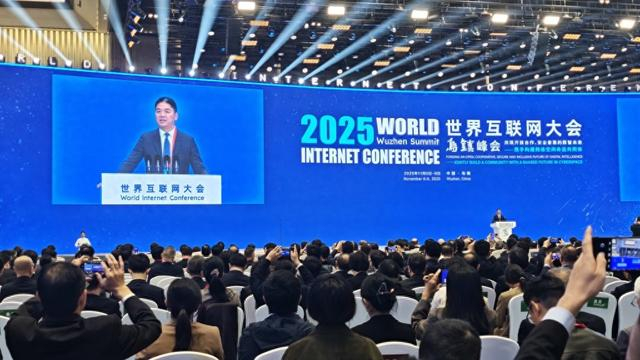
被取代还是新机遇?刘强东时隔多年亮相乌镇峰会谈数智生活新未来
Xin Lang Cai Jing· 2025-11-07 04:50
Core Viewpoint - Liu Qiangdong emphasizes the importance of reducing logistics costs in China to enhance corporate profits and stimulate economic growth through technological advancements and improved employee compensation [1][3] Group 1: Logistics and Economic Impact - High logistics costs in China lead to resource wastage and diminish corporate profits, suggesting that lowering these costs could create a positive economic cycle [1] - The potential for technological progress in the next five years is expected to surpass the achievements of the past decade, particularly in logistics automation [1] Group 2: Automation and Workforce - JD has replaced 90% of manual labor with robots in its sorting center in Beijing and plans to establish the world's first fully automated delivery station by April next year [3] - The company believes that the rise of robots will not eliminate human jobs but will instead free people from tedious tasks and create new demands in areas like arts and exploration [3] Group 3: Technological Development and Regulation - Liu Qiangdong notes that technological advancements historically lead to wealth concentration, suggesting that governments could impose "monopoly taxes" on dominant tech firms to fund public services [3] - The company reassures that the digital age will not lead to job loss or fairness issues, as many current situations are expected to change [3]


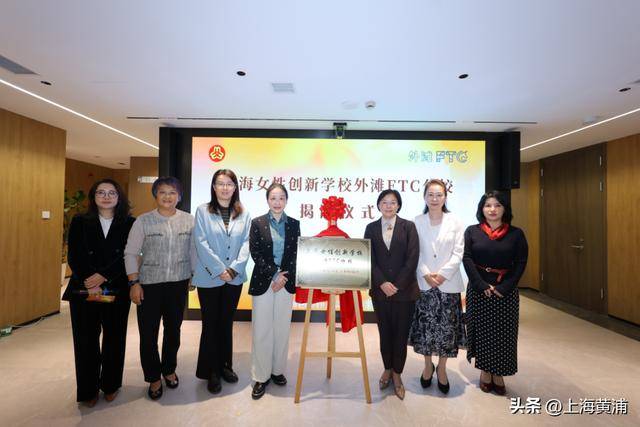
姐妹们看过来!上海女性创新学校外滩FTC分校成立啦!
Sou Hu Cai Jing· 2025-10-28 09:24
Core Insights - The "2025 Shanghai Women's Innovation School Bund FTC Special Event" was successfully held on October 27, marking the official establishment of the Shanghai Women's Innovation School Bund FTC branch [1] - The event featured three main segments: "Perception: Urban Inspiration," "Witness: Branch Launch," and "Share: She Creates Era," integrating women's innovation and entrepreneurship with high-quality internet content ecology [3] Group 1 - The event was attended by over a hundred representatives, including female entrepreneurs, content creators, and university students, discussing women's growth and innovation in the digital age [4] - In the "She Creates: Dialogue" segment, three guests from different fields engaged in deep discussions on topics such as high-quality internet content creation, women's entrepreneurial paths, and digital IP development [5] - Representatives from Bund FTC introduced the one-stop industry services and policy support provided to content creators, facilitating the transition from "inspiration" to "implementation" [7] Group 2 - The chairwoman of Shanghai Unique Clothing Co., Ltd., and a recognized female leader, shared her experiences on how women in traditional industries can leverage digital means to create personal aesthetic IP and rejuvenate their brands [9] - A well-known content creator from Xiaohongshu, Li Yuchen, shared practical insights on breaking through in content creation and commercialization from scratch [11] - The event fostered extensive discussions among participants on internet content creation, digital industry innovation thinking, and women's entrepreneurship, highlighting unique "her wisdom" and "her strength" [11]
李璐:迎接文化产业“数智时代”
Sou Hu Cai Jing· 2025-10-14 23:39
Core Viewpoint - The cultural industry in China is experiencing significant growth and transformation during the "14th Five-Year Plan" period, contributing positively to the national economy and regional development [1][4]. Group 1: Economic Impact - In 2023, the added value of China's cultural and related industries reached 5.95 trillion yuan, accounting for 4.59% of GDP [1]. - By 2024, the cultural industry is projected to achieve operating revenue of 19.14 trillion yuan, representing a 37.7% increase compared to 2020 [1]. - The added value of the cultural industry is expected to exceed 5.0% of GDP by the end of the "14th Five-Year Plan" period, enhancing its role in promoting consumption and stabilizing employment [1]. Group 2: Industry Characteristics - The cultural industry is characterized by an increasingly optimized structure, with a deeper integration of cultural, tourism, and commercial sectors. In 2024, the cultural service industry is expected to generate operating revenue of 10.91 trillion yuan, a year-on-year growth of 7.4%, making up 57.0% of total cultural industry revenue [1]. - The profit margin for the cultural industry is projected to reach 9.3% in 2024, driven by structural optimization [1]. - Technological innovation is leading the growth of new economic models and industries, with revenue from technology-intensive and creative-intensive sectors growing significantly, including broadcasting and internet services, which saw a 12.4% increase [2]. Group 3: Cultural and Economic Synergy - The cultural industry is increasingly supporting public cultural initiatives, creating a mutually beneficial relationship between cultural industries and cultural undertakings. For instance, over 12,000 intangible cultural heritage workshops have been established, generating employment for more than 1.2 million people [3]. - Traditional cultural elements are being integrated into modern products, particularly in the gaming industry, which is attracting younger generations to explore traditional culture [3]. - The international influence of Chinese culture and the competitiveness of Chinese manufacturing are gradually improving through the revitalization of traditional cultural resources [3]. Group 4: Future Directions - To sustain the growth of the cultural industry, efforts should focus on digital transformation, particularly in underdeveloped regions, and the establishment of a national cultural big data platform [4]. - There is a need to deepen the integration of cultural and tourism sectors and enhance public cultural services, including expanding free access to cultural facilities [4]. - Promoting international cultural cooperation and simplifying export processes for cultural products will enhance the global reach of Chinese culture [4].
数智时代的主流媒体系统性变革——2025媒体融合发展鄂尔多斯年会展望
Shang Hai Zheng Quan Bao· 2025-10-13 11:36
Core Insights - The conference in Ordos focused on the systematic transformation of mainstream media in the context of the digital and intelligent era, emphasizing the need for deep changes in media practices and technologies [1][2] Group 1: Media Integration and Transformation - Media integration has evolved from "addition" to "integration" and now to "digital intelligence," reflecting profound changes in technology and public opinion ecology [2] - The conference highlighted that media integration is no longer just a technical overlay but involves a comprehensive reshaping of production relationships, communication paradigms, and value chains [2][3] Group 2: Technological Empowerment and Content Value - The conference showcased that technology is the primary driving force behind media integration, with examples such as AI applications and successful media platforms demonstrating significant engagement [3] - Content value reconstruction remains crucial, with discussions on how popular accounts blend mainstream values with youthful expressions to achieve both positive influence and high traffic [3] Group 3: Role of Media in Social Governance - The role of media is shifting from being mere communicators to becoming service providers, as evidenced by local media initiatives that address community needs and enhance social governance [3] Group 4: International Communication and Local Media - The "Local International Communication System Resilience" was effectively practiced, with initiatives like "Global Focus Warm City" enhancing the international communication capabilities of local media [4] Group 5: Future Directions and Practical Examples - The conference served as a platform to summarize past practices and anticipate future directions, showcasing advancements in domestic technology and successful regional media collaborations [5] - The spirit of innovation and proactive engagement in media integration was emphasized, highlighting the importance of maintaining content authenticity amidst technological advancements [5]

数智时代高校网络思政教育的创新逻辑
Xin Hua Ri Bao· 2025-09-25 23:27
Core Viewpoint - The rapid development of internet and artificial intelligence technologies is driving society into a "data-driven and intelligent empowerment" era, posing new challenges for ideological and political education in higher education institutions [1] Group 1: Challenges and Adaptations in Ideological Education - Youth students, as frequent users of network technology, are experiencing changes in their learning and interaction modes due to the widespread application of "data + algorithms," necessitating an expansion of educational space, optimization of content supply, and innovation in value guidance [1] - The algorithmic recommendation mechanism has led to a clear trend of information dissemination becoming more segmented, which, while improving matching efficiency, raises concerns about the coverage and value guidance of ideological education resources in the digital space [2] Group 2: Enhancing Visibility and Engagement - Higher education institutions need to increase the visibility, weight, and priority of ideological education content within algorithmic recommendation mechanisms, ensuring that mainstream values guide algorithms and enhancing the attractiveness and persuasiveness of educational content through data analysis and content optimization [3] - Collaboration with mainstream online platforms is essential to embed value weights in recommendation models and establish stable content delivery mechanisms, while also enhancing the construction and management of campus media matrices to facilitate the production and dissemination of educational content [3] Group 3: Intelligent Transformation of Educational Models - The shift towards a data-driven and interactive approach in ideological education requires a focus on student-centered strategies, utilizing real-time analysis of fragmented online behaviors to predict students' ideological dynamics and needs [4] - A balance between personalized and collective education is crucial, with the development of algorithmic models that integrate mainstream value information to guide students' cognitive processes and enhance emotional resonance [5] Group 4: Collaborative Ecosystem for Ideological Education - The innovation logic of ideological education in the digital age involves not only technological upgrades but also dynamic updates of educational concepts, promoting a systematic and ecological layout that encourages multi-party participation and resource sharing [7] - The development of an ecological approach to ideological education necessitates leveraging the advantages of different digital platforms and integrating online and offline educational activities to enhance the practical appeal and effectiveness of the education [8]
古老儒学在文明对话中闪耀当代
Xin Hua She· 2025-07-11 01:24
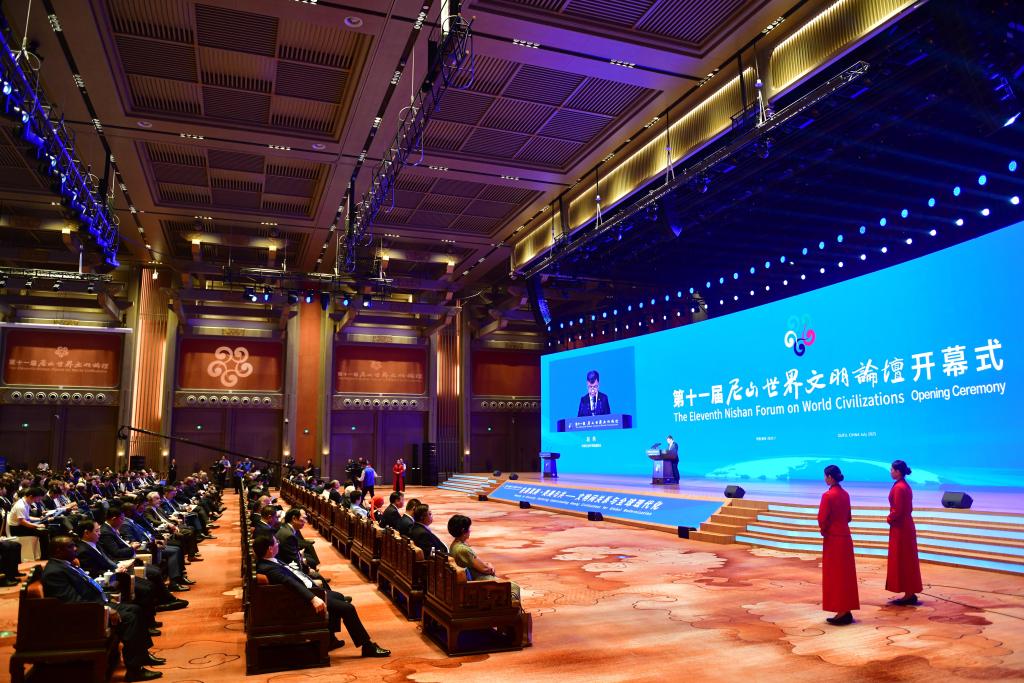
Core Viewpoint - The ancient Confucianism shines in contemporary civilization dialogue, providing insights into global issues and ethical frameworks for modern challenges [1][3][11] Group 1: Confucianism and Global Issues - The visit of Croatian computer scientist Branco Balon to study Confucianism highlights the relevance of traditional Chinese culture in addressing global civilization problems [1][2] - Balon presented an AI ethics framework inspired by Confucian thought during the 11th Nishan World Civilization Forum, emphasizing the enduring impact of Confucianism on both Chinese and global civilizations [3][4] Group 2: International Relations and Theories - Scholars are increasingly integrating Confucian ideas into international relations theories, promoting innovation and dialogue among civilizations [5] - Eduardo Daniel Oviedo noted that the Confucian concept of "harmony" is now a crucial principle in international systems [5] - The need for a pluralistic approach in modern international law, as suggested by Sun Lei, aligns with Confucian wisdom [5] Group 3: Global Governance and Ethical Frameworks - The forum discussed the importance of "ren" (benevolence) and "li" (ritual) in global governance, as highlighted by various experts [6][7] - Ricardo Pozzo emphasized the need for a global ethics that embraces diversity and avoids conflict, drawing from the Confucian idea of "heaven and humanity as one" [6] - Yang Chaoming pointed out the significance of traditional cultural values in addressing contemporary social issues like aging [6] Group 4: Globalization and Cooperation - The concept of "mutual achievement" was discussed in the context of China-Uganda cooperation, showcasing how Confucian principles can guide modern partnerships [9][10] - The forum concluded with a consensus calling for stronger cultural foundations to support global modernization through dialogue and collaboration [11]
中财大师生研发金融大模型及智能体
Zhong Guo Qing Nian Bao· 2025-07-09 08:35
Group 1 - The core viewpoint of the news is the launch of the CUFEL financial model and the CUFEL-A research report intelligent agent by a team from the Central University of Finance and Economics, marking a significant step in promoting independent innovation in financial technology [1] - The CUFEL model features a high-efficiency model fine-tuning process that enhances performance in vertical fields while maintaining general capabilities, providing substantial value in industry applications, particularly in intelligent agent construction and local deployment [1] - The CUFEL-A intelligent agent generates research reports on A-share listed companies through a four-step process: data aggregation, planning, structuring and reflection, and writing, utilizing a report evaluation algorithm based on tens of thousands of brokerage reports to improve report quality [1] Group 2 - The team is actively collaborating with leading companies in the financial industry to explore applications in areas such as intelligent credit, compliance, and supply chain finance [2] - The 2025 Zhongguancun Forum series, themed "China and the World Economy in the Era of Digital Intelligence," aims to interpret the logic of China's economic development and contribute to a new paradigm of global financial governance [2] - The Central University of Finance and Economics emphasizes talent cultivation as a foundational project for the digital intelligence era, aiming to develop compound talents with digital literacy and global vision [2]