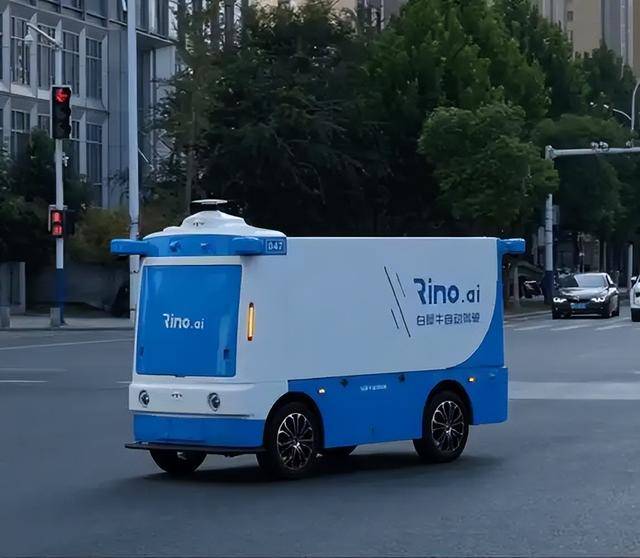
无人配送

Search documents
2026江苏两会|快递员代表的“无人车”心愿:让智慧物流开进田间地头
Xin Lang Cai Jing· 2026-02-02 14:55
Core Viewpoint - The article highlights the challenges and potential of smart logistics and unmanned delivery in rural areas, emphasizing the need for technological advancements and regulatory frameworks to enhance service delivery in these regions [2][3]. Group 1: Challenges in Unmanned Delivery - Unmanned delivery vehicles are primarily limited to urban areas due to complex rural road conditions and dispersed delivery points, making it difficult to adapt to real-life scenarios [2]. - Existing issues such as non-unified standards, lagging safety regulations, and insufficient technological maturity hinder the deployment of unmanned vehicles in rural settings [2]. Group 2: Recommendations for Improvement - There is a call to establish a technology system for unmanned delivery that is suitable for rural areas, alongside the promotion of industry standards and safety regulations to avoid fragmented approaches [3]. - The potential benefits of smart logistics include reduced transportation costs, improved delivery times, and enhanced access for agricultural products to urban markets [3]. Group 3: Vision for the Future - The industry is encouraged to continuously learn and adapt to keep pace with developments, with aspirations for unmanned delivery vehicles to reach rural farms directly [3]. - Achieving this vision requires technological breakthroughs, supportive policies, and active participation from frontline workers and rural communities [3].


快递员代表的“无人车”心愿:让智慧物流开进田间地头
Yang Zi Wan Bao Wang· 2026-02-02 14:16
Core Viewpoint - The article highlights the need for advancements in smart logistics and unmanned delivery systems to better serve rural areas, emphasizing the challenges faced in implementing these technologies in complex rural environments [2][3]. Group 1: Challenges in Unmanned Delivery - Unmanned delivery vehicles are primarily limited to urban areas, as rural logistics face challenges such as complex road conditions and dispersed delivery points [2]. - Existing technology struggles to adapt to the real-life scenarios of rural deliveries, such as the need to navigate between multiple delivery locations efficiently [2][3]. Group 2: Recommendations for Improvement - There is a call to establish a technology system for unmanned delivery that is tailored to rural needs, alongside the promotion of industry standards and safety regulations to avoid fragmented approaches [3]. - The integration of smart logistics is seen as a way to reduce transportation costs and improve delivery times, facilitating the movement of agricultural products from rural areas to urban markets [3]. Group 3: Future Aspirations - The industry is encouraged to continuously learn and adapt to keep pace with developments in logistics technology [3]. - There is a vision for unmanned delivery vehicles to eventually reach rural farms, delivering fresh produce directly to consumers, which requires technological breakthroughs, supportive policies, and active participation from frontline workers and rural communities [3].

传闻成真!菜鸟入股九识智能 将开启无人车双品牌运营
Nan Fang Du Shi Bao· 2026-01-29 15:19
作为快递行业降本增效的关键技术,末端无人物流车备受资本市场关注,成为多家产业链相关企业当前 投入布局的重点。新石器、白犀牛、九识等L4级无人驾驶技术企业在2025年都获得多轮融资。南都记 者梳理注意到,这些企业的投资方中普遍都出现了大型互联网公司的身影,反映出头部互联网平台正通 过对无人物流的加速投入,参与即时配送市场的竞争。 据市场预测,2027年全球无人配送车市场规模将突破数百亿美元,我国无人物流车市场规模将占全球市 场份额的40%以上。预计未来三到五年,物流行业将有超过20万台的快递无人车部署。国家邮政局在1 月初的2026年全国邮政工作会议上进一步明确,出台加快推广应用无人配送技术政策文件,深化无人 车、无人机等在行业试点应用。 据介绍,目前,九识智能积累了近亿公里级的真实公开道路数据,拥有成熟的算法模型;而菜鸟无人车 团队多年来在视觉语言模型及世界模型领域积累了技术优势。双方有望通过实现大规模落地数据与前沿 技术的结合,增强在L4级自动驾驶赛道中的竞争力。 九识智能称,本次战略整合通过资产注入与现金投资的组合方式,进一步增强了九识智能在L4级无人 驾驶领域的技术储备与供应链体系。据了解,此次战略合作 ...
“无人配送”加速驶入城乡生活
Ren Min Ri Bao· 2026-01-25 21:20
Core Insights - The charging efficiency of unmanned delivery vehicles has significantly improved, with power upgraded from 60 kW to 120 kW, reducing charging time from 90 minutes to 40 minutes [1] - The demand for unmanned delivery vehicles is increasing, with a notable rise in delivery volumes during the New Year period, where daily deliveries exceeded 9,800, marking a 32% year-on-year increase [1] Group 1: Industry Developments - The State Grid Qingdao Power Supply Company has actively engaged with logistics companies like China Post and SF Express to support the unmanned delivery industry, creating a dedicated service team for comprehensive power supply solutions [1] - The company has optimized three 10 kV lines and added four distribution transformers to meet the high-frequency charging needs of unmanned delivery vehicles [1] Group 2: Market Trends - The overall transportation volume for unmanned delivery has increased by 20% year-on-year, indicating a sustained release of scale effects in smart logistics [1] - More express delivery companies are entering the Qingdao unmanned delivery market, expanding their operational footprint [2]
未知机构:九识智能无人车获广州首批市级道路许可1月18日九识智能获得广州首-20260120
未知机构· 2026-01-20 02:20
Summary of Conference Call Notes Industry Overview - The document discusses the autonomous vehicle industry, specifically focusing on the advancements in delivery robots, particularly the L4 level Robovan technology. Key Points - **Regulatory Milestone**: On January 18, the company Jiushi Intelligent received the first batch of municipal road permits in Guangzhou for its L4 level Robovan, marking a significant breakthrough in complex urban environments [1] - **Commercialization Acceleration**: This development is viewed as a substantial acceleration in the commercialization process of unmanned delivery, validating a faster monetization path in the trillion-dollar urban distribution market compared to Robotaxi services [1] - **Market Players**: Key players in the Robovan sector include Jiushi Intelligent, New Stone Technology, and White Rhino, all of which are core participants in the Robovan market with accelerated commercialization processes [1] - **Potential Competitors**: Other companies mentioned that are entering the Robovan sector include Desay SV and Jingwei Hengrun, which are focusing on either complete Robovan vehicles or core components [1] Additional Insights - The document emphasizes the strategic importance of regulatory approvals in advancing the deployment of autonomous delivery solutions in urban settings, highlighting the competitive edge that Jiushi Intelligent may gain in the market [1]
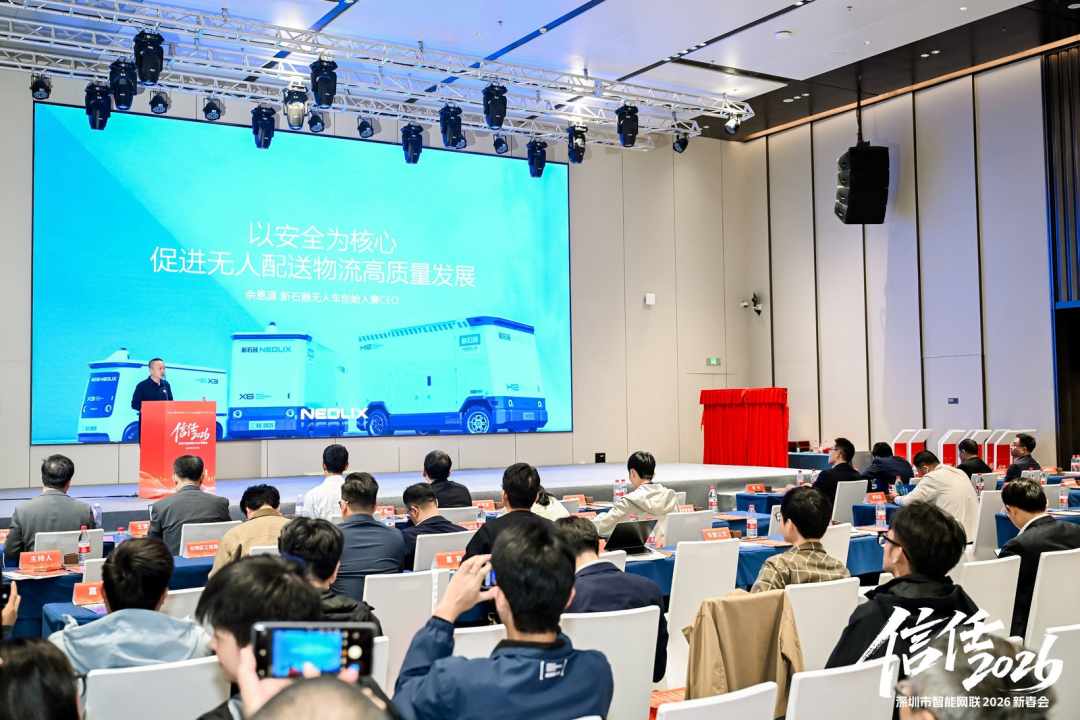
新石器创始人余恩源:计划2026深圳无人车运营规模超千台
Jin Rong Jie· 2026-01-17 03:37
Core Insights - The Shenzhen Intelligent Connected Vehicle New Year Conference successfully gathered government departments, industry organizations, and leading enterprises to discuss the development direction of the intelligent connected and autonomous driving industry in Shenzhen [1] Group 1: Company Developments - New Stone has operated 374 autonomous delivery vehicles in Shenzhen, with plans to expand the fleet to 1,000 vehicles in 2026, focusing on night delivery and diverse scenarios including fresh produce, hotel linens, and supermarket supply chains [3] - New Stone has established a key R&D base in Shenzhen and aims to accelerate the large-scale, commercial, and standardized development of autonomous delivery under the guidance of Shenzhen's "4123" strategic initiative [5] - New Stone has become a founding member of the newly established Shenzhen Autonomous Driving Safety Laboratory, participating in the construction of a safety testing system for autonomous delivery [7] Group 2: Industry Recognition and Future Plans - New Stone received the "Comprehensive Excellence Award" and "Safety Escort Award" at the 2025 Guangdong-Hong Kong-Macao Greater Bay Area Functional Autonomous Vehicle Competition, highlighting its technical strength and safety performance in the field [9] - The company aims to promote the application of autonomous delivery based on its experiences in Shenzhen, emphasizing safety as a fundamental principle while driving technological innovation and ecological collaboration as core motivators for industry advancement [9]
国内首个不锈钢火箭超级工厂开工拟年产25发;日本欲打造本土版“星链”系统;机构:内存市场已进入“超级牛市”——《投资早参》
Mei Ri Jing Ji Xin Wen· 2026-01-08 00:23
Market News - The U.S. stock market closed mixed, with the Nasdaq up 0.16%, while the S&P 500 and Dow Jones fell by 0.34% and 0.94% respectively. Major tech stocks mostly rose, with Intel increasing over 6% and Google rising more than 2%. Google's market capitalization reached $3.89 trillion, surpassing Apple's $3.85 trillion for the first time since 2019 [1] - International oil prices continued to decline, with WTI crude oil down 1.44% at $56.31 per barrel and Brent crude down 0.61% at $60.33 per barrel. Precious metals also saw a decrease, with spot gold down 0.92% at $4453.34 per ounce and silver down 3.8% at $78.16 per ounce [2] Industry Insights - Arrow Technology's large liquid carrier rocket assembly and recovery reuse base project commenced in Hangzhou, with a total investment of 5.2 billion yuan. This is China's first offshore recovery reusable rocket production base, expected to have an annual production capacity of 25 rockets [3] - Japan is developing a "Japanese version of Starlink" to establish a low-orbit satellite constellation for autonomous communication services, enhancing domestic control over communication networks [3] - The satellite communication industry is projected to exceed 200-400 billion yuan by 2030, with an annual compound growth rate of 10%-28%. This sector is transitioning from "concept verification" to "scale application," becoming a key driver for high-quality digital economic development [4] - The memory market has entered a "super bull market," surpassing historical highs from 2018. Prices for 64GB RDIMM memory are expected to rise significantly, with projections of a 40%-50% increase by Q4 2025 and another 40%-50% by Q1 2026 [4][5] - The postal industry plans to promote the application of unmanned delivery technologies by 2026, including the use of drones and automated sorting systems, to enhance logistics capabilities and support green development [6][7] Company Updates - Desay SV Automotive announced that its largest shareholder, Desay Group, plans to reduce its stake by up to 710,625 shares, representing no more than 1.19% of the company's total shares [8] - New Link Electronics plans to reduce its shares by up to 25.02 million, or 3% of its total shares, through various trading methods [8] - Yili Group's chairman plans to reduce his stake by up to 62 million shares, accounting for 0.98% of the total shares, with proceeds used to repay financing loans [10]
智能配送加持,青岛驶向“全球无人车第一城”
Xin Lang Cai Jing· 2026-01-06 19:29
Core Insights - The article highlights the successful implementation of unmanned delivery vehicles in Qingdao, significantly reducing logistics costs for companies like Qingdao Zhongji Tool Co., Ltd. [1][3] - Qingdao has emerged as a leader in unmanned vehicle deployment, surpassing the scale of operations of companies like Waymo in San Francisco [2][3] Cost Reduction - Logistics costs have been halved, with Qingdao Zhongji Tool Co., Ltd. reporting a drop from 5,000 to over 2,000 yuan per month due to the use of unmanned delivery vehicles [1][3] - The average transportation cost for urban logistics in China is approximately 3 yuan per kilometer, while unmanned vehicles operate at only 50% of traditional costs [3] Vehicle Specifications and Operations - The unmanned vehicles operated by New Stone Technology can carry up to 1 ton, have a cargo volume of 6 cubic meters, and can reach speeds of 50 km/h with a maximum range of 200 km [2] - The fleet has achieved a daily order volume exceeding 5,000, with 1,200 vehicles currently in operation [2] Safety Features - The unmanned vehicles are equipped with advanced perception and decision-making systems, including 12 high-definition cameras and 1 LiDAR, ensuring a 360-degree awareness and obstacle avoidance [4] - The vehicles are designed to operate 24/7 without fatigue, and they have systems in place for immediate accident response [4][5] Future Developments - The company aims to enhance the efficiency and reliability of Level 4 autonomous driving, with expectations that future vehicles will adapt to sudden road conditions and complex weather better than human drivers [5] - New Stone Technology plans to develop Qingdao into a model city for global unmanned delivery, with a vision to create a smart logistics network by 2026 [6]
万辆无人车,等待一张“全国通行证”
3 6 Ke· 2025-12-30 10:30
Core Insights - The most lucrative and rapidly scalable application of autonomous driving in 2025 is expected to be in the field of unmanned delivery [1] Group 1: Investment and Growth - Major players in the unmanned delivery sector, such as New Stone and Nine Insight, have received significant capital investments, with New Stone raising $600 million in October 2025, marking the largest single private equity financing in China's autonomous driving sector [2] - New Stone and Nine Insight have both surpassed a cumulative delivery volume of 10,000 units, with projections indicating that unmanned delivery vehicle sales will exceed 30,000 units in 2025 [4] Group 2: Regulatory Environment - The rapid growth of unmanned delivery has led to a more lenient regulatory environment compared to other autonomous driving sectors like Robotaxi and Robotruck, which face stricter scrutiny due to safety concerns [5][6] - The lack of clear regulatory definitions for unmanned delivery vehicles has allowed them to bypass stringent entry barriers faced by traditional vehicle manufacturers, facilitating easier market entry [6] Group 3: Safety and Operational Challenges - The rapid expansion of unmanned delivery vehicles has raised safety concerns, with incidents such as collisions with electric motorcycles becoming more common [9] - A significant portion of accidents involving unmanned vehicles, approximately 40%-50%, are due to rear-end collisions, highlighting the need for improved safety measures [9] Group 4: Legal and Regulatory Challenges - The ambiguity surrounding the legal classification of unmanned delivery vehicles complicates traffic management and accident liability issues [10] - The absence of a unified legal framework for unmanned delivery vehicles is identified as a major bottleneck hindering large-scale application [14] Group 5: Future Directions and Recommendations - To overcome current regulatory challenges, there is a call for a shift from a purely human-driven regulatory approach to a data-driven governance model that integrates real-time traffic data [22] - The industry is encouraged to focus on operational management and safety compliance to avoid repeating past mistakes seen in other sectors [21]
无人配送圈变天!融资4亿对6亿,菜鸟九识联手能否撼动新石器霸权
Sou Hu Cai Jing· 2025-12-28 06:45
Core Insights - The collaboration between Cainiao and Jiushi Intelligent aims to capture market share in the rapidly evolving unmanned delivery sector [1][18] - This partnership is driven by mutual needs: Cainiao requires technology and manpower, while Jiushi seeks to enhance its market presence and resolve ongoing challenges [3][4][6] Group 1: Collaboration Dynamics - Cainiao is looking to expand its "4-hour delivery" service across 31 cities, necessitating additional resources beyond manual delivery [3] - Jiushi Intelligent, having faced difficulties since its spin-off from JD, is in need of a strategic partnership to survive amidst increasing competition [4][6] - The collaboration is seen as a way for both companies to leverage each other's strengths: Cainiao's logistics network and Jiushi's technological expertise [6][8] Group 2: Challenges Ahead - Internal resource allocation may pose a challenge for Cainiao, which is already managing multiple projects [8] - Jiushi must balance its commitments to other major clients, such as China Post, complicating its operational dynamics [8] - Technical integration between Cainiao's dispatch system and Jiushi's autonomous driving model is expected to be contentious, with prior disagreements already noted [11] Group 3: Industry Context - The unmanned delivery sector faces significant hurdles, including operational challenges in complex environments and high costs associated with technology [13][14] - Regulatory inconsistencies across cities like Beijing and Shenzhen create additional uncertainty for long-term planning [14] - The partnership may signal a shift in industry practices, moving towards deeper collaborations rather than isolated efforts [18] Group 4: Competitive Landscape - The collaboration could reshape the competitive dynamics, as leading firms like SF Express and JD may seek similar partnerships [18][21] - Smaller players in the unmanned delivery market may find it increasingly difficult to survive as larger companies consolidate their advantages through such collaborations [21] - The industry remains in a cash-burning phase, with profitability being a critical factor for future success [22]