
有效市场

Search documents
天能控股集团董事长张天任:企业发展迎来更多机遇
Jing Ji Ri Bao· 2025-10-29 22:14
Core Viewpoint - The 20th Central Committee's Fourth Plenary Session emphasizes the need to invigorate various business entities, enhance the market-oriented allocation of factors, and improve macroeconomic governance efficiency, which is crucial for the high-quality development of the private economy and the formation of new productive forces [1]. Group 1: Market Dynamics and Government Role - The concept of an "effective market" provides direction for corporate innovation and development, where products and technologies must withstand market scrutiny to create real value [1]. - The role of a "proactive government" is to create a stable, fair, and transparent development environment for businesses through legal and institutional arrangements, which has been supported by recent laws like the Private Economy Promotion Law [1]. - The establishment of 18 production bases nationwide by the company is a result of the combined effects of market mechanisms and government service efficiency, reflecting improvements in the business environment [1]. Group 2: Commitment to Carbon Neutrality - The company is committed to integrating into the "dual carbon" goals during the 14th Five-Year Plan period by focusing on product high-endization, operational digitization, and global market expansion to contribute to a clean, low-carbon, safe, and efficient modern energy system [2].
林毅夫:香港凭人才科研与金融优势 深度融入国家发展大局
Zhong Guo Xin Wen Wang· 2025-09-30 12:28
Core Insights - Hong Kong can leverage its talent and financial advantages to deeply integrate into the national development framework of China [1][3] Group 1: China's Advantages in the Fourth Industrial Revolution - China possesses three core advantages for leading the Fourth Industrial Revolution: a strong talent pool, a vast market capable of scaling technologies, and the most comprehensive industrial sectors globally [3] - Key fields such as artificial intelligence, chip manufacturing, and biopharmaceuticals are areas where China is expected to achieve significant advancements [3] Group 2: Hong Kong's Role in National Development - Hong Kong's new productive forces are centered around talent and research, supported by five world-class universities and numerous top scientists [3] - The integration of Hong Kong's research capabilities with the industrial ecosystem of the Guangdong-Hong Kong-Macao Greater Bay Area can effectively translate into actual industrial value [3] Group 3: Financial Capital and Economic Foundation - As an international financial center, Hong Kong has significant advantages in financial capital, with a per capita GDP exceeding $50,000, the highest among all Chinese cities [3][4] - This economic foundation supports Hong Kong in maximizing its talent and research value while providing effective pathways for developing new productive forces [3] Group 4: Collaborative Economic Growth - Economic growth requires a synergy between an "effective market" and a "proactive government," where the market stimulates initiative and the government addresses business development challenges [4] - If Hong Kong continues to leverage its capital market functions and demonstrate proactive governance, it can become one of the most competitive cities globally with the highest income levels [4]


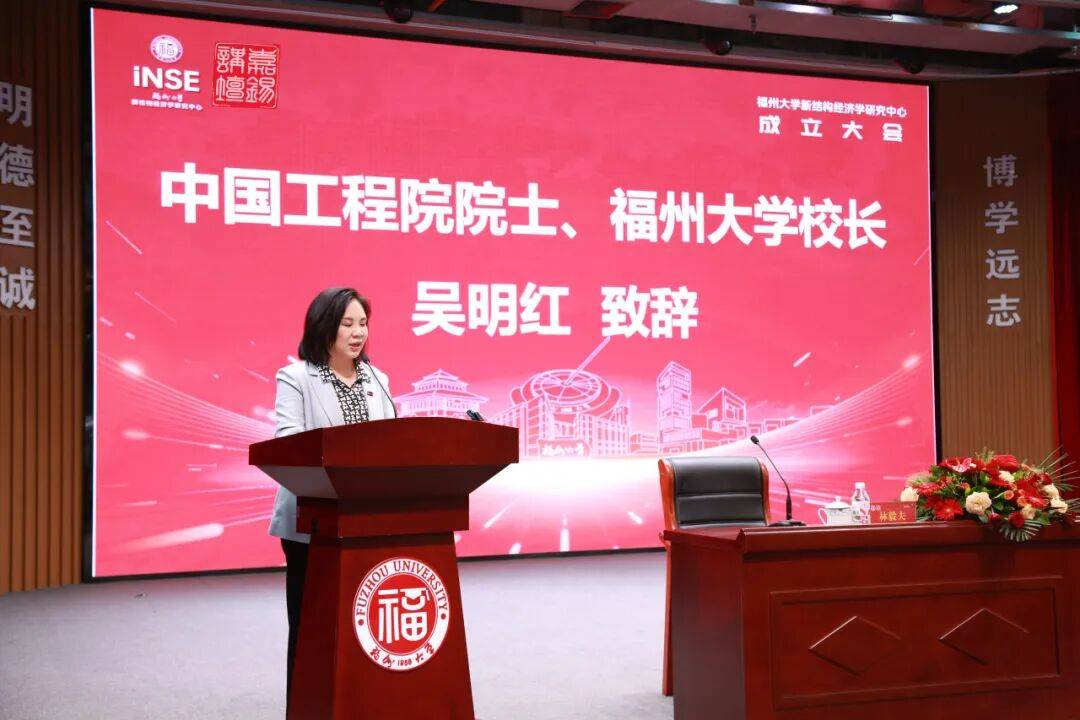
知名经济学家林毅夫教授做客福州大学707期嘉锡讲坛
Sou Hu Cai Jing· 2025-09-12 04:33
Core Viewpoint - The establishment of the New Structural Economics Research Center at Fuzhou University and the keynote speech by Professor Lin Yifu highlight the need for innovative economic theories that address the profound changes in the global political and economic landscape, particularly for developing countries [1][5]. Group 1: Event Overview - The establishment ceremony of the New Structural Economics Research Center and the 707th Jiaxi Forum took place at Fuzhou University, attended by over 500 participants including government officials, academicians, and students [1]. - The event was co-hosted by Fuzhou University Library, the School of Economics and Management, and the Academic Affairs Office [1]. Group 2: Keynote Insights - Professor Lin Yifu analyzed the deep implications of the "unprecedented changes in a century," emphasizing that traditional Western theories are insufficient for the development practices of developing countries [5]. - He elaborated on the New Structural Economics as a system of independent theoretical innovation, focusing on factor endowment structures and the endogenous nature of economic structures [5]. - Lin stressed the importance of the synergy between "effective markets" and "proactive governments" in promoting high-quality economic development [5]. - He proposed that China should leverage its comparative advantages by combining the latecomer advantages of traditional industries with the innovative opportunities of the digital economy to drive industrial upgrading and high-quality development [5]. Group 3: Academic and Cultural Impact - The Jiaxi Forum provided a valuable opportunity for students and faculty to engage directly with top scholars, enhancing academic perspectives and fostering theoretical confidence and cultural awareness [11]. - The event is seen as significant for promoting campus cultural development and academic discipline growth [11].
“碳”路先锋:4%能耗贡献22%工业产值
Xin Hua Ri Bao· 2025-08-19 21:57
Core Viewpoint - The rapid establishment of the virtual power plant in Nanjing Jiangning Development Zone represents a significant advancement in green technology and a model for collaborative efforts between government, enterprises, and market forces to achieve carbon neutrality goals [1][2][5]. Group 1: Virtual Power Plant Development - The Nanjing Jiangning Development Zone has successfully built a virtual power plant in just eight months, which is now operational and included in the national list of advanced green low-carbon technology demonstration projects [1]. - The virtual power plant utilizes a high-tech energy cloud platform to monitor real-time data on power generation capacity, adjustable capacity, green electricity usage ratio, and carbon emissions [1]. Group 2: Collaborative Reform Model - The development zone has adopted a reform model characterized by "enterprise主体, market主导, government支撑," which emphasizes collaboration among various stakeholders to drive green transformation [2][5]. - The establishment of new companies through partnerships with state-owned and private enterprises has led to the creation of seven new companies focused on low-carbon initiatives [3]. Group 3: Project and Investment Highlights - Over 50 low-carbon projects with investments exceeding 100 million yuan have been attracted to the development zone, with 35 major low-carbon projects currently under construction, totaling an investment of 335 billion yuan [4]. - The development zone has also launched several pioneering initiatives, including the first ESG development report for parks in the country and a carbon footprint service platform [4]. Group 4: Government and Market Synergy - The government plays a crucial role in top-level design and institutional supply, focusing on new electric power demonstration construction and optimizing the green business environment [5][6]. - The development zone aims to deepen the collaboration between government and enterprises, enhancing the integration of low-carbon services and technological innovation to ensure sustainable development [6].

为更激烈的全球经贸扰动未雨绸缪
第一财经· 2025-07-07 00:54
Core Viewpoint - The article discusses the significant impact of Trump's new tax and spending legislation on both the U.S. economy and the global economic landscape, emphasizing a shift towards a "small government" approach that includes tax cuts and deregulation, which is expected to enhance productivity and economic growth in the U.S. [1][2] Group 1: U.S. Economic Policy Changes - The new legislation includes tax reductions, spending cuts, increased military spending, and a rise in the deficit, which collectively aim to boost the U.S. economy [1] - The "small government" philosophy is expected to lower operational costs and improve efficiency within the U.S. economy, potentially increasing marginal labor productivity [1][3] - The ongoing trade conflicts and increased tariffs are anticipated to accelerate the U.S. capital expenditure cycle, as high tariffs may lead multinational companies to invest more in the U.S. market [2] Group 2: Global Economic Implications - The prolonged duration of high tariffs and trade conflicts is likely to further stimulate U.S. capital expenditure, prompting the government to endure and extend conflicts with trade partners [2] - Countries are currently reacting to the trade war initiated by the U.S., often in a defensive manner, which limits their ability to formulate strategic responses [2][3] - Nations, including China, need to prepare comprehensive strategies to counteract U.S. trade policies and avoid falling into a reactive trap [2] Group 3: Domestic Reforms in Response - In light of external uncertainties, domestic reforms in China are accelerating, focusing on building a unified national market and addressing issues like low-price competition [3] - The orderly exit of outdated production capacity and market reforms are expected to enhance China's core competitiveness and reshape its economic framework [3] - A well-matched relationship between limited government and effective markets could elevate China's economic activities and productivity, enabling it to better withstand external shocks [3]

五个日常小事让外籍教授感知中国经济大势
Sou Hu Cai Jing· 2025-05-17 09:41
Group 1 - The article highlights the perception of China's economic trends through everyday experiences of foreign experts, emphasizing the convenience and efficiency of shared economy practices [2][3] - The shared economy is identified as a crucial component of China's new development philosophy, which aims to promote high-quality growth through the integration of technology and various industries [3][4] - Significant advancements in infrastructure and emerging industries are noted, with China leading in global solar power capacity, electric vehicles, digital payments, and high-speed rail [4][6] Group 2 - The resilience of the Chinese economy is illustrated through the integration of new technologies such as electric vehicles, artificial intelligence, and big data, which enhance economic stability [6][7] - The ongoing implementation of China's Five-Year Plans provides a stable framework for economic and industrial policies, fostering innovation and investment in high-tech sectors [6][9] - The rapid growth of the pet economy is cited as an example of China's vast market potential, reflecting strong consumer spending and demographic trends [7][8] Group 3 - China's economic performance is characterized by its substantial scale, being the second-largest economy globally, and its significant contributions to global economic growth [9][10] - The country maintains a solid economic foundation, allowing it to navigate external challenges effectively and capitalize on opportunities [9][10] - The narrative of China's economic development is shifting towards a focus on high-quality growth, indicating a transition in economic strategy [10]
资金、土地、人才三箭齐发,广东12条硬核新政撑市场主体
Sou Hu Cai Jing· 2025-05-13 14:35
Core Viewpoint - Guangdong province is implementing measures to stimulate market vitality and accelerate the construction of a modern industrial system, aiming to transition from a competitive "red ocean" to a growth-oriented "blue ocean" amidst global economic fluctuations and rising market uncertainties [1] Group 1: Market Dynamics - The total number of market entities in Guangdong has surpassed 19 million, with over 8.35 million enterprises, leading the nation [1] - The measures include 12 specific policies focusing on cultivating new productive forces, reducing operational costs, enhancing foreign investment support, and providing comprehensive lifecycle services [1][2] Group 2: Resource Allocation - The measures prioritize funding for advanced manufacturing, high-tech enterprises, and future industries, while ensuring the availability of quality land for manufacturing development [2][3] - A new policy reserves at least 20,000 acres of land for emerging industries such as AI, robotics, and semiconductor manufacturing [2] Group 3: Financial Support - The government plans to provide interest subsidies for new bank loans to manufacturing and high-tech enterprises, with a total subsidy cap of 200 billion yuan annually [4] - The provincial finance department has allocated 26.2 billion yuan for "manufacturing dominance" initiatives in the 2025 budget, with an additional 13.6 billion yuan expected over three years [5] Group 4: Foreign Investment - Guangdong has established over 350,000 foreign-funded enterprises, contributing approximately 25% of provincial tax revenue and one-third of exports [6] - New measures include financial incentives for multinational corporations establishing regional headquarters and R&D centers, with rewards up to 8 million yuan for qualifying entities [6][7] Group 5: Innovation and Application - The government aims to create over 20 regional characteristic scenarios and 100 demonstration scenarios annually to facilitate the application of AI and other technologies [7] - The integration of foreign technology with local industrial needs is expected to enhance market confidence and stimulate innovation [7]