服务业扩能提质

Search documents
像重视制造业一样重视服务业
Jing Ji Ri Bao· 2025-11-13 22:20
Core Insights - The development potential of the service industry is driven by the continuous expansion of the consumer market and its role as a comprehensive carrier for optimizing economic structure, promoting industrial upgrading, stabilizing and expanding employment, and enhancing international competitiveness [1][2] Group 1: Service Industry Growth - During the "14th Five-Year Plan" period, China's service industry is expected to grow steadily, with an average annual increase of 5.9% in value added from 2021 to 2024, contributing an average of 60.6% to economic growth [1] - By 2024, the value added of the service industry is projected to account for approximately 56.7% of GDP, with household service consumption expenditure making up 46.1%, indicating significant room for improvement in both scale and structure [1] Group 2: Changing Consumer Demand - Current consumer demand in China is shifting from "availability" to "quality," with rapid growth expected in life services such as health care, elderly care, childcare, cultural tourism, and lifelong education due to trends like the expansion of the middle-income group and population aging [2] - The manufacturing sector's transition to higher value chains is driving strong demand for productive services such as R&D design, modern logistics, inspection and testing, and technology finance [2] Group 3: Challenges and Shortcomings - The primary shortcoming in the service industry is the lack of high-quality supply, with a scarcity of quality services in education, healthcare, elderly care, and childcare [3] - There are systemic barriers, including market access restrictions and insufficient competition, which hinder innovation and service quality [3] Group 4: Strategic Recommendations - To promote the expansion and quality improvement of the service industry, it is essential to focus on systemic innovation in development concepts, models, and standards rather than merely increasing scale and speed [4] - Key strategies include removing barriers to market access, encouraging fair participation from various business entities, and fostering the development of internationally competitive service industry leaders [4] - Emphasis should also be placed on deep integration of modern services with advanced manufacturing and agriculture, as well as the integration of digital technologies with service industries [4]
重大信号密集释放 民企发展、民间投资迎来新拐点和大升级
2 1 Shi Ji Jing Ji Bao Dao· 2025-11-12 00:15
Core Viewpoint - The recent policy measures aim to stimulate private investment in China, particularly in the service sector and key infrastructure projects, by providing clearer guidelines and support for private enterprises [1][3][5]. Group 1: Policy Announcements - The National Development and Reform Commission (NDRC) held a meeting to discuss the "14th Five-Year Plan" and gather suggestions for accelerating the development of the service industry [1]. - The NDRC announced 13 measures to promote private investment, focusing on expanding investment space, ensuring fair competition, and enhancing policy support [2][3]. Group 2: Investment Growth and Challenges - Private investment has slowed this year due to international environmental changes and adjustments in the real estate market, but private project investment excluding real estate grew by 2.1% year-on-year in the first three quarters [2]. - The NDRC acknowledges existing challenges in private investment and aims to address these through targeted measures [2][9]. Group 3: Specific Measures for Private Investment - The first measure encourages private capital participation in state-approved projects in sectors like railways and nuclear power, with a potential share of over 10% for private investors [3][4]. - The measures emphasize the need for feasibility studies to assess private capital involvement in these projects [5]. Group 4: Addressing Barriers to Investment - The measures aim to eliminate unreasonable market access barriers for private enterprises, particularly in service sectors such as environmental protection and quality certification [10]. - The NDRC plans to support private enterprises in high-value service sectors, enhancing their participation in industrial design and technology services [11]. Group 5: Future Directions - The NDRC will implement actions to enhance the quality and capacity of the service industry, promoting integration with advanced manufacturing and modern agriculture [1][11]. - There is a focus on encouraging private enterprises to explore paths for service-oriented manufacturing, enhancing their competitive edge in the market [11].
国家发展改革委召开民营企业座谈会
Qi Huo Ri Bao Wang· 2025-11-11 16:57
Core Viewpoint - The meeting chaired by Zheng Zhaojie emphasized the importance of the service industry in China's economic development and the need for further reforms and support to enhance its growth potential [1][2]. Group 1: Service Industry Development - The service industry in China has experienced rapid growth, with an expanding market size and the emergence of new models and formats, providing ample opportunities for high-quality development [1]. - There is significant potential for both expansion and quality improvement in the service sector, which is a key indicator of a country's economic development level [2]. Group 2: Recommendations and Government Support - Enterprises suggested that the government should deepen institutional reforms, improve social security and tax policies, innovate regulatory methods, and strengthen the support system for service industry development in the "14th Five-Year Plan" [1]. - The National Development and Reform Commission (NDRC) plans to incorporate the feedback from enterprises into the "14th Five-Year Plan" to create better conditions and environments for business development [2]. Group 3: Integration and Communication - The NDRC aims to promote the deep integration of modern services with advanced manufacturing and modern agriculture, enhancing quality, reducing costs, and lowering carbon emissions in the industry [2]. - There will be a focus on regular communication between the government and enterprises to address practical challenges faced by businesses, fostering healthy and high-quality development of the private economy [2].
重大信号密集释放,民企发展、民间投资迎来新拐点和大升级
2 1 Shi Ji Jing Ji Bao Dao· 2025-11-11 12:45
Core Viewpoint - The Chinese government is actively promoting policies to enhance the development of private enterprises and private investment, with a focus on expanding the service industry and facilitating private capital participation in key sectors such as railways and nuclear power [1][3][5]. Group 1: Policy Initiatives - The National Development and Reform Commission (NDRC) has introduced 13 measures aimed at stimulating private investment, including expanding market access and ensuring fair competition [2][3]. - The measures emphasize the need for special feasibility studies to assess private capital participation in projects requiring state approval, particularly in sectors with potential returns [4][5]. - The government aims to create a better environment for private enterprises by integrating modern services with advanced manufacturing and modern agriculture [1][9]. Group 2: Investment Trends - Private investment has shown a stable growth of 2.1% year-on-year in the first three quarters of the year, excluding real estate development [2]. - The government acknowledges existing challenges in private investment, such as market access barriers and financing difficulties, and is addressing these through targeted policies [6][8]. Group 3: Focus Areas for Private Capital - The measures encourage private capital to participate in high-value service sectors, including industrial design, quality certification, and digital transformation [9][10]. - The NDRC is committed to enhancing the quality and efficiency of the service industry, which is seen as a crucial component of national economic development [1][10]. Group 4: Implementation Strategies - The government plans to support private enterprises in participating in significant projects and to streamline the approval process for private investment in infrastructure and public services [6][7]. - There is a focus on building digital platforms and providing market-oriented services to support private enterprises in their innovation and growth efforts [7][10].

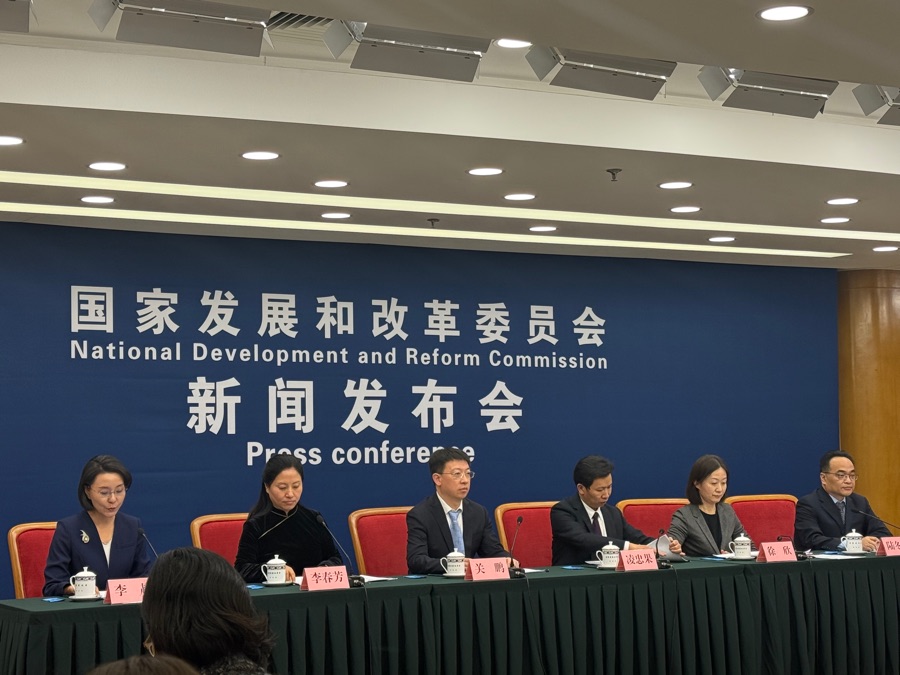
郑栅洁主任主持召开民营企业座谈会 就“十五五”时期服务业发展听取意见建议
清华金融评论· 2025-11-11 05:56
Core Viewpoint - The meeting hosted by the National Development and Reform Commission (NDRC) focused on gathering opinions and suggestions for accelerating the development of the service industry in line with the "14th Five-Year Plan" [3][4]. Group 1: Service Industry Development - The service industry is a crucial component of the national economy, and its development level is a key indicator of a country's economic progress [4]. - There is significant potential for expansion and quality improvement in China's service sector, as highlighted by the recent policies from the 20th Central Committee [4]. - The meeting emphasized the need for enterprises to maintain confidence in development, explore potential business opportunities, and enhance the specialization and value chain of productive services [4]. Group 2: Government Support and Policy Recommendations - Participants suggested that the government should deepen institutional reforms, improve social security and tax support systems, and innovate regulatory methods to better support service industry development [3]. - The NDRC plans to incorporate the valuable suggestions from enterprises into the "14th Five-Year Plan" to create a better development environment for businesses [4]. - The NDRC aims to implement actions that enhance the capacity and quality of the service industry, promoting integration with advanced manufacturing and modern agriculture [4].

国家发展改革委主任郑栅洁主持召开民营企业座谈会
Xin Jing Bao· 2025-11-11 05:30
Core Insights - The National Development and Reform Commission (NDRC) is focusing on the development of the service industry as part of the "14th Five-Year Plan" and is seeking input from private enterprises on how to accelerate service sector growth [1][2] - The service industry is recognized as a crucial component of the national economy, with significant potential for expansion and quality improvement [2] Group 1: Service Industry Development - The service industry in China has been rapidly growing, with an expanding market size and the emergence of new models and formats, providing ample space for high-quality development [1] - Enterprises are encouraged to pursue specialization and refinement in their service offerings to better meet production activities and consumer needs [1][2] Group 2: Government Support and Policy Recommendations - Companies have suggested that the government deepen institutional reforms, improve social security and tax support systems, innovate regulatory methods, and strengthen the guarantee of development factors for the service industry [1] - The NDRC plans to incorporate valuable suggestions from enterprises into the "14th Five-Year Plan" to create better development conditions and environments for businesses [2]
国家发展改革委主任郑栅洁主持召开民营企业座谈会 就“十五五”时期服务业发展听取意见建议
Di Yi Cai Jing· 2025-11-11 05:18
Core Insights - The meeting focused on gathering opinions and suggestions from private enterprises regarding the development of the service industry during the "14th Five-Year Plan" period [1][2] - The service industry is recognized as a crucial component of the national economy, with significant potential for expansion and quality improvement [2] Group 1: Service Industry Development - The service industry in China has experienced rapid growth, with an expanding market size and the emergence of new models and formats, providing ample space for high-quality development [1] - There is a strong future demand for services, with enterprises aiming to enhance specialization and refinement in their service offerings to better meet production activities and public needs [1][2] - The government is encouraged to deepen institutional reforms and improve policy support systems, including social security and tax policies, to facilitate better development for enterprises [1] Group 2: Government Initiatives and Support - The Director of the National Development and Reform Commission emphasized the importance of the service industry as a measure of economic development and highlighted the need for enterprises to maintain confidence and seize opportunities [2] - The government plans to incorporate valuable suggestions from enterprises into the "14th Five-Year Plan" outline, aiming to create better conditions and environments for business development [2] - There will be a focus on integrating modern services with advanced manufacturing and modern agriculture to enhance quality, reduce costs, and promote efficient development in the service sector [2]
提质增效融合创新 服务业发展纲目并举
Zhong Guo Zheng Quan Bao· 2025-11-09 22:29
Core Viewpoint - The "14th Five-Year Plan" emphasizes the high-quality and efficient development of the service industry, marking a new stage of quality improvement and innovation integration in China's service sector [1][2]. Group 1: Expansion and Quality Improvement of the Service Industry - The service industry in China is set to expand and improve significantly, driven by structural changes such as increased GDP per capita, accelerated industrial transformation, and rising urbanization rates [2]. - The plan proposes actions to enhance the quality and capacity of the service industry, which will help reshape the economic ecosystem and better meet the needs of the population [2]. - The two main pillars of the service industry, productive and life services, are identified as "dual engines" for this expansion, with a focus on upgrading productive services to support industrial transformation and enhancing life services for public welfare [2][3]. Group 2: Continuous Expansion of Open Sectors - Expanding the openness of the service industry is crucial for its high-quality development, with the plan suggesting alignment with international trade rules to enhance market access [4][6]. - In the first nine months of this year, actual foreign investment in the service sector reached 410.93 billion yuan, accounting for over 70% of total foreign investment [4]. - The plan highlights the need to further open sectors such as telecommunications, biotechnology, and education, aiming to boost foreign investment and enhance the service industry's global competitiveness [4][6]. Group 3: Enhancing Integration Development Levels - The integration of modern services with advanced manufacturing and modern agriculture is a key trend, aimed at driving industrial transformation and enhancing core competitiveness [7]. - The dynamic process of integrating modern services with advanced manufacturing is expected to foster innovation and improve service quality, thereby promoting new production capabilities [7][8]. - The development of service-oriented manufacturing has shown initial advantages, with continuous improvement in the sector's development index from 2018 to 2023 [8].
提质增效融合创新服务业发展纲目并举
Zhong Guo Zheng Quan Bao· 2025-11-09 20:13
Core Viewpoint - The "14th Five-Year Plan" emphasizes the high-quality and efficient development of the service industry, marking a new stage of quality improvement and innovation integration in China's service sector [1][2]. Group 1: Expansion and Quality Improvement of the Service Industry - The "14th Five-Year Plan" proposes the implementation of actions to expand and improve the quality of the service industry, which is expected to reshape the economic ecosystem and meet the needs of the population [1]. - By 2024, China's per capita GDP is projected to reach approximately $13,400, providing a broad space for the expansion and quality improvement of the service industry due to structural changes such as accelerated industrial transformation and urbanization [1]. Group 2: Dual Engines of Productive and Life Services - Productive and life services are identified as the two main pillars driving the expansion and quality improvement of the service industry [2]. - The plan aims to enhance productive services through specialization and high-end value chain extension, while life services will focus on high quality, diversity, and convenience [2]. Group 3: Continuous Expansion of Open Fields - Expanding the openness of the service industry is crucial for its high-quality development, with a focus on aligning with international high-standard trade rules [3]. - In the first nine months of this year, the actual use of foreign capital in the service industry reached 410.93 billion yuan, accounting for over 70% of total foreign investment [3]. Group 4: Enhancing Integration Development Level - The integration of modern service industries with advanced manufacturing and modern agriculture is a key strategy for enhancing core competitiveness and promoting industrial transformation [4][5]. - The development of service-oriented manufacturing is highlighted as a critical measure for deep integration between advanced manufacturing and modern services, fostering new productive forces [5].
21社论丨推动服务业扩能提质,扩大服务消费
21世纪经济报道· 2025-11-07 01:38
Core Viewpoint - The article emphasizes the importance of expanding high-quality consumer goods and services supply, particularly through relaxing access and integrating business formats, as outlined in the "15th Five-Year Plan" proposal. It highlights service consumption as a key driver for domestic demand and a clear path for high-quality development in the service industry [1]. Group 1: Service Consumption and Economic Development - The "15th Five-Year" period is crucial for achieving socialist modernization, with service consumption playing a significant role in enhancing residents' quality of life and driving industrial transformation [1][2]. - The growth of service consumption reflects a shift in consumption structure from "survival-type" to "development-type and enjoyment-type" as basic material needs are met [1][2]. Group 2: Demand and Supply Challenges - On the demand side, limited leisure time for residents with purchasing power restricts the potential for high-end service consumption, which is why the proposal includes measures for "paid staggered vacations" [2][3]. - On the supply side, there are three main issues: 1. Homogeneity in supply and a lack of high-end services, leading to outflow of service consumption [3]. 2. Shortcomings in service quality and trust systems due to insufficient professional talent [3]. 3. Inadequate infrastructure and support for service sectors, limiting the utilization of facilities [3]. Group 3: Strategies for Service Industry Enhancement - To effectively promote service industry capacity and quality, the focus should be on relaxing access and integrating business formats to address supply shortages [3][4]. - The proposal suggests activating market vitality by breaking down barriers in sectors like healthcare and education, simplifying approval processes for service facilities, and establishing regulatory standards [4][5]. - It also advocates for the integration of service formats, particularly in key areas like elderly care and tourism, and encourages the deep integration of digital technology with the service industry [4][5]. - Addressing talent shortages in sectors such as elderly care and childcare through expanded vocational education and establishing special subsidy mechanisms is crucial [5].