
真创新

Search documents
创新药,大消息!涉及这些上市药企
Zhong Guo Zheng Quan Bao· 2025-12-07 09:40
12月7日,医保、商保"双目录"发布。国家医保局、人力资源社会保障部印发《国家基本医疗保险、生育保险和工伤保险药品目录》以及《商业健康保险 创新药品目录》(2025年)。新版目录将于2026年1月1日在全国范围内正式实施。 2025年国家医保药品目录新增114种药品,其中,50种为1类创新药。同时,首版商保创新药目录共纳入19种药品,既有CAR-T等肿瘤治疗药品,也有神经 母细胞瘤、戈谢病等罕见病治疗药品,还有阿尔茨海默病治疗药品等,涉及北海康成、复星医药、药明巨诺、百济神州等国内多家上市药企。 图片来源:国家医保局网站 支持"真创新" 本次调整后,2025年国家医保药品目录内药品总数增至3253种,其中西药1857种、中成药1396种,肿瘤、慢性病、精神疾病、罕见病、儿童用药等重点领 域的保障水平得到明显提升。 中国证券报记者梳理发现,恒瑞医药、信达生物、众生药业、智翔金泰、康诺亚等多家国内上市公司产品被纳入。 恒瑞医药共有11款抗肿瘤产品被纳入,包括5款首次纳入国家医保目录的创新产品,3款创新药的关键新适应症,以及3款重点产品的医保目录内续约。恒 瑞医药肿瘤领域共16款已上市创新药中,已有14款纳入国家医 ...



看好医药“四重共振”投资机会
2025-12-04 15:36
看好医药"四重共振"投资机会 20251204 摘要 医药板块在 2025 年虽有修复,但未成市场主线,申万医药生物指数排 名靠后。经历四年调整后,板块已显现反弹迹象,预计 2026 年仍有上 涨空间,当前调整主因资金面,而非基本面恶化,提供布局良机。 2025 年医药行业经历多波行情,包括春节后的估值修复、3 月医药会议 数据超预期,以及 4 月地缘政治冲击后的创新药韧性。二季度末至三季 度初出现回调,但整体基于资金面,当前是布局医药股的良好时机。 当前最看好创新药、医疗器械和 CRO/CDMO 服务三条主线。创新药作 为排头兵,催化剂多且确定性高,估值逐步稳定;医疗器械受益于技术 进步和需求增长,发展潜力巨大;CRO/CDMO 服务受益于全球制药外 包需求增加。 转型老药企在创新药领域表现出色,拥有稳定收入和业绩作为估值参考, 估值重塑进行中,研发能力逐渐被市场认可,且在国际化方面展现出潜 力,BD 方面具有未被充分定价的潜力。 创新药投资具有临床试验时间点和数据确定性提高的特点。公司临床经 验和平台成熟度提升,监管审批时间缩短,临床数据预测更准确,同类 产品数据提供参考,核心管线数据波动减少。 Q&A ...
9月私募调研A股上市公司近2800次!看上了啥?
Shang Hai Zheng Quan Bao· 2025-10-12 07:25
Core Insights - The private equity sector is actively engaging in research and investment strategies, with over 900 private equity firms participating in A-share company research activities in September, totaling nearly 2800 instances of research [1][3] - Key sectors attracting attention include electronics, machinery, pharmaceuticals, and power equipment, indicating a structural market trend supported by policies aimed at economic growth and wealth reallocation [1][6] Private Equity Research Activity - In September, 979 private equity fund managers participated in A-share company research, covering 529 stocks across 30 primary industries, with a total of 2789 research instances [3] - Among these, 41 large private equity firms participated, covering 189 stocks with 318 research instances [3] Top Stocks and Industries - The top ten stocks researched in September included: - Maiwei Biotech (88 instances, +2.33%) - Lankai Technology (71 instances, +25.96%) - Juguang Technology (67 instances, +17.47%) - Jing Sheng Mechanical (63 instances, +50.85%) - Yuchuang Environmental (28 instances, +1.60%) [4][5] - The electronics sector had the highest research frequency with 554 instances, followed by machinery equipment with 444 instances, and pharmaceuticals with 333 instances [6][7] Investment Focus - Private equity firms are particularly interested in innovative biopharmaceutical companies like Maiwei Biotech, which has attracted significant attention due to its dual-target small nucleic acid drugs and other promising projects [5] - Investment strategies are shifting towards sectors with high growth potential, such as technology and pharmaceuticals, as well as companies benefiting from policies aimed at reducing competition [5][8] Market Outlook - The overall sentiment indicates that despite market volatility, there are still opportunities for growth in Chinese assets, driven by favorable economic policies and a shift in global investment strategies [5][8]

“医保双目录”申报药品首次亮相 高价创新药冲刺商保目录
Di Yi Cai Jing· 2025-08-12 16:37
Core Points - The adjustment of the medical insurance catalog this year marks the 8th since the establishment of the National Medical Insurance Administration and introduces a commercial health insurance (commercial insurance) innovative drug catalog for the first time [1][6] - A total of 534 drugs passed the formal review for the basic medical insurance catalog, while 121 drug generic names were approved for the commercial insurance innovative drug catalog, including high-priced innovative drugs like CAR-T [1][3] - The establishment of the commercial insurance innovative drug catalog indicates a significant shift in China's pharmaceutical industry, introducing a second major buyer beyond the basic medical insurance fund [3][6] Summary by Sections Medical Insurance Catalog Adjustment - The National Medical Insurance Administration announced the preliminary review results for the 2025 medical insurance drug catalog, with 534 drugs approved for the basic insurance catalog and 121 for the commercial insurance innovative drug catalog [1][3] - The commercial insurance innovative drug catalog provides a separate application channel for high-priced innovative drugs, which have historically faced challenges in entering the basic insurance catalog [3][4] Market Dynamics and Opportunities - Participation in the commercial insurance innovative drug catalog is voluntary for pharmaceutical companies and commercial insurance firms, presenting both risks and potential first-mover advantages [2][5] - The commercial insurance catalog aims to support high-priced innovative drugs that exceed the basic insurance scope, such as CAR-T therapies and rare disease medications [3][4] Policy Support and Industry Impact - The National Medical Insurance Administration has implemented measures to support the high-quality development of innovative drugs, with a focus on integrating commercial insurance and medical insurance to create a multi-tiered payment system for innovative drugs [6][7] - The introduction of the commercial insurance innovative drug catalog is expected to enhance the market potential for innovative drugs, providing a pathway for companies to transition from commercial insurance to basic insurance as market conditions evolve [5][7] Innovation and Competition - The pharmaceutical industry is experiencing increased competition and a trend of homogenization among innovative drugs, leading to price competition and the need for differentiation in innovation [8][9] - The National Medical Insurance Administration emphasizes the importance of supporting true innovation that offers additional clinical benefits and addressing unmet medical needs [9][10]
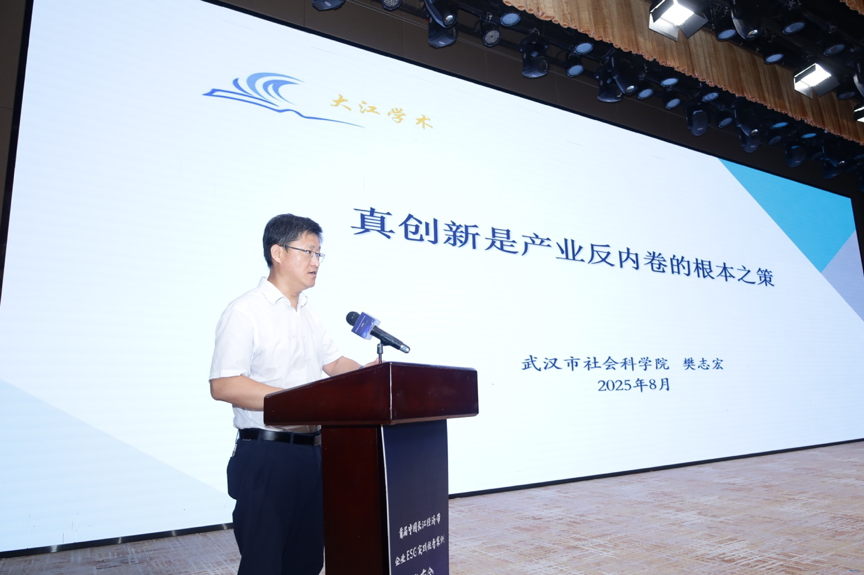
武汉市社科院院长樊志宏: 真创新才是产业反“内卷”根本之策
Chang Jiang Ri Bao· 2025-08-05 00:27
Group 1 - The current phenomenon of "involution" in cutting-edge fields such as photovoltaics, lithium batteries, and new energy vehicles is characterized by competition in a "no man's land," which is not indicative of recession but rather a stage of industrial innovation [1] - The essence of "involution" is a lack of genuine innovation leading to simple repetition under boundary constraints, with supply-side involution resulting in price declines rather than scale expansion when demand reaches its limit [2] - The automotive industry has seen stable annual sales between 80 million and 90 million vehicles, where excessive supply only compresses profits across the entire industry chain [2] Group 2 - Current pseudo-innovation relies on scale expansion to capture existing market share without enlarging the overall market, leading to intergenerational resource depletion that poses future development risks [2] - The core path to counter "involution" involves achieving true innovation and intergenerational equity, which requires breaking boundary limitations through technological breakthroughs and enhancing factor efficiency within existing boundaries [2] - The transition from the industrial era to a multi-dimensional space of virtual and real integration is causing a reconstruction of industrial systems, urban forms, and social structures, with "involution" being a growing pain in this new process [2]
2025系列研究框架培训 - 创新药行业框架
2025-07-25 00:52
Summary of Conference Call on the Innovative Drug Industry Industry Overview - The conference call focuses on the **innovative drug industry** in China, highlighting its growth potential and market dynamics [1][3][4]. Key Points and Arguments 1. **Market Sentiment and Stock Performance**: The market's anticipation of domestic innovative drug data has increased, with stock price corrections observed during the ASCO conference, indicating a demand for exceeding expectations [1][4]. 2. **Valuation Influences**: The macroeconomic environment significantly impacts the valuation of the innovative drug sector. High interest rates restrict valuations, while low rates enhance performance. Government policies in China support the sector, but overseas markets are crucial for growth [1][5][6]. 3. **Company Classification**: Innovative companies are categorized into **Big Pharma/Hybrid** and **Biopharma/Biotech**. Big Pharma has stable income and lower risk, while Biopharma/Biotech focuses on innovation and faces higher initial risks but has improved success rates in later clinical stages [1][7]. 4. **Impact of Policy Changes**: The collection policy in China has prompted traditional pharmaceutical companies to transform, with firms like HengRui and Hansoh achieving success in innovation, leading to valuation increases [1][8]. 5. **Investment Focus**: Investors should prioritize "differentiated innovation" and "true innovation" that significantly address unmet needs and open future market opportunities, rather than merely seeking first-in-class products [3][19]. 6. **Clinical Development Stages**: The drug development process involves five critical stages, each capable of significantly enhancing company valuation as products progress from preliminary data validation to market sales [3][10][11]. 7. **Macroeconomic Trends**: Historical data shows that the performance of innovative drug indices correlates with macroeconomic conditions, with a notable trend of increasing valuations during low-interest periods [5][6]. 8. **Emerging Technologies**: Future directions in tumor treatment include **dual antibodies** and **ADC (antibody-drug conjugates)**, with China holding a significant share of global R&D pipelines in these areas [25][41]. Additional Important Insights 1. **International Market Potential**: The potential for innovative products to enter international markets is a key driver for valuation increases, particularly as companies achieve clinical trial success abroad [9][39]. 2. **R&D Efficiency**: Chinese pharmaceutical companies exhibit higher R&D efficiency and lower costs, allowing them to attract multinational companies for pipeline acquisitions [24]. 3. **Commercialization Factors**: Despite a current focus on R&D, commercialization remains critical, with companies needing to differentiate their products to capture market share effectively [26][27]. 4. **Investment Considerations**: When selecting emerging pharmaceutical companies for investment, factors such as product capability, speed of advancement, competitive landscape, and international collaboration should be evaluated [20][21]. 5. **Profitability Trends**: Chinese innovative companies are beginning to show improved profitability, with some achieving net profit margins exceeding 40%, indicating a maturation of their business models [31]. This summary encapsulates the essential insights from the conference call regarding the innovative drug industry, emphasizing its growth potential, market dynamics, and investment considerations.
