私域运营

Search documents
“每天要加十几个,完不成扣钱或加班”!银行员工为企业微信考核伤脑筋,有人去电商买量,还有同行发帖求“互加”
Mei Ri Jing Ji Xin Wen· 2025-12-31 13:40
Core Viewpoint - Banks are increasingly implementing performance assessments based on the addition of clients on enterprise WeChat, reflecting the pressure on retail banking amid declining revenues and profits in the sector [1][17]. Group 1: Performance Assessment and Pressure - Many banks have set specific targets for adding clients on enterprise WeChat, with some requiring customer managers to add up to 100 clients per month, leading to significant pressure on employees [4][6]. - Employees are sharing their enterprise WeChat QR codes on social media to meet these targets, often incentivized by monetary rewards or penalties for failing to meet the requirements [2][5]. - The assessment mechanisms include strict monitoring and penalties, such as deductions from salaries for not meeting the required number of added clients [6][9]. Group 2: Rationale Behind Enterprise WeChat Adoption - The push for enterprise WeChat is partly to prevent "client privatization," ensuring that client relationships remain with the bank rather than individual employees [9][10]. - Banks view enterprise WeChat as a tool for unified client management, allowing for better data collection and analysis of customer behavior and preferences [9][10]. - The financial industry is facing rising customer acquisition costs, making effective client engagement through platforms like enterprise WeChat increasingly important [10][17]. Group 3: Challenges and Misconceptions - There are significant challenges in the implementation of enterprise WeChat, including the perception that the current assessment system is flawed and does not effectively utilize the platform's potential [13][16]. - Many employees express concerns about the quality of interactions with clients, often resorting to generic content that fails to engage customers meaningfully [15][16]. - The focus on quantitative metrics, such as the number of added clients, often overshadows the need for qualitative interactions that drive actual business results [16][17]. Group 4: Retail Banking Performance - Retail banking is experiencing a downturn, with many banks reporting declines in retail revenue and profits compared to the previous year [17][18]. - Specific banks, such as Ping An Bank and Zhejiang Commercial Bank, have seen significant drops in retail revenue, with some experiencing double-digit declines [18]. - Despite some banks reporting growth in retail profits, this is often due to low comparative bases from the previous year, indicating underlying challenges in the retail banking sector [19][20]. Group 5: Success Stories and Future Outlook - Some banks have successfully leveraged enterprise WeChat to enhance customer engagement, with notable increases in client activity and retention rates [20][21]. - For instance, the Industrial and Commercial Bank of China reported significant growth in the number of clients added through enterprise WeChat, leading to improved customer engagement metrics [20][22]. - The ongoing digital transformation in banking emphasizes the need for effective use of platforms like enterprise WeChat to drive profitability and customer satisfaction [10][17].




银行员工为企业微信考核伤脑筋,有人去电商买量,还有同行发帖求“互加”
Mei Ri Jing Ji Xin Wen· 2025-12-31 13:36
Core Viewpoint - Banks are increasingly focusing on the assessment of adding clients via enterprise WeChat as a key performance indicator (KPI) amid challenges in retail banking, leading to a surge in social media posts where employees seek mutual additions to meet their targets [1][22]. Group 1: KPI and Assessment Mechanisms - Many banks have set specific targets for adding enterprise WeChat contacts, with requirements such as 50 contacts per month for some employees, and penalties for not meeting these targets [5][8]. - The assessment includes financial penalties, such as a deduction of 300 yuan for failing to meet monthly targets, and some banks have implemented a ranking system with monetary rewards for top performers [8][12]. - The pressure to meet these KPIs has led to a culture of mutual assistance among bank employees, with many posting their WeChat QR codes on social media to gain more contacts [2][3]. Group 2: Challenges and Pain Points - Employees express frustration over the pressure to add contacts, often feeling compelled to work overtime to meet their targets [17]. - The current assessment system is criticized for focusing solely on frontline employees, neglecting the role of middle management in effectively utilizing enterprise WeChat [18][20]. - There is a concern that the quality of interactions is suffering, as many employees are merely adding contacts to fulfill their quotas rather than engaging meaningfully with clients [19]. Group 3: Industry Context and Performance - The retail banking sector is experiencing significant pressure, with many banks reporting declines in retail revenue and profits compared to the previous year [22][24]. - For instance, several banks, including Postal Savings Bank and Agricultural Bank, have seen retail revenue drop by over 6% year-on-year [23]. - In response to these challenges, banks are leveraging enterprise WeChat as a tool for deeper customer engagement, aiming to enhance client interaction and operational efficiency [25][26].

新观察:从流量到留量再到智能量:私域运营的底层逻辑与未来方向
Sou Hu Cai Jing· 2025-12-28 10:10
Core Concept - The article emphasizes the shift from pursuing superficial metrics like follower count and public domain views to focusing on conversion rates and private domain engagement, suggesting that businesses should build their IP assets within private social networks like WeChat [1][6] Group 1: Core Idea - The concept of "private domain" is gaining traction as it addresses the market's transition from "traffic growth" to "deepening user retention," highlighting the importance of certainty in growth and the value of customer relationships [7] - Private domain users exhibit a repurchase rate of 40%-60% and a conversion rate of 6%-10%, significantly higher than public domain metrics, indicating a need for brands to focus on user stickiness and conversion efficiency [7] - Brands can create real digital assets by nurturing customer relationships and interaction data within private domains, as opposed to relying on volatile public metrics [7] Group 2: Implementation Strategies - Effective private domain operations require systematic methods, including creating traffic entry points, user segmentation, and personalized outreach strategies [10] - Brands should utilize smart channels to efficiently convert public traffic into private domain users while implementing tagging for refined user segmentation [10] - Providing valuable content and designing altruistic sharing mechanisms can stimulate private domain engagement and sharing [10] Group 3: Limitations of the Concept - The article warns against completely dismissing the value of public domains, as they serve as a brand's influence radar and new customer reservoir, suggesting a collaborative approach between public and private domains [15] - Over-reliance on employees for distribution can lead to increased burdens and potential damage to personal social credibility if not managed properly [15] - The accumulation of user data in private domains poses significant security and compliance challenges, and there is a risk of rising customer acquisition costs within private domains [15] Group 4: New Perspectives in a Smart Society - In a connected and AI-driven society, the focus should shift from merely adding friends to understanding users deeply through AI and big data, enabling hyper-personalized services [17] - The role of employees will evolve from mere distributors to emotional connectors and problem solvers, aided by AI in content generation and optimal engagement timing [17] - Advanced IP operations will involve the fluid exchange of IP value across various platforms and scenarios, enhancing the overall brand ecosystem [17] Conclusion - The article concludes that businesses must transition from chasing vanity metrics to cultivating user value, positioning private domain conversion and relationship building as foundational strategies while leveraging public influence and cross-platform IP development as complementary efforts [18]

AI需求井喷这一年,腾讯云伙伴生态再加码
21世纪经济报道· 2025-12-26 23:27
Core Viewpoint - The article emphasizes the importance of aligning values between Tencent Cloud and its ecosystem partners, which is crucial for long-term business growth and collaboration in the evolving digital landscape [1]. Group 1: Tencent's Ecosystem and AI Demand - In the past year, AI has significantly increased cloud demand, with China's daily AI token consumption reaching 30 trillion, growing over 300 times in 18 months [3]. - Tencent encourages its ecosystem partners to adopt flexible business cooperation models to effectively deliver AI solutions [3]. - The "千域计划" (Thousand Domains Plan) has led to a 153% growth in the "integrated" cooperation model by 2025, with project completions increasing by over 150% compared to the previous year [3]. Group 2: Digital Transformation in Agriculture - Tencent Cloud's collaboration with partners like 恒创融慧 has enabled digital transformation in agriculture, specifically in managing dairy cattle through data-driven approaches [5][8]. - The project focuses on assessing the input-output ratio of dairy cows, enhancing operational efficiency through digital tools and AI technologies [10]. - The integration of Tencent's enterprise WeChat has improved communication and data management within agricultural operations, leading to better decision-making [8]. Group 3: Retail and Consumer Insights - Companies like 晶确科技 leverage Tencent's extensive data ecosystem to optimize retail strategies, focusing on high-value locations rather than broad distribution [12][13]. - The collaboration allows for precise matching of products to consumer preferences, enhancing the effectiveness of go-to-market strategies [15]. - The integration of AI capabilities into retail operations is expected to deepen as companies aim to utilize data for strategic decision-making [16]. Group 4: Future of AI and Business Integration - By 2025, Tencent's partners are expected to fully integrate AI agents into various business processes, enhancing operational efficiency and decision-making [16][18]. - The article highlights the necessity for higher data security as businesses increasingly rely on centralized data systems for AI applications [18]. - Tencent's ecosystem partners view collaboration as a means to align technical capabilities with industry-specific needs, creating differentiated opportunities for growth [20].


小鹅通拟港股上市 中国证监会要求补充说明股东情况等事项
Zhi Tong Cai Jing· 2025-12-26 13:25
Core Viewpoint - The China Securities Regulatory Commission (CSRC) has issued supplementary material requirements for 19 companies, including Xiaoe Inc. (小鹅通), which is preparing for an IPO on the Hong Kong Stock Exchange with CICC as its sole sponsor [1] Group 1: Regulatory Requirements - Xiaoe Inc. is required to provide detailed explanations regarding the compliance of its offshore structure and reverse mergers, including foreign exchange management and tax obligations [2] - The company must clarify the complete ownership structure of its controlling shareholders and disclose any potential legal restrictions on shareholding [3] - Xiaoe Inc. is also asked to explain the rationale behind family trust arrangements and the rights and obligations of all parties involved in the trust [4] Group 2: Company Overview - Xiaoe Inc. is a leading provider of product-driven SaaS solutions in the private domain operation sector, enabling businesses to build, operate, and expand their decentralized e-commerce infrastructure [5] - The company's cloud-based one-stop solution integrates e-commerce, digital marketing, and CRM into a unified system, enhancing efficiency in product marketing and transactions [5]
新股消息 | 小鹅通拟港股上市 中国证监会要求补充说明股东情况等事项
智通财经网· 2025-12-26 13:19
Core Viewpoint - The China Securities Regulatory Commission (CSRC) has issued supplementary material requirements for 19 companies, including Xiaoe Inc. (小鹅通), which is preparing for an IPO on the Hong Kong Stock Exchange with CICC as its sole sponsor [1] Group 1: Regulatory Requirements - Xiaoe Inc. is required to provide detailed explanations regarding the compliance of its offshore structure and reverse mergers, including foreign exchange management and tax obligations [2] - The company must clarify the ownership structure of its major shareholders and any potential issues related to shareholding restrictions [3] - Xiaoe Inc. is also asked to explain the rationale behind family trust arrangements and the rights and obligations of all parties involved in the trust [4] Group 2: Company Overview - Xiaoe Inc. is a leading provider of product-driven SaaS solutions in the private domain operation sector, enabling businesses to build and expand decentralized e-commerce infrastructure [5] - The company's cloud-based solution integrates e-commerce, digital marketing, and CRM into a unified system, enhancing efficiency in product marketing and transactions [5]
趋势研判!2026年中国私域运营解决方案行业核心线路、产业链、市场规模、细分结构、竞争格局、代表企业及发展趋势分析:市场规模将达169亿元,行业展现出巨大的增长潜力[图]
Chan Ye Xin Xi Wang· 2025-12-26 01:30
Core Insights - The private domain operation has become a core battlefield for user growth in China, driven by rising traffic costs and stringent public platform rules, with significant market growth potential [1][5][9] - The market for private domain operation solutions is expected to grow from 5.5 billion in 2019 to 14.3 billion by 2025, with projections of reaching 16.9 billion in 2026 [5][6][9] - Interactive private domain operation solutions are emerging as a high-level form and core trend, with market share expected to increase [1][5][9] Market Overview - The private domain operation market is categorized into interactive and traditional solutions, with interactive solutions projected to account for 43.36% of the market by 2025 [1][5][6] - By 2026, interactive solutions are expected to grow to 7.4 billion, maintaining a similar market share [1][5][6] Industry Definition and Classification - Private domain operation refers to channels controlled directly by enterprises, utilizing decentralized social networks for user engagement [2][4] - The essence of private domain operation is the transfer of user asset ownership from platforms to enterprises, allowing for direct and repeatable access to digital assets [2][4] Industry Development Status - The private domain operation solutions market is rapidly expanding, with significant growth potential highlighted by the increasing market size from 5.5 billion in 2019 to 14.3 billion in 2025 [5][6][9] - The industry is transitioning from broad traffic acquisition to refined user value extraction, evolving into a more intelligent and efficient user asset management system [9] Industry Chain - The industry chain is a symbiotic system based on platform ecosystems, with upstream components including AI, cloud computing, and big data, while downstream services cater to various sectors such as retail, fast-moving consumer goods, and healthcare [6][7] Competitive Landscape - The competitive landscape is characterized by a shift from broad competition to focused, differentiated strategies, with major players including Weimob Group, BlueFocus, and various SaaS solution providers [7][8] - Key companies like Shenzhen Xiao'e Network Technology Co., Ltd. and Weimob Group are leading in providing comprehensive private domain operation solutions [8][9] Industry Trends - The essence of private domain operation is deep user relationship management rather than short-term traffic acquisition, indicating a shift towards a robust, technology-driven independent industry [9]


华安保险电话服务中心获得2025金音奖“最佳服务创新奖”
Cai Fu Zai Xian· 2025-12-23 10:15
Group 1 - The "Golden Sound Award" is recognized as the "Oscar" of the customer service industry, with this year's event attracting nearly 10,000 call centers to participate [3] - The evaluation process adhered to the 4PS international standard, encompassing 550 indicators, and for the first time, included AI maturity as a core evaluation criterion [3] - Huazhong Insurance's telephone service center won the "2025 China Best Service Innovation Award" for its integrated operation case driven by private domain sales and service [1][3] Group 2 - Since 2020, Huazhong Insurance's telephone service center has been innovating its service model, establishing a closed loop of private domain operations centered on "service-driven sales" [5] - The implemented model has been piloted in regions such as Jilin, Guangxi, Jiangxi, Shandong, and Henan, leading to continuous improvement in signed premium and customer retention on enterprise WeChat [5] - The award reflects Huazhong Insurance's solid achievements and industry influence in the digital and intelligent transformation of customer service [8] Group 3 - During the conference, the general manager of Huazhong Insurance's telephone service center participated in a roundtable forum discussing trends in customer service industry collaboration and future development [6] - The company shared insights on "human-machine collaboration" and "private domain operations," showcasing its ongoing exploration in the digitalization and intelligent transformation of customer service [6]

从工具到伙伴,一家长期主义企业的生存样本
3 6 Ke· 2025-12-23 09:49
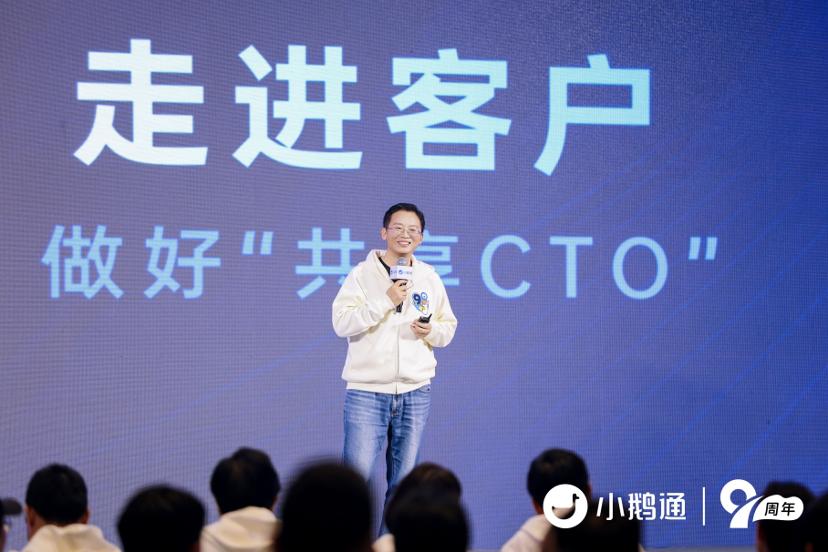
过去几年,越来越多企业开始重新审视"私域"在自身经营中的位置。 当流量成本持续走高、渠道红利逐步消退,企业逐渐意识到,真正决定增长质量的,已不只是一次次触达效率,而是能否围绕私域场景,长期承担用户关 系、持续优化经营流程,并让系统能力随业务规模一同演进。 在这样的行业背景下,小鹅通走过了自己成立以来的第九个年头。 作为一家服务企业私域运营的数字化平台,小鹅通的能力边界,也在伴随行业变化不断调整——从最初的工具型产品出发,逐步演进为覆盖交易、用户与服 务的数字化底座,并在不同行业的实践中,走向更具协同能力的生态形态。 这是一场陪伴式、渐进式的进化。正如小鹅通创始人、CEO 鲍春健所言,当客户的经营重心发生变化,平台也必须随之调整,并在长期服务中与客户共同 成长。某种程度上,小鹅通正是在服务不同阶段企业的过程中,参与并回应了增长重心从"获取效率"向"经营能力"转移的行业变化,也在这一过程中完成了 对自身责任边界的重新校准。 与此同时,以实时互动为代表的私域交易场景在过去三年中持续增长,带动平台内GMV同步攀升,显示出私域在承载真实经营结果方面的能力。 这些以经营结果为导向的变化,并非单一产品功能升级所带来的短期波 ...
京东:2026“京卓越”评选升级,季度动态考核将于明年Q2上线
Xin Lang Cai Jing· 2025-12-17 12:43
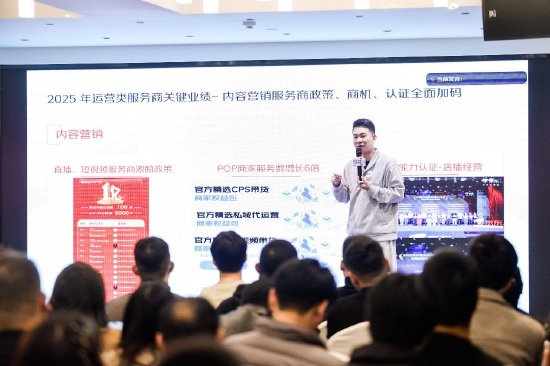
Core Insights - The JD service provider cooperation exchange meeting was held in Changsha, showcasing significant growth in the JD service market during the 2025 11.11 shopping festival, with merchant orders increasing by over 60% year-on-year, and a 9-fold surge in agency service orders, alongside 6-fold and 1.4-fold increases in content marketing and advertising tool orders respectively [2][6] Group 1: JD Service Market Developments - JD announced three major upgrade directions for the "Jing Excellence" evaluation in 2026, including refined tiered assessments with quarterly dynamic evaluations for different stages of service providers, a more precise coverage of evaluation tracks with dedicated tracks for AI tools and express delivery services, and a shift in evaluation focus from scale to quality with the introduction of service effectiveness metrics [2][6] - The results of the 2026 "Jing Excellence" evaluation will be announced in the first quarter of next year, with the quarterly assessments set to launch in the second quarter [2][6] Group 2: Policy Support and New Platforms - JD highlighted several policy supports for service providers and merchants, including a dual mechanism for traffic support and content capability certification to address pain points in short video and live streaming operations, and advertising policies focused on precise targeting to enhance advertising ROI for merchants [2][6] - The newly launched third phase of the merchant demand matching platform in the JD service market aims to intelligently analyze merchants' operational conditions and accurately recommend matching ISV software tools and operational services, thereby lowering the professional threshold for merchants in selecting service providers [3][7] - The JD service market underwent a comprehensive upgrade in September 2025, optimizing homepage recommendations and search accuracy to create a smarter and fairer display ecosystem for service providers, enabling merchants to more quickly and efficiently access suitable tools and services [3][7]