算电融合

Search documents
在白山黑水之间,书写振兴东北的数智新篇
Huan Qiu Wang Zi Xun· 2025-12-18 07:55
Core Viewpoint - Heilongjiang is leveraging its unique resources and strategic partnerships, particularly with Huawei, to drive digital transformation and innovation in artificial intelligence and computing power integration, positioning itself as a key player in China's digital economy [1][3]. Group 1: Digital Transformation as a Core Economic Engine - Heilongjiang has established AI innovation and computing power integration as the core engine for economic development during the 14th Five-Year Plan, driven by its inherent "seeking change" ethos [1]. - The province's confidence is rooted in its rich resource endowment, including a concentration of computing power demand and abundant electricity resources, making it an ideal hub for a new type of intelligent computing center [1]. - Heilongjiang boasts a strong educational foundation with institutions like Harbin Institute of Technology and Harbin Engineering University, providing a continuous supply of talent for AI and computing industries [1]. Group 2: Challenges and Shortcomings - Compared to coastal eastern regions, Heilongjiang's digital economy is relatively underdeveloped, with a weak industrial digitalization foundation and an existing "digital divide" [2]. - Traditional enterprises, especially SMEs, face significant challenges in transformation due to high technical barriers, substantial capital investment, and a lack of talent [2]. - There is a pressing need for continuous improvement in digital infrastructure, including computing power scheduling efficiency and data element circulation [2]. Group 3: Partnership with Huawei - Huawei has committed to deeply engage with Heilongjiang, integrating its technological expertise in computing, communication, energy, cloud, and AI to support the province's digital economy and high-quality urban development [3]. - The collaboration aims to provide a comprehensive suite of innovative technologies and extensive industrial ecosystem resources, tailored to Heilongjiang's unique advantages and strategic needs [3]. - Huawei's proposed solutions include stable green electricity for computing power through collaborative technologies and the establishment of resource pools for various industry applications [3]. Group 4: Industry Ecosystem Development - Huawei is facilitating Heilongjiang's digital transformation by establishing collaborative platforms, such as joint innovation labs with China Railway Harbin Bureau Group, focusing on standardizing solutions for the railway sector [4]. - The establishment of the "AI Empowering Digital Development Industry Alliance" signifies a new cooperative paradigm aimed at bridging the gap between technology research and industrial application [5]. - Huawei's initiatives are permeating various sectors, enhancing infrastructure intelligence and building a sustainable talent pipeline for long-term development [5]. Group 5: Practical Applications of Digital Transformation - The "Longzheng Zhishu" government model exemplifies successful digital governance, integrating over 400 billion pieces of data and significantly improving efficiency in local government operations [6]. - The logistics company Dada Zhiyun has transformed its operations into a comprehensive supply chain service provider by leveraging Huawei's technology to create an integrated logistics platform [6]. - The establishment of a modern industrial college in collaboration with Huawei is revolutionizing IT talent training, providing practical experience and skills aligned with industry needs [7]. Group 6: Conclusion - The partnership between Huawei and Heilongjiang represents a deep integration of technological empowerment and regional advantages, driving the revitalization of the Northeast and contributing to high-quality development in the digital economy [7].
算电融合助力人工智能赋能千行百业 协同创新奏响龙江数智发展新乐章
Huan Qiu Wang Zi Xun· 2025-12-18 07:22
Core Insights - The integration of computing power and electricity, termed "算电融合" (computing-electricity integration), is emerging as an innovative model that supports the green energy-driven digital economy, particularly benefiting the artificial intelligence (AI) industry [1][2][3] - The "算电融合" initiative aims to create a new infrastructure that combines energy flow, data flow, and value flow, enhancing the synergy between green electricity and intelligent computing [1][6] - The recent Huawei summit in Heilongjiang focused on promoting this integration and fostering collaboration among various industries to drive high-quality digital economic development in the region [2][5] Group 1: Industry Development - Heilongjiang is positioning itself as a leader in the integration of computing power and electricity, leveraging its energy-rich resources to accelerate economic growth in the digital era [1][6] - The establishment of the AI-enabled digital transformation industry alliance aims to bridge the gap between technology development and industrial application, facilitating the adoption of AI across various sectors [4][6] - Huawei's commitment to innovation in computing and energy sectors is expected to enhance the stability and efficiency of green electricity supply for computing needs, supporting the development of a new green intelligent computing center in Heilongjiang [7][8] Group 2: Strategic Initiatives - The national strategies "东数西算" (East Data West Computing) and "算电协同" (Computing-Electricity Collaboration) present significant opportunities for Heilongjiang as a demonstration province for computing-electricity integration [7] - The summit emphasized the importance of aligning computing power projects with green electricity supply, advocating for a coordinated approach to optimize energy and computing resources [6][7] - Future collaborations and project implementations are expected to unlock the potential of computing-electricity integration and AI, driving regional industrial upgrades and contributing to the high-quality development of Northeast China [8]
总投资600亿元! 四川国资算力投资大手笔 这家A股公司受益
Zheng Quan Shi Bao Wang· 2025-12-17 03:20
Core Insights - The strategic cooperation agreement between Shanghai Wutongshu High-tech Co., Ltd. and Sichuan Tianfu Cloud Data Technology Co., Ltd. involves a total investment of nearly 60 billion yuan, focusing on green computing infrastructure and operational systems [1] - The project aims to establish a leading green computing hub and AI industry base in China, leveraging Sichuan's green energy resources and data platform capabilities [1][2] - The first phase of the project will construct a 20,000-card computing cluster, expected to be operational by mid-2027, serving various innovative application scenarios [1] Company Overview - Tianfu Cloud, established in December 2020 with a registered capital of 300 million yuan, is a wholly-owned subsidiary of Sichuan Data Group, which is controlled by the Sichuan Provincial State-owned Assets Supervision and Administration Commission [2] - The company focuses on IDC services and aims to promote the development of Sichuan's digital industry through innovative applications in big data, cloud computing, and IoT [2] Project Details - The overall project will involve the construction of a 100,000-card computing cluster with a supporting 1GW of new energy installations, implemented in three phases [1] - The Sichuan Energy Investment Tianfu Cloud Data Industry Base project, which Tianfu Cloud is responsible for, has a planned total investment of 10 billion yuan and aims to establish a large-scale blockchain data center and innovation center by 2030 [2] Policy Support - The Sichuan Provincial Development and Reform Commission has issued opinions to support the integration of computing power and green electricity, promoting collaborative development of computing and green energy projects [3] - Recent policies include the construction of computing power clusters in various regions and increasing the supply of green electricity for intelligent computing centers [3] Market Dynamics - The acquisition of Wutongshu by Roman Holdings has positioned it to benefit from the growing demand in the intelligent computing sector, with significant increases in core business order volumes reported [4] - Roman Holdings' strategic focus includes embracing AI technologies and integrating them into urban and energy scenarios, which has positively impacted its stock performance [5]

四川绿电直连实施细则征求意见:配套储能不得独立参与电力市场和对外租赁盈利
中关村储能产业技术联盟· 2025-12-09 10:43
Core Viewpoint - The article discusses the draft implementation details for promoting green electricity direct connection projects in Sichuan Province, aiming to leverage the region's clean energy advantages and accelerate the development of related support measures [9][12]. Group 1: General Principles - The implementation details apply to green electricity direct connection projects within the administrative region of Sichuan Province, focusing on new energy sources such as wind, solar, and biomass, excluding existing hydropower and other renewable sources [13]. - The development goal is to meet the green energy needs of various enterprises while ensuring the stability of the public power grid and fair market operations [13]. Group 2: Basic Requirements for Green Electricity Direct Connection Projects - Projects must scientifically determine the types and scales of new energy sources based on load characteristics, with at least 60% of the annual self-generated electricity from new energy sources and at least 30% of total electricity consumption being self-generated [16]. - Projects are not allowed to feed electricity back to the public grid before the continuous operation of the electricity spot market, and after that, they can adopt a model primarily focused on self-consumption [16]. Group 3: Pricing and Trading Mechanisms - The pricing mechanism for green electricity direct connection projects must comply with national regulations, and projects in specific regions are exempt from peak pricing policies [21]. - Projects must participate in the electricity market as a unified whole and cannot have their supporting storage facilities operate independently in the market [21]. Group 4: Management and Implementation - Project owners must submit applications for approval or record-keeping according to regulations, and if projects are not commenced within two years of approval, the allocated new energy resources will be revoked [25][26]. - The overall implementation plan must be evaluated and approved by local energy authorities, ensuring that all components of the project are constructed and put into operation simultaneously [24]. Group 5: Safety and Monitoring - Projects must establish clear safety responsibility interfaces with the public grid and adhere to safety management measures to ensure stable operation [19]. - The provincial energy bureau is responsible for guiding the evaluation of project demand and monitoring project management and operation [26].


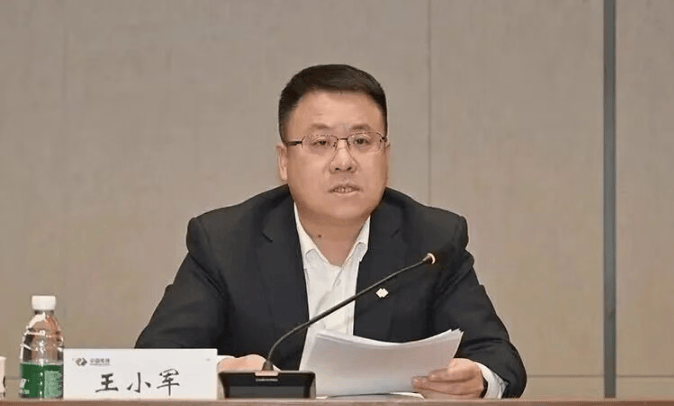
人事丨“算电融合”时代来临,王小军提名中国电建总经理引关注
Sou Hu Cai Jing· 2025-12-01 16:02
Group 1 - Wang Xiaojun has been appointed as the Deputy Secretary of the Party Committee and Director of China Power Construction Group Co., Ltd., and nominated as the candidate for General Manager [2] - Wang Xiaojun has nearly 30 years of experience in the electric power construction industry, with a career that includes various leadership roles and extensive international project experience [2] - The global power infrastructure is facing significant challenges and opportunities due to the AI computing power revolution [2] Group 2 - The power gap for data centers in the U.S. is expected to reach 49 GW between 2025 and 2028, driven by the intensive investment from tech giants in computing infrastructure [3] - The annual electricity consumption of generative AI is projected to surge from 7 TWh in 2023 to 393 TWh by 2028, with a compound annual growth rate exceeding industry expectations [3] Group 3 - Under Wang Xiaojun's leadership, China Power Construction is expected to enhance its focus on the "computing and electricity integration" new track, as highlighted in recent national policies [4] - The "computing and electricity collaboration" initiative is part of key tasks outlined in national plans aimed at promoting the synergy between computing power and electricity [4] - China's computing center electricity consumption is projected to grow from 82.4 billion kWh in 2019 to 166 billion kWh in 2024, with a compound annual growth rate of 15% [4] Group 4 - China Power Construction is actively pursuing strategic transformation and high-quality development, focusing on new industry cultivation, technological innovation, and digital transformation [5] - The company aims to expand its "water" business, promote high-quality development of its "energy" business, and explore the potential of its "city" business while increasing the scale of its "data" business [5] - Wang Xiaojun's technical background is expected to help China Power Construction identify new growth points in the rapidly changing energy landscape, particularly in hydropower and new energy projects [5]

像“搭积木”一样建设算力中心,前9个月山东智能算力产业规模超700亿元
Da Zhong Ri Bao· 2025-11-30 22:51
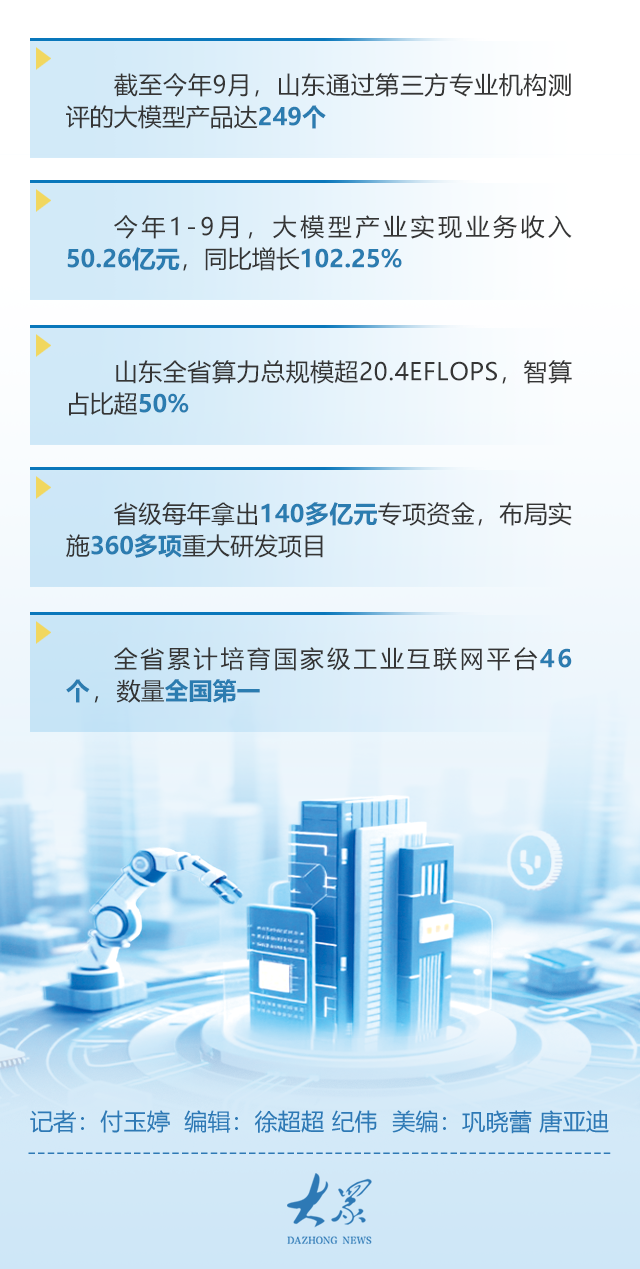
Group 1 - The core industry of Dongying is petrochemicals, and the emergence of large models with rich professional knowledge is enhancing the intelligence and confidence in "black gold" development [1] - The oil identification model developed by Shengruan Technology has been included in the provincial "model coupon" award list, helping more companies build oil and gas-specific large models through a technical system of "pre-trained large model + industry knowledge base + intelligent application" [1] - The CCUS (Carbon Capture, Utilization, and Storage) industry in Dongying is leveraging artificial intelligence to accelerate the development of new efficient capture materials, reducing traditional selection cycles from years to days [1] Group 2 - As of September, Shandong has evaluated 249 large model products through third-party professional institutions, achieving a business revenue of 5.026 billion yuan in the large model industry, a year-on-year increase of 102.25% [2][6] - The transition from "manufacturing" to "intelligent manufacturing" is supported by the rapid deployment of intelligent computing centers, which facilitate data circulation and enhance the accessibility of artificial intelligence [2] - The demand for intelligent computing centers is increasing as local governments aim to accelerate construction, transforming traditional buildings into intelligent computing centers to meet challenges such as rapid delivery and flexible expansion [2] Group 3 - The construction of intelligent computing centers is being driven by prefabrication, modularization, and greening, allowing for a 90% prefabrication rate and flexible combinations of modular functional boxes [3] - The Dongying computing center is built on cloud computing technology, providing a unified platform for general, intelligent, and high-performance computing to meet various usage scenarios [3] - A joint venture between Inspur and Shandong Tianrui Heavy Industry aims to innovate and optimize technology, with related achievements recognized as "internationally advanced" by Shandong Province [3] Group 4 - The Inspur intelligent computing center project covers eight major hub nodes in the country, with a cumulative computing power scale of approximately 10 EFLOPS [4] - Shandong has established 22 provincial intelligent computing cloud service centers with over 100 PFLOPS of computing power, contributing to a total computing power scale exceeding 20.4 EFLOPS in the province [4] - The intelligent computing industry in Shandong, including AI servers and intelligent computing cloud services, has surpassed 70 billion yuan in scale from January to September [4][5] Group 5 - The time required for research and development tasks has been significantly reduced, accelerating the launch of large model products across various application scenarios [5] - Shandong is focusing on vertical large model tracks, enhancing the comprehensive supply capacity of infrastructure, and deepening the application of artificial intelligence, with related industries accounting for about 9% of the national total [5][6] - The provincial government allocates over 14 billion yuan annually for major research and development projects, implementing more than 360 initiatives [6][7]

新筑股份(002480) - 002480新筑股份投资者关系管理信息20251121
2025-11-21 10:54
Group 1: Company Overview and Background - Chengdu Xinzhu Road & Bridge Machinery Co., Ltd. introduced its history, industry status, and restructuring background [2] - The controlling shareholder, Shudao Group, has three main business sectors, including clean energy [2] Group 2: Resource and Market Analysis - Shudao Clean Energy Group has over 30 million kilowatts of resource reserves, primarily in the "Three Prefectures and One City" region of Sichuan [2] - By 2025, Sichuan's electricity consumption is expected to reach 486.5 billion kilowatt-hours, with a supply capacity of approximately 460 billion kilowatt-hours, resulting in a shortfall of 26.5 billion kilowatt-hours [3] Group 3: Future Development Trends - Future electricity development in Sichuan will focus on three areas: multi-energy complementary power source construction, promoting electricity imports from Xinjiang and Gansu, and building virtual power plants [3] - The company aims to leverage its advantages in transportation and energy integration to secure high-quality clean energy resource development rights [3] Group 4: Impact of Policy Changes - The implementation of Document No. 136 is expected to have limited impact on hydropower, while wind and solar energy prices will gradually align with hydropower prices [3] - The company plans to mitigate market risks through long-term electricity trading agreements and innovative business models [3] Group 5: Storage and Renewable Energy Initiatives - Shudao Clean Energy Group is focusing on energy storage development, targeting both local and coastal areas for project implementation [4] - The company has already secured provincial demonstration projects for electrochemical storage and compressed air storage [4] Group 6: Infrastructure and Operational Efficiency - Shudao Group operates nearly 100 highways, with distributed photovoltaic systems installed on 53 of them, achieving a self-consumption rate exceeding 40% [4] - Future plans include transitioning to comprehensive energy services and enhancing operational efficiency through standardized management [4] Group 7: Shareholder Meeting and Restructuring Progress - The temporary shareholder meeting scheduled for November 24, 2025, was canceled to protect minority investors' interests due to the expiration of financial data validity [4] - The delay in the shareholder meeting does not affect the overall progress of the major asset restructuring [4]

黑龙江新质生产力研究系列报告:风电设备行业:“风电+超算”和“煤电+风电”助力黑龙江能源转型
Jianghai Securities· 2025-11-17 10:27
Investment Rating - The industry investment rating is "Overweight" (maintained) [4] Core Viewpoints - The report highlights the continuous increase in wind power bidding in November, with expectations for wind turbine prices to stabilize and recover [3] - The integration of "wind power + supercomputing" and "coal power + wind power" is seen as a key driver for energy transition in Heilongjiang [4] - The establishment of the first "wind power + supercomputing" project in Northeast China aims to create a closed-loop system for green electricity supply and high-performance computing, significantly reducing carbon emissions from data centers [4] Summary by Sections Project Developments - On November 6, a framework agreement was signed for a green industry project in Tonghe County, with a total investment of approximately 2.228 billion yuan, focusing on the synergy between energy structure and digital infrastructure [4] - On November 7, Huadian Energy announced plans to invest 12.043 billion yuan in a new integrated coal and renewable energy project in Heilongjiang [4] Financial Projections - The report outlines expected investment returns for six wind power projects, with the Qiqihar Fularji wind power project leading at a 20.55% return rate, while others range from 9.01% to 19.76% [4] Investment Recommendations - The report suggests focusing on local wind power operator Jiuzhou Group and Huadian Energy, one of China's five major power groups [4]

上市公司积极探索新能源与多产业融合发展新路径
Zheng Quan Ri Bao Zhi Sheng· 2025-11-13 17:05
Core Insights - The Chinese government is promoting the integration of renewable energy with various industries through targeted policies, aiming to enhance collaboration and optimize resource utilization [1][2][3] Policy Developments - The National Energy Administration released guidelines to accelerate the integration of renewable energy with multiple industries, focusing on three main areas: promoting green manufacturing, optimizing traditional industries, and fostering collaboration with emerging industries [1] - Recent policies emphasize the need for traditional industries to innovate processes and increase flexibility in energy usage, particularly in heating, cooling, and power generation [1][2] - A series of policies have been introduced to support the integration of renewable energy with sectors such as oil and gas, data centers, transportation, and coal [1] Regional Initiatives - Local governments are actively implementing national directives, with specific plans like Sichuan's initiative to develop "green electricity + computing power" projects by 2027 [2] - The establishment of a multi-layered policy system is noted, where national planning optimizes overall industry layout while local policies cater to regional characteristics [2] Industry Trends - Companies are increasingly exploring new models for integrating renewable energy with various sectors, driven by favorable policies and the transition of the energy structure [3] - Examples include Zhejiang Weiming Environmental Protection's collaboration on waste-to-energy projects and Jiangsu Yueda Investment's focus on "fishing-solar" complementary projects [3] - These innovative integration strategies are seen as ways for companies to enhance resource allocation, diversify business operations, and contribute to high-quality development in the renewable energy sector [3] Collaborative Efforts - Companies are encouraged to leverage their resources and technological advantages to identify promising application scenarios for integration [4] - Active participation in local pilot projects and collaboration with governments, research institutions, and industry peers is recommended to drive innovation in renewable energy technologies [4]
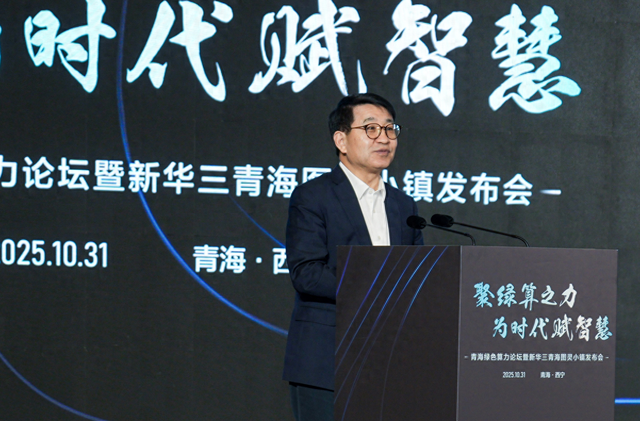
从绿电到“绿算”,从算力到“算利”,图灵小镇撬动青海新质生产力
Huan Qiu Wang· 2025-11-06 03:18
Core Viewpoint - The establishment of Qinghai Turing Town marks a significant step in the national strategy of "East Data West Calculation," focusing on AI and green future development [1][3]. Group 1: Project Overview - Qinghai Turing Town is positioned as a key player in the AI era, aiming to address the challenges of energy consumption, efficiency, and application in the computing power industry through a green and innovative approach [3]. - The project is expected to achieve a computing power scale of 20,000 PetaFLOPS by 2026, making it the largest green computing power project in Qinghai Province [3]. - The initiative aims to create a replicable model for a national integrated computing power system, showcasing Qinghai's advantages in energy resources and policies [3][6]. Group 2: Sustainable Business Model - Turing Town is designed as a cluster ecosystem that integrates services, research, innovation, education, and incubation, transitioning from "capacity supply" to "ecological empowerment" [3][4]. - The project emphasizes a collaborative approach involving government, enterprises, and innovation partners to address technical, application, talent, and industry coordination challenges [3][4]. Group 3: Economic Impact - The project is projected to contribute billions to Qinghai's GDP and attract AI industry chain enterprises, fostering a long-term economic growth environment [6][8]. - Turing Town aims to become a center for AI product quality inspection and application incubation, integrating mature AI applications with local industry development [6][8]. Group 4: Green Computing and Energy Integration - The project focuses on large-scale, low-cost intelligent computing infrastructure, leveraging Qinghai's clean energy resources to achieve a PUE value below 1.2, promoting sustainable development [7][10]. - By integrating power systems with computing power scheduling, Turing Town aims to create a new paradigm of "computing power and electricity integration" [7][10]. Group 5: Talent Development and Local Empowerment - The initiative includes plans for educational upgrades and AI talent cultivation, establishing a training base to support digital transformation and high-tech job creation in Qinghai [9][10]. - Turing Town will provide accessible AI solutions for local enterprises, addressing common challenges of technology adoption and cost barriers [10][11]. Group 6: Collaborative Ecosystem - The launch of Turing Town represents a collaborative effort among multiple stakeholders, including strategic partnerships with 12 organizations to promote green computing and AI integration [11]. - Qinghai's unique climate and energy advantages position it as a leader in the coordinated development of computing power and electricity, with Turing Town exemplifying this strategic direction [11].