
绿色化

Search documents
成本降,效率反而高
Xin Lang Cai Jing· 2026-02-27 22:33
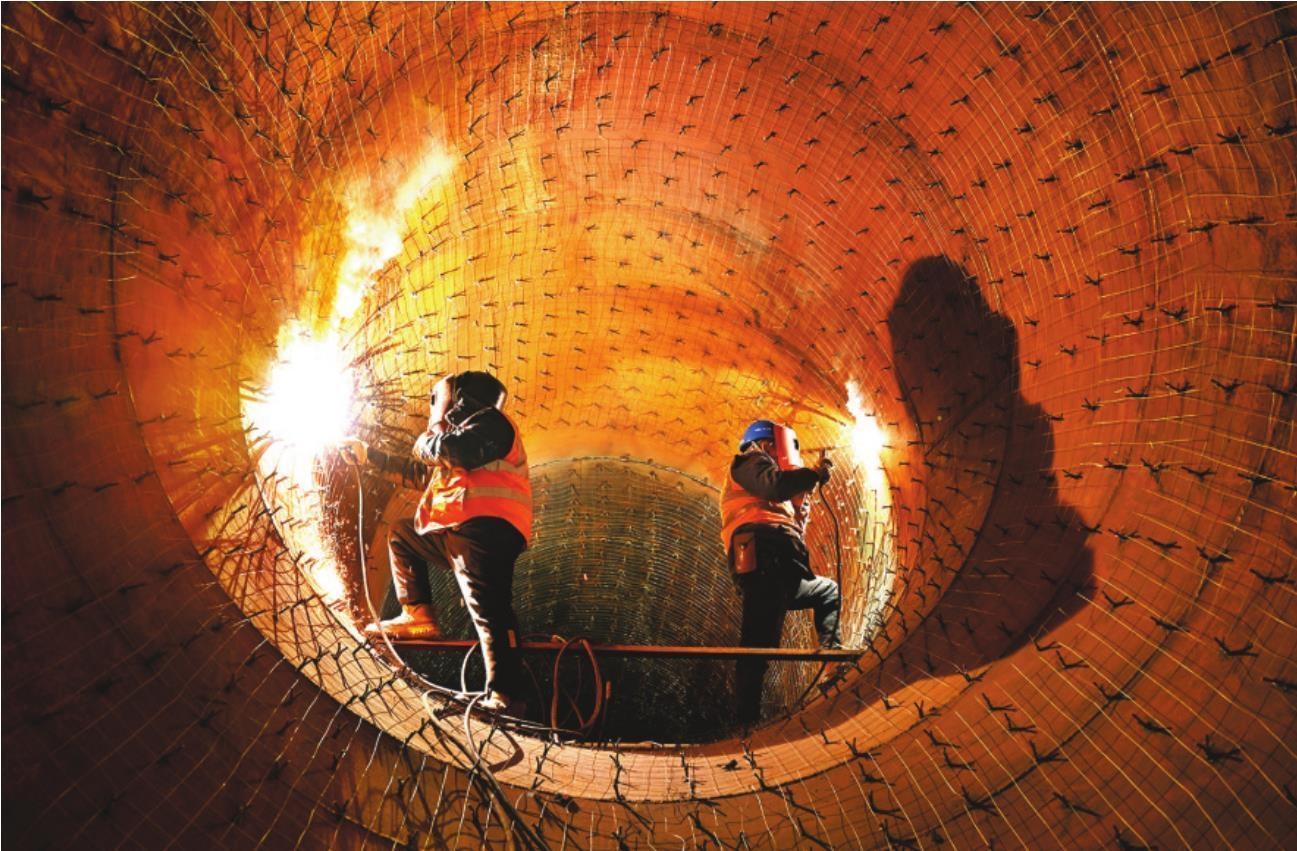
Group 1 - The core point of the article highlights the automation and modernization of the steel production process at Fushun New Steel Co., which has implemented a new 1400 cubic meter blast furnace to enhance efficiency and reduce costs [2][3] - The company has invested 1.58 billion yuan in upgrading its facilities, replacing five small blast furnaces with two modern ones, with the first furnace already operational since December 2025 [2] - The new blast furnace is expected to lower production costs by 70 yuan per ton, significantly increase production efficiency through full automation, and reduce carbon emissions by 15% to meet ultra-low emission standards [2][3] Group 2 - The construction of the new blast furnace utilizes a modular construction approach, which has reduced the construction period from 18-20 months to 15 months [3] - Fushun City is actively promoting the optimization and upgrading of its industrial structure, with 203 projects expected to resume or start construction in the first quarter, including 168 ongoing projects related to Fushun New Steel [3]

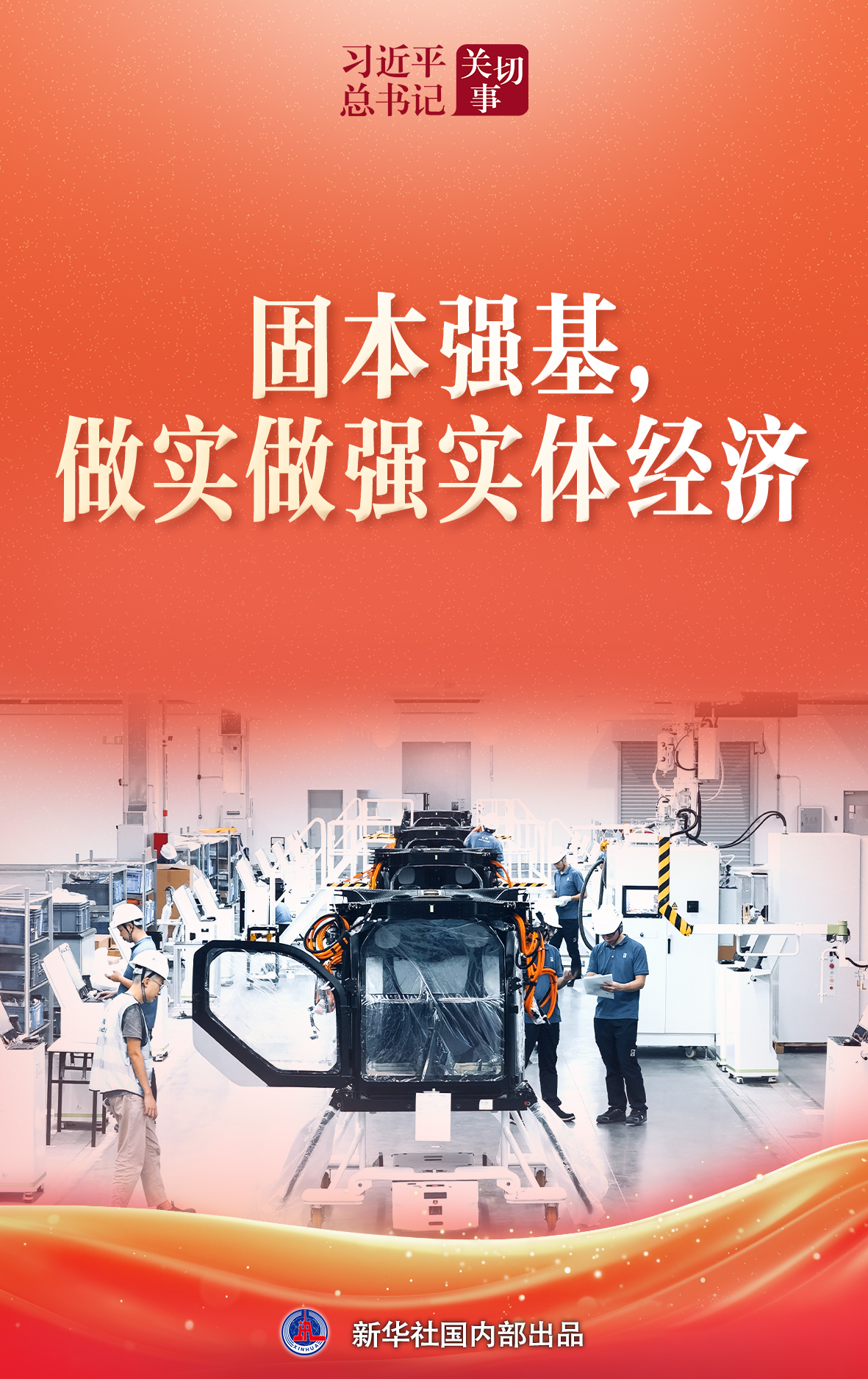
习近平总书记关切事·两会看落实丨固本强基,做实做强实体经济
Xin Hua Wang· 2026-02-27 07:05
Group 1 - The core message emphasizes the importance of the real economy as the foundation of a major country, with a focus on developing the real economy through technological and industrial innovation [3] - In 2025, the industrial added value contributed 35% to economic growth, with the manufacturing sector maintaining its position as the world's largest for 16 consecutive years, and the service sector's contribution to GDP rising to nearly 60% [8] - The development of the real economy is illustrated by the achievements of Luoyang Bearing Group, which reported revenues exceeding 6 billion yuan and expanded its product applications in various sectors, including new energy vehicles [8][7] Group 2 - The launch of the world's largest radial bearing for a 120-meter radio telescope by Luoyang Bearing Group marks a significant technological breakthrough in the domestic market [4] - The company is actively pursuing partnerships with leading domestic new energy vehicle manufacturers, particularly with its third-generation products that have high integration and assembly precision [7] - The emphasis on smart, green, and integrated development is highlighted as a key direction for the real economy, with various projects in hydrogen metallurgy and artificial intelligence applications contributing to reduced carbon emissions and enhanced productivity [20][19] Group 3 - The integration of technology and industry is crucial for enhancing the real economy, as demonstrated by the establishment of a technology transfer center in Guangdong aimed at accelerating the conversion of research outcomes into market products [13][14] - The production of a new type of flying car by Guangdong Huitian Aerospace Technology Company showcases the innovative potential within the low-altitude economy sector [9][12] - The ongoing digital transformation in manufacturing, as seen in the steel industry, has led to significant improvements in production stability and product quality, with sales of high-end automotive products increasing substantially [18]

新春走基层·驻外记者回乡手记丨这座西南小城何以吸引世界目光
Xin Hua Wang· 2026-02-27 02:51
Group 1 - Yibin is transforming its economy from traditional industries like liquor and coal to new engines represented by digital economy and green energy, specifically in the battery industry [6] - The battery industry in Yibin has become a significant sector, with the city hosting major companies like CATL and Kaiyi Auto, contributing to the local economy's upgrade [6] - Yibin is recognized globally for its battery production, with one in ten batteries worldwide produced in the city, highlighting its importance in the global supply chain [6][7] Group 2 - The logistics infrastructure in Yibin has improved significantly, with highways, high-speed rail, and expanded airport routes facilitating the distribution of local agricultural products [4] - The local economy is benefiting from increased visibility and business opportunities, particularly in the new energy vehicle sector, which has seen a surge in demand and investment [6] - The rise of the battery industry in Yibin reflects broader trends in China's economic development, showcasing the integration of inland cities into the global economy [7]

2026年中国铁路连接器行业产业链、需求规模、竞争格局分析:随着铁路网络的扩展和电气化程度的提升,铁路连接器市场需求持续增长,国产化率提升[图]
Chan Ye Xin Xi Wang· 2026-02-27 01:26
Core Viewpoint - The railway connector industry is experiencing growth driven by national policies promoting modern railway infrastructure, with significant investments expected to enhance the market demand and scale by 2025 [1][3]. Industry Definition and Classification - Railway connectors are essential components used to link completed railway trains or vehicles, ensuring synchronized operation for smooth train movement. They are classified into passenger car connectors and locomotive connectors, with further subdivisions into electrical, communication, and control connectors for passenger cars, and circular and rectangular connectors for locomotives [2][4]. Industry Development Status - The national railway fixed asset investment is projected to reach 901.5 billion yuan by 2025, a 6% increase year-on-year. This investment will support the construction of new railway lines, with total railway operating mileage expected to reach 165,000 kilometers, including over 50,000 kilometers of high-speed rail, accounting for 30.55% of the total [3][4]. Market Demand and Scale - The demand for railway connectors in China is expected to reach approximately 2.369 million sets by 2025, reflecting a year-on-year growth of 3.99%. The market size is projected to be around 4.49 billion yuan, with a growth of 4.66% [1][4]. Industry Chain - The upstream of the railway connector industry includes raw materials like copper, aluminum, and cables. The midstream involves the manufacturing of railway connectors, while the downstream applications are primarily in the manufacturing and maintenance of rail transport vehicles [4][5]. Competitive Landscape - The railway connector market is becoming increasingly competitive, with domestic companies rapidly rising in the market, particularly in the passenger car connector segment. Major domestic players include Sichuan Huafeng Technology Co., Ltd., Zhejiang Yonggui Electric Co., Ltd., and Nanjing Kanni Electromechanical Co., Ltd. [7][8]. Key Enterprises - Yonggui Electric focuses on the research, manufacturing, and sales of electrical connectors and components, reporting a revenue of 1.027 billion yuan in the first half of 2025, with 43.14% from the rail transport and industrial sector [8]. - Kanni Electromechanical emphasizes a diversified industrial structure, with rail transport products contributing 72.94% to its revenue of 1.282 billion yuan in the first half of 2025 [8][9]. Industry Development Trends - The railway connector industry is poised for growth due to the ongoing expansion of the national railway network and the shift towards intelligent and green transportation solutions. Despite some slowdowns in urban rail construction, the demand for maintenance and upgrades of existing infrastructure presents significant opportunities for the railway connector market [9].


全球产业格局变在哪里?
Sou Hu Cai Jing· 2026-02-26 10:48
Core Viewpoint - The global economic landscape is undergoing a systematic restructuring, driven by unilateralism and protectionism, particularly in emerging industries like semiconductors and artificial intelligence, necessitating a reevaluation of industrial layouts by many countries [1] Group 1: Changes in Spatial Layout - The shift from global integration to regionalization and "1+N" multi-point layout reflects the vulnerabilities of traditional global production networks amid geopolitical conflicts and supply chain disruptions [4] - The share of China in U.S. imports decreased from 21.6% in 2017 to 13.4% in 2024, while Mexico's share increased from 12.3% to 14.4%, and Vietnam's from 2.1% to 4.3%, indicating a clear trend towards regionalization and nearshoring [4] Group 2: Structural Changes - The global industrial value creation is transitioning from traditional manufacturing to service-oriented and green industries, with high-value services becoming integral to the entire industrial value chain [5] - Exports of China's "new three items" (new energy vehicles, lithium batteries, and photovoltaic products) surged from 284.4 billion yuan in 2020 to 1.28 trillion yuan in 2025, marking a 3.5-fold increase over five years [5] Group 3: Technological Changes - The geographical pattern of technological innovation is shifting from a concentrated model to a decentralized one, resulting in a multi-polar innovation landscape [6] - The U.S. leads in AI infrastructure and high-end semiconductor manufacturing, while the EU excels in green technology and industrial software, and China has developed advantages in 5G communication and new energy batteries [6] Group 4: Organizational Changes - The role of state intervention in global industrial organization is intensifying, with national policies increasingly influencing multinational corporations' strategies [7] - The number of global regional trade agreements reached 378 by the end of 2024, up by 102 since 2010, with many focusing on key sectors like semiconductors and new energy, embedding values and standards into trade rules [7]
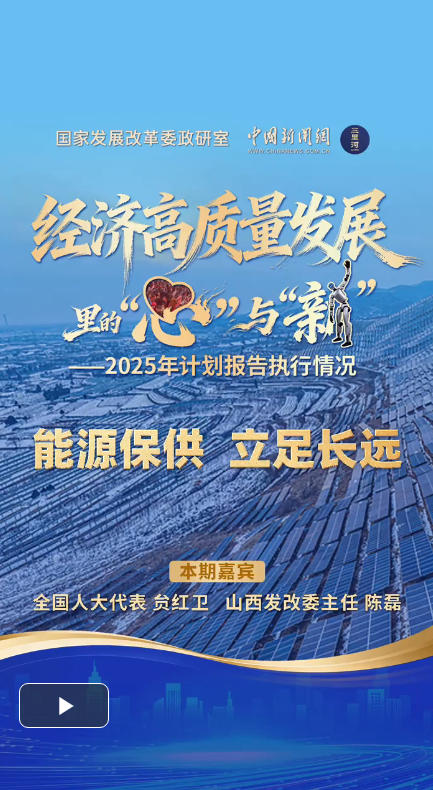
经济高质量发展里的“心”与“新”|能源保供,立足长远
Zhong Guo Xin Wen Wang· 2026-02-26 08:15
Group 1 - The core viewpoint of the article emphasizes the enhancement of energy supply security in China by 2025, with record high production of coal, oil, gas, and electricity, ensuring stable power supply [2] - National People's Congress representative, Yuan Hongwei, highlights the need to transform resource advantages into economic advantages by focusing on circular symbiosis and green development, with efforts in intelligence, greening, and integration [2] - Shanxi Development and Reform Commission Director, Chen Lei, states that Shanxi is committed to the national mission of coal supply security, with coal delivery of 400 million tons to stabilize supply for 23 provinces, alongside the delivery of 10 billion kilowatt-hours of green electricity [2]
城记 | 从上海各区开年“首访”看产业布局新动向
Xin Hua Cai Jing· 2026-02-26 07:40
Group 1 - Shanghai's districts are actively conducting visits and research to align with the "14th Five-Year Plan," emphasizing a sense of urgency to seize opportunities in the new year [1][2] - Huangpu District plans to advance 65 major construction projects by 2026, covering a total area of approximately 7.5 million square meters, with an investment of about 485 billion yuan, aiming for a 10% annual growth target [1] - The focus on technology and innovation is evident, with various districts visiting leading research institutions and companies to enhance the conversion of scientific achievements into productive forces [2][3] Group 2 - The research visits cover multiple industries, including biomedicine, aerospace, and chemical materials, aligning with Shanghai's modern industrial layout [3] - Districts are adopting a problem-oriented approach, addressing companies' concerns regarding revenue, regulatory issues, and service efficiency to support business development [4] - The visits also reflect a commitment to grassroots governance and public welfare, with attention given to community needs and local governance [4]
全省银行间市场科技创新债券发行金额突破200亿元
Sou Hu Cai Jing· 2026-02-25 23:16
Group 1 - The core viewpoint of the news is that the issuance of technology innovation bonds in Henan Province has surpassed 20 billion yuan, demonstrating the effectiveness of the "technology board" policy in promoting financing for technology enterprises [1] - Since the introduction of the "technology board" policy in May last year, Henan Province has facilitated 31 issuances of technology innovation bonds from 10 technology enterprises and 2 equity investment institutions, raising a total of 20.42 billion yuan with a weighted average interest rate of 2.3%, which is 0.3 percentage points lower than the average interest rate of bonds issued during the same period [1] - The issuance of technology innovation bonds has played a significant role in broadening financing channels, reducing financing costs, stimulating market vitality, and enhancing innovation capabilities [1] Group 2 - Anyang Iron and Steel Group, recognized as a national enterprise technology center, is undergoing a deep industrial transformation and needs to expand its financing channels [2] - The People's Bank of China in Anyang has guided the company to leverage the benefits of the "technology board" policy, organizing financial institutions to tailor financing solutions, aiming for the issuance of 3.79 billion yuan in technology innovation bonds by 2025 for projects related to deep purification of coke oven flue gas [2] - Longbai Group, a global leader in the titanium industry, has also been supported in issuing 4 billion yuan in technology innovation bonds, with the first batch successfully issuing 500 million yuan, setting records for the largest scale, longest term, and highest subscription multiple for similar bonds among private enterprises in the province [2] - The People's Bank of China in Henan plans to continue enhancing policy implementation to support more eligible entities in issuing technology innovation bonds, directing long-term, low-cost bond funds more efficiently into the technology innovation sector [2]
视频 | 陈吉宁调研正泰:更好发挥链主企业作用,助力构建更具竞争力的产业生态
Xin Lang Cai Jing· 2026-02-25 05:20
Core Viewpoint - The article highlights the visit of Chen Jining, a member of the Central Political Bureau and Secretary of the Shanghai Municipal Committee, to the Zhengtai Smart Electric Port Park, focusing on the development of the Songjiang District's new energy power equipment industry cluster, which aims to become a leading domestic base in this sector [1][5]. Group 1: Industry Development - The Songjiang District's new energy power equipment industry cluster focuses on green energy, smart electrical systems, industrial automation, intelligent low-carbon solutions, and headquarters research and trade [1][5]. - The cluster aims to build a complete upstream and downstream industrial chain by relying on leading enterprises, enhancing competitiveness in the industry ecosystem [1][5]. Group 2: Company Initiatives - Zhengtai Group, led by Chairman Nan Cunhui, is actively engaged in the new energy sector, emphasizing "green, digital, and intelligent" initiatives [2][6]. - The company has made significant advancements in key technologies such as graphene materials, flexible direct current, solid-state transformers, energy storage systems, and virtual power plants [2][6]. - Zhengtai has adopted the "sweet potato economy" concept and is integrating into the Yangtze River Delta's development, leveraging Shanghai's advantages in economy, finance, trade, shipping, and technology [2][6].

21社论丨用好优势抓住机遇,促进广东制造业与服务业协同发展
2 1 Shi Ji Jing Ji Bao Dao· 2026-02-24 23:09
Group 1 - The core theme of the Guangdong conference is the collaborative development of manufacturing and service industries to explore new paths for high-quality development [1] - Guangdong's manufacturing sector accounts for 1/8 of the national manufacturing value added and approximately 1/3 of the province's GDP, establishing it as a global manufacturing hub [1] - The manufacturing industry in Guangdong is transitioning towards intelligent, green, and integrated development, aiming to move from low-value assembly to high-value design and sales [1] Group 2 - The historical evolution of developed economies shows that manufacturing and service industries have always evolved dynamically and collaboratively, leading to deeper industrial division and tighter integration [2] - The rapid development of information technology since the 1990s has empowered manufacturing through service-oriented manufacturing and the integration of the digital economy with the real economy [2] - The current technological revolution and industrial transformation necessitate a strong collaboration between manufacturing and services, leveraging advancements in AI, biomanufacturing, and quantum communication [2] Group 3 - Guangdong has unique advantages in the global technological revolution, with the Guangdong-Hong Kong-Macao Greater Bay Area being the only region with both mechanical and AI technologies [3] - The manufacturing sector in Guangdong includes leading industries such as home appliances, mobile phones, and automobiles, which need to collaborate with intelligent technologies to enhance their competitive edge [3] - A supportive market environment is essential for the collaborative innovation of manufacturing and services, requiring regulatory frameworks that facilitate new products, business models, and technological innovations [3]