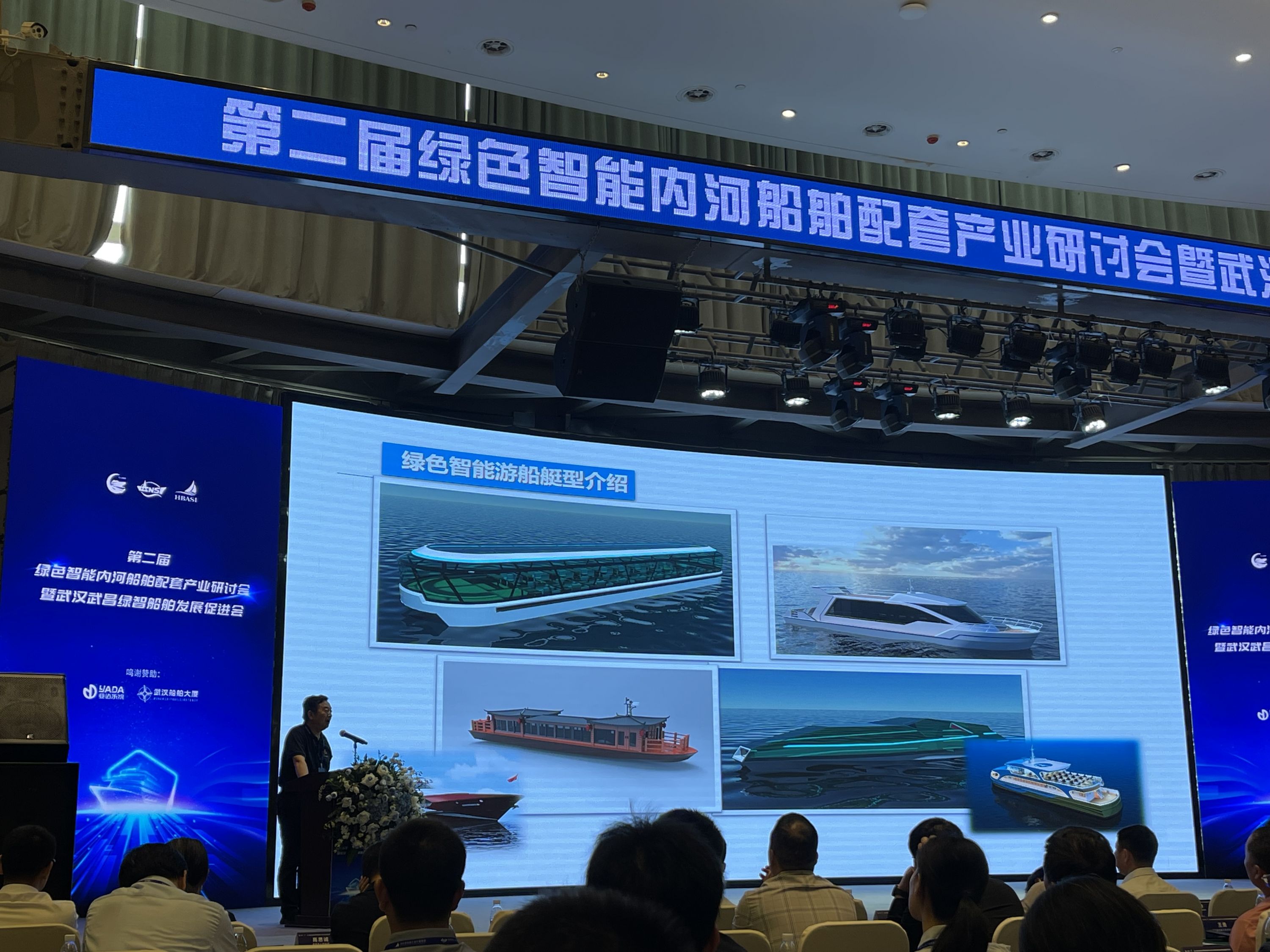
绿色智能船舶

Search documents
远洋船舶谱系扩容
Xin Lang Cai Jing· 2026-01-16 18:01
Core Insights - Shandong Province aims to enhance the shipbuilding and marine engineering equipment industry, targeting over 10% revenue growth by the end of 2026, with a focus on new energy vessels and high-end marine engineering equipment [1] - The province plans to maintain a 60% share in the construction completion, new orders, and backlog of new energy-powered vessels [1] Industry Development - The strategy includes consolidating traditional advantages in semi-submersible drilling and production platforms, as well as FPSOs, while expanding into FLNGs, large aquaculture vessels, and offshore launch platforms [1] - Emphasis will be placed on advancing underwater robotics, marine monitoring sensors, and underwater energy storage technologies [1] Vessel Types and Innovations - The variety of ocean-going vessels will be enriched, focusing on large bulk carriers and mineral carriers powered by LNG, methanol, and ammonia, as well as hybrid high-end passenger ferries [1] - Development of VLCCs, container ships with over 10,000 TEU capacity, chemical tankers, and unmanned vessels will be prioritized, alongside preparations for large LNG carriers and new fuel bunkering vessels [1] Supporting Technologies - Shandong will enhance core supporting technologies such as marine engines, ballast water treatment systems, and new fuel supply systems, promoting integrated, intelligent, and modular development of key components [2] - The province aims to attract critical suppliers for marine electrical equipment, generators, propellers, and deck machinery to further strengthen the industry supply chain [2]
盘前必读丨中国申请20.3万颗卫星频轨资源;两只商业航天概念股被监管警示
Di Yi Cai Jing Zi Xun· 2026-01-13 23:19
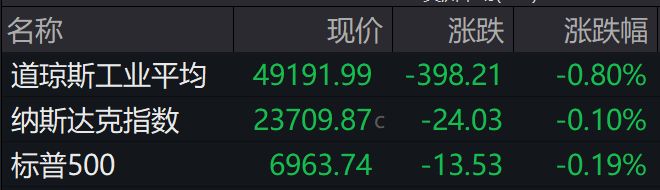
Group 1 - The U.S. stock market experienced a decline, with the S&P 500 index falling by 0.19%, the Dow Jones Industrial Average down by 0.80%, and the Nasdaq down by 0.10% [1] - Major tech companies showed mixed performance, with Intel rising by 7.33% and AMD increasing by 6.39%, while Microsoft and Meta Platforms fell by 1.36% and 1.69% respectively [2] - The Nasdaq Golden Dragon China Index dropped by 1.84%, with significant declines in stocks like Pinduoduo down 5.40% and Tencent Holdings down 2.79% [2] Group 2 - China submitted an application for 203,000 satellite frequency resources to the International Telecommunication Union, aiming to enhance its digital infrastructure [3] - The Ministry of Commerce announced a continuation of anti-dumping measures on imported solar-grade polysilicon from the U.S. and South Korea, effective from January 14, 2026, for a period of five years [3] - The Ministry of Industry and Information Technology reported that over 7,000 advanced smart factories have been established in China, with expectations for the industrial internet core industry to exceed 1.6 trillion yuan by 2025 [4] Group 3 - The Ministry of Industry and Information Technology emphasized the importance of stabilizing industrial economic growth and enhancing the supply capacity of quality industrial products [5] - A new action plan for the high-quality development of industrial internet platforms was issued, aiming for over 450 influential platforms by 2028 and a significant increase in connected industrial devices [6] - The Jiangsu provincial government announced an "Artificial Intelligence +" action plan, targeting a rapid growth in AI applications and a projected industry scale exceeding one trillion yuan by 2030 [6] Group 4 - The Hubei provincial government is focusing on developing the green intelligent ship industry as a pillar industry to contribute to the high-quality development of the Yangtze River Economic Belt [7] - The Shanghai Stock Exchange issued regulatory warnings to companies for inadequate information disclosure regarding their involvement in commercial space and AI applications, highlighting the need for accurate and complete communication to investors [8][9] - Several companies reported on their AI-related business developments, with varying degrees of progress and expectations for future profitability [9]

开门红!9艘集装箱船订单
Xin Lang Cai Jing· 2026-01-05 10:38
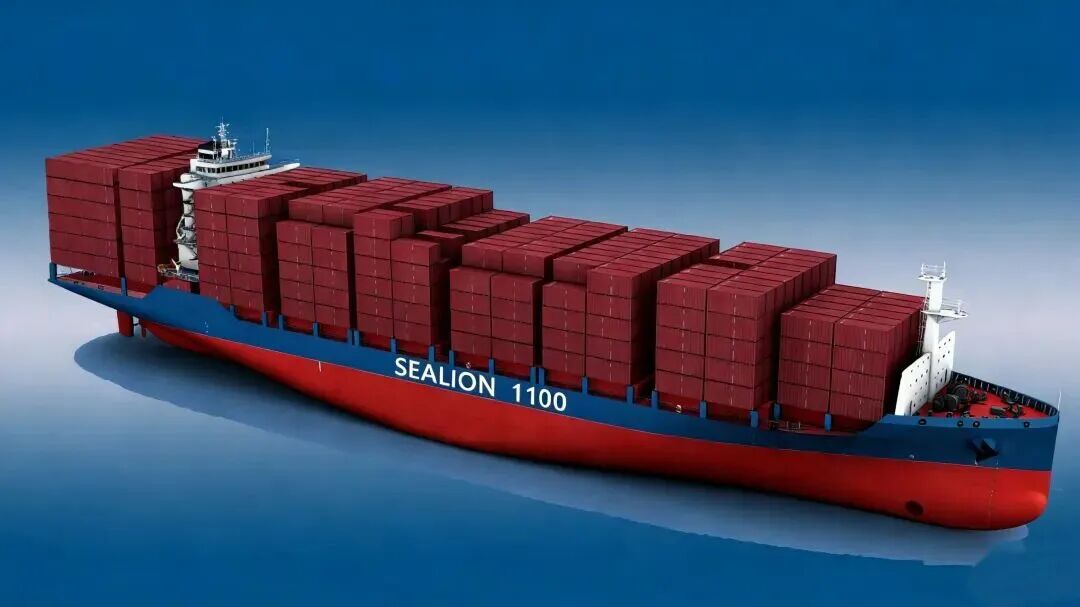
Core Viewpoint - China Shipbuilding Group's subsidiary, Wuchang Shipbuilding Industry Group, has officially signed contracts for the construction of 5 units of 1100TEU container ships and 4 units of 1800TEU container ships, marking a significant development in the shipbuilding sector [1][5]. Group 1: Project Initiation and Construction Model - Wuchang Shipbuilding has initiated preparatory work for this series of ships and will implement a phased construction model to ensure high-quality and timely delivery [3][7]. - The company has previously delivered a range of benchmark projects, including LNG-powered offshore vessels and methanol-powered ro-ro ships, demonstrating its capability in high-quality shipbuilding [3][7]. Group 2: Technological Innovation and Product Development - Wuchang Shipbuilding has strengthened its core competitiveness through technological innovation, with self-designed models such as the 1320TEU methanol dual-fuel container ship and the 1900TEU Bangkok-type container ship receiving Approval in Principle (AiP) certificates [3][7]. - The company is expanding its product line in the feeder container ship sector, focusing on green and intelligent shipbuilding technologies [3][7]. Group 3: Future Directions and Industry Collaboration - Wuchang Shipbuilding is also advancing in the oil and chemical tanker sectors, with self-designed vessels ranging from 7,000 to 29,000 deadweight tons receiving classification society certificates [4][8]. - The company aims to collaborate with shipowners, classification societies, and research institutions in areas such as technological innovation, green low-carbon initiatives, and smart manufacturing to build a safe, efficient, and resilient global shipping system [4][8].

专访湖北省社科院长江所副所长赵霞:进入“十五五”,湖北如何重塑内河船舶产业先发优势?
Mei Ri Jing Ji Xin Wen· 2025-12-19 06:00
Core Viewpoint - The Hubei Province aims to enhance its shipbuilding industry by establishing a national industrial cluster for shipbuilding and marine engineering, targeting an industrial output value exceeding 130 billion yuan by 2027, with an annual growth rate of over 15% [1][4]. Group 1: Development Goals and Strategies - The "Hubei Province Work Plan for Promoting the Transformation and High-Quality Development of the Inland Shipbuilding Industry" outlines a target of over 130 billion yuan in industrial output by 2027, with a focus on maintaining a leading market share in electric ship core power systems [1][4]. - The plan emphasizes the development of high-value-added vessels such as direct river-sea ships, high-performance yachts, and luxury cruise ships, alongside the establishment of Wuhan as the "Ship and Marine Design Capital" [4][8]. - Hubei's shipbuilding industry is expected to benefit from a significant market opportunity due to the large-scale green upgrade of over 110,000 existing inland vessels in the Yangtze River basin, creating a trillion-yuan market [4][6]. Group 2: Challenges and Shortcomings - Hubei's shipbuilding industry faces challenges in industrial chain collaboration, infrastructure support, and market competition, including insufficient leadership from major enterprises and reliance on external suppliers [6][11]. - The promotion of green vessels is heavily dependent on the establishment of a comprehensive supply network for charging and refueling, which is crucial for market demand [6][11]. - The industry must address the need for stronger "chain master" cultivation, parallel development of application scenarios and infrastructure, and deepening regional and international cooperation [7][11]. Group 3: Collaborative Framework - The four key cities—Wuhan, Yichang, Jingzhou, and Huanggang—are expected to form a well-coordinated "fleet" with clearly defined roles to enhance Hubei's competitive advantage in the shipbuilding sector [11][15]. - Wuhan will serve as the design and innovation center, focusing on high-value vessels and core systems, while Yichang will act as a demonstration area for green vessels [11][12]. - Jingzhou will concentrate on standardized and mass-produced ship manufacturing, and Huanggang will focus on the green and intelligent transformation of traditional shipbuilding [12][15]. Group 4: Innovation and Market Integration - The establishment of a public information service platform for the shipbuilding supply chain in Hubei will facilitate collaboration among over 1,100 enterprises, enhancing procurement efficiency and reducing costs [14]. - The cities are encouraged to jointly develop green shipping demonstration routes along the Yangtze River, promoting a unified "Hubei Shipbuilding" brand that integrates design and manufacturing solutions [14][15]. - The strategic positioning of Wuhan as the "Ship and Marine Design Capital" aims to attract top talent and create a complete innovation loop from basic research to engineering validation [10][15].

180天造一艘邮轮!中国造船业垄断全球近七成,美造船业慌了?
Sou Hu Cai Jing· 2025-12-18 12:55
Core Insights - China's shipbuilding industry has maintained its global leadership for 16 consecutive years, capturing nearly 70% of the global market share in new orders and undelivered vessels in the first half of this year [1] Group 1: Financial Support and Talent - The shipbuilding industry in China benefits from strong financial backing from state-owned institutions, allowing for lower interest rates and longer loan terms compared to Western counterparts [3][5] - The development of skilled talent is crucial, with experience gained from projects like the Liaoning, Shandong, and Fujian aircraft carriers contributing to a pool of proficient shipbuilders and engineers [9][11] Group 2: Industrial System and Efficiency - China's complete industrial system enables the production of everything from core equipment to key components, making it unique among global competitors [13] - The efficiency of Chinese shipbuilding has significantly improved, with the time to build large container ships reduced from 28 months to 16 months through digital modeling and streamlined processes [17][19] Group 3: Technological Advancements - China has successfully developed advanced technologies in shipbuilding, including aircraft carriers, large cruise ships, and LNG carriers, previously dominated by Western nations [21] - The Fujian aircraft carrier features innovative technologies such as conventional power with electromagnetic catapults, achieving a 98% domestic production rate [21][23] Group 4: Market Position and Standards - China's shipbuilding industry is increasingly recognized for its quality and efficiency, leading to a growing preference among global shipowners for Chinese shipyards over traditional partners in South Korea and Japan [29][31] - The industry is transitioning from following international standards to setting its own, with innovations in low-carbon technologies and smart control systems aligning with global trends towards carbon neutrality [36][38] Group 5: Future Outlook - The integration of AI and robotics in ship design and manufacturing enhances precision and efficiency, positioning China's shipbuilding sector as a leader in both competitiveness and environmental standards [39][41] - The journey from a follower to a leader in the global shipbuilding market reflects a solid foundation built on consistent efforts and technological advancements, contributing to national pride and industrial strength [43]
武昌两栋船舶大厦集聚近40家产业链企业,全国超八成绿色智能船舶研发设计出自武汉
Chang Jiang Ri Bao· 2025-10-22 01:29
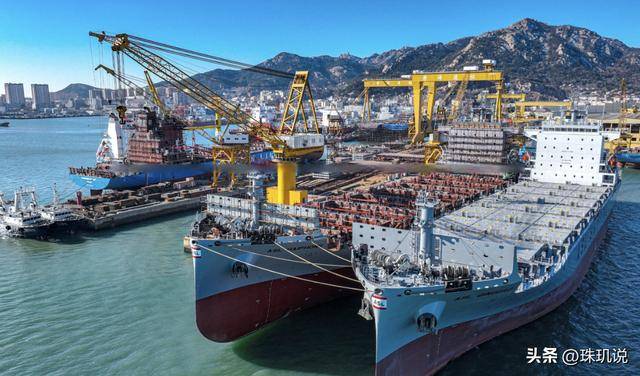
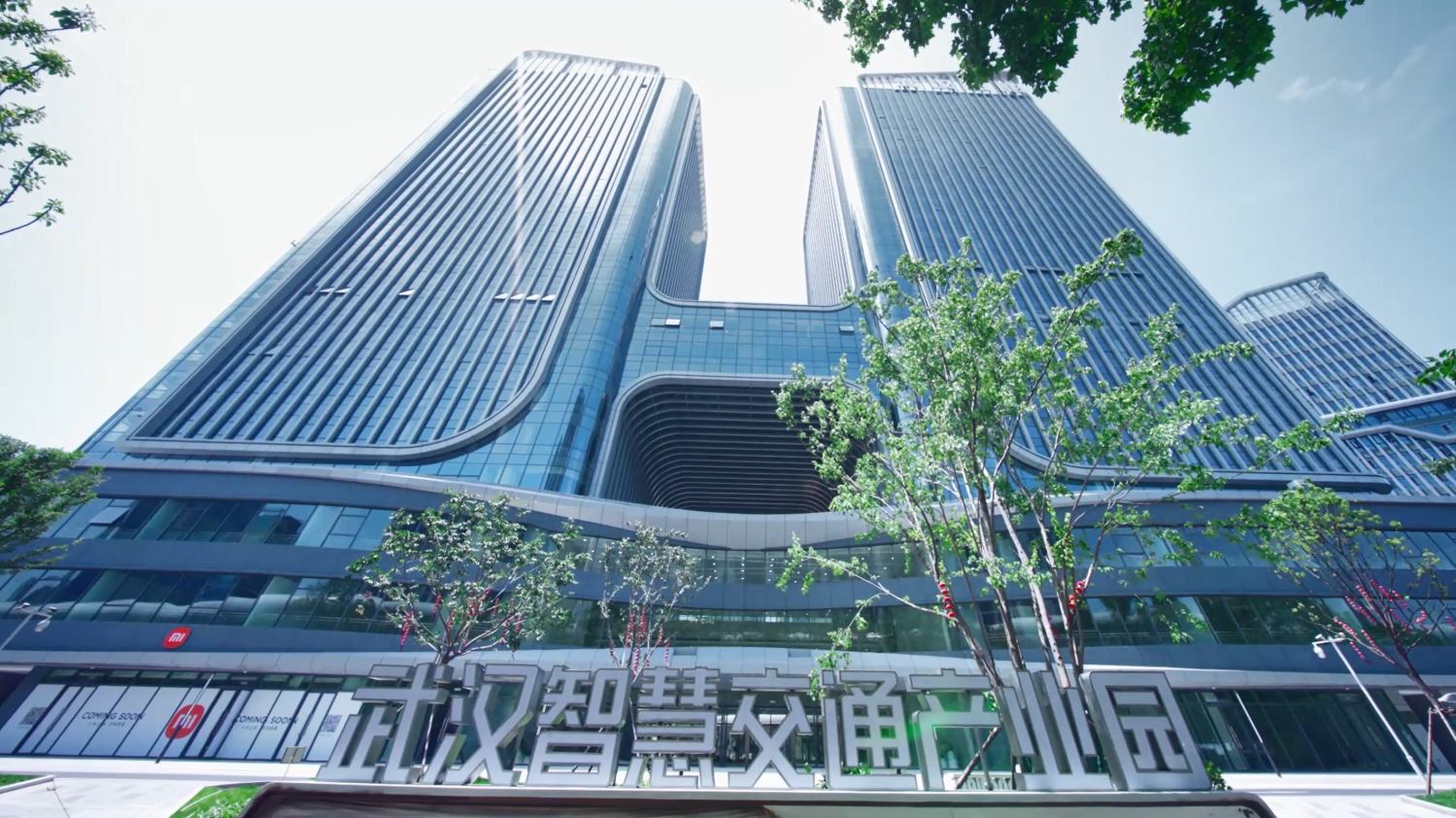
Core Viewpoint - The development of methanol engines by Hanli New Energy in collaboration with Wuhan University of Technology represents a significant advancement in the green shipping industry, with growing orders and a focus on sustainable alternatives to diesel fuel [2][3]. Group 1: Company Developments - Hanli New Energy has received numerous orders for methanol engine units from various enterprises in Shandong and other regions, indicating strong market demand for this technology [2]. - The establishment of the Wuhan Shipbuilding Building has attracted 16 green shipping industry chain enterprises, primarily linked to Wuhan University of Technology, enhancing collaboration between academia and industry [3][4]. Group 2: Industry Trends - The domestic inland shipping fleet exceeds 100,000 vessels, contributing nearly 30 million tons of carbon emissions annually, highlighting the urgent need for green and intelligent shipping solutions in line with national carbon reduction goals [3]. - The green shipping industry is poised for a trillion-yuan market opportunity, driven by the dual carbon goals and environmental protection initiatives along the Yangtze River [3]. Group 3: Collaborative Efforts - The collaboration between China Consulting Group, China Communications Construction Group, and Wuhan University of Technology aims to foster innovation and transformation of research outcomes into practical applications within the green shipping sector [3][4]. - The establishment of a public information service platform by the supply chain company has integrated over 1,000 industry chain enterprises, facilitating the signing of 20 new energy ship orders worth nearly 250 million yuan in the first half of the year [4]. Group 4: Infrastructure and Ecosystem - The Wuhan Shipbuilding Building and the Wuhan Smart Transportation Industrial Park are key infrastructures supporting the development of the green intelligent shipping industry, creating a conducive environment for innovation and collaboration [5][8]. - The strategic positioning of the Wuhan Shipbuilding Building and the Hubei Shipbuilding Building aims to create a complementary ecosystem for the green intelligent shipping industry, enhancing the region's competitive advantage [8].
企业落户到万吨级新能源船下水仅9个月
Chang Jiang Ri Bao· 2025-08-18 00:39
Group 1 - The core point of the news is the successful launch of the "Yongliang 003" LNG-powered multi-purpose vessel by San Dian Shui New Energy Technology (Hubei) Co., Ltd., marking a significant advancement in green shipbuilding in Wuhan [1] - The "Yongliang 003" is the first of a series of 110-meter LNG-powered vessels, designed to significantly reduce carbon emissions compared to traditional fuel ships, and features a dual-engine, dual-propeller, and dual-rudder configuration for enhanced navigation efficiency [1] - The project timeline from signing to launch was only 8 months, indicating a rapid development pace in the shipbuilding sector [1] Group 2 - The Hubei headquarters of San Dian Shui New Energy Technology was established in Wuhan's comprehensive bonded zone and port logistics park, which is expected to support the growth of the green intelligent shipbuilding industry [2] - The park aims to attract more quality upstream and downstream enterprises, fostering a complete ecosystem for ship manufacturing, shipping operations, and maintenance services [2] - The successful launch of the "Yongliang 003" is anticipated to inject new momentum into the regional economic development through enhanced shipping trade along the Yangtze River [1][2]
每年减碳量超5000吨,长江首艘纯甲醇动力智能船下水
Chang Jiang Ri Bao· 2025-08-01 01:46
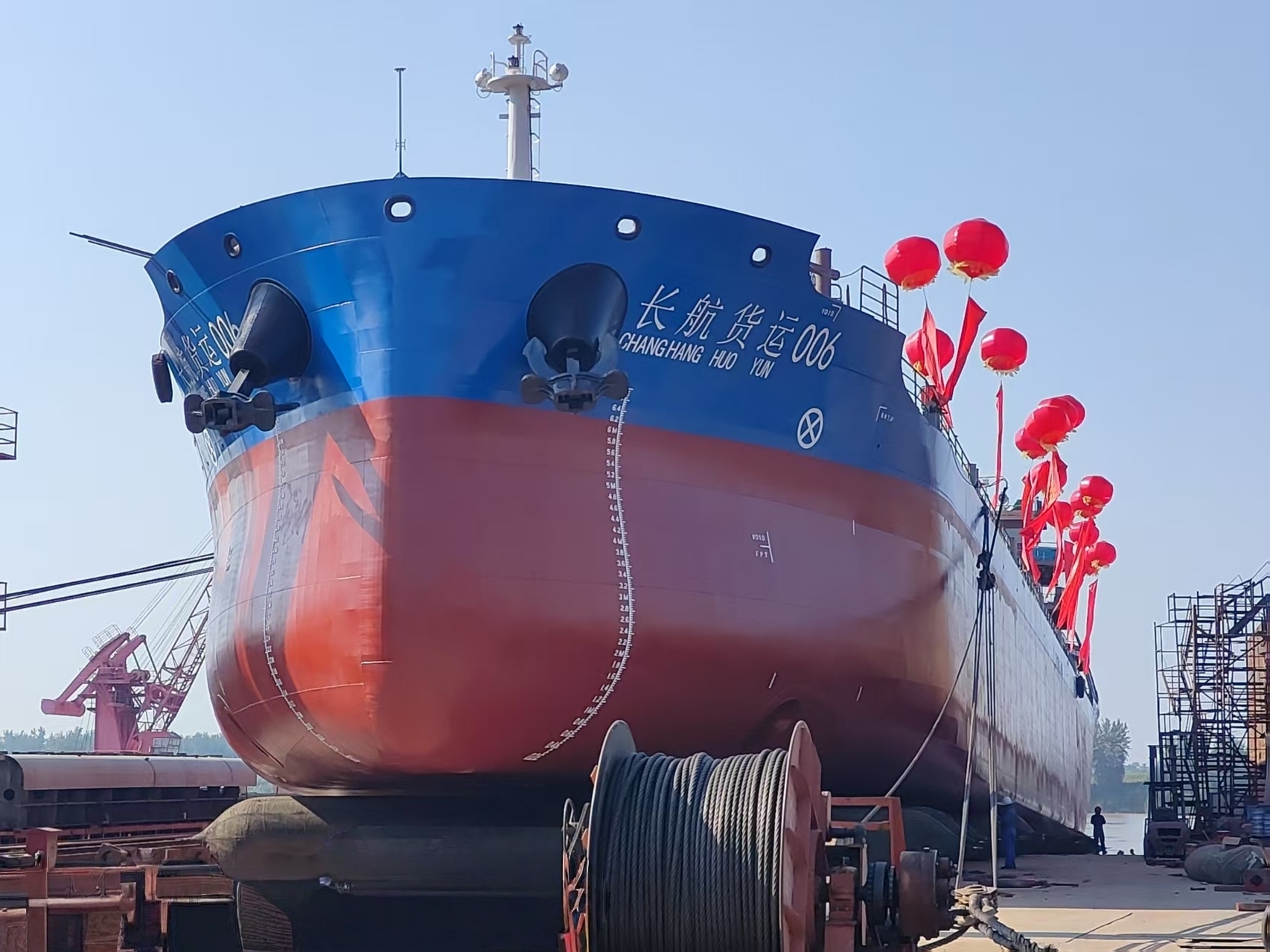
Core Viewpoint - The launch of the "Changhang Freight 006" vessel marks a significant advancement in the use of methanol-powered ships in China's inland waterways, promoting green and intelligent shipping solutions [1][3]. Group 1: Vessel Specifications and Features - The "Changhang Freight 006" is the first methanol-powered bulk carrier in the Yangtze River basin, with a maximum cargo capacity of 9,600 tons and a range of 3,000 kilometers [1]. - It is designed as a green intelligent vessel, featuring five smart functions including navigation assistance, crew behavior monitoring, and energy consumption monitoring [2]. - The vessel's dual-fuel engine can automatically switch to pure diesel mode in emergencies, ensuring operational safety [2]. Group 2: Environmental Impact and Cost Efficiency - The methanol dual-fuel engine can achieve a methanol replacement rate of up to 95%, leading to a carbon reduction of over 5,000 tons annually per engine when using green methanol [2]. - The vessel can reduce nitrogen oxide emissions by 60% and sulfur oxide emissions by up to 99%, demonstrating its capability in fast-flowing inland river segments [2]. - Methanol fuel costs only 30% to 40% of diesel prices, allowing the vessel to save approximately 20% in annual fuel expenses compared to traditional powered ships [2]. Group 3: Industry Implications - The operation of the "Changhang Freight 006" will contribute to the sustainable commercial development of methanol fuel in China's inland and coastal shipping sectors [3]. - The introduction of this vessel increases the number of green vessels in the Changhang Freight fleet to over 50, supporting the transition to green and intelligent shipping in the industry [3]. - The vessel is expected to begin operations by the end of September 2023, serving the Shanghai to Chongqing route and providing high-quality green transportation services [2].
上海船舶产业画像:“钢铁巨鲸”变身“零碳舰队”
Zheng Quan Ri Bao· 2025-07-04 16:09
Core Insights - Shanghai is recognized as a global leader in shipbuilding and marine engineering, with a significant focus on green and intelligent manufacturing [1][2][3] Group 1: Industry Overview - Shanghai has evolved from a historical shipbuilding hub to a modern industrial powerhouse, housing major companies like Hudong-Zhonghua and Jiangnan Shipyard [1][2] - The city is home to the largest and most advanced shipbuilding base in China, contributing to the nation's transition from a shipbuilding power to a strong maritime nation [1][2] - As of 2024, major Shanghai shipyards are ranked among the top ten globally, with significant advancements in high-end green ship types [2][3] Group 2: Economic Performance - The shipbuilding and marine engineering sector in Shanghai is projected to achieve an industrial output value exceeding 120 billion yuan in 2024, reflecting a year-on-year growth of approximately 20% [3][4] - In 2024, the three major shipyards in Shanghai are expected to deliver a total of 69 vessels and secure 128 new orders, marking increases of 19% and 70% respectively [3][4] Group 3: Strategic Developments - The merger of China Shipbuilding Industry Corporation and China Shipbuilding Heavy Industry Company aims to create a new entity with total assets nearing 400 billion yuan and annual revenues exceeding 120 billion yuan [5][6] - This consolidation is expected to enhance operational efficiency and strengthen the competitive position of Chinese shipbuilders in the global market [6] Group 4: Technological Advancements - Shanghai's ship design capabilities are highlighted by institutions like the Shanghai Shipbuilding Research Institute, which leads in civil ship design [5] - The industry is witnessing a shift towards green technologies, with a significant increase in orders for LNG-powered vessels, which are projected to dominate the market [6][7] Group 5: Future Outlook - By 2030, Shanghai aims to establish a world-class shipbuilding and marine engineering industry system, targeting an industrial value-added of over 45 billion yuan and an 85% localization rate for large LNG vessels [4] - The global shipping industry is moving towards decarbonization, with the International Maritime Organization setting ambitious targets for emissions reduction by 2050 [6][7]
沿海造船企业“转舵”内河首选武汉,五大项目落户
Chang Jiang Ri Bao· 2025-06-12 00:51
Core Insights - The establishment of five major projects in Wuhan's green intelligent shipbuilding industry was announced, highlighting the city's commitment to developing this sector [1][3] - The green upgrade of inland vessels is projected to create a trillion-yuan market, with nearly 300,000 existing vessels in need of replacement or retrofitting [3][4] - Wuhan is positioning itself as a key player in the green intelligent shipbuilding industry, with significant advancements in electric and hybrid vessels [6][7] Group 1: Industry Developments - The green upgrade of inland vessels is expected to be a trillion-yuan market, with a potential market size based on replacing 30% of existing vessels and retrofitting 20% [3] - Wuhan is recognized as a leading city in the development of electric ship battery systems, supplying nearly 70% of the electric vessels in China [6] - The city has a complete industrial chain for shipbuilding and marine engineering, with over 200 enterprises involved in research, design, and manufacturing [6] Group 2: Company Initiatives - Zhejiang Yada Green Energy Technology Co., a key player in high-end marine equipment, is expanding its presence in Wuhan, focusing on dual-fuel vessels [4] - Ningbo Chenxiang Electronics plans to establish a research and manufacturing base in Jiangxia, developing over 100 high-end connectors and harness products for electric vessels [4][5] - Wuhan's local government is actively promoting the application of new energy electric vessels, enhancing the operational landscape for companies in the region [5][6] Group 3: Future Projections - The green intelligent shipbuilding industry in Wuhan is expected to see a 16.9% year-on-year growth in output value by 2024 [7] - The city aims to create a new industrial chain for green intelligent vessels, focusing on research, design, and manufacturing clusters in Wuchang and Xinzhou districts [7]