
能源高质量发展

Search documents
能源高质量发展专家谈丨规划引领“十四五”能源高质量发展迈出坚实步伐
国家能源局· 2025-09-01 10:29
Core Viewpoint - The article emphasizes the importance of the "14th Five-Year Plan" for high-quality energy development in China, highlighting the strategic direction set by the central government for energy transformation and the establishment of a modern energy system [2]. Group 1: Energy Supply Chain Resilience and Security - The "14th Five-Year Plan" focuses on enhancing energy security, emphasizing the need for domestic energy production and diversified supply to mitigate risks [3]. - Energy production capacity has significantly increased, with a total primary energy production growth exceeding 22%, reaching 4.98 billion tons of standard coal by 2024 [3]. - The annual crude oil production reached 213 million tons, and natural gas production increased by over 13 billion cubic meters annually, showcasing the resilience of the energy supply system [3]. Group 2: Green and Low-Carbon Energy Transition - The article highlights the necessity of a green energy transition as a response to climate change and a driver for sustainable development [4]. - Non-fossil energy consumption proportion is projected to reach 19.8% by 2024, an increase of 3.9 percentage points from 2020, while coal consumption proportion is expected to decrease to 53.2% [5]. - The energy sector has achieved a cumulative reduction in energy intensity of 11.6% over the first four years of the "14th Five-Year Plan" [5]. Group 3: Coordinated Development of Energy Across Regions - The article discusses the need for optimizing energy development layouts to address imbalances in energy supply and demand across urban and rural areas [7]. - The construction of large clean energy bases in the western regions has progressed, with the "West-to-East Power Transmission" capacity exceeding 300 million kilowatts [7]. - The establishment of the world's largest charging infrastructure system, with a total of 16.7 million facilities, supports the widespread adoption of electric vehicles [7]. Group 4: Modernization of the Energy Industry Chain - The article stresses the importance of innovation in enhancing the energy industry's modernization and competitiveness [8]. - China has achieved significant advancements in nuclear power technology and is a leading global supplier of photovoltaic components and wind power key parts [9]. - The energy sector has made breakthroughs in unconventional oil and gas exploration and development, contributing to the modernization of the energy industry [9]. Group 5: Continuous Release of Energy High-Quality Development Vitality - The article outlines the need for deepening energy market reforms to stimulate market vitality and establish a modern energy market structure [10]. - The implementation of the Energy Law has strengthened the legal foundation for energy development, with over 60% of electricity consumption now determined by market transactions [11]. - New energy business models and technologies, such as microgrids and virtual power plants, are emerging, promoting the transition to a new energy system [11]. Group 6: Expanding High-Level Energy Opening-Up - The article emphasizes the importance of international cooperation in energy to enhance global energy governance [12]. - China's energy imports remain diversified and stable, with significant international cooperation projects established in over 100 countries [13]. - The country has strengthened its influence in global energy governance, participating in key international energy meetings and establishing regional energy cooperation platforms [13]. Conclusion - The "15th Five-Year Plan" is positioned as a critical period for achieving socialist modernization and initiating the construction of a new energy system, with a focus on high-quality energy development [14].


焦点访谈丨“含绿量”不断提升 “十四五”中国能源发展交出亮眼成绩单
Sou Hu Cai Jing· 2025-09-01 00:22
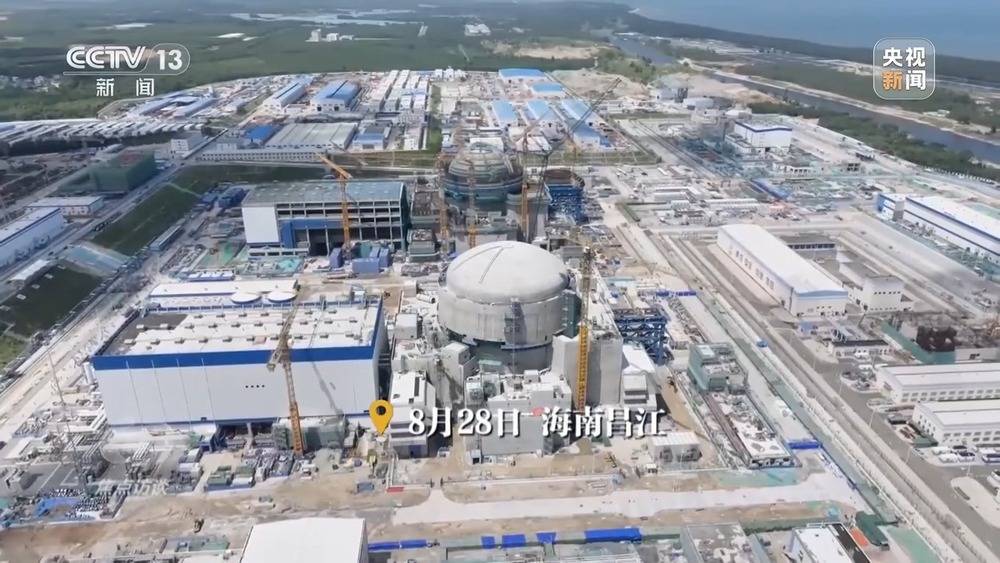
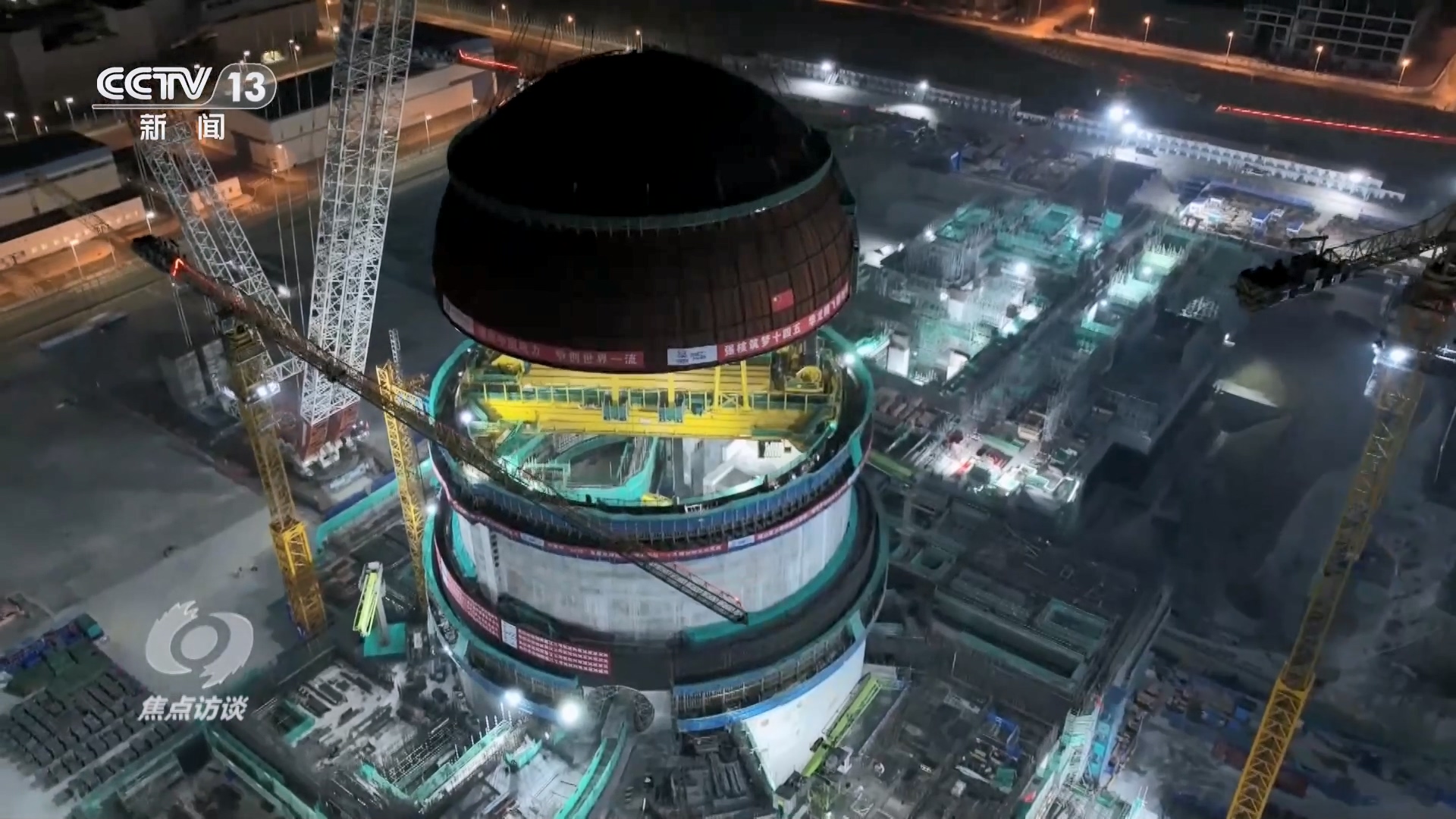
Core Insights - China's energy development during the "14th Five-Year Plan" has achieved significant breakthroughs, ensuring energy security for over 1.4 billion people and promoting green and low-carbon development [1][9][27] Group 1: Nuclear Energy Development - The Hainan Changjiang Nuclear Power Project is the first large-scale pressurized water reactor project initiated during the "14th Five-Year Plan," expected to deliver over 18 billion kilowatt-hours of clean electricity annually [3] - The "Hualong One" third-generation nuclear technology has entered mass construction, with 46 nuclear power units approved, totaling 54.5 million kilowatts, and a 30% increase in operational capacity and annual electricity generation [5] Group 2: Renewable Energy Advancements - The "14th Five-Year Plan" has seen China's wind and solar power generation capacity grow from 530 million kilowatts to 1.68 billion kilowatts, with new installations accounting for over half of the global total [15] - The "Tengger Desert" new energy base, part of the national clean energy initiative, has reached a scale of 130 million kilowatts, transforming previously barren land into a significant renewable energy source [13][15] Group 3: Energy Consumption and Supply - China's energy consumption growth during the first four years of the "14th Five-Year Plan" was 1.5 times that of the previous five years, with per capita annual electricity consumption exceeding 1,000 kilowatt-hours [9] - The energy self-sufficiency rate has remained stable at over 80%, with total energy production equivalent to approximately 5 billion tons of standard coal, accounting for over one-fifth of global energy production [11][9] Group 4: Infrastructure and Technology - The Ningxia-Hunan ±800 kV UHVDC project, part of the "Western Electricity to Eastern China" initiative, enhances the transmission of green electricity over long distances, facilitating the integration of renewable energy into the national grid [21][19] - The establishment of the largest electric vehicle charging network globally, with a charging station for every 2 electric vehicles, reflects the commitment to enhancing energy infrastructure [27] Group 5: Social Impact and Future Directions - The government has invested significantly in rural electrification, improving the reliability of power supply to over 99.9% [25] - The focus on high-quality energy development aims to support economic stability and contribute to global energy governance, with plans for a new energy system in the "15th Five-Year Plan" [27]
焦点访谈|“十四五”能源答卷:“基本盘”更加稳固,“含绿量”不断提升
Yang Shi Wang· 2025-08-31 13:33
Core Insights - China's energy development has achieved significant breakthroughs during the "14th Five-Year Plan" period, ensuring energy security for over 1.4 billion people and promoting green and low-carbon development [1][16] - The Hainan Changjiang Nuclear Power Phase II project is a major initiative, utilizing the Hualong One third-generation nuclear technology, which is a significant achievement in China's nuclear innovation [3][5] - The energy consumption in China has increased significantly, with a 1.5 times growth compared to the previous five years, and the average annual electricity consumption per capita has doubled over the past decade [7][11] Energy Production and Capacity - During the "14th Five-Year Plan," China approved the construction of 46 nuclear power units with a total installed capacity of 54.5 million kilowatts, resulting in a 30% increase in both operational capacity and annual electricity generation [3][5] - The renewable energy capacity has expanded dramatically, with wind and solar power installations growing from 530 million kilowatts to 1.68 billion kilowatts, and renewable energy generation capacity now accounts for approximately 60% of total installed capacity [11][9] Technological Innovations - Significant advancements in energy technology include breakthroughs in onshore and offshore oil and gas development, as well as improvements in solar and wind energy efficiency [5][9] - The "Desert Energy" base in Tengger Desert has become a model for green energy development, with over 4.4 million solar panels contributing to a stable increase in power generation [9][11] Infrastructure and Energy Distribution - The establishment of a comprehensive energy infrastructure network has facilitated the efficient distribution of energy resources across regions, including major projects like the "West-to-East Power Transmission" and "West-to-East Gas Transmission" [15][16] - The Ningxia to Hunan ±800 kV UHVDC transmission project has been completed, enabling rapid transmission of green electricity over long distances, addressing the challenge of energy consumption in different regions [13][15] Energy Security and Self-Sufficiency - China's energy self-sufficiency rate remains stable at over 80%, which is crucial for economic security and resilience against international market fluctuations [7][11] - The government has invested significantly in rural electrification, enhancing energy supply reliability and ensuring that energy access reaches remote areas [15][16]
焦点访谈丨非凡“十四五” 走出能源高质量发展之路
国家能源局· 2025-08-31 13:26
Core Viewpoint - The article discusses the recent trends and developments in the industry, highlighting key statistics and potential growth areas for companies involved in this sector [2] Group 1 - The industry has seen a significant increase in revenue, with a reported growth of 15% year-over-year, reaching a total of 200 billion [2] - Companies are focusing on innovation and technology integration to enhance operational efficiency and customer engagement [2] - Market competition is intensifying, with new entrants disrupting traditional business models and forcing established companies to adapt [2] Group 2 - Consumer demand is shifting towards sustainable and eco-friendly products, prompting companies to adjust their strategies accordingly [2] - Investment in research and development has increased by 20%, indicating a strong commitment to future growth and adaptation [2] - Regulatory changes are impacting operational practices, requiring companies to stay compliant while maintaining profitability [2]

能源高质量发展专家谈丨“十四五”能源规划成绩评述及形势展望
国家能源局· 2025-08-31 03:05
Core Viewpoint - The "14th Five-Year Plan" marks a crucial period for energy transformation in China, achieving significant results despite various challenges, with a focus on optimizing industrial layout and enhancing system resilience for high-quality energy development in the "15th Five-Year Plan" [2] Group 1: Achievements in Energy Development - Energy supply capacity has been significantly enhanced, with oil production expected to reach approximately 213 million tons in 2024, and natural gas production projected to hit 246.4 billion cubic meters [3] - Coal supply security has improved, with major coal supply bases established, and over 300 million kilowatts of coal power units modified for flexibility [3] - The total installed power generation capacity reached 3.65 billion kilowatts by mid-2025, with 44 ultra-high voltage transmission lines in operation, establishing the world's largest power infrastructure system [4] Group 2: Acceleration of Green Energy Transition - Renewable energy has become the mainstay of power generation, with a total installed capacity of 2.159 billion kilowatts by mid-2025, accounting for 59.2% of total capacity [5] - Nuclear power development has progressed steadily, with operational capacity reaching 60.91 million kilowatts and a total of 113 million kilowatts in operation, approved, and under construction [5] - The ability of the power system to accommodate high proportions of renewable energy has significantly improved, with new energy storage capacity reaching 73.76 million kilowatts by the end of 2024 [5] Group 3: Optimization of Energy Layout - Key regional energy projects have been advanced, including large-scale wind and solar bases in the Sanbei region, with 90 million kilowatts completed in the first phase [7] - Cross-regional energy transmission channels have been constructed, enhancing the "West-to-East Power Transmission" capacity to over 300 million kilowatts [7] - Rural energy transformation initiatives have been implemented, with over 83,000 village-level photovoltaic assistance stations established [8] Group 4: Strengthening Energy Technology Innovation - The efficiency of clean coal utilization has improved by 40%, with successful applications of coal liquefaction technology [9] - Breakthroughs in deep-sea oil and gas resource development have been achieved, including the construction of the world's first 100,000-ton deep-water semi-submersible production platform [9] - Significant advancements in smart energy technologies have been made, integrating AI and 5G into energy sectors for improved operational efficiency [9] Group 5: International Energy Cooperation - Energy cooperation with regions such as Russia and the Middle East has been deepened, enhancing energy supply security and infrastructure connectivity [10] - China's photovoltaic products have captured approximately 85% of the global market share, with significant investments in renewable energy projects across over 100 countries [10] - Active participation in global energy governance reforms has been emphasized, strengthening international cooperation on climate change [10] Group 6: Recommendations for Future Development - The integration of source, grid, load, and storage should be promoted to address issues of renewable energy curtailment and optimize energy industry layout [11] - The role of fossil energy as a safety net should be reinforced, encouraging cross-sector collaboration and breaking down investment barriers [12] - Carbon emission intensity will replace energy consumption intensity as a key indicator, necessitating systemic adjustments in energy policies to support low-carbon development [13]

国新办发布会聚焦我国“十四五”时期能源高质量发展成就
Xin Hua She· 2025-08-28 00:32
Group 1 - The core viewpoint of the news is that China's energy sector has achieved significant progress and historical accomplishments during the "14th Five-Year Plan" period, with a focus on high-quality development and energy security for over 1.4 billion people [1] - The energy supply capacity and resilience in China have reached a high level, with domestic supply accounting for over 90% of the consumption increase during the first four years of the "14th Five-Year Plan" [2] - Renewable energy has played a crucial role, contributing nearly 50% of the total new power generation, leading to a 50% increase in the total supply of non-fossil energy [2] Group 2 - The transition to a green and low-carbon energy system is accelerating, with renewable energy generation capacity increasing from 40% to around 60% [3] - Wind and solar power have become the main forces in the energy transition, with their combined generation exceeding the total increase in electricity consumption in the first half of the year [3] - The share of non-fossil energy in total energy consumption is expected to exceed the planned target of 20%, while coal's share is decreasing by 1 percentage point annually [4] Group 3 - Technological innovation is essential for the energy transition, with China leading in new energy technologies and holding over 40% of global patents in this field [5] - The installed capacity of new energy storage has grown nearly 30 times in five years, reaching approximately 95 million kilowatts [5] Group 4 - Continuous deepening of reforms in the energy sector has stimulated market dynamics, with the electricity market transaction volume increasing from 10.7 trillion kilowatt-hours to 23.8 trillion kilowatt-hours during the "14th Five-Year Plan" [6] - The number of registered electricity market participants has reached 970,000, five times that of 2020, indicating a significant increase in market vitality [6] Group 5 - The next steps involve advancing the construction of a new energy system and building an energy powerhouse to support China's modernization efforts [7]
端牢能源饭碗 “十四五”中国能源高质量发展成就不断
Zhong Guo Chan Ye Jing Ji Xin Xi Wang· 2025-08-27 23:38
Group 1 - The core viewpoint of the news is that China has made significant progress in energy development during the "14th Five-Year Plan" period, achieving key indicators such as comprehensive energy production capacity and the proportion of non-fossil energy [1] - The number of new energy patents in China accounts for over 40% of the global total, with advancements in photovoltaic conversion efficiency and offshore wind power capacity setting new world records [2] - China has built the world's largest electric vehicle charging network, with a ratio of 2 charging stations for every 5 vehicles, and increased the share of renewable energy generation capacity from 40% to approximately 60% [3] Group 2 - The energy investment during the "14th Five-Year Plan" period has shown rapid growth, improved structure, and strong vitality, leading to the establishment of the world's most comprehensive and largest energy system [4] - China's exported wind and photovoltaic products have contributed to a reduction of approximately 4.1 billion tons of carbon emissions for other countries during the "14th Five-Year Plan" period, significantly aiding global low-carbon transition efforts [5]
【数说“十四五”成就】能源高质量发展交出亮眼成绩单
国家能源局· 2025-08-27 07:11
Core Viewpoint - The article highlights the significant achievements in China's energy sector during the "14th Five-Year Plan" period, emphasizing high-quality development, increased renewable energy capacity, and advancements in energy technology and reform [4][18]. Group 1: Energy Supply and Consumption - During the first four years of the "14th Five-Year Plan," China's energy consumption increase reached 1.5 times that of the entire "13th Five-Year Plan," with projected new electricity consumption exceeding the annual consumption of the European Union [6][7]. - By 2024, national electricity generation is expected to surpass 10 trillion kilowatt-hours, accounting for one-third of global production, with total energy production equivalent to approximately 5 billion tons of standard coal, representing over one-fifth of global production [7]. Group 2: Renewable Energy Development - China has built the world's largest and fastest-growing renewable energy system, with the share of renewable energy generation capacity increasing from 40% to around 60%. Wind and solar power installations have each surpassed 100 million and 200 million kilowatts annually, achieving unprecedented growth [10]. - The proportion of non-fossil energy in national energy consumption has increased by 1 percentage point annually, expected to exceed the "14th Five-Year Plan" target of 20%, while coal's share decreases by 1 percentage point each year, enhancing the "green content" of economic development [11]. Group 3: Technological Innovation - The article notes that new energy technologies, such as those in renewable energy, lead globally, with over 40% of global patents in this field. Innovations in photovoltaic conversion efficiency and offshore wind turbine capacity continue to set world records [13][14]. - Major projects like the Baihetan Hydropower Station and the domestically developed third-generation nuclear power plants demonstrate China's hard power in technological innovation [15]. Group 4: Energy Reform and Market Development - The restructuring of the energy system and policy framework is accelerating, with the establishment of a national unified electricity market and the integration of coal and renewable energy into the market. The oil and gas sector is also moving towards a unified national network [20].
国家能源局:“十四五”能源高质量发展成就显著
Zhong Guo Hua Gong Bao· 2025-08-27 01:57
Group 1 - The core viewpoint is that China's energy sector has made significant progress and historical achievements during the "14th Five-Year Plan" period, with key indicators such as energy production capacity and the proportion of non-fossil energy expected to be met on schedule [1][2] - The "14th Five-Year Plan" is characterized by a more robust and resilient energy supply, with optimized resource allocation and improved energy infrastructure connecting various regions, enhancing energy security for over 1.4 billion people [1] - The plan emphasizes the fastest green and low-carbon transition, with renewable energy generation capacity increasing from 40% to around 60%, and significant annual additions in wind and solar power installations [2] Group 2 - The "14th Five-Year Plan" has seen major breakthroughs in energy technology innovation, with advancements in new energy technologies and oil and gas exploration reaching unprecedented depths [2] - The energy reform process has deepened, with coal, electricity, and new energy entering the market, and a national oil and gas network being established, alongside improvements in energy regulation and governance mechanisms [2]
保障能源安全 促进能源转型——国新办发布会聚焦我国“十四五”时期能源高质量发展成就
Xin Hua Wang· 2025-08-26 11:14
国务院新闻办公室26日举行"高质量完成'十四五'规划"系列主题新闻发布会,介绍"十四五"时期能源高 质量发展成就。 国家发展改革委党组成员、国家能源局局长王宏志在会上表示,"十四五"以来,我国能源事业取得了突 破性进展和历史性成就。"十四五"规划纲要提出的能源综合生产能力和非化石能源占比等主要指标将如 期完成,14亿多人的能源安全得到有效保障,绿色低碳发展举世瞩目,我国成为世界能源转型的重要推 动者。 能源供应更足、韧性更强 今年夏季,我国电力负荷不断创下新高,7月份单月用电量首次突破1万亿千瓦时大关,受到广泛关注。 能源绿色低碳转型加速推进 实现"双碳"目标,能源是主战场。近年来,我国加快构建清洁低碳、安全高效的新型能源体系。绿水青 山之间,可持续发展的绿色动能不断迸发。 构建起全球最大、发展最快的可再生能源体系,可再生能源发电装机占比由40%提升至60%左右;持续 推进煤炭清洁高效利用,目前已有95%的煤电机组实现了超低排放……发布会上的一系列数据,折射出 我国能源绿色低碳发展的铿锵步伐。 "风电光伏充分发挥转型'主力军'作用,今年上半年,风光发电量的增量超过了全社会用电量增量,全 社会用电量新增部分都是 ...