
自贸试验区

Search documents
挂牌运行两周年 新疆自贸试验区交出怎样的“成绩单”?
Yang Shi Xin Wen Ke Hu Duan· 2025-11-05 07:48
Core Viewpoint - The Xinjiang Free Trade Zone, particularly the Horgos area, has implemented a new self-driving car export model that significantly speeds up the customs clearance process for vehicles, addressing previous bottlenecks in the export of automobiles [1][3][9]. Group 1: Customs Clearance Innovations - The introduction of a self-driving car export model allows vehicles to be driven directly across the border, eliminating the need for traditional transport methods that were slow and costly [3][9]. - The customs clearance process has been streamlined, reducing the time from 15 minutes to 5 minutes for vehicle inspections, and increasing the daily clearance capacity from a few hundred to over 2000 vehicles [12][9]. - A dedicated channel for vehicle exports has been established, with pre-registered vehicle information allowing for quick scanning and processing at customs [9][12]. Group 2: Economic Impact and Growth - The Horgos area has attracted over 4,000 enterprises, contributing to a significant increase in related industries such as automotive sales, assembly, and parts manufacturing [12][19]. - The Xinjiang Free Trade Zone has seen a total of 18,000 new enterprises established across its three areas, with a total import and export value exceeding 155 billion yuan in the first nine months of the year [12][19]. - The region has become a key driver for high-level openness and innovation in Xinjiang, with various service centers established to support international trade and investment [13][15]. Group 3: Service Improvements for Enterprises - The establishment of a one-stop service center has streamlined processes for business registration, financing, and land applications, reducing registration time from three months to one month [17][19]. - The government actively assists enterprises in overcoming operational challenges, enhancing the overall business environment in the region [17][19]. - The focus on creating a supportive ecosystem has led to the successful establishment of various industries, including deep processing of agricultural products and new energy materials [19].


人民日报看新疆 | 产业集聚,打造对外开放新高地
Ren Min Ri Bao· 2025-11-04 09:10
Core Points - The establishment of the China (Xinjiang) Pilot Free Trade Zone on November 1, 2023, marks a significant development in the region, covering Urumqi, Kashgar, and Horgos, and aims to enhance trade and economic activities [2] - Since its establishment, Xinjiang's import and export trade volume has grown at an annual rate of 20% to 30%, consistently ranking among the top in the country [2] Group 1: Development Opportunities - The Horgos area has implemented a "three-in-one" joint review mechanism for pharmaceutical companies, reducing the approval process from two months to less than ten days, saving over one million yuan in costs [3][4] - In the first eight months of this year, 6,663 new enterprises were established in the region, a year-on-year increase of 10%, contributing to one-third of the new foreign-funded enterprises in Xinjiang [4] Group 2: Trade and Logistics - The Horgos port has seen a significant increase in efficiency, with an 80% improvement in overall customs clearance efficiency due to the introduction of a rapid customs clearance model [5] - In the first eight months of this year, Xinjiang's total foreign trade import and export value reached 356.31 billion yuan, a year-on-year increase of 25.4% [5] Group 3: Institutional Innovation - The Xinjiang Free Trade Zone has introduced 54 support policies and delegated 45 economic and social management powers to the regional level, promoting institutional innovation [7] - The establishment of the "two countries, double parks" model in the Kashgar Economic Development Zone aims to enhance cross-border logistics efficiency by 50% [6]
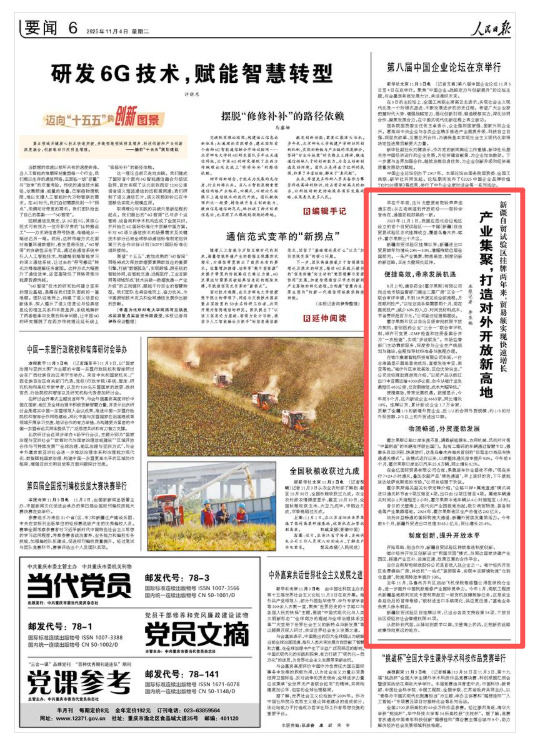
新疆自贸试验区挂牌两年来,贸易额实现快速增长 产业集聚,打造对外开放新高地
Ren Min Ri Bao· 2025-11-04 00:42
Core Points - The establishment of the China (Xinjiang) Pilot Free Trade Zone on November 1, 2023, marks a significant development in the region, covering Urumqi, Kashgar, and Horgos, and aims to enhance trade and economic activities [1] Group 1: Trade and Economic Growth - Since the establishment of the Xinjiang Free Trade Zone, the region's import and export trade volume has grown at an annual rate of 20% to 30%, consistently ranking among the top in the country [1] - In the first eight months of this year, the total foreign trade import and export value of Xinjiang reached 356.31 billion yuan, representing a year-on-year increase of 25.4% [3] Group 2: Business Environment and Opportunities - The Horgos area has implemented a "three-in-one" joint review mechanism for pharmaceutical companies, significantly reducing the time and costs associated with regulatory approvals by 60% [2] - In the first eight months of this year, 6,663 new enterprises were established in the region, a year-on-year increase of 10%, contributing to one-third of the new foreign-funded enterprises in Xinjiang [2] Group 3: Logistics and Infrastructure - The Horgos port has seen a significant increase in efficiency, with an 80% improvement in overall customs clearance efficiency due to the introduction of a rapid customs clearance model [3] - The local vehicle customs clearance time has been reduced from 6 hours to 1 hour, enhancing the logistics capabilities of the region [3] Group 4: Institutional Innovation - The Xinjiang Free Trade Zone has introduced 54 supportive policies and delegated 45 economic and social management powers to enhance operational efficiency and attract investment [5] - The establishment of the "two countries, double parks" model in the Kashgar Economic Development Zone aims to foster cross-border cooperation and mutual benefits in industrial development [4]
新疆自贸试验区挂牌两年来 贸易额实现快速增长 产业集聚 打造对外开放新高地
Ren Min Ri Bao· 2025-11-03 22:20
Core Viewpoint - The establishment of the China (Xinjiang) Free Trade Zone marks a significant development in enhancing trade and economic activities in the region, with a focus on efficient logistics, institutional innovation, and increased foreign investment. Group 1: Trade Growth - Since the establishment of the Xinjiang Free Trade Zone, the region's import and export trade volume has grown by an annual average of 20% to 30%, consistently ranking among the top in the country [1] - In the first eight months of this year, Xinjiang's total foreign trade import and export value reached 356.31 billion yuan, representing a year-on-year increase of 25.4% [3] Group 2: Business Development - The region has seen the establishment of 6,663 new enterprises in the first eight months of this year, a year-on-year increase of 10%, contributing to one-third of the new foreign-funded enterprises in Xinjiang [2] - Since its establishment, the Free Trade Zone has cumulatively set up over 17,000 new enterprises, accounting for nearly half of the contract foreign capital scale in the region [2] Group 3: Logistics Efficiency - The introduction of a "self-driving export goods vehicle rapid customs clearance model" has improved overall customs clearance efficiency at the Horgos port by 80% [3] - The time for local vehicles to clear customs has been reduced from 6 hours to 1 hour, significantly enhancing logistics efficiency [3] Group 4: Institutional Innovation - The establishment of the "two countries, double parks" model in the Kashgar Economic Development Zone promotes cross-border cooperation and mutual benefits in industrial development [4] - A total of 54 support policies have been introduced since the Free Trade Zone's establishment, along with the delegation of 45 economic and social management powers to the regional level [6]
商务部召开例行新闻发布会(2025年9月25日)
Shang Wu Bu Wang Zhan· 2025-09-25 08:16
Group 1 - The core viewpoint of the news is the emphasis on the development of digital consumption in China, highlighting its potential to significantly contribute to the economy and improve quality of life [3][4]. - The "Guiding Opinions" issued by the Ministry of Commerce and other departments aim to enhance digital consumption quality and scale, projecting a digital consumption size of 23.8 trillion yuan in 2024, accounting for 44.2% of total household consumption [3][4]. - The document focuses on three key aspects: promoting digital consumption, driving innovation through digital technology, and enhancing quality of life through digital services [4]. Group 2 - The "Guiding Opinions" encourage the integration of artificial intelligence in various consumer sectors, aiming to create immersive and experiential consumption scenarios [4]. - The Ministry of Commerce plans to implement measures to ensure the effective execution of the "Guiding Opinions," aiming to stimulate digital consumption potential [4]. - The service export policies introduced by the Ministry of Commerce and other departments include 13 practical measures to enhance service export competitiveness, with a focus on high-tech and high-value-added services [10][11]. Group 3 - The service export total is projected to grow from $219.1 billion in 2014 to $445.9 billion in 2024, with an average annual growth rate of 7.3% [10]. - The new policies aim to provide more detailed support for service exports, streamline tax refund processes, and enhance financial services for small and medium enterprises [11]. - The Ministry of Commerce will work with relevant departments to ensure the policies are implemented effectively, enhancing the international competitiveness of service export enterprises [11].
权威数读丨“含金量”“含新量”不断提高!这几组外贸数据要关注
Xin Hua Wang· 2025-08-12 05:50
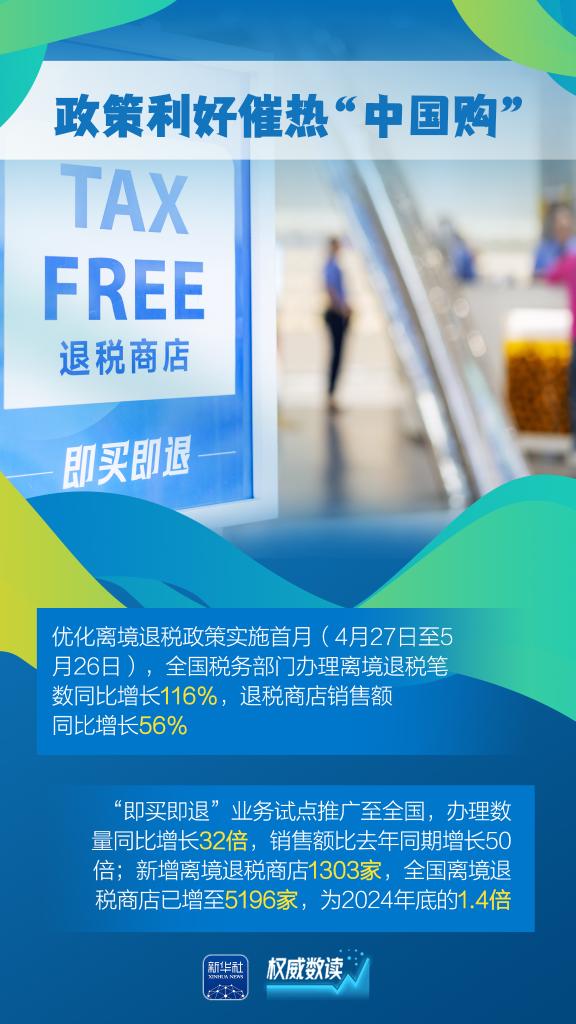
Core Insights - China's foreign trade has shown resilience and vitality in a complex environment, with significant growth in various sectors and markets [1] Group 1: Foreign Trade Performance - In the first five months of the year, China's imports and exports to countries involved in the Belt and Road Initiative increased by 4.2% [9] - Exports to ASEAN countries grew by 9.1%, while exports to Africa rose by 12.4%, indicating a diversification of market patterns [9] - Private enterprises' imports and exports increased by 7%, accounting for 57.1% of China's total foreign trade, a 2.4 percentage point increase from the previous year [12] Group 2: High-Value and High-Tech Products - In the first five months, exports of electromechanical products grew by 9.3%, making up 60% of total exports [15] - Notable growth was seen in integrated circuit exports, which increased by 18.9%, and electric vehicle exports, which rose by 19% [15] Group 3: New Trade Dynamics - The implementation of the optimized departure tax refund policy led to a 116% year-on-year increase in the number of tax refund transactions and a 56% increase in sales at refund stores [4] - The "immediate purchase and refund" business model has been expanded nationwide, with a 32-fold increase in transaction numbers and a 50-fold increase in sales compared to the previous year [4] Group 4: E-commerce and International Cooperation - The number of Silk Road e-commerce partner countries has reached 35, with the establishment of 120 online and offline national pavilions [22] - The fourth China-Africa Economic and Trade Expo resulted in 176 signed projects worth $11.39 billion, a 45.8% increase in project quantity compared to the previous session [25] Group 5: Future Trade Projections - Trade between China and South Asian countries is projected to approach $200 billion by 2024, doubling over the past decade with an average annual growth rate of approximately 6.3% [28]
“丝路电商”伙伴国增至36个 经贸合作朋友圈又扩大了
Yang Shi Xin Wen· 2025-07-18 09:32
Core Viewpoint - The Chinese government emphasizes the significant achievements and innovations made during the "14th Five-Year Plan" period, particularly through the establishment and development of Free Trade Zones (FTZs) as a means of institutional opening and economic growth [1][2]. Group 1: Free Trade Zones (FTZs) - The number of FTZs in China has reached 22, covering various regions and forming a comprehensive framework for institutional opening [2]. - FTZs have generated 200 institutional innovation results over the past five years, providing tangible benefits to enterprises and the public [2]. - By 2024, the share of foreign trade and foreign investment from FTZs is projected to reach 19.6% and 24.3% of the national totals, respectively, indicating a robust development of an open economy [2]. Group 2: Belt and Road Initiative (BRI) - Trade with countries involved in the BRI has increased from $2.7 trillion in 2021 to $3.1 trillion in 2024, with an average annual growth rate of 4.7% [3]. - The proportion of trade with BRI countries in China's overall trade has risen from 45.3% to 50.7%, further increasing to 51.8% in the first half of this year [3]. - From 2021 to mid-2025, bilateral investment with BRI countries has exceeded $240 billion, with direct investment from China surpassing $160 billion [3]. - The total revenue from contracted projects in BRI countries has reached nearly $600 billion during the same period, showcasing solid project execution and expanding cooperation in emerging fields [3].
向新而行 聚势而强——一季度十二师经济运行观察
Sou Hu Cai Jing· 2025-05-14 06:58
Core Viewpoint - The Xinjiang Production and Construction Corps's 12th Division is demonstrating a strong commitment to high-quality development, achieving a GDP of 5.23 billion yuan in Q1, with a year-on-year growth of 5.6%, despite facing multiple challenges [1] Economic Performance - The primary industry saw a significant increase in value added by 33.6% year-on-year, driven by the flourishing flower gardening and livestock sectors, indicating a successful transition from traditional agriculture to modernization and branding [2] - The industrial sector also showed stable growth, with industrial production increasing by 13.6% year-on-year, supported by energy supply and food processing [2] Industrial Growth - Natural gas supply doubled, contributing to a 100% increase in output value for Xinjiang Dexin Hengyang Gas Co., which boosted the overall industrial output value by 6.58 percentage points [3] - The construction industry experienced a 7.8% increase in total output value, with major contributions from leading companies [3] Demand Recovery - Investment, consumption, and exports are identified as the three driving forces of economic growth, with wholesale sales increasing by 20.88% year-on-year [4] - Fixed asset investment grew by 16.6%, with a focus on infrastructure and livelihood projects, indicating a structural optimization [4] Investment and Innovation - The 12th Division is emphasizing effective investment, with significant progress in major projects and strong support from industrial and private investments [5] - As part of the first pilot free trade zone in Northwest China, the 12th Division is exploring new paths for an outward-oriented economy, with foreign trade enterprises achieving an import-export value exceeding 5.4 billion yuan [6] New Consumption Trends - The rise of night economy and experiential consumption is evident, with new shopping centers attracting significant foot traffic and boosting local business revenues [7] - Non-profit service industries are also growing, contributing positively to GDP, with companies providing safety services and community support seeing substantial revenue increases [7]
积极推进提质增效进一步发挥“两区”带动作用
第一财经· 2025-05-12 00:50
Core Viewpoint - The development of Free Trade Zones (FTZs) and National Economic and Technological Development Zones (NETDZs) is increasingly important in the current complex international situation, emphasizing the need for reform and innovation to enhance their roles in promoting economic growth and opening up the economy [2][5]. Group 1: Free Trade Zones (FTZs) - In 2023, the total import and export volume of FTZs reached 7.67 trillion yuan, accounting for 18.4% of the total import and export value of the country [2]. - The State Council has issued a notice to promote the replicable reform pilot experiences from the Shanghai FTZ, covering areas such as investment management, trade facilitation, financial sector openness, and service industry liberalization [3]. - The recent State Council meeting emphasized the need for FTZs to align with international high-standard economic and trade rules, increase institutional innovation, and explore differentiated approaches to achieve breakthrough results [4]. Group 2: National Economic and Technological Development Zones (NETDZs) - In 2023, NETDZs achieved a total import and export volume of 10 trillion yuan, representing over 24% of the national total [2]. - The State Council meeting highlighted the importance of strengthening the support for land, talent, and capital resources for NETDZs, and called for the development of supportive policies and measures [5]. - NETDZs are tasked with serving the overall national strategy, acting as experimental fields for institutional reform and innovation, and becoming pioneers in promoting high-level opening up and regional coordinated development [5].

一财社论:积极推进提质增效进一步发挥“两区”带动作用
Di Yi Cai Jing· 2025-05-11 12:46
Group 1 - The importance of promoting the development of free trade pilot zones and national economic and technological development zones has increased in the current complex international situation [1][4] - In 2023, the total import and export volume of free trade pilot zones reached 7.67 trillion yuan, accounting for 18.4% of the total import and export value; national economic and technological development zones had a total import and export volume of 10 trillion yuan, exceeding 24% of the national total [1][2] - The State Council has issued a notice to replicate and promote the reform and innovation achievements from the Shanghai Free Trade Zone across other regions, emphasizing the need for continuous improvement and efficiency enhancement [2][3] Group 2 - The "Opinions" issued by the Central Committee and the State Council highlight the need for systematic reforms and improvements in the free trade pilot zones over the next five years, aiming for a comprehensive enhancement of the open economy quality [3] - The State Council meeting emphasized the need to support free trade pilot zones in aligning with international high-standard economic and trade rules, increasing institutional innovation, and facilitating cross-border data flow [3] - National economic and technological development zones are required to strengthen the guarantee of land, talent, and funding, and to create a better environment for their development [4]