
舆论战

Search documents
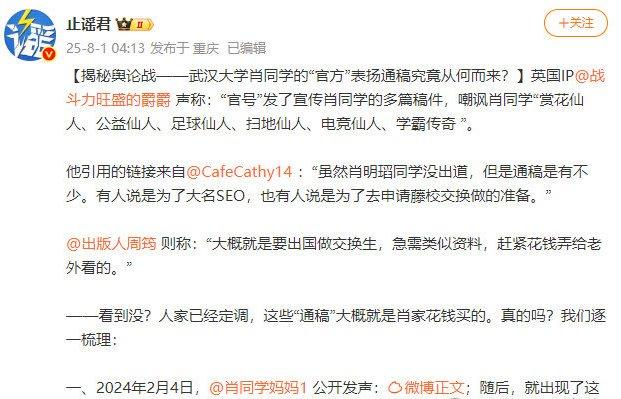
被忽略的疑点,武大事件的“通稿”……究竟是谁发的?细思极恐!
Xin Lang Cai Jing· 2025-08-01 15:05
Core Viewpoint - The article discusses the manipulation of public opinion surrounding a campus incident at Wuhan University, highlighting the emergence of SEO-driven positive articles aimed at reshaping the narrative around a student involved in the controversy [1][10][12]. Group 1: Media Manipulation - A collection of similar SEO articles praising the student emerged after the student's mother publicly spoke out, indicating a coordinated effort to create a positive image [4][5]. - The articles were disseminated through various media channels, including official media self-media accounts, suggesting a blend of official and unofficial narratives [4][5]. - The content of these articles was criticized for being generic and lacking news value, raising questions about the motivations behind their publication [7][9]. Group 2: Theories of Operation - Two main theories emerged regarding the origin of these articles: one suggesting a clumsy crisis management effort by the student's family, and the other proposing a more sinister, organized campaign to discredit the family [7][10]. - The first theory posits that the family sought to counteract negative public sentiment by commissioning positive articles, although the execution appeared poorly done [7][9]. - The second theory suggests a strategic "false flag" operation aimed at discrediting the family by portraying them as attempting to manipulate public perception, thus shifting the focus from the incident itself to the family's social status [10][12]. Group 3: Implications for Public Discourse - The incident reveals a troubling reality about public discourse being increasingly polluted by organized information warfare, where media platforms may compromise their credibility for short-term gains [16]. - The article emphasizes that the complexity of these operations indicates a deeper understanding of communication strategies, moving beyond simple attacks to more sophisticated agenda-setting [14][15]. - The involvement of organized groups with ideological motives raises concerns about the integrity of public discussions and the challenges faced by individuals in defending their positions against such orchestrated campaigns [16].

除了让时间说话,农夫山泉做对了什么
Mei Ri Jing Ji Xin Wen· 2025-07-27 13:48
Core Viewpoint - The stock price of Nongfu Spring has surged by 5.57%, reaching a 42-month high and a market capitalization of 523 billion HKD, amidst a reversal of public sentiment following the "Zong family inheritance" controversy [1] Group 1: Brand Defense Strategies - The founder, Zhong Shanshan, actively engaged in public discourse by addressing rumors and participating in interviews to clarify the company's position [2] - The company utilized legal measures to counteract negative publicity, exemplified by a swift response to a consumer report from the Hong Kong Consumer Council [3] - Zhong Shanshan adopted a humble approach in public discussions, criticizing online bullying while maintaining a focus on product quality [4] Group 2: Public Perception and Market Position - The public began to reassess the company's image, recognizing the complexity of entrepreneurs and the importance of their contributions to society despite personal controversies [5] - The turnaround in Nongfu Spring's market position is attributed not only to improved public relations but also to strong product offerings, including the launch of new beverage lines [5]

京东入局酒旅搅动行业风云:一场与携程的“破独”之战
Sou Hu Cai Jing· 2025-06-20 12:15
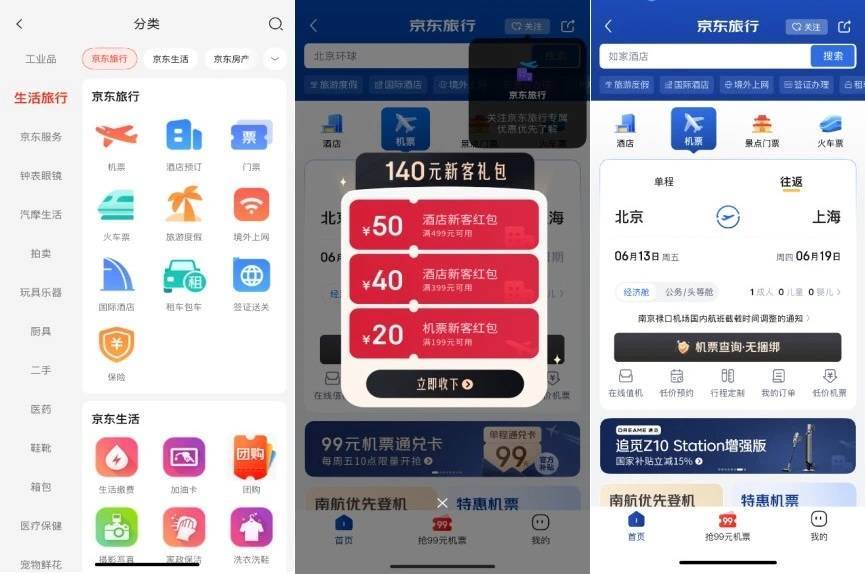
Core Viewpoint - JD.com has officially entered the hotel industry, aiming to disrupt the market dominated by Ctrip, amidst growing dissatisfaction among hotel operators regarding Ctrip's pricing strategies [1][2][3] Group 1: JD.com's Strategy - JD.com announced three key initiatives to attract hotels: waiving commissions for up to three years for participating hotels, leveraging its user base of 800 million and over 30,000 large enterprises to drive traffic to hotels, and utilizing high-frequency scenarios like food delivery to stimulate demand [2][3] - The company aims to capitalize on the high gross margins in the hotel sector, where Ctrip has maintained an 80% gross margin, presenting a significant opportunity for JD.com [3][6] - JD.com's entry into the hotel market is seen as a strategic move to find a high-margin growth engine, especially as its other business segments face increasing costs and competition [3][6] Group 2: Market Dynamics - Ctrip has historically controlled over half of the hotel market share, with its revenue for 2024 reaching 533 billion yuan, which is 4.6% of JD.com's total revenue, yet its profit is nearly half of JD.com's [6][8] - The hotel industry is currently facing profit challenges, with major hotel chains like Huazhu and Jinjiang reporting declines in net profit, indicating a difficult environment for hotel operators [7][10] - Ctrip's pricing strategies, including its "price adjustment assistant," have led to significant dissatisfaction among hotel operators, who feel pressured by automatic price adjustments that undermine their profitability [11][12] Group 3: Competitive Landscape - Despite JD.com's potential advantages, Ctrip remains a formidable competitor, having maintained its market position through established user trust and operational control [14][15] - The competitive landscape is further complicated by other players like Meituan and Fliggy, which have also captured market shares, indicating that JD.com will face significant challenges in gaining traction [14][15] - The ongoing tension between hotels and Ctrip highlights the need for a challenger in the market, and JD.com's entry could provide the necessary disruption to improve conditions for hotel operators [16][17]


【环时深度】盘点印巴冲突升级背后的舆论暗战
Huan Qiu Shi Bao· 2025-05-19 22:48
Core Viewpoint - The recent India-Pakistan conflict has highlighted the role of information warfare, with both sides claiming victory and utilizing social media to shape narratives, amidst a backdrop of misinformation and AI-generated content [1][2][3]. Group 1: Conflict Overview - A ceasefire agreement was reached on May 10 after several days of intense conflict, marking one of the most severe confrontations in recent years [1]. - The conflict saw significant aerial engagements, with both sides claiming to have inflicted damage on each other's military assets [1][3]. Group 2: Information Warfare - Misinformation has been rampant, with both Indian and Pakistani media disseminating unverified claims about military successes and losses [2][4]. - AI tools like Grok have been employed by netizens to verify the authenticity of videos and images related to the conflict, revealing a mix of credible and fabricated content [2][3]. Group 3: Domestic Reactions - In India, the media has reported exaggerated claims to stir nationalist sentiments, while the government has faced backlash for perceived weakness in handling the situation [4][5]. - Pakistan's media has taken a more subdued approach, focusing on maintaining public morale and avoiding incitement of anti-India sentiment [6][5]. Group 4: International Dynamics - The U.S. has been drawn into the narrative, with President Trump claiming credit for mediating the ceasefire, which India has denied, emphasizing its preference for no external intervention [7][8]. - The conflict has raised concerns about India's strategic autonomy, as international involvement could complicate its long-standing position on Kashmir as an internal matter [7][8].
“阵风”战机被击落,“印度优势”破产
Hu Xiu· 2025-05-09 11:56
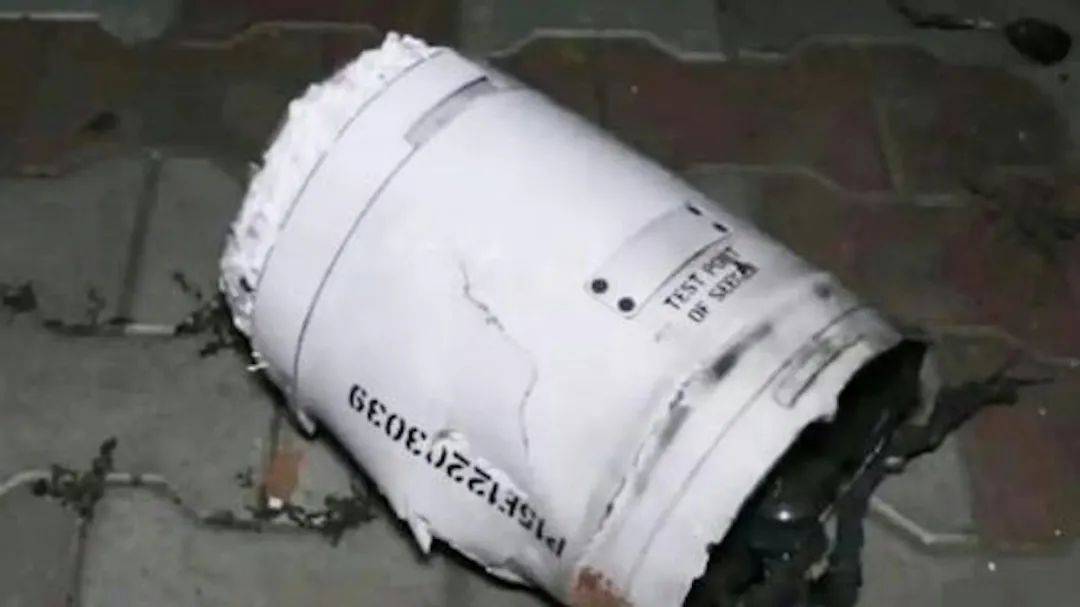
Group 1 - The military conflict between India and Pakistan has shifted from traditional air combat to drone warfare, with India launching large-scale drone attacks against Pakistan [2][4] - Pakistan's military reported shooting down 25 Israeli-made Harop suicide drones launched by India in a single day [2] - The situation remains tense, with accusations and denials from both sides regarding drone and missile attacks along the Line of Control [2][5] Group 2 - Indian media reported that the Indian Navy conducted an attack on Karachi, Pakistan, marking a significant escalation, but this claim was quickly labeled as false [3] - The conflict has seen a surge in misinformation and sensational news on social media, complicating the verification of claims made by both sides [6][8] - The narrative surrounding the conflict has become a part of the warfare, with both sides engaging in a "war of words" alongside military actions [4][7] Group 3 - The recent escalation in conflict was triggered by a terrorist attack in the Indian-administered Kashmir region, leading to India's Operation Sindoor targeting alleged terrorist facilities in Pakistan [5] - There are ongoing debates about whether the conflict will escalate further, with analysts suggesting that domestic political factors in India may influence its military strategy [12] - The potential for new forms of warfare, such as drone strikes and cyber warfare, is being considered in the context of the evolving military landscape [13][14]
海外反转交易继续,国内科技赛道有亮点
Hu Xiu· 2025-04-29 11:54
Group 1 - The article discusses the current state of the domestic stock market, which is relatively stable with minor declines in major indices, indicating a lack of significant opportunities [3] - The focus shifts to the U.S. market, where high-level officials are concerned about the market returning to a "danger zone" following previous tensions with China [3] - U.S. Treasury Secretary Janet Yellen is employing a "carrot and stick" approach in dealing with China, suggesting that China has a responsibility to resolve trade issues, which reflects a shift from direct confrontation to a more diplomatic stance [3] Group 2 - The technology sector, particularly semiconductors and artificial intelligence, has shown slight increases, but significant growth is not expected before the upcoming holiday [3] - The article highlights the ongoing effects of recent meetings and discussions, which continue to influence market sentiment and performance [3]
刘强东和王兴:从“东兴饭局”到“外卖大战”
Hu Xiu· 2025-04-24 02:03
Core Viewpoint - The competition between Meituan and JD.com in the food delivery sector has intensified, with both companies engaging in strategic maneuvers and public relations battles to gain market share and consumer favor [1][3][12]. Group 1: Competitive Dynamics - JD.com announced its entry into the food delivery market in February, positioning the battle not just in food delivery but in a broader instant retail context [2]. - Meituan's CEO publicly challenged JD.com, leading to a response from JD.com's founder, who set a profit cap for JD's food delivery service at 5% [4]. - Meituan's net profit margin was reported at 10.6%, but its food delivery segment's profit margin is significantly lower, at nearly 3% [4]. Group 2: Public Relations and Marketing Strategies - JD.com has been leveraging public sentiment by addressing issues such as delivery delays and promising free orders for late deliveries [5]. - Meituan responded to JD.com's claims with clarifications and rebuttals, indicating a back-and-forth in public perception management [6][7]. - JD.com's marketing strategy includes high-profile public appearances by its founder, which have generated significant online buzz [9][10]. Group 3: Market Position and Performance - JD.com currently delivers approximately 5 million orders daily, while Meituan leads with 70-80 million and Ele.me with around 30 million [11]. - Despite the lower order volume, JD.com is employing aggressive tactics like zero commission and substantial subsidies to attract users [11][29]. - Meituan's new instant retail service, "Meituan Flash Purchase," aims to compete directly with JD.com by offering rapid delivery of a wide range of products [15][17]. Group 4: Strategic Comparisons - The competitive landscape is likened to historical military strategies, with Meituan's approach being more defensive and JD.com's being aggressive and bold [13][20]. - Both companies exhibit distinct strategic characteristics, with Meituan focusing on operational efficiency and JD.com on expansive growth and market penetration [23][28]. Group 5: Future Outlook - The ongoing competition is expected to lead to improved service ecosystems, benefiting merchants, delivery personnel, and consumers alike [31].