财政金融协同促内需

Search documents
21社论丨统筹促消费与扩投资,拓展内需增长新空间
21世纪经济报道· 2026-03-07 01:10
Core Viewpoint - The 2026 economic policy emphasizes building a strong domestic market, prioritizing domestic demand, and balancing consumption and investment to expand new growth spaces for domestic demand [1] Group 1: Consumption - China's consumer market remains the second largest globally, and when adjusted for purchasing power parity, it ranks first [1] - The focus on expanding domestic demand extends beyond goods consumption to service consumption, which has significant potential for growth [1] - A special government bond of 250 billion yuan will support the replacement of consumer goods, with an emphasis on optimizing policy implementation mechanisms [1] - The national service industry conference will be held this year to explore high-quality development potential in the service sector [2] Group 2: Investment - The new government bond issuance for this year is set at 11.89 trillion yuan, marking a record high [3] - Policies will focus on stimulating private investment and encouraging both state-owned and private enterprises to participate in infrastructure projects [3] - Investment will target 109 major projects under the "14th Five-Year Plan," with an estimated investment exceeding 7 trillion yuan in key areas such as water networks, electricity networks, and artificial intelligence [3] - Emerging industries like integrated circuits, aerospace, and biomedicine are expected to see significant growth, with related output projected to approach 6 trillion yuan by 2025 and potentially double by 2030 [3] Group 3: Policy Innovation - A new initiative will establish a 100 billion yuan fund to promote domestic demand through financial collaboration, leveraging consumer spending and private investment [4] - The policy aims to create synergy among fiscal, financial, and industrial policies to enhance the flow of capital into consumption and the real economy [4] - Overall, the 2026 economic policy reflects a balance of immediate growth stabilization and long-term momentum building, demonstrating a pragmatic and steady approach [4]


财长详解今年财政政策亮点
第一财经· 2026-03-06 13:43
Core Viewpoint - The article discusses China's implementation of a more proactive fiscal policy in 2026 to promote stable economic growth, highlighting increased funding, policy collaboration, and enhanced efficiency in fiscal spending [3][4]. Group 1: Fiscal Policy Highlights - The scale of national general public budget expenditure has reached a new high of 30 trillion yuan, marking a significant increase [3]. - The new government bond issuance has reached 1.189 trillion yuan, aimed at boosting domestic demand and stabilizing growth [3]. - The total transfer payments from the central government to local governments have reached 1.042 trillion yuan, providing more financial resources for local governments to ensure basic livelihood, wages, and operational stability [3]. Group 2: Spending Growth and Efficiency - The combined budget for national general public expenditure and government fund expenditure is approximately 41.88 trillion yuan, reflecting a growth of about 4.6% compared to 2025 [4]. - Improving the efficiency of fiscal funds is emphasized, with a potential 1% increase in overall efficiency equating to savings of 300 billion yuan [4]. Group 3: Policy Collaboration and Support - A notable highlight of the fiscal policy is the establishment of a 100 billion yuan fiscal-financial collaboration fund to stimulate domestic demand, with six targeted policies supporting private investment and consumer spending [5]. - In the first two months of the year, new loans for service industry operations and personal consumption reached 5.1 trillion yuan, a year-on-year increase of 7% [6]. Group 4: Focus on Key Areas - Fiscal spending is increasingly directed towards key areas such as education, social security, health, and housing, with a total exceeding 12.4 trillion yuan [6]. - The budget for scientific and technological spending is nearly 1.3 trillion yuan, reflecting a growth of 7.1% [6]. Group 5: Budget Management and Cost Control - The government is committed to stringent budget management, with a reduction of over 7% in central government "three public" expenditures and a 10% cut in meeting and training expenses [7]. - Local governments have also tightened budgets, with 20 provinces saving over 12 billion yuan to allocate more funds to critical areas [7].
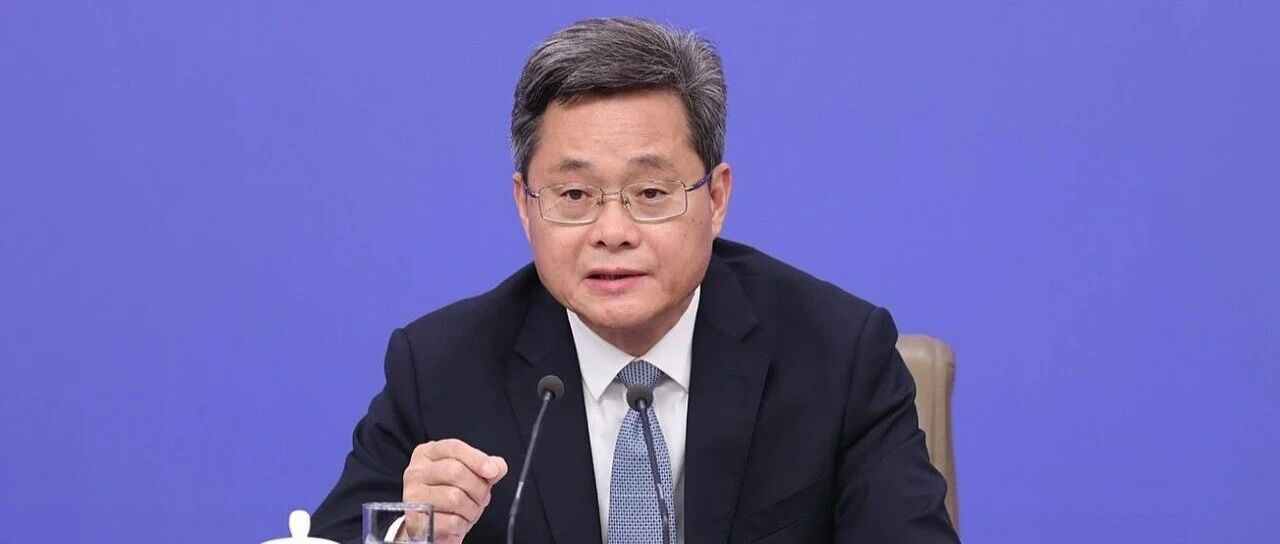
五位部长重磅发声,信息量巨大
盐财经· 2026-03-06 11:43
Group 1 - The total market value of A-shares exceeds 110 trillion yuan, highlighting the importance of the stock market as a barometer for economic health [2] - The "14th Five-Year Plan" aims to enhance the scale of the service industry to over 100 trillion yuan and the artificial intelligence industry to exceed 10 trillion yuan by the end of the plan [4] - The central government plans to establish a national-level merger and acquisition fund to support restructuring and alleviate "involution" competition [4] Group 2 - The central bank will flexibly utilize various monetary policy tools, including interest rate cuts, to maintain an appropriately loose monetary policy [3] - By the end of 2025, foreign institutions and individuals are expected to hold over 10 trillion yuan in domestic RMB financial assets [3] - The Ministry of Finance will continue a more proactive fiscal policy in 2026, with a focus on stimulating domestic demand through innovative financial tools [3][4] Group 3 - The consumption market in China is projected to become the largest in the world by purchasing power parity during the "14th Five-Year Plan" [4] - Offline retail consumption growth has outpaced online for the first time during the recent Spring Festival holiday [4] - The cross-border e-commerce import and export scale reached 2.75 trillion yuan, marking a significant growth area for foreign trade [5]
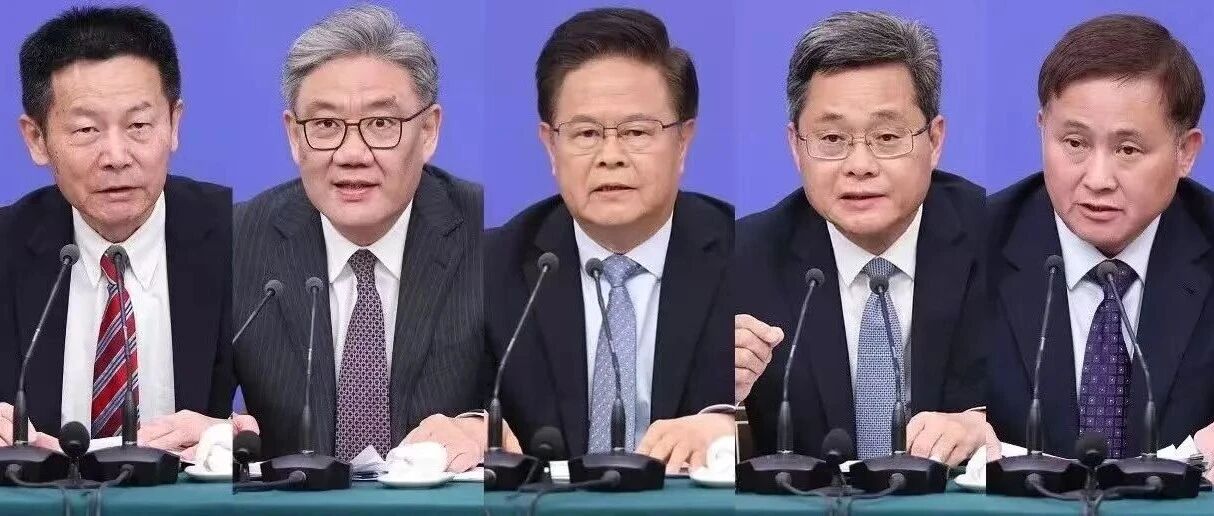
郑栅洁、蓝佛安、王文涛、潘功胜、吴清权威发声,要点来了
财联社· 2026-03-06 11:18
Group 1 - The expected GDP increment for this year is over 6 trillion yuan [2] - By the end of the "14th Five-Year Plan," the scale of the artificial intelligence industry is projected to exceed 1 trillion yuan [2] - The "14th Five-Year Plan" outlines that the output value of six emerging pillar industries, including integrated circuits and aerospace, is expected to expand to over 10 trillion yuan by 2030 [4] Group 2 - The central government has allocated 100 billion yuan to promote domestic demand this year [5] - Fiscal spending on education and health is expected to exceed 12.4 trillion yuan this year [6] - The A-share market's total market value has surpassed 110 trillion yuan [11] Group 3 - The A-share market will implement a more precise and inclusive listing standard on the ChiNext board to support innovative enterprises [13] - There will be a crackdown on market manipulation and fraudulent activities to enhance investor protection [11][13]

消费1000亿专项资金:来源与使用
CAITONG SECURITIES· 2026-03-06 10:59
Funding Source - The newly established 100 billion yuan fiscal-financial collaborative fund for stimulating domestic demand may not be entirely sourced from the issuance of long-term special government bonds[5] - The 2026 government work report proposed issuing 1.3 trillion yuan in long-term special government bonds, with 800 billion yuan for "two重" and 250 billion yuan for consumer goods replacement, totaling 1.25 trillion yuan[5] - There remains 500 billion yuan in funding whose purpose is unclear, which could potentially be redirected to the 100 billion yuan fund[5] Fund Utilization - The fund will primarily utilize three financial tools: loan interest subsidies, financing guarantees, and risk compensation, which leverage fiscal funds to stimulate bank credit without directly increasing fiscal expenditure[5] - In Shanghai, the policy focuses on loan interest subsidies, providing 1%-1.5% interest support for personal consumption loans, service industry loans, and loans for small and micro enterprises[7] - Yunnan combines interest subsidies with financing guarantees, creating a "subsidy + guarantee" tool to enhance credit for private investment and small enterprises, with banks bearing at least 20% of the risk[8] Policy Implications - Both Shanghai and Yunnan's policies aim to expand domestic demand, with Shanghai emphasizing cost reduction for financing and Yunnan focusing on risk-sharing to support private investment[5] - The funding direction is concentrated on consumer credit, service industry financing, equipment upgrades, and support for private investment and small enterprises[5] Risk Considerations - There are limitations in policy forecasting and potential deviations due to incomplete implementation of consumption policies in some provinces[9] - The possibility of exceeding expected incremental policies exists if economic pressures are greater than anticipated[9] - Uncertainties in international geopolitical situations may also impact the timing of domestic policy implementation[9]
蓝佛安:中央安排1000亿元支持财政金融协同促内需
证券时报· 2026-03-06 08:39
十四届全国人大四次会议于2026年3月6日(星期五)下午3时,在梅地亚中心新闻发布厅举行记者会,邀请国家发展和改革委员 会主任郑栅洁、财政部部长蓝佛安、商务部部长王文涛、中国人民银行行长潘功胜、中国证券监督管理委员会主席吴清就发展改 革、财政预算、商务、金融证券等相关问题回答中外记者提问。 蓝佛安: 中央财政安排1000亿元支持财政金融协同促内需 财政部部长蓝佛安表示,内需为主导、内部可循环,这是大国经济的独特优势。当前我国经济总体向新向优,但是供强需弱的矛盾依然突出,居 民消费活力不足,民间投资增长偏弱,为破解这一问题,今年中央财政专门安排1000亿元,推出财政金融协同促内需一揽子6项政策,4项定向支 持民间投资、2项支持居民消费,形成财政传导、金融放大、市场运作的传导链条,撬动更大规模社会资源流向扩内需重点领域,叠加今年2500 亿元消费品以旧换新政策,力度大于去年。初步匡算,千亿级的财政资金可支持惠及万亿级的信贷,实现"四两拨千斤"的效果。 屏幕下方点个赞, 天天抓牛股! 版权声明 证券时报各平台所有原创内容,未经书面授权,任何单位及个人不得转载。我社保留追 究相关 行 为主体法律责任的权利。 证 券 ...

两会|蓝佛安:更加积极的财政政策力度给足
券商中国· 2026-03-06 08:31
Core Viewpoint - The article discusses the Chinese government's proactive fiscal policy aimed at boosting domestic demand and enhancing economic growth through innovative financial tools and increased government spending [2][4][5]. Group 1: Fiscal Policy Innovations - The Ministry of Finance has introduced a new fiscal-financial collaborative tool to stimulate domestic demand, focusing on enhancing resident consumption and private investment [4]. - This year's fiscal policy is characterized by a significant increase in the scale of government spending, with total public budget expenditures exceeding 30 trillion yuan for the first time [6]. - The new government bond issuance is set to reach 11.89 trillion yuan, marking the largest scale in recent years [6]. Group 2: Financial Support Mechanisms - Central government transfers to local governments have also reached a record high of 10.42 trillion yuan, maintaining over 10 trillion yuan for four consecutive years [6]. - A special fund of 100 billion yuan has been allocated to support the fiscal-financial collaboration aimed at boosting domestic demand, which is expected to leverage a much larger scale of social resources [7]. - The combination of this fiscal support with a 250 billion yuan policy for replacing consumer goods is anticipated to create a multiplier effect, potentially benefiting up to 1 trillion yuan in credit [8].
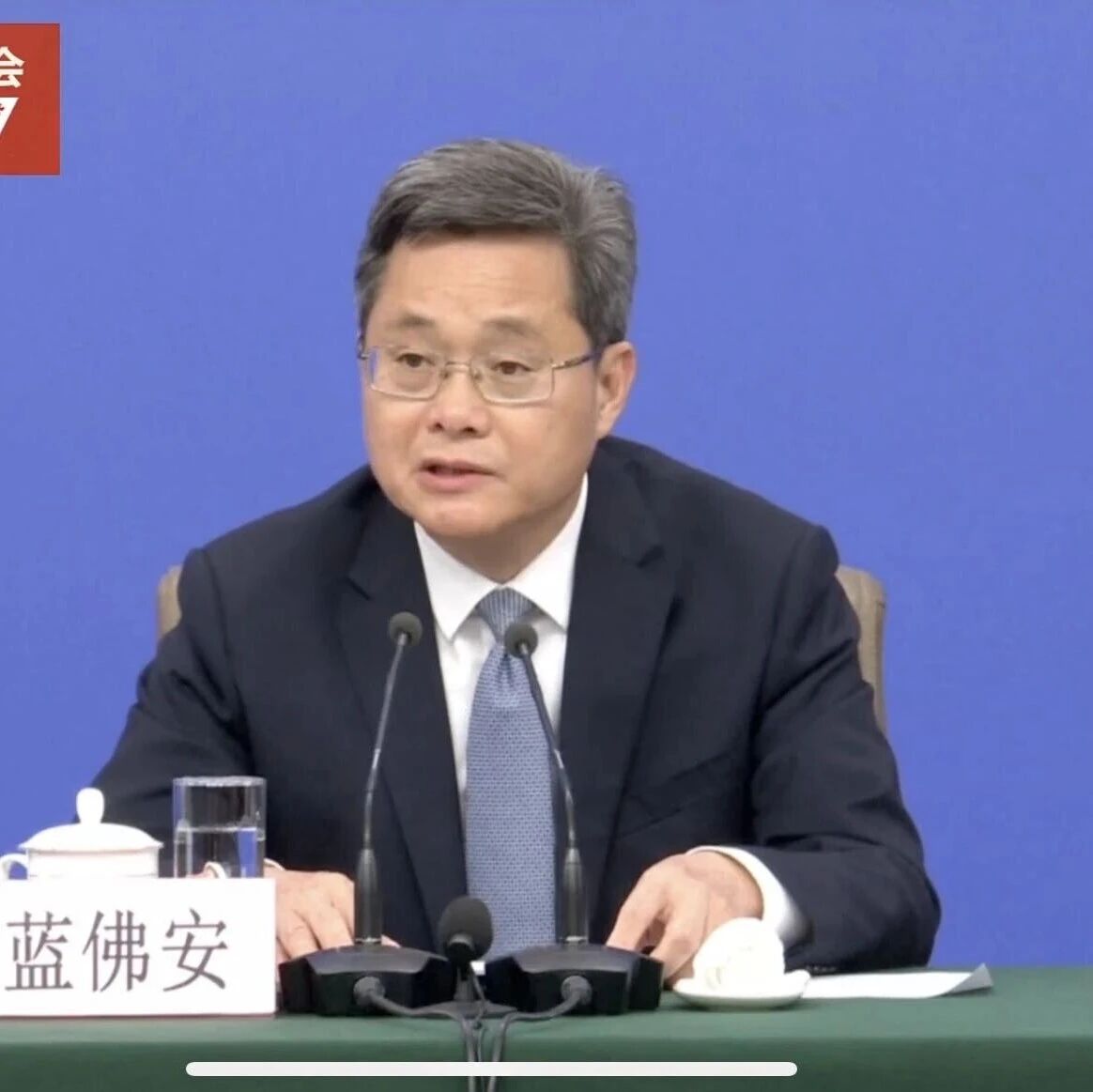
蓝佛安:更加积极的财政政策力度会给足
证券时报· 2026-03-06 07:57
Core Viewpoint - The article discusses the Chinese government's commitment to a more proactive fiscal policy, highlighting significant increases in fiscal spending, government bond issuance, and intergovernmental transfers to enhance local fiscal capacity [2][3][4][5]. Group 1: Fiscal Policy Initiatives - The Ministry of Finance emphasizes a more proactive fiscal policy characterized by substantial funding and enhanced policy coordination to amplify effects [2]. - Fiscal funding arrangements this year have reached new highs in three areas: total expenditure exceeding 30 trillion yuan, new government bond issuance at 1.189 trillion yuan, and intergovernmental transfers surpassing 10.42 trillion yuan for four consecutive years [3]. - A new policy tool has been established to promote domestic demand through fiscal and financial collaboration, focusing on boosting household consumption and private investment [4]. Group 2: Policy Effectiveness - The Ministry of Finance asserts that the more proactive fiscal policy this year has achieved a new level in both quantity and quality, ensuring better effectiveness and implementation [5].

千亿促内需专项资金怎么用?业内称有望撬动10万亿融资
第一财经· 2026-03-05 12:38
2026.03. 05 本文字数:2691,阅读时长大约5分钟 作者 | 第一财经 亓宁 在今年的政府工作报告中,扩大内需仍被置于重要位置,"消费"被高频提及。在政策部署层面,报告 明确,设立1000亿元财政金融协同促内需专项资金。 去年以来,财政金融协同扩内需的政策导向更加明确,相关制度举措进一步完善。多位受访人士表 示,今年政府工作报告明确新设立千亿规模的专项资金,一方面有助于促消费、扩内需金融政策更 好、更快地落地,为消费贷、经营贷贴息等政策优化和延续衔接提供保障;另一方面,专项资金也将 起到分担金融机构风险、优化信贷结构、拓展业务范围等作用。 总体来看,专项资金的设立有助于以市场化的方式优化金融资源配置,起到撬动作用。不过,也有业 内人士提示,政策落地过程中应注意结合前期经验,以有效监管确保资金专款专用且用在"刀刃"上, 防范金融机构或借款人违规套利、过度"内卷"等乱象。 促消费做"乘法"又有新安排 政府工作报告指出,促进商品消费扩容升级,安排超长期特别国债2500亿元支持消费品以旧换新, 优化政策实施机制。设立1000亿元财政金融协同促内需专项资金,组合运用贷款贴息、融资担保、 风险补偿等方式,支持 ...
1万元信用卡分期可省约50元,国补贴息怎么领
Xin Lang Cai Jing· 2026-02-12 08:54
Core Viewpoint - The new fiscal subsidy policy for credit card installment payments allows consumers to save up to 3,000 yuan annually, with a 1% annual subsidy rate, capped at 50% of the agreed annual interest rate for installments [2][3][4]. Group 1: Policy Implementation - Over 40 banks, including six state-owned banks and twelve national joint-stock banks, have announced the implementation of the new fiscal subsidy policy for credit card installment payments as of February 12 [2][3]. - The subsidy policy will be effective from January 1, 2026, to December 31, 2026, allowing cardholders to apply for the subsidy through various channels such as mobile banking apps and customer service [2][3]. Group 2: Financial Benefits - Consumers can save approximately 50 yuan on a 10,000 yuan purchase paid in 12 installments, with a subsidy of over 4 yuan per installment [3][10]. - The fiscal subsidy can be combined with existing bank discounts on credit card installments, potentially reducing the effective annual interest rate to around 3% [10]. Group 3: Consumer Awareness - Banks emphasize that there are no service fees for the subsidy application and warn consumers to be cautious of potential scams, as they do not collaborate with any loan intermediaries [10]. Group 4: Economic Context - The policy aims to support consumer financing needs and stimulate domestic demand, with various financial institutions involved in the implementation of the subsidy for personal consumption loans [4][5]. - The National Financial Regulatory Administration highlighted the importance of a favorable consumer finance environment for boosting market activity, especially during the upcoming Spring Festival [5].