
金发姑娘状态

Search documents
虽迟但到!韩美关税细则说明书公布 韩国经济吃下“定心丸”?
Di Yi Cai Jing· 2025-11-14 05:47
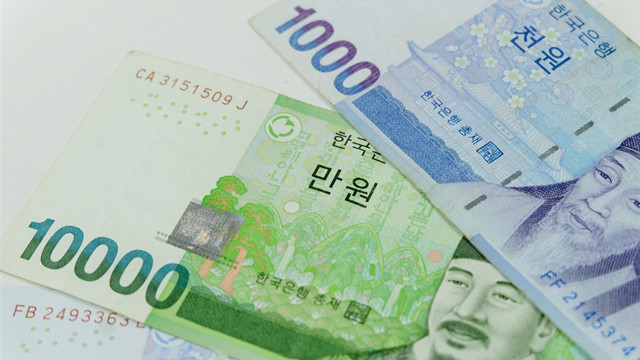
Group 1 - South Korea and the United States have reached an agreement on tariff and security negotiations, with South Korea's President Lee Jae-myung announcing the details on November 14 [1] - The agreement includes a commitment from South Korea to invest $350 billion in the U.S. and purchase $100 billion worth of energy products, leading to a reduction of tariffs from 25% to 15% [2][3] - The South Korean automotive industry is particularly affected, with exports of auto parts to the U.S. projected to reach $8.22 billion in 2024, accounting for 36.5% of total auto parts exports [2] Group 2 - In the third quarter of this year, Hyundai and Kia reported significant tariff expenses, with Hyundai's reaching approximately $12.4 billion and Kia's at around $1.23 billion, leading to a decline in operating profits of 29.2% and 49.2% respectively [3] - The South Korean government is pushing for the tariff reduction to be retroactive to November 1, with excess tariffs paid after this date to be refunded [3] - The investment plan includes $200 billion in cash investments and $150 billion for shipbuilding projects, with a commitment to optimize related systems for both U.S. commercial and military vessels to be built in South Korea [3] Group 3 - The Bank of Korea reported a GDP growth of 1.2% quarter-on-quarter and 1.7% year-on-year in the third quarter, marking the fastest growth since early 2024 [4] - The IMF has downgraded South Korea's economic growth forecast for this year from 2% to 0.9%, citing trade friction and weak domestic demand as major challenges [4][5] - Citibank predicts that South Korea's GDP growth could reach 2.2% by 2026, driven by strong semiconductor exports and weak energy prices, suggesting a stable economic outlook [5]
虽迟但到!韩美关税细则说明书公布,韩国经济吃下“定心丸”?
Di Yi Cai Jing· 2025-11-14 05:37
Group 1 - The recent agreement between South Korea and the United States on tariff and security negotiations has alleviated concerns in the South Korean industry, which was anxious about potential changes in trade conditions [1][3] - South Korea has committed to investing $350 billion in the U.S. and purchasing $100 billion worth of energy products, leading to a reduction in tariffs from 25% to 15% [3][4] - The automotive sector in South Korea is particularly affected, with exports of auto parts to the U.S. projected to reach $8.22 billion in 2024, accounting for 36.5% of total auto parts exports [3][4] Group 2 - In the third quarter of this year, Hyundai and Kia reported significant tariff expenses, with Hyundai's reaching approximately $12.4 billion and Kia's at about $1.23 billion, resulting in a year-on-year profit decline of 29.2% and 49.2%, respectively [4] - The South Korean government is pushing for the new 15% tariff rate to take effect retroactively from November 1, which would allow for refunds on excess tariffs paid [4][5] - The investment plan includes $200 billion in cash investments, with a cap of $20 billion per year, and an additional $150 billion allocated for shipbuilding projects [5] Group 3 - The South Korean economy is projected to grow at a rate of around 1% this year, influenced by strong semiconductor exports, despite the negative impact of U.S. tariffs [6][7] - The International Monetary Fund (IMF) has revised its growth forecast for South Korea from 2% to 0.9% due to trade tensions and weak domestic demand [6][7] - Citibank has a more optimistic outlook, predicting that South Korea's GDP growth could reach 2.2% by 2026, driven by strong semiconductor exports and declining energy prices [7]

黄金反弹凶猛!花旗喊出2027年底6000美元,但2026年3650美元
Sou Hu Cai Jing· 2025-11-13 12:25
Core Viewpoint - The recent report from Citigroup predicts that gold prices could potentially reach $6,000 per ounce by the end of 2027 under a specific bullish scenario driven by global wealth reallocation, although the base case suggests a decline to $3,650 per ounce by 2026 [1][5][7]. Group 1: Price Predictions - In a bullish scenario with a 30% probability, gold prices may hit $6,000 per ounce by the end of 2027, driven by significant global wealth reallocation [5][6]. - The base case scenario, which has a 50% probability, anticipates gold prices to decline to $3,650 per ounce by 2026 due to an improving U.S. economic environment [7][8]. - A bearish scenario with a 20% probability suggests that gold prices could fall to $3,000 per ounce by the end of 2026 or 2027 if geopolitical and economic concerns ease significantly [8]. Group 2: Market Dynamics - The U.S. market has been the primary driver of recent gold price increases, with U.S. gold ETF net inflows accounting for 60.9% of global totals in 2025 [13][17]. - The current physical gold market is experiencing a significant supply-demand gap, estimated to exceed 1,000 tons annually, indicating that new buying demand far exceeds the supply from mining and recycling [17]. - The report highlights that gold currently represents only about 0.1% of global household wealth, suggesting that even a slight increase in allocation could require a substantial amount of gold, potentially leading to price surges [9]. Group 3: Investment Trends - The report indicates that the investment demand, particularly from U.S. investors, is a key factor in the recent surge in gold prices, with net investment demand running at an annualized rate exceeding $350 billion [13]. - The valuation of gold is currently considered "very expensive," with multiple indicators reaching 50-year highs, raising concerns about potential overvaluation [10][14]. - The proportion of gold in global foreign exchange reserves has risen to nearly 35%, the highest level since the mid-1990s, reflecting increased central bank interest in gold as a reserve asset [15].

DLS MARKETS:油价下跌如何影响美债?通胀与利率的传导效应解析
Sou Hu Cai Jing· 2025-10-22 03:12
Group 1 - Core viewpoint: The continuous decline in oil prices may lead to a drop in the 10-year U.S. Treasury yield to around 3.75%, reflecting the complex interplay between macroeconomic indicators [1] Group 2 - Oil price decline: International oil prices have been on a downward trend, with WTI crude oil prices falling from approximately $80 per barrel in January to below $58, nearing levels seen during the COVID-19 pandemic [2] - Factors influencing oil prices: The drop in oil prices is primarily driven by an oversupply of global crude oil and widespread concerns about slowing global economic growth [2] Group 3 - Impact of oil prices on bond yields: Lower energy costs typically ease inflationary pressures, which are crucial for the Federal Reserve's monetary policy decisions. A sustained decrease in inflation could enhance expectations for interest rate cuts, leading to rising bond prices and falling yields [4] - Recent bond market response: Since October, the 10-year U.S. Treasury yield has decreased by approximately 18 basis points, reflecting both expectations for future rate cuts and concerns about the stability of parts of the U.S. banking system [4] Group 4 - Unusual market phenomenon: A rare occurrence of simultaneous increases in both U.S. stock and bond prices suggests that investors anticipate a "Goldilocks" scenario, where economic growth slows enough to curb inflation without triggering a recession [5] Group 5 - Market focus: The upcoming Federal Reserve policy meeting and the release of the September core CPI data are critical, with economists predicting a month-over-month increase of 0.3%, consistent with August [6] Group 6 - Analyst perspective on bond market: Even with ongoing economic growth, there remains potential for further increases in the bond market. Predictions indicate that the 10-year U.S. Treasury yield could drop to the 3.60%-3.70% range, levels briefly reached last year [7] Group 7 - Dual impact of falling oil prices: The decline in oil prices has a dual effect on the economy; it lowers energy costs, enhancing consumer purchasing power and stimulating demand, while also indicating a potential cooling of global economic activity [8]

美股的平静或是“波动的先兆”,摩根大通:保持警惕
Hua Er Jie Jian Wen· 2025-08-18 03:12
Group 1 - The core viewpoint of the articles highlights the cautious optimism surrounding the Federal Reserve's potential interest rate cuts, which have led to historical highs in the S&P 500 and Nasdaq indices, but warns of limited short-term upside for risk assets [1][2] - Morgan Stanley analysts suggest that while the market is currently in an ideal "Goldilocks" state, investors should remain vigilant about macroeconomic risks that could lead to a market pullback [2][3] - The report anticipates a potential 5-10% correction in the S&P 500, with a target range of 5800-6000 points, should economic weakness signals become pronounced [1][2] Group 2 - Inflation is expected to remain sticky, with recent CPI and PPI data aligning with forecasts, indicating upward pressure on prices due to tariffs [3] - Despite the inflation concerns, Morgan Stanley maintains its prediction of a 25 basis point rate cut by the Federal Reserve in September, driven by risk management considerations amid soft employment data [3] - The report emphasizes that the decision to maintain current policy rates will depend heavily on upcoming inflation and employment data [3] Group 3 - Geopolitical risks have resurfaced, particularly with the upcoming meeting between Russian President Putin and U.S. President Trump, which has increased market optimism regarding a potential ceasefire in Ukraine [4] - However, Morgan Stanley expresses skepticism about the sustainability of any peace agreement, citing unchanged fundamental goals from Russia regarding Ukraine's NATO and EU aspirations [4] Group 4 - Morgan Stanley recommends a cautious cross-asset strategy, advising a reduction in risk assets and a bearish outlook on the U.S. dollar [5] - The firm favors defensive sectors over cyclical ones in the stock market and sees European equities as undervalued compared to U.S. stocks [5] - In the fixed income space, emerging market rates are viewed as more attractive, particularly in Brazil and Mexico, while the firm suggests shorting copper as part of a hedging strategy [5]
