隐私保护

Search documents
莫让“小手表”成“大隐患”
Xin Lang Cai Jing· 2026-01-26 22:08
Core Viewpoint - The trend of children's smartwatches is shifting towards more complex features resembling smartphones, leading to concerns about children's excessive engagement in social and entertainment functions rather than focusing on safety and communication [1]. Group 1: Industry Trends - Children's smartwatches are increasingly incorporating social and entertainment features, which diverges from their original purpose of safety and communication [1]. - Parents express concerns that the growing complexity of these devices may lead to children becoming addicted to virtual social interactions [1]. Group 2: Recommendations - Schools and families should collaborate to guide children in the responsible use of smartwatches, enhancing their awareness of responsibility and privacy protection [1]. - There is a call for regulatory bodies to strengthen governance at the source, ensuring that children's smartwatches return to their primary function of ensuring safety [1].
谷歌以6800万美元和解谷歌助手隐私诉讼案
Xin Lang Cai Jing· 2026-01-26 15:09
Core Points - Google has agreed to pay $68 million to settle a lawsuit claiming that its voice assistant improperly monitored smartphone users, violating their privacy [2][5] - The preliminary class action settlement agreement was submitted to the U.S. District Court in San Jose, California, and requires approval from Judge Beth Labson Freeman [2][5] - Users alleged that Google illegally recorded and disseminated private conversations after the Google Assistant was triggered, in order to send targeted advertisements [2][5] - The Google Assistant is designed to respond to "hot words" like "Hey Google" or "Okay Google," similar to Apple's Siri [2][5] - Users opposed receiving advertisements after the Google Assistant mistakenly recognized their speech as the hot words [2][5] - In December 2024, Apple reached a similar settlement of $95 million with smartphone users [2][5] - Court documents indicate that Google denies any wrongdoing but opted for the settlement to avoid the risks, costs, and uncertainties of litigation [2][5] - The settlement agreement covers users who purchased Google devices or were illegally recorded and had their private conversations disseminated since May 18, 2016 [2][5] Legal Fees - Plaintiffs' attorneys may request up to one-third of the settlement amount, approximately $22.7 million in legal fees [3][6]


数字时代如何更好地保护隐私 ——读《论隐私与技术》
Shang Hai Zheng Quan Bao· 2026-01-25 18:54
Core Argument - The book "On Privacy and Technology" by Daniel J. Solove discusses the threats and challenges that digital technology and artificial intelligence pose to privacy, highlighting the significant regulatory gaps in current laws [3][4]. Group 1: Regulatory Gaps - Current privacy laws in the U.S. and EU are insufficient and fundamentally flawed, as they place too much responsibility on individuals who lack the time and expertise to manage their privacy effectively [3][4]. - The legal framework often fails to hold technology creators and users accountable, rendering many regulations ineffective [3][4]. Group 2: Importance of Privacy - Protecting personal privacy is crucial not only for individuals but also for achieving greater social value, as it helps create a fairer and more efficient societal framework [4]. - Privacy protection plays several important roles, including limiting government and corporate power, respecting individual choices, managing reputations, maintaining social boundaries, and ensuring trust in professional relationships [4]. Group 3: Corporate Practices - Despite tech companies' promises to respect user privacy, they often engage in excessive data collection and usage, disguising these actions through psychological tactics [5][6]. - Users are frequently misled into consenting to data usage without fully understanding the implications, as privacy notices are often complex and filled with legal jargon [6]. Group 4: Misconceptions about Privacy Regulation - The belief that market forces and technology will self-regulate privacy protection is a misconception, as self-regulation often proves to be ineffective [7]. - The argument that regulation stifles innovation is countered by the observation that compliance costs are a small fraction of overall profits, indicating that the issue lies in the willingness to innovate for compliance rather than the ability to do so [8]. Group 5: Digital Memory and Data Minimization - The explosion of digital storage capabilities has led to the retention of vast amounts of irrelevant personal data, which poses risks to user safety and privacy [9]. - There is a need for legislative reform to respect users' rights to delete their data and enforce data minimization obligations on companies [9]. Group 6: Call to Action - The book emphasizes the urgent need for a paradigm shift from "personal self-protection" to "institutional accountability" in privacy protection [10]. - Strong legal regulations are necessary to hold powerful technology platforms accountable, ensuring that technological advancements serve the public good [10].

海外走红,国内克制,国产厂商的隐私投入,为何总是“点到为止”?
3 6 Ke· 2026-01-23 09:28
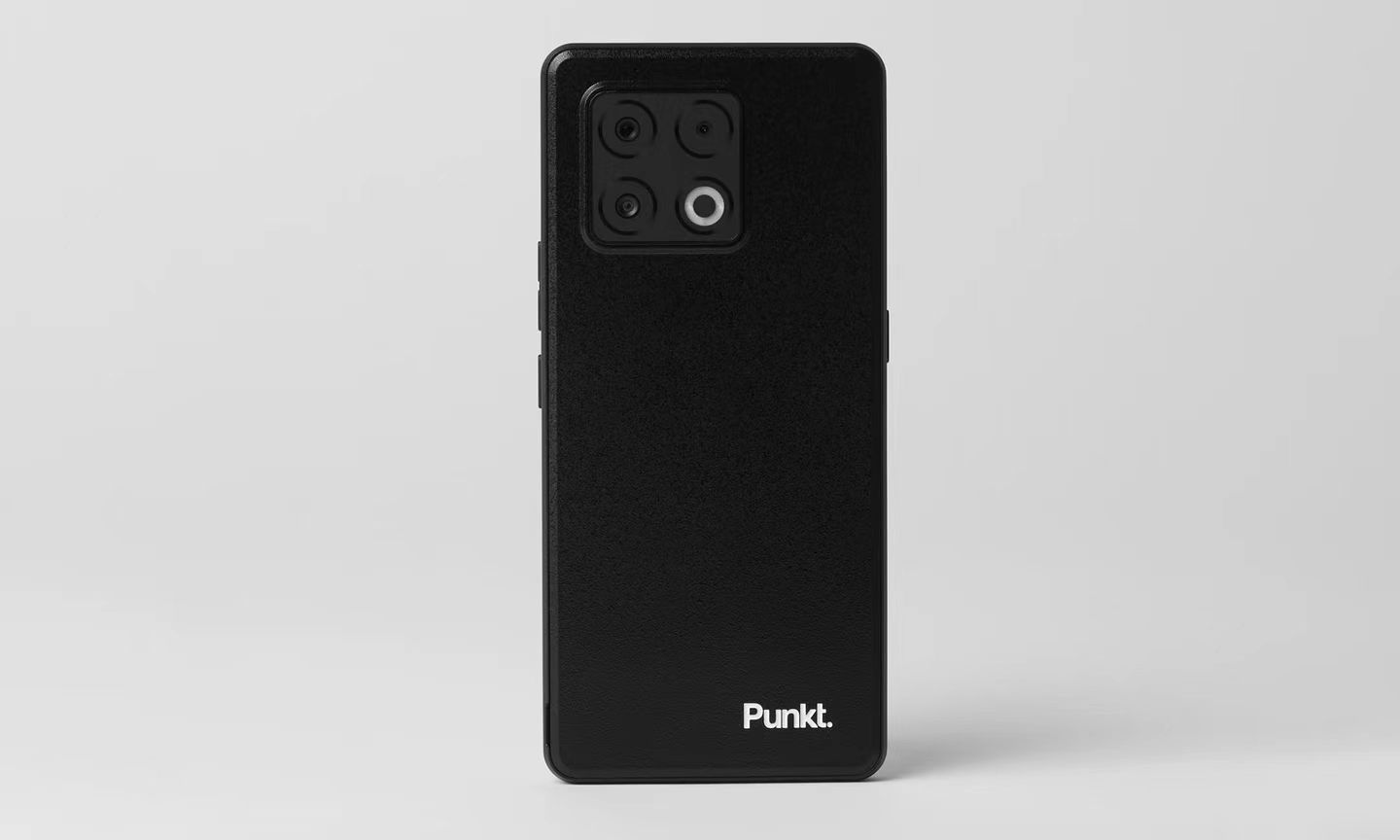
Core Viewpoint - The increasing concern over privacy in the context of advanced internet and smartphone technology highlights a growing demand for products that can effectively safeguard personal data while maintaining usability [1][12]. Group 1: Privacy Concerns and Market Demand - Users are increasingly aware of privacy risks associated with smartphones, leading to a demand for devices that can prevent data leaks from a hardware perspective [2][4]. - Punkt's MC03 privacy phone, showcased at CES 2026, offers a unique solution by categorizing applications into "closed" and "open" environments, allowing users to control permissions and isolate sensitive data [2][4]. - The phone can operate without Google services, addressing privacy concerns without sacrificing usability, emphasizing privacy as a top priority [4]. Group 2: Domestic Manufacturers' Approach - Domestic manufacturers are not neglecting privacy but are focusing on user experience, which often leads to fewer hardware-level privacy solutions [5][9]. - For instance, OPPO's Find X8 Ultra provides extensive privacy features, including detailed permission controls and alerts for sensitive actions, indicating a commitment to privacy [5]. - The complexity of implementing hardware-level privacy solutions in a mobile ecosystem that relies on frequent permissions and app interactions makes it challenging for manufacturers to prioritize such features [11]. Group 3: User Behavior and Privacy Trade-offs - Users have accepted a trade-off between convenience and privacy, often unconsciously agreeing to share data for a smoother experience [12][15]. - The pervasive nature of data collection in modern services has heightened sensitivity towards privacy breaches, leading to a demand for more robust privacy solutions [15][16]. - The concept of a privacy phone challenges the norm by suggesting that true privacy requires significant trade-offs, either through reduced app permissions or by adopting more stringent hardware controls [15][17]. Group 4: Future of Privacy in Technology - The future competition in privacy will not only focus on permission management but also on providing verifiable control over personal data [16][17]. - The notion that privacy should not come at the cost of convenience is emphasized, with the need for a balance between user control and seamless experience [20]. - As privacy becomes a fundamental expectation rather than an added benefit, manufacturers will need to adapt to meet these evolving consumer demands [18][20].
消息称美国加州法院裁定苹果隐私集体诉讼胜诉
Xin Lang Cai Jing· 2026-01-22 06:52
Group 1 - The case revolves around whether Apple violated user privacy by allegedly collecting detailed usage data from iPhone users without explicit consent, in violation of the California Invasion of Privacy Act (CIPA) [1] - The legal dispute traces back to a technical discovery by security researcher Tommy Mysk over three years ago, revealing that the App Store sends detailed user operation data in real-time, regardless of user consent [3][4] - The court dismissed the plaintiff's claims, stating that the legal basis for the accusations was insufficient, highlighting contradictions and unclear definitions in the plaintiff's arguments [3] Group 2 - Mysk's tests indicated that Apple collects the same application data regardless of whether users click "agree," which he described as shocking and indicative of a broader issue within Apple's ecosystem [4] - The court's ruling focused more on the technical interpretation of legal terms like "confidential" and "communication," rather than a moral judgment on Apple's data collection practices [4]

从对手到盟友,苹果与谷歌的AI新战事
3 6 Ke· 2026-01-16 12:42
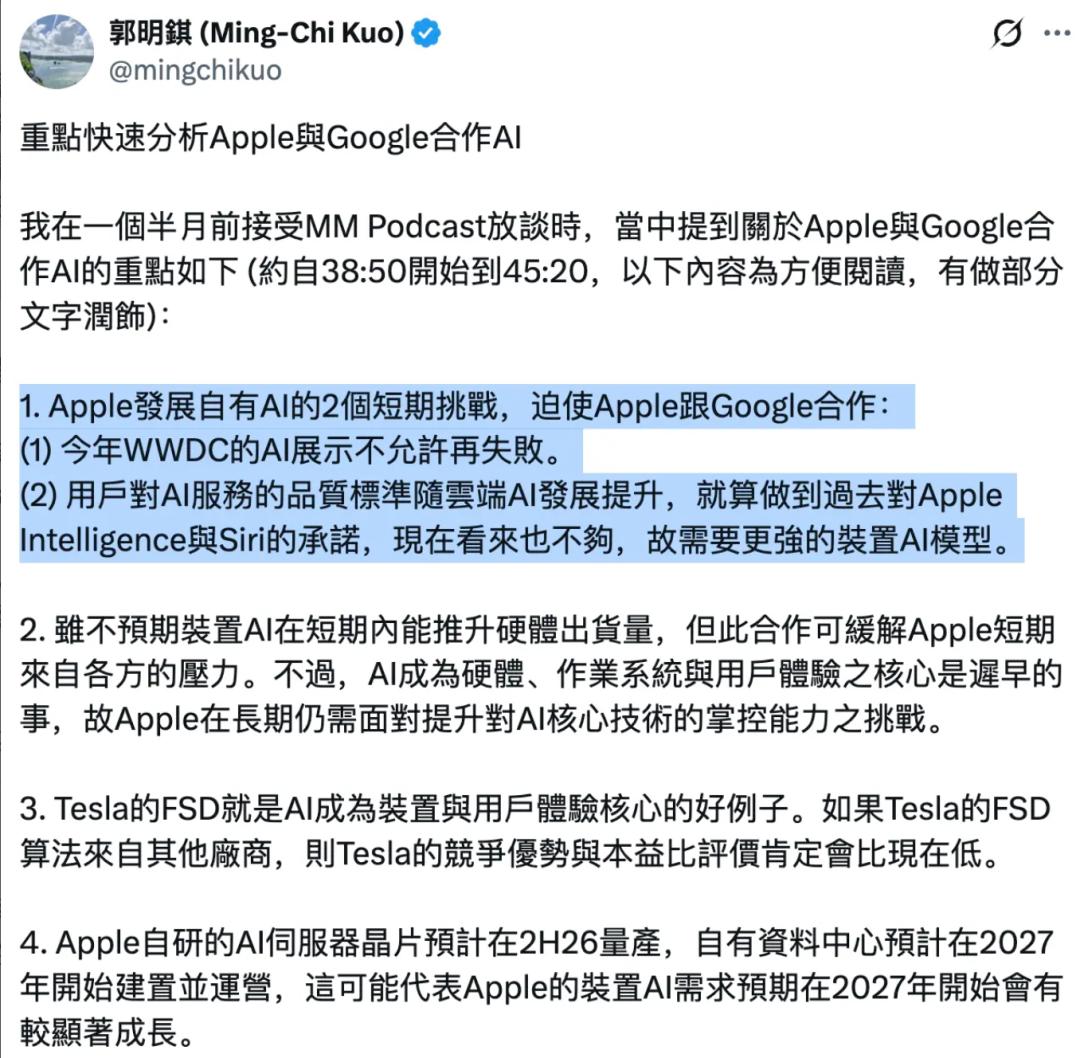
Core Insights - The collaboration between Apple and Google represents a strategic partnership aimed at leveraging each other's strengths in AI technology, particularly with Google's Gemini model being integrated into Apple's Siri and Apple Intelligence strategy [1][3]. Group 1: Apple's AI Strategy - Apple has historically been perceived as lagging in AI development, especially after the rise of OpenAI's ChatGPT, while other tech giants aggressively invested in cloud services and large models [1][2]. - Apple's commitment to user privacy has constrained its ability to utilize cloud-based AI, leading to challenges in the performance of its AI offerings compared to competitors [2]. - The partnership with Google involves Apple paying approximately $1 billion annually to access the Gemini model, which has 1.2 trillion parameters, allowing Apple to enhance its AI capabilities while maintaining data privacy [2][3]. Group 2: Google's AI Development - Google's Gemini model is not merely taking over Siri but is positioned as a supportive technology that will help Apple improve its own AI models while keeping user data secure [3]. - The restructuring of Google, including the merger of Google Brain and DeepMind into Google DeepMind, has revitalized its AI strategy, culminating in the successful launch of Gemini 3, which is seen as a significant improvement over previous models [5][6]. - Google's vertical integration, from chip development (TPU) to cloud services, provides it with a competitive edge in AI model training and deployment, contrasting with competitors reliant on external GPU solutions [6]. Group 3: Market Implications - The collaboration is reshaping the competitive landscape in the AI sector, with Google's stock price rising while companies like Nvidia and Microsoft, closely tied to OpenAI, experience volatility [6]. - The market is beginning to recognize that success in AI may depend more on creating a comprehensive ecosystem that includes hardware, core models, and applications rather than just having the largest models or computing power [6]. - There are indications that other companies, such as Meta, may consider transitioning their computing architecture from Nvidia GPUs to Google's TPU, posing a potential threat to Nvidia's dominance in the AI computing market [6].

苹果要放弃自研AI了吗?谷歌和OpenAI谁才是库克的真爱
2 1 Shi Ji Jing Ji Bao Dao· 2026-01-15 09:08
Core Viewpoint - Apple and Google have entered a multi-year deep cooperation agreement, marking a significant shift in the tech landscape, particularly in AI integration for the next generation of iPhones [2][4]. Group 1: Partnership Details - Apple will pay Google approximately $1 billion annually for technology licensing related to the integration of Google's Gemini AI into future iPhones [2]. - The collaboration is expected to lead to a major upgrade of Siri, although the Chinese version may not utilize Gemini and could rely on local partnerships or special models [2]. Group 2: Strategic Implications - This partnership raises questions about whether Apple is abandoning its long-standing self-developed AI strategy, especially given delays in the new Siri and talent loss from its AI team [2]. - The collaboration also serves as a strategic move to balance power against OpenAI, which has previously integrated ChatGPT into Apple's systems and has been competing for talent in Apple's core areas [2]. Group 3: Privacy Considerations - Apple maintains its commitment to user privacy, ensuring that all AI computations are either performed on-device or through private cloud computing, preventing Google from accessing raw user data [3]. - This approach reinforces Apple's industry-leading privacy standards while collaborating with Google [3].
苹果公司服务业务2025年创多项纪录 生态扩张与技术创新驱动增长
Xin Lang Cai Jing· 2026-01-13 04:28
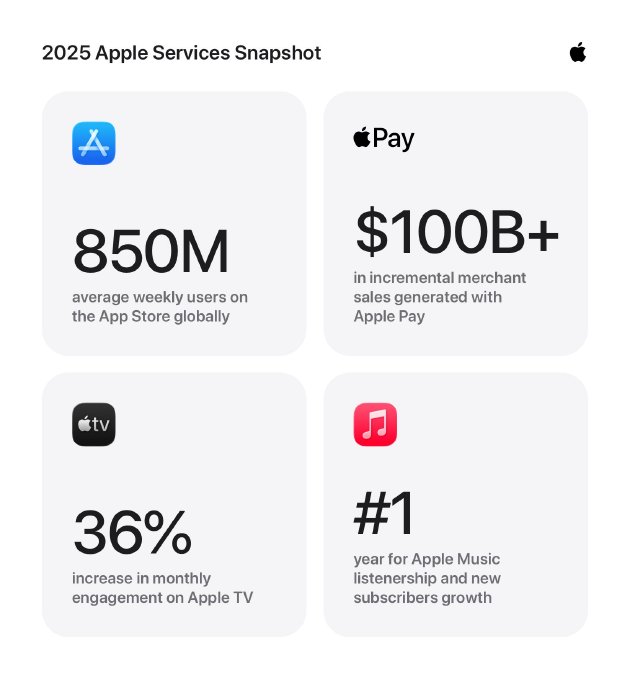
新酷产品第一时间免费试玩,还有众多优质达人分享独到生活经验,快来新浪众测,体验各领域最前 沿、最有趣、最好玩的产品吧~!下载客户端还能获得专享福利哦! 新浪数码讯 1月13日上午消息,苹果公司宣布,其服务业务在 2025 年实现创纪录增长,涵盖 App Store、Apple Music、Apple Pay 等核心服务在内的业务线均刷新关键数据,同时完成全球市场拓展与产 品功能革新的双重突破,这些,都显示了苹果软件生态系统的活力与商业价值。 作为 Apple 服务生态的核心支柱,App Store 在 2025 年展现出强劲的用户粘性与商业潜力。官方数据显 示,全球每周平均有 8.5 亿用户访问该平台,覆盖 175 个国家和地区,其中美国、日本、印度和中国市 场的访问量均创下历史新高。尤其在 2025 年圣诞节至元旦的节日季期间,App Store 的访客量与用户数 字商品消费支出双双打破纪录,效率类、照片视频类应用成为增长主力,Simply Draw: Learn to Draw 等教育类应用亦广受青睐。 开发者生态的繁荣页为 App Store 注入持续动力。自 2008 年上线以来,平台开发者累计收入已 ...
听·见丨莫让消费者成为流量消费的“背景板”
Sou Hu Cai Jing· 2026-01-12 05:20
Core Viewpoint - The rise of live streaming in various sectors such as dining, fitness, and retail has blurred the lines between commercial marketing and privacy infringement, as consumers unknowingly become "background props" for businesses seeking to attract traffic [1][2]. Group 1: Live Streaming as a Marketing Tool - Live streaming has become a crucial method for businesses to attract customers due to its real-time interactivity and authentic representation of scenes [2]. - In the restaurant industry, live streaming can effectively showcase the ambiance and popularity of the establishment, making it more appealing than static images [2]. - Fitness institutions utilize live streaming to demonstrate the professionalism of trainers and the quality of facilities, thereby reducing potential customers' decision-making time [2]. - Retail "store exploration live streams" can transcend physical space limitations, accurately targeting online users and boosting foot traffic and sales [2]. Group 2: Privacy Concerns and Legal Implications - Many businesses, in pursuit of higher engagement and conversion rates, have begun to infringe on privacy rights by filming consumers without their consent, treating them as "traffic material" [2]. - The essence of live streaming "background prop" infringement is clearly defined in legal terms, with privacy being recognized as an individual's personal life and private information that should not be disclosed without consent [2]. - The Civil Code stipulates that any organization or individual must not infringe upon others' privacy rights through disturbance, disclosure, or public exposure [2]. Group 3: Solutions and Regulatory Measures - To address the challenges of live streaming "background props," a multi-party governance system is needed to balance traffic benefits and privacy protection [3]. - Businesses can proactively avoid infringement risks by implementing practices such as designating specific areas for live streaming that do not include dining spaces [3]. - Recent regulations, such as the "Live E-commerce Supervision Management Measures," outline the responsibilities of platforms and businesses, emphasizing the need for consent when filming in public settings [3]. - Consumers are encouraged to enhance their awareness of rights and can take actions such as recording evidence, filing complaints, and reporting violations to protect their interests [3].

a16z 趋势洞察:2026 年,隐私将成加密行业的关键护城河
Xin Lang Cai Jing· 2026-01-11 12:03
Group 1 - Privacy is becoming a crucial competitive advantage in the blockchain space, as existing blockchains have significant shortcomings in privacy features [2][3] - The concept of "privacy network effects" is introduced, where privacy not only enhances security but also creates a lock-in effect for users, making them less likely to switch chains [2][3] - The transition between private and public chains poses risks of identity exposure, making privacy a core requirement for most real-world applications [2][3] Group 2 - The emergence of new chains with privacy features could lead to a "winner-takes-all" dynamic, where a few privacy-focused chains dominate the market due to user loyalty [3] - The need for decentralized communication tools is emphasized, as reliance on centralized servers poses risks of government intervention and data breaches [5][6] - The concept of "Secrets-as-a-Service" is proposed, which aims to integrate privacy as a fundamental infrastructure rather than an afterthought, ensuring data access control and client-side encryption [8][9] Group 3 - The DeFi sector is urged to shift from heuristic security practices to a principle-based approach, focusing on enforcing key security attributes through code [11] - The evolution from "Code is Law" to "Spec is Law" reflects a need for systems to automatically enforce security properties, potentially preventing attacks before they occur [11] - AI-assisted tools are being developed to help create specifications and invariants, streamlining the process of ensuring security in DeFi applications [11]