预期管理机制

Search documents
周末重磅!中央财办发声!
证券时报· 2025-12-13 05:05
Core Viewpoint - The article emphasizes that China's major economic indicators are expected to perform better than anticipated, with the economy projected to reach approximately 140 trillion yuan by 2025, and outlines plans for incremental policies to support economic stability and growth in the coming years [1][3][4]. Economic Performance - The year is highlighted as significant for China's modernization process, with expectations to achieve major social and economic development goals, including a projected economic growth rate of around 5% [3]. - China's economy has shown resilience and vitality, with stable employment and rapid growth in foreign trade, particularly in diversified exports [3]. - International organizations, including the IMF, have raised their economic growth forecasts for China for the next two years [3]. Policy Implementation - The government plans to maintain stable economic growth, employment, and price levels while promoting income growth alongside economic expansion [5]. - A more proactive fiscal policy and moderately loose monetary policy will continue, with an emphasis on the integration of existing and new policies to enhance economic stability [6]. Consumption and Investment - The article discusses the importance of domestic demand, with initiatives like the "old-for-new" consumption policy driving sales growth in related sectors [8]. - There is a focus on increasing investment in urbanization, technological innovation, and improving living standards, with plans to raise the scale of central budget investments [9]. Innovation and Entrepreneurship - The government aims to strengthen the role of leading venture capital institutions and technology enterprises, supporting innovation and the application of new technologies [11]. - A comprehensive plan for education and talent development in technology is to be established, alongside measures to protect intellectual property in emerging fields [11]. Market Regulation - The article mentions the need for a unified national market and the establishment of guidelines for local government investment promotion, aiming to create a fair competitive environment [13]. - There will be efforts to deepen reforms in state-owned enterprises and improve regulations to support the private economy [14]. Trade and Foreign Investment - The government plans to expand both exports and imports, promoting sustainable foreign trade development and enhancing the "Invest in China" brand [16][17]. - Continuous optimization of the business environment and reforms to encourage foreign investment are also highlighted [17]. Environmental Goals - The article outlines plans for a green transition, including measures to achieve carbon peak and promote new energy sources like hydrogen and green fuels [21]. Employment and Risk Management - Employment is emphasized as a key priority, with policies aimed at stabilizing job markets and addressing risks in the real estate sector [23]. - The government will focus on managing local government debt risks and preventing the emergence of hidden debts [23].


中央经济工作会议,部署8项重点任务!
Jin Rong Shi Bao· 2025-12-11 14:14
Core Viewpoint - The Central Economic Work Conference held from December 10 to 11 in Beijing outlined key tasks for economic work in 2026, emphasizing the need for policy support and reform innovation to address current economic challenges [2][3]. Group 1: Economic Policy Direction - The conference highlighted five essential approaches for economic work under the new circumstances, including fully tapping economic potential and ensuring a balance between policy support and reform innovation [3]. - Emphasis was placed on maintaining a stable yet progressive approach to economic governance, integrating existing and new policies for effective outcomes [4]. Group 2: Fiscal and Monetary Policy - The conference called for increased counter-cyclical and cross-cyclical adjustments to enhance macroeconomic governance effectiveness, alongside a more proactive fiscal policy [5]. - It was noted that maintaining necessary fiscal deficits and total debt levels while optimizing fiscal expenditure structures is crucial for addressing local fiscal difficulties [5]. - A moderately loose monetary policy will continue, focusing on stabilizing economic growth and ensuring reasonable price recovery [5][6]. Group 3: Key Economic Tasks for 2026 - Eight key tasks for economic work in 2026 were identified, including: 1. Fostering a strong domestic market driven by internal demand [8]. 2. Accelerating innovation to cultivate new growth drivers [8]. 3. Enhancing quality development through reform efforts [8]. 4. Promoting multi-field cooperation and openness [8]. 5. Encouraging coordinated development for urban-rural integration and regional synergy [8]. 6. Leading with "dual carbon" initiatives for comprehensive green transformation [8]. 7. Prioritizing people's livelihoods by addressing practical issues for the public [8]. 8. Safeguarding against risks in key areas through proactive and prudent measures [8].

中央经济工作会议:保持流动性充裕
Wind万得· 2025-12-11 10:22
Group 1 - The core viewpoint of the article emphasizes the need for a stable yet progressive economic policy approach, focusing on quality and efficiency improvements while leveraging both existing and new policies to enhance macroeconomic governance effectiveness [2] - The meeting highlighted the continuation of a more proactive fiscal policy, maintaining necessary fiscal deficits, total debt scale, and overall expenditure, while optimizing the structure of fiscal spending and regulating tax incentives and subsidies [2] - It was stressed that addressing local fiscal difficulties is crucial, ensuring the baseline for basic public services is secured, and maintaining strict financial discipline within government agencies [2] Group 2 - The article advocates for a moderately loose monetary policy, with a focus on stabilizing economic growth and ensuring reasonable price recovery as key considerations for monetary policy [2] - It mentions the flexible and efficient use of various policy tools such as reserve requirement ratio cuts and interest rate reductions to maintain ample liquidity and facilitate the transmission of monetary policy [2] - The importance of keeping the RMB exchange rate stable at a reasonable and balanced level is also highlighted, along with the need for consistency and effectiveness in macroeconomic policy orientation [2]

吴清人民日报刊文:提高资本市场制度的包容性适应性
Hua Er Jie Jian Wen· 2025-12-04 23:10
Core Viewpoint - The article emphasizes the need to enhance the inclusiveness and adaptability of the capital market system, focusing on legal reforms and investor protection mechanisms [1] Group 1: Legal Reforms - Strengthening the rule of law in the capital market by revising the Securities Law and the Securities Investment Fund Law [1] - Developing and revising regulations for the supervision of listed companies and securities firms to create a fair market environment [1] Group 2: Investor Protection - Promoting the establishment of special representative litigation mechanisms to protect investors [1] - Enhancing investor education and advocacy for rational, value, and long-term investment strategies [1] Group 3: Market Environment - Improving the management of expectations and fostering a societal atmosphere that encourages innovation and tolerates failure [1] - Building high-end think tank platforms and talent teams to address strategic and foundational issues in the capital market [1]
吴清:共同营造规范、包容、有活力的资本市场生态
Feng Huang Wang· 2025-12-04 23:02
Core Viewpoint - The article emphasizes the need to create a standardized, inclusive, and vibrant capital market ecosystem, highlighting the importance of legal construction and regulatory reforms in the capital market [1] Regulatory Reforms - The article calls for the revision of key laws including the Securities Law and the Securities Investment Fund Law, as well as the formulation and revision of administrative regulations such as the Listing Company Supervision Management Regulations and Securities Company Supervision Management Regulations [1] Investor Protection - There is a push to enhance investor protection mechanisms, including the establishment of representative litigation for investors and strengthening investor education and advocacy for rational, value, and long-term investment [1] Talent and Research Development - The article stresses the importance of building high-end think tanks and talent teams in the capital market, focusing on strategic, foundational, and forward-looking research [1] Public Sentiment and Innovation - It advocates for improving expectation management mechanisms and fostering a societal atmosphere that encourages innovation and accepts failure [1]
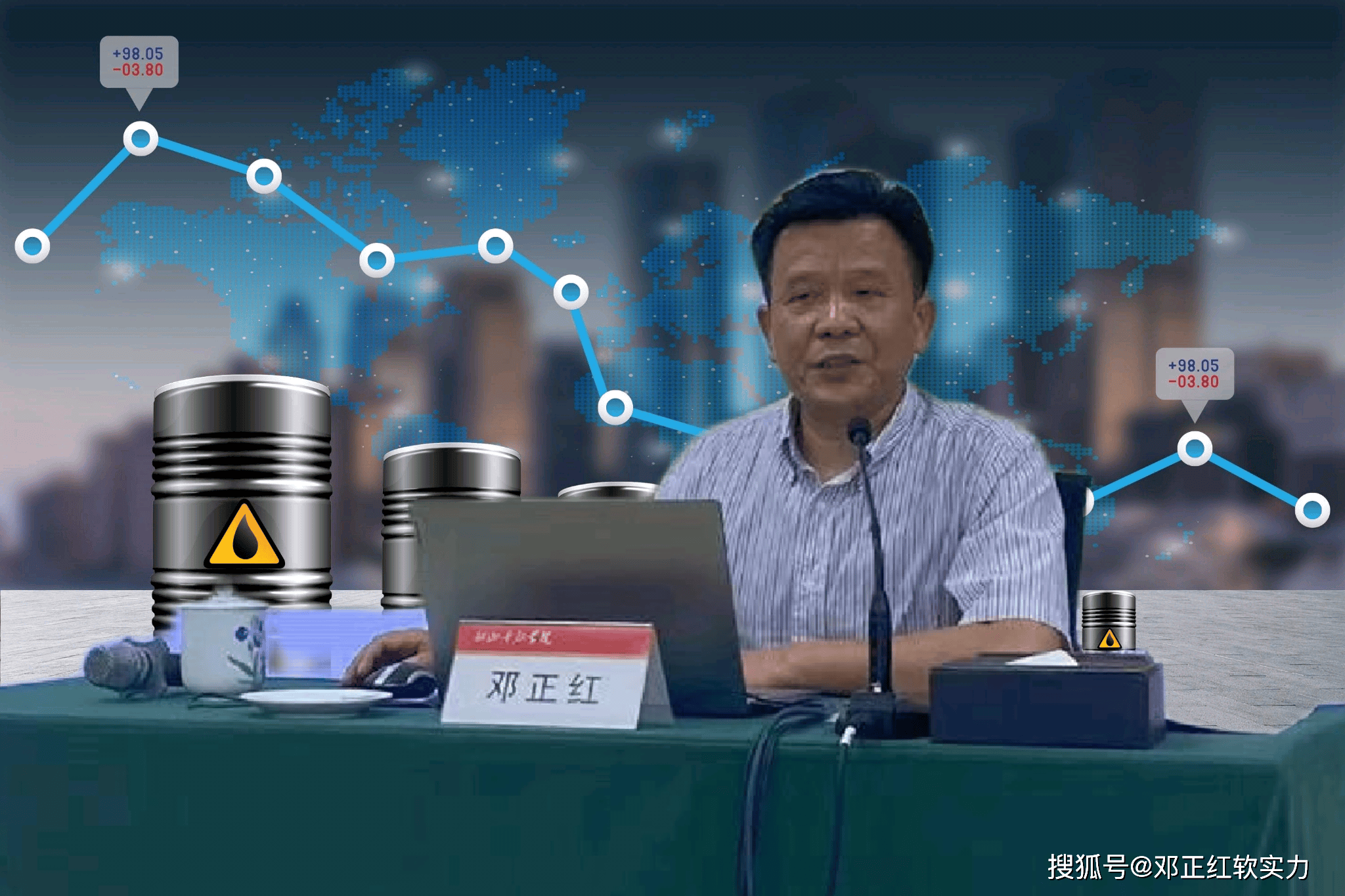
邓正红能源软实力:油价担忧遭遇下沉式阻力 预期严重过剩的市场注入额外供应
Sou Hu Cai Jing· 2025-11-24 04:01
Core Insights - The market is evaluating the potential impact of a peace agreement between Russia and Ukraine, which could lead to an influx of crude oil into an already well-supplied market [1][2] - Key developments being monitored include the feasibility of the peace agreement, the gradual lifting of sanctions on Russia, and the potential for additional supply in a market expected to face significant oversupply next year [1][2] Group 1: Oil Market Dynamics - OPEC and other oil-producing countries, particularly in the Americas, have been increasing production, contributing to downward pressure on oil prices [1][2] - The anticipated peace agreement could lead to a reduction in sanctions against Russia, potentially increasing global oil supply and pushing prices towards a baseline of $55 to $60 per barrel [2][3] Group 2: Soft Power and Market Influence - The concept of soft power in the oil market is illustrated through the ability of oil-producing countries to manage supply and influence market expectations rather than relying solely on resource reserves [1][4] - The interplay of geopolitical changes and market expectations is reshaping global energy governance, with a focus on the ability to set rules and manage perceptions [4][6] Group 3: Comparative Analysis of Major Oil Producers - Russia's adaptability is demonstrated through its shift in export structure and technological innovation, maintaining a 10% share of global oil supply despite sanctions [2][3] - Saudi Arabia's leadership in OPEC showcases its capacity for production adjustment, while the U.S. shale oil industry faces challenges in maintaining capital efficiency and innovation [3][4] Group 4: Future Outlook - Short-term oil price fluctuations are expected to remain within the $60 to $65 per barrel range, driven by the competition between soft power and hard power in the market [3][4] - Long-term competition in the energy sector is shifting towards digital rules, technological standards, and climate narratives, indicating a complex landscape for future energy governance [3][4]
提高宏观经济政策的效率
Sou Hu Cai Jing· 2025-05-25 20:11
Group 1 - The core viewpoint emphasizes the need to enhance the effectiveness of macroeconomic policies while addressing the declining marginal efficiency of these policies [2][3] - The importance of ensuring consistency between economic and non-economic policies to avoid "composite fallacy" is highlighted, as conflicting policies can lead to suboptimal outcomes [2][3] - The necessity of improving the transmission mechanism of macroeconomic policies to achieve intended policy goals is discussed, indicating that a blockage in these mechanisms can hinder effectiveness [3][4] Group 2 - The role of automatic stabilizers and fiscal policy transmission mechanisms is crucial, with income distribution, money supply, and prices being key mediators [4][5] - The need for a robust expectation management mechanism is outlined, emphasizing that market participants' expectations can significantly influence policy effectiveness [6][7] - The importance of matching policy goals with appropriate tools is stressed, referencing Tinbergen's principle that the number of policy instruments should at least equal the number of targets [9] Group 3 - The coordination between short-term and long-term policies is essential for stabilizing economic growth, with short-term counter-cyclical policies needing to align with structural reforms [10][11] - The current economic environment necessitates stronger macroeconomic stimulus policies to break negative cycles and restore confidence among businesses and households [8][11] - The potential negative impacts of short-term policies on long-term structural reforms must be carefully managed to ensure overall policy effectiveness [11]