2030愿景

Search documents
押注全球算力第三极:英伟达、xAI、联想沙特投资进入收获期
Ge Long Hui· 2025-12-18 05:50
Core Insights - Saudi Arabia is transforming into the world's third-largest computing hub, following the US and China, as part of its "Vision 2030" strategy aimed at diversifying its economy beyond oil dependency [2][16] - The country is investing heavily in high-performance computing and advanced technology, attracting global tech giants like NVIDIA, AMD, Amazon AWS, xAI, and Microsoft to establish partnerships and projects in the region [2][6] Investment and Infrastructure - The Saudi Public Investment Fund (PIF) is the driving force behind the AI transformation, acting as both a fund provider and a major customer [4] - PIF's subsidiaries, Alat and Humain, are focused on building a dual-driven system of manufacturing and computing capabilities, with Alat concentrating on hardware and Humain on AI technology and infrastructure [4][5] - A notable collaboration includes a $2 billion partnership with Lenovo to establish a server manufacturing facility in Riyadh, expected to produce millions of devices annually by 2026 [4][10] Strategic Partnerships - Major tech companies are entering the Saudi market, with NVIDIA planning to build an AI factory utilizing advanced GPUs, and AWS investing over $5 billion to create an "AI Zone" data center [6][7] - The partnerships aim to develop AI infrastructure and applications, including Arabic language models, enhancing Saudi Arabia's position in the global AI landscape [7][14] Economic Impact - The AI sector is projected to significantly contribute to Saudi Arabia's GDP, with estimates suggesting it could account for 12.4% of the GDP by 2030, translating to a substantial economic impact of $320 billion across the MENA region [14][15] - The region's IT spending is expected to reach $169 billion by 2026, indicating a robust growth trajectory as countries like Saudi Arabia and the UAE transition from traditional energy economies to AI powerhouses [15][16] Market Expansion and Diversification - Lenovo aims to increase its revenue from the Middle East to approximately $6 billion, reflecting the strategic importance of the region for tech giants seeking growth opportunities amid saturated traditional markets [13][15] - The establishment of a comprehensive AI ecosystem in Saudi Arabia, covering computing infrastructure, AI models, and industry applications, is creating a new cluster effect for global tech companies [15][16]




专访沙特国家发展基金董事会副主席:将中国视为知识共享与理念交流的伙伴
Di Yi Cai Jing· 2025-12-16 01:47
Group 1: Economic Partnership and Trade - Saudi Arabia is China's largest trading partner in the Middle East, and China is also Saudi Arabia's largest trading partner [1] - In 2024, the bilateral trade volume between China and Saudi Arabia is expected to reach $107.53 billion, maintaining China's position as Saudi Arabia's top trading partner [1] - The two countries have signed a memorandum of understanding to facilitate Chinese tourist groups visiting Saudi Arabia, enhancing cultural exchanges [1][4] Group 2: Vision 2030 and Economic Transformation - The Saudi National Development Fund (NDF) plays a crucial role in supporting the economic transformation goals outlined in Vision 2030 [2] - Non-oil GDP has reached approximately 55% of total GDP, indicating significant progress in economic diversification [7] - The NDF aims to empower the private sector, including small and medium-sized enterprises, to participate in the national economic transformation [7][8] Group 3: Investment Climate and Financial Stability - Saudi Arabia has never defaulted on its debt, maintaining a healthy debt-to-GDP ratio of about 33% and an AA credit rating [5] - The country has established a robust fiscal reserve buffer and a systematic debt management plan to ensure financial stability [5] - Saudi Arabia's strategic geographic location and friendly business environment enhance its attractiveness for foreign investment [5] Group 4: Cultural and Educational Exchange - There has been a significant increase in the number of schools in Saudi Arabia offering Chinese language courses, reflecting growing interest in cultural exchange [4] - Direct flights between Saudi cities and major Chinese cities have been established, facilitating travel and business interactions [4] Group 5: Governance and Strategic Decision-Making - The NDF employs a centralized treasury management system to ensure resources are allocated to impactful areas [8] - The fund has a shock absorber mechanism to provide timely support to the private sector during crises, such as the COVID-19 pandemic [8] - Saudi Arabia has developed a governance framework to manage risks associated with emerging technologies like AI, ensuring strategic decision-making [9]
全球瞭望丨津巴布韦媒体:中国“十五五”规划建议为津中合作提供重要机遇
Xin Hua She· 2025-12-15 01:12
Core Viewpoint - Strengthening the alignment between China's 14th Five-Year Plan and Zimbabwe's Vision 2030 presents significant opportunities for cooperation between the two countries [1] Group 1: Cooperation and Support - China has historically supported Zimbabwe during its liberation period and continues to assist in major projects such as the expansion of the Kariba South Hydro Power Station and the renovation of Victoria Falls Airport [1] - The ongoing collaboration between China and Zimbabwe is deepening, indicating a strong bilateral relationship [1] Group 2: Development Strategies - Zimbabwe's Vision 2030 aims to elevate the national economy to middle-income status and eradicate poverty by 2030 [1] - The second phase of Zimbabwe's national development strategy, which aligns closely with China's 14th Five-Year Plan, is set to be implemented from 2026 to 2030, potentially marking a milestone period for the country's development [1] Group 3: Sectoral Focus - The alignment of the two plans is expected to accelerate Zimbabwe's development in key sectors such as energy, manufacturing, digital innovation, and electric vehicles [1] - If Zimbabwe capitalizes on this opportunity, the period from 2026 to 2030 could significantly advance the construction of a comprehensive and enduring partnership with China [1]
腾讯为何也要买华纳:引入HBO、参投哈利波特或纯财务?
3 6 Ke· 2025-12-11 12:15
Core Insights - Warner Bros. Discovery (WBD) is currently engaged in a significant merger battle, with Netflix proposing an $82.7 billion acquisition and Paramount's Oracle-backed bid of approximately $108.4 billion in cash [1][2] - Tencent has withdrawn from the bidding process for WBD to avoid U.S. national security scrutiny, despite previously committing $1 billion to support Paramount's acquisition [2][3] Group 1: Acquisition Details - Paramount's cash offer is set at $30 per share, totaling over $100 billion, while Netflix's offer primarily involves stock [2] - The involvement of foreign sovereign wealth funds from Saudi Arabia, Abu Dhabi, and Qatar in the Paramount bid is noted, as they agreed to relinquish management rights to avoid additional scrutiny [2][3] Group 2: Political and Regulatory Context - The acquisition of WBD by a Chinese tech giant like Tencent would raise significant political concerns in the U.S., particularly regarding media ownership and national security [3][4] - The urgency of the bidding war is emphasized, as Paramount must demonstrate a more stable and quicker transaction to WBD shareholders compared to Netflix's offer [3][16] Group 3: Tencent's Historical Involvement - Tencent has been a strategic shareholder in Skydance Media for seven years, initially investing over $100 million for a 5-10% stake [4][6] - Tencent's previous involvement in projects like "Terminator: Dark Fate" and its eventual withdrawal from "Top Gun: Maverick" due to concerns over U.S.-China relations illustrate the complexities of its investment strategy [6][8] Group 4: Broader Industry Implications - The competition for WBD highlights the increasing influence of Middle Eastern capital in the entertainment industry, as they seek to reshape global cultural narratives [12][14] - The ongoing battle between WBD, Paramount, and Netflix may extend into the next year, with WBD shareholders facing a tight deadline to respond to Paramount's hostile takeover bid [16]



体育烧光了沙特的钱?
虎嗅APP· 2025-12-11 09:35
Core Viewpoint - Saudi Arabia's sports investment strategy is shifting from aggressive expansion to a more cautious approach, focusing on sustainable returns and long-term viability in the face of economic pressures and changing priorities [5][9][25]. Group 1: Economic Context and Strategy Shift - Saudi Arabia's GDP grew over tenfold from 1973 to 1981 due to oil price surges, but reliance on oil has made the economy vulnerable to price fluctuations [4]. - The introduction of the "Vision 2030" plan in 2016 aimed to diversify the economy away from oil dependency, with sports becoming a key component of this strategy [5][6]. - The Public Investment Fund (PIF), with assets exceeding $900 billion, is central to this diversification, but recent signals indicate a slowdown in spending on sports and entertainment [9][10]. Group 2: Impact on Sports Investments - PIF's investment contracts dropped by 84% in the first five months of the year, indicating a significant reduction in capital allocation for sports [9]. - The aggressive expansion in sports was initially aimed at enhancing Saudi Arabia's global image and influence, but the sustainability of such investments is now under scrutiny [10][25]. - LIV Golf, a major investment by PIF, has incurred over $1 billion in losses, raising questions about the long-term viability of such high-cost ventures [12][13]. Group 3: NEOM and Future Projects - NEOM, a $500 billion mega-project, is central to Saudi Arabia's post-oil growth strategy, but it faces significant cost overruns and operational challenges [15][18]. - The 2029 Asian Winter Games, planned to be held in NEOM, may be postponed due to these financial pressures, reflecting a broader reassessment of large-scale projects [17][21]. - The need for substantial resources, such as water for artificial snow, adds to the complexity and cost of NEOM, further straining the budget [20]. Group 4: Future of Sports in Saudi Arabia - The shift in investment strategy suggests a more selective approach to sports, focusing on areas with proven revenue potential, such as football, while reducing exposure in less sustainable sectors like boxing [25][26]. - Esports and gaming are emerging as potential focal points for future investments, indicating a strategic pivot towards digital entertainment [27]. - The overall trend suggests that the sports industry will need to adapt to a new reality of reduced funding, emphasizing self-sustainability and realistic financial models [29].
沙特:拟建2000米高塔
财联社· 2025-12-09 10:59
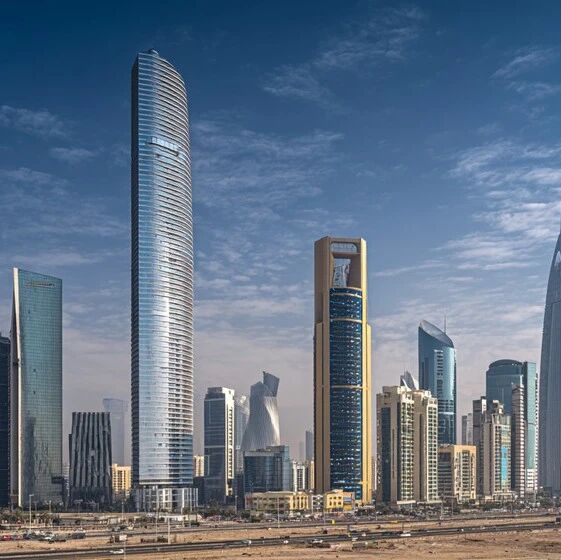
Core Viewpoint - Saudi Arabia is planning to construct the Rise Tower in Riyadh, which aims to become the tallest building in the world, exceeding the height of the Burj Khalifa by more than double and the Shanghai Tower by three times [1][5]. Group 1: Project Overview - The Rise Tower is part of Saudi Arabia's "Project Rise - Lumenis," which aligns with the country's Vision 2030 strategy aimed at economic diversification and reducing oil dependency [5]. - The project is supported by the Public Investment Fund (PIF) and is estimated to cost around $5 billion, making it one of the most notable projects in PIF's expanding portfolio [6]. Group 2: Architectural and Engineering Challenges - The Rise Tower will face significant engineering challenges, particularly in ensuring efficient vertical transportation for its height of 2,000 meters, as traditional elevator systems are inadequate [9]. - Innovative solutions such as magnetic levitation elevators and multi-car designs are being explored to enhance passenger capacity and efficiency [9]. - The building's design must also address environmental challenges posed by Riyadh's desert climate, including extreme temperature variations and occasional sandstorms [10]. Group 3: Urban Development and Sustainability - The Rise Tower will be a key landmark in the newly planned "Arctic" district of Riyadh, which is part of a broader vision for a sustainable and technologically advanced urban environment [7][8]. - The concept of the tower includes a "vertical city" that integrates residential, commercial, and recreational spaces, contributing to the transformation of Riyadh into a leading global city [8][10].
沙特不反对取消“2030愿景”中的高成本项目
Shang Wu Bu Wang Zhan· 2025-12-08 16:13
Core Viewpoint - Saudi Arabia is open to canceling some high-cost projects within its Vision 2030 framework due to challenges posed by low oil prices and ongoing budget deficits [1] Group 1: Financial Context - Saudi Finance Minister Jadaan indicated that the country is reassessing high-cost projects, with a focus on efficiency in spending [1] - The recent budget statement for 2026 highlights the need for more efficient expenditure amid financial challenges [1] Group 2: Project Specifics - There have been previous indications that the review of high-cost projects would likely involve delays or scale reductions rather than outright cancellations [1] - When asked about the potential cancellation of the NEOM project, Jadaan stated that the decision would be made by the Public Investment Fund (PIF) [1]
沙特外国直接投资存量超过1万亿里亚尔
Shang Wu Bu Wang Zhan· 2025-12-08 16:13
Core Insights - Saudi Arabia's foreign direct investment (FDI) stock has exceeded 1 trillion riyals, reflecting significant economic transformation under the "Vision 2030" initiative [1] Group 1: Economic Indicators - As of the beginning of the period, the money supply was approximately 2.6 trillion riyals, with FDI stock at about 813 billion riyals [1] - By the end of the period, the money supply increased to approximately 3.17 trillion riyals, and FDI stock reached 1.02 trillion riyals [1] Group 2: Structural Development - The increase in FDI and money supply indicates broad structural development in the Saudi economy, driven by diversification of income sources, attraction of foreign investment, and improvement of market efficiency [1]
沙特2024年游客人数达1.16亿
Shang Wu Bu Wang Zhan· 2025-12-08 16:13
Core Insights - Saudi Arabia is projected to reach 116 million tourists in 2024, representing a 6% growth, with tourism spending expected to hit 284 billion riyals [1] Group 1: Tourism Growth - The increase in tourist numbers reflects significant internal changes within the industry, enhancing service levels for both domestic and international visitors [1] - The tourism sector is evolving towards a more mature phase, focusing on cultural experiences rather than just entertainment [1] Group 2: Vision 2030 Impact - The advancements in the tourism industry are aligned with Saudi Arabia's Vision 2030 goals, showcasing substantial progress [1] - The commitment to creating enriching cultural experiences is evident, indicating a strategic shift in the tourism approach [1]
沙特将旅游炼成“新石油”,中东旅游格局由此生变
Di Yi Cai Jing· 2025-12-01 13:31
Group 1: Tourism Industry Development in Saudi Arabia - The tourism industry contributes nearly 5% to Saudi Arabia's GDP, second only to oil production [8] - Saudi Arabia is prioritizing tourism development as a core part of its national development policy, aiming to diversify its economy [1][8] - The country has opened its doors to international tourism post-pandemic, with significant investments in tourism infrastructure and promotional events [1][8] Group 2: Red Sea Tourism Projects - Saudi Arabia is developing the Red Sea tourism sector, aiming to create a comprehensive tourism city with 50 hotels, nearly 1,000 residences, and an international airport [3][4] - The Red Sea Global project is positioned as a "greenfield project," leveraging untouched areas with rich biodiversity for tourism development [3] - Chinese contractors are actively involved in the construction of tourism infrastructure, bringing technical expertise and collaborative work culture [4] Group 3: Cultural Heritage and Visitor Experience - Al-Ula, known for its stunning sandstone canyons and ancient tombs, is a UNESCO World Heritage site and is enhancing the experience for Chinese tourists [5][7] - Saudi Arabia aims to increase the number of Chinese tourists to 500,000 by 2025, up from 100,000 three years ago [7] Group 4: Future Tourism Goals - By 2030, Saudi Arabia plans to host 100 million tourists annually, creating 1 million jobs and increasing tourism's GDP contribution from 3.2% to 10% [9] - Major international sporting events, including the 2034 FIFA World Cup, are expected to boost tourism significantly [9][10] - The Saudi Pro League has attracted global football stars, enhancing the league's visibility and commercial value [9]