Agent(智能体)

Search documents
豆包升级1.8 对话谭待:模型间最重要的不是竞争而是做大市场
Bei Ke Cai Jing· 2025-12-19 09:20
Core Insights - The core message of the news is the significant growth and advancements of the Doubao model by Huoshan Engine, which has seen a tenfold increase in daily token usage, reaching over 50 trillion tokens by December 2023, alongside the launch of the Doubao 1.8 model optimized for various applications [1][2]. Group 1: Model Performance and Upgrades - Doubao model's daily token usage has surpassed 50 trillion, marking a tenfold increase compared to December of the previous year [1]. - The Doubao 1.8 model has been upgraded with enhancements in multi-modal capabilities and Agent functionalities, including improved tool usage and complex instruction adherence [2][3]. - The Doubao model demonstrated advanced capabilities such as long video understanding, which can be applied in various sectors like online education and product quality inspection [3]. Group 2: Market Position and Competition - Doubao mobile has gained significant attention, sparking discussions about AI assistant safety and its potential to disrupt the market [1][2]. - The competition in the AI sector is intensifying, with Alibaba's products like Qianwen and Lingguang rapidly gaining user traction, indicating a shift in the competitive landscape [4][5]. - Huoshan Engine claims a 46.4% market share in the Chinese public cloud model market, while Alibaba asserts a leading position that exceeds the combined share of its competitors [5][6]. Group 3: Industry Outlook and Collaboration - The industry outlook suggests a potential tenfold growth in the AI market next year, emphasizing the importance of collaboration rather than zero-sum competition [2][6]. - Huoshan Engine has significantly reduced model calling costs by up to 99%, which has been validated as a viable strategy as other cloud providers follow suit [6]. - The increasing investment from various cloud vendors in the MaaS (Model as a Service) sector is seen as a positive sign of market maturation, which will facilitate the broader application of AI across industries [6].

“百镜大战”来临! 谁能抢占AI眼镜市场高地?
Mei Ri Jing Ji Xin Wen· 2025-12-02 13:26
Core Insights - The AI glasses market is experiencing a surge in demand, with significant sales reported by companies like Meta and Rokid, indicating a potential turning point for the industry [1][3][9] - However, the industry faces challenges related to supply chain constraints and the need for hardware innovation to meet the growing demand [3][4][5] Group 1: Market Demand and Sales Performance - Meta's new Ray-Ban Meta glasses sold out within 48 hours, prompting the company to increase investment to boost production capacity [1] - Rokid reported selling 40,000 units of its glasses within five days of launch, with users averaging eight hours of daily wear [1] - Quark AI glasses topped Tmall's smart glasses sales during the "Double 11" shopping festival, showcasing strong consumer interest [1] Group 2: Supply Chain and Production Challenges - The industry is facing a production bottleneck, with Rokid's initial shipment forecast of 100,000 to 150,000 units being significantly exceeded by actual demand [3] - AI glasses require a new hardware architecture that presents challenges in manufacturing, necessitating deep customization within the supply chain [4][5] - Companies are restructuring their production schedules and expanding capacity to meet the anticipated demand, with projections of reaching a million units in deliveries by early next year [4] Group 3: Technological and Material Innovations - The future of AI glasses relies on breakthroughs in foundational materials and miniaturization, such as silicon carbide for high-transparency glass and advanced battery technology [6] - The industry is moving towards a more mature supply chain that can support the necessary scale for cost reductions [5][6] Group 4: Competitive Landscape - The AI glasses market is becoming increasingly competitive, with various players, including major companies like Alibaba and startups like Rokid, vying for market share [9] - Alibaba views AI glasses as a critical personal mobile interface post-smartphone era, investing in comprehensive technology capabilities to enhance competitiveness [8][9] - The Chinese market is expected to diverge from overseas models, with a focus on AI-driven hardware innovation to meet diverse consumer needs [9]
100+企业已经申报,榜单倒计时一天!2025年度中国技术力量榜单申报即将截止
AI前线· 2025-11-29 05:32
Core Viewpoint - The "2025 China Technology Power Annual List" is set to recognize outstanding contributions in the AI sector, with a strong lineup of participating companies and a focus on AI innovations and applications [4][5]. Group 1: Event Details - The final registration date for the "2025 China Technology Power Annual List" is November 30, with only one day remaining for submissions [3]. - This year marks the fifth consecutive year of the list's evaluation, receiving submissions from over 100 companies, including industry giants like Alibaba, Tencent, and ByteDance, as well as innovative representatives [4]. - The theme for this year's list is "Insight into AI Transformation, Witnessing an Intelligent Future," covering eight major areas related to AI advancements [4]. Group 2: Award Categories - The awards will include eight categories: - 2025 AI Infrastructure Excellence Award TOP20 - 2025 AI Engineering and Deployment Excellence Award TOP20 - "Artificial Intelligence +" Best Industry Solution TOP20 - AI Agent Most Productive Product/Application/Platform TOP15 - Data & AI Most Valuable Product/Platform TOP10 - AI Coding Most Productive Product TOP5 - Embodied Intelligence Star Product TOP10 - AI Open Source Star Project TOP10 [5]. Group 3: Evaluation Process - The evaluation results will be announced on December 19 during the AICon·Beijing event, which will also feature a grand award ceremony [8]. - The evaluation criteria for various awards will involve scoring from an expert panel and the InfoQ editorial team, with user ratings contributing to some categories [9][11]. - Specific dimensions for evaluation will be outlined in the registration forms, focusing on factors such as internal implementation effectiveness, resource investment, replicability, data security, and community engagement in open-source projects [12][14].

从 Others 到挑战者第一,火山引擎没有错过大模型
晚点LatePost· 2025-11-20 02:15
Core Viewpoint - The emergence of large models is transforming the landscape of China's cloud computing industry, with companies like Volcano Engine gaining significant traction in the AI application development platform market [1][2][15]. Group 1: Market Position and Performance - Volcano Engine ranked first in the "Challenger" quadrant of Gartner's Magic Quadrant for AI application development platforms, showcasing its strong capabilities in model services [2][6]. - As of mid-2025, Volcano Engine is projected to hold a 49.2% market share in China's public cloud large model service market, indicating its leading position [7]. - The company aims to achieve a revenue target of over 20 billion RMB this year, reflecting a growth rate exceeding 100% [16]. Group 2: Strategic Focus and Investments - Volcano Engine has aggressively invested in AI over the past three years, positioning itself to capitalize on the rapid growth of the AI sector [7][8]. - The company has shifted its focus towards Model as a Service (MaaS), recognizing the potential for high margins and growth in this area [6][11]. - The integration of AI capabilities into existing cloud services is seen as a critical strategy for competing against established players in the market [16]. Group 3: Competitive Landscape and Challenges - The cloud computing market is characterized by high entry barriers due to established players having strong customer ties and high data migration costs [8][9]. - Volcano Engine faces competition from major cloud providers like Alibaba Cloud, which are also investing heavily in AI and large model services [16]. - The overall market for MaaS is still in its early stages, with a projected size of only 1.29 billion RMB by mid-2025, despite a staggering growth rate of 421.2% [15]. Group 4: Future Outlook and Innovations - The company is exploring new growth avenues, particularly in the development of intelligent agents, which are expected to create significant economic value beyond traditional applications [15]. - Volcano Engine's strategy includes leveraging AI as a lever to penetrate the existing market, with a significant portion of its revenue expected to come from large model services [16]. - The company is also adjusting its sales strategies to prioritize MaaS products, which offer higher returns compared to traditional cloud services [11].

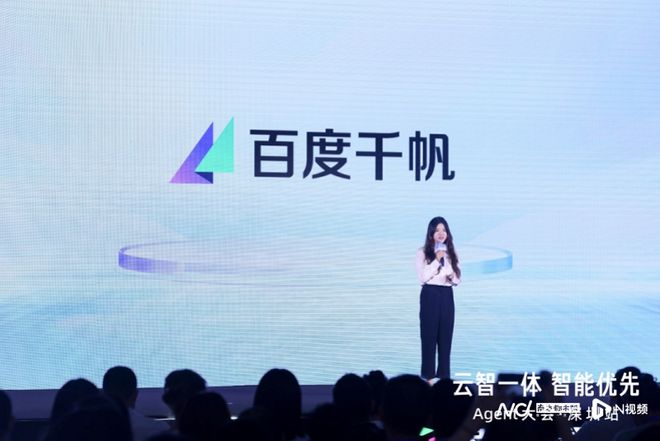
百度千帆品牌战略升级,聚焦企业级Agent落地
Nan Fang Du Shi Bao· 2025-10-17 15:55
Core Insights - Baidu Intelligent Cloud announced a brand strategy upgrade for its AI-native application development and service platform, Qianfan, focusing on enterprise production scenarios [1][4] - Since its launch in March 2023, Qianfan has served over 460,000 enterprise clients and developed over 1.3 million agents, with daily usage of Baidu AI Search tools exceeding 10 million calls [1][4] Group 1: Platform Enhancements - The upgraded Qianfan platform emphasizes four key elements: Agent engine, tools and MCP, model services, and enterprise-level services [4] - The new Agent engine features a flexible orchestration architecture, reducing average task latency by 20% and long task duration by 40% [4][6] - New tools include video AI notes and third-party MCP services, enhancing the scalability of agents [5] Group 2: Model Services and Cost Efficiency - Qianfan offers over 150 state-of-the-art models and has enhanced its large model service capabilities, introducing a "proactive Cache mode" that can reduce inference costs by up to 80% [6] - The platform provides end-to-end observability and high availability, ensuring agents function as reliable digital employees [6] Group 3: Industry Applications - Qianfan has been successfully implemented in various enterprise production scenarios, such as the Shenzhen Water Authority, which improved customer satisfaction to over 98% and reduced complaints by over 15% [7] - In the energy sector, Liwei Zhili utilized Qianfan for intelligent inspection and fault diagnosis, transitioning from small model assistance to agent-driven operations [8] - The platform is also being applied in education as "smart teaching assistants" and in finance for personalized investment advice [9]

AI浪潮录|周志峰:北京AI优势根植于顶尖学府汇聚的科研沃土
Bei Ke Cai Jing· 2025-08-26 08:58
Core Insights - Beijing is emerging as a strategic hub in the AI large model sector, driven by technological innovation and a supportive ecosystem for startups and research institutions [1] - The AI industry is transitioning from a "technology acceleration phase" to an "application acceleration phase," with foundational capabilities remaining crucial [7] - Investment strategies in the AI sector emphasize the importance of independent thinking and the ability to recognize opportunities amidst market hype [12][13] Group 1: Industry Development - The rise of AI unicorns like Zhiyuan AI and the establishment of the "Global Open Source Capital" initiative highlight Beijing's commitment to fostering AI innovation [1] - The emergence of DeepSeek as a significant player illustrates the practical growth of China's innovative capabilities in AI [6] - The AI landscape is characterized by a dynamic competition between established giants and agile startups, with the latter having unique opportunities to thrive [23][24] Group 2: Investment Strategies - Investors are encouraged to be "super users" of AI technologies, gaining firsthand experience to inform their investment decisions [10] - The fear of missing out (FOMO) is identified as a major challenge in investment, necessitating a careful analysis of market signals and trends [13][14] - Successful investment in AI requires a balance of intellectual rigor and emotional resilience, enabling investors to navigate uncertainty and make informed predictions [11] Group 3: Market Trends - The concept of "基模五强" (Five Strong Foundational Models) reflects the evolving competitive landscape, with companies like DeepSeek and Zhiyuan AI leading the charge [19] - The increasing focus on application-driven models indicates a shift in how AI companies are categorized and valued [20] - The rapid development of general agents (AGI) and their implications for various industries signal a significant transformation in AI capabilities [25][27] Group 4: Talent and Research - Beijing's AI advantage is rooted in its concentration of top-tier research institutions and talent, with leading universities contributing significantly to the global AI workforce [29] - The collaboration between academia and industry is essential for translating research strengths into practical applications [29]

别再空谈“模型即产品”了,AI 已经把产品经理逼到了悬崖边
AI科技大本营· 2025-08-12 09:25
Core Viewpoint - The article discusses the tension between the grand narrative of AI and the practical challenges faced by product managers in implementing AI solutions, highlighting the gap between theoretical concepts and real-world applications [1][2][9]. Group 1: AI Product Development Challenges - Product managers are overwhelmed by the rapid advancements in AI technologies, such as GPT-5 and Kimi K2, while struggling to deliver a successful AI-native product that meets user expectations [1][2]. - There is a significant divide between those discussing the ultimate forms of AGI and those working with unstable model APIs, seeking product-market fit (PMF) [2][3]. - The current AI wave is likened to a "gold rush," where not everyone will find success, and many may face challenges or be eliminated in the process [3]. Group 2: Upcoming Global Product Manager Conference - The Global Product Manager Conference scheduled for August 15-16 aims to address these challenges by bringing together industry leaders to share insights and experiences [2][4]. - Attendees will hear firsthand accounts from pioneers in the AI field, discussing the pitfalls and lessons learned in transforming AI concepts into viable products [5][6]. - The event will feature a live broadcast for those unable to attend in person, allowing broader participation and engagement with the discussions [2][11]. Group 3: Evolving Role of Product Managers - The skills traditionally relied upon by product managers, such as prototyping and documentation, are becoming less relevant due to the rapid evolution of AI technologies [9]. - Future product managers will need to adopt new roles, acting as strategists, directors, and psychologists to navigate the complexities of AI integration and user needs [9][10]. - The article emphasizes the importance of collaboration and networking in this uncertain "great maritime era" of AI development [12].

吴声谈AI应用的未来:要经一个个场景逐步进化
Bei Jing Shang Bao· 2025-08-04 10:26
Core Insights - The future of AI applications is expected to evolve through meticulously designed scenarios, with embodied intelligence entering a critical phase of consideration [1] - Examples such as Amazon's deployment of robots and Google's introduction of the VLA (Visual Language Action) Gemini Robotics illustrate the transition from perception and execution to cognitive capabilities [1] - Despite the consensus on the integration of hardware and software, the realization of humanoid robots' "iPhone moment" remains unclear, with many believing that the anticipated "Agent Year" of 2025 has not yet materialized [1] - The core challenge lies in the transformation of real productivity and the large-scale iteration of efficiency, which is still in a deep exploration phase and has not yet become best practice or disrupted existing paradigms [1]
大厂「AI」智能体,等待 DeepSeek 时刻
3 6 Ke· 2025-07-30 23:56
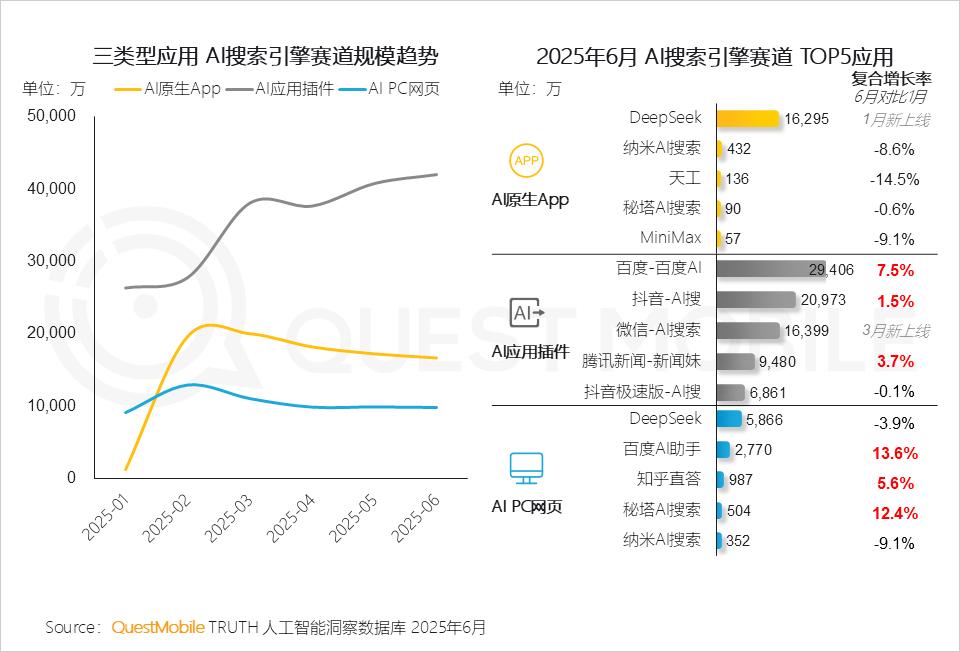
Core Insights - The AI industry remains dominated by major internet companies, with TikTok, Tencent, Alibaba, and Baidu leading the market, collectively holding a user base of over 46 billion [2][5][21] - The AI application market is primarily driven by internet enterprises, with 80% of the top 30 applications coming from these companies, and the four major groups accounting for 66.7% of the market share [2][4] - The focus of major companies this year is on accelerating the deployment of B-end AI agents in specific scenarios, emphasizing the need for both general capabilities and scenario-specific applications [5][21] Company Strategies - Tencent showcased a comprehensive strategy at WAIC, presenting over 10 AI agents across various verticals, including health management and marketing, indicating a broad approach to AI applications [6][21] - Alibaba's cloud platform, with over 200,000 customers and 700,000 agent applications, has emerged as a leader in the practical implementation of AI agents, demonstrating significant market penetration [8][21] - ByteDance has opted for an open-source approach with its Coze Studio and Coze Loop platforms, allowing developers to build and iterate on AI agents, which has garnered significant attention in the developer community [12][13] Market Trends - The growth of AI plugins is outpacing that of native apps, as traditional apps increasingly integrate AI capabilities, indicating a shift in how AI is being utilized across platforms [4][21] - The competition among major internet companies for AI agent commercialization is intensifying, with significant contracts awarded to various players, highlighting the competitive landscape [16][21] - The emergence of AI agents as personal intelligent partners rather than mere tools signifies a shift in market perception, with both B-end and C-end applications being explored [21]


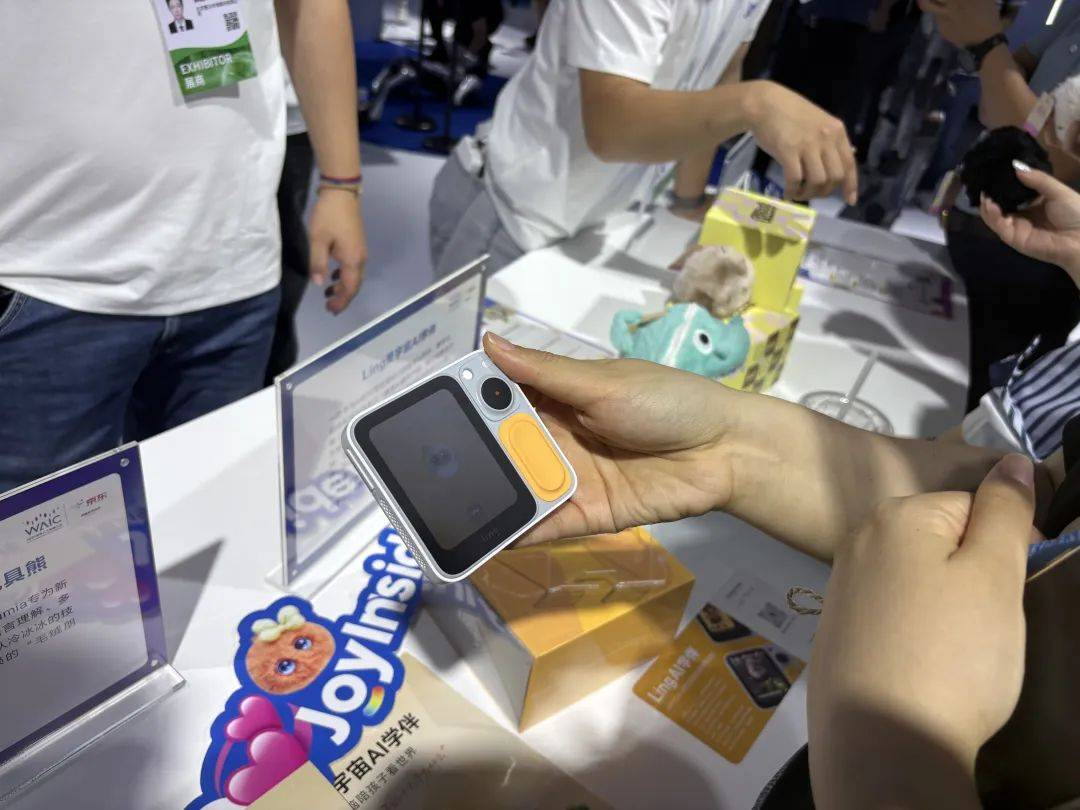
热议WAIC⑤ | 热钱还在涌入,Agent替代打工人还要多久?
Sou Hu Cai Jing· 2025-07-30 11:03
Core Insights - The current Agent product ecosystem is diverse, but no "blockbuster" product has emerged yet [9] - The focus is shifting from general Agents to vertical-specific Agents that can perform specific tasks effectively [2] - There is a significant investment trend in AI Agent startups, with approximately $700 million raised by June 2025 [3][4] Group 1: Agent Development and Application - At the WAIC, various companies showcased their Agent products, including JD.com, Baidu, and Amazon, indicating a growing interest in digital employees and industry assistants [1] - The development of vertical Agents is seen as more promising due to their ability to secure commercial orders by addressing specific tasks [2] - Companies like JD.com and Baidu are making strides in open-source Agent development, with JD's JoyAgent receiving significant attention on GitHub shortly after its launch [3] Group 2: Market Sentiment and Challenges - There is a high level of enthusiasm among enterprises for AI technology, but concerns exist regarding the gap between technological advancements and practical applications [5] - Companies are cautious about fully replacing human workers with Agents, preferring to use them as supportive tools for repetitive tasks [6][10] - The market faces challenges such as data quality, semantic modeling, and the need for stability and security in real-world applications [2][5] Group 3: Future Outlook - Gartner predicts that by the end of 2027, over 40% of AI Agent projects may be canceled due to rising costs and unclear commercial value [8] - The sentiment among investors suggests that not all large models will survive, emphasizing the importance of industry-specific applications [4] - The potential for Agents to reshape the job market is acknowledged, but the focus should be on their effective integration into existing workflows [10]