
ETF配置

Search documents
权益ETF系列:关注结构变化,行情可能临近变盘点
Soochow Securities· 2025-07-12 14:40
Investment Rating - The report maintains an "Increase" rating for the financial products sector [1]. Core Insights - The report emphasizes the importance of structural changes in the market, indicating that a turning point in market trends may be approaching [5][17]. - The overall market performance for the week of July 7 to July 11, 2025, showed positive returns across most indices, but rapid rotation among stocks suggests a preference for holding rather than chasing hot stocks [17][20]. - The macro model for July scored -5, indicating a potential dominance of large-cap value stocks, while the overall market may experience adjustments [24]. - The technical timing model indicates a high risk level for the market, suggesting that while the trend remains positive, the relative position may be too high [17][21]. Summary by Sections A-share Market Overview (July 7 - July 11, 2025) - Major broad indices showed varied performance, with the top three being the Wind Micro-Pan Daily Equal Weight Index (2.99%), CSI 1000 (2.36%), and the ChiNext Index (2.36%) [10]. - Style indices also varied, with small-cap value (2.71%) and small-cap growth (2.31%) leading, while large-cap value (-0.18%) lagged [11]. - Among the Shenwan first-level industry indices, real estate (6.12%), steel (4.41%), and non-bank financials (3.96%) performed best, while coal (-1.08%) and banks (-1.00%) underperformed [15]. A-share Market Outlook (July 14 - July 18, 2025) - The report suggests a focus on structural changes, with a potential turning point in market trends [17]. - The macro model indicates that the market may experience adjustments, with a focus on performance post-earnings announcements [17][24]. - The report recommends a balanced ETF allocation strategy, anticipating a relatively volatile market with ongoing structural opportunities [65][66]. Fund Allocation Recommendations - The report advocates for a balanced ETF allocation strategy, emphasizing the importance of selecting funds with a minimum one-year establishment and a fund size exceeding 100 million [65][66].
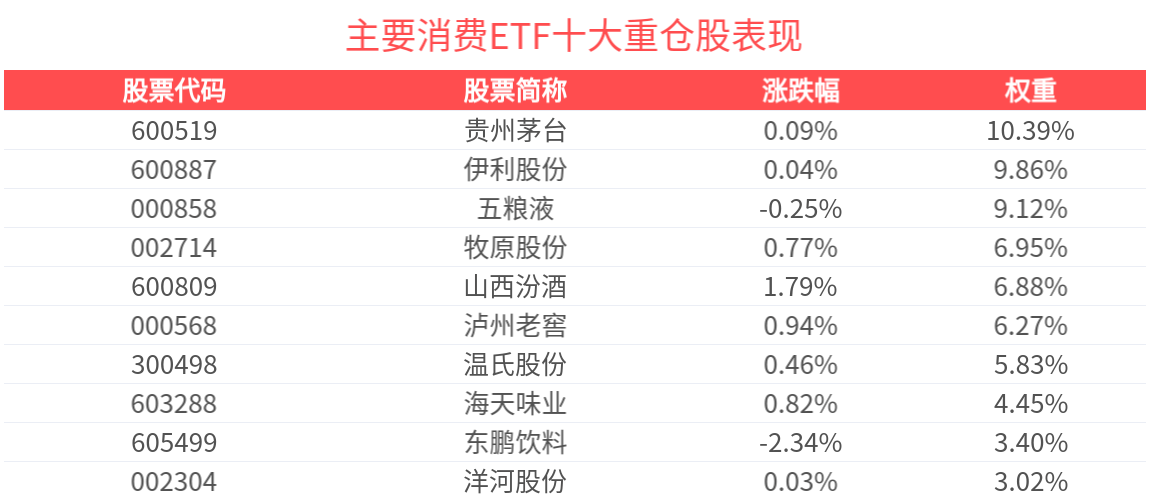
主要消费ETF(159672)盘中飘红,山西汾酒领涨,机构:白酒板块板块经过加速下跌后更具配置价值
Sou Hu Cai Jing· 2025-06-17 06:02
Core Viewpoint - The article discusses the fluctuations in the China Securities Major Consumer Index and highlights the impact of recent "alcohol bans" on the liquor industry, suggesting a potential transformation and upgrade in the sector due to new regulations [1]. Group 1: Market Performance - As of June 17, 2025, the China Securities Major Consumer Index experienced mixed performance among its constituent stocks, with Shanxi Fenjiu leading with a 1.79% increase, while XinNuoWei saw a decline of 3.06% [1]. - The Major Consumer ETF (159672) rose by 0.13%, with a latest price of 0.75 yuan [1]. Group 2: Regulatory Impact - Since May 2025, multiple regions have actively implemented "alcohol bans," leading to increased market concerns regarding the liquor sector [1]. - The new regulations are expected to drive the liquor industry towards transformation and upgrade, focusing on quality innovation to meet diverse consumer demands [1]. Group 3: Industry Valuation - The liquor sector is currently experiencing a downturn, with valuations at the bottom range and low fundamental expectations, making it more attractive for investment after a rapid decline [1]. - The competition within the liquor industry is intensifying, with a trend towards concentration, where leading companies are expanding their market share through brand barriers and strategic upgrades [1]. Group 4: ETF Performance Metrics - As of June 16, 2025, the Major Consumer ETF has recorded a maximum monthly return of 24.35% since its inception, with an average monthly return of 4.87% [2]. - The ETF's management fee is 0.50%, and the custody fee is 0.10%, which are among the lowest in comparable funds [2]. - The latest price-to-earnings ratio (PE-TTM) for the index tracked by the ETF is 18.78, indicating a valuation lower than 99.6% of the time over the past year, suggesting historical low valuations [2]. Group 5: Top Holdings - As of May 30, 2025, the top ten weighted stocks in the China Securities Major Consumer Index account for 67.15% of the index, with notable companies including Yili Group, Kweichow Moutai, and Wuliangye [3].






上交所ETF“科创引领”华安基金首场专场活动成功举办|共探科创投资新方向,分享ETF配置新思路
Xin Lang Ji Jin· 2025-06-13 02:25
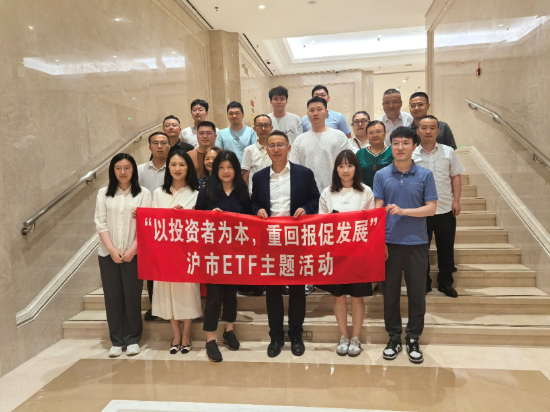
Group 1 - The event focused on investment opportunities in the Sci-Tech Innovation Board and ETF allocation strategies, aiming to provide professional insights for investors [1][2] - The Sci-Tech Innovation Board has achieved significant results in institutional innovation and market ecology optimization over the past six years, providing strong support for technology innovation enterprises [2][3] - The event attracted numerous institutional and individual investors, fostering a lively atmosphere for exchange [2][3] Group 2 - The Shanghai Stock Exchange presented a comprehensive overview of the development of the Sci-Tech Innovation Board and the latest trends in the ETF market, highlighting over 20 newly released indices that support key areas of technology innovation [3] - Huazhang Fund's Chief Index Investment Officer discussed the unique investment value of the Sci-Tech Innovation Board in the "hard technology" sector and shared strategies for capturing investment opportunities through related ETF products [3] - Southwest Securities' Chief Analyst emphasized the core role of ETFs in optimizing asset allocation, providing practical investment strategies tailored to different risk preferences [6] Group 3 - The event was part of the Shanghai Stock Exchange's "Sci-Tech Leadership" theme month, showcasing the collaboration of the three institutions to enhance investor understanding of the Sci-Tech Innovation Board and Shanghai ETFs [6][8] - Huazhang Fund committed to enhancing investor services and providing efficient index investment tools, aligning with regulatory initiatives for high-quality development in public funds [8]

公募投资审美频遭质疑!“迪王”市值反超“宁王”,基金持仓却......
券商中国· 2025-04-07 08:01
Core Viewpoint - BYD's market value has surpassed CATL for the first time in nearly seven years, reclaiming the title of the highest market value stock in the Shenzhen market, attracting more investment funds [1][3][4]. Group 1: Market Position and Fund Allocation - As of the latest data, BYD's market value stands at 1.07 trillion yuan, slightly ahead of CATL, which is significantly higher than the third and fourth ranked companies, Midea Group and Wuliangye, with market values of 558 billion yuan and 512 billion yuan respectively [4]. - In the recently disclosed public fund annual reports, CATL has become the top holding stock, surpassing Kweichow Moutai, while BYD's fund holdings are only half of CATL's, with a total market value of less than a quarter of CATL's [2][5]. - A total of 2,861 funds have allocated positions in CATL, with a combined holding market value of 178.575 billion yuan, accounting for 17.2% of CATL's circulating shares, while BYD's market value held by public funds ranks only 17th, at 43.084 billion yuan [5][6]. Group 2: Investment Preferences and Trends - Public fund managers prefer CATL due to its leading position in the power battery sector and stable annual performance, while BYD's performance is more affected by competition in the vehicle market and policy fluctuations [7][8]. - The growth of ETFs has significantly influenced the pricing power of CATL and BYD, with CATL benefiting from its high weight in broad-based indices, attracting more passive fund investments [8][9]. - CATL is the second-largest weighted stock in the CSI 300 index, with a weight of approximately 3.22%, while BYD is the seventh with a weight of about 1.62% [9]. Group 3: Changing Investment Aesthetics - Public funds have faced criticism for their traditional reliance on financial metrics like P/E and P/B ratios, favoring companies with stable profits and predictable cash flows, which makes it difficult for high-growth companies like BYD to fit into traditional screening models [10][12]. - The investment aesthetic is shifting towards industry leaders, moving away from traditional metrics of low valuation and high growth, indicating a potential for greater consensus on industry leaders in the market [12].



百亿级私募入场“扫货” 加码创新药与互联网ETF
Shang Hai Zheng Quan Bao· 2025-04-02 18:31
Core Insights - The report highlights the increasing interest of billion-level private equity firms in ETFs and LOFs, particularly in the internet and innovative pharmaceutical sectors as of the end of 2024 [1][2]. Group 1: Investment Trends - A total of 16 billion-level private equity firms appeared in the top ten shareholders of public funds by the end of 2024, with a significant focus on internet and innovative pharmaceutical sectors [1]. - Notably, heavyweights like Rongyang Investment and Ningquan Asset have increased their holdings in healthcare ETFs, indicating a strategic shift towards these sectors [2][3]. - The innovative pharmaceutical sector is expected to experience a turning point this year, driven by favorable healthcare policies and the global competitiveness of Chinese innovative drug companies [2]. Group 2: Sector Focus - The internet sector is a key area of investment for billion-level private equity firms, with a notable shift towards Hong Kong stocks, particularly those related to the Hang Seng Technology Index [3]. - Many top private equity firms are reducing exposure to overheated sectors like robotics while increasing their positions in internet-related assets [3]. Group 3: ETF Utilization - ETFs have become an important tool for private equity firms to allocate assets flexibly, including bonds and overseas assets, amidst China's economic transformation [4][5]. - High-profile fund managers are increasingly using ETFs to manage risks and adapt to market changes, indicating a growing trend towards diversified index funds [5].