S交易

Search documents
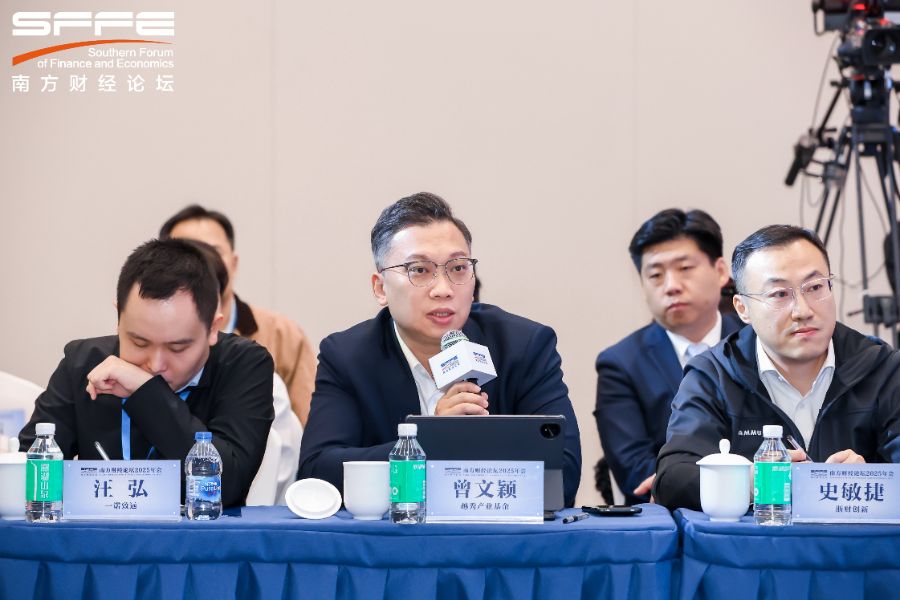
曾文颖:S市场买方结构显著扩容,交易呈现多元化、复杂化趋势
2 1 Shi Ji Jing Ji Bao Dao· 2025-12-12 09:47
Group 1 - The 15th 21st Century Innovation Capital Conference was held in Guangzhou, supported by various financial media and institutions [1] - The roundtable discussion focused on the evolution of strategies in mergers and acquisitions, S transactions, and securities investments [3] Group 2 - Zeng Wenying, head of the investment department at Yuexiu Industrial Fund, shared insights on the shift of S transactions from traditional exit methods to a key entry point for market-oriented institutions seeking quality assets [3] - Yuexiu Industrial Fund has an asset management scale exceeding 150 billion yuan, with a diversified investment strategy that includes mother fund investments, equity direct investments, and mezzanine investments [3] - Since initiating its first S fund transaction in 2020, Yuexiu Industrial Fund has invested approximately 5 billion yuan, positioning itself as a leader in the market-oriented S transaction field [3] Group 3 - The S fund market is experiencing significant changes, with transaction initiators shifting from LPs to GPs, indicating a move towards proactive management [4] - The buyer structure has expanded significantly, with participation from insurance funds, state-owned platforms, brokerages, and foreign investors, making S funds a vital asset acquisition pathway [4] - S transactions are becoming more complex and diversified, evolving from simple share transfers to various forms such as follow-on funds, asset package transactions, and single-asset investments, raising the professional threshold in the industry [4]


这家水下VC,悄悄搞定10个亿
投中网· 2025-12-10 03:06
Core Viewpoint - The article discusses the resilience and adaptability of a venture capital firm, Jingshui Lake Venture Capital, which has successfully navigated through industry fluctuations and established a stable presence in the early-stage investment landscape, focusing on sectors like smart energy and industrial technology [5][6]. Fundraising and Market Dynamics - Jingshui Lake Venture Capital has raised over 1 billion yuan in a year through various funds, including blind pool funds and S funds, indicating a significant achievement in a challenging market environment [6][7]. - The firm’s fundraising strategy is characterized by a combination of primary, secondary, and direct investments, tailored to meet the needs of limited partners (LPs) and the current market conditions [6][7]. - The CEO of Touzhong Information highlighted that the market is at a turning point, moving towards a new balance after a period of harsh market clearing, rather than returning to the previous bubble era [6][7]. Investment Strategy and Execution - Jingshui Lake has adapted its exit strategies in response to delayed IPOs, opting for equity transfers and S transactions to generate cash flow for LPs, demonstrating a proactive approach to liquidity [7][8]. - The firm has successfully executed multiple equity transfers and S transactions, achieving favorable pricing and significantly improving the DPI (Distributions to Paid-In capital) of its first fund [7][8]. - The S fund strategy is seen as a response to the changing market landscape, allowing the firm to manage existing investments while preparing for future opportunities [27][28]. LP Relationships and Fund Structure - The fundraising process is described as a mutual selection between the firm and LPs, with a strong emphasis on transparency and data sharing regarding past investment performance [11][12]. - Approximately two-thirds of the current fund comprises familiar LPs, while one-third consists of new LPs who are well-informed and have specific investment preferences [15][16]. - The firm maintains a cautious approach to expanding its LP base, focusing on building long-term trust and familiarity with existing partners to ensure alignment in investment strategies [21][22]. Sector Focus and Investment Philosophy - Jingshui Lake primarily invests in AI-driven industrial technology and smart energy applications, adhering to a strategy that emphasizes early-stage investments and leading roles in funding rounds [25][26]. - The firm avoids overextending into single sectors, maintaining a diversified portfolio that allows for a manageable number of investments per fund [25][26]. - The investment philosophy is rooted in a long-term perspective, aiming to accumulate value over time rather than chasing short-term gains [31][32].

这家水下VC,悄悄搞定10个亿
3 6 Ke· 2025-12-10 00:56
Core Insights - The article discusses the resilience and growth of Jingshui Lake Venture Capital, a relatively young VC firm that has successfully navigated industry challenges and established a stable position in the market [1][2][4] Fundraising and Strategy - Jingshui Lake has raised over 1 billion RMB in the past year, including new S funds and FOFs, indicating a significant achievement in a challenging market environment [2][3] - The firm employs a PSD (Primary+Secondary+Direct) strategy, which has evolved in response to LP demands and market conditions, rather than being a pre-planned approach [2][21] - The fundraising process has seen strong participation from existing LPs, with about two-thirds of the new fund coming from familiar investors, reflecting a solid trust base [5][9] Market Position and Adaptation - The firm has adapted to the changing market by exploring alternative exit strategies, such as equity transfers and S transactions, to provide liquidity to LPs amid delayed IPOs [3][24] - Jingshui Lake's successful transactions have improved the DPI of its first fund, showcasing its ability to navigate the current market landscape effectively [3][24] LP Relationships and Dynamics - The firm has established strong relationships with LPs, with approximately 30% of its old LPs being those with guiding fund attributes, which allows for greater investment flexibility [8][12] - New LPs are characterized by their clear investment preferences and understanding of the market, facilitating straightforward communication and collaboration [6][10] Investment Focus and Philosophy - Jingshui Lake focuses on early-stage investments in sectors like smart energy and industrial technology, maintaining a disciplined approach to avoid overextending into high-valuation areas [19][20] - The firm emphasizes a long-term investment strategy, aiming for sustainable growth rather than chasing short-term gains, which aligns with its overall investment philosophy [25][26] Future Outlook - The firm is cautious about expanding its scale, preferring to maintain a manageable fund size that allows for focused investment in quality projects [18][19] - Jingshui Lake's approach to investment is rooted in a deep understanding of market cycles, allowing it to make informed decisions about sector opportunities and risks [26][27]
中流击水,破浪前行|第19届中国投资年会·有限合伙人峰会即将在沪启幕
3 6 Ke· 2025-11-18 03:14
Core Insights - The current market environment is characterized by uncertainty and the need for decisive action, as traditional investment rules are becoming ineffective [1] - The 19th China Investment Annual Conference and Limited Partner Summit will be held on November 26-27, 2025, in Shanghai, focusing on the theme "Breaking Through in the Midstream" [1][6] - The summit aims to gather significant capital from state-owned enterprises, active market-oriented funds, and insurance funds to address structural challenges in the market and explore new value discovery logic [1][4] Group 1: Summit Structure and Themes - The summit will feature three high-level closed-door discussions that will address core industry issues and provide actionable frameworks and strategic insights through dialogues among top LPs, GPs, and industry leaders [2] - Multiple core sessions will be set up to provide deep insights into industry trends, capital operations, and future predictions, assisting participants in navigating the complex market landscape [3] Group 2: Capital and Market Resilience - The summit will continue to leverage its strong capital gathering ability, bringing together dominant state-owned capital and market-driven funds to share insights on industry trends and capital logic [4] - The event is positioned as a collective action to seek certainty amid uncertainty, encouraging industry leaders to engage in discussions that clarify market direction [4] Group 3: Key Publications and Reports - A new book titled "History of Venture Capital in China" will be launched, providing a systematic review of the development of the venture capital industry over the past 20 years [5] - The "2025 Annual Limited Partner List" will be released to recognize outstanding institutions in investment practices over the past year, highlighting investment hotspots and trend changes [5] - The "China Venture Capital Market Development Index Report" will be published to analyze market structure, policy environment, and capital flow, offering authoritative data support for investment direction and strategic decision-making [5]
人均身价过亿,高盛买了
投中网· 2025-10-27 06:47
Core Insights - The acquisition of Industry Ventures by Goldman Sachs marks a significant move in the venture capital landscape, highlighting the increasing importance of venture capital in driving growth for Wall Street banks [5][12][10] Group 1: Acquisition Details - Goldman Sachs announced the acquisition of Industry Ventures, a venture capital firm managing $7 billion in assets, for $665 million in cash and stock, with potential additional payments of up to $300 million based on future performance [5][9] - The deal is expected to be completed in Q1 2026, with all 45 employees joining Goldman Sachs, and the CEO and core management team being appointed as partners in Goldman Sachs Asset Management [5][6] Group 2: Strategic Rationale - Goldman Sachs aims to enhance its alternative investment platform, which has a scale of $540 billion, by integrating Industry Ventures into its external investment group, XIG, which manages over $450 billion [6][8] - The acquisition is not intended to position Goldman Sachs as a competitor in the venture capital space but rather to leverage Industry Ventures' expertise in secondary transactions, which are becoming increasingly vital in the private equity market [7][12] Group 3: Market Context - The secondary market for venture capital transactions is projected to reach $61.1 billion from June 2024 to June 2025, surpassing the total IPO exit amount of $58.8 billion during the same period, indicating a shift in exit strategies for investors [9][12] - The acquisition reflects a broader trend where banks are increasingly recognizing the value of venture capital firms in diversifying their investment strategies and meeting complex client needs [12][13] Group 4: Implications for the Industry - The deal signifies a potential increase in venture capital acquisitions by financial institutions, as the secondary market becomes a crucial component of private equity investment strategies [11][12] - The transaction may inspire similar moves in the industry, particularly as the U.S. public market continues to face challenges, leading to a greater focus on private market opportunities [13][14]


“S交易”爆发前夜,我们见到了易凯资本的伏兵 | 巴伦精选
Sou Hu Cai Jing· 2025-10-14 11:17
Core Insights - The S transaction market in China has evolved significantly since its inception, transitioning from a niche concept to a mainstream investment strategy by 2018, driven by regulatory changes and market conditions [3][5] - The S transaction market experienced its first decline in total transaction volume in 2023 due to tightened IPO regulations and reduced buyer confidence, but is expected to rebound following government support initiatives in 2025 [5][6] - The role of Financial Advisory (FA) institutions is becoming increasingly prominent in S transactions, which were previously dominated by buyers, indicating a shift towards more structured and professional transaction processes [6][12] Group 1: Market Evolution - The S fund market began to gain traction in 2018, with significant contributions from early adopters like Gaofei Asset and Yixin Wealth, marking a new phase of systematic growth [3][5] - The average annual growth rate of S transactions exceeded 50% from 2018 to 2023, reflecting a robust expansion phase [3] - By 2024, the total market size of equity investment funds in China reached 26 trillion yuan, with a significant portion awaiting exit strategies [10] Group 2: Regulatory Environment - The tightening of IPO schedules and changes in exit rules have increased uncertainty for buyers, directly impacting their expectations and confidence [5][10] - In 2025, the Chinese government officially encouraged the development of S funds, signaling a potential turnaround for the market [5][6] Group 3: Role of Financial Advisory Institutions - FA institutions, previously absent in S transactions, are now emerging as key players, providing essential services in a market that requires complex asset valuation and transaction structuring [6][12] - The experience and resources of FA institutions are seen as valuable assets for new buyers and sellers entering the S transaction market [12][30] Group 4: Buyer and Seller Dynamics - The buyer landscape is shifting, with state-owned platforms and financial institutions becoming more active, while traditional private equity players are adapting to new market conditions [13][14] - Sellers are increasingly motivated by the need to liquidate assets as funds approach maturity, leading to a rise in S transactions [14][15] Group 5: Asset Characteristics and Valuation - Popular asset types in the current market include core technology assets, important sector leaders, and structured financing options, with pricing reflecting the underlying asset quality [20][23] - The average pricing for technology assets ranges from 65% to 70%, while medical and consumer assets are priced lower, indicating varying levels of demand and risk perception [23] Group 6: Service Offerings and Strategies - The S transaction service offerings are categorized into general old stock transactions, structured financing, and succession funds, each targeting different buyer and seller needs [24][25][26] - The trend towards succession funds is becoming a core strategy for S transactions, reflecting a shift in how funds manage their exit strategies [26][32]

破解复杂市场,施罗德资本如何领跑人民币S交易?
Sou Hu Cai Jing· 2025-07-03 13:15
Core Insights - The S transaction has emerged as a significant exit solution in the context of a narrowing exit channel and declining liquidity in the global private equity market [2] - Despite increased attention and policy support for S funds, the actual market transaction scale remains below expectations, indicating that the RMB S transaction market is still in its early development stage [2][5] - Challenges such as valuation pricing, compliance in transaction processes, and significant differences in expectations between buyers and sellers contribute to the low S transaction rate, failing to meet the urgent liquidity demands of LPs and GPs [2][10] Group 1: Company Background and Expertise - Schroder Capital has been active in the Chinese private equity market since 1998, establishing a robust resource network that covers local project sources and quality GPs [7] - The firm has introduced over 3 billion RMB in foreign capital to the Chinese private equity market through seven QFLP funds, providing international investors with insights and investment channels into China's growth opportunities [5] - With nearly 30 years of experience in the Chinese market, Schroder Capital leverages its mature structured design and valuation methodologies to adapt quickly to market demands and establish pricing advantages [5][8] Group 2: Investment Strategy and Focus - Schroder Capital's investment strategy in China is characterized by a thematic-driven approach, focusing on long-term structural opportunities rather than short-term trends [8] - The firm targets three main themes aligned with China's economic development: consumer growth, services and empowerment for SMEs, and technological innovation and import substitution [8] - The private equity team's long-term partnership strategy has allowed them to accumulate cross-cycle investment experience, making them one of the few platforms capable of dual-currency (USD and RMB) allocations [7][10] Group 3: Market Position and Future Outlook - The S fund is seen as an effective means to share in the growth dividends of Chinese enterprises, but it requires higher asset quality and exit diversity [10] - Schroder Capital's ability to quickly integrate into the RMB S market and achieve diverse, market-validated results is attributed to its long-termism and high co-investment ratios, aligning interests with investors [10] - The firm aims to lead the RMB S market towards standardization and institutionalization, thereby boosting confidence in the entire venture capital industry [10]

欧洲老钱加码投资!IDG设5亿美元多资产接续基金
Zheng Quan Shi Bao Wang· 2025-06-30 12:20
Group 1 - LGT Capital co-led a $500 million multi-asset continuation fund by IDG Capital, which consists of a diversified portfolio of 13 assets [1][2] - The transaction reflects the growing maturity and scale of the S market in the Asia-Pacific region, showcasing LGT Capital's execution capabilities in dynamic markets [2][5] - LGT Capital focuses on private equity, multi-alternative strategies, and sustainable investments, establishing a strong network of quality GPs and funds globally [4][5] Group 2 - The multi-asset strategy chosen by IDG Capital indicates a high level of confidence in asset management capabilities and offers broader liquidity solutions for LPs [6] - The complexity of the transaction involves both onshore and offshore structures, requiring navigation through multiple jurisdictions and regulatory frameworks [6] - This collaboration highlights IDG Capital's ability to attract international capital and manage assets effectively on a global scale [6]
投资对赌协议:创业者的“卖身契”
Sou Hu Cai Jing· 2025-06-29 22:12
Core Viewpoint - The article discusses the increasing prevalence of "earn-out" agreements in China's venture capital landscape, highlighting the risks and consequences for entrepreneurs who fail to meet these targets, leading to significant financial burdens and potential bankruptcy [1][3][10]. Group 1: Current Market Trends - The case of Smartisan Technology's 15 million yuan loan dispute exemplifies the challenges faced by companies under earn-out agreements, with a ruling requiring repayment of principal plus interest at a rate of 6% [3]. - In 2023, several companies aiming for IPOs, such as Baishen Pharmaceutical and Youxun Medical, have triggered buyback clauses due to unmet targets, reflecting a broader trend in the market where 90% of private equity funds in China include such clauses [3][10]. - The contrast in earn-out agreement usage is stark, with China at 90% compared to only 2% in Silicon Valley, indicating a fundamental difference in venture capital ecosystems [3]. Group 2: Government and Institutional Responses - The Central Political Bureau of the Communist Party of China has introduced the concept of "patient capital," urging state-owned enterprises to lead by example in fostering a more sustainable investment environment [4][5]. - Various state-owned enterprises in cities like Shanghai and Beijing are taking steps to lower return requirements and extend fund durations, signaling a shift towards more supportive investment practices [5]. Group 3: Entrepreneurial Challenges - Entrepreneurs are increasingly finding themselves in precarious situations due to the pressure of earn-out agreements, with notable cases of founders facing severe consequences for failing to meet financial targets [6][10]. - The urgency to meet IPO deadlines is palpable, with approximately 130,000 investment projects and over 10,000 companies currently facing exit challenges [9]. - The article highlights the case of ADC, which achieved a remarkable IPO in Hong Kong but is burdened by significant losses and stringent earn-out conditions that could lead to high-interest buybacks if targets are not met [10]. Group 4: Market Dynamics and Future Outlook - The article notes a growing trend of companies turning to the Hong Kong stock market as a last resort for IPOs, with the market experiencing a resurgence in fundraising activities [10]. - The private equity secondary market is becoming increasingly active, with a notable rise in old stock transactions, indicating a shift in how liquidity crises are managed [12][14]. - The ongoing tension between short-term profit motives and long-term value creation is underscored, with the potential for a new path emerging through government-backed initiatives aimed at reducing the reliance on earn-out agreements [20].


银行系资金加速涌入,政策型LP关注存量消化|月度LP观察
FOFWEEKLY· 2025-06-25 10:17
Core Viewpoint - In May, the number of funding institutions decreased, and the number of funding transactions slightly declined, indicating a slight drop in market activity compared to the previous month. However, financial institutions' participation in funding is entering a phase of explosive growth due to policy support [3][5][34]. Group 1: Funding Activity Overview - In May, the number of newly registered private equity and venture capital funds totaled 339, a month-on-month decrease of 18.71%, but a year-on-year increase of 36.69% [5]. - The activity of institutional LPs decreased by 18% compared to April, but increased by 58% year-on-year [3][5]. - Policy-type LPs accounted for the highest funding share at 40.41%, followed by industrial-type at 33.98%, financial-type at 20.04%, and financial institutions at 5.25% [7]. Group 2: Policy-Type LPs and Market Dynamics - Policy-type LPs saw a significant month-on-month decline of 26.8% in funding, becoming the category with the largest drop [9]. - Local governments are concentrating their funding efforts, with notable examples including Beijing's government investment platforms making only two investments in May, totaling 102 billion [9]. - The Sichuan Revitalization Science and Technology Innovation Fund completed a GP-led secondary transaction, indicating active asset management among policy-type LPs [10][11]. Group 3: Financial Institutions' Funding Growth - Financial institutions' funding activity increased by 4% month-on-month in May, with a total funding scale exceeding 25.2 billion, marking a 77% increase from the previous month [14]. - Recent policy adjustments have allowed insurance funds to increase their equity asset allocation, leading to a significant rise in private equity investments [15]. - Insurance capital is increasingly focusing on sectors such as healthcare, semiconductors, and new energy, with notable investments in the Shanghai Lilan Fund totaling 950 million [15][16]. Group 4: Regional Funding Trends - Jiangsu province continues to lead in funding activity, with several strategic emerging industry funds registered in May, totaling 7 billion [22]. - Beijing emerged as the region with the largest funding scale in May, driven by significant contributions from financial institutions [25]. - The establishment of various funds in Jiangsu aligns with local industrial strategies, aiming to enhance competitiveness in key sectors [24].