数字消费

Search documents
王府井:紧跟新消费需求持续关注银发经济,打造多元化消费体验场景
Cai Jing Wang· 2025-12-02 03:52
Core Viewpoint - Wangfujing is actively adapting to new consumer demands by accelerating business model iterations and implementing a "one store, one strategy" approach to rejuvenate its department store format [1] Group 1: Business Strategy - The company is focusing on emerging economic trends such as the first-release economy, silver economy, ice and snow economy, "artificial intelligence + consumption," digital consumption, green consumption, and health consumption [1] - Wangfujing aims to create diversified consumer experience scenarios by integrating cultural, commercial, tourism, and sports development trends [1] Group 2: Financial Performance - For the period from January to September 2025, Wangfujing reported a revenue of 7.709 billion yuan, representing a year-on-year decline of 9.30% [1] - The company achieved a net profit attributable to shareholders of 124 million yuan, which is a significant year-on-year decrease of 71.02% [1]

长三角议事厅·周报|从国际化消费试点看长三角城市新梯度
Xin Lang Cai Jing· 2025-12-02 03:47
Core Insights - The Ministry of Commerce and the Ministry of Finance have jointly announced the list of "Pilot Cities for International Consumption Environment Construction," with Shanghai leading the Yangtze River Delta as an international consumption center, while Nanjing and Hangzhou have made their debut on the list [1][3][4] Group 1: Consumption Landscape - Shanghai remains at the top of the consumption hierarchy, with projected international tourism revenue of $11.09 billion in 2024, a growth of 79.3%, and domestic tourism revenue of approximately ¥497.26 billion, a growth of 35.2% [3] - Hangzhou is recognized as the "E-commerce Capital," with online retail sales exceeding ¥1 trillion in 2022, supported by over 128 e-commerce platforms and 1.25 million online stores [3][4] - Nanjing excels in offline shopping districts and cultural scenes, with a focus on revitalizing historical areas and enhancing night economy, leading to a higher density of cultural offerings compared to similar cities [4] Group 2: Absence of Strong Manufacturing Cities - Notable absences from the pilot list include major manufacturing cities like Suzhou, Ningbo, and Wuxi, which, despite their economic strength, have not developed corresponding international consumption environments [5][6] - Suzhou is projected to surpass ¥1 trillion in retail sales in 2024, yet its service sector's contribution to GDP is only about 52.4%, indicating a reliance on manufacturing income rather than a robust consumer market [5][6] - Ningbo and Wuxi also exhibit similar trends, with low inbound tourism numbers and a lack of international consumption experiences, highlighting a disconnect between industrial strength and consumer engagement [5][6] Group 3: Regional Consumption Gradient - The Yangtze River Delta has established a preliminary consumption gradient, with Shanghai at the internationalization peak, followed by Hangzhou and Nanjing as innovation hubs, while Suzhou, Ningbo, and Wuxi lag behind in consumer engagement [6][7] - This entrenched structure may weaken the overall domestic demand potential of the Yangtze River Delta and create new imbalances in urban capabilities and regional roles [6] Group 4: Challenges in Consumption Coordination - Despite advancements in transportation integration, the consumption landscape has not evolved correspondingly, with a lack of clear regional consumption function division [7][8] - The absence of a unified data framework hampers regional collaboration, as cities rely on disparate data sources, leading to a fragmented understanding of consumer behavior across the region [8] Group 5: Recommendations for Regional Benefits - To transform the pilot cities' advantages into regional benefits, it is essential to address institutional shortcomings and establish unified standards for cross-city operations [9][10] - Shanghai should continue to serve as a global entry point, while Nanjing and Hangzhou can focus on cultural and digital consumption experiences, respectively, to create a cohesive regional consumption ecosystem [9][10] - Developing a regional consumption big data platform could enhance policy precision and foster sustainable cross-city consumption habits [10]

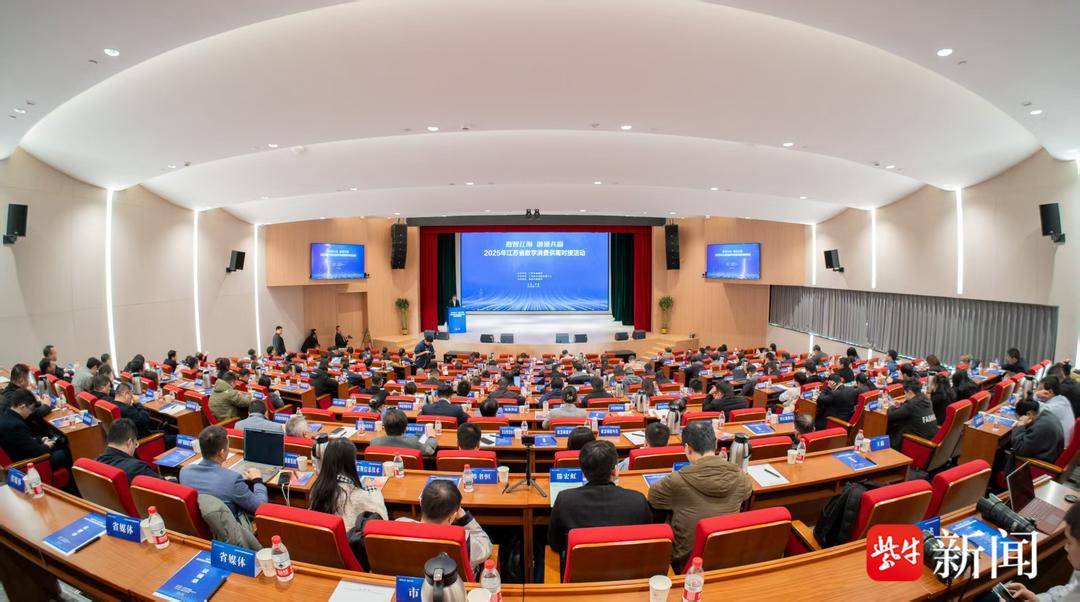
江苏数字消费“天团”来了!2025年江苏省数字消费供需对接活动在南通举行
Yang Zi Wan Bao Wang· 2025-12-01 07:53
Core Insights - Jiangsu Province is showcasing its digital consumption capabilities through a series of innovative companies and technologies that enhance efficiency and consumer experience [1][3][5] Group 1: Company Innovations - Suzhou Wandi Network Technology Co., Ltd. has developed an AI store management system that allows one person to manage thousands of stores, currently implemented in 500,000 stores nationwide [3] - Changzhou Whaleship Technology Co., Ltd. has created the world's largest unmanned cargo aircraft, capable of carrying 5 tons over 2,600 kilometers without refueling, with 500 aircraft orders already placed [3][5] - Nanjing Tadao Medical Technology Co., Ltd. introduced a robotic system for orthopedic surgeries that reduces operation time from 30 minutes to just 3 minutes, currently used in over 30 top-tier hospitals [5] Group 2: Digital Consumption Landscape - The event highlighted the concept of "digital consumption," which encompasses the application of digital technologies in consumer activities, including the evolution of consumption content, channels, and environments [7] - Jiangsu's digital consumption initiatives are part of a broader strategy to upgrade traditional industries and enhance consumer experiences through technology [7][8] - The event served as a platform for companies to showcase their innovations and for supply and demand sides to connect directly, facilitating market opportunities [8][12] Group 3: Future Directions - Jiangsu Province aims to stimulate demand and lower consumption barriers by publishing a digital consumption demand guide and supporting leading companies in overcoming core technological challenges [8] - The province plans to establish a regular platform for ongoing connections between digital consumption supply and demand, enhancing policy support to elevate Jiangsu's digital consumption to new heights [8]
商务部:将推进汽车流通消费改革试点
Xin Jing Bao· 2025-11-27 03:51
Core Viewpoint - The Ministry of Industry and Information Technology, along with five other departments, has issued a plan to enhance the adaptability of supply and demand for consumer goods, aiming to further stimulate consumption in China [1] Group 1: Automotive Sector - The Ministry of Commerce will promote reforms in automotive circulation, expand the second-hand car market, and develop the automotive aftermarket, including modifications, rentals, events, and RV camping [1] - Retail sales of passenger cars increased by 7.9% from January to October this year, indicating a sustained growth trend in the automotive sector [1] Group 2: Home Appliances and Furniture - Retail sales of home appliances, furniture, and communication equipment have grown by approximately 20% year-on-year for the same period, highlighting strong consumer demand in these categories [1] Group 3: New Consumption Models - The government will actively promote the "first launch economy," encouraging companies to release new products, open flagship stores, and host debut events [1] - There is a focus on developing health consumption and enhancing the quality of health-related goods and services [1] - The initiative also aims to foster digital and green consumption, integrating artificial intelligence with consumer trends to create new growth points [1]
网红“流量”变“增量”,徐州“十四五”消费交出亮眼答卷
Sou Hu Cai Jing· 2025-11-27 03:26
Core Insights - The article highlights the achievements and future plans of Xuzhou in terms of consumption and economic development during the "14th Five-Year Plan" and the upcoming "15th Five-Year Plan" [1][9] Consumption Market Performance - Xuzhou's social retail sales reached 377.02 billion yuan from January to October 2025, with a growth rate of 5.9%, ranking third in the province and first in growth [2] - The city organized over 9,000 consumption promotion events since 2023, with nearly 40 million yuan allocated for consumption vouchers, generating over 20 times in sales [2] Upgrading Consumption Scenarios - The Pengcheng Square business district was recognized as a national smart demonstration area, and the first international tax refund store in Northern Jiangsu was established, enhancing international consumption capabilities [3] - Nighttime consumption increased by 35.2%, with over 50% of visitors to the newly opened Pengcheng Qili being from outside the city [3] - A total of 564 new stores were introduced from 2022 to 2024, with over 100 new brands expected in 2025 [3] Collaborative Efforts for Consumption Upgrade - Cultural and tourism consumption has become a new growth engine, with significant increases in visitor numbers and revenue from various attractions and events [4] - The city received 66 million visitors in 2024, with tourism revenue reaching 22.132 billion yuan, marking growth rates of 18.67% and 19.18% respectively [4] Optimizing Consumption Environment - The market supervision bureau established a new consumer rights protection mechanism, resulting in 1.09 billion yuan in economic losses recovered for consumers [5] - The city has developed 1,660 units with no-reason return commitments and 888 ODR enterprises to enhance consumer confidence [5] District Highlights and New Consumption Patterns - Xinyi's retail sales grew from 28.7 billion yuan at the end of the 13th Five-Year Plan to over 60 billion yuan in 2025, with an average annual growth rate of 15.9% [6] - The Yunlong District saw a 6.2% annual growth in retail sales, with significant contributions from the first-store economy and cultural tourism [7] Future Outlook for Consumption Development - Xuzhou plans to enhance consumption supply, innovate business formats, and optimize scenarios to elevate the consumption market [8] - The city aims to develop cultural tourism as a pillar industry, promoting new consumption scenarios such as water tourism and RV camping [8]
万店掌跻身省级数字消费场景,亮相供需对接会
Sou Hu Cai Jing· 2025-11-26 08:46
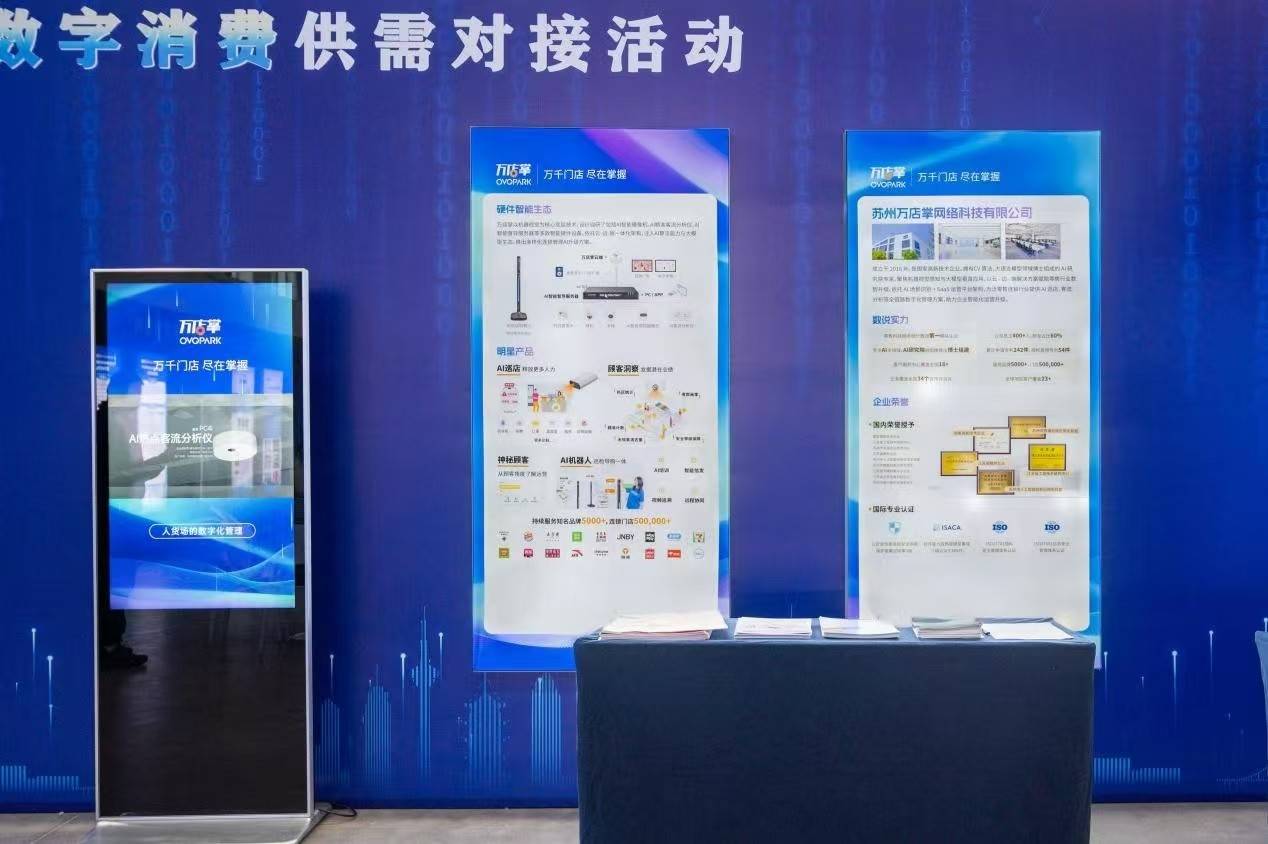
Core Insights - The event held on November 25, 2025, in Nantong, Jiangsu Province, focused on digital consumption, bringing together over 100 leading innovative companies and institutions from various sectors such as footwear, pharmaceuticals, and electronics to facilitate efficient communication and collaboration between supply and demand [1][3] - WanDianZhang, a benchmark enterprise in retail chain digitization, was recognized in the provincial digital consumption innovation scene list and participated in sharing solutions and demonstrations, providing new ideas for the implementation of digital consumption innovation scenarios [1][3] Group 1: Recognition and Impact - The Jiangsu Provincial Data Bureau announced the 2025 digital consumption innovation scene list, with WanDianZhang being selected due to its solid practical achievements in the retail AI sector, reflecting the urgent demand for AI empowerment across various industries [3][5] - The selection of WanDianZhang signifies authoritative recognition from government departments regarding its technological strength and ability to implement solutions effectively, highlighting the growing need for digital solutions in the retail sector [3][5] Group 2: AI Technology Applications - During the event, experts emphasized that the current consumer market has entered a scenario consumption phase, with AI evolving from a basic tool to a core engine driving scenario innovation and value creation [6] - WanDianZhang showcased its AI technology applications in retail environments, including AI store inspections, AI customer flow analysis, AI robots, and cloud-based management solutions, demonstrating practical examples and commercial value for the industry [6][8] Group 3: Practical Solutions and Future Directions - The AI store inspection solution utilizes intelligent visual recognition technology to automatically detect store displays and service standards, reducing management costs by replacing manual inspections [8] - The AI customer flow analysis tool helps retail businesses optimize service flow and store operations by analyzing customer entry and exit data, enhancing space utilization [8] - The AI robot can perform autonomous inspections, stock alerts, and customer guidance, operating 24/7 to reduce labor costs in stores [8] - Cloud-based management enables remote monitoring and intelligent interaction, facilitating "unmanned management with AI oversight and human service," addressing challenges in nighttime store operations [8] - WanDianZhang aims to continue focusing on retail AI technology development and scenario innovation, deepening collaboration with government and industry partners to promote digital upgrades for more retail enterprises, thereby injecting momentum into the development of the digital consumption sector in Jiangsu Province [8]
供需“双向奔赴” 数字动能激活中国超大市场新消费
Yang Guang Wang· 2025-11-25 13:49
Group 1 - The online retail sales in China from January to October increased by 9.6% year-on-year, reflecting the advantages of a large-scale market and the deep integration of "Made in China" industrial upgrades [1] - Smart wearable products, such as AI glasses and smartwatches, saw a significant growth in online sales, with an increase of 23.1%, indicating a shift from novelty consumption to essential consumption [1] - The strong consumer demand is driving companies to invest more in core technology and product iterations, creating a virtuous cycle where market demand drives technological upgrades and technological progress stimulates consumption potential [1] Group 2 - Recent policies aimed at promoting digital consumption are being released, positioning digital consumption as a new engine for expanding domestic demand [2] - The State Council's recent meeting emphasized leading industrial upgrades through consumption upgrades and achieving a dynamic balance between supply and demand [2] - The market is witnessing structural changes, with digital consumption becoming a significant component, characterized by essential, scenario-based, segmented, and quality-oriented consumption [2] Group 3 - There is an expectation for relevant departments to introduce policies to enhance the adaptability of supply and demand in consumer goods, which will support the expansion of consumption [3] - Fields such as artificial intelligence terminals, ultra-high-definition video, and drones are likely to experience rapid development [3]
晶采观察丨供需“双向奔赴” 数字动能激活中国超大市场新消费
Yang Guang Wang· 2025-11-25 13:47
Group 1 - The online retail sales in China from January to October increased by 9.6% year-on-year, reflecting the advantages of a large-scale market and the deep integration of "Made in China" industrial upgrades [1] - Smart wearable products, such as AI glasses and smartwatches, saw a significant growth in online sales, with an increase of 23.1%, indicating a shift from novelty consumption to essential consumption [1] - The strong consumer demand is driving companies to invest more in core technology and product iterations, creating a virtuous cycle where market demand drives technological upgrades and technological progress stimulates consumption potential [1] Group 2 - Recent policies aimed at promoting digital consumption are being released, positioning digital consumption as a new engine for expanding domestic demand [2] - The State Council's recent meeting emphasized leading industrial upgrades through consumption upgrades and achieving a dynamic balance between supply and demand [2] - The market is witnessing structural changes, with digital consumption becoming a significant component, characterized by essential, scenario-based, segmented, and quality-oriented consumption [2] Group 3 - There is a call for more quality supply to meet new demands, and enhancing supply-demand adaptability is key to unlocking consumption potential and facilitating economic circulation [3] - Relevant departments are expected to introduce policies to enhance the adaptability of consumer goods supply and demand, which may lead to rapid development in fields such as AI terminals, ultra-high-definition video, and drones [3]
【宏观经济】一周要闻回顾(2025年11月19日-11月25日)
乘联分会· 2025-11-25 09:01
Core Viewpoint - The article highlights the positive impact of e-commerce in China from January to October 2025, emphasizing its role in boosting consumption, promoting modern industrial systems, and expanding high-level openness to the outside world [3][4]. E-commerce Development - In the first ten months of 2025, China's online retail sales increased by 9.6% year-on-year, driven by digital consumption and quality e-commerce [3]. - Smart products and online services saw significant growth, with smart wearables like AI glasses and smartwatches growing by 23.1%, and online service consumption increasing by 21% [4]. - Instant e-commerce also thrived, with sales rising by 24.3%, particularly in the restaurant sector where online coupons for in-store experiences grew by 25.1% [4]. Industrial E-commerce - Industrial e-commerce is facilitating the digital transformation of small and medium-sized enterprises, with over 400 matching events held by major e-commerce platforms [4]. - Key sectors such as textiles and pharmaceuticals experienced e-commerce transaction growth of 5.5% and 3.4%, respectively [4]. - Agricultural products and rural online retail sales grew by 9.5% and 7.5%, respectively, indicating a strong push for e-commerce to empower local agricultural products [4]. International Cooperation - The "Silk Road E-commerce" initiative is fostering high-quality cooperation along the Belt and Road, with 12 innovative practice cases being replicated nationwide [5]. - Activities promoting the Chinese market as a global opportunity included 36 events, with significant sales growth in imported goods, such as a 73.7% increase in Uzbek candy and a 39.9% increase in Thai mangosteen [5]. Foreign Investment - In the first ten months of 2025, China established 53,782 new foreign-invested enterprises, a year-on-year increase of 14.7%, while actual foreign investment amounted to 621.93 billion yuan, a decrease of 10.3% [11]. - The manufacturing sector attracted 161.91 billion yuan, while the service sector received 445.82 billion yuan in foreign investment [11]. - High-tech industries saw a significant increase in foreign investment, with e-commerce services growing by 173.1% [11].

数字化打开消费新窗口,量化派以长期主义提升用户体验
Sou Hu Cai Jing· 2025-11-24 09:01
Group 1: Industry Overview - The digital economy is reshaping the consumption landscape, expanding boundaries and reconstructing value creation logic [1] - China's online consumption market is experiencing strong growth, with the market size projected to increase from 13.9 trillion yuan in 2020 to 25.7 trillion yuan in 2024, and expected to reach 41.2 trillion yuan by 2029 [3] - In the first eight months of this year, the national online retail sales increased by 9.6% year-on-year, outpacing the overall growth of social consumer goods retail [3] Group 2: Company Profile - The company, Quantitative Wave, focuses on the online market in China, driven by its mission to "digitally drive the world and intelligently illuminate life" [3] - Utilizing its self-developed AI technology platform, the company provides intelligent and precise consumption experiences for consumers and partners [3] - As of May 31, 2025, Quantitative Wave has attracted over 60.3 million registered terminal customers through its online market, creating growth and synergy for its business partners [4] Group 3: Future Outlook - The integration of digital technology with new consumption scenarios is leading to a favorable development trend in online consumption, indicating a broad industry outlook [4] - The company has built efficient integration capabilities in high-frequency consumption scenarios such as e-commerce and O2O automotive retail, accumulating rich industry experience and data resources [4] - As technology continues to resonate with life demands, companies like Quantitative Wave that focus on enhancing experiences and creating value are expected to shine in the evolving landscape of digital consumption [4]