
数字资产

Search documents
数字资产应用度提升之际,摩根大通借助区块链开展债务发行
Xin Lang Cai Jing· 2025-12-11 15:20
Core Insights - Morgan Stanley has issued a U.S. commercial paper for Galaxy Digital Holdings on the Solana blockchain, marking a significant step in institutional acceptance of digital assets [1][3] - The transaction, involving Coinbase Global and Franklin Templeton, is one of the earliest cases of using blockchain for securities issuance and management, described by Morgan Stanley as a "global milestone" [1][3] - The debt transaction is valued at $50 million, highlighting the growing interest of traditional financial institutions in blockchain platforms like Solana, which offers high transaction speeds and low costs [4] Company Actions - Morgan Stanley's digital asset market head, Scott Lucas, stated that this milestone transaction is crucial for building the future of finance, demonstrating institutional acceptance of digital assets and the ability to securely bring new financial instruments on-chain amid complex legal and regulatory environments [4] - The bank has previously completed several issuances on its private permissioned blockchain, including municipal securities for Quincy in April 2024 and U.S. commercial paper for OCBC Bank in August 2025 [4] Future Plans - Lucas indicated plans to explore expanding the framework and Morgan Stanley's role in it in the first half of next year, which will include broadening the investor and issuer base and covering more types of securities [2][4] - In this transaction, Morgan Stanley acted as the arranger and created a tokenized version of the U.S. commercial paper, with issuance and redemption payments made in USDC, a stablecoin issued by Circle [5]

Easy Markets易汇:比特币回升至94000美元附近
Xin Lang Cai Jing· 2025-12-10 11:45
Core Viewpoint - Bitcoin (BTC) has rebounded strongly above $94,000, coinciding with expectations of an interest rate cut by the Federal Reserve, indicating a potential shift in market sentiment towards cryptocurrencies [1][4]. Group 1: Market Performance - Bitcoin's price fluctuated around $90,000 before a rapid increase of over $3,000 within minutes, resulting in a 4% rise over the past 24 hours, suggesting a resurgence of bullish sentiment [1][5]. - Ethereum (ETH) rose approximately 5% during the same period, while Cardano (ADA) and Chainlink (LINK) showed even more significant gains [5]. - Precious metals also performed well, with silver prices surpassing $60 per ounce, indicating a broader interest in alternative assets [5]. Group 2: Market Structure and Investor Behavior - Recent market observations indicate that Bitcoin typically shows a downward trend at the market open, but the recent reversal may signal a weakening of selling pressure [2][6]. - Investors in the crypto derivatives market have adopted defensive positions, reflecting concerns about further market weakness, but crowded positions may have contributed to Bitcoin's rapid rebound [6]. - The recent shift to a positive premium for Bitcoin on Coinbase suggests a recovery in spot demand from U.S. investors, indicating that the current price increase is primarily driven by the spot market rather than leveraged funds [6]. Group 3: Future Outlook - The Federal Reserve is expected to lower the benchmark interest rate by 25 basis points, which could further enhance risk appetite in the market [3][7]. - This accommodative monetary policy environment is anticipated to provide ongoing support for Bitcoin and other digital assets, creating opportunities for investors to enter the market following price corrections [7]. - The market is currently experiencing a transition from seller to buyer sentiment, which may lead to volatility in the short term but presents a favorable opportunity for long-term investors to observe and position themselves in digital assets [7].


数码港:区块链与数字资产试点资助计划已有9间企业入围
Zhi Tong Cai Jing· 2025-12-10 11:30
Core Insights - The first phase of the "Blockchain and Digital Asset Pilot Funding Scheme" received over 200 applications, exceeding expectations, covering areas such as RWA tokenization, stablecoins, payment solutions, and Web3.0 security and risk management [1] - Nine companies have been shortlisted, including five in the RWA sector, one in payments, two in security, and one in smart living [1] - The pilot program has completed its tasks and is in the final acceptance stage, with nearly half of the pilot products and services successfully launched or about to be launched, involving an asset scale of over HKD 120 million [1] Funding Scheme Details - The scheme aims to fund promising blockchain and Web3.0 projects, offering up to HKD 500,000 (with a maximum of 80% funding) to support companies in testing innovative solutions in real environments [1] - The initiative serves as a bridge between startups and large institutions, providing testing opportunities to facilitate the implementation of innovative applications and promote overall industry upgrades [1] - The Digital Port has gathered over 300 blockchain and digital asset-related companies [1] Investor Network and Future Plans - The Digital Port's investor network includes over 220 investment institutions, covering venture capital funds, family offices, and private equity funds, and collaborates with various blockchain underlying protocols to build a comprehensive industrial ecosystem [1] - Due to the success of the first phase, there are plans to launch a second phase of the funding scheme, although no specific timeline has been established yet [2] - The Digital Port will continue to align with national and local government development strategies, supporting blockchain and digital asset enterprises through various plans and support projects, while enhancing public awareness of the industry [2]
HashKey今起招股,引入瑞银、富达基金、鼎晖投资为基石,预计12月17日挂牌上市
Sou Hu Cai Jing· 2025-12-09 04:05
Core Viewpoint - HashKey Holdings is planning a global offering of approximately 241 million shares, with a price range of HKD 5.95 to 6.95 per share, aiming to raise around HKD 14.264 billion if the midpoint price is applied [2][13]. Group 1: Offering Details - The company intends to offer about 24.057 million shares in Hong Kong and approximately 217 million shares internationally, with the offering period set from December 9 to December 12, 2025, and the expected pricing date on December 15, 2025 [2]. - The shares will be traded in lots of 400 shares, with J.P. Morgan and Guotai Junan International acting as joint sponsors [2]. - A cornerstone investment agreement has been established, with cornerstone investors agreeing to subscribe for shares totaling USD 75 million (approximately HKD 584 million) under certain conditions [2]. Group 2: Company Overview - HashKey provides a licensed digital asset platform offering trading facilitation, on-chain services, and asset management, and has launched HashKey Chain, a scalable Layer 2 infrastructure [4]. - The company is recognized as the largest regional onshore platform in Asia by trading volume as of 2024, and it is also the largest on-chain service provider and digital asset management institution in Asia by staked assets [4][5]. - As of September 30, 2025, HashKey's platform supports 80 types of digital asset tokens, including major Layer-1 assets and DeFi tokens [5]. Group 3: Financial Performance - HashKey's revenue sources include trading facilitation, on-chain services, and asset management, with significant growth in trading volumes from HKD 4.2 billion in 2022 to HKD 328 billion in 2023 [11][13]. - The company recorded revenues of HKD 129 million, HKD 208 million, and HKD 721 million for the years 2022, 2023, and 2024, respectively, indicating rapid expansion in trading facilitation services [11]. - As of August 31, 2025, HashKey held HKD 1.657 billion in cash and cash equivalents, along with HKD 592 million in digital assets, with 84% of the digital assets being mainstream tokens [12]. Group 4: Use of Proceeds - The company plans to allocate approximately 40% of the global offering proceeds for technology and infrastructure upgrades, another 40% for market expansion and ecosystem partnerships, and the remaining 20% for operational and risk management as well as general corporate purposes [14].
HASHKEY HLDGS 12月9日起招股
Zheng Quan Shi Bao Wang· 2025-12-09 01:26
Core Viewpoint - HASHKEY HLDGS plans to globally offer 241 million shares, aiming to raise approximately HKD 15.52 billion, with a net amount of HKD 14.26 billion for various operational enhancements and financial flexibility [1][2] Group 1: Share Offering Details - The company will offer 24.0572 million shares in Hong Kong and 217 million shares internationally, with an additional 36.0852 million shares available for over-allotment [1] - The subscription period is set from December 9 to December 12, with a maximum offer price of HKD 6.95 per share and an entry fee of approximately HKD 2,808.04 for a board lot of 400 shares [1] Group 2: Fund Utilization - The raised funds will be used to expand the operational team, enhance brand awareness, and establish ecosystem partnerships [1] - Additional allocations include upgrading technology and infrastructure over the next three to five years, strengthening operational and risk management, and providing working capital for general corporate purposes [1] Group 3: Key Investors - The company has secured cornerstone investors including Cithara Global Multi-Strategy SPC — Bosideng Industry Investment Fund SP, Infini Global Master Fund, UBS Asset Management (Singapore) Ltd., and others, committing to purchase approximately 84.024 million shares at the offer price [1] Group 4: Financial Performance - For the fiscal years ending June 30, 2023, 2024, and the first half of 2025, the company reported net losses of HKD 580 million, HKD 1.189 billion, and HKD 506 million respectively, with year-on-year changes of 0.73%, -104.85%, and 34.84% [2]
HASHKEY HLDGS招股 拟全球发售2.41亿股
Zheng Quan Shi Bao Wang· 2025-12-09 00:28
Group 1 - HashKey Holdings plans to conduct an initial public offering (IPO) from December 9 to 12, 2025, aiming to globally offer 241 million shares, with approximately 10% allocated for public sale in Hong Kong and 90% for international sale, along with a 15% over-allotment option [1] - The expected price range for the shares is between HKD 5.95 and HKD 6.95, with trading anticipated to commence on the Hong Kong Stock Exchange on December 17 [1] - The company operates a licensed digital asset platform providing trading facilitation, on-chain services, and asset management, and is recognized as the largest regional onshore platform in Asia by trading volume for 2024 [1] Group 2 - The net proceeds from the global offering, assuming no exercise of the over-allotment option and a mid-point share price of HKD 6.45, are estimated to be approximately HKD 14.26 billion [2] - Approximately 40% of the net proceeds will be allocated for upgrading technology and infrastructure over the next three to five years, with 22% specifically for enhancing product development capabilities [2] - The company plans to use about 10% of the proceeds over the next three years for procuring cloud services from external quality cloud providers and upgrading its systems [2]
HASHKEY HLDGS12月9日至12月12日招股 拟全球发售2.41亿股 引入UBS AM Singapore等基石投资者
Zhi Tong Cai Jing· 2025-12-08 23:40
Core Viewpoint - HashKey Holdings plans to conduct a global offering of 241 million shares, with a price range of HKD 5.95 to 6.95 per share, aiming to raise approximately HKD 14.26 billion in net proceeds [1][2]. Group 1: Offering Details - The global offering consists of approximately 10% for public sale in Hong Kong and 90% for international sale, with an additional 15% over-allotment option [1]. - The shares are expected to commence trading on December 17, 2025, at 9:00 AM Hong Kong time [1]. Group 2: Business Overview - HashKey Holdings operates a licensed digital asset platform providing trading facilitation, on-chain services, and asset management [1]. - The company is recognized as the largest regional onshore platform in Asia by trading volume for 2024, and also leads in on-chain services and digital asset management by assets under management [1]. Group 3: Strategic Partnerships - The company has entered cornerstone investment agreements with several major investors, including UBS AM Singapore and Fidelity, totaling USD 75 million in share subscriptions [2]. - Assuming a mid-range offer price of HKD 6.45, cornerstone investors are expected to acquire approximately 90.54 million shares [2]. Group 4: Use of Proceeds - Approximately 40% of the net proceeds will be allocated to upgrading technology and infrastructure over the next three to five years, with specific allocations for product development, cloud services, talent acquisition, and IT security [3]. - Another 40% will be used to expand the operational team, enhance brand awareness, and establish ecosystem partnerships [3]. - About 10% will be directed towards improving operational and risk management, including legal and compliance team expansion [3]. - The remaining 10% will be reserved for working capital and general corporate purposes [3]. Group 5: Performance Metrics - The company's trading volume surged from HKD 4.2 billion in 2022 to HKD 328 billion in 2023, and is projected to reach HKD 638.4 billion in 2024 [4]. - The number of registered customers increased dramatically from 18 in 2022 to 1.37 million by the end of 2024, reflecting the rapid expansion of the trading platform [4]. - The number of asset-holding clients rose from zero in 2022 to 138,500 by mid-2025, indicating significant growth in client engagement [4].
惠誉评级:持有大量加密货币敞口的美国银行面临日益增长的风险
Sou Hu Cai Jing· 2025-12-08 23:36
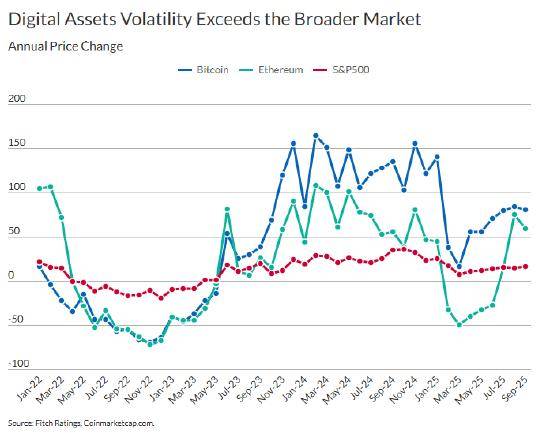
来源:环球市场播报 惠誉评级表示,美国银行对数字资产的参与度不断提升,这不仅增加了潜在产品种类,还有助于提高手 续费收入、收益率和运营效率,同时改善客户服务。然而,即便银行的参与仅限于信托托管服务、现金 管理等风险相对较低的业务,此举仍会加剧声誉风险、流动性风险、运营风险和合规风险。 美国监管态势已明确转向接纳数字资产。在美国前总统政府时期多年的谨慎监管后,美国银行如今无需 事先获得批准,即可开展加密货币托管、稳定币发行及基于区块链的服务。摩根大通、美国银行、花旗 集团、富国银行等大型金融机构均已宣布数字资产相关计划。加密货币公司也在申请联邦信托银行牌 照。 两项关键法案或推动稳定币的应用范围扩大。目前稳定币市值已达 2650 亿美元,美国财政部长斯科 特・贝森特预计其市值可能升至 2 万亿美元。《GENIUS 法案》将在 2027 年 1 月,或实施细则最终确 定后 120 天内(以较早者为准)生效。该法案为稳定币建立了首个全面的联邦监管框架,要求稳定币需 以美元和美国国债按 1:1 的比例提供抵押支持。若《CLARITY 法案获得通过,将为数字商品交易所 和经纪交易商提供监管依据。 稳定币发行、存款代币化 ...

HASHKEY HLDGS(03887.HK)预计12月17日上市 引入富达基金等多家基石
Xin Lang Cai Jing· 2025-12-08 23:17
Group 1 - The company HASHKEY HLDGS plans to globally offer approximately 241 million shares, with 24.06 million shares available in Hong Kong and about 217 million shares for international offering, subject to reallocation and adjustments [1] - The expected pricing date for the shares is December 15, 2025, with a price range of HKD 5.95 to HKD 6.95 per share, and trading is anticipated to commence on December 17, 2025 [1] - The company has established a licensed digital asset platform providing trading facilitation, on-chain services, and asset management services, and is recognized as the largest regional onshore platform in Asia by trading volume according to Frost & Sullivan [2] Group 2 - The cornerstone investors have agreed to subscribe for shares totaling USD 75 million (approximately HKD 584 million) under certain conditions, with the total number of shares to be subscribed being approximately 90.54 million at a median price of HKD 6.45 per share [3] - The net proceeds from the global offering are expected to be approximately HKD 14.264 billion, with 40% allocated for technology and infrastructure iteration, 40% for market expansion and ecosystem partnerships, 10% for operations and risk management, and 10% for working capital and general corporate purposes [4]
HASHKEY HLDGS(03887)12月9日至12月12日招股 拟全球发售2.41亿股 引入UBS AM Singapore等基石投资者
智通财经网· 2025-12-08 22:59
Core Viewpoint - HASHKEY HLDGS plans to conduct an initial public offering (IPO) from December 9 to December 12, 2025, aiming to issue 241 million shares at a price range of HKD 5.95 to 6.95 per share, with 10% allocated for public offering in Hong Kong and 90% for international investors [1][2] Group 1: Company Overview - The company operates a licensed digital asset platform offering trading facilitation, on-chain services, and asset management [1] - HASHKEY HLDGS is recognized as the largest regional onshore platform in Asia by trading volume for 2024, and also leads in on-chain services and digital asset management by assets under management [1] Group 2: Investment Agreements - The company has entered cornerstone investment agreements with several firms, including UBS AM Singapore and Fidelity, totaling USD 75 million in shares [2] - Assuming a median offer price of HKD 6.45, cornerstone investors are expected to acquire approximately 90.54 million shares [2] Group 3: Use of Proceeds - Approximately 40% of the net proceeds from the IPO will be allocated to upgrading technology and infrastructure over the next three to five years, with specific allocations for product development, cloud services, talent acquisition, and IT security [3] - Another 40% will be used to expand the operational team, enhance brand awareness, and establish ecosystem partnerships [3] - About 10% will be directed towards improving operational and risk management, including legal and compliance team expansion [3] - The remaining 10% will be reserved for working capital and general corporate purposes [3] Group 4: Performance Metrics - The company's trading volume surged from HKD 4.2 billion in 2022 to HKD 328 billion in 2023, and is projected to reach HKD 638.4 billion in 2024, driven by the launch of its digital asset trading platforms [4] - Registered customers increased dramatically from 18 in 2022 to 158,600 by the end of 2023, and further to 1.3372 million by the end of 2024, reflecting the rapid expansion of the trading platform [4] - The number of asset-holding clients rose from zero in 2022 to 37,530 by the end of 2023, and to 120,700 by the end of 2024, indicating strong growth in client engagement [4]