
新型能源体系

Search documents
中金:公用事业板块市场关注度走弱 长线资金仍有高息配置需求
智通财经网· 2026-01-22 05:59
Group 1 - The fundamentals and industry landscape of waste-to-energy are steadily improving, while nuclear power is entering a period of intensive production, contributing stable profit increments annually [1] - The waste-to-energy sector is effectively transforming its operations, focusing on enhancing existing assets and improving cash flow, which boosts dividend capacity and willingness [1] - Nuclear power assets in South China are expected to stabilize in profitability, with the sector entering a phase of consistent production during the "14th Five-Year Plan" [1] Group 2 - There remains a strong demand for high dividend-paying investments, particularly in thermal power and Hong Kong utilities, as long-term funds seek high-yield options [2] - Compared to previously favored hydropower, thermal and waste-to-energy sectors are seen as having greater potential for dividend increases due to reduced capital expenditures and strong cash flows [2] - Hong Kong utilities are characterized by predictable profits and high historical dividend certainty, making them attractive investment options [2] Group 3 - The transition to a new energy system is ongoing, with the "14th Five-Year Plan" focusing on green energy consumption, application, and accelerated grid construction [3] - The green energy sector is expected to recover from its fundamental low, aided by various measures including reduced investment on the supply side and enhanced responsibilities on the demand side [3] - There are opportunities for improved cash flow in green energy operations due to accelerated subsidy disbursements, particularly for leading companies with high wind energy ratios and operational capabilities [3]
山西电网2026年固定资产投资将超180亿元
Xin Lang Cai Jing· 2026-01-22 05:48
Group 1 - The core viewpoint of the news is that State Grid Shanxi Electric Power Company is significantly increasing its investment in 2023, with fixed investments expected to exceed 18 billion yuan, aiming to enhance power supply reliability and support high-quality development in Shanxi [1] - In the first year of the 14th Five-Year Plan, Shanxi's power grid construction is entering a new phase of acceleration, focusing on expanding effective investments and strengthening energy hubs [1] - The company plans to enhance the power supply capacity through the construction of key projects, including the 1000 kV Datong-Tianjin South UHV transmission channel and the 500 kV Jiexiu substation [2] Group 2 - In 2026, the company will focus on reinforcing the Shanxi power grid structure and accelerating the establishment of a new power system to support the construction of a new energy system in Shanxi [2] - The company plans to start construction on 1,205 kilometers of transmission lines at 110 kV and above, with a transformer capacity of 8.04 million kVA, and to put into operation 1,481 kilometers of transmission lines with a transformer capacity of 9.82 million kVA [2] - These efforts aim to optimize the allocation of power resources and better serve Shanxi's green and low-carbon transformation as well as high-quality economic and social development [2]
中国年用电量首破10万亿千瓦时 新质生产力驱动用电新增量
Yang Shi Xin Wen· 2026-01-20 23:57
Core Insights - In 2025, China's total electricity consumption will exceed 10 trillion kilowatt-hours for the first time, which is more than double the annual electricity consumption of the United States and higher than the combined total of the EU, Russia, India, and Japan [1] Group 1: Electricity Consumption Growth Drivers - The high-end manufacturing sector is a new driver of electricity consumption growth, with a motorcycle smart factory in Hangzhou projected to achieve revenues exceeding 15 billion yuan in 2025, with over 70% of its sales coming from overseas markets [3] - A new materials company in Hangzhou anticipates electricity consumption exceeding 25 million kilowatt-hours in 2025, driven by the demand for semiconductor high-purity equipment and new energy storage electrode production [5] - The electricity consumption in Hangzhou is expected to surpass 110 billion kilowatt-hours in 2025, with a year-on-year growth rate of 6.5%, particularly in the automotive, computer, communication, and other electronic device manufacturing sectors [7] Group 2: Impact of New Technologies - The rapid penetration of new information technologies, such as artificial intelligence, is driving significant growth in electricity consumption in the internet and related service industries, with a smart elderly care service company experiencing a 25% year-on-year increase in electricity consumption due to model training and new product testing [9] - In Jiaxing, the first "10,000 Card" computing power cluster in Zhejiang is under construction, with electricity consumption in the computing power industry exceeding 790 million kilowatt-hours in 2025, marking a 287% year-on-year increase [11] Group 3: Electric Vehicle Charging Services - The electric vehicle charging service industry is projected to see a consumption growth rate of 48.8% in 2025, making it a significant contributor to the growth of the tertiary sector's electricity consumption [17] - The charging service industry is expected to provide services for nearly 30 million pure electric vehicles in 2025, with electricity consumption exceeding 102 billion kilowatt-hours [19] Group 4: Power Supply and Renewable Energy - China's power supply capacity is steadily improving, with total installed power generation capacity exceeding 3.8 billion kilowatts, and the proportion of green electricity continues to rise, with one-third of electricity consumption coming from renewable energy sources [21] - The establishment of a national unified electricity market is underway to provide cross-regional power support for the anticipated 10 trillion kilowatt-hours of electricity consumption [19][21] - The resilience and development vitality of China's large-scale economy are highlighted by its leading position in electricity consumption, supported by the active construction of a new energy system [23]

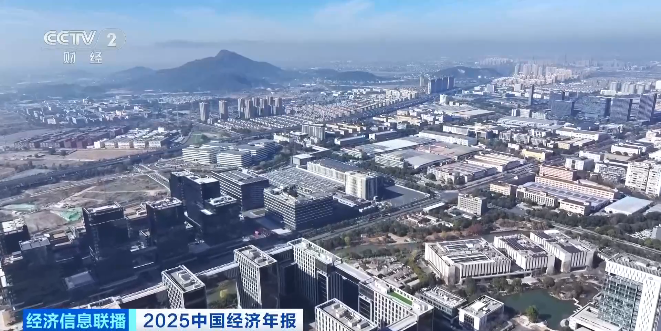
中国经济年报丨中国年用电量首破10万亿千瓦时 新质生产力驱动用电新增量
Sou Hu Cai Jing· 2026-01-20 15:16
Core Insights - By 2025, China's total electricity consumption is expected to exceed 10 trillion kilowatt-hours, marking a first globally and surpassing the annual consumption of the US by more than double, as well as the combined total of the EU, Russia, India, and Japan [1] Group 1: Electricity Consumption Growth Drivers - The booming high-end manufacturing sector is a new driver of electricity consumption growth, with a motorcycle smart factory in Hangzhou projected to achieve revenues exceeding 15 billion yuan in 2025, with over 70% of its sales coming from overseas markets [3] - A new materials company in Hangzhou anticipates electricity consumption exceeding 25 million kilowatt-hours in 2025, driven by the demand for semiconductor high-purity equipment and new energy storage electrode production [5] - The electricity consumption in Hangzhou is projected to surpass 110 billion kilowatt-hours in 2025, with a year-on-year growth rate of 6.5%, particularly in the automotive, computer, communication, and electronic device manufacturing sectors [7] Group 2: Impact of New Technologies - The rapid development of artificial intelligence and new information technologies is driving significant growth in electricity consumption in the internet and related service industries, with a smart elderly care service company experiencing a 25% year-on-year increase in electricity consumption due to model training and new product testing [9] - In Jiaxing, the first "10,000 Card" computing power cluster in Zhejiang is under construction, with electricity consumption in the computing power industry expected to exceed 790 million kilowatt-hours in 2025, reflecting a 287% year-on-year increase [11] Group 3: Electric Vehicle Charging and Services - The "light-storage charging and swapping" energy station in Zhaoqing is operational, with a 600-kilowatt supercharging pile capable of fully charging new energy vehicles in just ten minutes [13] - The total charging volume from charging piles operated by Guangdong Electric Vehicle Service Company is expected to reach nearly 800 million kilowatt-hours in 2025, with supercharging stations seeing a 167% year-on-year increase in total charging volume [15] - The electricity consumption in the charging and swapping service industry is projected to grow by 48.8% in 2025, making it a significant contributor to the growth of the tertiary sector's electricity consumption [17] Group 4: Energy Supply and Market Structure - By 2025, the electricity consumption from the charging and swapping service industry is expected to exceed 102 billion kilowatt-hours, supporting nearly 30 million pure electric vehicles nationwide [19] - A preliminary national unified electricity market will be established by 2025 to provide cross-regional electricity support for the anticipated 10 trillion kilowatt-hours of electricity consumption [21] - China's electricity supply capacity is steadily improving, with total installed power generation capacity exceeding 3.8 billion kilowatts, and renewable energy accounting for one-third of total electricity consumption by 2025 [24]
中国华能:“十四五”期间发电装机突破3亿千瓦 稳居全球装机容量第二
Zhong Guo Dian Li Bao· 2026-01-20 03:51
Core Viewpoint - China Huaneng is entering a crucial period in its "15th Five-Year Plan," focusing on enhancing its role in energy security, technological innovation, and corporate reform while aiming to build a world-class enterprise [1][18]. Group 1: Achievements in the 14th Five-Year Plan - During the "14th Five-Year Plan," China Huaneng's installed power generation capacity exceeded 300 million kilowatts, a 53.4% increase from the end of the "13th Five-Year Plan," maintaining its position as the second-largest globally [4]. - The company achieved a 21.8% increase in power generation and a 50% increase in coal production capacity, with coal output surpassing 100 million tons for four consecutive years [4]. - The company has also significantly expanded its heating services, with a heating area exceeding 1.12 billion square meters and a 33.9% increase in heating volume [5]. Group 2: Commitment to Energy Security - China Huaneng emphasizes its core mission of ensuring national energy security, which is vital for the economy and people's livelihoods [3]. - The company has successfully completed major power supply tasks for significant national events, demonstrating its robust energy supply system [6]. Group 3: Green and Low-Carbon Development - The company has made substantial progress in low-carbon development, with the proportion of low-carbon clean energy installations exceeding 56.6% and a 3.8-fold increase in new energy capacity compared to the end of the "13th Five-Year Plan" [10]. - China Huaneng is actively involved in major national strategies, establishing large-scale renewable energy bases across various regions, contributing to regional green development [11]. Group 4: Technological Innovation - China Huaneng has been recognized as a leading enterprise in technological innovation, achieving multiple breakthroughs in key areas during the "14th Five-Year Plan" [14]. - The company has launched several significant projects, including the world's first 650°C ultra-supercritical coal-fired power unit and a carbon capture project with an annual capacity of 150,000 tons [16]. Group 5: Future Directions in the 15th Five-Year Plan - In the "15th Five-Year Plan," China Huaneng aims to accelerate green and low-carbon development, focusing on ecological priorities and comprehensive transformation across all business areas [12][17]. - The company plans to enhance its core functions and competitiveness, aligning its goals with national needs and striving for a strong start in 2026 [18].
去年我国原煤产量增至48.3亿吨,行业利润为何近乎腰斩?
Xin Lang Cai Jing· 2026-01-19 14:04
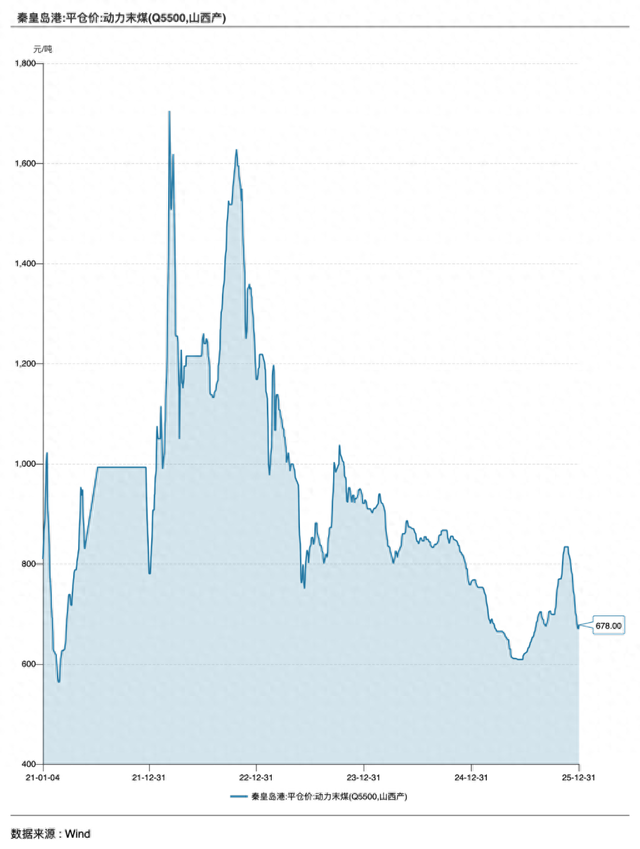
Industry Overview - In 2025, China's industrial raw coal production is projected to reach 4.83 billion tons, a year-on-year increase of 1.2% [1] - The first half of last year saw a 5.4% year-on-year increase in raw coal production, but growth slowed significantly after the implementation of overproduction verification policies in July, leading to negative year-on-year growth in the second half [1] - December 2025 saw a national industrial raw coal production of 440 million tons, a year-on-year decrease of 1% [1] Regional Production Insights - Shanxi Province is expected to produce over 1.3 billion tons of coal in 2025, an increase from 1.279 billion tons the previous year [1] - Inner Mongolia's coal production from January to November last year was 1.17 billion tons, a year-on-year decrease of 1.2% [1] - Shaanxi Province's coal production is projected to reach 800 million tons, a year-on-year increase of 2.5% [1] Company Performance - China Shenhua's coal production was 332 million tons, a year-on-year decrease of 1.7%, with sales down 6.4% to 431 million tons [2] - China Coal Energy's coal production was 135 million tons, down 1.8%, and sales decreased by 10.2% to 256 million tons [2] - Shaanxi Coal and Chemical Industry is one of the few large coal companies to maintain positive production growth, with a 2.59% increase to 175 million tons [2] Import and Price Trends - Coal imports decreased by nearly 10% to 49 million tons last year, but remained at the second-highest historical level [2] - The average price of 5500 kcal thermal coal at Qinhuangdao Port in 2025 was 696.88 yuan per ton, a year-on-year decrease of 18.49% [2] Profitability and Demand - The coal mining and washing industry achieved a total profit of 297.01 billion yuan from January to November 2025, a year-on-year decrease of 47.3% [4] - Electricity consumption, closely related to the coal industry, grew by 5% year-on-year, reaching a historic high of 10 trillion kilowatt-hours [4] Future Energy Landscape - The share of electricity generated from coal has been declining due to the rapid growth of renewable energy, which accounted for about 40% of total electricity generation in the first three quarters of 2025 [5] - Predictions indicate that by 2030 and 2035, fossil energy consumption will decrease to approximately 71.3% and 65.3%, respectively, with coal consumption dropping to 46.8% and 41.9% [5]
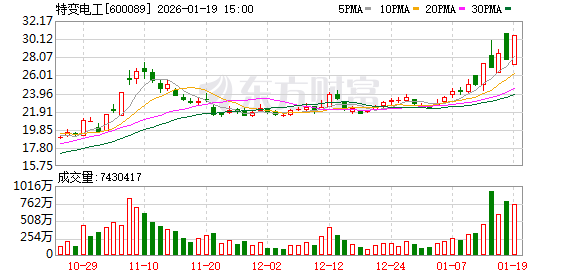
特变电工:公司正积极布局储能业务
Zheng Quan Ri Bao· 2026-01-19 12:39
Core Viewpoint - The company emphasizes that energy storage is a crucial component in building a new energy system and is actively developing its energy storage business [2] Group 1 - The company is responding to investor inquiries regarding its strategic focus on energy storage [2] - The company recognizes the importance of energy storage in the context of new energy systems [2]

内蒙古电力集团在北京举办高质量发展高端研讨会
Zhong Guo Neng Yuan Wang· 2026-01-19 09:40
1月17日,内蒙古电力集团在北京召开高质量发展高端研讨会,围绕加快蒙西电网数智化改造,谋划推进特高压柔性直流输电工 程等重大任务,聚焦"十五五"发展规划,邀请多位院士及能源、电力、科技领域权威专家,共同研讨新型电力系统建设路径, 为内蒙古电力高质量发展把脉定向、凝聚共识。 中国工程院院士汤广福、刘吉臻、舒印彪、彭苏萍、郭剑波、张宗亮、葛世荣、郑玉平,来自国家电网、南方电网、怀柔国家 实验室、清华大学、华北电力大学等单位的专家参加研讨。内蒙古电力集团党委书记、董事长张海峰出席会议并致辞,党委副 书记、总经理张晓虎主持会议并作总结讲话。 张晓虎在总结讲话中表示,内蒙古电力集团将坚决贯彻国家能源战略,全面落实自治区"十五五"规划建议及"1571"工作部署, 深入研究、充分吸纳院士专家意见建议,切实转化为推动工作的具体思路和务实举措,强化创新规划引领,统筹发展与安全, 加大关键核心技术攻关力度,深化开放合作和人才引育,持续优化供电服务和用电营商环境,在新型电力系统建设、新型能源 体系和新质生产力培育中走在前、作示范。 张海峰在致辞中表示,面向"十五五",内蒙古电力集团将坚持规划引领和系统思维,加快推进蒙西电网数字化、 ...

能源强国建设“大家谈”︱以高水平能源科技自立自强 筑牢能源强国建设根基
国家能源局· 2026-01-19 09:10
Core Viewpoint - The article emphasizes the importance of energy technology innovation as a fundamental requirement for building a strong energy nation, highlighting its role in ensuring energy security and competitiveness in the global arena [2]. Group 1: Technological Innovation Leading Energy Dominance - Since the 18th National Congress, China's energy sector has shifted from "catching up" to "keeping pace" and even "leading" in certain areas, providing solid technological support for establishing itself as a global energy powerhouse [3]. - Technological innovations have bolstered total energy supply, making China the world's largest energy producer and consumer, with coal mining and deep oil and gas exploration technologies continuously breaking through, maintaining over 80% self-sufficiency [3]. - By 2024, China's primary energy production and consumption are projected to reach 4.98 billion and 5.96 billion tons of standard coal, accounting for 26.8% and 27.7% of the global total, respectively [3]. Group 2: Accelerating Green Transition through Technological Innovation - Continuous breakthroughs in technologies such as efficient photovoltaics and large-capacity wind turbines have led to China having the largest renewable energy system globally, with renewable energy installations surpassing thermal power for the first time [4]. - The "West-to-East Power Transmission" project has a transmission capacity of approximately 340 million kilowatts, with over 20% of the electricity transmitted being renewable energy [4]. - Currently, one-third of the electricity consumed in China is green energy, showcasing the increasing capacity for renewable resource allocation [4]. Group 3: Challenges in Energy Transition and Security - The transition from an energy major to an energy powerhouse faces challenges, particularly in balancing supply and carbon reduction, necessitating a stronger focus on technological innovation [5]. - Energy consumption has increased by approximately 98 million tons of standard coal during the first four years of the 14th Five-Year Plan, with continued economic growth expected to drive rigid energy demand [6]. - The reliance on coal is shifting from a foundational energy source to a regulatory one, with coal power's share in electricity generation declining, posing challenges for energy security [6]. Group 4: Strategic Directions for Technological Innovation - To build a strong energy nation, it is crucial to accelerate the construction of a new energy system, focusing on various energy sources such as coal, oil, gas, electricity, and hydrogen [8]. - Key areas for technological breakthroughs include advanced efficient power generation technologies, clean utilization of coal, and new oil and gas development technologies to ensure fossil energy security [9]. - The development of new power grid forms and power equipment technologies is essential to support the construction of a new power system capable of accommodating high proportions of renewable energy [10]. Group 5: Building an Innovative Ecosystem for Energy Independence - The 14th Five-Year Plan period is critical for adjusting the energy structure and transitioning to new energy sources, necessitating a focus on major tasks, large installations, and platforms for energy technology innovation [11]. - Strengthening national strategic tasks and forward-looking layouts is essential for high-quality implementation of major projects in smart grids and new oil and gas exploration [11]. - Enhancing collaboration among national research institutions, universities, and leading enterprises in the energy sector is vital for accelerating technological breakthroughs and the application of significant research outcomes [12].

年用电量首破10万亿度 彰显中国经济“新”动能
Xin Lang Cai Jing· 2026-01-18 21:31
(来源:经济参考报) 国家能源局最新数据显示,2025年我国全社会用电量历史性突破10万亿千瓦时,达到10.4万亿千瓦时, 同比增长5%。从全球来看,中国一个国家的用电量超过多个经济体总和,相当于美国全年用电量的两 倍多,超过欧盟、俄罗斯、印度、日本四个经济体的年用电量总和。 "十年间用电量从5万亿千瓦时到10万亿千瓦时,这样的增长速度在全球主要经济体中绝无仅有。"中国 电力企业联合会常务副理事长杨昆表示,作为经济运行的"晴雨表",(全社会用电量数据)这一里程碑 式的跨越,彰显出中国超大规模经济体的强劲韧性与发展活力,也映照出产业结构升级、绿色转型的发 展新逻辑,更体现了我国能源保障能力的全面提升。 在传统认知里,电量飙升往往与水泥窑的轰鸣、钢铁厂的火光绑定。如今,这种"电量增长等于高耗能 扩张"的旧逻辑已被彻底打破,新制造、新基建、新场景成为新增用电的主力。 机构普遍预测,"十五五"期间,我国全社会用电量年均增速在4.2%至5.6%之间。若GDP年均增长5%, 按电力弹性系数测算,全社会用电量增速约为5.5%,到2030年有望突破13万亿千瓦时。机构还预计, 到2030年,我国终端电气化率有望达到35%,电 ...