核心CPI

Search documents
美国9月CPI同比增长3%
Di Yi Cai Jing· 2025-10-24 12:54
Core Insights - The U.S. Consumer Price Index (CPI) increased by 3% year-over-year in September, compared to a previous increase of 2.9% [1] - The month-over-month CPI growth for September was 0.3%, down from a previous growth of 0.4% [1] - The core CPI, which excludes food and energy, rose by 3% year-over-year, slightly lower than the previous increase of 3.1% [1] - The month-over-month core CPI growth was 0.2%, down from a previous growth of 0.3% [1]
美国9月核心CPI同比增长3%
Xin Lang Cai Jing· 2025-10-24 12:47
Core Insights - The core Consumer Price Index (CPI) in the U.S. for September increased by 3% year-over-year, which was below the forecast of 3.1% and unchanged from the previous value of 3.1% [1] - On a month-over-month basis, the core CPI rose by 0.2%, again falling short of the expected 0.3% and remaining consistent with the prior month's increase of 0.3% [1]
金十独家:美国9月CPI报告全文
Jin Shi Shu Ju· 2025-10-24 12:43
Core Insights - The Consumer Price Index for All Urban Consumers (CPI-U) in the U.S. increased by 0.3% in September, lower than the 0.4% rise in August, with a year-over-year increase of 3.0% [1][3] - Gasoline prices were a significant contributor to the overall price increase, rising by 4.1% in September, while energy prices increased by 1.5% [1][2] - Core CPI, excluding food and energy, rose by 0.2% in September, down from 0.3% in the previous two months, with notable increases in housing, airfare, entertainment, and clothing [1][3] Food Prices - Food prices increased by 0.2% in September, lower than the 0.5% rise in August, with household food prices up by 0.3% [2] - Among the six major food categories, four saw price increases, with "other household food" up by 0.5% and non-alcoholic beverages up by 0.7% [2] - Year-over-year, household food prices rose by 2.7%, with significant increases in meat, poultry, fish, and eggs by 5.2% [2] Energy Prices - The energy index rose by 1.5% in September, higher than the 0.7% increase in August, with gasoline prices up by 4.1% [2] - Over the past 12 months, the energy index increased by 2.8%, with electricity up by 5.1% and natural gas up by 11.7% [2] Core CPI Details - The core CPI, excluding food and energy, increased by 0.2% in September, with the housing index rising by 0.2% [3] - The year-over-year core CPI also rose by 3.0%, with notable increases in housing (3.6%) and healthcare (3.3%) [3] - The unadjusted CPI-U for the past 12 months reached an index level of 324.800, reflecting a 3.0% increase [3][4]
美国9月核心CPI同比增长3%,预估为3.1%,前值为3.1%
Mei Ri Jing Ji Xin Wen· 2025-10-24 12:40
Core Insights - The core Consumer Price Index (CPI) in the United States increased by 3% year-over-year in September, which was below the forecast of 3.1% and unchanged from the previous value of 3.1% [1] - On a month-over-month basis, the core CPI rose by 0.2% in September, lower than the expected increase of 0.3% and consistent with the prior month's increase of 0.3% [1]
美国9月CPI同比增长3%,预估为3.1%,前值为2.9%
Hua Er Jie Jian Wen· 2025-10-24 12:32
Core Insights - The U.S. Consumer Price Index (CPI) for September increased by 0.3% month-over-month, which is below the expected 0.4% and matches the previous value of 0.4% [1] - The core CPI year-over-year for September stands at 3%, slightly below the expected 3.1% and unchanged from the previous value of 3.1% [1] - The month-over-month core CPI for September rose by 0.2%, lower than the expected 0.3% and the previous value of 0.3% [1]
关税转嫁效应下,美国9月CPI可能继续走高
Sou Hu Cai Jing· 2025-10-24 09:40
Core Insights - The Consumer Price Index (CPI) in the U.S. is expected to rise for the second consecutive month in September, with a projected increase of 0.4% from August, driven by higher gasoline prices and tariff-related costs on clothing, beef, and coffee [1][1][1] - Year-over-year, the CPI is estimated to increase by 3.1%, marking the highest level in 16 months, while the core CPI, excluding volatile food and energy prices, is expected to rise by 0.3% month-over-month and 3.1% year-over-year [1][1][1] - Economists predict that consumers will bear up to 60% of the total tariff costs over the next six months, as companies gradually pass on costs while sacrificing hiring [1][1][1] Inflation Trends - Inflation in the services sector, particularly rent, may cool down, potentially offsetting the impact of rising goods prices [1][1][1] - Despite the strengthening inflation, the Federal Reserve is anticipated to lower interest rates by 25 basis points next week [1][1][1] Data Collection Concerns - The CPI report is released during a government shutdown, raising concerns about the quality of October's data due to disruptions in data collection and resource pressures on the Bureau of Labor Statistics [1][1][1]
日本9月核心CPI同比上升2.9%
Mei Ri Jing Ji Xin Wen· 2025-10-24 05:12
Core Insights - Japan's core Consumer Price Index (CPI) rose by 2.9% year-on-year in September, matching expectations and up from a previous value of 2.7% [1] Economic Indicators - The core CPI increase of 2.9% aligns with market expectations of 2.90% [1] - The previous month's core CPI was recorded at 2.70%, indicating a notable increase [1]
促消费政策显效 企业贷款保持增势 电商物流指数走高 多项数据释放需求端积极信号
Zhong Guo Zheng Quan Bao· 2025-10-21 22:26
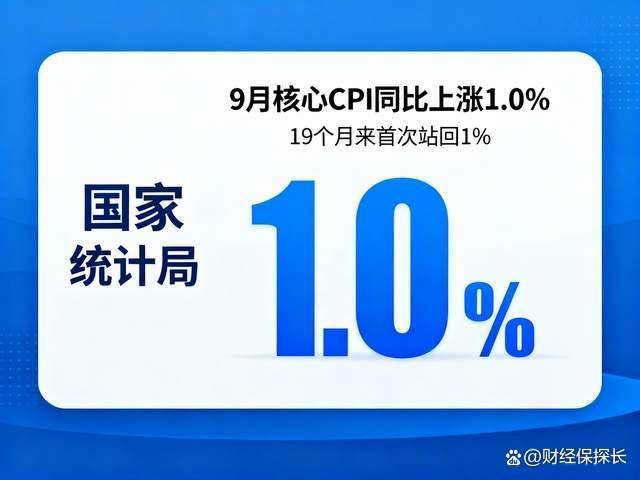
Group 1: Economic Indicators - The core Consumer Price Index (CPI) has increased for the fifth consecutive month, with a year-on-year rise of 1% in September, marking the first time in 19 months that the increase has returned to 1% [2] - The narrow gap between narrow money (M1) and broad money (M2) has shrunk to 1.2 percentage points, the lowest this year, indicating improved business activity and personal investment demand [3] - The logistics industry has maintained a positive outlook, with the logistics industry prosperity index at 51.2% in September, reflecting a continuous demand for logistics services [4] Group 2: Consumer Demand and Spending - The rise in core CPI suggests accelerated consumer demand, particularly in quality and upgraded consumption, with notable price increases in sectors such as arts and crafts (14.7%), sports equipment (4%), and nutritional foods (1.8%) [2] - E-commerce logistics have shown strong demand, with the e-commerce logistics index reaching a new high of 112.7 points in September, driven by seasonal consumption and holiday factors [5][6] - The overall consumer market remains stable, with policies aimed at expanding domestic demand and promoting consumption showing positive effects [2] Group 3: Financial Sector and Lending - Corporate loans have shown a positive growth trend, particularly in key sectors like equipment manufacturing and high-tech manufacturing, with a year-on-year increase of 8.2% in medium to long-term loans for the manufacturing sector [3] - Personal credit demand has rebounded, supported by lower interest costs and adjustments in housing purchase policies in major cities, leading to a 7% year-on-year increase in housing transaction volume in September [3] - Financial mechanisms are expected to play a crucial role in stimulating effective demand in the real economy through interest rate adjustments and coordinated market rates [3]
三组数据折射需求端发力积极信号
Zhong Guo Zheng Quan Bao· 2025-10-21 08:30
Group 1: Economic Indicators - The logistics industry prosperity index has remained in the prosperity zone for seven consecutive months, indicating a positive trend in logistics demand [1] - The core CPI has increased for the fifth consecutive month, with a year-on-year rise of 1% in September, marking the first time it has returned to this level in 19 months [2] - The M1 and M2 "scissors difference" has narrowed to 1.2 percentage points, reflecting a recovery in personal investment demand [3] Group 2: Consumer Demand - The rise in core CPI suggests an acceleration in consumer demand, driven by effective policies aimed at expanding domestic demand and boosting consumption [2] - The implementation of personal consumption loan subsidies and adjustments in housing purchase policies in major cities have contributed to a rebound in consumer credit demand [4] Group 3: Investment Demand - The financial data indicates a positive trend in corporate loan growth, particularly in key sectors such as equipment manufacturing and high-tech manufacturing [4] - The balance of medium to long-term loans in the manufacturing sector reached 15.02 trillion yuan, with a year-on-year growth of 8.2% [4] Group 4: Logistics Industry - The logistics industry prosperity index for September was reported at 51.2%, reflecting a month-on-month increase of 0.3 percentage points and indicating sustained demand [5] - The e-commerce logistics index reached a new high of 112.7 points in September, showing a month-on-month increase and a continuous rise over the past seven months [5][6] - Factors such as the Mid-Autumn Festival and National Day holidays have boosted logistics demand, with significant increases in e-commerce logistics business volume [6]
19个月,核心CPI重回1%!但CPI还在降,经济到底是暖了还是凉了?
Sou Hu Cai Jing· 2025-10-21 05:03
Core Insights - The core CPI in September increased by 1.0% year-on-year, marking a significant return to focus after 19 months of fluctuations [3] - Overall CPI, however, decreased by 0.3% year-on-year, indicating a mixed economic signal where core CPI rises amidst overall deflation [5] Price Movements - Prices of essential food items such as seasonal vegetables and eggs rose by 2.2% and 3.3% respectively, while pork prices fell by 0.7%, suggesting a shift in consumer sentiment away from pork [7] - Service prices, particularly in tourism and accommodation, saw a year-on-year increase of 0.6%, reflecting a growing demand for higher quality services despite a seasonal decline post-summer [9] Economic Indicators - The core CPI's rise to 1% is viewed as a positive sign for consumer demand recovery, although it is influenced by base effects from the previous year [10] - The disparity in energy prices, with continued declines in gasoline and diesel, indicates a lack of recovery in production demand, highlighting structural issues in the economy [11] Consumer Behavior - The surge in gold prices by 6.5% is driven by both risk aversion due to geopolitical uncertainties and a lack of consumer confidence, leading to increased purchases of gold as a safe asset [11] - The demand for higher quality services, such as beauty and home services, is indicative of a trend towards consumption upgrades, where consumers prioritize quality over mere affordability [10] Future Outlook - The sustainability of the core CPI's upward trend depends on timely policy support and the stabilization of market confidence, as current recovery appears to be largely spontaneous [12] - The interplay between weak energy prices and fluctuating service costs poses a risk to consumer confidence, which is crucial for sustained economic recovery [12]