自动化

Search documents
沪指再创10年新高,科创、创业方向带头发力,科创50ETF富国(588940)、双创50ETF(588380)双双涨逾2%!
Mei Ri Jing Ji Xin Wen· 2025-10-24 10:16
Group 1 - The A-share market indices experienced a strong performance on October 24, with the Shanghai Composite Index rising by 0.48%, reaching a new high for the year, while the Shenzhen Component Index increased by 1.35% and the ChiNext Index surged over 2% to surpass 3100 points [1] - The storage and commercial aerospace sectors led the gains, with over 3600 stocks in the Shanghai and Shenzhen markets rising [1] - The recent bullish sentiment from major foreign investment firms, including Goldman Sachs, indicates a positive outlook for the A-share market, predicting a 30% increase in major indices by the end of 2027 [1] Group 2 - The series of indices reflecting the overall performance of the sci-tech and entrepreneurial sectors are representative of China's new economy, providing a comprehensive layout and unbiased representation of the fundamental characteristics of these sectors [2] - The ETFs related to the sci-tech and entrepreneurial sectors have a price fluctuation limit of 20%, offering high elasticity advantages and leading the gains in broad indices during previous A-share rebound phases, positioning them as pioneers for investors to capitalize on the A-share bull market [2]

20cm速递|外资巨头积极看好A股后市!创业板50ETF华夏(159367)上涨2.23%,同类产品最低费率档
Mei Ri Jing Ji Xin Wen· 2025-10-24 04:54
Group 1 - The core viewpoint of the articles indicates a positive outlook for the A-share market, with major foreign investment banks like Goldman Sachs and Morgan Stanley expressing optimism about future performance [1] - Goldman Sachs predicts that the main stock indices in China will rise by approximately 30% by the end of 2027, suggesting a shift in investor mindset from "selling high" to "buying low" as the bull market develops [1] - Morgan Stanley recommends long-term investment in high-tech sectors such as artificial intelligence, automation, robotics, biotechnology, and high-end manufacturing, while also advising investors to maintain positions in high-quality dividend stocks to mitigate short-term market volatility [1] Group 2 - The ChiNext 50 ETF (159367) has two main advantages: a 20% price fluctuation limit, providing greater trading flexibility compared to traditional broad-based indices, and low management fees of 0.15% and custody fees of 0.05%, which effectively reduce investment costs [2] - The ChiNext 50 Index selects the top 50 stocks by market capitalization and liquidity from the ChiNext Index, representing leading companies with strong growth potential, primarily covering industries such as batteries, securities, and communication equipment [1]
外资巨头相继发声 积极看好后市 中国资产全线爆发
Zheng Quan Shi Bao· 2025-10-23 23:27
Group 1 - Foreign institutions are collectively optimistic about the Chinese stock market, with QFII actively increasing positions in the third quarter [1][8] - Major foreign investment banks, including Goldman Sachs, Morgan Stanley, and JPMorgan, have expressed positive outlooks for the Chinese market, indicating a shift towards a "slow bull" market [8][9] - Goldman Sachs predicts that major stock indices will rise by approximately 30% by the end of 2027, driven by a 12% growth in earnings and a 5% to 10% upward adjustment in valuations [9] Group 2 - The Nasdaq Golden Dragon China Index has shown strong performance, with a current increase of 1.5% [2] - Leading Chinese tech stocks such as Meituan, Baidu, Alibaba, Tencent, Pinduoduo, and JD have all experienced significant gains, with Meituan ADR rising over 4% [4][5] - Morgan Stanley suggests that global investors will increasingly allocate assets to Chinese stocks, particularly in high-tech sectors like AI, automation, and biotechnology [9]






中国资产,全线爆发!A50直线拉升
Zheng Quan Shi Bao· 2025-10-23 22:32
Core Viewpoint - The Chinese asset market is experiencing a significant surge, with major indices showing positive trends and foreign investment banks expressing optimism about future growth [1][8]. Market Performance - As of October 23, the U.S. stock market showed mixed results, with the Dow Jones up 0.03%, Nasdaq up 0.61%, and S&P 500 up 0.32% [1][2]. - The Nasdaq Golden Dragon China Index opened strong and has increased by 1.5% [2]. Individual Stock Performance - Major Chinese tech stocks are performing well, with Meituan ADR up over 4%, Baidu and Alibaba up over 3%, and Tencent, Pinduoduo, and JD.com up over 2% [4][5]. - Other notable Chinese stocks include Dazhong Pharmaceutical up nearly 8%, Xunlei up over 5%, and various other companies showing gains of over 2% [4][6]. Foreign Investment Outlook - Goldman Sachs has indicated that the Chinese stock market is entering a slow bull market, predicting a 30% increase in major indices by the end of 2027, driven by a 12% growth in earnings and a 5%-10% upward adjustment in valuations [8]. - Morgan Stanley's chief China equity strategist noted that global investors' allocation to Chinese stocks remains relatively low, suggesting a trend towards increased investment in the long term [8][9]. Sector Recommendations - Morgan Stanley recommends focusing on high-tech sectors such as artificial intelligence, automation, robotics, biotechnology, and high-end manufacturing, while also suggesting the continued allocation to high-quality dividend stocks to mitigate short-term market volatility [9].
刚刚!中国资产,全线爆发!A50直线拉升
Zheng Quan Shi Bao· 2025-10-23 15:37
中国资产爆发。 当地时间10月23日,美股三大指数开盘涨跌不一,盘初反复震荡后走高。截至发稿,道指涨0.03%,纳指涨0.61%,标普500指数涨0.32%。 | 代码 | 名称 | 现价 | 涨跌 | 涨跌幅 | | --- | --- | --- | --- | --- | | DJI | 道琼斯工业平均 | 46604.80 | 14.39 | 0.03% | | IXIC | 纳斯达克指数 | 22878.72 | 138.32 | 0.61% | | SPX | 标普500 | 6720.95 | 21.55 | 0.32% | 中概股表现强势,纳斯达克中国金龙指数高开高走,目前涨幅扩大至1.5%。 | 代码 | 名称 | 现价 | 涨跌 | 涨跌幅 | | --- | --- | --- | --- | --- | | MPNGY | 美团-ADR | 25.910d | 1.160 | 4.69% | | BIDU | 百度集团 | 120.870 | 3.840 | 3.28% | | BABA | 阿里巴巴 | 171.170 | 5.310 | 3.20% | | TCEHY | 腾讯控股 ...

Plexus(PLXS) - 2025 Q4 - Earnings Call Transcript
2025-10-23 13:32
Financial Data and Key Metrics Changes - Revenue for fiscal 2025 was $1.058 billion, marking the third consecutive quarter of sequential growth and approaching the high end of guidance [8][9] - Non-GAAP EPS grew over 30% to $2.14, substantially exceeding guidance due to favorable discrete tax items [8][9] - Non-GAAP operating margin expanded by 40 basis points to 5.8% [9][25] - Free cash flow for fiscal 2025 was $154 million, significantly exceeding projections, with a total of $495 million generated over the past two fiscal years [9][26] Business Line Data and Key Metrics Changes - Aerospace and Defense sector revenue decreased 6% sequentially in Q4, with flat revenue for fiscal 2025 due to delays in new product launches [17][18] - Healthcare Life Sciences sector revenue increased 1% sequentially in Q4, with a 5% increase for fiscal 2025 driven by imaging and monitoring subsectors [19][20] - Industrial sector revenue was up 11% sequentially in Q4, but flat for fiscal 2025, with strong wins of $165 million in Q4 [21][22] Market Data and Key Metrics Changes - The funnel of qualified manufacturing opportunities increased by 2% sequentially to $3.7 billion, with a record high in aerospace and defense sector opportunities [23] - The company expects revenue growth in excess of end markets for fiscal 2026, driven by ongoing program ramps and market share gains [24][14] Company Strategy and Development Direction - The company aims for revenue growth of 9% to 12% in fiscal 2026, focusing on investments in talent, technology, and operational efficiency [8][14] - Continued emphasis on sustainability and responsible innovation, with significant achievements in waste reduction and community engagement [12][11] Management's Comments on Operating Environment and Future Outlook - Management expressed confidence in future growth potential, citing new program ramps and modest improvements in end markets [41][39] - The company is monitoring the impact of government shutdowns but has not seen any indications of slowdown in major market verticals [49][50] Other Important Information - The company reduced debt by over $100 million in fiscal 2025 while returning cash to shareholders through an expanded share repurchase program [26][27] - The cash cycle improved to 63 days, the best result in five years, with significant reductions in gross inventory [28] Q&A Session Summary Question: Growth trajectory and confidence in future investments - Management indicated increased confidence in growth trajectory due to substantial new program ramps and modest market improvements [39][41] Question: AI opportunities and new product developments - The company is seeing opportunities in AI, particularly in power generation and healthcare, with ongoing programs leveraging AI technology [45][46] Question: Impact of government shutdown on defense and other markets - No indications of slowdown due to the government shutdown have been observed, and management is closely monitoring the situation [49][50] Question: Strength in semicap and energy sectors - Management expects similar performance in semicap for fiscal 2026, with significant share gains anticipated [52][53] Question: Healthcare Life Sciences growth drivers - Growth in this sector is attributed to both new program ramps and the resolution of inventory overhang [56][57] Question: Customer visibility and market stability - Visibility from customers appears stable, with ongoing programs progressing well despite previous volatility [66][67] Question: Capacity and expansion plans for Penang facility - The Penang facility has significant expansion capacity, and efficiency improvements are expected to drive profitability [80][81] Question: Commercial aerospace demand signals - Management is optimistic about potential tailwinds in commercial aerospace but has not yet seen demand signal changes [83][85]

Honeywell(HON) - 2025 Q3 - Earnings Call Transcript
2025-10-23 13:30
Financial Data and Key Metrics Changes - Honeywell raised its 2025 EPS guidance for the third time this year, with earnings per share in Q3 reported at $2.86, up 32% year over year, and adjusted EPS at $2.82, up 9% year over year [5][17] - Organic sales growth accelerated to 6% year over year, with orders growing 22% organically to $11.9 billion [16][17] - Free cash flow for Q3 was $1.5 billion, down 16% from the prior year due to capital expenditures timing and higher working capital [18] Business Line Data and Key Metrics Changes - Aerospace Technologies grew 12% organically, driven by strength in commercial aftermarket and defense [18] - Industrial Automation sales increased 1% organically, while segment margin declined to 18.8% due to inflationary pressures [19][20] - Building Automation achieved 7% organic sales growth, with margin expanding 80 basis points year over year [20] - Energy and Sustainability Solutions saw a 2% organic decline, with segment margin flat at 24.5% [21] Market Data and Key Metrics Changes - North America and the Middle East led regional growth, while Europe experienced organic growth for the fourth consecutive quarter [20] - Orders in Aerospace showed strong double-digit growth across all end markets, with a book-to-bill ratio of 1.2 [18] Company Strategy and Development Direction - Honeywell is planning to realign its automation business structure in 2026, focusing on four segments: Aerospace Technologies, Building Automation, Process Automation and Technology, and Industrial Automation [10][12] - The company is simplifying its portfolio and reducing legacy liabilities, including divesting Bendix asbestos liability and terminating an indemnification agreement for $1.6 billion [9][10] - Honeywell aims to leverage its R&D investments to drive growth through innovative products and solutions [16][34] Management's Comments on Operating Environment and Future Outlook - Management expressed confidence in the company's ability to navigate macroeconomic uncertainties and highlighted strong order growth as a positive indicator for future performance [16][35] - The company anticipates a return to margin expansion in 2026, driven by improved pricing strategies and operational efficiencies [36][78] Other Important Information - The spin-off of Solstice Advanced Materials is expected to reduce 2025 sales by $700 million and adjusted EPS by approximately $0.21 [22][24] - Honeywell's recent capital raise for its quantum computing venture, Continuum, is expected to support its growth potential [14][36] Q&A Session Summary Question: What is the expected margin decline for Energy and Sustainability Solutions (ESS) in Q4? - Management indicated that the decline is primarily due to mix issues and expects ESS margins to normalize in 2026 [40][42] Question: What are the growth prospects for the Industrial Automation segment? - Management noted that while there are timing variabilities, they are optimistic about margin expansion and backlog improvements in Industrial Automation [48][49] Question: How is the Aerospace division managing destocking? - Management believes that destocking is largely behind them and expects sequential improvements in margins going into 2026 [50][51] Question: What is the pricing strategy across the organization? - Management emphasized a focus on preserving margins while maintaining volume, with expectations for improved pricing in 2026 [75][78] Question: What are the growth opportunities in the sensor business? - Management highlighted strong growth potential in the sensor business across aerospace, medical devices, and industrial sectors [102]

A500ETF基金(512050)盘中拉升,摩根士丹利发声:中国资产的进一步增持将是大势所趋
Mei Ri Jing Ji Xin Wen· 2025-10-23 08:23
Group 1 - The A-shares market continues to experience fluctuations, with the A500 ETF (512050) narrowing its intraday decline to 0.69% as of 11:10 AM, and achieving a trading volume exceeding 2.9 billion yuan, ranking first among its peers [1] - Key stocks such as Tianfu Communication, New Yisheng, Dongshan Precision, and Shenzhen South Circuit have seen a pullback, while Tianhua New Energy, Postal Savings Bank, Tuojing Technology, and Guodian Power have shown resilience [1] - Morgan Stanley's Chief China Equity Strategist Wang Ying highlights that despite global investors' low allocation to Chinese equities, there is a growing recognition of China's rapid advancements in various sectors, including humanoid robotics, automation, biotechnology, and artificial intelligence [1] Group 2 - The new generation core broad-based A500 ETF (512050) enables investors to easily allocate to core A-share assets, tracking the CSI A500 Index with a strategy that combines industry-balanced allocation and leading stock selection [2] - The ETF covers all 35 sub-sectors of the market, integrating both value and growth characteristics, and is overweight in sectors such as AI industry chain, pharmaceutical biotechnology, power equipment for new energy, and national defense industry, showcasing a natural "barbell" investment approach [2]
亚马逊计划用机器人代替60万岗位|首席资讯日报
首席商业评论· 2025-10-23 04:05
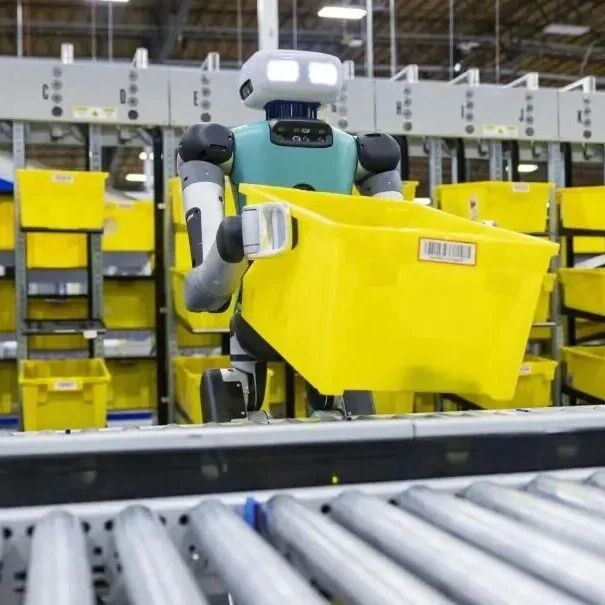
Group 1 - Amazon plans to automate 75% of its operations, aiming to replace over 600,000 jobs in the U.S. by 2033, while expecting product sales to double during this period [2] - The chairman of Wa Xiaozhi, Wu Jian, announced a promotional campaign where purchasing goods worth 300,000 yuan will reward buyers with an SUV, highlighting low entry barriers for distributors [3] - Mercedes-Benz is implementing its largest-ever layoff plan, with around 4,000 employees already accepting severance packages, which can reach up to 500,000 euros for senior management [5] Group 2 - In the first nine months of 2023, Guangdong Province attracted 78.13 billion yuan in foreign investment, an increase of 8.8% year-on-year, with the manufacturing sector seeing a 23.5% rise [8] - The Zhengzhou High-tech Zone is offering a 200,000 yuan reward for new technology bank branches, aiming to enhance financial services for local enterprises [9] - The Yunnan provincial government is promoting regional equity markets to better serve private enterprises, establishing a training base for companies aiming for public listings [10] Group 3 - South Korea's chip exports are expected to exceed $165 billion in 2025, driven by growing demand in the AI market, with a 16.9% year-on-year increase in exports from January to September 2023 [11] - Singapore's Changi Airport reported a 3.1% increase in passenger traffic in Q3 2023, with China remaining the largest source market [12] - The restructuring of Suning Group faces challenges as a lawsuit from a former investor complicates the process, with a creditors' meeting held as scheduled [13]

亚马逊计划用机器人代替60万岗位,实现75%运营自动化;OpenAI设立秘密项目,训练AI接手初级银行家的繁琐工作丨AIGC日报
创业邦· 2025-10-23 00:10
Group 1 - Yushu Technology has received a patent for a method and system that maps human movements to robot joint control, enhancing robot flexibility and enabling natural human-robot interaction [2] - OpenAI is training AI to take over tedious tasks traditionally performed by junior bankers, utilizing over 100 former investment bankers from major firms like JPMorgan and Goldman Sachs in a secret project called "Mercury" [2] - Alibaba Cloud's Tongyi Qwen has expanded its Qwen3-VL family by adding two new dense model sizes, bringing the total to 24 open-source models available for commercial use [2][3] Group 2 - Amazon plans to automate 75% of its operations, aiming to replace over 600,000 jobs in the U.S. by 2033, while also expecting to double its product sales during this period [3] - The automation initiative is projected to save Amazon approximately $12.6 billion from 2025 to 2027, with each item’s picking, packing, and delivery costs reduced by about $0.30 [3]