
免税概念

Search documents
步步高涨2.15%,成交额6.26亿元,主力资金净流出875.62万元
Xin Lang Zheng Quan· 2025-10-13 05:30
Group 1 - The core viewpoint of the news is that Bubu Gao's stock has shown significant fluctuations, with a year-to-date increase of 44.30% and a recent drop of 10.52% over the past 20 days [1] - As of October 13, Bubu Gao's stock price was 5.70 CNY per share, with a total market capitalization of 15.326 billion CNY [1] - The company has been active in the stock market, appearing on the "Dragon and Tiger List" 10 times this year, with the most recent appearance on September 9, where it recorded a net buy of -51.15 million CNY [1] Group 2 - Bubu Gao operates primarily in the retail sector, with its main business revenue composition being 64.34% from supermarkets, 27.44% from other businesses, 6.01% from department stores, and 2.21% from logistics and advertising [1] - As of June 30, the number of shareholders increased by 96.50% to 88,500, while the average circulating shares per person decreased by 49.11% to 17,105 shares [2] - For the first half of 2025, Bubu Gao reported a revenue of 2.133 billion CNY, representing a year-on-year growth of 24.39%, and a net profit of 201 million CNY, which is a significant increase of 357.71% [2] Group 3 - Since its A-share listing, Bubu Gao has distributed a total of 1.677 billion CNY in dividends, with no dividends paid in the last three years [3] - As of June 30, 2025, Hong Kong Central Clearing Limited is the tenth largest circulating shareholder, holding 10.5068 million shares as a new shareholder [3]

中国中免跌2.01%,成交额13.55亿元,主力资金净流出1.43亿元
Xin Lang Cai Jing· 2025-10-10 06:38
Core Viewpoint - China Duty Free Group Co., Ltd. (China Duty Free) has experienced fluctuations in stock performance, with a recent decline in share price and mixed trading activity, reflecting market sentiment and operational challenges [1][2]. Financial Performance - As of June 30, 2025, China Duty Free reported a revenue of 28.15 billion yuan, a year-on-year decrease of 9.96%, and a net profit attributable to shareholders of 2.60 billion yuan, down 20.81% compared to the previous year [2]. - The company has cumulatively distributed dividends of 18.40 billion yuan since its A-share listing, with 7.24 billion yuan distributed over the last three years [3]. Stock Market Activity - On October 10, 2023, China Duty Free's stock price fell by 2.01%, closing at 68.26 yuan per share, with a trading volume of 1.355 billion yuan and a turnover rate of 1.00% [1]. - The stock has seen a year-to-date increase of 3.49%, but has declined by 2.69% over the last five trading days [1]. Shareholder Structure - As of June 30, 2025, the number of shareholders decreased by 4.30% to 289,700, with an average of 0 circulating shares per shareholder [2]. - Major shareholders include Hong Kong Central Clearing Limited, which increased its holdings by 15.73 million shares, and several ETFs that have also increased their positions [3]. Business Overview - China Duty Free primarily engages in the retail of duty-free and taxable goods, with 72.26% of revenue from duty-free sales and 25.54% from taxable goods [2]. - The company operates in both domestic and international markets, focusing on tourism retail and property leasing related to tourism retail complexes [2].

步步高涨2.11%,成交额4.80亿元,主力资金净流出1429.28万元
Xin Lang Cai Jing· 2025-09-30 03:13
Company Overview - Bubu Gao Commercial Chain Co., Ltd. is located in Changsha, Hunan Province, established on December 11, 2003, and listed on June 19, 2008. The company's main business involves retail sales, with revenue composition as follows: supermarkets 64.34%, others 27.44%, department stores 6.01%, logistics and advertising 2.21% [1]. Stock Performance - As of September 30, Bubu Gao's stock price increased by 2.11% to 5.81 CNY per share, with a trading volume of 480 million CNY and a turnover rate of 3.91%, resulting in a total market capitalization of 15.621 billion CNY [1]. - Year-to-date, Bubu Gao's stock price has risen by 47.09%, with a 6.41% increase over the last five trading days, a 5.07% decrease over the last 20 days, and a 14.60% increase over the last 60 days [1]. Financial Performance - For the first half of 2025, Bubu Gao achieved a revenue of 2.133 billion CNY, representing a year-on-year growth of 24.39%. The net profit attributable to shareholders was 201 million CNY, showing a significant year-on-year increase of 357.71% [2]. - Since its A-share listing, Bubu Gao has distributed a total of 1.677 billion CNY in dividends, with no dividends paid in the last three years [3]. Shareholder Information - As of June 30, 2025, the number of shareholders for Bubu Gao was 88,500, an increase of 96.50% compared to the previous period. The average circulating shares per person decreased by 49.11% to 17,105 shares [2]. - Among the top ten circulating shareholders, Hong Kong Central Clearing Limited is the tenth largest shareholder, holding 10.5068 million shares as a new shareholder [3]. Industry Classification - Bubu Gao belongs to the Shenwan industry classification of retail trade, specifically general retail and supermarkets. The company is associated with several concept sectors, including prepared dishes, community group buying, delisting concepts, duty-free concepts, and unified market concepts [2].
春秋航空涨2.01%,成交额2.00亿元,主力资金净流出927.95万元
Xin Lang Zheng Quan· 2025-09-26 05:25
Core Viewpoint - Spring Airlines' stock price has shown fluctuations, with a current price of 53.71 CNY per share and a market capitalization of 52.546 billion CNY, reflecting a year-to-date decline of 5.53% [1] Financial Performance - For the first half of 2025, Spring Airlines reported operating revenue of 10.304 billion CNY, representing a year-on-year growth of 4.35%, while net profit attributable to shareholders decreased by 14.11% to 1.169 billion CNY [2] - Cumulative cash dividends since the company's A-share listing amount to 2.412 billion CNY, with 1.482 billion CNY distributed over the past three years [3] Shareholder Structure - As of June 30, 2025, the number of shareholders decreased by 7.43% to 21,000, with an average of 46,551 circulating shares per shareholder, an increase of 8.02% [2] - The top circulating shareholder is Hong Kong Central Clearing Limited, holding 22.713 million shares, an increase of 545,500 shares from the previous period [3]

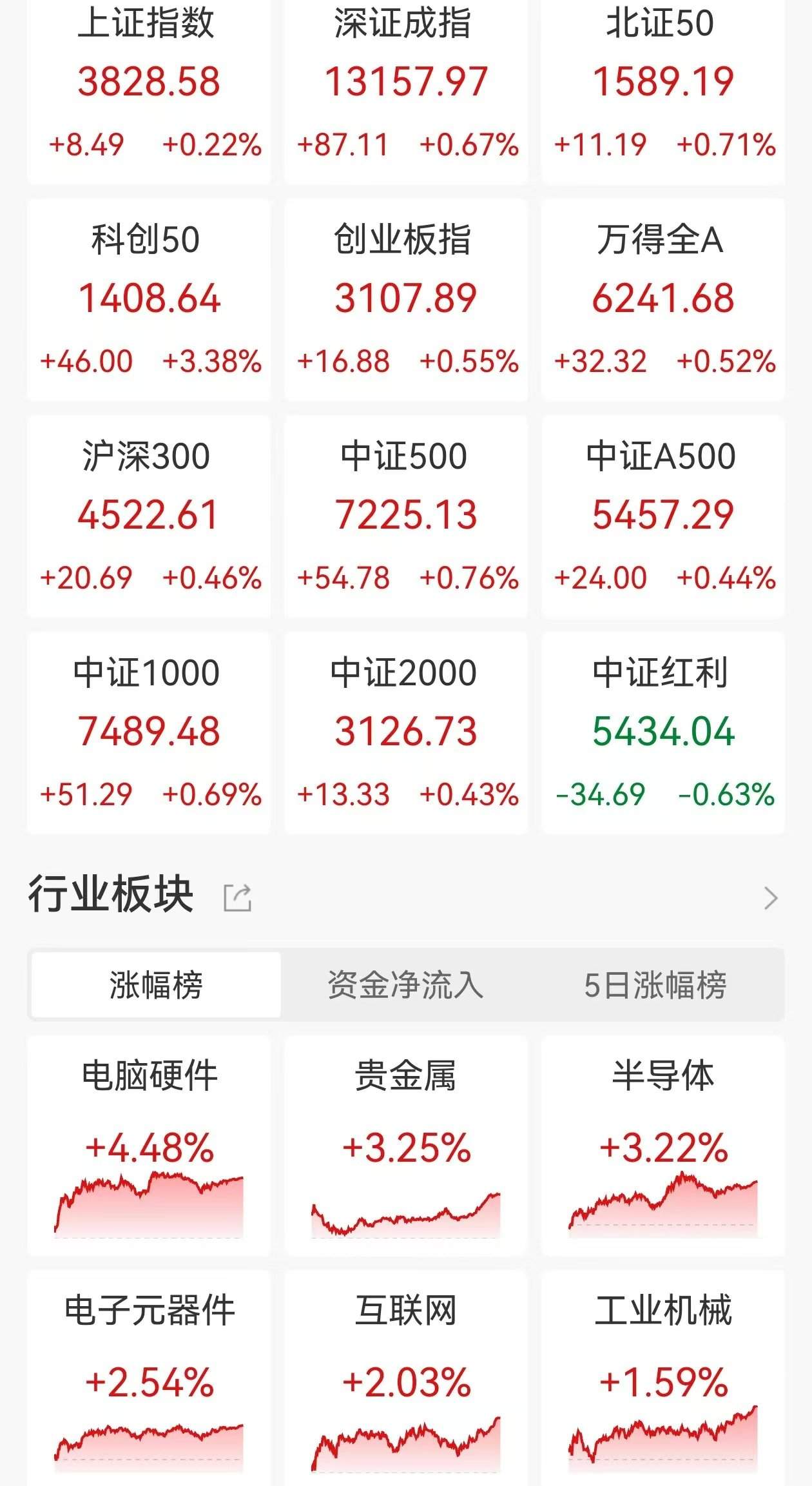
A股收评:三大指数集体上涨,创业板指涨0.55%科创50涨3.38%,贵金属、消费电子走高,影视概念重挫!超3100股下跌,成交2.14万亿缩量2069亿
Ge Long Hui· 2025-09-22 07:23
Market Overview - The three major A-share indices experienced slight gains, with the Shanghai Composite Index rising by 0.22% to close at 3828 points, the Shenzhen Component Index increasing by 0.67%, and the ChiNext Index up by 0.55% [1][2] - The STAR Market 50 Index saw a significant increase of 3.38% [1][2] - Total trading volume for the day was 2.14 trillion yuan, a decrease of 206.9 billion yuan compared to the previous trading day, with over 3100 stocks declining [1] Index Performance - Shanghai Composite Index: 3828.58 (+0.22%) - Shenzhen Component Index: 13157.97 (+0.67%) - ChiNext Index: 3107.89 (+0.55%) - STAR Market 50 Index: 1408.64 (+3.38%) - CSI 300 Index: 4522.61 (+0.46%) - CSI 500 Index: 7225.13 (+0.76%) [2] Sector Performance - The gold sector saw a rise, with spot gold surpassing $3700, leading to a more than 9% increase in Zhongjin Gold [3] - The consumer electronics, AI, and AI phone sectors surged following reports of OpenAI's production agreement with Luxshare Precision, resulting in multiple stocks hitting the daily limit [3] - The storage chip sector also experienced gains, with Demingli hitting the daily limit [3] - Conversely, the tourism and hotel sector declined, with Tianfu Tourism hitting the daily limit down, and the film sector faced significant losses with multiple stocks, including Jishi Media and China Film, also hitting the daily limit down [3] - The commercial retail sector fell, with Huijia Times dropping nearly 9% [3]


中百集团跌2.06%,成交额1.23亿元,主力资金净流出1777.91万元
Xin Lang Cai Jing· 2025-09-22 03:28
Company Overview - Zhongbai Group is a large chain enterprise primarily engaged in commercial retail, including chain supermarkets and comprehensive department stores, with additional involvement in pharmaceuticals, logistics, property management, and import-export trade [1] - The company's main business revenue composition is 91.07% from merchandise sales and 8.93% from other income [1] Stock Performance - As of September 22, Zhongbai Group's stock price decreased by 2.06%, trading at 7.59 CNY per share, with a total market capitalization of 5.03 billion CNY [1] - The stock has experienced a year-to-date decline of 41.97%, with a 3.92% drop over the last five trading days, 4.29% over the last 20 days, and 2.44% over the last 60 days [1] - The company has appeared on the trading leaderboard 18 times this year, with the most recent appearance on April 14, where it recorded a net purchase of 53.38 million CNY [1] Financial Performance - For the first half of 2025, Zhongbai Group reported a revenue of 4.62 billion CNY, a year-on-year decrease of 19.13%, and a net profit attributable to shareholders of -255 million CNY, a decline of 79.50% year-on-year [2] - The company has cumulatively distributed 919 million CNY in dividends since its A-share listing, with no dividends distributed in the past three years [3] Shareholder Information - As of August 31, Zhongbai Group had 99,800 shareholders, a decrease of 2.57% from the previous period, with an average of 6,568 circulating shares per shareholder, an increase of 2.63% [2] Industry Classification - Zhongbai Group belongs to the retail trade sector, specifically in the general retail and supermarket category, and is associated with concepts such as community group buying, duty-free shopping, rural revitalization, state-owned enterprise reform, and new retail [2]

春秋航空涨2.03%,成交额3.51亿元,主力资金净流出47.19万元
Xin Lang Cai Jing· 2025-09-19 06:32
Core Viewpoint - Spring Airlines' stock price has shown fluctuations, with a year-to-date decline of 4.33% but a recent increase of 2.33% over the last five trading days, indicating potential recovery trends in the short term [2]. Financial Performance - For the first half of 2025, Spring Airlines reported a revenue of 10.304 billion yuan, representing a year-on-year growth of 4.35%. However, the net profit attributable to shareholders decreased by 14.11% to 1.169 billion yuan [2]. - Cumulatively, since its A-share listing, Spring Airlines has distributed a total of 2.412 billion yuan in dividends, with 1.482 billion yuan distributed over the past three years [3]. Shareholder Information - As of June 30, 2025, the number of shareholders for Spring Airlines was 21,000, a decrease of 7.43% from the previous period. The average number of circulating shares per person increased by 8.02% to 46,551 shares [2]. - The top ten circulating shareholders include Hong Kong Central Clearing Limited, which holds 22.713 million shares, an increase of 545,500 shares from the previous period. Other notable shareholders include Huatai-PB CSI 300 ETF and ICBC Convertible Bond [3]. Market Activity - On September 19, Spring Airlines' stock rose by 2.03%, reaching a price of 54.39 yuan per share, with a trading volume of 351 million yuan and a turnover rate of 0.67%. The total market capitalization stood at 53.212 billion yuan [1]. - The net outflow of main funds was 471,900 yuan, while large orders saw a buy-in of 59.263 million yuan and a sell-out of 64.169 million yuan, indicating mixed investor sentiment [1].
中国中免涨2.01%,成交额24.71亿元,主力资金净流出8931.42万元
Xin Lang Cai Jing· 2025-09-19 05:37
Group 1 - The stock price of China Duty Free Group (中国中免) increased by 2.01% on September 19, reaching 73.12 CNY per share, with a trading volume of 2.471 billion CNY and a turnover rate of 1.77%, resulting in a total market capitalization of 151.275 billion CNY [1] - Year-to-date, the stock price has risen by 10.86%, with a 3.86% increase over the last five trading days, an 8.36% increase over the last 20 days, and a 20.68% increase over the last 60 days [2] - The company has a primary business focus on tourism retail, with 72.26% of revenue from duty-free sales, 25.54% from taxable goods, and 2.20% from other sources [2] Group 2 - As of June 30, the number of shareholders for China Duty Free Group was 289,700, a decrease of 4.30% from the previous period, with an average of 0 circulating shares per shareholder [3] - For the first half of 2025, the company reported operating revenue of 28.151 billion CNY, a year-on-year decrease of 9.96%, and a net profit attributable to shareholders of 2.600 billion CNY, down 20.81% year-on-year [3] - The company has distributed a total of 18.405 billion CNY in dividends since its A-share listing, with 7.241 billion CNY distributed over the last three years [4] Group 3 - The top ten circulating shareholders include Hong Kong Central Clearing Limited as the third-largest shareholder with 82.66 million shares, an increase of 15.7285 million shares from the previous period [4] - Other significant shareholders include Invesco Great Wall New Growth Mixed Fund and Huaxia SSE 50 ETF, with respective holdings of 20.60 million shares and 19.1472 million shares, both showing increases from the previous period [4]
跨境消费火热,又一地将启动离境退税,相关市场有望达千亿
Xuan Gu Bao· 2025-09-19 02:17
Group 1 - Guizhou Province will implement a tax refund policy for overseas travelers starting from October 1, 2025, aimed at enhancing the shopping experience for foreign tourists [1] - The introduction of the tax refund policy is expected to boost tourism revenue and stimulate growth in retail, dining, and accommodation sectors, contributing to a more mature domestic consumption market [1] - The potential market for the tax refund policy is estimated to be nearly 100 billion, which could further enhance consumption and expand domestic demand [2] Group 2 - The tourism retail operators, particularly leading duty-free operator China Duty Free Group, are expected to benefit from the influx of inbound tourists and increased shopping activities [2] - Travel service providers may see business growth as the optimized tax refund policy is likely to attract more high-spending tourists, particularly from Europe and the United States [2][3] - Scenic destinations are positioned to gain from the influx of inbound tourists, benefiting from the consumer spending driven by the tax refund policy [3] Group 3 - Wangfujing has established a significant presence in Guizhou with multiple commercial complexes, indicating a strategic focus on the southwestern region [8] - Guizhou Cultural Tourism Technology Company, a subsidiary of GuiGuang Network, is involved in the development and operation of cultural tourism projects [9] - SanTe Cableway has signed a contract for the development of a tourism project in the Fanjing Mountain National Nature Reserve, aligning with the tourism growth in the region [10]
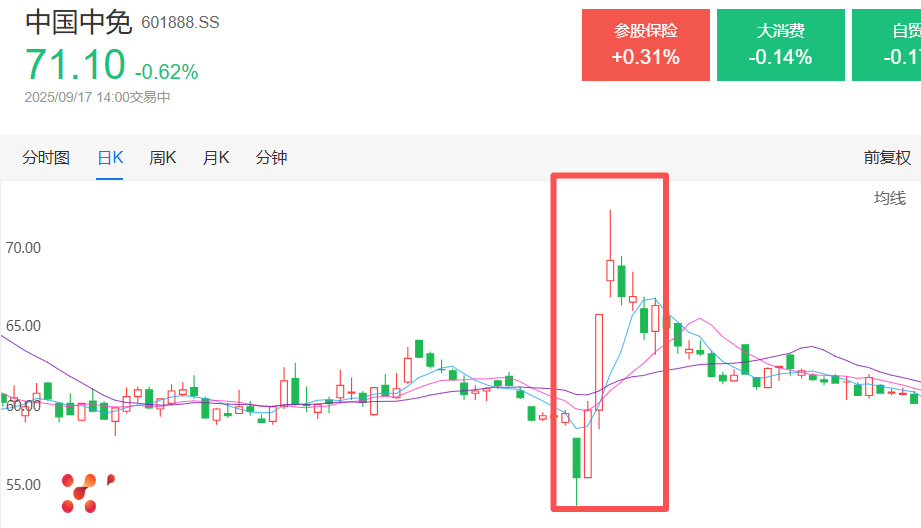
厦门港务跌2.59%,成交额1.73亿元,近5日主力净流入-6684.65万
Xin Lang Cai Jing· 2025-09-18 13:16
Core Viewpoint - Xiamen Port Development Co., Ltd. experienced a decline in stock price by 2.59% on September 18, with a trading volume of 173 million yuan and a market capitalization of 6.142 billion yuan [1]. Company Overview - The company primarily engages in bulk cargo terminal loading and unloading, port logistics services, and port trade [2][3]. - It operates a comprehensive logistics service supply chain that covers all aspects of cargo movement in and out of the port [3]. - As the largest comprehensive logistics service provider in the Xiamen port area, the company possesses scarce resources such as bulk cargo terminals and a complete logistics service system that integrates land, sea, air, and rail [3]. Financial Performance - For the first half of 2025, the company reported a revenue of 10.542 billion yuan, a year-on-year decrease of 14.72%, while the net profit attributable to shareholders was 141 million yuan, reflecting a year-on-year increase of 9.44% [7]. - The company's main business revenue composition includes 89.43% from comprehensive supply chain services, 5.65% from port support services, and 4.59% from terminal loading and unloading [7]. Shareholder Information - As of June 30, 2025, the number of shareholders increased by 8.32% to 52,300, with an average of 14,184 circulating shares per person, a decrease of 7.68% [7]. - The top ten circulating shareholders include Hong Kong Central Clearing Limited, which holds 3.8257 million shares, down by 2.1283 million shares from the previous period [9]. Market Activity - The stock has seen a net outflow of 22.6142 million yuan from main funds today, with a continuous reduction in main fund positions over the past three days [4][5]. - The average trading cost of the stock is 8.48 yuan, with the current price near a support level of 8.17 yuan [6].
