
安倍经济学

Search documents
是他,还是她?日本自民党总裁选举倒计时,资本市场屏息静待
第一财经· 2025-10-03 07:48
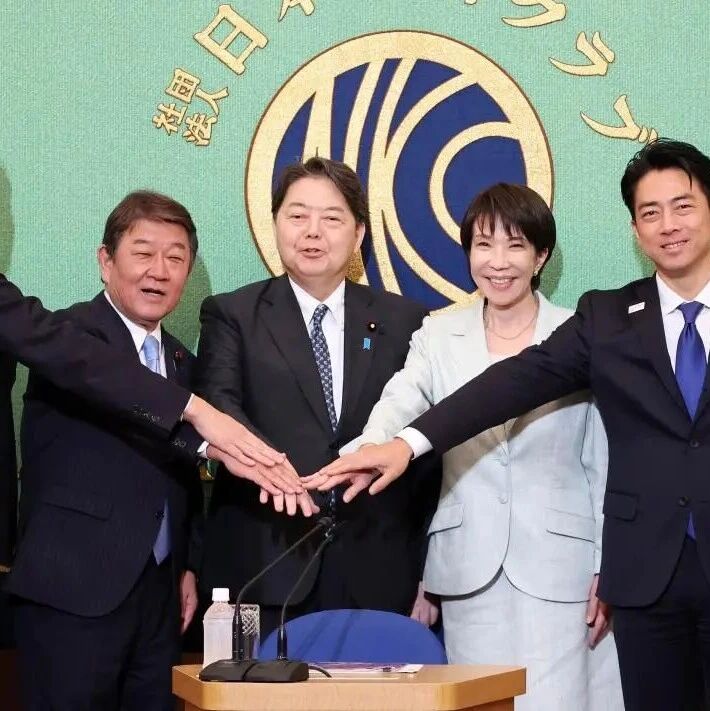
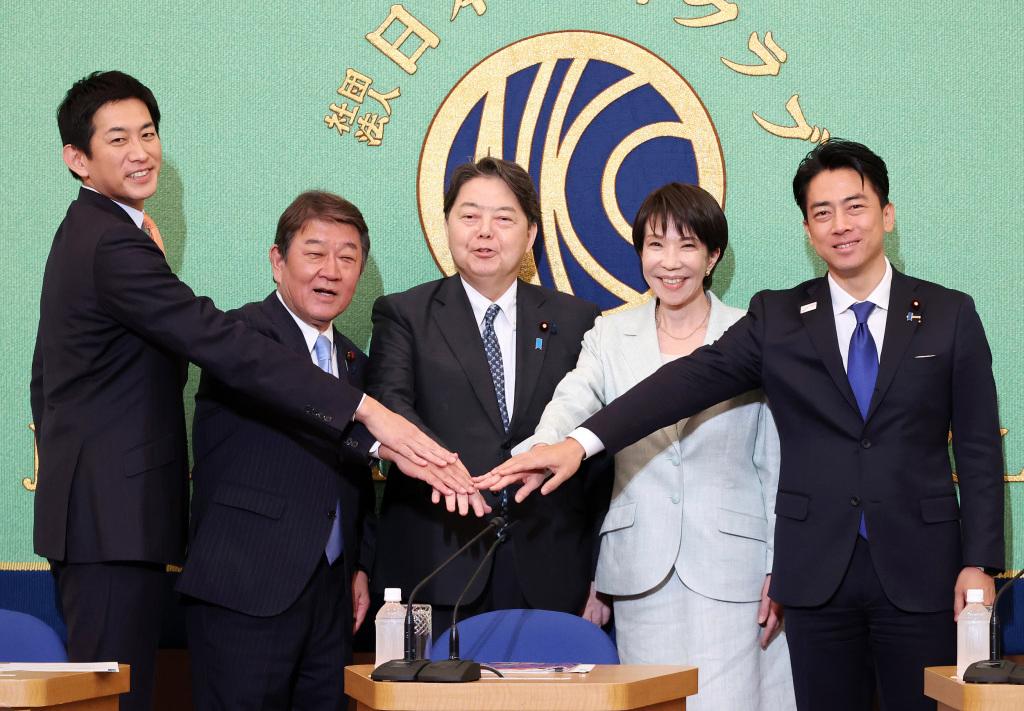
2025.10. 03 本文字数:2737,阅读时长大约6分钟 作者 | 第一财经 潘寅茹 封图 | 日本自民党总裁选举候选人(来源:新华社图) 经过两周的备选,日本自民党总裁选举即将迎来"最后时刻"。 根据日本自民党总裁选举管理委员公告,共有5人报名参加本届自民党总裁选举 , 投票将于10月4日 举行,届时将选出新一任总裁。这次选举的胜者如无意外,将成为日本下任首相。 农林水产大臣小泉进次郎、前经济安全保障担当大臣高市早苗、内阁官房长官林芳正、前经济安全保 障担当大臣小林鹰之以及自民党前干事长茂木敏充,5位候选人已在做"最后冲刺"。 选前最接近投票日的民调显示,25%的受访者支持高市早苗,21%的受访者支持小泉进次郎。但针 对自民党内议员的民调却结果截然不同:截至9月28日,有日媒采访了295名自民党议员中的265 人。结果显示,小泉进次郎获得的支持率最高,有71人支持;其次是林芳正,获得52人支持;38名 议员支持高市早苗;小林鹰之和茂木敏充均获得29人支持。 与以往不同,9月22日选战开始正式开始后,5位候选人争相在社交平台"圈地"。比如,小泉进次郎 在9月22日当天就开通个人社交平台账号,要求其阵营内 ...

是他,还是她?日本自民党总裁选举倒计时,资本市场屏息静待
Di Yi Cai Jing· 2025-10-03 02:02
这次选举的胜者如无意外,将成为日本下任首相。 经过两周的备选,日本自民党总裁选举即将迎来"最后时刻"。 根据日本自民党总裁选举管理委员公告,共有5人报名参加本届自民党总裁选举,投票将于10月4日举行,届时将选出新一任总裁。这次选举的胜 者如无意外,将成为日本下任首相。 与以往不同,9月22日选战开始正式开始后,5位候选人争相在社交平台"圈地"。比如,小泉进次郎在9月22日当天就开通个人社交平台账号,要求 其阵营内成员在网络上发布称赞自己并暗讽竞争对手的评论;高市早苗在正式宣布参选后,个人社交账号6天内已发布了7条视频;茂木敏充则把 日常工作,比如把视察儿童食堂的情况搬到了社交媒体上;小林鹰之晒出"忙碌竞选中的午餐"等。网友对此评论不一。比如,网友捕捉到了茂木 敏充在工作视频中的尴尬表情,称其"作秀"成分太多;而小林鹰之的午餐视频则遭网友群嘲。 值得注意的是,在一次电视辩论中,当主持人要求5位候选人用英文回应未来的日美关系时,仅有林芳正与茂木敏充用英语回答。此事也让日本网 友为未来首相与美国政府打交道的能力捻一把汗。 在各大民调支持率领先的两位候选人小泉进次郎和高市早苗也差点在线上"翻车"。选战开始后,有日媒爆 ...
日本自民党党首明日选举,会有何影响?
Hu Xiu· 2025-10-03 00:15
Group 1 - The upcoming election for the president of Japan's ruling Liberal Democratic Party (LDP) features candidates including current Minister of Agriculture, Forestry and Fisheries Shinjiro Koizumi, former Minister of Economic Security Sanae Takaichi, and others, with predictions indicating a competitive race primarily between Koizumi and Takaichi [1][2][3] - Regardless of who wins the election, Japan's political landscape is expected to remain unstable, with a pattern of frequent leadership changes likely to continue [1][6][11] - The political cycle in Japan has been characterized by a lack of clear economic policies, contributing to the ongoing instability and dissatisfaction among the populace [7][21] Group 2 - The relationship between Japan and China is anticipated to remain unchanged despite the new party leader, with ongoing tensions likely to persist [2][24] - The economic ties between Japan and China have shown stability, with bilateral trade figures indicating a slight increase from 32.55 trillion yen (approximately 312.4 billion USD) in 2014 to 32.65 trillion yen (approximately 269.86 billion USD) in 2024, suggesting that economic relations are not significantly affected by political tensions [24][25] - The candidates for the LDP presidency have not proposed new strategies for Japan's economic relationship with the United States, which is crucial given the impact of U.S. tariffs on Japan's economy, including a projected GDP decrease of 0.4% due to these tariffs [17][18][20]
中金 • 全球研究 | 2025年日本自民党总裁选举#4:候选人高市早苗
中金点睛· 2025-09-29 23:35
Core Viewpoint - The article emphasizes that Sanae Takaichi is a strong proponent of "Abenomics," advocating for monetary easing, yen depreciation, and fiscal expansion. If elected, the price fluctuations of various Japanese assets may align with the trends observed during the "Abenomics trade," although the magnitude of changes is expected to be weaker than in 2012-2013 due to significant transformations in Japan by 2025 [2]. Candidate Background - Sanae Takaichi, born on March 7, 1961, is a female politician from the Liberal Democratic Party (LDP) of Japan. She comes from a non-political family background and has a diverse educational and professional history, including studying at Kobe University and working in the U.S. Congress [3][4]. Political Career - Takaichi's political journey began in 1992, and she has held various significant positions, including Minister of Internal Affairs and Communications and Minister of Economic Security. She has been a prominent figure in the LDP and has supported Shinzo Abe in past elections [4][5]. Economic and Financial Policies - Takaichi's economic policies include: - **Tax Reduction**: Proposing to raise the income threshold for tax exemptions and implement cash subsidies for low-income families, reflecting a cross-party collaboration approach [7]. - **Monetary Policy**: She shows a clear preference for monetary easing, emphasizing the negative impacts of rapid interest rate hikes on corporate investment and housing loans [8]. - **Exchange Rate**: Takaichi appears to favor a weaker yen, arguing that yen depreciation benefits export industries and enhances foreign reserves [9]. - **Fiscal Policy**: Advocating for fiscal expansion and deficit financing, she emphasizes the importance of strategic investments to stimulate economic growth [10]. Market Outlook if Elected - If Takaichi is elected, the market may experience trends similar to those during the "Abenomics trade," including yen depreciation, rising Japanese stock prices, and a gradual increase in bond yields. However, the expected changes in magnitude are likely to be less pronounced than those seen in 2012-2013 [11].

能印钱绝不赚钱,日本央行只是在假装收紧货币
Sou Hu Cai Jing· 2025-09-26 06:54
Core Viewpoint - The Bank of Japan (BOJ) plans to sell approximately 3.3 trillion yen worth of ETFs annually, indicating a commitment to tightening monetary policy despite not raising interest rates at the recent meeting. The current pace suggests it would take 113 years to completely divest its holdings [1] Group 1: Bank of Japan's Actions - The BOJ has held 37 trillion yen in ETFs, which represents 3.5% of the total market capitalization of the Tokyo Stock Exchange [1] - The BOJ began purchasing Japanese stocks significantly in 2013 to support Abenomics and ceased these purchases only at the beginning of the interest rate hike cycle in early 2024 [1] - At its peak in 2020, the BOJ's holdings accounted for nearly 6% of the total market capitalization of Japanese stocks, with the recent decline in share percentage attributed to the rise in Japanese stock prices over the past two years [1] Group 2: Market Impact - The BOJ is now one of the top shareholders in over 200 companies within the Nikkei 225 index, highlighting its significant influence on the Japanese stock market [1]
【环时深度】五年四换相,日本正进入“多党化时代”
Huan Qiu Shi Bao· 2025-09-25 22:32
Core Points - The upcoming election for the new president of Japan's ruling Liberal Democratic Party (LDP) is crucial, with five candidates competing amid a challenging political landscape marked by a "double minority" situation in both houses of parliament [1][8] - Public sentiment is mixed regarding frequent leadership changes, with some expressing anxiety over political instability while others hope for new leadership to bring about change [4][12] - The election process involves a unique voting structure where party members and supporters have a significant influence, potentially leading to unexpected outcomes [4][5] Candidate Analysis - Polls indicate that Sanae Takaichi leads with 28% support, followed closely by Shinjiro Koizumi at 24%, while the other candidates lag significantly [2][4] - Takaichi may need to moderate her right-wing positions to appeal to a broader base, while Koizumi must demonstrate policy stability despite his lack of experience in key party roles [5][6] - The influence of former Prime Ministers Taro Aso, Yoshihide Suga, and Fumio Kishida is critical, as their support could sway the election outcome significantly [6][7] Political Landscape - Japan is entering a "multi-party era," complicating the ability of the new LDP president to govern effectively without cooperation from opposition parties [8][10] - Historical context shows that Japan has experienced significant political shifts, with the LDP's dominance challenged by various parties over the decades [9][10] - The new president will face immediate challenges, including rising prices, stagnant wages, and the need to increase defense spending, alongside long-term issues like aging demographics and social welfare sustainability [12][13]
5位老面孔竞选日本自民党总裁,混战中胜出还得看“造王者”
Di Yi Cai Jing· 2025-09-22 13:38
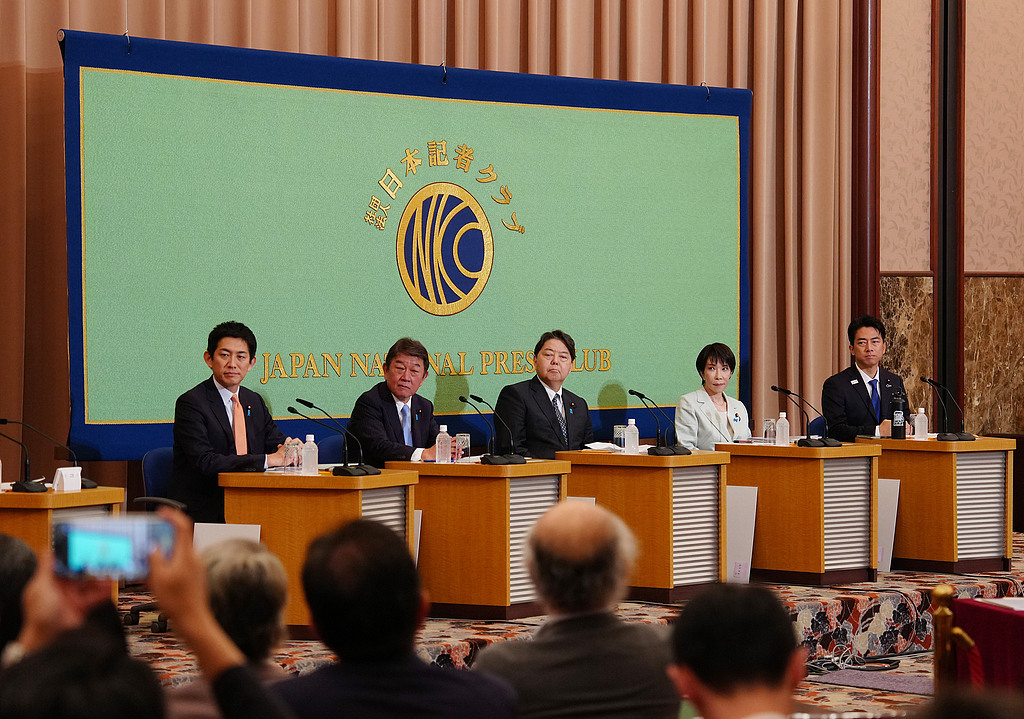
5人都参加了去年的总裁选举,是政坛的"老面孔"。 一年之后,日本自民党总裁选举战又一次打响。 据新华社报道,日本自民党总裁选举管理委员会22日发布公告说,共有5人报名参加本届自民党总裁选举,投票将 于10月4日举行,届时将选出新一任总裁。 22日上午,候选人申报工作在自民党总部举行。农林水产大臣小泉进次郎、前经济安全保障担当大臣高市早苗、 内阁官房长官林芳正、前经济安全保障担当大臣小林鹰之以及自民党前干事长茂木敏充5人报名参选。 这5人不仅都参加了去年的总裁选举,同时也是日本政坛的"老面孔"。在为期15天的拉票阶段,5名候选人将在一 系列公开场合阐述自身政策主张。近期各项民调均显示,5位候选人中唯一的女性高市与"最年轻"的候选人小泉处 于领跑民调的"第一阵营",两人的支持率互有领先。 与高市不同,44岁的小泉进次郎被视为自民党内的"新生代"。此次,他争取了不少自民党内保守派大佬的支持, 组建自己的竞选阵营,其中包括前首相岸田文雄的亲信木原诚二、首相石破茂的亲信斋藤健,以及安倍晋三亲 信、现财政大臣加藤胜信。此外,小泉还得到了前首相菅义伟的支持。 上海大学东亚研究中心教授陈友骏告诉第一财经,虽然高市与小泉的领跑 ...
日本央行前高官:即使高市早苗上台,10月仍可能加息
Jin Shi Shu Ju· 2025-09-18 12:03
弱势日元会给出口带来提振,但它一直是决策者们担忧的源头,因为它会抬高进口成本,并且是导致通 胀远高于日本央行2%目标的一个因素。 下田知行说,美元兑日元汇率升破150,也可能引来美国政府的抱怨,后者正推行一项能提振美国出口 的弱势美元政策。 他说,如果股价保持坚挺,并且定于10月1日公布的"短观"商业景气调查没有大幅恶化,日本央行很可 能会在其10月29-30日的会议上加息。 AI播客:换个方式听新闻 下载mp3 音频由扣子空间生成 前日本央行官员下田知行周四表示,即使支持激进货币宽松政策的高市早苗赢得执政党党首竞选并成为 下一任首相,日本央行也可能在10月加息。 高市早苗目前被视为10月4日自民党总裁竞选的领跑者,其因公开反对日本央行的加息以及呼吁加大支 出以重振日本经济而备受瞩目。 她可能成为日本下一任首相的前景,已导致一些市场参与者买入日元和日本国债,认为这可能会阻碍日 本央行加息。 但曾在日本央行货币事务部门任职的下田知行预计党首竞选,包括高市早苗可能获胜的结果,对货币政 策的影响有限。下田知行在接受采访时说,"虽然她可能会主张增加财政支出,但我怀疑高市早苗能否 推行可能削弱日元的政策。" 日本央行去 ...
管涛:日本经济停滞终结不能说是量宽的胜利
Di Yi Cai Jing· 2025-09-14 13:01
Core Viewpoint - The Bank of Japan is cautious in its monetary policy decisions regarding interest rate hikes and balance sheet reduction due to various internal and external constraints, despite recent inflationary pressures and economic recovery [1][16]. Group 1: Economic Context - Japan has experienced persistent inflation and positive economic growth, emerging from decades of stagnation, with the central bank having raised interest rates three times since March of last year, totaling 60 basis points [1][4]. - The inflationary trend in Japan is attributed to a series of external shocks rather than the effectiveness of quantitative easing (QE) policies [1][4][16]. Group 2: Historical Monetary Policy - The Bank of Japan was the first to implement QE in response to the asset bubble burst in the early 1990s, gradually lowering interest rates to near zero and officially introducing QE in 2001 [2][3]. - Despite the introduction of QE and QQE, Japan struggled with low inflation rates until 2022, when inflation began to exceed the 2% target [3][4]. Group 3: Recent Inflation Drivers - The COVID-19 pandemic disrupted global supply chains, significantly increasing international commodity prices, which contributed to inflation in Japan [6][8]. - The ongoing conflict between Russia and Ukraine further exacerbated supply chain issues and commodity price increases, impacting Japan's inflation [6][9]. Group 4: Inflation Statistics - Japan's CPI and core CPI inflation rates rose to 2.5%, 3.2%, and 2.7% from 2022 to 2024, indicating a significant shift from previous years of deflation [4][8]. - In 2022, Japan's average PPI inflation reached 9.8%, with CPI and core CPI inflation also showing substantial increases compared to previous years [8][12]. Group 5: Monetary Policy Implications - The rise in inflation and inflation expectations has prompted the Bank of Japan to consider normalizing its monetary policy, with interest rate hikes beginning in January of the previous year [14][16]. - The central bank's decisions are influenced by external monetary policy trends, particularly the aggressive rate hikes by the Federal Reserve, which have led to a depreciation of the yen [9][16]. Group 6: Economic Growth and Outlook - Japan's nominal GDP growth is projected to average 3.0% from 2021 to 2024, indicating an improvement compared to previous years [12][13]. - However, the economic recovery remains fragile, with potential challenges arising from rising interest rates and government financing costs due to high debt levels [15][16].
石破辞职、日本走向何方
2025-09-09 02:37
Summary of Key Points from the Conference Call Industry or Company Involved - The discussion revolves around the political landscape in Japan, particularly focusing on the resignation of Prime Minister Shigeru Ishiba and the upcoming elections for the president of the Liberal Democratic Party (LDP) [1][2][6]. Core Points and Arguments - **Resignation of Shigeru Ishiba**: Ishiba resigned following the LDP's poor performance in the July 2025 Senate elections, where the ruling coalition failed to secure a majority, marking the lowest seat count in 10-15 years [2]. - **LDP Presidential Election Process**: The election will follow a complete process involving 590 votes, split between National Diet members and LDP members. If no candidate secures a majority in the first round, a second round will occur with increased weight on National Diet votes [3][4]. - **Candidates and Policies**: Key candidates include Sanae Takaichi, who supports monetary easing and fiscal expansion, and Shinjiro Koizumi, who advocates for structural reforms and labor market flexibility [1][9][10]. - **Market Reactions**: Ishiba's resignation is expected to lead to a more favorable market environment, with potential for increased stock market activity and a weaker yen, as candidates are likely to adopt more aggressive fiscal and monetary policies compared to Ishiba [14][15]. - **Economic Policy Implications**: The new prime minister may implement slight fiscal relaxations, such as tax cuts, but significant increases in fiscal stimulus could risk downgrading Japan's credit rating due to high debt levels [16][18]. - **Monetary Policy Outlook**: The Bank of Japan is unlikely to raise interest rates in the short term, as the new prime minister will be in office for less than a month before any potential rate changes, and the central bank is waiting for wage data to assess inflation impacts [17]. Other Important but Possibly Overlooked Content - **Labor Market Dynamics**: Japanese companies traditionally avoid layoffs during economic downturns, opting instead to reduce bonuses and extend working hours, which limits flexibility in the labor market [11][12]. - **Comparison with U.S. Practices**: Unlike U.S. firms that frequently adjust workforce levels based on economic conditions, Japanese firms maintain a more stable workforce, which can hinder their ability to adapt to economic fluctuations [11]. - **Potential for Increased Inequality**: Koizumi's proposed reforms to relax dismissal regulations could enhance labor market fluidity but may also exacerbate income inequality [13]. - **GDP Growth Indicators**: Recent data indicates Japan's nominal GDP growth at 4.9% for Q2 2025, suggesting improvements in consumer spending and corporate earnings, which could positively influence the overall economic outlook [18][19].