
金融强国

Search documents
金融强国之青岛银行样本:从“给钱”到“引路”,一家城商行如何重塑金融与实体的关系?
Mei Ri Jing Ji Xin Wen· 2025-12-25 14:55
Core Insights - The construction of a financial powerhouse relies on financial institutions deeply rooted in the real economy and providing precise empowerment, requiring banks to shift from traditional lending to offering systematic and accompanying financial services [1] Group 1: Financial Empowerment of Foreign Trade - In the first half of the year, Shandong Province's goods trade import and export reached 1.73 trillion yuan, ranking fifth nationwide, with Qingdao accounting for 442.7 billion yuan, or 25.6% of the province's total [2] - Qingdao Bank has tailored a comprehensive financial solution for a local company, A Group, involved in seaweed bio-products, which includes cross-border trade financing, cross-border settlement, and USD demand deposit services, successfully enhancing the company's supply chain competitiveness [2] - A Group has secured over 300 million yuan in loans from Qingdao Bank, enabling it to sign supply agreements with multiple core suppliers in Chile, thereby locking in prices for seaweed [2] Group 2: Customized Financial Solutions for Advanced Manufacturing - Qingdao ranks sixth nationally in advanced manufacturing, with significant clusters in the region, but high-end manufacturing equipment procurement and upgrades require substantial investment [3] - A microelectronics company in Qingdao received a tailored technical transformation loan of 10 million yuan from Qingdao Bank to purchase essential testing equipment for its newly approved integrated circuit reliability verification project [3][4] - The bank expedited the loan approval process through a "green channel," completing the disbursement in just three working days after receiving complete documentation [4] Group 3: Resource Linking for Green Development - Financial institutions play a crucial role in linking enterprises with policies, resources, and channels, especially for technology-driven companies [5][6] - Qingdao Bank has developed a product system for technology enterprises and established a communication mechanism with local government departments to better understand and meet enterprise needs [6] - The bank successfully approved a project loan of 95 million yuan for Qingdao Blue New Energy Co., Ltd., along with assisting in obtaining low-cost re-lending funds to reduce financing costs significantly [6][7]
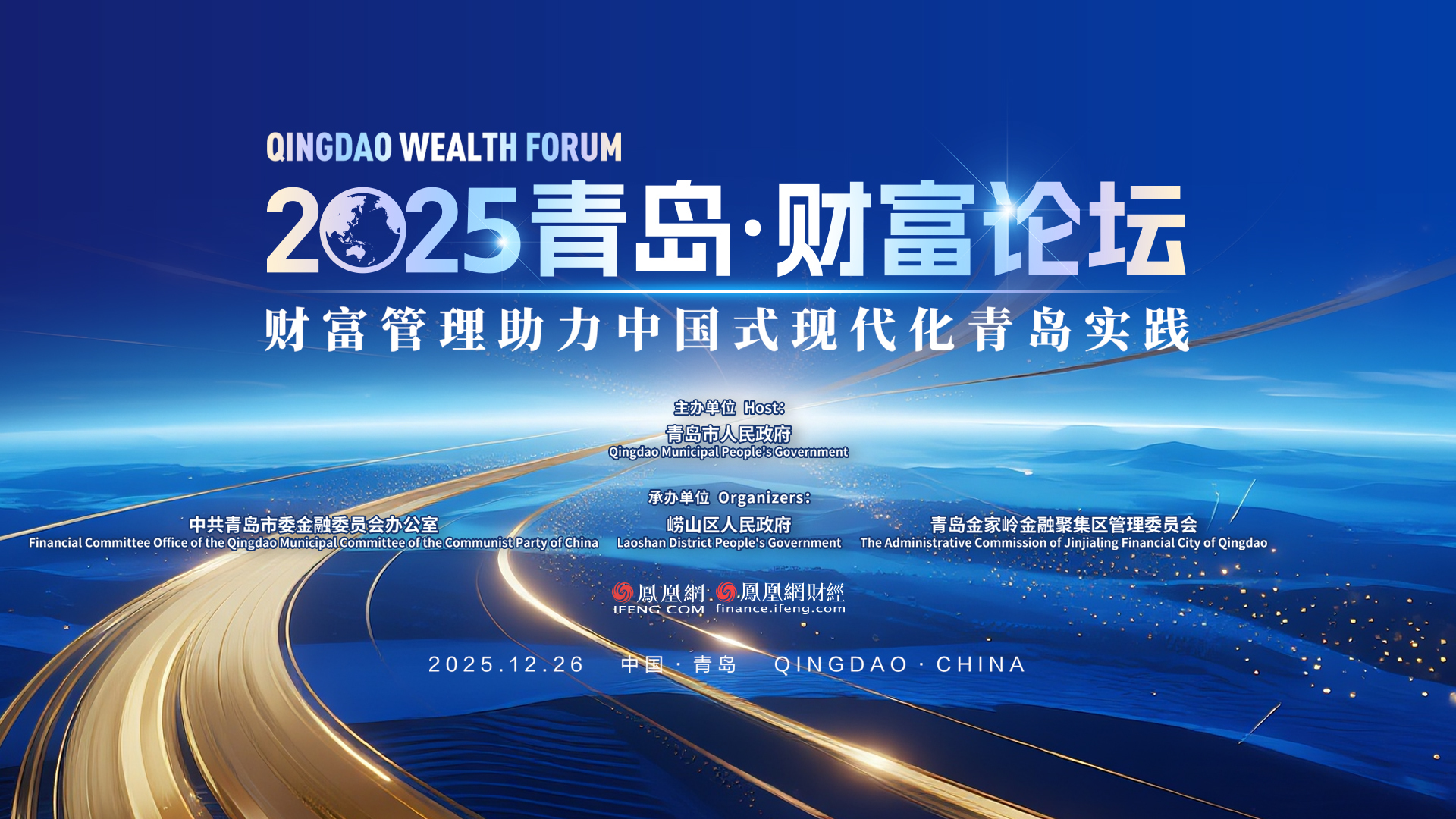
共绘财富管理新蓝图!2025青岛财富论坛即将启幕
Feng Huang Wang Cai Jing· 2025-12-25 03:49
Core Viewpoint - The "2025 Qingdao Wealth Forum" aims to create a platform for dialogue on wealth management, focusing on its role in supporting China's modernization efforts and financial strategies [1][3]. Group 1: Forum Overview - The forum will take place on December 26 in Qingdao's Jinjialing Financial District, featuring a main forum and three parallel sub-forums [1][3]. - The main forum will discuss new paradigms in wealth management and national financial development directions, particularly in the context of the "14th Five-Year Plan" [3][5]. Group 2: Sub-Forums Focus - The first sub-forum will explore how financial technology is reshaping wealth management, with discussions on digital currency, data assetization, and smart investment advisory [4]. - The second sub-forum will focus on green finance and sustainable investment, discussing innovations in green financial products and ESG evaluation systems [4]. - The third sub-forum will showcase digital financial innovations and recognize outstanding financial technology projects, promoting the application of digital finance in wealth management [4]. Group 3: Strategic Importance - The "14th Five-Year Plan" period is critical for achieving socialist modernization and advancing high-quality financial development, with wealth management serving as a vital link between finance and the real economy [5]. - The forum aims to connect local, national, and global perspectives on wealth management, exploring integration with technology, green initiatives, and industry [5].

坚守初心担使命 奋进金融强国新征程 ——南方基金深入学习贯彻党的二十届四中全会精神
Zhong Jin Zai Xian· 2025-12-25 03:20
Group 1 - The core message emphasizes the importance of the 14th Five-Year Plan in accelerating the construction of a financial powerhouse, with South Fund committing to implement the spirit of the conference as a major political task [1][2] - South Fund aims to enhance high-quality development through political leadership, focusing on serving the modernization of China, the real economy, and the capital market [2] - The company is dedicated to fostering a high-quality financial talent pool and promoting a unique financial culture to support its development [2] Group 2 - The 14th Five-Year Plan highlights the need for a more inclusive and adaptable capital market, with South Fund taking on the mission of promoting market stability and health [3] - South Fund plans to focus on developing equity funds to enhance market vitality and efficiency, aligning with national strategic directions [3][4] - The company aims to create a "long money, long investment" ecosystem to stabilize the capital market and support long-term financing for enterprises [4] Group 3 - South Fund is committed to enhancing its international competitiveness and contributing to a more open and inclusive capital market, aligning with the 14th Five-Year Plan's emphasis on high-level openness [5] - The company has launched various international investment products and established a presence in Hong Kong to facilitate overseas investment in Chinese assets [5] Group 4 - South Fund is focused on developing five key areas: technology finance, green finance, inclusive finance, pension finance, and digital finance, as outlined in the 14th Five-Year Plan [6][7] - The company aims to enhance its capabilities in serving the real economy and national strategies through systematic investment research and product design [7][8] Group 5 - South Fund is dedicated to improving its services in wealth management and pension business, with a focus on enhancing customer experience and expanding its client base [8] - The company is actively involved in educational initiatives to promote financial literacy and encourage participation in pension systems [8] Group 6 - The company is advancing its digital transformation and AI applications to enhance operational efficiency and service quality, aligning with the strategic goals of the 14th Five-Year Plan [9] - South Fund is developing a comprehensive digital platform to integrate investment research and improve data utilization [9]
南方基金:坚守初心担使命 奋进金融强国新征程
Zhong Guo Jing Ji Wang· 2025-12-25 03:13
Core Viewpoint - The article emphasizes the commitment of Southern Fund to implement the spirit of the 20th Central Committee of the Communist Party of China, focusing on high-quality development and the construction of a financial power during the 14th Five-Year Plan period [1][2]. Group 1: Political Leadership and High-Quality Development - Southern Fund aims to unify thoughts and actions based on the spirit of the 20th Central Committee, enhancing the company's high-quality development through deepening party leadership [2]. - The company integrates the value pursuit of "serving the country through finance" into its development process, focusing on supporting the modernization of China, the real economy, and the capital market [2]. - The company emphasizes the importance of investing in human resources, attracting high-quality talent, and promoting a financial culture that aligns with national characteristics [2]. Group 2: Capital Market Functionality - The 14th Five-Year Plan highlights the need for a more inclusive and adaptable capital market, which is crucial for enhancing the service quality of the capital market and supporting new productive forces [3]. - Southern Fund is committed to developing equity funds to enhance market vitality and efficiency, recognizing their role in optimizing the investor structure [3]. - The company plans to create a product matrix centered around broad-based equity indices and thematic strategies, aligning with the trend of index investment [3]. Group 3: Long-Term Investment Ecosystem - Southern Fund aims to promote a "long money, long investment" ecosystem to stabilize the capital market, recognizing the inherent value investment attributes of long-term funds [4]. - The company has been serving pension funds for 23 years, managing nearly 1 trillion yuan in pension assets and over 300 annuity clients, contributing positively to the capital market [4]. Group 4: Internationalization and Openness - Southern Fund prioritizes internationalization as a key business strategy, aiming to support China's high-level capital market openness [5]. - The company has launched the first domestic equity QDII public fund and participated in various cross-border investment initiatives, establishing itself as a significant player in the Hong Kong market [5]. Group 5: Financial Support for Economic Development - The company is focused on developing technology finance, green finance, inclusive finance, pension finance, and digital finance, aligning with the strategic directions of the 14th Five-Year Plan [7]. - Southern Fund is enhancing its investment research capabilities to support the integration of technological and industrial innovation, aiming to identify breakthrough technologies [7]. Group 6: Customer-Centric Financial Services - The company is committed to enhancing the diversity and accessibility of its financial services, serving over 220 million clients and achieving a 58% growth in the past five years [8]. - Southern Fund is transforming towards a buyer advisory model and actively engaging in investor education initiatives to improve financial literacy [8]. Group 7: Digital Transformation and AI Integration - Southern Fund is focusing on digital transformation as a core capability, developing a comprehensive digital platform to enhance operational efficiency and customer experience [9]. - The company is leveraging AI applications to improve data quality and business integration, aiming for a more intelligent and comprehensive service delivery [9]. Conclusion - Southern Fund is dedicated to contributing to the construction of a financial power by enhancing its asset management capabilities and supporting the stability of the financial system, guided by the principles of the 14th Five-Year Plan [10].
坚守初心担使命 奋进金融强国新征程——南方基金深入学习贯彻党的二十届四中全会精神
Xin Lang Cai Jing· 2025-12-25 03:12
Core Viewpoint - The 20th Central Committee's Fourth Plenary Session has set clear requirements and strategic deployments for accelerating the construction of a financial power during the "14th Five-Year Plan" period, providing fundamental guidelines for effective financial work during this period [1][11]. Group 1: Political Leadership and High-Quality Development - The "14th Five-Year Plan" is a critical period for advancing Chinese-style modernization and building a financial power, with the company emphasizing the importance of political leadership and high-quality development [2][12]. - The company aims to integrate the spirit of the plenary session into its operations, focusing on serving the national strategy, the real economy, and the capital market's high-quality development [2][12]. - The company is committed to enhancing its organizational structure by attracting high-quality talent and promoting a unique financial culture [2][13]. Group 2: Focus on Core Responsibilities and Capital Market Functionality - The "14th Five-Year Plan" emphasizes improving the inclusiveness and adaptability of the capital market, which is essential for enhancing the market's service quality and supporting new productive forces [3][14]. - The company plans to focus on developing equity funds to enhance market vitality and efficiency, recognizing their importance in optimizing the investor structure [3][14]. - The company aims to create a product matrix centered around broad-based equity indices and thematic strategies, aligning with the trend of index investment [3][14]. Group 3: Long-Term Investment Ecosystem - The company is dedicated to fostering a "long money, long investment" ecosystem to enhance market stability, which is crucial for maintaining national financial security [4][15]. - The company has been serving pension funds for 23 years, currently managing nearly one trillion yuan in pension assets and serving over 300 pension clients [4][15]. Group 4: Internationalization and Open Capital Market - The company prioritizes internationalization as a key business strategy, aiming to support China's high-level capital market opening [5][16]. - The company has launched the first domestic equity QDII public fund and has been actively involved in various cross-border investment initiatives [5][16]. Group 5: Contribution to Key Financial Areas - The company is focused on developing technology finance, green finance, inclusive finance, pension finance, and digital finance, which are essential for supporting high-quality economic development [6][17]. - The company aims to enhance its investment research capabilities to align with the strategic goals of the "14th Five-Year Plan" [6][17]. Group 6: Enhancing Customer Experience and Financial Literacy - The company is committed to improving the diversity and accessibility of its financial services, serving over 220 million clients with a 58% growth in the past five years [8][19]. - The company is actively engaged in investor education initiatives to enhance financial literacy among the public [8][19]. Group 7: Digital Transformation and AI Integration - The company is focusing on digital transformation and AI applications as core capabilities, aiming to create a comprehensive digital platform for investment research [9][20]. - The company is developing a cloud-native system to enhance the integration of investment research and improve data quality and user experience [9][20].
中汇人寿党委书记、董事长任小兵:以全面深化改革激活高质量发展“新引擎”
Zhong Guo Zheng Quan Bao· 2025-12-25 00:21
Core Viewpoint - The 20th Central Committee's Fourth Plenary Session outlines a development blueprint for China over the next five years, emphasizing the acceleration of building a financial powerhouse during the "14th Five-Year Plan" and the upcoming "15th Five-Year Plan" [1] Group 1: Financial Development Strategy - The session emphasizes the need for state-owned life insurance companies to act as stabilizers and anchors for high-quality development during the "15th Five-Year Plan" [1] - Zhonghui Life Insurance integrates the session's spirit with its reform and development, highlighting the importance of the Party's leadership in guiding corporate governance and decision-making [2][8] Group 2: Party Leadership and Governance - The company prioritizes the political construction of the Party, embedding its leadership into all governance aspects, and enhancing the Party's capabilities in economic and social development [2] - Zhonghui Life Insurance implements a "Party first" decision-making mechanism for significant management and reform initiatives, ensuring that the Party plays a central role in strategic planning [2][8] Group 3: Commitment to Social Responsibility - The company emphasizes the principle of "people first," aligning its operations with the goal of improving the quality of life for citizens and ensuring that modernization benefits all [4] - Zhonghui Life Insurance is committed to fulfilling its legal obligations and social responsibilities, including consumer protection and enhancing service transparency [5] Group 4: Product and Service Innovation - The company aims to address health and elderly care challenges by innovating products and services, creating a comprehensive service ecosystem that integrates insurance, health, and elderly care [6] - Zhonghui Life Insurance is developing a diverse product portfolio, including critical illness, medical, and retirement planning products, while enhancing customer service through technology [7][8] Group 5: Focus on High-Quality Development - The 20th Central Committee's session identifies high-quality development as the core theme for the "15th Five-Year Plan," with a shift from scale expansion to quality and efficiency in the insurance industry [7] - Zhonghui Life Insurance is actively pursuing reform and transformation strategies, optimizing its business structure, and enhancing service delivery to align with high-quality development goals [7][8]
专访刘世锦:打造强大的货币与资本市场,为创新和消费架桥
21世纪经济报道· 2025-12-24 14:10
Core Viewpoint - The article emphasizes that China's economy is expected to demonstrate strong resilience and vitality, with major economic indicators aligning with expectations, and the total economic output projected to reach around 140 trillion yuan by 2025 [1]. Group 1: Economic Advantages - China possesses three major economic advantages: the potential for catching up, the new technology revolution focused on digital and green technologies, and the advantage of a super-large market economy [4][5]. - The "catching up potential" indicates that China has a growth potential of at least 20,000 USD per capita GDP to reach the level of developed countries, primarily driven by the upgrading of consumption structure and the transformation of traditional industries [5][6]. - The super-large market economy advantage includes a significant consumer base, with 400 million middle-income individuals and the potential for 800-900 million individuals transitioning to middle-income status, which can significantly expand the consumer market [6][7]. Group 2: Economic Growth Drivers - The current economic growth in China is shifting from being driven by investment and exports to being driven by innovation and consumption [8][9]. - The focus on becoming a manufacturing powerhouse, a consumer powerhouse, and a financial powerhouse is essential for sustaining economic growth and enhancing the quality of development [9][10]. - A strong capital market and robust currency are crucial for bridging the gap between manufacturing and consumption, facilitating the necessary financial support for these sectors [10][11]. Group 3: Financial Market Development - The capital market is expected to play a pivotal role in selecting projects that are marketable, profitable, and have controllable risks, thereby improving resource allocation efficiency [10][11]. - The transition to a modern capital market system is necessary as China enters a phase of innovation-driven economic growth, with more funds expected to flow into capital markets rather than traditional banking [10][12]. - A strong currency is identified as a key indicator of a financial powerhouse, with the potential for the renminbi to become more internationally recognized as China's manufacturing and trade capabilities grow [12][13].

中国财富管理50人论坛2025年会将于12月27日在京启幕
Xin Lang Cai Jing· 2025-12-24 12:45
来源:中国财富管理50人论坛 2025年12月27日—28日,由中国财富管理50人论坛主办、中关村国研财富管理研究院承办、国泰基金支 持的中国财富管理50人论坛(CWM50)2025年会(十二届)将在北京召开,广泛邀请政府部门、专家 学者和业界领袖展开高水平的思想交流,为经济和金融高质量发展建言献策,助力资管行业行稳致远。 会议主题 2025年是"十四五"规划收官与"十五五"开局衔接的关键之年。10月召开的二十届四中全会对"十五五"时 期"加快建设金融强国"提出了明确要求与战略部署,这也是"金融强国"首次写入五年规划建议。 本届年会将围绕"迈向'十五五' 建设金融强国"这一核心主题,汇聚政策制定者、行业领袖与学术专家, 共同探讨资管行业在新时代的使命与路径。 今年的中央经济工作会议对明年经济工作,特别是创新驱动与人工智能发展指明了方向,提出要深化拓 展"人工智能+",完善人工智能治理。创新科技金融服务。 在此背景下,中国财富管理50人论坛2025年会还将举办国研平台第三届"AI+金融"峰会,携手金融与科 技领域的业界领袖、专家学者、行业精英展开高水平思想交流。 历届年会回顾 11 高质量发展的实现路径与金融支 ...
21专访|刘世锦:打造强大的货币与资本市场,为创新和消费架桥
2 1 Shi Ji Jing Ji Bao Dao· 2025-12-24 08:22
Core Viewpoint - China's economy is expected to reach approximately 140 trillion yuan by 2025, demonstrating strong resilience and vitality despite facing challenges [1] Economic Advantages - China has three main economic advantages: 1. Catch-up potential, with a GDP per capita growth potential of at least 20,000 USD to reach the level of developed countries [5] 2. New technology revolution focused on digital and green technologies [4] 3. Super-large market economy advantage, with a significant consumer base and production capacity [4][8] Economic Growth Drivers - The current economic growth is shifting from being driven by investment and exports to being driven by innovation and consumption [2][10] - The focus on becoming a manufacturing powerhouse, a consumer powerhouse, and a financial powerhouse is essential for sustainable growth [10][11] Manufacturing and Consumption - The manufacturing sector aims to enhance its position in global value chains and increase productivity through market competition [10] - The consumer market is expected to expand significantly, particularly as a large portion of the low-income population transitions to the middle-income group [7][8] Financial Market Development - A strong capital market is crucial for supporting the manufacturing and consumption sectors, requiring an evolution from traditional banking to modern capital market systems [12] - The capital market should facilitate the emergence of large innovative enterprises and support the financial needs of a growing economy [13] Currency Strength and Internationalization - A strong currency is a key indicator of a financial powerhouse, with China's manufacturing and trade positions providing a solid foundation for the internationalization of the renminbi [14][15] - Strategies to balance imports and exports while increasing the use of renminbi in international transactions are essential for enhancing its global standing [15]
李有祥:全力开创中国农再高质量发展新局面
Jin Rong Shi Bao· 2025-12-24 02:47
习近平总书记始终高度重视"三农"工作。全会提出,农业农村现代化关系中国式现代化全局和成 色。"十五五"规划建议专章部署"加快农业农村现代化,扎实推进乡村全面振兴",要求"提高强农惠农 富农政策效能",提出"保护和调动农民务农种粮积极性,强化价格、补贴、保险等政策支持和协同"。 作为农业保险的"保险",中国农再聚焦扩大农业再保险供给,深入实施农业保险约定分保机制改革 试点,财政支持的农业大灾风险分散机制的基础和核心作用初步彰显,累计为农业保险提供风险保障近 4万亿元,支付赔款约720亿元,服务农户6.5亿户次,占全国农业再保险市场份额70%以上,积极应对 局地大灾,支持直保公司及时理赔、保障农户利益,提高了农业保险行业发展的韧性,有效发挥农业再 保险国家队和主渠道作用。 党的二十届四中全会是在我国即将胜利完成"十四五"规划主要目标任务,进入基本实现社会主义现 代化夯实基础、全面发力的关键时期召开的一次重要会议,全会审议通过的《中共中央关于制定国民经 济和社会发展第十五个五年规划的建议》对未来五年发展作出顶层设计和战略擘画,对"三农"、金融、 防灾减灾等领域作出的系列部署,是新时代扎实高效做好农业保险再保险的根本 ...
