长钱长投

Search documents
“十五五”资本市场高质量发展擘画新图景
Zhong Guo Zheng Quan Bao· 2025-10-26 21:06
Core Viewpoint - The China Securities Regulatory Commission (CSRC) emphasizes enhancing the resilience and risk resistance of the capital market, improving the inclusiveness and adaptability of market systems, and strengthening the effectiveness and deterrence of regulatory enforcement to promote high-quality development of the capital market [1] Group 1: Stability Mechanisms - The CSRC aims to cultivate high-quality listed companies and improve the "long money long investment" ecosystem to strengthen the internal stability of the market [1] - Market participants expect that during the 14th Five-Year Plan period, efforts will be made to enhance the quality of listed companies and create a favorable environment for long-term capital investment [2] - The proportion of institutional investors is expected to increase significantly, enhancing the market participation and influence of long-term capital such as insurance funds and pension funds, which will reduce market volatility and highlight long-term investment value [2] Group 2: Market Adaptability - The core value of the capital market is to serve the real economy, which requires higher inclusiveness and adaptability to provide precise financing support for various types and stages of enterprises [3] - The CSRC plans to deepen reforms in the Science and Technology Innovation Board and the Growth Enterprise Market, enhancing the financing capabilities of the multi-tiered capital market to better meet the diverse needs of the real economy [3][4] Group 3: Legal and Regulatory Framework - High-quality development of the capital market relies on a fair order and legal protection under strict regulation, with a focus on combating various securities and futures violations [5] - The CSRC emphasizes the importance of transparency in information disclosure to maintain market order and ensure fair practices [5] - Digitalization and intelligence in regulatory practices are seen as crucial for enhancing regulatory effectiveness and investor protection [6]
10月25日,寒武纪大涨9%,超越贵州茅台重登A股股王宝座
Sou Hu Cai Jing· 2025-10-25 16:21
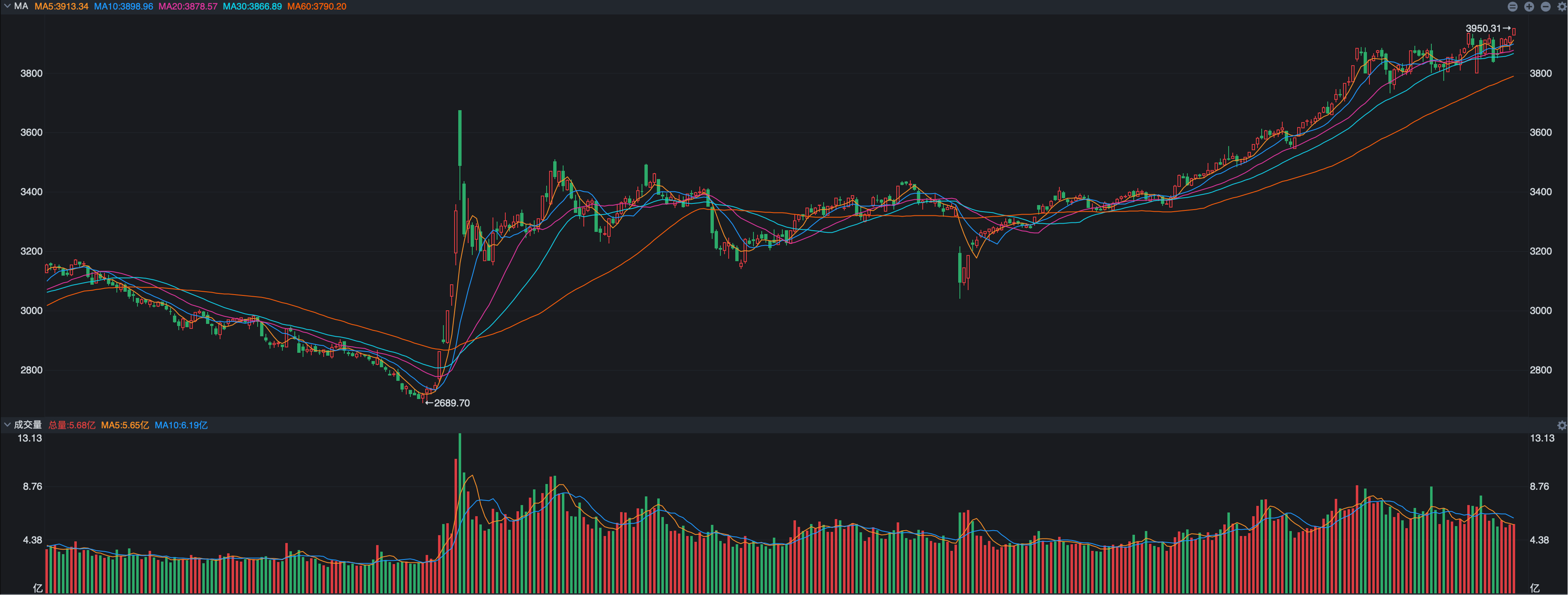
Group 1 - Cambrian's stock price surged by 9%, reclaiming the title of "A-share king," reflecting a shift in market sentiment towards technology stocks [1] - The A-share market reached a nearly ten-year high, with the Shanghai Composite Index closing above 3950 points, indicating strong market performance [3] - The central bank emphasized the importance of maintaining stability in the stock market, marking a significant policy shift [3][13] Group 2 - The technology sector, including Cambrian, has shown strong performance, with many tech stocks experiencing positive momentum [8][10] - QFII has increased its holdings in 30 stocks and raised stakes in 21 stocks, signaling a positive influx of capital into the market [8] - The overall market sentiment is influenced by the government's focus on technological self-reliance as outlined in the "14th Five-Year Plan" [8][11] Group 3 - The recent CPI data in the U.S. has led to increased expectations for interest rate cuts by the Federal Reserve, impacting global capital flows [5][6] - The Nasdaq China Golden Dragon Index saw a 2.4% increase, indicating positive performance among Chinese tech stocks [6] - The market is witnessing a notable shift in investor behavior, with a rise in institutional investor participation and a longer holding period for stocks [10][13] Group 4 - There is a clear divergence in stock performance, with about 30% of stocks underperforming the market index, raising questions about overall market health [15] - The valuation levels of the CSI 300 index are at a historically elevated level, with significant disparities between sectors, particularly between technology and traditional industries [15] - Cambrian's stock fluctuations have sparked discussions about the AI industry chain, highlighting both opportunities and challenges in the domestic AI chip sector [11][17]



监管又开会了,这次释放了什么利好?
Sou Hu Cai Jing· 2025-10-25 03:56
Group 1 - The core focus of the recent meeting is to enhance the resilience and risk resistance of the capital market, cultivate high-quality listed companies, and improve the "long money long investment" market ecosystem [1][2] - The aim is to reduce market volatility and create a stable upward trend similar to the US stock market, where declines are less frequent [1] - The development of a high-quality group of listed companies is essential for establishing core competitiveness in the A-share market, akin to the "Seven Sisters" of the US tech sector [2] Group 2 - The "long money long investment" ecosystem is designed for long-term investment, which stabilizes the market during upward trends and acts during downturns, similar to a stabilization fund [2] - The recent A-share market behavior shows a shift towards a continuous effect of market stabilization, indicating the effectiveness of the "long-term stability" mechanism [4] - Maintaining a certain level of investment positions is deemed necessary, with a recommendation of at least 30% allocation, to navigate potential market fluctuations [5]
证监会:完善“长钱长投”的市场生态 加强长效化稳市机制建设
智通财经网· 2025-10-24 11:23
Core Points - The China Securities Regulatory Commission (CSRC) emphasizes enhancing the resilience and risk resistance of the capital market, fostering high-quality listed companies, and improving the long-term investment ecosystem [1][5]. - The meeting highlighted the importance of the 20th Central Committee's Fourth Plenary Session, which provides strategic guidance for the next five years of economic and social development in China [3][4]. - The CSRC aims to deepen reforms in the capital market, enhance regulatory effectiveness, and promote a higher level of openness in the market [5][6]. Group 1 - The meeting focused on strengthening the internal foundation for market stability through the development of high-quality listed companies and a robust long-term investment environment [5]. - The CSRC is tasked with improving the inclusiveness and adaptability of capital market systems, including reforms in the Sci-Tech Innovation Board and the Growth Enterprise Market [5]. - Regulatory enforcement will be intensified to combat securities and futures violations, with an emphasis on digital and intelligent supervision [5]. Group 2 - The CSRC plans to advance the opening of the capital market to a deeper and higher level, balancing openness with security [5]. - There is a commitment to enhancing the integrity and construction of the CSRC's party discipline and cadre team [5][7]. - The meeting underscored the necessity of aligning with the spirit of the plenary session as a major political task for the CSRC [6].
个人养老金,最新业绩规模来了
Zhong Guo Ji Jin Bao· 2025-10-19 13:51
Core Insights - The personal pension system has shown significant results in its three years of implementation, becoming an important pillar of the multi-tiered pension security system in China [1][2][3] - The system has positively impacted individuals, financial institutions, and capital markets, establishing a mature framework of "policy guidance + market operation" [2][3] - Public funds have played a crucial role in the personal pension sector, contributing to product innovation and performance support, thereby promoting long-term investment strategies [5][6] Group 1: System Implementation and Impact - The personal pension system has expanded the participant base significantly, providing a crucial supplement to the first and second pillars of pension security [3][4] - The introduction of tax incentives, such as a pre-tax deduction limit of 12,000 yuan per year, has provided tangible benefits to participants [3][4] - The system is expected to introduce more stable, long-term capital into the market, aligning with national policies aimed at increasing medium to long-term funds in the market [3][4] Group 2: Public Fund Contributions - Public funds are identified as the core vehicle for the personal pension system, with a focus on low fees and long-term assessments to reduce costs for investors [5][6] - The public fund industry has developed a diverse product line that meets various risk preferences and age groups, enhancing the appeal of pension investment [6][7] - The high proportion of rights in public fund Y shares is advantageous for long-term investment, allowing investors to benefit from the growth of listed companies [7][8] Group 3: Performance and Growth - Personal pension funds have experienced significant performance recovery, with an average net value increase of over 15% this year, and the total scale of Y shares reaching 12.405 billion yuan, a 35.7% increase from last year [8][10] - The number of personal pension funds has continued to grow, with 302 funds reported by the end of September, including new products launched in the third quarter [12][13] - Over 98% of personal pension funds have achieved positive returns since inception, with nearly 20% of products seeing net value increases exceeding 20% [10][12] Group 4: Challenges and Future Directions - Despite the growth in account openings, actual contribution rates remain low, indicating a need for improved investor education and product innovation [18][19] - The industry faces challenges in enhancing investor participation, particularly among low to middle-income groups, due to perceived complexity and limited appeal of tax incentives [19][20] - Future innovations in the personal pension sector are expected to focus on product segmentation, strategy upgrades, and enhanced service offerings to transition from single investment products to comprehensive pension solutions [21][22]

个人养老金,最新业绩规模来了
中国基金报· 2025-10-19 13:14
Core Viewpoint - The implementation of the personal pension system over the past three years has shown significant results, becoming an important pillar of the multi-level pension security system in China [3][5][7]. Group 1: Impact on Individuals and Financial Institutions - The personal pension system has positively influenced individuals, financial institutions, and the capital market, establishing a mature framework of "policy guidance + market operation" [5][6]. - The system has solidified the professional position of public funds in the third pillar of pensions, with a product system evolving from single fund-of-funds (FOF) to index funds, catering to diverse investor risk preferences [5][6]. - The introduction of tax deductions of 12,000 yuan per year for participants has provided tangible benefits for investors, while institutional investors can manage assets from a long-term perspective due to the stability of personal pensions [7][8]. Group 2: Performance and Growth of Personal Pension Funds - Personal pension funds have experienced significant performance recovery, with an average net value increase of over 15% this year, and the total scale of personal pension Y shares reaching 12.405 billion yuan, a growth of 35.7% from the previous year [14][19]. - The number of personal pension funds has expanded, with 302 funds reported by the end of September, including eight new products in the third quarter [19][20]. - Over 98% of personal pension funds have achieved positive returns since inception, with nearly 20% of products seeing net value increases exceeding 20% [14][19]. Group 3: Role of Public Funds - Public funds play a crucial role in the personal pension system, providing high equity ratios suitable for long-term investment and helping to achieve stable growth of pension assets [10][11]. - The public fund industry has contributed significantly through product innovation, performance support, and investor education, promoting the "long money long investment" concept [10][11][12]. - Public funds are seen as the core vehicle for the implementation of personal pensions, with a diverse product line that meets the needs of different age groups and risk preferences [10][11]. Group 4: Future Directions and Challenges - The personal pension system is expected to continue expanding, with a focus on product diversification to cater to different risk preferences and life cycles [20][30]. - Challenges remain in enhancing investor participation and addressing the low actual contribution rates, with suggestions for improved education, product innovation, and policy support [28][29]. - Future innovations in personal pensions may include product segmentation, strategy upgrades, and enhanced services, transitioning from single investment to comprehensive pension solutions [30][32].

上交所“十四五”期间“起承转合” 稳步推进世界一流交易所建设
Shang Hai Zheng Quan Bao· 2025-10-17 18:38
Group 1: Direct Financing and Market Development - The Shanghai Stock Exchange (SSE) has effectively enhanced its direct financing capabilities, with initial public offering (IPO) financing in the stock market increasing by 16% during the 14th Five-Year Plan compared to the previous period [1] - The bond market's total issuance reached 31 trillion yuan, a 42% increase from the previous five years, with over 10 trillion yuan in industrial bonds and asset-backed securities (ABS) [1] - The SSE has actively promoted the construction of the REITs market, achieving 51 initial listings and 4 expansions, raising 140.5 billion yuan, which accounts for nearly 70% of the market [1] Group 2: Mergers and Acquisitions - The SSE supports listed companies in revitalizing assets and enhancing core competitiveness through mergers and acquisitions, with notable cases such as China Shipbuilding's acquisition of China Shipbuilding Industry Corporation [1] - Since the introduction of the "Six Merger Guidelines," the SSE has disclosed 996 asset restructuring cases, a 20% increase year-on-year, and 114 major asset restructuring cases, up 138% [1] Group 3: Long-term Investment Ecosystem - The SSE has promoted a long-term investment ecosystem, advocating for rational, value, and long-term investment principles [2] - The number of new indices has reached approximately 3,500, with the scale of ETF products growing from 900 billion yuan to 4 trillion yuan, an increase of nearly 3.5 times [2] - The SSE has launched the first batch of science and technology innovation bond ETFs, with a scale of nearly 160 billion yuan [2] Group 4: Corporate Responsibility and Market Structure - There has been a noticeable shift in the awareness of corporate responsibility among listed companies, with a 51.2% increase in total dividend announcements amounting to 7.32 trillion yuan over the past five years [3] - The average annual compound growth rates for operating income and net profit of SSE-listed companies were 3.8% and 4.6%, respectively [3] - The proportion of professional institutions holding A-share market value has increased by 47% since the end of the previous five-year plan [3] Group 5: International Cooperation and Market Openness - The SSE has actively integrated into the national strategy for opening up, with the cumulative transaction volume of the Stock Connect program reaching 99 trillion yuan, a 275% increase from the previous five years [4] - The SSE has facilitated the issuance of Global Depositary Receipts (GDRs) for 10 companies, raising a total of 3.35 billion USD [4] - The SSE has established capital market cooperation with the Middle East, hosting international investor conferences for five consecutive years [4] Group 6: Investor Protection and Market Ecology - The SSE has implemented strict regulations to maintain market fairness, with nearly 800 disciplinary actions taken against violations, including over 170 cases of financial fraud [5] - The SSE has encouraged listed companies to implement dividend policies, achieving an average annual dividend yield of nearly 2.5% during the 14th Five-Year Plan [6] - The SSE has enhanced investor education and protection mechanisms, with a focus on matching investors with suitable products [6] Group 7: Service Improvement and Market Satisfaction - The SSE has launched initiatives to improve market services, resulting in a cumulative fee reduction of approximately 4 billion yuan over three years [7] - The SSE has streamlined its rules, reducing the number of disclosure documents by over 50% [7] - The SSE has significantly increased the number of online services, enhancing convenience for users and improving investor participation in shareholder meetings by 11 times [7]
上交所“十四五”成绩单出炉
证券时报· 2025-10-17 12:11
Core Insights - The Shanghai Stock Exchange (SSE) has made significant progress during the "14th Five-Year Plan" period, enhancing market resilience and investor confidence, with the Shanghai Composite Index's annualized volatility decreasing by 2.8 percentage points to 15.9% [1][2] - SSE has become the third-largest stock market globally, the largest bond market, and the second-largest ETF market in Asia, indicating its growing importance in the global financial landscape [2] Market Development - The SSE has focused on high-quality development, integrating with national economic goals and advancing towards becoming a world-class exchange [2] - The proportion of technology innovation companies in the Shanghai market has increased from 32% to 41%, with their market capitalization share rising from 27% to 32% [5] Innovation and R&D - R&D investment by companies listed on the SSE has grown from 0.64 trillion yuan to 1.07 trillion yuan, a 66% increase, accounting for nearly 40% of the national total [6] - The SSE has supported the listing and development of high-tech companies, with 376 new listings on the Sci-Tech Innovation Board, including 37 unprofitable companies [6] Financing and Capital Market Function - The total financing from initial public offerings (IPOs) in the Shanghai market increased by 16% compared to the previous five-year period [7] - The bond market's issuance scale reached 31 trillion yuan, a 42% increase, with significant contributions from industrial bonds and asset-backed securities [8] Long-term Investment and Market Structure - The SSE has promoted long-term investment strategies, with the ETF market growing from 0.9 trillion yuan to 4 trillion yuan, a nearly 3.5-fold increase [9] - The market has seen a 55% increase in the market value held by various long-term funds [10] Regulatory and Investor Protection - The SSE has implemented strict regulatory measures, with nearly 800 disciplinary actions taken, over 30% of which were severe penalties [14][15] - The SSE has encouraged companies to adopt multiple dividend distributions annually, with an average dividend yield of nearly 2.5% during the "14th Five-Year Plan" [16] International Cooperation and Market Opening - The SSE has enhanced its international presence, with the cumulative trading volume of the Stock Connect program reaching 99 trillion yuan, a 275% increase [13] - The SSE has established capital market cooperation with the Middle East and hosted international investor conferences to attract foreign investment [13]

财通资管三度蝉联IAMAC“证券机构—业务潜力”推介
Zhong Zheng Wang· 2025-10-10 08:23
Core Insights - The report highlights the increasing role of long-term capital in stabilizing the market, particularly through insurance funds and social security funds, which are seen as "patient capital" that supports the development of a resilient market ecosystem [1][2] Group 1: Company Performance - Caitong Asset Management has been recognized for its outstanding investment management capabilities and professional client services, winning the "Securities Institution - Business Potential" recommendation for three consecutive years [1] - As of the end of Q2 2025, Caitong Asset Management has a total management scale of nearly 300 billion yuan, with public fund management exceeding 110 billion yuan and non-monetary public fund management surpassing 100 billion yuan [2] - The company has served 20.32 million investors and distributed over 68.6 billion yuan in dividends to product holders [2] Group 2: Industry Trends - The IAMAC's recommendation aims to promote collaboration between insurance institutions and various industry players, adhering to principles of legality, prudence, fairness, and non-profit [2] - The survey conducted by IAMAC reflects the growing trend of long-term investments in the capital market, emphasizing the importance of stable funding sources for market health [1][2]
横扫港股IPO!从“固收为王”到“股债双驱”,险资重塑资本角色
Hua Xia Shi Bao· 2025-10-09 19:35
纵观全局,险资正在从传统的"固收为主、权益为辅"转向"固收打底、权益增强"的资产配置模式。其在 IPO市场上的频繁出手,不仅是资产端寻求收益突破的战术调整,更是保险资金作为"耐心资本"服务实 体经济、支持国家战略的功能体现。 "险资正在从传统财务投资者向'产业赋能型资本'转型。"北京大学应用经济学博士后、教授朱俊生在接 受《华夏时报》记者采访时表示,传统险资更关注财务收益,而近年来,随着投资能力、产业研究能力 和投后管理能力的提升,一些险资机构开始通过IPO基石投资、战略配售、联合投后服务等方式深入参 与产业链发展,实现资本与产业的双向价值创造。 本报(chinatimes.net.cn)记者吴敏 北京报道 近年来,在资本市场深化改革与利率持续下行的双重背景下,保险资金正以前所未有的活跃姿态涌入 IPO市场,成为一级市场中不可忽视的长期资本力量。从港股基石投资到A股战略配售,从半导体芯片 到新能源电站,险资的触角正深入更多具备高成长性与战略价值的产业领域。 港股IPO:险资成为基石力量 今年以来,港股市场迎来多家重磅企业上市,其中紫金矿业旗下黄金业务板块紫金黄金国际的登陆尤为 引人注目。该项目不仅是今年港股募 ...