关税战

Search documents
“中国一粒不买”!美国豆农破防 或失1600万吨订单 特朗普威胁“报复中国” 中方回应
Hua Xia Shi Bao· 2025-10-16 00:51
Core Viewpoint - The U.S. soybean farmers are facing significant challenges as China has ceased purchasing U.S. soybeans since May, leading to concerns about unsold products and potential financial losses [1][3][5]. Group 1: Market Impact - The American Soybean Association reported that prior to 2018, an average of 28% of U.S. soybean production was exported to China, accounting for 60% of total U.S. soybean exports during that period [5]. - In the 2023-2024 marketing year, the U.S. was expected to export nearly 25 million tons of soybeans to China, significantly more than the 4.9 million tons exported to the European Union [5]. - From January to September this year, the number of U.S. grain transport ships docking at Chinese ports dropped by 56%, from 72 to 32 vessels, with no U.S. ships docking since July [6]. Group 2: Shift to South America - Since May, the average number of grain transport ships from South American countries like Argentina, Brazil, and Uruguay docking at Chinese ports has been over 40 per month, with 90% of these carrying soybeans [7]. - In 2024, the U.S. exported nearly 27 million tons of soybeans to China, but from January to July this year, the export volume was only 5.9 million tons, indicating a drastic decline [9]. Group 3: U.S. Response and Strategy - The U.S. government is considering providing subsidies to farmers, but many farmers believe that market access is more critical than subsidies [5]. - The U.S. is actively seeking new buyers in Africa and Asia to compensate for the loss of the Chinese market, but these efforts are unlikely to fully replace the demand from China [11]. - The American Soybean Association has urged the Trump administration to prioritize reaching a soybean agreement with China, as other exporting countries are seizing the opportunity to capture U.S. market share [11].


美媒:中国对美国食用油出口本就大幅下降,特朗普的威胁影响甚微
Guan Cha Zhe Wang· 2025-10-15 14:46
Core Points - President Trump's threat to halt imports of Chinese cooking oil is seen as an economic hostile act, but analysts suggest it will have minimal market impact due to the already declining trade volume between the U.S. and China in this sector [1][3] - The U.S. has become a significant importer of used cooking oil (UCO) from China, with exports reaching a record 1.27 million tons valued at approximately $1.2 billion in 2024, but recent trade tensions have led to a sharp decline in UCO imports [3][4] - The value of soybean trade between the U.S. and China is significantly higher than that of cooking oil, with soybean exports projected at $24.58 billion in 2024, highlighting the critical nature of this trade relationship [4][7] Trade Dynamics - China's UCO exports to the U.S. have dropped by 65% from January to August 2023, falling to 290,000 tons valued at $28.67 million, as Chinese exporters shift focus to Europe and domestic markets [3][4] - The U.S. soybean market is under pressure due to China's pivot to South American suppliers, with potential losses estimated at 14 to 16 million tons if China does not resume purchases by mid-November [4][7] - U.S. farmers are facing financial strain, with increased costs for fertilizers and equipment due to tariffs, leading to a rise in farm bankruptcies by approximately 50% compared to the previous year [7][8] Market Reactions - Analysts indicate that Trump's threats have not affected UCO pricing, as the market has already adjusted to reduced U.S. demand [3][4] - The flexibility of China's trade system allows it to expand relations with South American countries, which are now major suppliers of soybeans to China [8][9] - The Chinese government maintains a consistent stance on trade issues, emphasizing that trade wars yield no winners and advocating for negotiations based on mutual respect [9]

谢锋:美方应回归理性 不要再走经贸关系紧张升级的老路死路
Zhong Guo Xin Wen Wang· 2025-10-15 08:36
Core Viewpoint - The Chinese Ambassador to the U.S., Xie Feng, emphasizes the need for the U.S. to return to rationality and avoid escalating tensions in economic and trade relations, highlighting that trade wars yield no winners [1]. Group 1: U.S.-China Relations - Recent tensions have arisen in U.S.-China relations, which had previously stabilized under the strategic guidance of the two nations' leaders [1]. - Xie Feng calls for mutual respect, peaceful coexistence, and win-win cooperation as the guiding principles for U.S.-China relations [1]. - The ambassador warns that trade wars will only lead to mutual losses and asserts that China will not passively accept damage to its rights or the multilateral trade system [1]. Group 2: Key Issues and Recommendations - Xie Feng urges the U.S. to engage in dialogue based on mutual respect and equal consultation to address concerns, rather than escalating tensions [1]. - The Taiwan issue is identified as the most disruptive factor in U.S.-China relations, with a call for the U.S. to stop distorting UN General Assembly Resolution 2758 and to refrain from sending incorrect signals to pro-independence forces in Taiwan [1]. - The ambassador encourages the U.S.-China Relations National Committee and various stakeholders to work together to promote stable and sustainable development in bilateral relations [2].
特朗普指责中国不进口大豆并威胁“报复”,外交部回应
Di Yi Cai Jing· 2025-10-15 07:39
Core Viewpoint - The trade war and tariff conflict have no winners and do not serve the interests of either party [1][2]. Group 1: Trade Relations - The Chinese government maintains a consistent and clear stance on handling Sino-U.S. economic and trade issues [2]. - Both parties should negotiate to resolve relevant issues based on equality, respect, and mutual benefit [2].
中国驻美大使呼吁美方回归理性,停止极限施压
Xin Hua Cai Jing· 2025-10-15 06:26
Core Points - The Chinese Ambassador to the U.S., Xie Feng, emphasized the need for rationality from the U.S. side, urging an end to extreme pressure and advocating for dialogue to resolve mutual concerns, rather than escalating trade tensions [1] - Xie Feng stated that trade wars and tariff battles yield no winners, highlighting that both sides suffer and that mutual respect and cooperation are the only viable paths to resolve disputes [1] - The ambassador called for adherence to principles of mutual respect, peaceful coexistence, and win-win cooperation, acknowledging the historical and cultural differences between China and the U.S. while stressing the importance of not allowing biases to dictate decisions [1] Industry and Company Insights - Xie Feng urged for collective efforts to enhance China-U.S. exchanges and cooperation, noting that the relationship requires both top-down strategic guidance and grassroots support [2] - The U.S.-China National Council has played a significant role over the past 60 years as a bridge for civil exchanges and cooperation, contributing to the improvement and development of China-U.S. relations [2] - The business community is identified as a stabilizing force in China-U.S. relations, promoting pragmatic cooperation and cultural exchanges, with many U.S. companies choosing to grow alongside China [2]
谢锋大使在美中关系全国委员会年度颁奖晚宴上的致辞
Bei Jing Ri Bao Ke Hu Duan· 2025-10-15 06:19
Core Points - The speech emphasizes the importance of stable and healthy U.S.-China relations, which are crucial for the well-being of both nations and the world [2][3][4] - The speaker highlights the negative impact of trade wars and tariffs, asserting that there are no winners in such conflicts and calling for dialogue and mutual respect to resolve differences [2][3] - The need for cooperation in various global challenges is stressed, with an invitation for the U.S. to participate in China's initiatives for global development and governance [3][5] Group 1 - The U.S.-China relationship is described as the most significant bilateral relationship today, affecting not only the two countries but also the global future [2] - Recent trade discussions have led to positive consensus, but U.S. actions, such as export controls and tariffs, threaten to escalate tensions [2][4] - The speaker urges the U.S. to return to rationality and stop extreme pressure tactics, advocating for dialogue based on mutual respect [2][3] Group 2 - The speech acknowledges historical and cultural differences between the U.S. and China but emphasizes the importance of respecting each other's core interests [4] - The Taiwan issue is identified as a critical point of contention that must be handled with care to maintain the political foundation of U.S.-China relations [4] - The speaker calls for a collaborative approach to address global challenges, highlighting the potential for cooperation in areas like drug trafficking, climate change, and public health [3][5] Group 3 - The role of the business community in stabilizing U.S.-China relations is recognized, with examples of successful partnerships, such as Pfizer's long-term commitment to the Chinese market [5] - The upcoming Chinese Communist Party meeting is expected to outline the "15th Five-Year Plan," which will present significant opportunities for international collaboration [5] - The speaker encourages American friends to visit China and experience its realities, promoting people-to-people connections as a foundation for stronger ties [5][6]
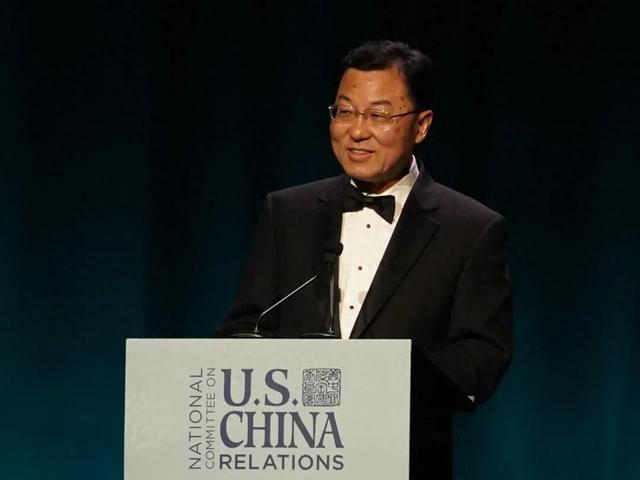
中国驻美大使呼吁美方回归理性 停止极限施压
Xin Hua Wang· 2025-10-15 06:15
Group 1 - The core message emphasizes the need for the U.S. to return to rationality and stop extreme pressure, advocating for dialogue to resolve concerns based on mutual respect and equal consultation [1][2] - The speaker highlights that trade wars and tariff battles yield no winners, and both sides should learn from past experiences that such conflicts only lead to mutual harm [1] - The importance of maintaining a direction of mutual respect, peaceful coexistence, and win-win cooperation is stressed, acknowledging the historical and cultural differences between China and the U.S. [1] Group 2 - The call for collective action to enhance U.S.-China exchanges and cooperation is made, emphasizing the need for both top-down strategic guidance and bottom-up support [2] - The role of the U.S.-China National Council as a bridge for civil exchanges over the past 60 years is recognized, highlighting its contributions to improving bilateral relations [2] - The business community is identified as a stabilizing force in U.S.-China relations, promoting practical cooperation and cultural exchanges [2]
中国驻美大使谢锋:关税战、贸易战打不得 不会有赢家
Zheng Quan Shi Bao Wang· 2025-10-15 06:03
Core Viewpoint - The trade and tariff wars between China and the U.S. are detrimental, with no winners emerging from such conflicts, as emphasized by China's Ambassador to the U.S., Xie Feng [1] Summary by Relevant Sections Trade Relations - Over the past five months, China and the U.S. economic teams have held four meetings, reaching positive consensus to stabilize bilateral economic relations, providing relief to both nations and the global community [1] - Despite these discussions, the U.S. has continued to impose restrictions on Chinese entities, including adding multiple Chinese firms to export control lists shortly after the Madrid talks [1] Economic Impact - The U.S. has implemented measures that significantly harm China's legitimate rights and interests, disrupting international trade and maritime order, and threatening the stability of global supply chains [1] - Following threats from the U.S. to increase tariffs on China, U.S. stock and currency markets reacted negatively, causing global market panic and casting a shadow over the world economy [1] Call for Dialogue - The experience from both sides indicates that trade wars lead to mutual losses, and the only viable solution to disputes is through equality, respect, and reciprocity [1] - China expresses a willingness to avoid conflict but will not tolerate damage to its rights or the disruption of international trade rules, urging the U.S. to return to rationality and resolve issues through dialogue based on mutual respect and equal negotiation [1]
美欧新关税围剿,家具跨境将错失年底消费旺季?
3 6 Ke· 2025-10-15 02:49
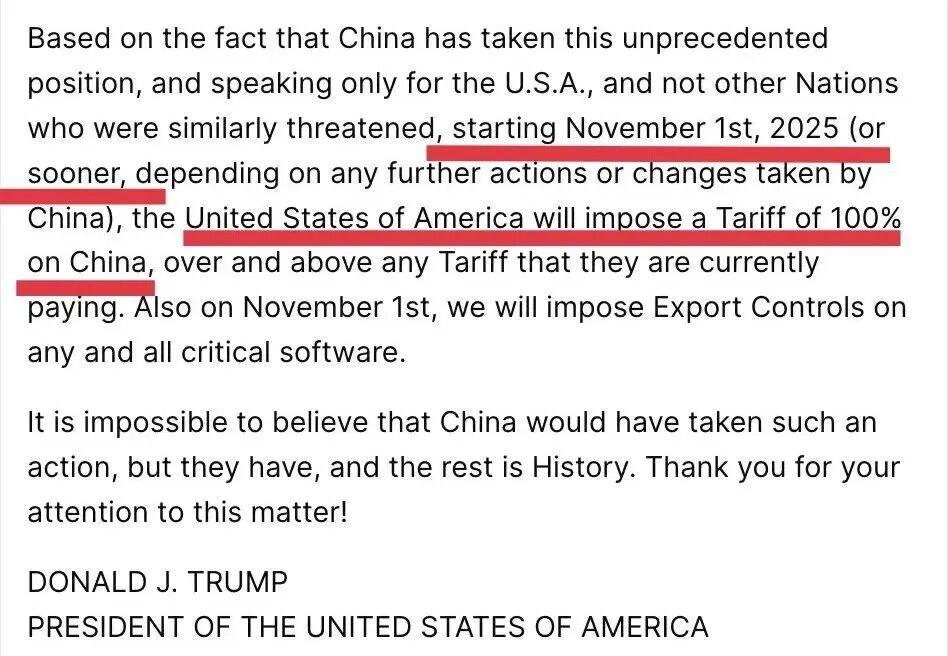
Core Viewpoint - The ongoing "tariff war" is expected to be a significant variable in the fourth quarter of this year, with potential impacts on global trade dynamics and consumer behavior [1]. Group 1: U.S. Tariff Actions - Starting from October 14, the U.S. will impose tariffs ranging from 10% to 25% on imported softwood lumber, upholstered wooden furniture, and finished cabinets/vanities [2]. - Specific tariff rates include 10% on softwood lumber and 10%-25% on upholstered wooden furniture and cabinets, with some rates set to increase in 2026 [2]. - President Trump announced plans to impose an additional 100% tariff on Chinese goods starting November 1, citing China's export controls on rare earths as the reason [2]. Group 2: China’s Response - China has expressed its willingness to engage in dialogue while also indicating readiness to respond to U.S. tariff threats, emphasizing that negotiations should not occur alongside new restrictions [3]. Group 3: EU Tariff Actions - The European Union will impose anti-dumping duties of nearly 90% on hardwood plywood from China starting December 7, 2025, with specific rates for different suppliers [5]. Group 4: Market Reactions and Economic Impact - U.S. stock markets reacted negatively to the tariff news, raising concerns about the impact on global supply chains [7]. - In contrast, the A-share market showed resilience despite initial declines, with China's total trade value reaching 33.61 trillion yuan, a 4% year-on-year increase [7]. - According to Goldman Sachs, U.S. consumers will bear over 55% of the costs associated with the tariffs, while U.S. businesses will absorb 22% [7]. Group 5: Industry-Specific Impacts - The furniture industry is expected to face similar challenges as retailers prepare for the holiday season, with reports indicating a 40% reduction in orders for Halloween costumes due to tariffs [8]. - The shipping market is experiencing price fluctuations, with container shipping rates from Shanghai to the U.S. West Coast showing slight increases, and plans for further rate hikes are in place [9][10].