
开源模型

Search documents
全网开测GPT-oss!技术架构也扒明白了
量子位· 2025-08-07 00:56
Core Insights - The article highlights the impressive performance of GPT-oss, which surpasses many existing open-source models and is poised to lead in the SaaS fast-fashion era [1][3][4]. Performance Testing - GPT-oss has successfully passed multiple performance tests, achieving top rankings in various benchmarks, including GPQA Diamond, AIME 2024, AIME 2025, and Codeforces, outperforming models like DeepSeek R1, Qwen3, and Llama 4 [5][6]. - In the MMLU benchmark, GPT-oss achieved scores of 85.9 for the low 120B model and 88 for the medium model, while Qwen3-235B performed slightly better in MMLU [6][7]. Model Architecture - The architecture of GPT-oss is noted for its wider structure, more attention heads, and higher hidden dimensions compared to similar models, incorporating advanced techniques such as attention bias units [22][24][26]. - The model retains the core MoE Transformer architecture while optimizing performance and reducing complexity, making it suitable for open-source applications [26][28]. Cost and Training - The estimated cost for training the GPT-oss-120B model is between $4.2 million and $23.1 million, while the 20B model costs between $420,000 and $2.3 million [30]. - There are indications that the model may have limitations in non-English text performance, with a significant portion of responses containing grammatical or spelling errors [30]. User Applications - Users have begun exploring various applications for GPT-oss, including its integration into platforms for academic paper understanding and data transformation [17][19][20]. - The model can be easily accessed and utilized through platforms like LM Studio and AWS, facilitating rapid development of AI applications [33][34]. Community Engagement - The article encourages users to test GPT-oss and share their experiences, indicating a growing community interest in the model's capabilities [39].


中国“霸榜”全球开源大模型:光环下的隐忧与挑战丨人工智能AI瞭望台
Zheng Quan Shi Bao· 2025-08-07 00:32
Core Insights - China's open-source large models are reshaping the global AI landscape with a "cluster-style" rise, as evidenced by the dominance of Chinese models in recent rankings [1][2][3] - The rapid iteration of open-source models has led to challenges such as high compatibility costs and a tendency towards homogenization, raising concerns about the sustainability of innovation [2][11] Group 1: Open-Source Model Landscape - In recent weeks, major Chinese companies like Alibaba and Tencent have released multiple open-source models, contributing to a competitive environment reminiscent of the "hundred model battle" of 2023 [1][4] - As of July 31, 2023, nine out of the top ten open-source models listed by Hugging Face are from China, with notable entries including Zhiyuan's GLM-4.5 and Alibaba's Tongyi Qianwen series [4][5] Group 2: Advantages and Challenges of Open-Source - The rise of open-source models in China is attributed to the availability of vast amounts of quality Chinese language data and the maturation of domestic computing power, which supports large-scale distributed training [5][8] - Despite the advantages, developers face challenges such as frequent model updates and the need for constant debugging, which can lead to increased integration costs and compatibility issues [11][12] Group 3: Diverging Paths in AI Development - There is a clear divergence in the development paths of AI models, with Chinese companies favoring open-source approaches while U.S. firms tend to lean towards closed-source models to maintain competitive advantages [7][8] - The open-source model is seen as a way for Chinese firms to build trust and establish a developer ecosystem, contrasting with the capital-driven, profit-focused approach of U.S. AI companies [9][10] Group 4: Future Directions and Innovations - Experts suggest that the current trend of "fine-tuning" among models may lead to a lack of groundbreaking innovations, emphasizing the need for foundational algorithm breakthroughs and unified API standards [11][12] - The establishment of a knowledge-sharing community for AI algorithms in China is proposed as a means to foster innovation and overcome existing barriers in AI development [12]


中国“霸榜”全球开源大模型:光环下的隐忧与挑战丨人工智能AI瞭望台
证券时报· 2025-08-07 00:12
Core Viewpoint - China's open-source large models are rising in a "cluster-style" manner, reshaping the global AI landscape, while also presenting challenges such as frequent iterations leading to compatibility issues and a tendency towards homogenization [2][5][10]. Group 1: Open-source Model Surge - In recent weeks, major Chinese companies have released multiple open-source models, marking a resurgence in the domestic large model scene, reminiscent of the "hundred model battle" of 2023 [2][4]. - As of July 31, 2023, nine out of the top ten open-source large models listed by Hugging Face are from China, with notable models like Zhipu's GLM-4.5 and Alibaba's Tongyi Qianwen series dominating the rankings [4][5]. Group 2: Shift from Closed to Open-source - The success of DeepSeek has been pivotal in shifting the industry towards open-source models, prompting more companies to follow suit and focus on model optimization and iteration [4][5]. - The open-source approach is seen as a way for latecomers in the AI field, particularly in China, to break the dominance of established closed-source models [7][8]. Group 3: Economic and Technical Implications - The rise of open-source models in China is driven by the availability of vast amounts of quality Chinese language data and the maturation of domestic computing power, creating a strong feedback loop [5][8]. - Open-source models lower the barriers to entry for smaller companies, enabling them to leverage advanced models at reduced costs, thus accelerating AI integration into various sectors [8][10]. Group 4: Challenges and Concerns - The rapid iteration of open-source models has led to a phenomenon described as "tuning internal competition," where the lack of disruptive innovation results in similar capabilities across models [10][11]. - Developers face challenges such as high compatibility costs and frequent changes in model interfaces, which complicate integration efforts [10][11]. - Experts suggest that to avoid stagnation, there is a need for unified API standards and a focus on foundational algorithm innovation [11].

DeepSeek终于把OpenAI逼急了
阿尔法工场研究院· 2025-08-07 00:08
Core Viewpoint - The release of OpenAI's first open-source language model, GPT-OSS, marks a significant shift in the AI landscape, challenging the previously held belief that the strongest models would remain closed-source and proprietary [5][12][13]. Group 1: OpenAI's Strategic Shift - OpenAI has transitioned from a closed-source, paid model to an open-source collaborative ecosystem, potentially signaling a competitive stance against domestic Chinese models [14][16]. - The newly released models, GPT-OSS-120B and GPT-OSS-20B, are designed to be efficient and accessible, with the former featuring 117 billion parameters and the latter 21 billion parameters, both capable of running on consumer-grade hardware [9][10][11]. Group 2: Impact of Chinese Open-Source Models - The rapid development of Chinese open-source models, such as DeepSeek and Tongyi Qwen, has prompted OpenAI to reconsider its strategy, as these models have gained significant traction and market presence [18][20]. - The Chinese open-source model ecosystem is expected to flourish by 2025, with multiple influential teams emerging in various AI domains, including programming and multi-modal applications [20][22]. Group 3: Competitive Landscape - The competitive dynamics in the AI sector are intensifying, with Meta also reconsidering its open-source strategy, indicating a broader trend among major players to reassess their approaches in light of emerging competition [22].
资金动向 | 北水买日港股超90亿港元,加仓腾讯、阿里
Ge Long Hui· 2025-08-06 19:07
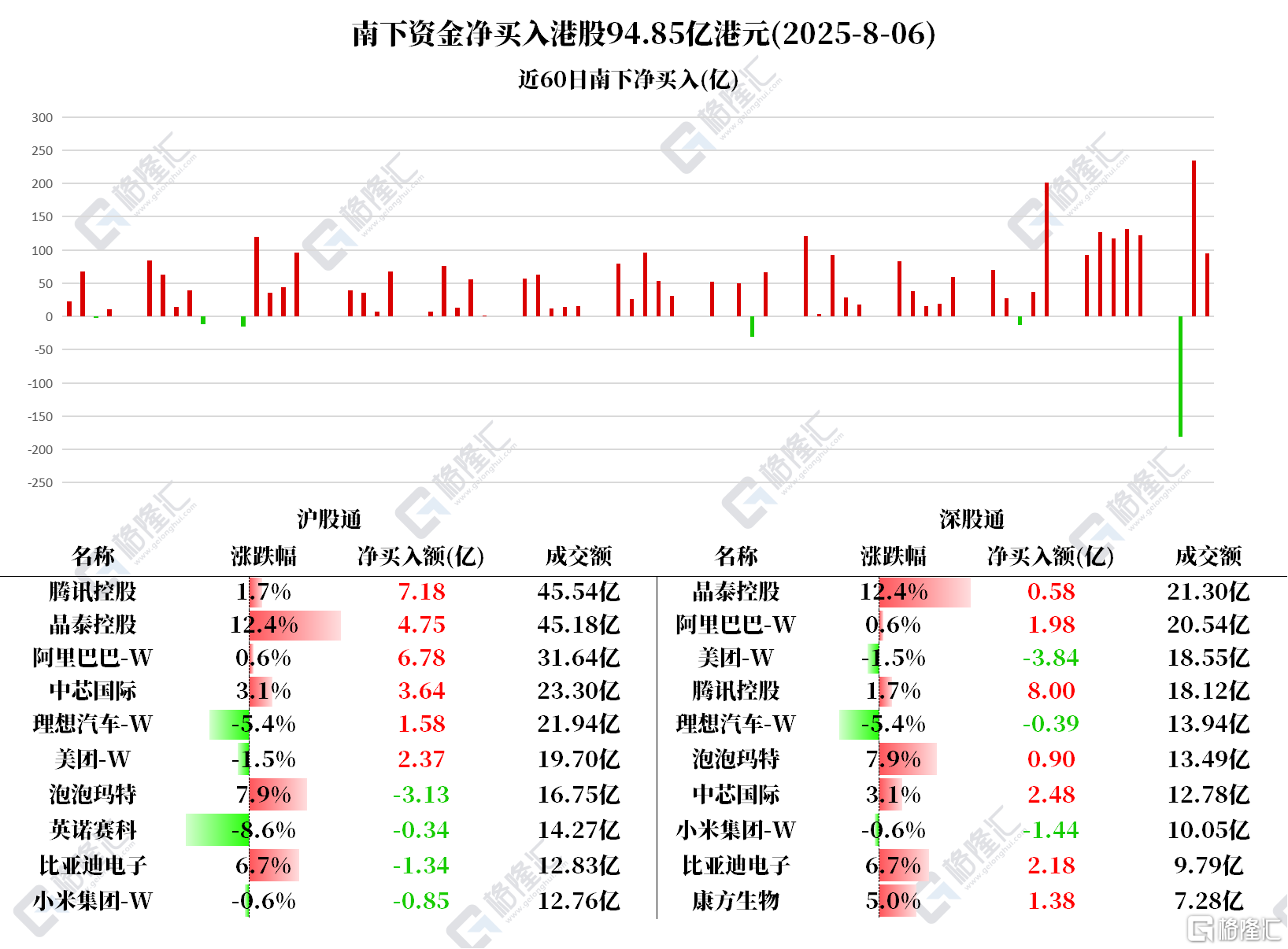
Group 1 - Tencent Holdings saw a net buy of HKD 15.18 billion, marking a total of HKD 59.44 billion in net buys over the last 10 days [1] - Alibaba-W experienced a net buy of HKD 8.76 billion, with a total of HKD 21.16 billion in net buys over the last 3 days [1] - SMIC recorded a net buy of HKD 6.11 billion, totaling HKD 9.51 billion in net buys over the last 3 days [1] Group 2 - Alibaba-W launched a new membership system integrating various Alibaba resources, aimed at enhancing consumer experience and user engagement [5] - SMIC is set to release its earnings report on August 7, with expected revenue of USD 2.185 billion for Q2 2025, a year-on-year increase of 14.91% [6] - Crystal Technology announced a significant order with DoveTree, totaling approximately USD 6 billion, setting a record for AI pharmaceutical overseas orders [6] Group 3 - Ideal Auto-W, along with China Automotive Research and Dongfeng Liuzhou Motor, issued a joint statement advocating for self-discipline and ethical competition in the automotive industry [6] - Bubble Mart received a report from Morgan Stanley stating that its intrinsic value exceeds its current IP holdings, maintaining an "overweight" rating with a target price of HKD 365 [6]

时隔六年,OpenAI 为什么再次开源?
Founder Park· 2025-08-06 14:00
Core Viewpoint - OpenAI's release of the open-source model gpt-oss marks a significant strategic shift, indicating a clearer understanding of its value proposition beyond just the model itself, focusing on its user base and application ecosystem [2][4][13]. Group 1: OpenAI's Open-Source Model Release - OpenAI has launched its first open-source model, gpt-oss, since GPT-2, with performance comparable to its proprietary o4 mini model while reducing costs by at least 10 times [2][10]. - The gpt-oss-120b model achieved a score of 90.0 on the MMLU benchmark, while the gpt-oss-20b scored 85.3, indicating competitive performance in the open-source landscape [3][8]. - The models are designed to run efficiently on various hardware, from consumer-grade GPUs to cloud servers, and are licensed under Apache 2.0, allowing for commercial deployment without downstream usage restrictions [7][8]. Group 2: Strategic Implications - OpenAI's move to open-source is not merely a technical sharing but aims to build an application ecosystem, targeting enterprises looking to deploy open-source AI models [5][12]. - The release reflects OpenAI's recognition that its core competitive advantage lies in its large user base and application ecosystem rather than just the models themselves [4][13]. - OpenAI's decision to avoid releasing training data, code, or technical reports suggests a strategy to attract businesses while potentially impacting academic research and the true open-source AI community [19][22]. Group 3: Competitive Landscape - The introduction of gpt-oss is expected to challenge existing API products, with OpenAI positioning itself aggressively in the market by offering a model that significantly undercuts the cost of its proprietary offerings [10][11]. - The architecture of gpt-oss aligns with industry trends towards sparse MoE models, indicating a shift in design preferences within the AI community [14]. - The competitive landscape is evolving, with OpenAI's release potentially reversing the previous lag in open-source model applications compared to Chinese counterparts [21][22]. Group 4: Future Considerations - The open-source model's ecosystem remains chaotic, with high-scoring models not necessarily being user-friendly, which could slow adoption rates [17][18]. - OpenAI's approach to model safety and fine-tuning raises questions about the balance between usability and security, which will need community validation [15][16]. - The ongoing competition between U.S. and Chinese open-source models highlights the need for strategic actions to maintain relevance and leadership in the AI space [20][22].

DeepSeek终于把OpenAI逼急了
Feng Huang Wang· 2025-08-06 08:21
Core Insights - OpenAI has launched its first open-source language model, GPT-OSS, which is expected to initiate a new wave of open-source development in the tech industry [1][6] - The release of GPT-OSS marks a significant shift from OpenAI's previous closed-source and paid model strategy to an open and collaborative ecosystem [6][9] Model Specifications - The GPT-OSS-120B model features a MoE architecture with 117 billion parameters, requiring only a single 80GB GPU for operation, and its performance is comparable to the closed-source O4-mini [4] - The GPT-OSS-20B model also utilizes MoE architecture, has 21 billion parameters, and can run smoothly on devices with 16GB of memory, performing similarly to O3-mini [4] Market Impact - OpenAI's decision to make GPT-OSS available for free commercial use is seen as a significant advantage for AI startups in China and globally [5] - The rapid development of Chinese open-source models, such as DeepSeek and Tongyi Qwen, has prompted OpenAI to reconsider its strategy, as these models have gained significant traction and market presence [7][8] Competitive Landscape - The emergence of competitive Chinese models has raised concerns within Silicon Valley, leading to a potential strategic shift among companies like Meta, which may abandon its open-source approach in favor of closed-source models [9] - OpenAI's recent actions indicate a heightened focus on protecting its intellectual property and maintaining a competitive edge in the evolving AI landscape [9]

Claude 小升级就赢了OpenAI 9年“开源神作”?高强度推理直接歇菜、幻觉率高达50%,写作还被Kimi 2吊锤?
3 6 Ke· 2025-08-06 07:32
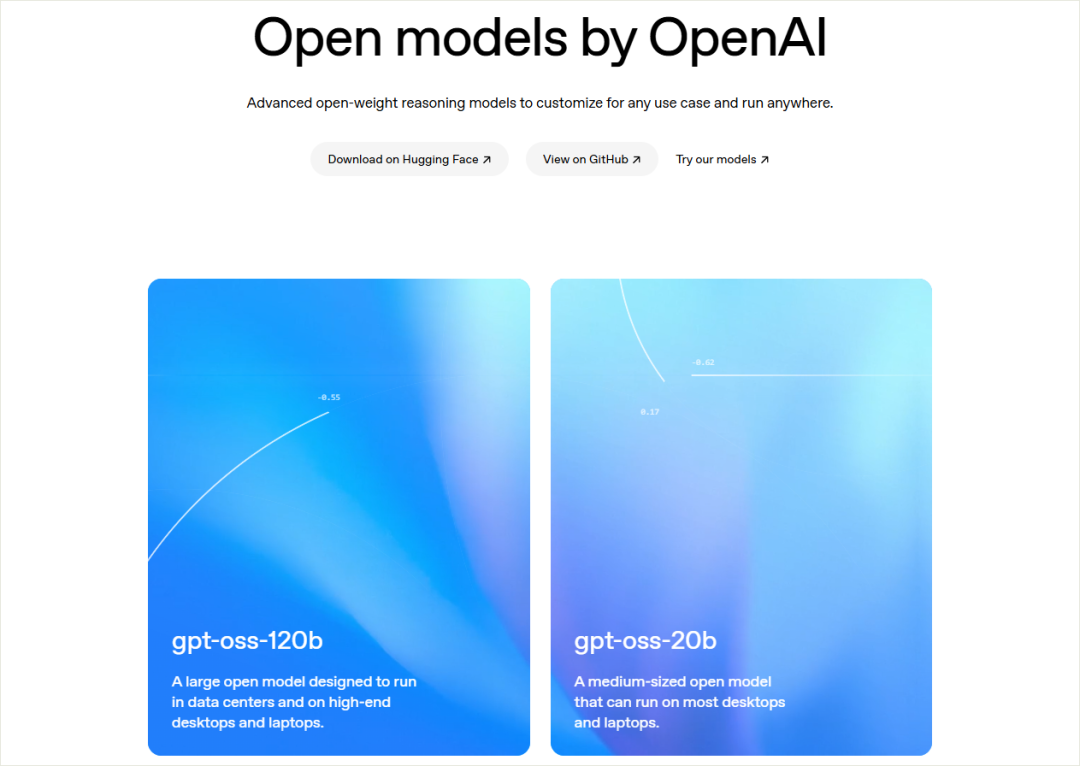
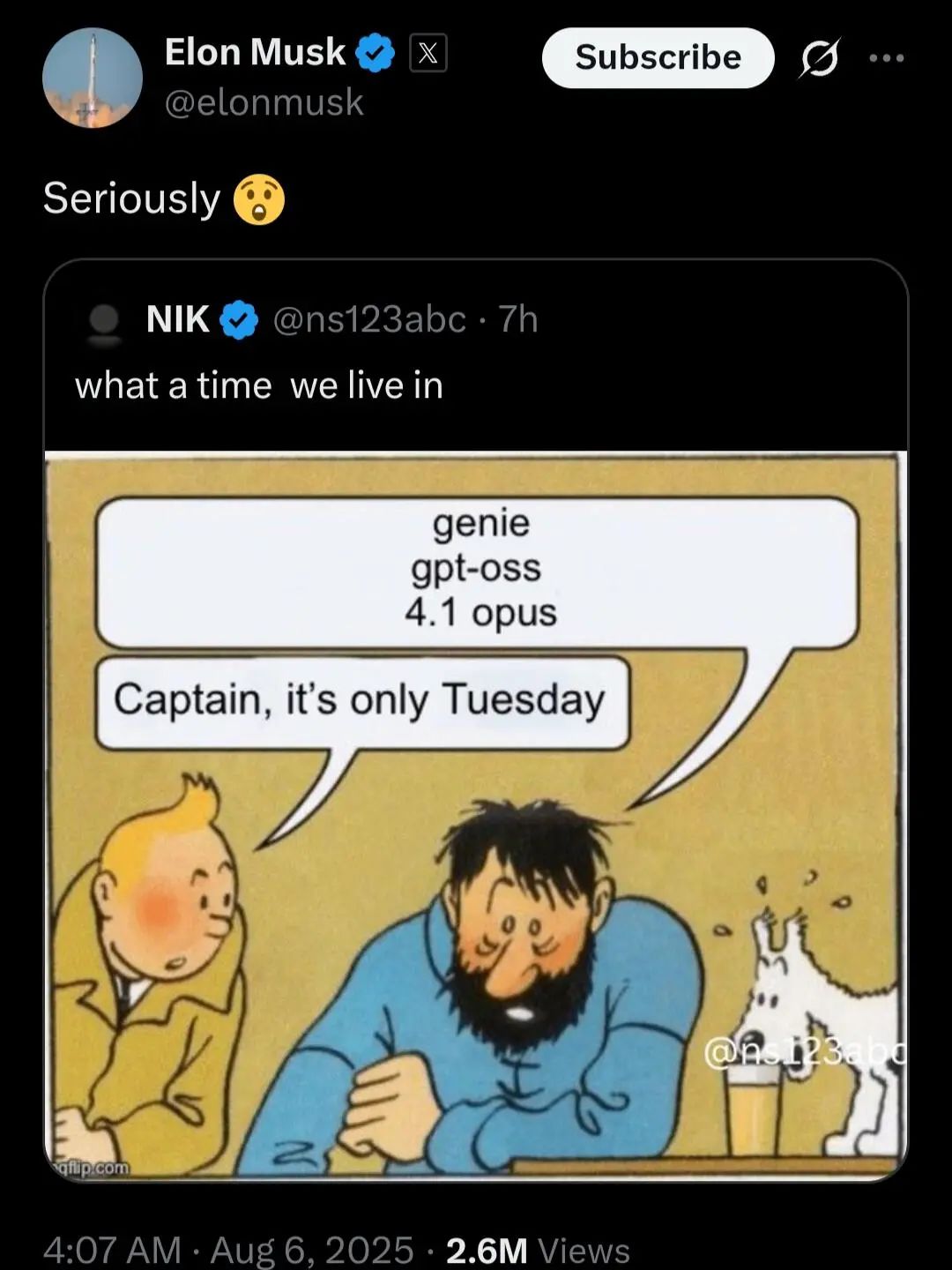
值得一提的是,几乎与 gpt-oss 开源同时,谷歌 Deepmind 宣布推出 Genie 3 ,Anthropic 放出了 Claude Opus 4.1。有网友感叹,"我们生活在什么样的时 代。"马斯克也转发了这条帖子,并配了意味深长的词和表情。 刚刚,OpenAI 发布了首个开源语言模型系列 gpt-oss,包括 gpt-oss-120b 和 gpt-oss-20b 两款语言模型:完全可定制,提供完整的思维链(CoT)并支持结 构化输出。 现在,gpt-oss-120b 和 gpt-oss-20b 的权重均可在 Hugging Face 上免费下载,且它们原生采用 MXFP4 量化格式。这使得 gpt-oss-120B 模型可在 80GB 内存 内运行,而 gpt-oss-20b 仅需 16GB 内存。 下载链接:https://huggingface.co/collections/openai/gpt-oss-68911959590a1634ba11c7a4 Github 地址:https://github.com/openai/gpt-oss Claude Opus4.1 的最大亮点在于编程性能提 ...
OpenAI、谷歌等深夜更新多款模型 展示开源、智能体、世界模型进展
Di Yi Cai Jing· 2025-08-06 04:59
Core Insights - Major AI companies released new products, showcasing shifts in product strategies, particularly OpenAI's transition to open-source models and Anthropic's focus on incremental updates [1][3] OpenAI - OpenAI launched two open-source models: gpt-oss-120b with 117 billion parameters and gpt-oss-20b with 21 billion parameters, both utilizing MoE architecture [2] - The gpt-oss-120b model can run on an 80GB GPU, while gpt-oss-20b can operate on consumer devices with 16GB memory, allowing local deployment on laptops and mobile phones [2] - These models achieved top-tier performance in benchmark tests, with gpt-oss-120b scoring close to or exceeding the closed-source o4-mini model [2] Anthropic - Anthropic introduced Claude Opus 4.1, marking a shift towards more frequent, incremental updates rather than focusing solely on major version releases [3] - The new model demonstrated improved capabilities in complex multi-step problem-solving and coding tasks, with a SWE-bench Verify score of 74.5%, surpassing the previous version [4] Google - Google launched Genie 3, its first world model allowing real-time interaction, building on previous models Genie 1 and Genie 2 [5] - Genie 3 can simulate diverse environments and natural phenomena, maintaining visual consistency for up to several minutes at 720p resolution [6] - Despite advancements, Genie 3 has limitations, such as restricted action space and challenges in simulating multiple agents in shared environments [9]


OpenAI、谷歌等深夜更新多款模型,展示开源、智能体、世界模型进展
Di Yi Cai Jing· 2025-08-06 04:49
Core Insights - The recent product launches by OpenAI, Anthropic, and Google indicate a shift in product strategies among major AI model developers, with a focus on open-source models and incremental updates [1][3][5] OpenAI - OpenAI has released two open-source models, gpt-oss-120b with 117 billion parameters and gpt-oss-20b with 21 billion parameters, both utilizing the MoE architecture [2] - The gpt-oss-120b model can run on a single 80GB GPU, while gpt-oss-20b can operate on consumer devices with 16GB memory, allowing for local deployment on laptops and mobile devices [2] - OpenAI's CEO, Sam Altman, emphasized the importance of releasing powerful open-source models, which are the result of billions of dollars in research [1][2] Anthropic - Anthropic has shifted its strategy to focus on more frequent incremental updates rather than solely major version releases, exemplified by the launch of Claude Opus 4.1 [3] - Claude Opus 4.1 shows improvements in coding capabilities, scoring 74.5% on the SWE-bench Verify benchmark, surpassing its predecessor [4] - The new model is designed to handle complex multi-step problems more effectively, positioning it as a more capable AI agent [3][4] Google - Google introduced Genie 3, its first world model that supports real-time interaction, building on previous models like Genie 1 and Genie 2 [5] - Genie 3 can simulate diverse interactive environments and model physical properties, allowing for realistic navigation and interaction within generated worlds [5][6] - Despite its advancements, Google acknowledges limitations in Genie 3, such as restricted action spaces and challenges in simulating multiple agents in shared environments [9]