成本控制

Search documents
晶雪节能(301010) - 2025年12月16日投资者关系活动记录表
2025-12-17 00:54
Group 1: Financial Performance - The third quarter gross margin declined due to a shrinking demand in the industry, leading to a performance drop [2] - The company experienced a significant order recovery starting from the second half of the year after a slow first half [2] Group 2: Strategic Measures - The company is focusing on both revenue generation and cost reduction strategies, including exploring new application areas and establishing strategic partnerships with suppliers like Baosteel and Wanhua to lower production costs [2] - The company is actively expanding its overseas market presence, with notable progress in Indonesia and Singapore, utilizing a combination of distribution and direct sales models [2] Group 3: Partnerships and Collaborations - The company provides maintenance materials for Tesla's super factories and energy storage plants, leveraging its prefabricated building advantages [3] - There is a long-standing cooperative relationship with Iceberg Cold Chain, where both companies complement each other's services [3] Group 4: Market Management - The company's product sales exhibit seasonal characteristics, with December typically accounting for 40%-50% of annual sales, which minimizes the impact of order fluctuations on management [3] - The company is currently focused on deepening its development in cold storage and building insulation, while also considering expansion into other industries [3] Group 5: Future Plans - The company is monitoring investment and acquisition opportunities within the industry chain and is actively researching suitable projects [3]
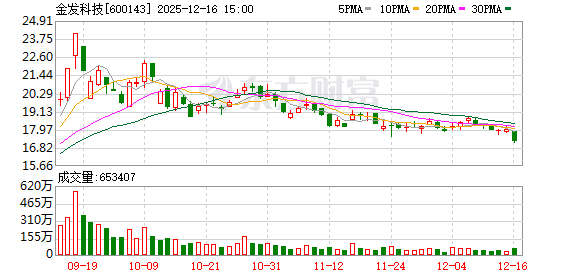
金发科技:公司两大石化项目的产品自用率稳步提升
Zheng Quan Ri Bao· 2025-12-16 14:09
Core Viewpoint - The company is enhancing its production efficiency and competitiveness through the development of two major petrochemical projects, which will lead to a more integrated and cost-effective production process [2] Group 1: Project Development - The company is accelerating the construction of a 150,000-ton PP modification integrated project in Ningbo and a 200,000-ton ABS modification integrated project in Liaoning [2] - Once fully operational, these projects will enable a "pipeline direct supply" production connection, further reducing overall costs and improving product competitiveness and industry chain synergy [2] Group 2: Raw Material Supply Strategy - The company is implementing a diversified and long-term procurement strategy for propane, sourcing from multiple locations [2] - Leveraging its own terminal advantages, the company is actively exploring large-scale centralized procurement models in collaboration with industry partners to penetrate intermediaries and enhance bargaining power [2] - Through global sourcing adjustments, the company is gradually improving its ability to respond to potential trade risks, ensuring the safety and stability of raw material supply [2]


极兔泰国市占率第一,如何在"海外竞争最激烈市场"成就领跑样本?
Ge Long Hui· 2025-12-16 09:11
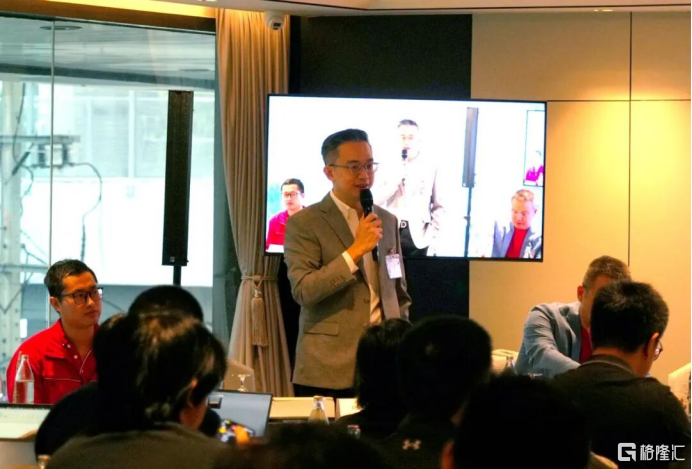
Core Insights - J&T Express successfully held an investor open day in Bangkok, Thailand, attracting a record attendance of 80 in-person participants and over 100 online attendees, highlighting strong market interest in its Southeast Asia strategy and operational results [1] - The company’s CEO in Thailand, Winsome Huo, presented data showing that J&T has become the market leader in Thailand's public express delivery sector in the first half of the year, achieving the highest service satisfaction rating for three consecutive years [2] Group 1: Operational Achievements - J&T's success in Thailand is attributed to its relentless pursuit of service quality, scale, efficiency, and cost control, effectively integrating experiences from China [4] - The company is the only express delivery firm in Thailand to fully automate all its transfer centers, with its largest sorting center capable of processing over 5 million parcels daily [4] - J&T Thailand has maintained a cost reduction of over 10% per parcel for several years, optimizing costs faster than market price declines, ensuring sustained profitability [6] Group 2: Market Position and Strategy - J&T has established a 70,000 square meter overseas warehouse network in Bangkok, with daily processing capabilities of over 200,000 orders for To C and over 4,000 cubic meters for To B, serving as a crucial link between Chinese supply chains and the Thai consumer market [7] - The company is diversifying its revenue structure beyond e-commerce, launching the "J&T Super" service targeting high-end business parcels, and has secured contracts with major clients like Apple and Adidas [6] - Investors expressed interest in the long-term market dynamics of Thailand, noting that new entrants face significant financial barriers and lengthy establishment periods [7] Group 3: Future Growth Drivers - Future growth is expected to come from the potential increase in e-commerce penetration and per capita parcel volume in Thailand, as well as diversification into non-e-commerce markets [9] - J&T emphasizes its role as a third-party service provider, opening its service capabilities to all e-commerce platforms and leveraging a global footprint to mitigate regional risks [9] - The company aims to replicate its successful strategies and innovations from Thailand in other markets, focusing on customer-centric and efficiency-driven principles to create long-term value for global clients and investors [10]
持续盈利路漫漫,新势力盈利变奏曲
Zhong Guo Qi Che Bao Wang· 2025-12-16 06:50
2025年,一些造车新势力迎来了盈利的转折点。零跑、赛力斯、小米等企业凭借销量的迅猛增长, 率先实现了盈利;小鹏、蔚来等企业的亏损幅度也在不断缩小,盈利步伐逐步迈进。然而,理想汽车在 三季度却出现了"扭盈为亏"的情况,面临持续盈利的重大考验。在迈向盈利的道路上,领先的造车新势 力已取得显著成果,但能否保持持续盈利依然是一个严峻的挑战。 规模效应临界点逼近 在新能源汽车产业竞争白热化的当下,销量规模已成为造车新势力突破盈利困局的核心变量,其影响贯 穿企业运营的每个环节。汽车工业的规模经济特性在新能源汽车时代愈发显著。当企业年销量突破10万 辆临界点时,供应链议价能力将发生质变。以电池采购为例,头部新势力可凭借规模化订单将成本降低 15%~20%,这种优势直接转化为毛利率提升的关键支撑。对于新势力而言,销量增长带来的固定成本 分摊效率提升,同样不容忽视——研发费用、生产线折旧等固定支出,在规模化生产下被均摊至更低的 单车成本,为盈利创造空间。 小米汽车便是规模效应助力盈利的典型。2025年三季度,其交付量突破10万辆,销售收入总额约283亿 元,平均单车收入约26万元,毛利率高达25.5%,单车毛利润达6.65万 ...


泡沫破裂与生死时速 ——自动驾驶行业进入“务实生存”新阶段
Zhong Guo Qi Che Bao Wang· 2025-12-15 01:32
Core Viewpoint - The autonomous driving industry is experiencing a significant downturn, marked by the collapse of once-prominent unicorn companies, reflecting the harsh realities of the market after a period of excessive capital influx [2][3]. Group 1: Industry Collapse - By the end of 2025, the autonomous driving sector is witnessing the end of its "crazy era," with companies like Maimo Zhixing halting operations due to financial distress and judicial account freezes [2]. - The downfall of Maimo Zhixing and Zongmu Technology serves as a warning for the industry, indicating that the collapse of high-valuation companies is no longer an isolated incident but a reflection of systemic issues within the sector [2]. Group 2: Strategic Pitfalls - Companies that have fallen from grace share similar trajectories, having initially thrived during a booming market by securing substantial funding and high valuations based on promising technology narratives [3]. - Maimo Zhixing's reliance on a single major client, Great Wall Motors, created a dependency that ultimately limited its market expansion and technological autonomy, leading to missed opportunities [4]. Group 3: Market Dynamics - The shift in Great Wall Motors towards more open technological collaborations has destabilized Maimo Zhixing's foundational partnerships, exacerbating its vulnerabilities in a competitive landscape [4]. - The global capital market's increasing caution towards hard technology investments has redirected funds away from the uncertain profitability of autonomous driving towards more immediately rewarding sectors like AI [4]. Group 4: Technological Missteps - Maimo Zhixing's failure to adapt to the industry's shift towards "light mapping" technology has hindered its competitiveness, as it continued to invest heavily in outdated systems [5]. - The choice of technology routes has significant implications for cost structure, data iteration efficiency, and scalability, with companies like Momenta successfully leveraging their capabilities to enter global markets [6]. Group 5: Market Polarization - The collapse of weaker firms has led to a stark division in the industry, with leading companies like Horizon Robotics solidifying their positions through extensive partnerships and market penetration [8]. - The competition has shifted from mere technological prowess to the speed of technological iteration, cost control, and the ability to commercialize effectively [9]. Group 6: Future Outlook - The autonomous driving sector is transitioning from its initial chaotic phase to a more mature stage focused on deepening and consolidating market positions, with capital becoming more selective in its investments [10].

以“成本”之精 牧原股份锻造穿越周期韧性
Zhong Guo Zheng Quan Bao· 2025-12-12 20:24
Core Viewpoint - The company, Muyuan Foods, is making significant progress in its internationalization strategy with its upcoming listing in Hong Kong, which is expected to enhance its global business expansion and research and development efforts [1][2]. Group 1: Internationalization Strategy - Muyuan Foods is set to issue up to 546 million shares for its Hong Kong listing, with funds primarily aimed at expanding its global footprint and enhancing R&D [2]. - The company has accelerated its international expansion, establishing a subsidiary in Vietnam and forming strategic partnerships with local agricultural firms [2]. - The focus of its international strategy is on providing comprehensive solutions in technology, management, and equipment rather than just meat trade, leveraging its experience in disease control and production technology [2]. Group 2: Cost Control and Operational Efficiency - The company has successfully reduced its breeding costs to approximately 11.3 yuan per kilogram, with over one-third of its breeding units achieving costs below 12 yuan per kilogram [4]. - Cost reductions are attributed to strict adherence to technical standards and effective management practices, emphasizing the importance of management execution in cost differentiation [4]. - Innovations in feed cost management, such as low-soy diets and synthetic amino acid production, are being implemented to stabilize feed prices and enhance overall cost efficiency [6]. Group 3: Financial Health and Market Position - The company is focusing on the ToB market in its meat processing business, aiming to enhance the value of each pig and transition to a high-value product supply platform [7]. - Following a significant capital expenditure phase, the company's cash flow has improved, with a reported debt reduction of approximately 9 billion yuan and an asset-liability ratio of 55.50% as of Q3 2025 [7]. - The company aims to return to a reasonable debt level while maintaining strong cash flow to better reward shareholders [7]. Group 4: Industry Insights - The company observes a new phase in the "pig cycle," characterized by reduced price volatility and stable industry capacity, indicating a shift towards cost and efficiency competition [5]. - The traditional "pig cycle" model is becoming less applicable, as the industry stabilizes and medium-sized producers can thrive based on production performance [5]. Group 5: Future Outlook - The company aims for sustainable development through continuous R&D investment and cost efficiency, contributing to the high-quality development of the industry [8]. - The Hong Kong listing is expected to provide international perspectives and resources, enhancing the company's growth trajectory while solidifying its market position [8].

以“成本”之精牧原股份锻造穿越周期韧性
Zhong Guo Zheng Quan Bao· 2025-12-12 20:17
● 本报记者 杨梓岩 11月下旬,牧原股份赴港上市迎来关键进展,中国证监会已对其出具境外发行上市备案通知书,标志着 其国际化战略迈出实质性一步。 在行业周期波动趋缓、竞争步入成本决胜的新阶段,牧原股份凭借持续下降的养殖成本与稳健增长的业 绩,展现出穿越周期的强大韧性。牧原股份董事会秘书秦军日前在接受中国证券报记者专访时表示,公 司正通过持续研发投入与降本增效,推动可持续发展,期待通过自身业务发展以及对行业技术、产业链 的贡献,助力行业高质量发展。 全球化价值重塑 对于牧原股份而言,此次赴港上市是公司面向长远全球化发展的重要战略落子。秦军明确表示,发行H 股主要是为未来五到十年的国际化拓展铺路。 根据备案通知书,牧原股份拟发行不超过5.46亿股境外上市普通股,于香港联交所主板上市。募集资金 将主要用于拓展全球商业版图及研发投入。 港股上市被视为牧原全球化战略的关键助推器。秦军指出,上市过程本身有助于公司开拓海外业务,两 者相辅相成。 财务结构的优化是公司近期另一大亮点。随着大规模资本开支阶段结束,牧原现金流状况显著改善。秦 向"10元时代"迈进 如果说国际化布局着眼于未来增长空间,那么持续深化的成本控制能力则是 ...
Oil-Dri Q1 Earnings Decline Y/Y Amid Tough Comparison Pressures
ZACKS· 2025-12-12 17:06
Core Viewpoint - Oil-Dri Corporation of America (ODC) shares have underperformed the broader market despite reporting strong quarterly profit results, with a 6.7% decline in shares since the release of first-quarter fiscal 2026 results compared to a 0.1% rise in the S&P 500 index [1] Earnings & Revenue Performance - For the first quarter ended October 31, 2025, Oil-Dri reported consolidated net sales of $120.5 million, a 6% decrease from $127.9 million in the same period last year [2] - Net income fell 6% to $15.5 million from $16.4 million a year earlier, with diluted earnings per share at $1.06, down from $1.13 [3] Key Business Metrics - Gross profit totaled $35.5 million, a 13% decrease year-over-year, with gross margin contracting to 29.5% from 31.9% due to lower sales volumes and a 3% increase in domestic cost of goods sold per ton [4] - Selling, general and administrative expenses declined 5% year-over-year to $18.5 million, partially offsetting pressures from lower volumes and higher per-unit costs [5] Cash Flow and Financial Position - Operating cash flow for the quarter was $10.3 million compared to $10.9 million in the prior year, with cash and cash equivalents ending at $42.4 million, down from $50.5 million at the end of fiscal 2025 [6] Segment Performance & Business Drivers - The Business-to-Business Products Group reported net sales of $44.3 million, a 9% decline, with fluid purification revenues down 13% to $26.7 million and animal health revenues dropping 25% to $4.7 million [7] - The Retail and Wholesale Products Group generated net sales of $76.2 million, down 4%, with domestic cat litter sales declining 6% year-over-year, although the lightweight cat litter segment saw a 32% increase in sales [8][9] Management Commentary & Influencing Factors - Management indicated that the year-over-year declines were largely anticipated due to the exceptionally strong performance in the prior-year quarter, emphasizing continued execution of growth strategies and strong cash generation as positives [10] - Factors impacting results included lower volumes, higher per-ton costs, and normalization of demand in renewable diesel filtration, while cost controls and growth in agricultural and lightweight cat litter products provided some offsets [11] Other Developments - Following the quarter's end, Oil-Dri's board approved a 14% increase in the quarterly cash dividend, reflecting management's confidence in the company's financial position and long-term outlook [12]


“等等党亏麻了”,12GB内存将在中端机上消失?
Guan Cha Zhe Wang· 2025-12-12 07:09
Core Insights - TrendForce's latest survey indicates that memory prices are expected to rise significantly in Q1 2026, leading smartphone and laptop manufacturers to inevitably increase product prices, lower specifications, and further reduce shipment forecasts [1][2] Group 1: Smartphone Market - The share of memory in the Bill of Materials (BOM) cost for consumer electronics, including smartphones, is increasing, which may force companies like Apple to reconsider pricing strategies for new models and potentially eliminate discounts on older models [1] - For mid-range Android brands, the rising memory prices will likely compel them to increase new model prices and adjust existing model pricing or lifecycle to mitigate losses [1][5] - The low-end smartphone market is expected to see entry-level models revert to 4GB of memory by 2026 due to cost constraints [5] Group 2: Laptop Market - The rise in memory prices will lead laptop brands to adjust their product mix, procurement strategies, and regional sales layouts, particularly affecting high-end thin laptops that use soldered mobile DRAM [2] - In the consumer laptop market, while current inventory and low-cost memory may support short-term profits, long-term adjustments in specifications or pricing are anticipated, with a significant pricing adjustment expected in Q2 2026 [2] - Lenovo and Dell are reportedly planning price increases of approximately 15-20%, effective as early as mid-December [5] Group 3: Memory Pricing Trends - TrendForce forecasts a 30.9% quarter-over-quarter increase in DRAM industry revenue for Q3 2025, reaching $41.4 billion, with a projected 45-50% increase in DRAM contract prices for Q4 2025 [5] - All DRAM products, including High Bandwidth Memory (HBM), are expected to see price increases of 50-55% [5] - The global shipment forecast for laptops has been revised from a 1.7% year-over-year increase to a 2.4% year-over-year decrease for 2026 [5]

力拓集团锂战略凸显行业增长面临的挑战
Wen Hua Cai Jing· 2025-12-12 06:13
Core Insights - Rio Tinto's ambitious strategy reveals both promising and cautionary aspects of the lithium industry, emphasizing the need for rapid supply expansion to meet growing demand for aluminum and lithium [1] Group 1: Company Strategy and Projects - Rio Tinto announced a restructuring into three main segments: iron ore, copper, aluminum, and lithium, with plans to increase lithium carbonate equivalent production capacity from 75,000 tons to 200,000 tons by 2028 [1] - The company aims to maintain a 50% EBITDA margin while investing $1 billion annually over the next three years in business expansion in Canada and Argentina [1][2] - Four key projects include a lithium hydroxide plant in Quebec with an annual capacity of 32,000 tons, the Sal de Vida lithium carbonate project in Argentina with a capacity of 15,000 tons, and two lithium production lines using direct lithium extraction technology, each with a capacity of 30,000 tons [2] Group 2: Cost and Market Dynamics - The average capital intensity for these projects is projected at $65 per kilogram, with C1 operating costs for all salt lake assets expected to decrease to $5-8 per kilogram [2] - The lithium industry's incentive prices are rising annually, with specific projects like Sal de Vida experiencing a doubling of C1 costs compared to previous ownership [3][4] - Rio Tinto's salt lake projects are expected to achieve an internal rate of return of 15%, driven by strong demand, particularly in the energy storage sector, which has surpassed electric vehicles as the fastest-growing area for lithium demand [6][7] Group 3: Technological Advancements - The Fenix project is expected to reduce the conversion time from brine to final carbonate from 2-3 months to 1-2 days using direct lithium extraction technology, potentially yielding significant operational capital benefits [5] - The lithium market environment remains challenging, but Rio Tinto is establishing a substantial business scale at the lower end of the cost curve, allowing for rapid asset development if market conditions improve [7] Group 4: Market Pricing - As of December 10, the assessed price for lithium hydroxide in North Asia was $10,400 per ton, reflecting a 4% increase from the beginning of the year and a significant rise from $8,800 per ton a year ago [7]