源网荷储一体化

Search documents
点“绿”成电 织“能”入网——从信阳新能源发展看区域绿色低碳转型
He Nan Ri Bao· 2025-08-19 23:35
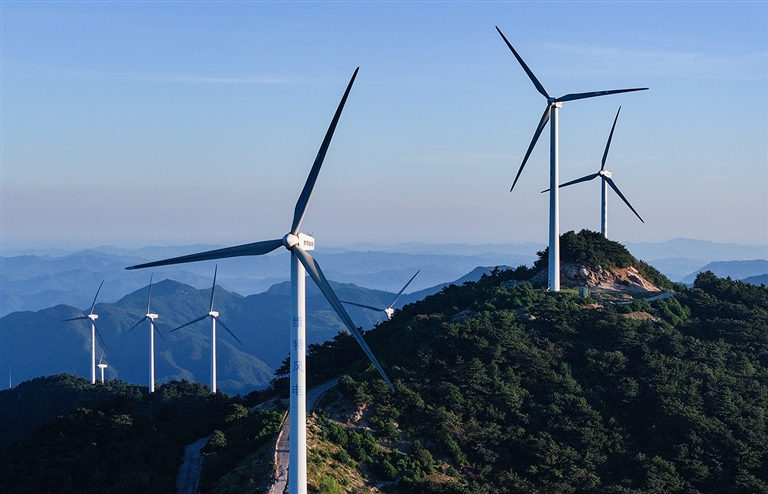
一个大号充电宝能有多大?一整座山。 这个正在建设的大号"空气充电宝",是信阳300兆瓦先进压缩空气储能项目,就在新县的大别山深处。项目建 成后能把光伏、风力发的电能,稳定流畅地接入电网,存储备用,平衡电网供需。 实现碳达峰碳中和目标,能源绿色低碳发展是关键。河南加快推进能源结构战略性调整,积极推动能源替 代,2024年迎来"双超越双突破":可再生能源装机超越火电、新能源装机超越煤电;可再生能源装机占比突 破50%、年发电量突破1000亿千瓦时。 在这场绿色变革浪潮中,老区信阳凭借得天独厚的自然资源禀赋,可再生能源装机占比达66.59%,高出全省 13个百分点以上,成为河南绿色发展的"尖子生",也是观察区域绿色低碳转型的鲜活标本。 绿能"风光"无限 8月18日,记者沿着施工通道走进信阳"空气充电宝"项目现场,看到连接地上场区和地下储气硐室的运输通道 已经完成,大山"肚子"内直径15米、总长1800米、总容量约31万立方米的空气压缩硐室已掘进过半,预计将 于2026年年底建成投产。 作为国家能源局新型储能试点示范项目,"空气充电宝"是国内最大的在建300兆瓦级人工硐室压缩空气储能项 目。"项目建成投用后,年发电量 ...

研报掘金丨华源证券:维持韶能股份“增持”评级,算电融合持续推进
Ge Long Hui A P P· 2025-08-18 07:38
Core Viewpoint - The integration of computing power and energy is progressing, which is expected to open up growth opportunities for Shaoneng Co., Ltd. [1] Industry Summary - Shaoguan, as the only hub node in the Guangdong-Hong Kong-Macao Greater Bay Area, is experiencing a surge in green electricity demand, with integrated projects for data center clusters expected to be implemented rapidly [1] - The four major telecom operators, along with companies like Huashao and Yingshuo, have established 120,000 standard racks, while projects from Tencent, Global Switch, and China Unicom are also under construction, indicating a significant increase in electricity demand in Shaoguan [1] - The city plans to reach a photovoltaic installed capacity of 8 GW and wind power installed capacity of 4 GW by 2035, focusing on integrated projects to reduce operational costs for data centers and ensure stable power supply [1] Company Summary - The company, as a clean energy listed enterprise located in Shaoguan, is actively developing new energy projects and is well-positioned to accelerate the implementation of integrated power projects in the context of local energy and computing power planning [1] - Recently, the company announced a private placement plan and a dividend commitment, with the completion of the private placement leading to a change in the controlling shareholder to the Shaoguan State-owned Assets Supervision and Administration Commission, which is expected to improve corporate governance and usher in a new phase for the company [1] - The company maintains an "Accumulate" rating [1]

直击光大绿色环保半年报业绩发布会:营收下降净利回升,首个国补到期生物质项目实现扭亏
Hua Xia Shi Bao· 2025-08-17 04:21
Core Viewpoint - The environmental industry is transitioning from a phase of incremental expansion to one of optimization, as traditional infrastructure markets become saturated. Companies must adapt from construction to operational services to remain competitive [1][3]. Financial Performance - In the first half of 2025, the company reported a revenue of HKD 3.4 billion, a decrease of 3% year-on-year. However, the net profit attributable to shareholders was HKD 191 million, an increase of 33% year-on-year, with basic earnings per share at HKD 0.0923 and a proposed dividend of HKD 0.028 per share [1][2]. - The decline in revenue was primarily due to a decrease in construction revenue, while the increase in net profit was attributed to cost reduction efforts and decreased financial expenses [1][2]. Business Segments - The company's construction service revenue decreased by 4% year-on-year, while operational service revenue grew by 1%, increasing its share of total revenue by 4 percentage points. Operational service revenue now accounts for 94% of total revenue, up from 79% in 2022 [2]. - Despite a 4.1% decrease in biomass processing volume, the company saw a 3% increase in electricity generation and a 27.4% increase in steam sales, indicating improved operational efficiency [2]. Industry Trends - The traditional infrastructure market is becoming saturated, with ecological environment engineering investments expected to drop below 30% by 2025. Client demands are shifting towards long-term operational services, including maintenance and smart upgrades [3]. - The company plans to focus on enhancing its biomass utilization projects and developing high-value projects such as biomass gasification and zero-carbon parks, integrating various renewable energy resources [3]. Biomass Project Transformation - The company operates 54 biomass utilization projects, with a design capacity of approximately 120,000 tons per year. The net profit from biomass projects increased by 15% year-on-year to HKD 626 million, driven by growth in heating services and improved fuel quality [4][5]. - A notable project, the Anhui Dazhong biomass project, achieved profitability for the first time after transitioning from a pure power generation model to a combined heat and power model, capitalizing on local demand for heating [4][5]. Cost Management and Financial Strategies - The company is implementing various measures to control costs and enhance management efficiency, including targeted support for waste disposal projects and reducing operational expenses [5]. - Financially, the company successfully issued a national subsidy asset-backed security (ABS) of RMB 653 million, which helped lower domestic loan interest rates and improve accounts receivable management [5].
全版日程发布!第十届储能西部论坛倒计时4天
中关村储能产业技术联盟· 2025-08-15 10:59
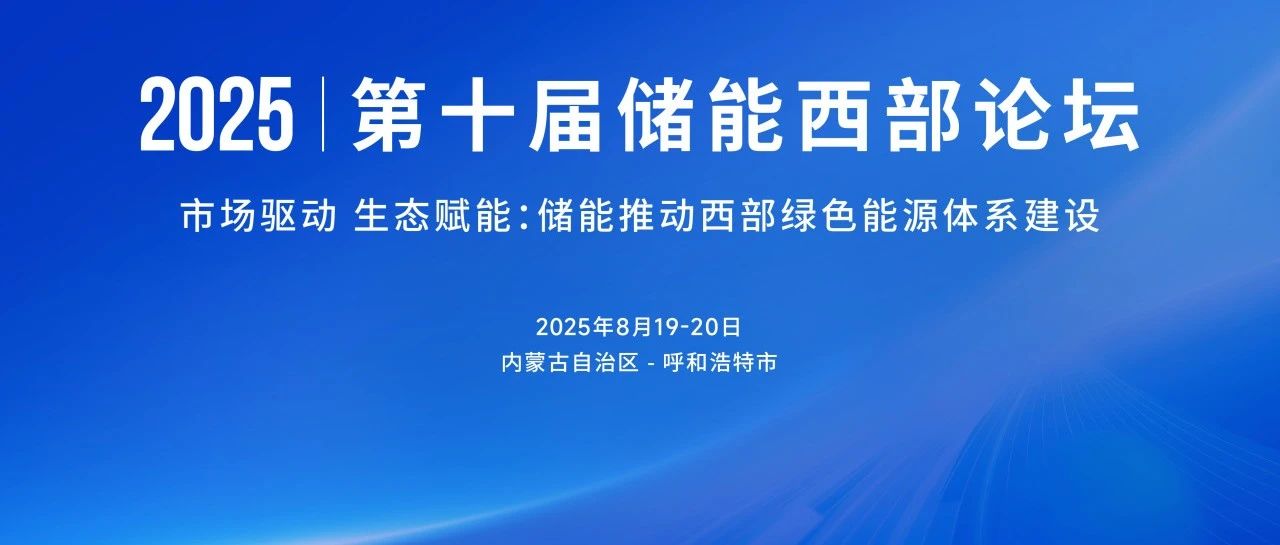
Core Viewpoint - The 10th Western Energy Storage Forum will be held on August 19-20, 2025, in Hohhot, Inner Mongolia, focusing on the integration of new energy and energy storage in China's western region, contributing to the national dual carbon strategy and the construction of a new power system [2][30]. Event Overview - The forum aims to create an innovative communication platform involving government, industry, academia, research, and application to explore new ideas for the development of new energy and energy storage in western China [2]. - The full agenda for the forum has been officially released, detailing various sessions and discussions [2]. Main Reports and Sessions - Keynote speeches will cover topics such as the new energy revolution and new energy storage technologies, the current status and trends of the new energy storage industry, and innovative practices in energy storage technology by major companies [10][11][12]. - The forum will feature multiple sub-forums focusing on new energy storage and electricity markets, innovative value creation in energy storage, and the exploration of unique energy storage markets in the western region [13][14][16]. Special Topics and Discussions - Discussions will include the integration of energy storage with renewable energy sources, innovative business models for zero-carbon parks, and the application of new energy storage technologies in data centers [19][22]. - A roundtable discussion will address the collaboration between large-scale energy storage and green hydrogen production, emphasizing the importance of stable green electricity supply [19]. Supporting Organizations - The forum is organized by several key institutions, including the China Energy Research Society, the Zhongguancun Energy Storage Industry Technology Alliance, and the Inner Mongolia Energy Storage Industry Promotion Association [24][30].
同力日升(605286):算电协同,乘势而升
Guotou Securities· 2025-08-13 15:37
Investment Rating - The report assigns a "Buy-A" investment rating with a target price of 45.45 CNY for the next six months [4][6]. Core Insights - The company has successfully transformed its business model, with significant growth in its new energy sector, which now serves as a key growth driver, surpassing traditional elevator business revenue [1][21]. - The implementation of the 136 document is expected to enhance the value of energy storage, with the introduction of a capacity price mechanism in Gansu province, which could be adopted nationwide, providing stable revenue for the energy storage industry [2][54]. - The company is strategically positioned to benefit from the green electricity revolution driven by the surge in AI computing power, with initiatives in data centers and green energy projects [3][55]. Summary by Sections 1. Dual Business Model Driving High-Quality Development - The company has diversified into the new energy sector through the acquisition of Beijing Tianqi Hongyuan, focusing on energy storage system integration and new energy power station development [15][16]. - In 2024, the new energy business revenue grew by 103.61% to 879 million CNY, accounting for 34.76% of total revenue, with a gross profit contribution of 64.75% [21][28]. - The company has successfully balanced the cyclical fluctuations of the elevator industry by expanding its new energy business [21][28]. 2. Policy-Driven Energy Storage Value Recovery - The cancellation of mandatory energy storage requirements is expected to shift the industry from price competition to product quality competition [40][51]. - Gansu province has introduced a capacity price mechanism for independent energy storage, which is anticipated to stabilize investment returns and promote sustainable development in the energy storage sector [54][55]. 3. Integrated Energy Supply Solutions - The increasing energy consumption of data centers, driven by AI, presents a significant opportunity for energy storage solutions [55][56]. - The integration of green electricity supply and independent energy storage is expected to create a synergistic revenue model, enhancing profitability for energy projects [63][64]. 4. Proprietary Technology and Product Barriers - The company has established a strong product barrier through self-developed technologies and a decade of industry experience, focusing on high reliability and energy efficiency in its energy storage products [66][68]. - The company holds 39 patents related to energy storage and has made significant investments in R&D, ensuring a competitive edge in the market [68].

天富能源: 新疆天富能源股份有限公司2025年半年度报告正文
Zheng Quan Zhi Xing· 2025-08-11 16:26
Core Viewpoint - The report highlights the financial performance of Xinjiang Tianfu Energy Co., Ltd. for the first half of 2025, indicating a decrease in revenue and net profit due to reduced electricity demand and increased tax expenses, while overall profit increased due to lower operating costs [1][2][3]. Company Overview and Financial Indicators - The company reported operating revenue of approximately 4.07 billion RMB, a decrease of 10.64% compared to the same period last year [2][3]. - Total profit reached approximately 346.38 million RMB, an increase of 9.36% year-on-year [2][3]. - Net profit attributable to shareholders was approximately 303.78 million RMB, down 3.00% from the previous year [2][3]. - The company’s net assets increased by 3.33% to approximately 7.70 billion RMB [2][3]. Business Operations - The company operates in the electricity and heat production and supply industry, which is crucial for the national economy and closely linked to the development of secondary industries [3][4]. - As of June 2025, the company had a controllable power generation capacity of 4,761 MW, including 2,890 MW from thermal power, 1,640 MW from photovoltaic, and 231 MW from hydropower [3][4]. - The company has a unique "combined heat and power" production method, providing centralized heating for the entire city of Shihezi, covering an area of 31.69 million square meters [3][4]. Market and Industry Context - The overall electricity consumption in China for the first half of 2025 was approximately 4,841.8 billion kWh, with a year-on-year growth of 3.7% [3][4]. - The company is positioned as the largest comprehensive energy listed company in the Xinjiang Production and Construction Corps, with a focus on electricity, heat, natural gas supply, and urban water supply [3][4]. - The company has exclusive rights to operate the natural gas business in Shihezi, enhancing its market position in the region [3][4]. Financial Performance Analysis - The decrease in operating revenue was primarily due to a reduction in electricity supply and income, which fell by 14.09% year-on-year [4][5]. - Operating costs decreased significantly due to lower fuel prices and reduced electricity purchase costs, contributing to the increase in total profit [4][5]. - The net cash flow from operating activities was approximately 226.22 million RMB, down 39.65% from the previous year, attributed to decreased revenue and increased accounts receivable [4][5]. Competitive Advantages - The company benefits from having the largest independent local power grid in the Xinjiang Production and Construction Corps, allowing effective management of electricity resources [6][7]. - The integration of power generation, supply, and scheduling enhances the company's ability to respond to market fluctuations and ensures stable energy supply [6][7]. - The company is strategically positioned to capitalize on the growing demand for clean energy, supported by favorable government policies and the region's abundant solar resources [6][7].

如何强化规划引领,加快电力系统低碳转型?专家这样看
Xin Hua Cai Jing· 2025-08-11 15:00
Core Viewpoint - The conference emphasized the need for a robust institutional framework and governance system to accelerate the low-carbon transition of the power sector in China, aligning with the country's dual carbon goals [1][2]. Group 1: Key Insights from the Conference - The conference was themed "Strengthening Planning Guidance, Accelerating Low-Carbon Transition in Power" and was supported by various organizations, highlighting the importance of planning in the energy transition [1]. - The chairman of the China Energy Research Society, Shi Yubo, noted that the total installed capacity of renewable energy in China has surpassed that of thermal power, marking a significant milestone [1]. - Shi Yubo outlined three key areas for future focus: enhancing the systematic and coordinated nature of planning, ensuring scientific and flexible planning, and promoting forward-looking and innovative planning to foster new technologies and business models [1][2]. Group 2: Challenges and Recommendations - The Vice Chairman of the China Electricity Council, An Hongguang, pointed out that the green and low-carbon development of electricity is essential for addressing climate change and achieving sustainable development, while also facing challenges such as renewable energy absorption and market mechanism adaptation [2]. - An Hongguang suggested improving the power system's adjustment capabilities, enhancing inter-provincial and inter-regional power flexibility, and promoting diverse applications of new energy storage technologies [3]. - The conference also released two reports focusing on the high-quality development of solar and wind power and enhancing regional power interconnectivity to support high proportions of renewable energy [3].
注册资本100亿元!山东铁投能源投资集团揭牌成立
Qi Lu Wan Bao· 2025-08-10 23:13
Group 1 - The establishment of Shandong Iron Investment Energy Group marks a significant step in accelerating the development of the new energy industry by Shandong Iron Investment Group [1] - The new energy sector is a key component of the "353" industrial development strategy, focusing on an integrated model of "wind, solar, nuclear, and storage" [1][2] - The company aims to achieve a target of "100 billion assets, 10 billion revenue, leading in the province, and competitive nationally" while enhancing operational capabilities and accelerating power trading [1][2] Group 2 - Shandong Iron Investment Energy Group has a registered capital of 10 billion yuan and oversees several subsidiaries, with a total installed capacity of 1.8 GW and a grid-connected capacity of 1.7 GW across 41 renewable energy stations [2] - The company will focus on the entire chain of "generation-storage-consumption" and aims to be a benchmark operator in the clean energy sector, emphasizing market-oriented projects and innovative integration of "transportation + energy" [3] - The operational strategy includes enhancing resource development, collaborative innovation, and operational support while pursuing both independent development and cooperative mergers and acquisitions [3]
招投标周报(7.28~8.5):招标12.1GWh,中标7.8GWh
鑫椤储能· 2025-08-06 06:28
Core Viewpoint - The article highlights the recent bidding and winning projects in the energy storage sector, indicating a growing trend in the integration of energy sources and storage systems across various provinces in China [1][2]. Bidding Section - The largest project is the EPC general contracting framework for the integrated energy storage project by Huahuo Energy, with a total bidding scale of 3 GWh covering Hebei, Jiangsu, and Shandong provinces. Each province has a bidding segment that includes 1 GW of solar, 1 GW of wind, and 1 GWh of storage [2]. - The bidding requirements specify a maximum of five candidates per segment, with each candidate allocated 200 MW for solar, 200 MW for wind, and 200 MWh for storage. The maximum bidding prices are set at 3.8 yuan/W for wind, 2.5 yuan/W for solar, and 0.68 yuan/Wh for storage [2]. Winning Section - The lowest winning bid for the storage system was 0.415 yuan/Wh, submitted by Beijing Tiancheng Tongchuang for a shared storage project with a total scale of 100 MW/400 MWh, amounting to a total project price of 16.6 million yuan [3][6]. Project Statistics - A detailed table lists various bidding projects, including dates, categories, project types, investors, and installed capacities. Notable projects include: - Huahuo Energy's integrated energy project in Guangdong with a capacity of 3 GWh [4]. - Ningxia Zhongying Energy's shared storage project with a capacity of 200 MW/800 MWh [4]. - Xinjiang's independent storage projects with capacities of 100 MW/400 MWh [4]. Winning Project Statistics - A table summarizes winning projects, including: - A wind power project in Guangxi with a capacity of 150 MW, won by BYD with a bid price of 0.46 yuan/Wh [6]. - An independent storage project in Henan with a capacity of 100 MW/300 MWh, won with a bid price of 1.015 yuan/Wh [6]. - A shared storage project in Shandong with a capacity of 100 MW/400 MWh, won at a price of 0.415 yuan/Wh [6].

上海市人工智能CVC基金发布,首期总规模30亿元;咸宁长证高新产业投资母基金成立,总规模30亿元丨07.28-08.03
Sou Hu Cai Jing· 2025-08-04 08:11
Group 1 - The establishment of the Xianning Changzheng High-tech Industry Investment Fund has a total scale of 3 billion yuan, focusing on local advantageous industries such as health, electronic information, green energy, and new materials [1] - The Pudong New Area has launched a 2 billion yuan artificial intelligence seed fund aimed at supporting early-stage innovative talent and technologies [1] - The Fujian provincial government is selecting fund managers for the Sci-tech Relay S Fund, with a target scale of no less than 5 billion yuan [2] Group 2 - Shanghai's three leading industry mother funds are selecting the third batch of sub-funds to support original innovation and results transformation in integrated circuits, biomedicine, and artificial intelligence [2] - The Hubei humanoid robot industry investment fund has a total scale of 10 billion yuan, focusing on humanoid robots and artificial intelligence [2] - The Nanchong City private equity investment fund has completed registration with a total scale of 1 billion yuan, focusing on high-end machinery manufacturing [3] Group 3 - The Shanghai Artificial Intelligence CVC Fund has a first phase total scale of 3 billion yuan, aiming to create a comprehensive financial empowerment system for artificial intelligence [3] - The Net-Load Energy Fund has been established with a total scale of 3 billion yuan, focusing on integrated energy projects [3] - The Sichuan Digital Culture Fund has successfully completed registration with a total scale of 254 million yuan, focusing on digital culture and economy [4] Group 4 - The Kaihui (Dassault) Digital Industrial Fund has been established in Shanghai, focusing on digital and intelligent innovation in the industrial sector [4] - Aojie Technology plans to invest in a private equity fund with a total scale of 2.11 billion yuan, targeting key industries such as integrated circuits and biomedicine [4] - The National Development and Reform Commission has released draft guidelines for government investment funds, aiming to enhance investment direction and evaluation management [4]