
创新驱动

Search documents
中国经济圆桌会丨坚持创新驱动,加紧培育壮大新动能
Xin Hua Wang· 2025-12-30 12:09
Core Viewpoint - The director of the Chinese Academy of Fiscal Sciences, Yang Zhiyong, emphasized the importance of adhering to innovation-driven strategies and accelerating the cultivation and expansion of new growth drivers [1] Group 1 - The focus on innovation is crucial for sustaining economic growth in China [1] - There is a need to foster and strengthen new economic drivers to adapt to changing market conditions [1]
中国旭阳集团(01907):创新赋能厚植成长韧性综合用力扩张发展空间
智通财经网· 2025-12-30 10:07
Core Insights - In 2025, China Xuyang Group focuses on innovation-driven growth and service leadership, achieving significant advancements in core coking operations, chemical new materials, and high-purity hydrogen sales, while expanding its international business [1] Group 1: Business Expansion and Internationalization - The company launched its 3.2 million tons/year coking project in Indonesia in July 2023, establishing long-term strategic partnerships with major steel companies across Southeast Asia, South America, India, and Europe [2] - Xuyang's new subsidiary in Brazil, established on August 19, 2025, marks its first office in the Americas, enhancing its international presence and service capabilities across Latin America [3] - The company has set up 11 overseas subsidiaries and offices in regions including Hong Kong, Indonesia, Singapore, and Japan, covering 41 countries and regions [3] Group 2: Innovative Developments - Xuyang has successfully developed and launched a domestic first-of-its-kind industrialized production facility for amino alcohol, achieving a production capacity of 5,000 tons/year and breaking foreign technology monopolies [6][7] - The amino alcohol product has been recognized for its high purity and stability, gaining traction in various high-end applications, including renewable energy batteries and biomedicine [7] Group 3: Hydrogen Production and Sustainability - The company expects to achieve a record high sales volume of approximately 24 million standard cubic meters of high-purity hydrogen in 2025, solidifying its position as the second-largest supplier in China and the largest in the Beijing-Tianjin-Hebei region [8] - Xuyang's hydrogen production has met the highest global certification standards for clean hydrogen, with a carbon emission intensity of 0.49 kg CO₂e/kg H₂, significantly below the EU's limit [8] Group 4: Financial Performance and Market Recognition - In a significant milestone, Xuyang returned 100% of its net profit to investors in 2025, alongside substantial share buybacks and increases in holdings by executives and major shareholders [9] - The company has received multiple accolades for its sustainable development and investor relations, including recognition in the "Top 100 Chinese Brand Internationalization" list and various awards for ESG practices [9] Group 5: Future Development Plans - Xuyang has outlined a new five-year development plan (2026-2030) and a ten-year framework (2026-2035) to guide its strategic direction and maintain resilience in a complex environment [10]
环球新材国际斩获ESG双项荣誉 投资价值与领袖影响力获认可
Zheng Quan Ri Bao Wang· 2025-12-30 08:49
Core Viewpoint - Global New Materials International Holdings Limited has been recognized for its outstanding performance in globalization, sustainable development, and value creation, winning the "ESG Excellence Investment Value Listed Company Award" and its chairman receiving the "ESG Excellence Influence Business Leader Award" [1] Group 1: Awards and Recognition - The award ceremony for the 2025 Annual Listed Company Excellence ESG Value List was held in Hong Kong, co-hosted by the Global Business Alliance, Hong Kong Business Daily, and Hong Kong Economic Times [1] - The evaluation criteria for the ESG value list include six dimensions: strategic governance, environmental friendliness, social responsibility, value co-creation, innovation leadership, and sustainable development [1] - The dual awards received by Global New Materials International reflect the company's strength and high recognition in the capital market, highlighting its benchmark position in the sustainable development of the new materials industry [1] Group 2: Financial Performance - Global New Materials International has maintained a high-quality growth trajectory, with a compound annual growth rate (CAGR) of 36.58% in revenue from 2017 to 2024, and gross margin increasing from approximately 44% to 53.34% by 2024 [2] - In the first half of 2025, the company achieved revenue of 912 million yuan, a year-on-year increase of 17.7%, while the non-net profit reached 260 million yuan, a significant increase of 54.4% year-on-year [2] - The company's financial performance is attributed to improved governance efficiency and a solid global supply chain, which creates a dual moat for raw material supply and product channel expansion [2] Group 3: Innovation and Product Development - The company is committed to driving industrial upgrades through innovation and aims to provide more sustainable high-performance material solutions [3] - Global New Materials International has established a brand matrix consisting of SUSONITY, CHESIR, and CQV, covering various applications such as cosmetics, automotive coatings, new energy, and high-end industrial manufacturing [3] Group 4: Global Strategy and Operational Efficiency - The ongoing effects of mergers and acquisitions are laying a solid foundation for the long-term development of ESG, with initial establishment of cross-regional collaboration mechanisms and global R&D team technical sharing [4] - The company is enhancing its global production network, with projects like the second phase of the Seven Color Pearl project gradually coming online and the Tonglu synthetic mica project entering the equipment installation phase [4] - A differentiated pricing strategy is being implemented across the three major business platforms, with adjustments ranging from 3% to 30%, optimizing product value and market demand [4] Group 5: Market Position and Future Outlook - The pearl pigment industry is characterized by high growth potential, low price sensitivity, and strong brand moat, making it a rare "strong consumer attribute" sector [5] - Global New Materials International has become an industry leader through strategic vision and cross-border mergers, entering the high-end market and unlocking growth potential [6] - The chairman emphasizes that mergers are not the end but the starting point for collaborative creation, aiming to integrate Asian speed with European precision in various fields [7] - The company aims to deepen ESG practices through technological innovation, capacity upgrades, and global layout, striving for breakthroughs in green materials, beauty technology, automotive coatings, and high-end industrial applications [7]
大连市委经济工作会议举行
Zhong Guo Fa Zhan Wang· 2025-12-30 07:14
坚持对外开放,着力建设内畅外联的高水平开放门户枢纽。提升开放平台能级,加快自贸片区整合提 升,稳步扩大制度型开放;千方百计稳外资稳外贸,健全外商投资服务保障体系,优化产业链供应链跨 境布局,深度参与高质量共建"一带一路";增强"三个中心"功能,进一步优化服务、提高效率、降低成 本,畅通东北海陆大通道,提高金融服务实体经济质效。 坚持协调发展,着力构建城乡融合、陆海统筹的发展格局。扎实推进乡村全面振兴,提高农业现代化水 平,建设宜居宜业和美乡村;推进以县城为重要载体的城镇化建设,推动县域经济高质量发展,培育特 色优势产业集群;加快建设现代海洋城市,坚持保护开发并重,坚持疏近用远,推进海洋渔业向深远海 集约高端转型,发展壮大海工装备、船舶制造、海岛旅游等产业。 中国发展网讯 记者施文郁报道 近日,大连市委经济工作会议举行。会议全面贯彻落实中央经济工作会 议及省委经济工作会议精神,通报全市项目建设和赛马评比情况,总结今年经济工作,分析当前经济形 势,部署明年经济工作。 会议指出,今年以来,全市上下一体贯彻习近平总书记关于东北、辽宁及大连全面振兴的重要讲话和重 要指示精神,全面落实党中央决策部署及省委工作要求,锚定" ...
专访刘元春:2026年继续强化创新驱动布局,内需有望筑底回稳
2 1 Shi Ji Jing Ji Bao Dao· 2025-12-30 07:07
21世纪经济报道记者周潇枭北京报道2025年前三季度我国经济同比增长5.2%,尽管四季度经济面临下 行压力,但是全年有望实现5%左右的增长目标。 具体来看,尽管面临国际经贸斗争,2025年1-11月份我国货物出口同比增长6.2%,实现较高增长,出口 表现韧性十足。1-11月份社会消费品零售总额同比增长4%,服务零售额同比增长5.4%,消费仍在持续 恢复,尤其是升级类服务消费增长较快。1-11月份,固定资产投资同比下降2.6%,高技术产业投资维持 较高增长。 中央经济工作会议指出,2026年要更好统筹国内经济工作和国际经贸斗争,实施更加积极有为的宏观政 策,持续扩大内需、优化供给,因地制宜发展新质生产力,纵深推进全国统一大市场建设,持续防范化 解重点领域风险,着力稳就业、稳企业、稳市场、稳预期,推动经济实现质的有效提升和量的合理增 长。 《21世纪》:2025年前三季度经济增长5.2%,预计四季度经济增速如何?如何看待2025年经济表现? 刘元春:按照大家的核算,从需求端来看,四季度经济增速预计在4.5%左右;供给端表现会好一些, 像四季度工业增加值增速预计在4.8%左右,因此最终核算下来,四季度GDP增速预计 ...
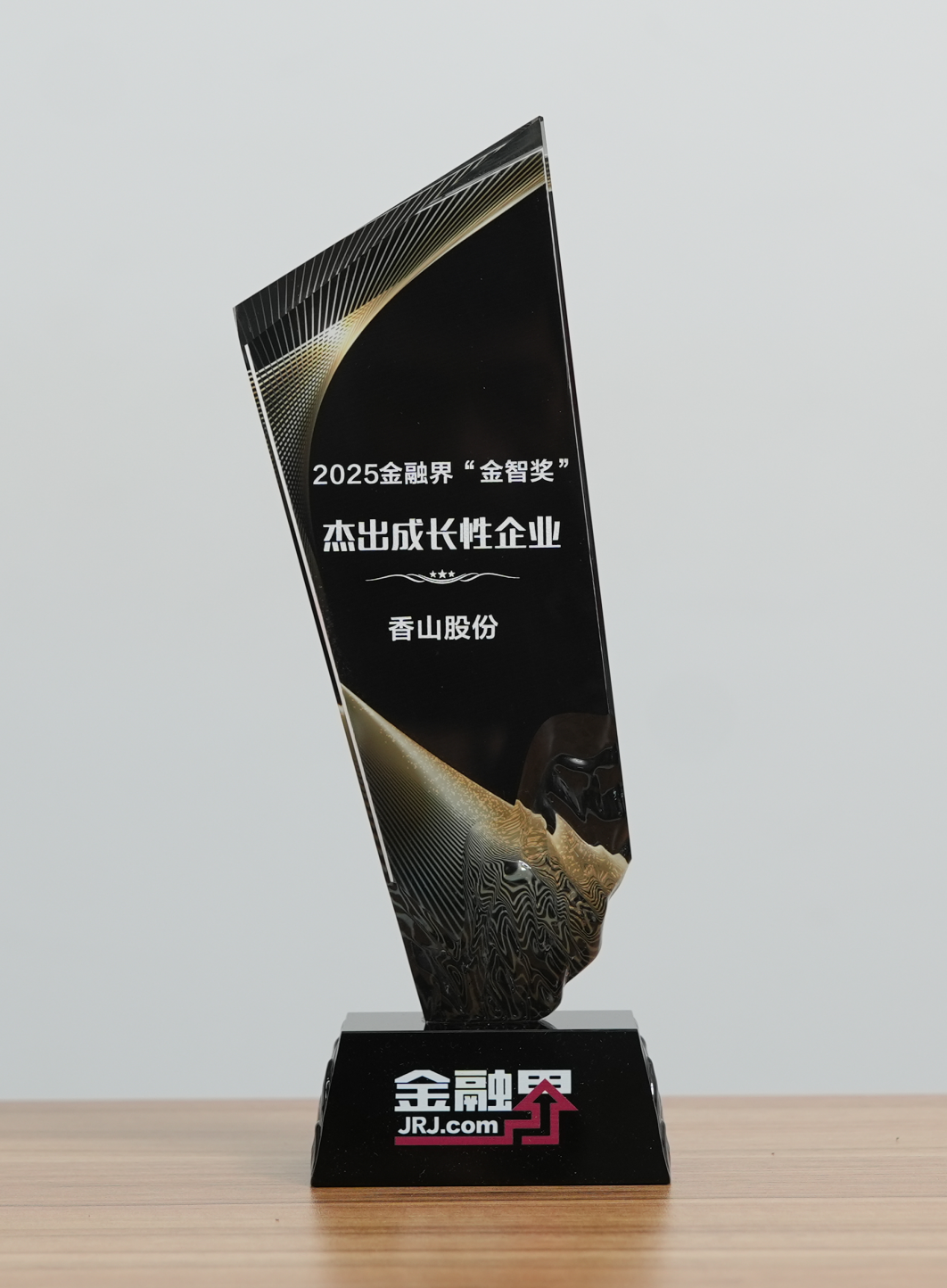
跨界培育创新增长动能!香山股份荣获第十四届金融界“金智奖”杰出成长性企业
Jin Rong Jie· 2025-12-30 02:53
Group 1 - The "Qihang·2025 Financial Summit" was successfully held in Beijing, focusing on the theme of "New Starting Point, New Momentum, New Journey," gathering hundreds of leaders and guests from regulatory bodies, industry associations, financial institutions, listed companies, and media [1] - The 14th Financial界 "Golden Intelligence Award" results were announced, with Xiangshan Co., Ltd. awarded as the "Outstanding Growth Enterprise" [1][3] - The "Golden Intelligence Award" aims to establish high-quality development benchmarks, guiding listed companies to focus on their core businesses, continue innovation, and fulfill social responsibilities, thereby promoting capital concentration towards quality enterprises [3] Group 2 - Xiangshan Co., Ltd. was recognized for its continuous breakthroughs in core business upgrades, innovation-driven development, and layout in emerging sectors, demonstrating its strong growth potential and core competitiveness [4] - The company has developed a dual main business structure of "automotive parts + new energy charging and distribution," focusing on smart cockpit components and core tracks in new energy charging and distribution systems [4] - Xiangshan Co., Ltd. emphasizes innovation-driven principles, continuously focusing on core technology research and development, and exploring cross-industry applications in emerging fields such as new energy and low-altitude economy [4]

世界最大直径水下盾构隧道车道板施工突破3000米!
Qi Lu Wan Bao· 2025-12-30 02:38
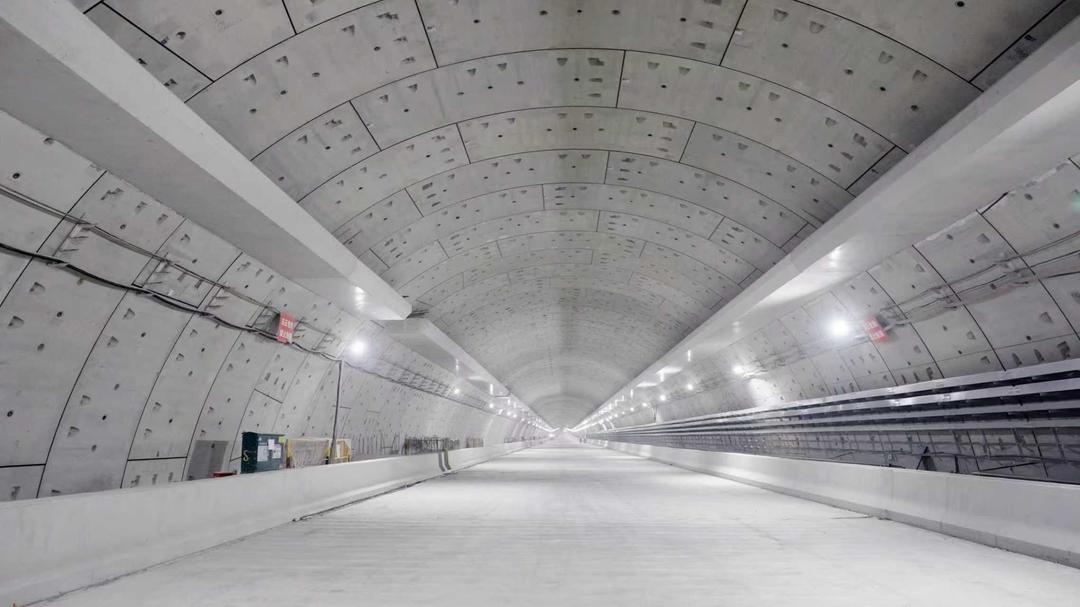
Core Viewpoint - The construction of the Jinan Huanggang Road Yellow River Tunnel has successfully reached a significant milestone, with over 3000 meters of the upper deck structure completed, marking the transition into a critical phase for the tunnel's internal structure construction, which is essential for its timely opening [1][3] Group 1: Project Overview - The Jinan Huanggang Road Yellow River Tunnel is the first single-hole double-layer shield tunnel in China, featuring a dual-layer tunnel layout [3] - The upper deck consists of six lanes, with a total length of 3290 meters and a cross-span of 13 meters, designed to support both vehicle loads and auxiliary facilities [3] Group 2: Construction Techniques - The total volume of concrete used for the upper deck is over 30,000 cubic meters, indicating the complexity and scale of the project [3] - The project team has implemented innovative solutions, including 12 hydraulic walking formwork vehicles and modular design, to enhance efficiency and reduce construction time by over 30% compared to traditional methods [5] Group 3: Quality and Safety Management - A strict three-inspection system is in place to ensure quality control at every stage of construction, with detailed records maintained for materials and processes [5] - Safety management measures include dividing the hydraulic vehicles into three operational zones, assigning responsibilities, and conducting thorough inspections of critical systems to ensure comprehensive safety oversight [6] Group 4: Impact and Significance - Once completed, the tunnel is expected to reduce commuting time between the two banks from 40 minutes to just 4 minutes, significantly enhancing Jinan's urban connectivity and supporting national strategic initiatives [6]
在奋力谱写中原大地推进中国式 现代化新篇章中挑大梁、走在前
Zheng Zhou Ri Bao· 2025-12-30 01:01
Group 1: Economic Performance - The city's economy has shown stable and orderly operation, maintaining a good development trend with an industrial added value growth of 8.8% from January to November, with 70% of 38 major industry categories experiencing growth [1] - Fixed asset investment has increased by 4%, ranking third among national central cities [1] - The total number of market entities in the city has reached 2.226 million [1] Group 2: Innovation and Technology - The establishment of the Central Plains Science and Technology City Innovation Alliance and the Harbin Institute of Technology Zhengzhou Higher Research Institute has been announced, with over 15,000 technology-based enterprises and 274,000 young talents retained [1] - The intensity of R&D investment in society is expected to reach 3% [1] Group 3: Manufacturing and Industry - By the end of November, the city's total vehicle production reached 956,300 units, a year-on-year increase of 16.52%, with 508,000 units being new energy vehicles [1] - The digital economy scale is expected to exceed 800 billion yuan for the year [1] Group 4: Logistics and Trade - Zhengzhou Airport's cargo and mail throughput exceeded 1 million tons, making it a member of the global "million-ton club" for air cargo [1] - The China-Europe Railway Express has operated over 3,000 trains, a year-on-year increase of 50%, and cross-border e-commerce transactions reached 160 billion yuan, ranking among the top in the country [1] Group 5: Governance and Social Welfare - The governance system led by party building has been continuously improved, enhancing social welfare and maintaining social stability [1]
前11月“8+9”相关产业新设企业超百万户
Xin Lang Cai Jing· 2025-12-29 19:18
Core Insights - The "8+9" related industries in China have shown sustained growth in vitality, with a total of 1.01 million new enterprises established from January to November this year, representing a 9% increase compared to the same period last year [1][2] - The "8 emerging industries," including new generation information technology, high-end equipment manufacturing, and new materials, saw 775,000 new enterprises established, a 2.6% year-on-year increase, continuing to play a foundational role [1] - The "9 future industries," represented by future health, future intelligence, and future energy, performed exceptionally well with 283,000 new enterprises established, marking a significant 35.8% year-on-year growth, indicating substantial development potential and growth momentum [1] Industry Performance - In specific sectors, certain cutting-edge fields experienced explosive growth, with the "generative artificial intelligence" sector seeing new enterprise numbers increase by over 29 times; the "civil aviation" sector followed closely with a growth rate of 108.3%; and the "humanoid robotics" sector also showed strong activity with a 48.9% year-on-year increase [1] - These three sectors have emerged as leaders in driving growth within future industries [1] Strategic Implications - The proportion of high-tech and strategic emerging industry enterprises represented by the "8+9" industries continues to rise, facilitating the transition of Chinese enterprises towards new and stronger developments, and further advancing the country's industrial system towards the mid-to-high end of the global value chain [2] - The ongoing improvement of supporting policies and strong market demand is expected to sustain the positive development momentum of these industries [2]
万达轴承:聚力攻关核心技术
Zheng Quan Shi Bao· 2025-12-29 18:53
Core Viewpoint - Wanda Bearing, as the first stock in the "920 segment" of the Beijing Stock Exchange, is committed to deepening its main business and expanding into new areas, focusing on product innovation and customer development [1][2] Group 1: Company Development Strategy - Wanda Bearing is the largest manufacturer of specialized bearings for forklifts in China and has established long-term stable partnerships with top global industrial vehicle manufacturers [1] - The company is actively developing specialized bearings for harmonic reducers and RV reducers, aiming to capture opportunities in the rapidly growing humanoid robotics sector [1] Group 2: Innovation and Market Position - The company emphasizes the importance of innovation as a source of vitality and a core support for high-quality development in the capital market, continuously optimizing production processes and focusing on core technological breakthroughs [2] - Wanda Bearing is committed to a "specialized, refined, distinctive, and innovative" development path, increasing R&D investment to enhance product competitiveness and market share [2]