
培育壮大新动能

Search documents
未知机构:杨畅2026年2月政治局会议通稿与上年12月的比较分析事件2-20260228
未知机构· 2026-02-28 02:35
Summary of the Conference Call Industry or Company Involved - The document discusses the political landscape and economic policies of China, specifically focusing on the Central Committee's meeting held on February 27, 2026. Core Points and Arguments 1. **Domestic and International Coordination**: The new statement emphasizes the need to coordinate both domestic and international situations, removing the term "struggle" from previous communications, indicating a softer approach to international relations [1] 2. **Fiscal and Monetary Policy**: The commitment to continue implementing a more proactive fiscal policy and moderately loose monetary policy remains unchanged from the previous statement, indicating consistency in economic strategy [1] 3. **Reform Measures**: There is a stronger emphasis on the need for reform measures to be coordinated with macroeconomic policies, highlighting the importance of reform in driving economic growth [1] 4. **Domestic Market Development**: The new statement stresses the importance of building a strong domestic market, with the addition of the term "focus" to underline its significance [1] 5. **Innovation and Technology**: The call to accelerate the cultivation of new growth drivers and promote high-level technological self-reliance has been strengthened, indicating a shift towards prioritizing innovation [1] 6. **Deepening Reforms**: The emphasis on continuously deepening reforms in key areas suggests a long-term commitment to enhancing the quality of economic development [1] 7. **Opening Up**: The statement calls for further expansion of high-level opening up, indicating a proactive approach to international cooperation and trade [1] 8. **Rural Revitalization**: There is a solid commitment to advancing comprehensive rural revitalization and promoting new urbanization and regional coordinated development, with a specific focus on rural areas [1] 9. **Improving Livelihoods**: The new statement emphasizes a greater effort to guarantee and improve people's livelihoods, reflecting a commitment to social welfare [1] 10. **Green Transition**: The call to accelerate the comprehensive green transition indicates a strong commitment to environmental sustainability [1] 11. **Risk Prevention and Safety**: There is an increased focus on strengthening risk prevention and safety capabilities in key areas, highlighting the importance of stability in economic policies [1] 12. **Government Self-Improvement**: The statement emphasizes the need for the government to strengthen its own construction and firmly establish a correct view of performance, indicating a focus on governance quality [1] Other Important but Possibly Overlooked Content - The changes in wording and emphasis reflect a strategic shift in the government's approach to economic management and social issues, which may have implications for investors and businesses operating in China [1]
2026年政策密码
Jing Ji Guan Cha Bao· 2026-02-25 05:50
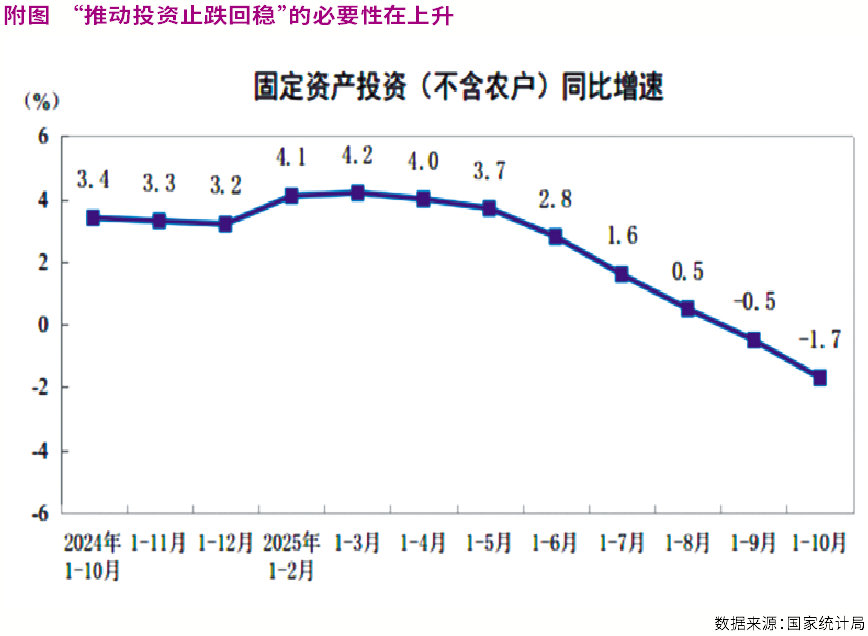
Group 1: Policy Focus for 2026 - The core focus for 2026 includes expanding domestic demand, restructuring economic drivers, and stabilizing the real estate market, as indicated by multiple government meetings [1] - Key terms for 2026 include "cultivating and strengthening new driving forces," emphasizing innovation and technology as central to economic growth, particularly in emerging industries like AI and digital economy [2][4] - The government aims to address "involution" in competition, promoting innovation and quality over price wars and resource wastage, with a focus on various sectors including aviation and new energy vehicles [3][4] Group 2: Consumer and Investment Strategies - The emphasis on boosting consumption is critical, with consumption contributing 52.0% to economic growth in 2025, and expected to grow steadily in 2026 due to policy support and improved consumer confidence [5] - Investment strategies for 2026 include stabilizing investment levels, with a noted 3.8% decline in fixed asset investment in 2025, and a focus on infrastructure and social welfare projects to enhance investment [8][9] Group 3: Human-Centric Investment - The concept of "investing in people" has emerged, focusing on directing resources towards human development and welfare, particularly for vulnerable groups [6][7] - This approach aims to enhance public service access and improve the quality of life for various demographics, including low-income families and the elderly [7] Group 4: Regulatory Environment - Strengthening compliance and regulatory measures is a priority, with increased scrutiny on platform economies and tax compliance expected in 2026 [10] - Companies will face higher compliance costs, necessitating investments in risk management and regulatory adherence, particularly in sectors utilizing AI and digital platforms [10]

牢牢把握培育壮大新动能的两个关键
Xin Lang Cai Jing· 2026-02-08 18:31
Core Viewpoint - The Central Economic Work Conference emphasizes "innovation-driven development and accelerating the cultivation of new momentum" as a key task for economic work in 2026 [1] Group 1: Key Tasks and Focus Areas - Accelerating the cultivation of new momentum is a systematic project that requires coordinated advancement of technological innovation, industrial innovation, and scenario innovation [1] - The focus should be on the deep integration of technological innovation and industrial innovation, addressing institutional barriers, and solving the disconnection between the innovation chain and the industrial chain [1] - Systematic optimization of resource allocation, collaboration between industry, academia, and research, and industrial layout mechanisms are essential to fully connect the transformation channels from strong technology to strong industry and strong economy [1] Group 2: Implementation Strategies - The approach should be tailored to local conditions, leveraging existing foundations to cultivate and expand new momentum [1] - Regions should develop differentiated strategies based on their development levels, foundational conditions, and practical situations, focusing on innovation priorities and industrial layouts [1] - Active exploration in practice is encouraged to gradually form distinctive, vibrant, and sustainable new momentum cultivation models [1]
加紧培育壮大新动能的作用与关键
Jing Ji Ri Bao· 2026-01-14 22:10
Core Viewpoint - The central economic work conference emphasizes "innovation-driven development" as a key task for 2026, aiming to cultivate and strengthen new economic drivers through technological breakthroughs and industrial upgrades, which are essential for both short-term growth and long-term international competitiveness [1][2]. Group 1: Importance of New Economic Drivers - The policy framework for "cultivating and strengthening new economic drivers" has become increasingly clear, with a strong emphasis on the urgency of this task highlighted in 2025 [2]. - New economic drivers are crucial for achieving both qualitative improvements and reasonable quantitative growth in the economy, especially as traditional drivers show diminishing returns [3]. Group 2: Supply and Demand Balance - Cultivating new economic drivers is essential for achieving a higher level of supply-demand balance, which is vital for a smooth national economic cycle [4]. - Current imbalances in supply and demand are linked to insufficient domestic consumption and innovation lagging behind, necessitating the development of new drivers to meet evolving consumer needs [4]. Group 3: Global Context and Competition - The need to cultivate new economic drivers is also a response to increasing global technological competition and the urgency of seizing opportunities presented by the latest technological revolution [5]. - Countries are intensifying their strategic focus on technological innovation, making it critical for any nation to quickly achieve industrialization of technological innovations to maintain competitive advantages [5]. Group 4: Innovation Types - The cultivation of new economic drivers encompasses three main types of innovation: technological innovation, industrial innovation, and scenario innovation, which are interconnected and essential for driving economic growth [6][10]. - Technological innovation serves as the primary engine for cultivating new drivers, focusing on breakthroughs in key common technologies [7]. - Industrial innovation is crucial for matching large-scale production with consumer demand, requiring a supportive ecosystem and innovative business models [8]. - Scenario innovation is vital for connecting technological achievements with market needs, emphasizing the importance of real-world applications [9]. Group 5: Integration and Local Adaptation - A systematic approach is necessary for cultivating new economic drivers, focusing on the deep integration of technological and industrial innovation [11]. - The strategy must be tailored to local conditions, encouraging regions to explore development paths that align with their unique circumstances and capabilities [12][13].
中国经济圆桌会丨坚持创新驱动,加紧培育壮大新动能
Xin Hua Wang· 2025-12-30 12:09
Core Viewpoint - The director of the Chinese Academy of Fiscal Sciences, Yang Zhiyong, emphasized the importance of adhering to innovation-driven strategies and accelerating the cultivation and expansion of new growth drivers [1] Group 1 - The focus on innovation is crucial for sustaining economic growth in China [1] - There is a need to foster and strengthen new economic drivers to adapt to changing market conditions [1]
中央经济工作会议:坚持内需主导指引资本布局
Xin Lang Cai Jing· 2025-12-23 12:14
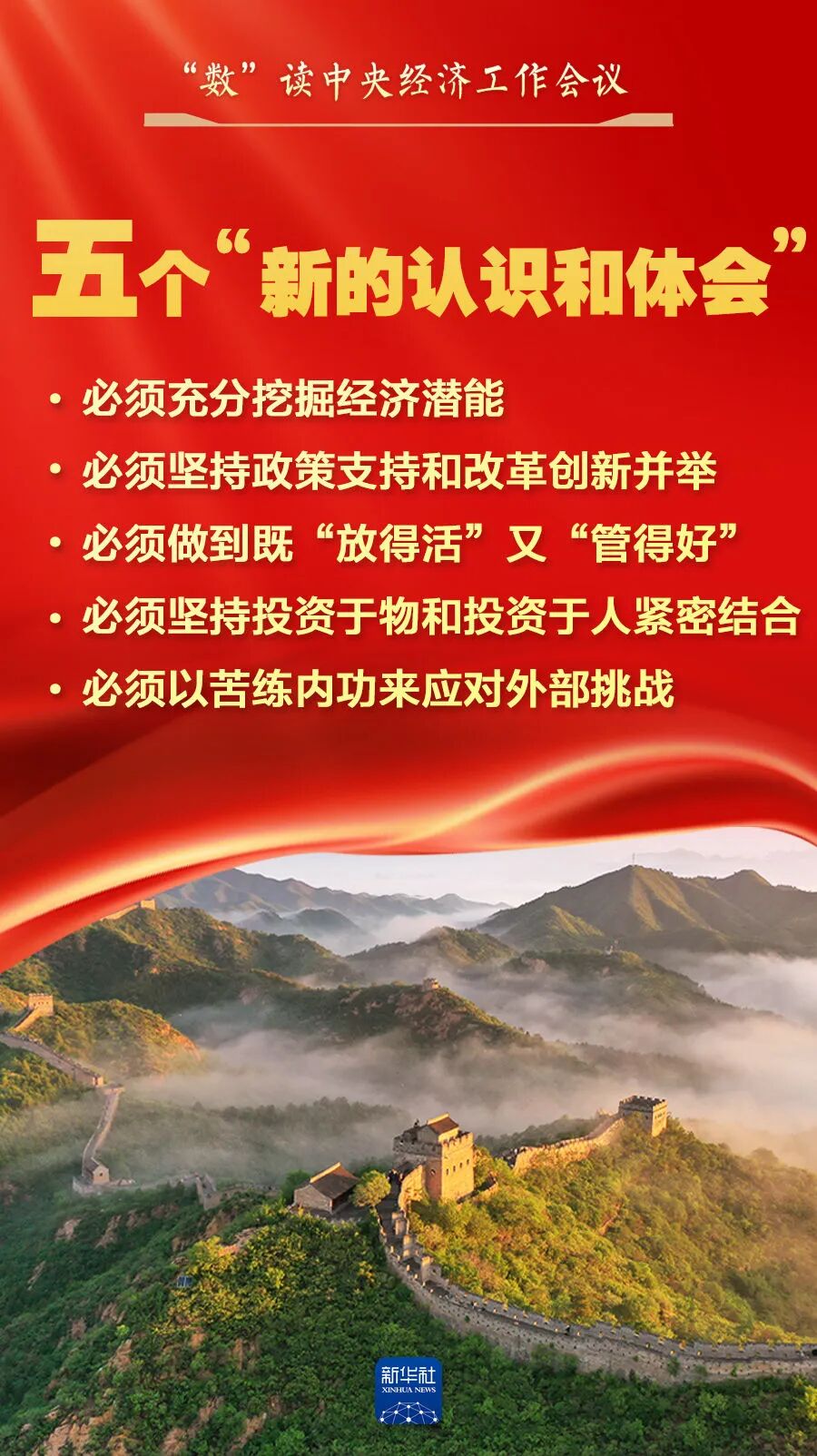
Core Viewpoint - The Central Economic Work Conference has outlined a comprehensive plan for economic work in 2026, emphasizing the implementation of more proactive macro policies and detailing eight key areas of focus, including building a strong domestic market and fostering new growth drivers [2][22]. Group 1: Methodology and Policy Direction - The conference introduced the "Five Musts" methodology, which includes fully tapping economic potential, integrating policy support with reform innovation, balancing market freedom with effective governance, combining investments in physical and human capital, and honing internal capabilities to face external challenges [3][24][26]. - The policy tone for 2026 is set to be "more proactive and effective," with a focus on maintaining continuity in fiscal and monetary policies, which is crucial for stabilizing market expectations and enhancing confidence [7][27]. Group 2: Key Focus Areas - The conference highlighted the importance of expanding domestic demand as a primary economic task, addressing the challenges posed by external uncertainties and the imbalance between supply and demand [9][29]. - Specific measures to boost consumption include implementing special actions to stimulate consumption, developing urban and rural income increase plans, and enhancing the supply of quality goods and services [10][30][31]. Group 3: Investment Strategies - The conference aims to stabilize investment by increasing central budget investments, optimizing local government bond management, and leveraging new policy financial tools to invigorate private investment [12][33][34]. - Emphasis is placed on high-quality urban renewal as a dual approach to stabilize investment and improve living conditions [15][34]. Group 4: Innovation and New Growth Drivers - The conference stresses the need for innovation-driven growth, focusing on establishing international technology innovation centers in key regions and enhancing the role of enterprises in innovation [16][35]. - It also calls for the development of key manufacturing industry chains and the expansion of "Artificial Intelligence +" initiatives, indicating a shift towards a more supportive environment for technological advancements [17][36]. Group 5: Market Outlook and Capital Allocation - The market is expected to experience a structural shift, with a focus on technology, consumer sectors, and financial services as key areas for investment [18][39]. - Analysts suggest that the upcoming year may see a resurgence in growth-oriented stocks, particularly in sectors like AI applications, semiconductors, and renewable energy [19][38].
中央经济工作会议定调!这两个字有深意
Ke Ji Ri Bao· 2025-12-14 10:16
Core Insights - The central economic work conference emphasized the importance of "accelerating the cultivation and expansion of new driving forces" as a key task for 2026, highlighting the urgency and proactivity in fostering new economic momentum [1][3]. Group 1: Strategic Significance - The strategic significance of cultivating new driving forces has become more pronounced, as the country faces external pressures and internal challenges, achieving qualitative improvements and reasonable growth in the economy [3]. - The need to shift away from traditional economic growth models and develop a modern industrial system that is self-controlled and competitive is underscored, with new quality productivity being a key driving force [3]. Group 2: Pathways and Measures - The conference proposed specific measures such as "formulating a plan for integrated development of education, technology, and talent," which aims to create a virtuous cycle of technology leadership, talent support, and educational assurance [4]. - The establishment of international science and technology innovation centers in regions like Beijing, Shanghai, and the Guangdong-Hong Kong-Macau Greater Bay Area is intended to enhance original innovation capabilities and attract top talent [4]. Group 3: Technological Foundation - The technological foundation for cultivating new driving forces is solid, with significant advancements in various sectors, including a nearly trillion-yuan scale in the biomanufacturing industry and continued global leadership in the electric vehicle sector [6]. - In 2024, China's national comprehensive innovation capability ranked 10th globally, with R&D expenditure exceeding 3.6 trillion yuan, and a notable increase in the contribution of the "three new" economy to GDP, which reached 18% [6].

华泰期货董事长赵昌涛:实干担当开新局 奋勇争先谱新篇
Zheng Quan Ri Bao Wang· 2025-12-12 08:04
Core Viewpoint - The Central Economic Work Conference held on December 10-11 in Beijing provides guidance for China's economic high-quality development, emphasizing the importance of risk management and innovation in the futures industry [1] Group 1: Economic Strategy and Risk Management - The conference highlights the need to "build a strong domestic market," positioning it as a key task for the upcoming year. The company aims to enhance risk management support for the real economy by leveraging the futures market's capabilities [1] - The company plans to innovate its business model and upgrade services to provide comprehensive hedging solutions that cover the entire supply chain, thereby enhancing operational resilience for enterprises and stabilizing market supply [1] Group 2: Digital Transformation and New Growth Drivers - The conference calls for "innovation-driven development" and the company identifies digital transformation as a core path for innovation. It will utilize its self-developed intelligent hedging system "Tianji" to integrate AI and big data technologies into risk identification and decision-making processes [2] - The goal is to create an open, collaborative, and intelligent derivatives service ecosystem that enhances risk management efficiency and translates technological innovation into practical capabilities for supporting the real economy [2] Group 3: Coordinated Development and Rural Revitalization - The conference emphasizes "coordinated development" and the company is committed to extending financial services to rural areas. It aims to optimize the "insurance + futures" model and integrate it with credit financing and order agriculture [2] - The company will implement the "Five Major Revitalizations" to stabilize the supply and prices of important agricultural products, contributing to common prosperity through futures solutions [2] Group 4: Green Finance and Sustainable Development - The conference includes a focus on "dual carbon" strategies, and the company aligns its business layout with green development strategies by providing customized risk management services for green industries [3] - The company will explore service models for carbon emission rights and green electricity derivatives, assisting traditional industries in managing market risks during their green transition and directing financial resources towards low-carbon sectors [3]
权威解读!中央经济工作会议这些提法,很新!
Shang Hai Zheng Quan Bao· 2025-12-11 14:51
Core Insights - The Central Economic Work Conference held on December 10-11, 2025, outlined key economic tasks for 2026, emphasizing the importance of domestic demand and market stability [1][2][10]. Group 1: Economic Policy Direction - The conference established a policy tone of "seeking progress while maintaining stability" and "improving quality and efficiency," highlighting a higher demand for economic quality and effectiveness [3][4]. - It was noted that macroeconomic policies will focus on both short-term and long-term adjustments, enhancing the effectiveness of governance [4]. Group 2: Fiscal Policy - A more proactive fiscal policy will be implemented, with a projected deficit rate of no less than 4% and an increase in new debt scale [5][6]. - The fiscal spending structure will shift towards supporting consumption and improving residents' welfare, including increased childcare subsidies and pension benefits [5][6]. Group 3: Monetary Policy - The conference reiterated the commitment to a moderately loose monetary policy, emphasizing the flexible use of various policy tools such as interest rate cuts and reserve requirement ratio adjustments [7][9]. - The aim is to enhance liquidity and promote economic stability through effective monetary policy coordination [7][9]. Group 4: Domestic Demand and Consumption - The primary task for 2026 is to "maintain domestic demand as the main driver and build a strong domestic market," with a focus on boosting consumption and investment [10][11]. - Specific measures to stimulate consumption include increasing fiscal support and expanding the range of supported consumer goods [11]. Group 5: Innovation and New Growth Drivers - The conference highlighted the importance of "innovation-driven development" as a key task, aiming to create a comprehensive innovation ecosystem [12][13]. - Initiatives include establishing international technology innovation centers and enhancing intellectual property protection in emerging fields [12][13]. Group 6: Capital Market Reforms - Continuous deepening of capital market reforms was emphasized, focusing on improving the investment and financing functions of the capital market [16][17]. - Future measures may include optimizing capital market infrastructure and enhancing investor protection [17]. Group 7: Real Estate Market Stability - The conference stressed the need to stabilize the real estate market through targeted policies, including inventory reduction and promoting affordable housing [25]. - Measures may involve using special bond funds to acquire existing housing for public welfare and implementing tax incentives for home purchases [25]. Group 8: Energy Strategy - The conference called for the formulation of a national energy strategy, focusing on building a new energy system and expanding green electricity applications [22][23]. - This marks a significant shift in energy development strategy, aiming to replace traditional fossil fuels with clean energy sources [22][23]. Group 9: Local Government Debt Management - The conference addressed the need to manage local government debt risks proactively, encouraging compliance and restructuring of existing debts [27][28]. - Strategies include replacing high-cost debts with lower-interest bonds and utilizing asset management techniques to mitigate risks [27][28].
实干担当开新局 奋勇争先谱新篇
Qi Huo Ri Bao Wang· 2025-12-11 13:31
Core Viewpoint - The important speech by General Secretary Xi Jinping at the Central Economic Work Conference provides guidance for high-quality economic development in China, serving as a fundamental directive for the futures industry to align its direction, plan development, and promote practice [1] Group 1: Economic Strategy and Risk Management - The company will focus on strengthening risk management support for the real economy, aligning with the central strategy of building a strong domestic market, which emphasizes the importance of domestic demand [1] - The company aims to enhance its role in resource allocation and risk management, providing comprehensive hedging solutions that cover the entire supply chain from procurement to production and inventory [1] Group 2: Digital Transformation and Innovation - The company identifies digital transformation as a core path for innovation, leveraging its self-developed intelligent hedging system "Tianji" to integrate AI and big data technologies into risk identification, strategy generation, and decision support [2] - The goal is to create an open, collaborative, and intelligent derivatives service ecosystem that enhances risk management efficiency and translates technological innovation into practical capabilities for supporting the real economy [2] Group 3: Rural Revitalization and Coordinated Development - The company is committed to extending financial services to rural areas, optimizing the "insurance + futures" model, and integrating it with credit financing and order agriculture to build a multi-level agricultural risk protection system [2] - The company aims to contribute to stabilizing the supply and prices of important agricultural products while promoting common prosperity through futures solutions [2] Group 4: Green Finance and Sustainable Development - The company aligns its business layout with the green development strategy, providing customized risk management services for green industries in response to the "dual carbon" initiative [3] - The company is exploring service models for carbon emission rights and green electricity derivatives, assisting traditional industries in managing market risks during their green transformation [3]