
城乡融合发展

Search documents
发展硬实力跃升,全国百强镇焕新丨“百千万工程”沙田新画卷上
Nan Fang Nong Cun Bao· 2025-11-18 01:35
Core Viewpoint - The article highlights the economic and environmental development of Shatian Town, emphasizing its transformation into a competitive hub within the Guangdong-Hong Kong-Macao Greater Bay Area, driven by strategic initiatives and infrastructure improvements [6][8][92]. Economic Development - Shatian Town achieved a GDP of 14.042 billion yuan in the first half of 2025, marking a 7.0% year-on-year growth, ranking 6th in the city and 59th among China's top 100 towns in comprehensive competitiveness [8]. - The town's economic strategy focuses on high-quality development through "strong industry, optimized platforms, and active consumption," leading to continuous improvement in economic indicators [14][15]. - Significant projects include the 1.2 million tons/year propane dehydrogenation to polypropylene project by Ju Zheng Yuan, a key enterprise in the region [18][19]. - Shatian attracted 30 major projects with a total investment of 13.35 billion yuan, including the introduction of new materials and construction companies, resulting in a 235% increase in construction output [21][25]. Trade and Logistics - The total import and export value of Shatian reached 95.718 billion yuan in the first half of 2025, with a year-on-year growth of 15.5%, maintaining the second position in the city [31]. - The Tiger Gate Port Comprehensive Bonded Zone, as a logistics hub, reported an import and export value of approximately 61.96 billion yuan, growing by 15.3% [30]. Environmental Improvement - The "Hundred Million Project" has led to significant enhancements in urban and rural environments, focusing on comprehensive planning and quality improvements [42][43]. - Key areas such as the Binjiang Road have undergone quality upgrades, with a 4.66 km road improvement completed in just three months at an investment of 25 million yuan [58]. - The town has implemented a "seven ones" strategy for beautiful rural construction, enhancing the living environment and promoting local tourism [61][62]. Safety and Security - Shatian has established a three-dimensional safety system focusing on "peaceful construction, key prevention, and conflict resolution," enhancing safety measures in industrial areas [69][70]. - The establishment of a smart information system in the Lisha Island fine chemical park has improved safety monitoring and emergency response capabilities [74][76]. - The town has achieved a 98.2% resolution rate for historical grievances, contributing to community stability and economic growth [88][89].


深入贯彻落实党的二十届四中全会精神 持续巩固拓展脱贫攻坚成果促进共同富裕
Zheng Zhou Ri Bao· 2025-11-17 00:55
Group 1 - The core focus of the article is on the efforts of Zhengzhou city to support Luoyang County in poverty alleviation and rural revitalization through various projects and initiatives [1][2] - Key projects include the Siyuan Water Plant and the Luoyang County Maternal and Child Health Hospital, which are essential for improving local living conditions and public health [1] - The first phase of the rare edible mushroom production base in Luoyang County has commenced production, contributing to local employment and economic development [1] Group 2 - The city emphasizes the importance of integrating urban and rural development to promote comprehensive rural revitalization, particularly in the context of the final year of the 14th Five-Year Plan [2] - There is a strong focus on enhancing support in areas such as industrial development, social welfare, and grassroots governance to ensure the sustainability of poverty alleviation efforts [2] - The city aims to consolidate previous support through inter-departmental collaboration and resource integration to amplify the impact of assistance provided to Luoyang County [2]
扎实抓好城乡融合区域联动 推动高质量发展和民生改善
Xin Hua Ri Bao· 2025-11-16 22:10
刘小涛先后来到长电科技(600584)(宿迁)公司、乔海飞机制造公司、荣芯半导体(淮安)公司和中天精 品钢帘线项目、鹏鼎控股(002938)淮安园区,与企业负责人深入交流,感谢企业为当地经济发展作出 的贡献,仔细询问当前实际需求。刘小涛要求有关部门和地方多换位思考、多靠前服务,持续优化营商 环境,推动惠企政策直达快享、兑现落实,及时帮助协调解决问题,更大力度服务企业增资扩产、开拓 市场、做大做强。 省政府秘书长赵建军参加调研。 本报讯(记者王拓李嘉豪)11月15日至16日,省长刘小涛在宿迁市、淮安市调研。他强调,要深入学习贯 彻党的二十届四中全会和习近平总书记对江苏工作重要讲话精神,完整准确全面贯彻新发展理念,发挥 比较优势、坚持各扬所长,做好区域互补、跨江融合、南北联动大文章,扎实推进乡村全面振兴,促进 城乡融合发展、区域协调发展,让现代化建设成果更多更公平惠及广大群众。 在涟水县南集镇码头村,刘小涛察看村卫生室、便民服务站等民生场所,看望慰问低保户,并与基层干 部群众座谈。他要求进一步抓好乡村全面振兴,加强基础设施、基本公共服务和基层组织建设,谋划好 主导产业、保护好主体风貌、挖掘好主题文化,走好科技强农 ...
“十五五”谋局 中国城镇化下一个五年走向何方?
Mei Ri Jing Ji Xin Wen· 2025-11-16 14:34
Core Insights - China's urbanization is transitioning from rapid growth to stable development, with a focus on improving quality and efficiency rather than merely expanding size [1][7][20] Urbanization Achievements - Over the past 46 years, China's urbanization rate has increased from 17.9% to 67%, with the urban population rising from 172 million to 940 million [1] - During the "14th Five-Year Plan" period, the urbanization rate is projected to rise from 63.9% in 2020 to 67% by 2024, with over 170 million rural residents moving to urban areas [4] Economic Transition - The focus of China's economic development is shifting from supply-side to demand-side strategies, particularly during the "15th Five-Year Plan" period, to address insufficient demand [2][3] - New urbanization is seen as a crucial driver for economic growth, aiming to enhance domestic demand and stabilize GDP growth [3] Quality of Urbanization - The "15th Five-Year Plan" emphasizes the need to balance speed and quality in urbanization, with an expected urbanization growth rate of around 0.7 percentage points [7] - Key tasks include promoting the urbanization of agricultural migrants and ensuring equal access to public services [7][12] Urban Structure and Coordination - The development of urban clusters and metropolitan areas is essential for enhancing economic growth and regional coordination [8][12] - There is a need to address the "polarization" issue, where large cities attract resources at the expense of smaller cities [12][14] Rural Integration - The integration of urban and rural areas is a strategic priority, with a focus on promoting rural revitalization and ensuring a balanced flow of resources [15][16] - Recent trends show a shift towards local labor migration, with a decrease in the proportion of migrant workers traveling long distances [16][18] Infrastructure and Public Services - Improving infrastructure and public services in rural areas is critical for supporting urbanization and enhancing the quality of life for residents [19] - The government is encouraged to utilize financial tools, such as issuing special bonds for new urbanization, to alleviate local fiscal pressures and support infrastructure development [18][19]
“十五五”谋局,中国城镇化下一个五年走向何方?
Mei Ri Jing Ji Xin Wen· 2025-11-16 11:54
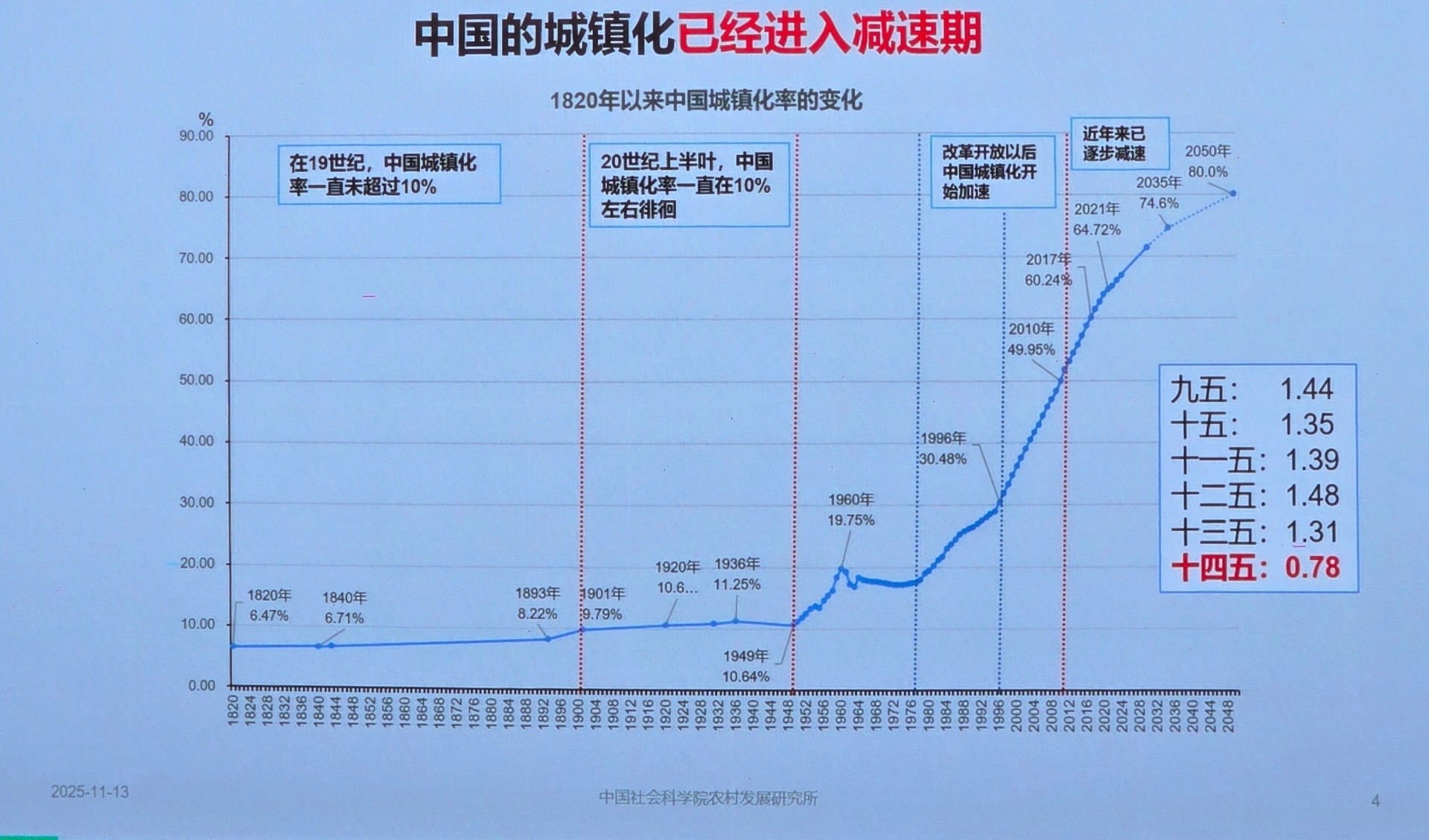
每经记者|淡忠奎 每经编辑|杨欢 中国的城镇化,正在悄然换挡。 过去的46年间,中国城镇化率从17.9%迅速提高到67%,城镇常住人口从1.72亿人增加到9.4亿人。在城镇化取得巨大成就的同时,也积累了一些矛盾和问 题。 比如,中小城市在基础设施、公共服务等方面与大城市的差距较大,企业聚集和产业聚集能力薄弱;大城市内部发展不均衡,城市规划与治理的短板限制人 口承载能力进一步提升。 我国城镇化正从快速增长期转向稳定发展期,城市发展正从大规模增量扩张阶段转向存量提质增效为主的阶段——今年中央城市工作会议首次提出"现代化 人民城市"建设目标,也为城镇化的下半场指明航向。 面对即将到来的"十五五",城镇化如何实现高质量发展?中国城市建设还有哪些新机遇新动能?11月13日,"中国新型城镇化理论·政策·实践论坛2025"在清 华大学召开,胡祖才、范恒山、李稻葵、魏后凯等多位权威学者围绕相关话题展开探讨。 如中国国土经济学会首席专家,国家发改委原副秘书长范恒山所说,城市发展首先要自己过硬,把能量搞足,把品质提升,同时,城市的发展不仅仅为了城 市,"如果仅仅为了城市,我们的城镇化将失去意义,要带动区域,特别是带动农村"。 眼 ...
令人向往的乡村多起来了
Ren Min Ri Bao· 2025-11-16 09:15
Group 1 - The United Nations World Tourism Organization announced the list of "Best Tourism Villages" for 2025, with four villages from China included, bringing the total to 19, the highest in the world [1] - Rural tourism has become a popular destination due to beautiful scenery, convenient transportation, and well-developed facilities, allowing people to connect with nature and escape urban pressures while enjoying modern conveniences [1] - The growth of rural tourism facilitates the flow of resources and ideas between urban and rural areas, serving as a window to observe urban-rural integration development [1] Group 2 - To make rural areas more attractive, it is essential to build livable, workable, and beautiful villages, as outlined in the "14th Five-Year Plan" by the Central Committee of the Communist Party of China [2] - The focus should be on respecting farmers' wishes, improving rural infrastructure, public services, and living environments, allowing farmers to enjoy modern civilized life locally [2] - The ideal rural area should combine ecological beauty, cultural spirit, thriving industries, and modern facilities while preserving rural characteristics [2] Group 3 - Protecting and inheriting traditional culture is crucial for maintaining the intrinsic appeal of rural areas, combining agricultural civilization with modern elements to enhance their charm [3] - The integration of intangible cultural heritage with industry and tourism, as seen in Guizhou's DanZhai County, has created job opportunities for over 3,000 people and boosted rural cultural revitalization [3] - Urban-rural integration is a necessary requirement for China's modernization, promoting the flow of resources while preserving rural nostalgia and enhancing the quality of modern life [3]
以赛为媒释放消费潜力
Jing Ji Ri Bao· 2025-11-14 00:50
Core Insights - The integration of cultural, tourism, and sports activities in Zhuhai aims to leverage the momentum from the 15th Sports Games to boost local consumption and tourism [1][2] - Zhuhai has introduced four key initiatives to enhance the synergy between sports events and tourism, focusing on creating a vibrant atmosphere, offering attractive discounts, expanding new consumption spaces, and ensuring a high-quality travel experience [1] - The "Sports + Culture and Tourism" model in Jinwan District is being innovatively practiced, linking sports events with local economic growth through targeted development strategies [2] Group 1 - The core objective is to convert the event's traffic and festive market popularity into tangible increases in cultural and tourism consumption [1] - Zhuhai has designed multiple tourism routes themed around the 15th Sports Games, connecting major landmarks and event venues to promote cultural exchange in the Guangdong-Hong Kong-Macao region [1] - The initiatives are expected to further unlock Zhuhai's consumption potential, as stated by the local cultural and tourism authorities [1] Group 2 - Jinwan District is deepening the integration of sports and tourism by combining local agricultural specialties with sports events, creating new business models such as agritourism [2] - The district is also enhancing the brand influence of popular attractions through event promotion, thereby increasing their visibility [2] - The approach of "one event, one area, one specialty" is being explored to create a differentiated development pattern, aligning major events with specific local industries [2]
令人向往的乡村多起来了(话说新农村)
Ren Min Ri Bao· 2025-11-13 22:10
Core Viewpoint - The development of rural areas through innovative thinking and shared concepts is essential for promoting the flow of urban and rural elements, allowing villages to retain their cultural essence while achieving modern living standards, ultimately leading to a beautiful future of Chinese-style modernization [1][3]. Group 1: Rural Tourism and Development - The United Nations World Tourism Organization announced that four more villages from China were included in the 2025 "Best Tourism Villages" list, bringing the total to 19, the highest in the world [1]. - The increasing popularity of picturesque, well-connected, and well-equipped rural areas as tourist destinations reflects a significant flow of resources and opportunities between urban and rural areas, serving as a window to observe urban-rural integration [1]. Group 2: Building Attractive Rural Areas - The construction of livable, business-friendly, and beautiful villages is emphasized in the "14th Five-Year Plan" by the Central Committee of the Communist Party of China, which aims to improve rural infrastructure, public services, and living environments to enhance the quality of life for farmers [2]. - The preservation of rural characteristics while promoting the dual flow of urban and rural elements is crucial for creating attractive rural areas that combine ecological beauty, cultural richness, and modern conveniences [2]. Group 3: Cultural Heritage and Modernization - Protecting and inheriting traditional culture is vital for maintaining the intrinsic appeal of rural areas, combining agricultural civilization with modern elements to create a spiritual home for more people [3]. - The integration of intangible cultural heritage with industry and tourism, as demonstrated by the model in DanZhai County, has led to increased employment and income for over 3,000 people, showcasing the potential for cultural revitalization in rural areas [3].
坚定加速转型升级,精心谋划好“十五五”发展蓝图!陈吉宁在嘉定区开展专题调研并主持召开座谈会
Di Yi Cai Jing· 2025-11-13 13:47
陈吉宁指出,要立足大局、担当责任,深入打好制造业高质量发展攻坚战。顺应汽车行业高端化、智能 化、绿色化趋势,加快产业生态转型,在数字化人才培养集聚上再发力、在专业化队伍能力提升上再加 力,更好服务支持汽车企业转型。塑造汽车零部件产业新优势,抓住智能驾驶赛道,加大汽车芯片布 局,打造新的核心竞争力。加大力度培育特色主导产业,加强系统化部署,建强市场化服务平台,加快 形成新的经济增长点。要做好生产性服务业发展的大文章,立足主导产业,着眼制造业全生命周期,围 绕研发服务、工业软件、生产性互联网平台、数字广告、运维服务等进一步发力。要切实优化产业生态 和创新生态,围绕龙头企业把产业链供应链上下游企业充分带动起来,在推动创新共同体建设、促进科 技创新与产业创新深度融合上拿出硬招实招。大力深化产教融合,推动高校优化学科专业结构,为区域 产业发展提供有力的人才支撑。 陈吉宁指出,要体现高站位、大格局,推动新城建设进一步提升品质。强化与长三角毗邻地区的联动发 展、与中心城区的协同发展、以城带乡的融合发展,打造现代化人民城市建设的嘉定样板。强化规划引 领,深化产城融合、职住平衡,提升宜居宜业、宜乐宜游品质。优化公共服务供给,更 ...
赵一德在专家学者和民营企业家代表座谈会上强调集思广益深化研究 着眼长远谋篇布局以高水平规划引领高质量发展现代化建设
Shan Xi Ri Bao· 2025-11-12 00:38
在认真听取大家发言后,赵一德指出,党的二十届四中全会对"十五五"时期事关中国式现代化全局 的战略任务作出部署,擘画了未来五年乃至更长一段时期我国发展的宏伟蓝图。要深学笃行全会精神, 贯通落实习近平总书记历次来陕考察重要讲话重要指示,坚持在大局下思考、大局下行动,科学把握机 遇和挑战,切实把准战略重点和主攻方向,确保党中央决策部署在陕西不折不扣落地见效。 赵一德强调,"十五五"时期陕西必须坚持高质量发展主题,完整准确全面贯彻新发展理念,以科技 创新引领新质生产力发展、构建现代化产业体系,以改革开放更好联通国内国际双循环,以城乡融合发 展促进共同富裕,以发展方式绿色低碳转型提升生态文明建设水平,以统筹发展和安全守牢风险底线, 推动经济实现质的有效提升和量的合理增长,更好满足三秦百姓日益增长的美好生活需要,奋力谱写中 国式现代化建设的陕西新篇章。希望专家学者紧扣关系陕西发展的重大问题,发挥自身专长,深入调查 研究,积极建言献策,为规划编制提供重要智力支撑。希望广大民营企业家秉持长期主义,持续改革创 新,在优化供给、开拓市场、稳定就业等方面展现新担当新作为。有关部门要强化开门问策,把社会期 盼、群众智慧、专家意见、基 ...