贸易谈判
Search documents
特朗普称美国将对印度施加25%关税及“惩罚”,指印方是俄罗斯能源大买家
Hua Er Jie Jian Wen· 2025-07-30 16:29
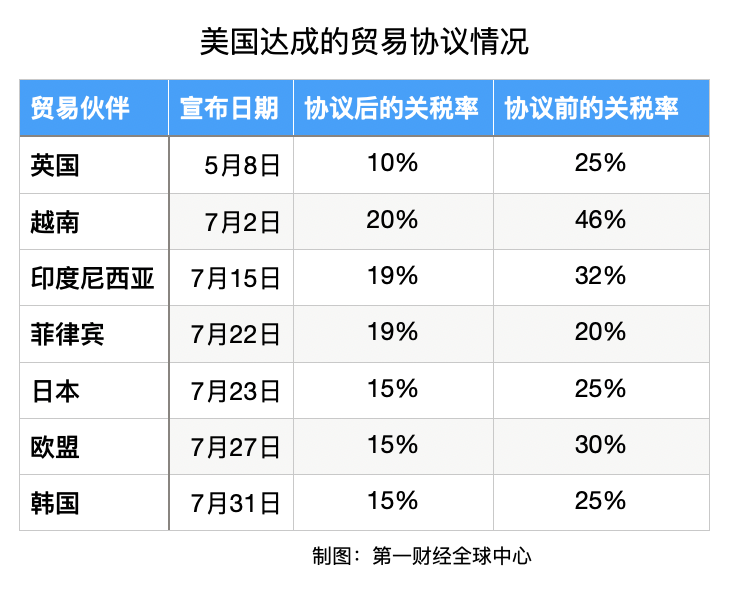
Core Viewpoint - The ongoing trade negotiations between the US and India have officially broken down, leading to President Trump's decision to impose a 25% tariff on Indian imports starting August 1, citing India's high tariffs and non-tariff barriers as significant issues [1][5]. Trade Relations - The US-India trade deficit is highlighted, with Trump stating that the trade imbalance is substantial, and India's tariffs are among the highest globally [1][5]. - The US is India's largest trading partner, with projected goods trade of approximately $128.8 billion in 2024, and India having a trade surplus of $45.8 billion with the US [6]. Tariff Implications - The 25% tariff on India is notably higher than tariffs imposed on other countries, such as 20% on Vietnam and 15% on Japan and the EU, placing India at a competitive disadvantage [6]. - The imposition of tariffs has led to a depreciation of the Indian Rupee, which fell to a five-month low against the dollar [2]. Geopolitical Factors - A significant reason for the tariff imposition is India's continued purchase of energy and military equipment from Russia, with over one-third of India's oil imports and 36% of its weapons coming from Russia [7]. - Trump's previous threats included imposing secondary tariffs on countries purchasing Russian oil unless a ceasefire agreement was reached in Ukraine [7]. Agricultural Negotiations - Trade negotiations have stalled primarily due to disagreements in the agricultural sector, where the US seeks greater access while India prioritizes food security and the interests of small farmers [8]. - Despite some concessions from India on tariffs for specific products, the overall trade deficit remains a concern for the US, which aims to reduce the $45.8 billion deficit with India [8].
美国财长贝森特:如果没有达成协议 可以在8月1日之后继续进行贸易谈判
Jin Shi Shu Ju· 2025-07-30 15:05
(文章来源:金十数据) 美国财长贝森特:如果没有达成协议,可以在8月1日之后继续进行贸易谈判。 ...
美国财长贝森特:如果没有达成协议,可以在8月1日之后继续进行贸易谈判。
news flash· 2025-07-30 15:00
美国财长贝森特:如果没有达成协议,可以在8月1日之后继续进行贸易谈判。 ...
韩国总统办公室:在与美国的贸易谈判中,重点放在能够带来互利成果且韩国能够承受的领域,也讨论了芯片、电池和生物产业相关议题。
news flash· 2025-07-30 05:34
Core Points - The South Korean presidential office emphasizes the focus on mutually beneficial outcomes in trade negotiations with the United States [1] - Discussions include key sectors such as semiconductors, batteries, and the biopharmaceutical industry [1] Industry Summary - The semiconductor industry is highlighted as a critical area of discussion, indicating its importance in the trade relationship [1] - The battery sector is also a focal point, reflecting the growing demand for energy storage solutions and electric vehicle components [1] - The biopharmaceutical industry is mentioned, suggesting potential collaboration and investment opportunities in healthcare and biotechnology [1]
7.30黄金原油日内交易计划
Sou Hu Cai Jing· 2025-07-30 05:26
Group 1 - Gold prices are currently trading around $3327.60 per ounce, showing a rebound after a significant drop, with ongoing market speculation ahead of key economic data releases and the Federal Reserve's monetary policy meeting [1] - Crude oil prices have risen over 3% to approximately $69.22 per barrel, driven by optimism regarding the easing of trade tensions and increased pressure from the U.S. on Russia regarding the Ukraine conflict [1] - The upcoming Federal Open Market Committee (FOMC) meeting is expected to maintain a cautious stance, with market expectations for potential rate cuts in September or by the end of the year, which could impact the strength of the U.S. dollar and subsequently affect gold prices [1] Group 2 - Gold is currently facing resistance around $3438 and has retreated to a strong support level near $3320, indicating a potential trading opportunity for short-term positions [3] - The trading strategy for gold suggests entering long positions around $3325 with a stop loss at $3315, targeting price levels between $3338 and $3355 [3] - Crude oil is showing a strong upward trend, with a focus on confirming a second upward movement after a potential pullback, indicating a bullish outlook in the short term [3]
方正中期期货有色金属日度策略-20250730
Fang Zheng Zhong Qi Qi Huo· 2025-07-30 02:39
Group 1: Report Industry Investment Rating - No relevant content provided Group 2: Core Views of the Report - The non - US copper market has low inventory, and the domestic copper market is expected to have a situation of weak supply and strong demand, but the short - term price lacks an obvious upward driver. Zinc has an increase in supply and weak demand, and the price is expected to be weak. The aluminum industry chain is recommended to be short - sold, and the fundamentals of tin are weak. Lead shows a range - bound trend, and nickel and stainless steel are in a weak situation [3][4][5][6][7][8] Group 3: Summary by Directory 1. Part One: Logic of Non - ferrous Metals Operation and Investment Suggestions - **Macro Logic**: The non - ferrous metals sector adjusts and falls after taking profits in the domestic anti - involution stage. The market focuses on trade negotiations and domestic policies. The US - EU trade agreement boosts the US dollar, putting pressure on non - ferrous metals [11] - **Investment Suggestions for Each Metal** - **Copper**: It is expected to stop falling and rebound, with support at 78000 - 79000 and pressure at 80000 - 82000. Suggested to buy at low prices [13] - **Zinc**: It is expected to be weakly volatile, with support at 21600 - 21800 and pressure at 22800 - 23100. Suggested to short at high prices [13] - **Aluminum Industry Chain**: It is expected to be weakly volatile. Suggested short - selling for aluminum, alumina, and cast aluminum alloy [13][14] - **Tin**: It is expected to be weakly volatile, with support at 250000 - 255000 and pressure at 270000 - 290000. Suggested short - selling [14] - **Lead**: It is expected to fluctuate in a range, with support at 16600 - 16800 and pressure at 17200 - 17400. Suggested to buy at low prices [14][15] - **Nickel**: It is expected to be bearish, with support at 115000 - 116000 and pressure at 122000 - 123000. Suggested to short at high prices [15] - **Stainless Steel**: It is expected to be weakly volatile, with support at 12300 - 12400 and pressure at 12800 - 13000. Suggested to short at high prices [15] 2. Part Two: Review of Non - ferrous Metals Market - The closing prices and daily changes of copper, zinc, aluminum, alumina, tin, lead, nickel, stainless steel, and cast aluminum alloy are presented [16] 3. Part Three: Position Analysis of Non - ferrous Metals - The latest position analysis of the non - ferrous metals sector includes information on net long and short positions, their changes, and influencing factors for different varieties [18] 4. Part Four: Spot Market of Non - ferrous Metals - The spot prices and daily changes of copper, zinc, aluminum, alumina, nickel, stainless steel, tin, lead, and cast aluminum alloy are provided [19][21] 5. Part Five: Non - ferrous Metals Industry Chain - Charts related to the industry chain of copper, zinc, aluminum, alumina, tin, lead, nickel, and stainless steel are presented, including inventory changes, processing fees, and price trends [22][26][28][33][39][41][46][52] 6. Part Six: Non - ferrous Metals Arbitrage - Charts related to the arbitrage of copper, zinc, aluminum, alumina, tin, lead, nickel, and stainless steel are presented, including ratio changes, basis, and spread trends [54][56][59][62][66][69][70] 7. Part Seven: Non - ferrous Metals Options - Charts related to the options of copper, zinc, and aluminum are presented, including historical volatility, implied volatility, trading volume, and open interest [72][73][75]
长江期货市场交易指引-20250730
Chang Jiang Qi Huo· 2025-07-30 01:29
1. Report Industry Investment Ratings - **Macro Finance**: Defensive wait-and-see for stock indices, take profit for treasury bonds [1][6] - **Black Building Materials**: Temporarily wait-and-see for rebar, oscillate for iron ore and coking coal and coke [1][6] - **Non-ferrous Metals**: Range trading or wait-and-see for copper, wait-and-see for aluminum, suggest wait-and-see or short on rallies for nickel, range trading for tin, gold, and silver [1][11] - **Energy and Chemicals**: Oscillate for PVC, caustic soda, styrene, rubber, urea, and methanol; wide-range oscillation for polyolefins; short lightly for soda ash [1][21] - **Cotton Textile Industry Chain**: Oscillate and adjust for cotton and cotton yarn, oscillate strongly for apples and jujubes [1][36] - **Agriculture and Animal Husbandry**: Short on rallies for pigs and eggs; wide-range oscillation for corn; oscillate strongly for soybean meal and oils [1][38] 2. Core Views of the Report - The report provides investment ratings and trading suggestions for various futures varieties based on current market conditions, including macro events, supply and demand fundamentals, and policy expectations [1][6] - It emphasizes the importance of paying attention to key events such as the Sino-US economic and trade talks, the Politburo meeting, and the Fed's interest rate decision, as well as the impact of these events on the market [6][11] - For each variety, it analyzes the supply and demand situation, cost factors, and market sentiment to predict the future price trend and provides corresponding investment strategies [6][8] 3. Summaries According to Relevant Catalogs Macro Finance - **Stock Indices**: Due to the Sino-US economic and trade talks and the Politburo meeting, combined with the high margin trading and the decline in fund holding ratio, the stock indices may oscillate, especially with potential small fluctuations during the intensive disclosure period of mid-year reports in late August [6] - **Treasury Bonds**: Although the bond market rebounded on Monday and the central bank's capital injection improved market sentiment, the market is still in the paradigm of "trading bonds based on commodities" and "trading bonds based on stocks." Attention should be paid to whether the important meeting will bring incremental demand-side policies. If demand improves, the bond market may not be overly optimistic [6] Black Building Materials - **Rebar**: On Tuesday, the rebar futures price rose significantly. The market is trading on the expectation of the Politburo meeting. Fundamentally, supply and demand are relatively balanced. In the short term, it is expected to enter an oscillating pattern, and investors can wait and see or conduct short-term trading [8] - **Iron Ore**: On Tuesday, the iron ore futures price oscillated strongly. Affected by the macro sentiment, the impact on iron ore is relatively small. The supply is expected to increase in the long term, but the current high profit of steel products and the expectation of the meeting support the price. It is expected to oscillate at a high level [8] - **Coking Coal and Coke**: The supply of coking coal is tight locally, and the import is improving. The demand for coke is strong, and the supply and demand structure is tight. The price of coking coal is expected to oscillate, and the price of coke may continue to rise [9] Non-ferrous Metals - **Copper**: Affected by the US copper import tariff policy and the change in domestic demand, the copper price is expected to oscillate in a range. It is recommended to conduct range trading or wait and see [11] - **Aluminum**: The price of bauxite is supported, but the supply of imported ore may increase in the third quarter. The production capacity of alumina and electrolytic aluminum is increasing, while the downstream demand is weak. It is recommended to wait and see for aluminum and short on rallies for alumina [12][13] - **Nickel**: The supply of nickel is in excess in the medium and long term, and the consumption growth is limited. It is recommended to short on rallies, with the main contract reference range of 118,000 - 124,000 yuan/ton; for stainless steel, it is recommended to conduct range trading, with the main contract reference range of 12,500 - 13,200 yuan/ton [14][15] - **Tin**: The production of refined tin is stable, and the consumption of the semiconductor industry is expected to recover. The supply and demand gap of tin ore is improving. It is recommended to conduct range trading, with the reference range of the SHFE tin 09 contract being 245,000 - 270,000 yuan/ton [16] - **Gold and Silver**: Affected by the Sino-US trade talks and the Fed's interest rate decision, the market's risk aversion sentiment has decreased, but there are still concerns about the US fiscal situation and geopolitical situation. It is recommended to conduct range trading carefully, with the reference range of the SHFE gold 10 contract being 757 - 805 and the SHFE silver 10 contract being 8,700 - 9,500 [18][19] Energy and Chemicals - **PVC**: The cost is low, the supply is high, and the demand is weak. The inventory is slightly lower than last year, and the sustainability of exports is uncertain. It is expected to oscillate in the short term, and the 09 contract can focus on the range of 5,150 - 5,350 [21][22] - **Caustic Soda**: The supply is abundant, and the demand has rigid support but the growth rate slows down. The spot price is stable and weak, and the near-month contract is under pressure. It is expected to oscillate, and the 09 contract can focus on the range of 2,500 - 2,700 [24] - **Styrene**: The cost is under pressure, the supply is expected to increase, and the demand may weaken. The macro environment is favorable, and the price is expected to oscillate, with the focus on the range of 7,200 - 7,600 [26] - **Rubber**: The raw material price is high, providing cost support. The downstream demand is general, and the price is expected to oscillate strongly, with the focus on the pressure level of 15,000 [28] - **Urea**: The supply decreases slightly, the demand from compound fertilizer enterprises increases, and the industrial demand is stable. The inventory pattern is neutral, and the price is expected to be weak first and then strong, with the support level of 1,700 - 1,730 and the pressure level of 1,820 - 1,850 [31] - **Methanol**: The supply increases slightly, the demand from the methanol-to-olefins industry is stable, and the traditional demand is weak. The inventory decreases, and the price may face a certain correction [32][33] - **Polyolefins**: Affected by the macro sentiment and cost factors, the price is expected to oscillate weakly in the short term. The L2509 contract can focus on the range of 7,200 - 7,500, and the PP2509 contract can focus on the range of 6,900 - 7,200 [34] - **Soda Ash**: After the market sentiment cools down, the futures price of soda ash has fallen back. The supply is expected to increase in August, and the price is overestimated. It is recommended to short lightly [34] Cotton Textile Industry Chain - **Cotton and Cotton Yarn**: According to the USDA report, the global cotton production and consumption in the 2025/26 season are expected to increase, and the ending inventory will also increase. The Xinjiang cotton production is expected to be good, and the downstream consumption is light. The futures price is expected to oscillate and adjust [36] - **Apples**: The spot market is stable, the inventory of old-season apples is low, and the early-maturing apples are in stable demand. The price is expected to oscillate strongly in the high range [36] - **Jujubes**: The jujube trees in the main producing areas are in the growth period, and the second and third crops of flowers have a good fruit set. The supply in the sales area is low, and the price of high-quality products is strong. It is expected that the spot price will be stable and strong in the short term [37] Agriculture and Animal Husbandry - **Pigs**: The supply is strong and the demand is weak, and the pig price is under pressure. However, the resistance from the breeding side and the entry of secondary fattening limit the decline. In the medium and long term, the supply will gradually increase. It is recommended to short on rallies for the near-month contracts, and consider the arbitrage strategy of long 05 and short 03 [38][39] - **Eggs**: The short-term supply pressure is weakened by the decline in egg production rate, and the demand is expected to increase seasonally. However, the large supply in the medium and long term restricts the increase. It is recommended to short on rallies for the 09 contract and wait to go long on dips for the 12 and 01 contracts [40][41] - **Corn**: The short-term supply and demand game intensifies, and the spot price has limited upward and downward space. The medium and long-term supply and demand are tightened, but the supply from substitutes limits the increase. It is recommended to be cautious about going long unilaterally in the short term, with the range of 2,250 - 2,350, and consider the 9 - 1 reverse arbitrage opportunity [42][43] - **Soybean Meal**: In the short term, the good weather in the US soybean producing areas and the abundant supply in China suppress the price. In the long term, there is a potential supply gap, and the price is expected to be strong. It is recommended to cautiously go long on the M2509 contract and go long on dips for the M2511 and M2601 contracts [44][45] - **Oils**: The short-term market sentiment is bearish, but the supply and demand of Indonesian palm oil are balanced, and the demand from China and India still exists. The short-term price is expected to oscillate, and it is recommended to go long on dips. The 09 contracts of soybean oil, palm oil, and rapeseed oil can focus on the ranges of 8,000 - 8,200, 8,900 - 9,200, and 9,300 - 9,600 respectively [45][51]
中国计划取消美国猪肉关税豁免,进口美国肉类产品关税将增30%
Sou Hu Cai Jing· 2025-07-30 00:50
Core Viewpoint - A significant trade conflict is escalating between China and the United States, particularly affecting agricultural products, as China has ended tariff exemptions on U.S. agricultural imports, leading to increased tariffs and potential market shifts [1][3][4]. Group 1: Impact on U.S. Agriculture - The U.S. agricultural sector faces severe consequences, with tariffs on beef expected to rise from 32.5% to 62.0%, making U.S. beef more expensive than competitors like Australian and Brazilian beef [3][4]. - Pork tariffs could increase from 57% to 87%, drastically reducing the share of U.S. pork in China's imports from 18% to single digits [3][4]. - The agricultural market is experiencing a broad impact, with various products like grains, oilseeds, and nuts losing competitiveness in China [3][4]. Group 2: China's Agricultural Landscape - China is projected to produce 57.06 million tons of domestic pork in 2024, with U.S. pork imports constituting only 0.7% of its supply, indicating minimal impact from the U.S. exit [5]. - The demand for U.S. pork by Chinese fast-food and hotpot restaurants is expected to decline, leading to a potential 15% increase in domestic substitute prices [5]. - South American countries are seizing the opportunity to expand their market share in China, with Brazil investing $5 billion to enhance cold chain logistics and Argentina accelerating beef export certifications [5]. Group 3: Strategic Adjustments by Allies - U.S. allies are adjusting their strategies in response to the trade conflict, with the EU and Japan negotiating favorable terms in exchange for tariff concessions [7]. - China's termination of agricultural tariff exemptions signals a refusal to engage in one-sided concessions during negotiations [7]. Group 4: Future Projections - The ongoing trade negotiations are critical, with the U.S. agricultural sector expressing concerns about the long-term implications of the tariff increases, particularly for pork, which may follow the trajectory of soybeans, whose market share in China has drastically declined [9]. - The anticipated U.S. pork imports to China are expected to drop from 408,000 tons in 2024 to less than 100,000 tons this year, indicating a significant market shift [9].