
智能体

Search documents
聚焦合肥,科大讯飞以大模型技术赋能远程银行数智化升级
Sou Hu Cai Jing· 2025-12-01 15:43
Core Viewpoint - The event highlighted the role of "large models + intelligent agents" in leading the digital transformation of remote banking, with iFlytek as a key technical contributor [1] Group 1: Technological Advancements - iFlytek has made significant breakthroughs in large model technology, successfully applying it to remote banking scenarios [1] - The company emphasizes the importance of a "good technology, safe and controllable" approach, establishing a comprehensive security governance system for the financial industry's intelligent transformation [1] Group 2: Industry Collaboration - iFlytek collaborates with partners such as Huawei and Huishang Bank to create an open and shared communication platform [1] - The deep sharing by iFlytek's research institute vice president identified industry pain points, providing valuable references for peers [1] Group 3: Future Directions - iFlytek aims to continue developing large model and intelligent agent technologies, offering more mature solutions to empower the digital transformation of remote banking [1] - The company's technological practices and transformation strategies provide diverse reference paths for banking institutions [1]


意识产生、符号推理……AI下一站该往哪走?
3 6 Ke· 2025-12-01 03:52
Group 1: Core Perspectives on AI Development - The current phase of AI is characterized as a critical platform shift, with uncertainty in its development forms. The deployment of technology must go through three stages: absorption, innovation, and disruption, with the current focus on absorption in areas like programming and marketing [1][4][6] - AI is fundamentally about "computable pattern recognition" and lacks true consciousness. Current AI can only find patterns based on data and execute rules without understanding their essence. The limitations of existing computer technology prevent the emergence of consciousness [1][11][12] - The future of AI will not be limited to a single form but will evolve in four key directions: symbolic reasoning, spatial intelligence, emotional intelligence, and intelligent agents. This evolution signifies a diversification and specialization of intelligence [1][18][19] Group 2: Optimism and Preparedness for AI - Maintaining optimism in the face of AI development is essential, viewing progress as a "Protopia" where the world improves incrementally each day. This perspective encourages innovation and preparation rather than fear [2][22][23] - The uncertainty surrounding the realization of general artificial intelligence remains, with the possibility of many specialized "weak AIs" emerging instead of a singular form of intelligence [14][20] - The future AI landscape may feature a hybrid architecture of centralized cloud computing and decentralized edge computing, balancing efficiency and privacy concerns [15][16] Group 3: Implications for Industries and Workforce - AI is expected to enhance human work efficiency rather than replace jobs, as it allows individuals to focus on more creative and judgment-based tasks by automating repetitive ones [16][17] - The evolution of AI will lead to the emergence of a new economic system centered around intelligent agents, which will operate seamlessly in the background [21]
智能体:你的“数字搭档”已上线
Ke Ji Ri Bao· 2025-12-01 00:17
Core Insights - The article discusses the emergence of "intelligent agents" as a new category of digital assistants that can potentially alleviate daily tasks and enhance productivity across various sectors such as entertainment, education, and healthcare [1] Group 1: Definition and Capabilities - Intelligent agents are seen as advanced digital partners that differ from traditional AI by possessing capabilities such as understanding, memory, planning, and autonomous decision-making [2] - The development of intelligent agents is inspired by the portrayal of AI in the film "HER," where the AI system provides seamless assistance and real-time information [2][3] Group 2: Evolution and Application - The evolution of intelligent agents is moving from mechanical responses to proactive predictions, enabling them to break down tasks and complete them autonomously [4] - Intelligent agents are currently being applied in various settings, including hotels, factories, and hospitals, to assist with repetitive and collaborative tasks [4] Group 3: Challenges and Future Development - The transition of intelligent agents from task executors to deep interactive and self-evolving partners faces challenges such as insufficient data accumulation and limitations in the processing capabilities of large models [5] - Companies are encouraged to develop deep reasoning capabilities in intelligent agents to ensure their actions align with human values and maintain safety in physical and social interactions [6]
AI大家说 | 意识产生、符号推理……AI下一站该往哪走?
红杉汇· 2025-12-01 00:05
Core Insights - The article consolidates viewpoints from experts Benedict Evans, Roger Penrose, and Kevin Kelly regarding the future development of AI, focusing on the evolution of AI consciousness, its potential impact on industries, and how to navigate the uncertainties of AI advancement [3][6]. Group 1: Benedict Evans' Perspective - Evans highlights that AI is currently at a critical platform transition phase, with its development still uncertain. The deployment of technology must go through three stages: absorption, innovation, and disruption, with the current focus on "absorption" scenarios like programming and marketing [3][9]. - He emphasizes that while many successful use cases are in the "absorption" stage, the real questions lie in what "innovation" and "disruption" will look like, particularly in terms of how AI can redefine industry problems [9][10]. - Evans notes that despite the significant capital investments by tech giants, the clarity around product forms, business models, and value capture remains ambiguous, indicating a transformative change is underway regardless of potential market bubbles [11][12]. Group 2: Roger Penrose's Viewpoint - Penrose argues that true intelligence must involve consciousness, asserting that current AI is merely a computational concept that identifies patterns without genuine understanding [15][16]. - He references Gödel's theorem to explain that existing computational technologies cannot achieve consciousness, as they are limited to rule application without understanding the underlying principles [16][17]. - Penrose expresses skepticism about the potential for AI to develop consciousness, suggesting that any future intelligent devices would need to be fundamentally different from current computers [17]. Group 3: Kevin Kelly's Insights - Kelly posits that the future of AI will not be singular but will encompass various forms of intelligence, with a focus on four key areas: symbolic reasoning, spatial intelligence, emotional intelligence, and intelligent agents [20][21]. - He discusses the uncertainty surrounding whether AI will enhance human work efficiency or directly replace jobs, noting that current evidence suggests AI improves efficiency without leading to mass unemployment [21]. - Kelly introduces the concept of "Protopia," advocating for a perspective that embraces gradual improvement rather than utopian or dystopian extremes, suggesting that small daily advancements can lead to significant long-term changes [22][23].

哈佛老徐:英伟达业绩好只是其次,真正的故事才刚开始
老徐抓AI趋势· 2025-11-30 08:20
Core Viewpoint - The article discusses the recent performance of NVIDIA and its implications for the AI industry, emphasizing that the demand for GPUs is just beginning and that NVIDIA's ecosystem is crucial for its dominance in the market [4][19]. Financial Performance - NVIDIA's Q3 revenue reached $57 billion, a 62% year-over-year increase, with net profit at $31.9 billion, up 65% [6]. - The outlook for Q4 is even more optimistic, with projected revenue of $65 billion, representing an 85% year-over-year growth [7]. AI Market Dynamics - The article questions whether AI is a bubble, suggesting that the real issue is the ongoing and increasing demand for GPUs, which is far from reaching its peak [8]. - Three accelerating trends are identified that will drive GPU demand: 1. Non-AI software migrating from CPU to GPU, indicating a significant shift in data processing needs [9]. 2. Generative AI replacing traditional machine learning, leading to substantial changes in advertising effectiveness, with Meta's ad conversion rates increasing by 5% on Instagram and 3% on Facebook [10]. 3. The imminent explosion of autonomous driving, robotics, and intelligent agents, which are expected to grow at a rate ten times faster than current expectations [11]. Competitive Advantage - NVIDIA's competitive edge lies in its CUDA ecosystem, which supports a wide range of applications and is continuously evolving due to active developer engagement [15][16]. - The article argues that without software support, even the best hardware is ineffective, highlighting the importance of NVIDIA's established software ecosystem [16]. Strategic Investments - NVIDIA's investments in companies like OpenAI and Anthropic are not merely for chip sales but to integrate these companies into the CUDA ecosystem, enhancing its market position [18]. - The strategy aims to optimize AI models using NVIDIA's chips, thereby expanding the CUDA ecosystem and solidifying NVIDIA's dominance [18]. Future Outlook - The article posits that NVIDIA's true value lies in the anticipated $3-4 trillion annual investment in AI infrastructure, positioning the company as a foundational player in the AI era [19]. - The narrative suggests that the future of AI will be defined by those who successfully implement AI across various industries, indicating a significant opportunity for growth and innovation [21].

为什么同样用 AI,有的企业狂飙,有的原地踏步?
Ge Long Hui· 2025-11-28 14:14
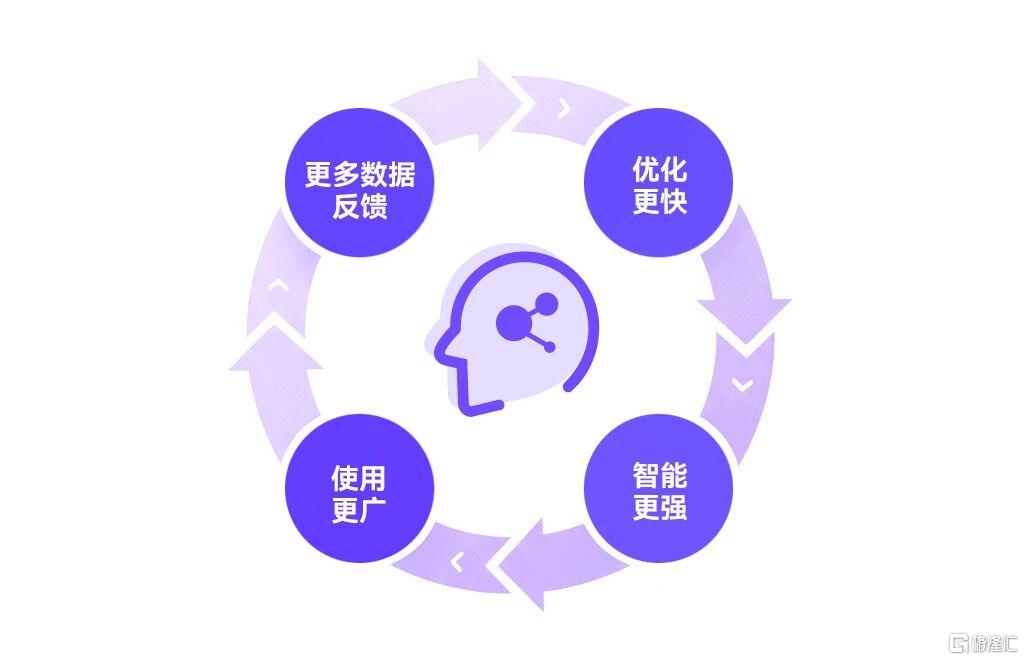
毕竟,大模型能力正在快速趋同,公域数据带来的智能化差距正在消失。 今天你能买到的模型、能力、工具,竞争对手明天也能轻易获得。 因此,一个真正关键的问题随之出现——在模型能力趋同的情况下,企业的差异化究竟从哪里建立? 过去一年,智能体在企业中的落地速度远超预期。同时,也有越来越多的管理者开始意识到:"我们怎样才能在智能体时代建立真正的竞争优势?" 答案其实也很简单,决定这一点的,不是模型本身,而是企业自己长期积累的——私域反馈数据。 那些来自真实业务的纠错、例外情况、用户情绪、人工介入路径、专家判断,构成了企业独有的"智能资产"。它们无法外购、无法复制,却能直接决定智能 体能否从"会做事"进化到"懂业务、贴流程、可承担"。 首先,私域数据无法外购、无法复制,是企业独有的"智能资产"。 用户的每一次真实咨询、失败对话、人工纠偏、例外流程与专家判断,这些数据都只存在于企业内部,不会出现在任何公开数据集中。换句话说,你拥有的 数据,竞争对手永远拿不到——这构成了天然的结构性差异。 而这些数据反馈越多,优化越快;智能越强,使用越广;使用越广,又反过来带来更多反馈。一旦飞轮启动,领先企业会加速前进,落后者则难以追赶。 对 ...
CB Insights 2025 未来科技新星:45 家高潜力初创公司名单与技术趋势解读|Jinqiu Select
锦秋集· 2025-11-28 08:38
Core Insights - The report by CB Insights identifies 45 promising tech startups across six sectors, with a total funding exceeding $2.8 billion and an average Mosaic score of 791, indicating strong potential for commercialization [3][4]. Group 1: Industry Characteristics - **Enterprise Tech**: Comprises 22 companies focusing on AI infrastructure and developer tools, with the largest average funding [4]. - **Financial Services**: Features 7 companies where AI-native finance is the main theme, with regulatory compliance as a key barrier [4]. - **Healthcare**: Includes 6 companies led by voice AI and clinical workflow automation, with HIPAA compliance as a prerequisite [4]. - **Industrials**: Contains 6 companies where robotics and geospatial AI are emerging, characterized by strong hard-tech attributes and lengthy validation cycles [4]. - **Legal**: Comprises 2 companies where AI is applied in judicial reasoning and contract review, with proprietary data as a critical moat [4]. - **Retail and Supply Chain**: Features 2 companies focusing on consumer AI applications and logistics decision optimization, closest to the consumer end [4]. Group 2: Technology Trends - **De-generalization of AI Infrastructure**: The value is shifting towards infrastructure optimized for specific tasks rather than general models, with companies like Exa and Cartesia leading this trend [6]. - **Rise of Agentic Workflow**: AI is evolving from answering questions to executing tasks, with companies like Maven AGI achieving a 93% autonomous resolution rate in customer service [7]. - **AI Integration into the Physical World**: AI is moving from screens to physical applications, impacting energy, manufacturing, and spatial computing, as seen with Skild AI and Persona AI [8]. - **Zero Hallucination Technology**: High-risk industries are pushing for technologies that ensure zero hallucination, with companies like Harmonic and BenchIQ focusing on verifiable reasoning [9]. - **Compliance and Sovereignty as Barriers**: Regulatory compliance is becoming a structural barrier, with data sovereignty as a prerequisite for global expansion, highlighted by InCountry and WitnessAI [10]. Group 3: Company Highlights - **Cartesia**: Developed ultra-low latency voice AI with a funding of $91 million and a Mosaic score of 849, focusing on real-time conversational AI [11]. - **Coval**: Provides AI agent testing infrastructure with a funding of $3.3 million and a Mosaic score of 743, addressing the challenges in agent deployment [12]. - **Maven AGI**: Achieved a 93% autonomous resolution rate in customer support with a funding of $78 million and a Mosaic score of 823, indicating strong market fit [26]. - **Harmonic**: Focuses on formal mathematical reasoning AI with a funding of $175 million and a Mosaic score of 795, ensuring zero hallucination in critical applications [20]. - **InCountry**: Offers data residency services across 90+ countries with a funding of $50 million and a Mosaic score of 769, emphasizing compliance in data storage [21].
国资领投、老股东加码!无问芯穹完成近5亿元A+轮融资
Guo Ji Jin Rong Bao· 2025-11-27 14:15
Core Insights - AI infrastructure company Wunwen Xinqiong has completed nearly 500 million yuan in Series A+ financing to enhance its investment in intelligent infrastructure development [1] - The funding round was led by Zhuhai Technology Group and Foton Capital, with participation from several other investors including Hongtai Fund and Lenovo Venture Capital [1] - The raised funds will be allocated to three main areas: expanding technological advantages, promoting the scaling of AI cloud products and terminal solutions, and increasing R&D investment in intelligent infrastructure [1] Investment Focus - The company aims to enhance its soft and hard technology synergy and diverse heterogeneous advantages [1] - There is a focus on scaling AI cloud products and terminal solutions within the industry [1] - Investment will also be directed towards building a first-class intelligent service platform and supporting cloud and terminal infrastructure [1] Industry Perspective - The evolution of artificial intelligence is transitioning from a "dialogue tool" to an "action partner," with intelligent agents expected to become new productivity units in society [1] - Wunwen Xinqiong emphasizes that infrastructure must always align with the forefront of intelligent development, serving as a production line for intelligent agent development and a testing ground for practical applications [1] - The company’s strategy is centered on optimizing hardware and software to create a new generation of learnable and evolvable Agentic Infrastructure [2]
无问芯穹完成近5亿元A+轮融资 持续发力智能体时代的AI新基建
Zheng Quan Ri Bao Wang· 2025-11-27 10:50
Core Insights - Shanghai Wunuan Xinqiong Intelligent Technology Co., Ltd. has completed nearly 500 million RMB in A+ round financing, led by Zhuhai Technology Group and Futen Capital, with participation from various other investors, indicating strong market confidence in the company's AI infrastructure initiatives [1][3] - The company aims to expand its technological advantages, promote the large-scale application of AI cloud products and terminal solutions, and enhance research and development of intelligent infrastructure [3][4] Company Overview - Wunuan Xinqiong focuses on building high-performance AI infrastructure, combining software and hardware optimization to address the computational bottlenecks in AI applications [5] - The company has developed the "Wunuan AI Cloud" and "Wuyin Terminal Intelligent Solutions," which support AI development and service, serving numerous leading AI enterprises and research institutions [5] Technological Developments - The company has established over 25,000 PetaFLOPS of computing power across 53 core data centers in 26 cities, providing robust support for AI application development and deployment [4] - Wunuan Xinqiong has launched the world's first end-side multimodal understanding model, "Wunuan Tianquan," which operates with a computational cost of 3 billion and memory requirements of 7 billion, significantly enhancing terminal resource efficiency [4] Strategic Vision - The company is committed to creating a new generation of learnable and evolvable infrastructure, focusing on producing, collaborating, and servicing intelligent agents, aiming for deeper breakthroughs in AI infrastructure optimization and ecosystem building [5]
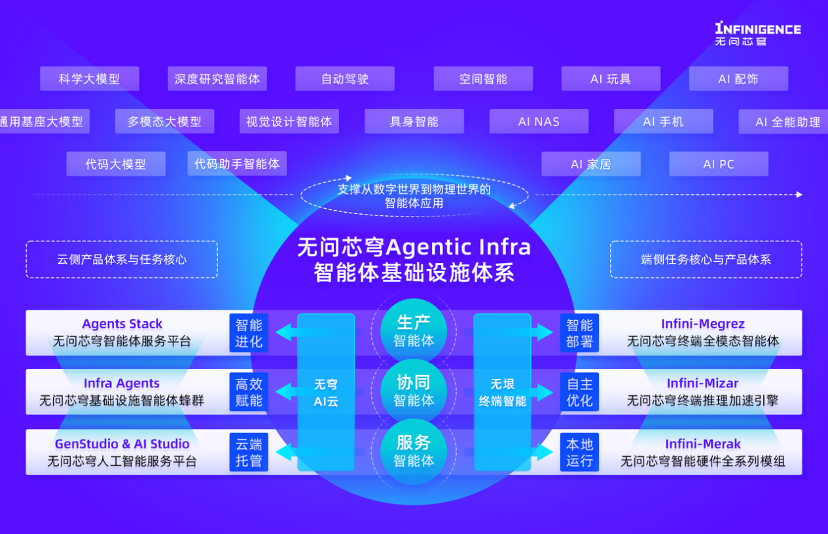
无问芯穹完成近5亿元A+轮融资,加码Agentic Infra基础设施建设
机器人圈· 2025-11-27 10:43
Core Insights - The article discusses the recent completion of a nearly 500 million RMB A+ round financing by Wunwen Xinqiong, a leading AI infrastructure company, with participation from various state-owned and market-oriented funds, indicating strong backing for its growth strategy [2][3]. Financing and Investment - The financing round was led by Zhuhai Technology Group and Futen Capital, with participation from several other investors, showcasing a blend of state and market capital support [2]. - The funds will be allocated to three main areas: enhancing technological advantages, expanding AI cloud products and terminal solutions, and increasing investment in intelligent infrastructure development [3]. Company Strategy and Vision - Wunwen Xinqiong aims to transform AI infrastructure to support the evolution of intelligent agents, viewing this as both a strategic opportunity and a mission [4]. - The company focuses on creating a new generation of learnable and evolvable infrastructure for intelligent agents, emphasizing the importance of optimizing both hardware and software [4][5]. Product Development and Technological Advancements - The company has developed a comprehensive technology and product architecture that integrates AI cloud and terminal intelligence, facilitating breakthroughs in intelligent applications across digital and physical worlds [5]. - Wunwen Xinqiong has established a robust AI cloud infrastructure, managing over 25,000 P of computing power across 53 core data centers in 26 cities, supporting over 100 AI companies [7]. - The company has launched innovative terminal solutions, including the world's first end-side multimodal understanding model, which significantly reduces resource bottlenecks [7][8]. Recent Product Launches - Recently, Wunwen Xinqiong introduced two intelligent agent products: Infra Agents for cloud infrastructure and Kernel Mind for terminal optimization, along with supporting technologies for continuous evolution and efficient communication of intelligent agents [8].
