毛利率

Search documents
铂科新材:2025年三季报净利润为2.94亿元
Xin Lang Cai Jing· 2025-10-22 00:45
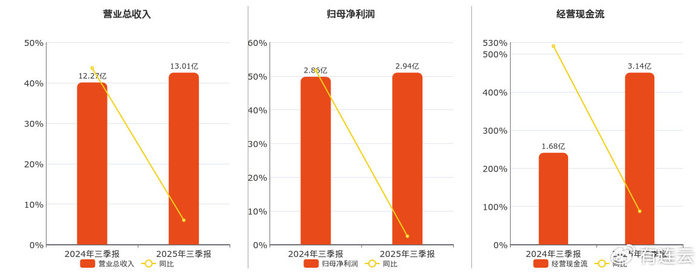
Core Insights - The company, 铂科新材 (300811.SZ), reported a total revenue of 1.301 billion yuan for Q3 2025, with a net profit attributable to shareholders of 294 million yuan and a net cash inflow from operating activities of 314 million yuan [2]. Financial Performance - The latest debt-to-asset ratio stands at 23.19%, an increase of 1.08 percentage points compared to the same period last year [4]. - The gross profit margin is reported at 40.53%, which is a decrease of 0.11 percentage points year-on-year [4]. - The return on equity (ROE) is at 10.13%, down by 2.92 percentage points from the previous year [4]. - The diluted earnings per share remained relatively stable compared to the same reporting period last year, with a slight decline of 0.22% [4]. - The total asset turnover ratio is 0.38 times, reflecting a decrease of 0.08 times, which is a year-on-year decline of 17.77% [4]. - The inventory turnover ratio is reported at 3.62 times [4]. Shareholder Structure - The number of shareholders is 20,200, with the top ten shareholders holding a total of 164 million shares, accounting for 56.75% of the total share capital [4]. - The largest shareholder is 深圳市摩码新材料投资有限公司, holding 22.49% of the shares [4].

长城科技:2025年三季报净利润为2.15亿元
Xin Lang Cai Jing· 2025-10-21 01:09
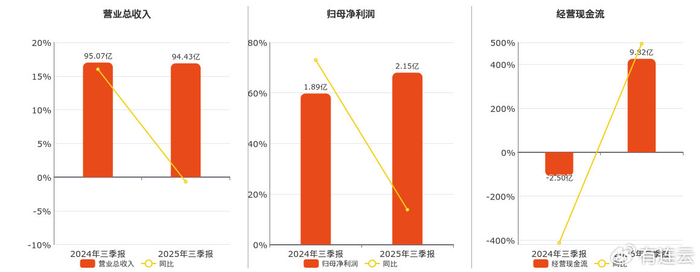
Core Insights - The company reported a total revenue of 9.443 billion yuan for Q3 2025, a decrease of 64.7986 million yuan or 0.68% compared to the same period last year [1] - The net profit attributable to shareholders was 215 million yuan, with a net cash inflow from operating activities of 982 million yuan [1] Financial Performance - The latest asset-liability ratio stands at 64.96%, an increase of 1.07 percentage points from the previous quarter and up 3.26 percentage points year-on-year [3] - The gross profit margin is reported at 4.20%, with a return on equity (ROE) of 8.94% [4] - The diluted earnings per share (EPS) is 0.38 yuan, a decrease of 0.53 yuan or 58.24% compared to the same period last year [5] - The total asset turnover ratio is 1.41 times, down 0.10 times or 6.56% year-on-year [5] - The inventory turnover ratio is 11.71 times, a decrease of 1.10 times or 8.56% compared to the same period last year [5] Shareholder Structure - The number of shareholders is 27,800, with the top ten shareholders holding 125 million shares, accounting for 60.53% of the total share capital [5] - The largest shareholder is Huzhou Great Wall Electronics Technology Co., Ltd. with a holding of 25.06% [5]

春风动力(603129):归母净利润同比+11%,全地形车需求向好
Soochow Securities· 2025-10-20 12:35
Investment Rating - The investment rating for the company is "Buy" [1] Core Insights - The company reported a year-on-year increase of 11% in net profit attributable to shareholders for Q3 2025, driven by strong demand for all-terrain vehicles [7] - The company is a leader in the domestic all-terrain vehicle and motorcycle markets, with three major business segments experiencing high growth [7] - The forecast for net profit attributable to shareholders for 2025-2027 is 1.87 billion, 2.47 billion, and 2.74 billion RMB respectively, with corresponding P/E ratios of 19.0, 14.4, and 13.0 [7] Financial Performance Summary - For Q3 2025, the company achieved total revenue of 5.04 billion RMB, with a year-on-year increase of 11% in net profit attributable to shareholders [7] - The all-terrain vehicle segment saw sales of 49,000 units, with an average selling price (ASP) of 48,000 RMB, reflecting a year-on-year increase of 22.2% [7] - The motorcycle segment experienced a decline in domestic sales, with 66,000 units sold, a year-on-year decrease of 13.9% [7] - The extreme core segment reported a remarkable growth of 349% in sales, reaching 193,000 units [7] - The overall gross margin for Q3 2025 was 26.1%, a decrease attributed to the impact of tariffs and a higher proportion of lower-margin products [7] Earnings Forecast and Valuation - The company’s total revenue is projected to grow from 15.04 billion RMB in 2024 to 29.31 billion RMB in 2027, with a compound annual growth rate (CAGR) of 24.18% [8] - The net profit attributable to shareholders is expected to increase from 1.47 billion RMB in 2024 to 2.74 billion RMB in 2027, with a CAGR of 26.99% [8] - The earnings per share (EPS) is forecasted to rise from 9.65 RMB in 2024 to 17.94 RMB in 2027 [8]

1个农夫山泉≈23个华润饮料 怡宝“水战”输在哪?解开市值悬殊之谜
Mei Ri Jing Ji Xin Wen· 2025-10-17 13:47
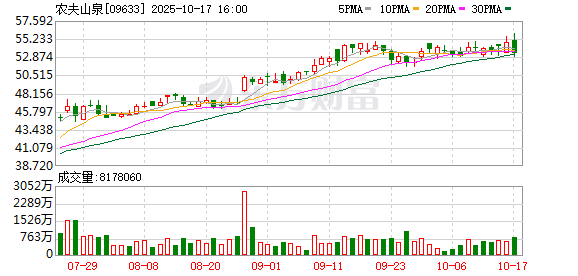
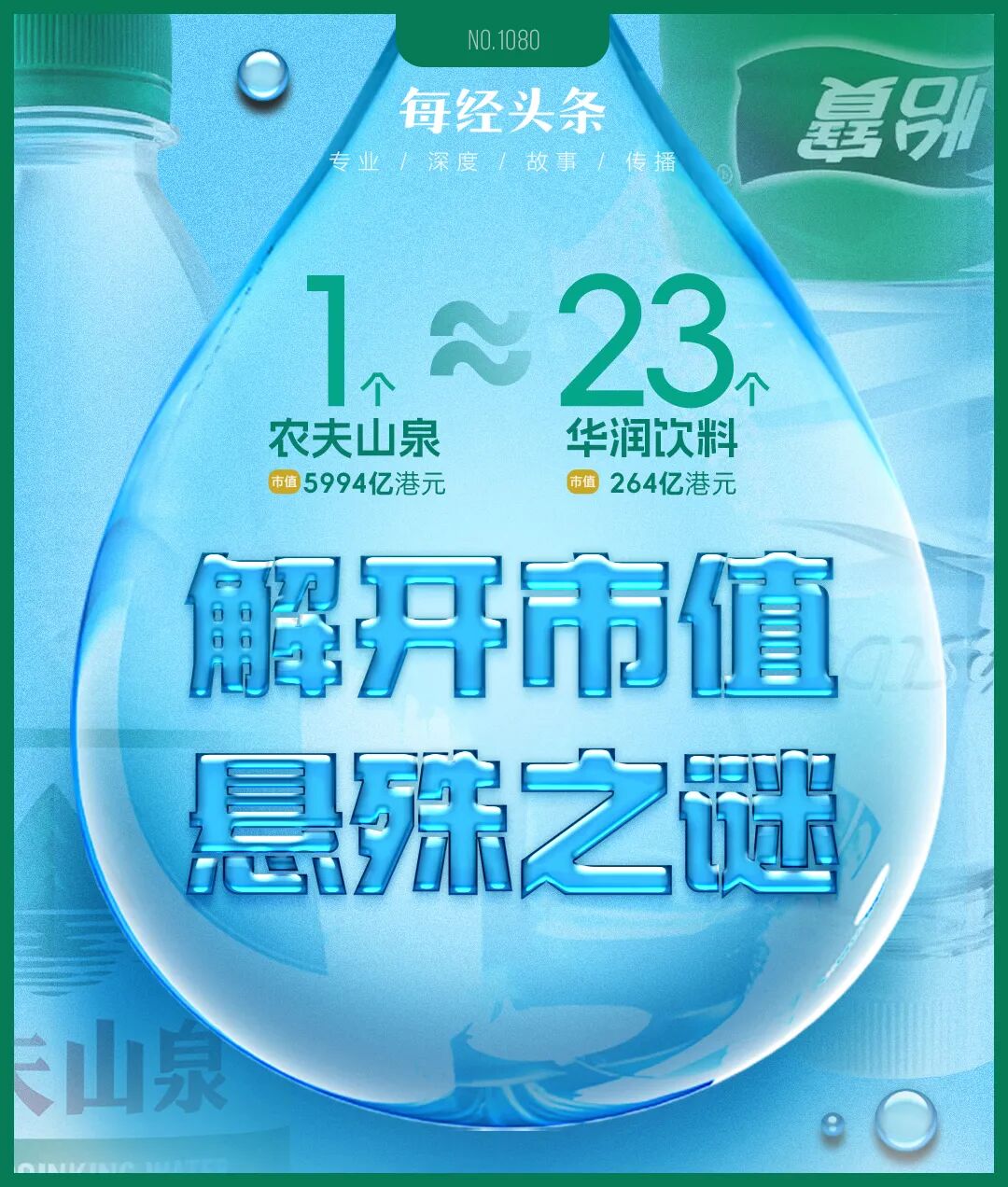
Core Viewpoint - The stark valuation difference between Nongfu Spring and China Resources Beverage, despite similar product pricing, highlights the underlying value dynamics in the bottled water industry, with Nongfu Spring commanding a market capitalization of 599.4 billion HKD compared to China Resources Beverage's 26.4 billion HKD [2][7]. Group 1: Market Performance - As of October 17, 2023, Nongfu Spring's market capitalization increased by 217.6 billion HKD, while China Resources Beverage's decreased by 1.7 billion HKD, illustrating a significant valuation gap where one Nongfu Spring is equivalent to approximately 23 China Resources Beverages [7]. - In the first half of 2025, Nongfu Spring reported revenue of 25.622 billion CNY and a net profit of 7.622 billion CNY, with bottled water revenue accounting for 36.9% of total revenue. In contrast, China Resources Beverage had revenue of 6.206 billion CNY and a net profit of only 0.805 billion CNY, with bottled water revenue making up 84.6% of its total [7][9]. Group 2: Profitability Metrics - Nongfu Spring's gross margin reached 60.3% in the first half of 2025, while China Resources Beverage's was 46.7%, indicating a 13.6 percentage point advantage for Nongfu Spring [9][19]. - The gross margins for Nongfu Spring have consistently been higher than those of China Resources Beverage, with a notable difference of 10.8 percentage points in 2024 [9]. Group 3: Competitive Landscape - The bottled water market has seen intense competition, with Nongfu Spring emerging as a leader, while China Resources Beverage has struggled to maintain its market position, leading to a decline in market share for the latter [9][10]. - Nongfu Spring has diversified its product offerings beyond bottled water, with tea beverages contributing significantly to its revenue, while China Resources Beverage is still in the process of expanding its beverage portfolio [9][10]. Group 4: Supply Chain and Production Models - Nongfu Spring operates a fully self-sufficient production model, controlling its supply chain from water source to bottling, which enhances its cost efficiency and profitability [19][22]. - In contrast, China Resources Beverage relies heavily on a contract manufacturing model, which incurs additional costs and risks associated with outsourcing production [19][22][27]. Group 5: Future Strategies - China Resources Beverage is actively working to increase its self-production capacity, aiming for 60% of its bottled water production to come from its own facilities by 2025, as part of its strategic expansion plan [28][29]. - The industry is witnessing a trend towards self-built production facilities, as companies recognize the importance of supply chain control in maintaining competitive advantage [30][31].
1个农夫山泉≈23个华润饮料,怡宝“水战”输在哪?解开市值悬殊之谜
Mei Ri Jing Ji Xin Wen· 2025-10-17 13:36
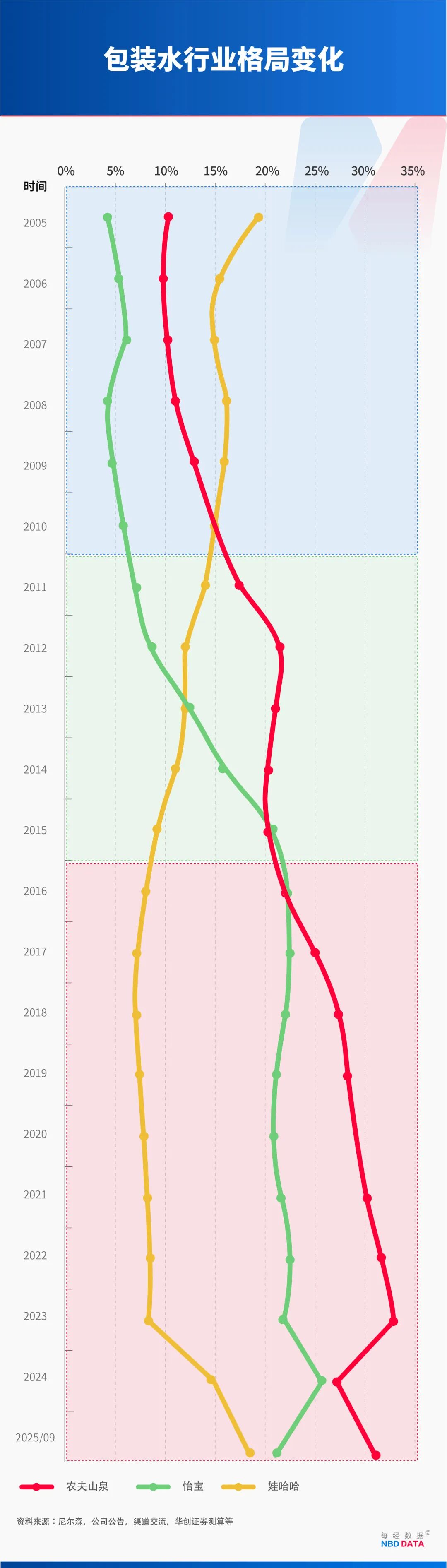
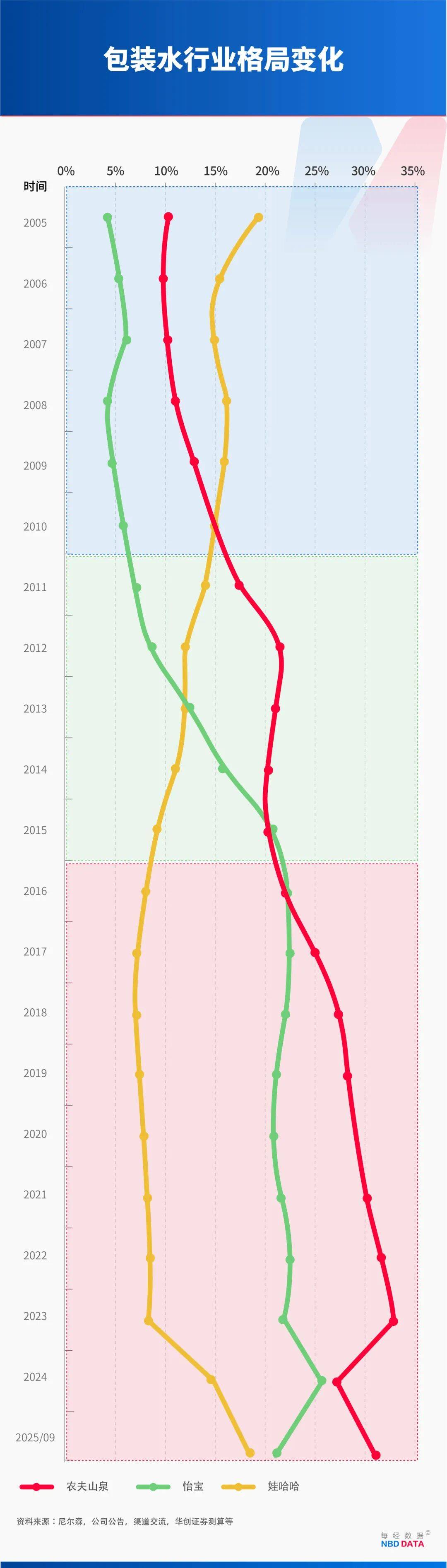
Group 1 - The article highlights the stark contrast in market valuation between two leading bottled water companies, Nongfu Spring and China Resources Beverage, despite their similar product offerings and pricing [2][3] - Nongfu Spring's market capitalization reached 599.4 billion HKD, while China Resources Beverage's market cap was only 26.4 billion HKD, indicating a significant disparity in investor perception [7] - Over the past three years, Nongfu Spring has maintained a gross margin close to 60%, while China Resources Beverage's gross margin has been around 40%, showcasing the profitability difference between the two companies [7][9] Group 2 - From January to October 2023, Nongfu Spring's market value increased by 217.6 billion HKD, while China Resources Beverage's decreased by 1.7 billion HKD, further emphasizing the valuation gap [7] - In the first half of 2025, Nongfu Spring reported revenue of 25.622 billion CNY and a net profit of 7.622 billion CNY, with bottled water revenue accounting for 36.9% of total revenue [7] - In contrast, China Resources Beverage's revenue was 6.206 billion CNY, with a net profit of only 0.805 billion CNY, and bottled water revenue making up 84.6% of its total revenue [7] Group 3 - The article discusses the competitive landscape in the bottled water market, noting that Nongfu Spring has successfully captured market share from China Resources Beverage, which has seen a decline in its market position [9][10] - Nongfu Spring has diversified its product offerings, with tea beverages contributing significantly to its revenue, while China Resources Beverage is still in the process of expanding its beverage portfolio [10][11] - The cost structure of bottled water production is highlighted, with Nongfu Spring benefiting from a fully self-sufficient production model, while China Resources Beverage relies on outsourcing, leading to higher costs and lower margins [15][19] Group 4 - The article emphasizes the importance of supply chain management in the bottled water industry, with companies increasingly focusing on building their own production facilities to reduce costs and improve margins [38] - Nongfu Spring has established multiple production bases and water sources, enhancing its operational efficiency, while China Resources Beverage is working to increase its self-production ratio [22][30] - The competitive advantage in the industry is shifting towards those who can effectively manage their supply chains and production capabilities, indicating a long-term strategic focus for both companies [38][39]
一个农夫山泉≈23个华润饮料,怡宝“水战”输在哪?揭开市值悬殊之谜
3 6 Ke· 2025-10-17 12:50
Core Viewpoint - The stark valuation difference between Nongfu Spring and China Resources Beverage, despite similar product offerings, highlights the underlying value dynamics in the bottled water industry, with Nongfu Spring commanding a market capitalization of HKD 599.4 billion compared to China Resources Beverage's HKD 26.4 billion [1][6]. Group 1: Financial Performance - As of October 17, 2023, Nongfu Spring's market capitalization increased by HKD 217.6 billion to HKD 599.4 billion, while China Resources Beverage's market cap decreased by HKD 1.7 billion to HKD 26.4 billion, indicating a valuation ratio of approximately 23:1 [6]. - In the first half of 2025, Nongfu Spring reported revenue of CNY 25.622 billion and a net profit of CNY 7.622 billion, with bottled water revenue accounting for 36.9% of total revenue. In contrast, China Resources Beverage had revenue of CNY 6.206 billion and a net profit of only CNY 0.805 billion, with bottled water revenue making up 84.6% of its total [6][8]. Group 2: Profit Margins - In the first half of 2025, Nongfu Spring achieved an overall gross margin of 60.3%, while China Resources Beverage's gross margin was 46.7%, reflecting a significant competitive advantage [8][17]. - Nongfu Spring's gross margins have consistently been higher than those of China Resources Beverage, with a margin of 58.1% in 2024 compared to 47.3% for China Resources Beverage [8][17]. Group 3: Market Strategy and Product Diversification - Nongfu Spring has successfully diversified its product offerings beyond bottled water, with tea beverages generating over CNY 10 billion in revenue, accounting for 39.4% of total revenue in the first half of 2025 [8][9]. - China Resources Beverage is still in the process of expanding its beverage product line, with only CNY 0.955 billion in beverage revenue, representing 15.4% of its total revenue in the first half of 2025 [9][10]. Group 4: Supply Chain and Production Models - Nongfu Spring operates a fully self-sufficient production model, controlling its supply chain from water source to bottling, which contributes to its higher gross margins [14][17]. - China Resources Beverage relies heavily on a contract manufacturing model, with approximately 69% of its bottled water produced by third-party manufacturers, leading to increased cost pressures [20][25]. Group 5: Competitive Landscape - The bottled water market is characterized by intense competition, with Nongfu Spring's strategic focus on product diversification and supply chain control giving it a competitive edge over China Resources Beverage, which is still developing its product range and production capabilities [35][36]. - The industry is witnessing a trend towards self-built production facilities, with major players like China Resources Beverage planning to increase its self-produced capacity to 60% by 2025, reflecting a shift in strategy to enhance supply chain control [29][33].
一个农夫山泉≈23个华润饮料,怡宝“水战”输在哪?
Hu Xiu· 2025-10-17 12:28
Core Insights - The article discusses the stark valuation differences between two leading bottled water companies in China: Nongfu Spring and China Resources Beverage (Yibao), despite their similar product offerings and pricing [3][4][11]. Group 1: Market Valuation and Performance - Nongfu Spring has a market capitalization of HKD 599.4 billion, while China Resources Beverage is valued at only HKD 26.4 billion, indicating a significant disparity in market perception [3][11]. - From January to October 2023, Nongfu Spring's market value increased by HKD 217.6 billion, while China Resources Beverage's market value decreased by HKD 1.7 billion, highlighting the contrasting trajectories of the two companies [11]. - In the first half of 2025, Nongfu Spring reported revenue of CNY 25.622 billion and a net profit of CNY 7.622 billion, with bottled water contributing CNY 9.443 billion, accounting for 36.9% of total revenue. In contrast, China Resources Beverage had revenue of CNY 6.206 billion and a net profit of only CNY 0.805 billion, with bottled water making up 84.6% of its revenue [12]. Group 2: Profitability and Margins - Nongfu Spring's gross margin has consistently been higher than that of China Resources Beverage, with a gross margin of 60.3% in the first half of 2025 compared to 46.7% for China Resources Beverage [15][32]. - The article emphasizes that higher gross margins provide companies with the financial strength to engage in price wars, which is crucial in a competitive market [16][14]. - The profitability gap is attributed to the operational efficiencies and cost management strategies employed by Nongfu Spring, which has a more robust supply chain and production model [32][29]. Group 3: Product Diversification and Market Strategy - Nongfu Spring has successfully diversified its product offerings beyond bottled water, with tea beverages contributing significantly to its revenue, accounting for 39.4% in the first half of 2025 [19]. - In contrast, China Resources Beverage is still in the process of expanding its beverage portfolio, with only CNY 0.955 billion in beverage revenue, representing 15.4% of its total revenue [20]. - The competition for shelf space in retail outlets is critical, with companies needing to provide a diverse product range to secure prime display locations, which Nongfu Spring has managed effectively [24][27]. Group 4: Supply Chain and Production Models - Nongfu Spring operates a fully self-sufficient production model, controlling its supply chain from water source to bottling, which enhances its cost efficiency and product quality [29][32]. - China Resources Beverage, on the other hand, relies heavily on third-party manufacturers, which adds to its cost structure and reduces its profit margins [35][32]. - The article notes that the trend in the industry is shifting towards self-built production facilities, as companies recognize the importance of controlling their supply chains to improve profitability [54][56].

健信超导IPO上会 毛利率显著低于同行
Bei Jing Shang Bao· 2025-10-16 16:17
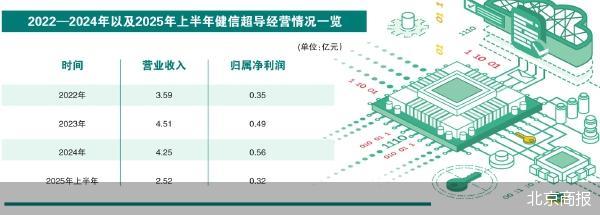
Core Viewpoint - The company, Ningbo Jianxin Superconducting Technology Co., Ltd., is preparing for its IPO on the Sci-Tech Innovation Board, with a reduced fundraising target of 775 million yuan due to the cancellation of a supplementary working capital project [1][5][6]. Group 1: Company Overview - Jianxin Superconducting is the largest independent supplier of superconducting magnets globally and ranks second among domestic companies in the MRI equipment superconducting magnet market share [3][4]. - The company specializes in the research, production, and sales of core components for medical MRI equipment, with superconducting magnets, permanent magnets, and gradient coils constituting about 50% of the MRI equipment's core component costs [3]. Group 2: Financial Performance - The company reported revenues of 359 million yuan, 451 million yuan, 425 million yuan, and 252 million yuan for the years 2022 to 2024 and the first half of 2025, respectively, with net profits of 34.63 million yuan, 48.73 million yuan, 55.78 million yuan, and 31.92 million yuan during the same periods [3]. - The company has maintained consistent cash dividends over the reporting period, with amounts around 19.99 million yuan each year from 2022 to 2024 [6]. Group 3: IPO Process and Fundraising - The IPO process has been relatively swift, with the company receiving acceptance on May 9 and entering the inquiry phase by May 31, undergoing two rounds of inquiries before the upcoming meeting on October 21 [3][4]. - The revised fundraising plan includes 275 million yuan for an annual production of 600 sets of non-liquid helium superconducting magnets, 260 million yuan for a technical upgrade project for high-field medical superconducting magnets, and 240 million yuan for new superconducting magnet research and development [5][6]. Group 4: Market Position and Growth Potential - The company is positioned to enhance its market share by integrating into the supply chains of leading complete machine enterprises, indicating significant growth potential in its product market share [4]. - The company aims to increase its R&D investment, expand production scale, and enhance its competitive advantage and profitability post-IPO [4]. Group 5: Financial Metrics and Industry Comparison - The company's gross margin has been significantly lower than the industry average, with figures of 19.56%, 22.84%, 24.94%, and 24.84% for the years 2022 to 2025, compared to industry averages of 46.27%, 45.59%, 45.17%, and 47.41% [8]. - The R&D expense ratio for the same periods was 5.66%, 5.42%, 6.5%, and 6.65%, indicating efficient use of R&D funds due to prior investments and technological accumulation [9].
Park Aerospace's Q2 Earnings Rise Y/Y Despite Lower Sales
ZACKS· 2025-10-15 13:55
Core Insights - Park Aerospace Corp. (PKE) shares increased by 2.6% following the announcement of its fiscal second-quarter results, outperforming the S&P 500, which declined by 1.4% during the same period [1] - Over the past month, Park Aerospace stock has risen by 11.1%, significantly exceeding the S&P 500's 0.5% gain, indicating strong investor optimism post-earnings report [1] Financial Performance - For the second quarter of fiscal 2026, Park Aerospace reported earnings per share (EPS) of 12 cents, up from 10 cents in the same quarter last year [2] - Net sales were $16.4 million, a slight decrease from $16.7 million in the prior-year quarter, reflecting a 2% decline [2] - Net earnings increased by 16.4% year over year to $2.4 million from $2.1 million [2] Operational Metrics and Margins - The gross profit for the quarter was $5.1 million, representing 31.2% of net sales, compared to $4.8 million and 28.5% in the same quarter last year, indicating a 2.7 percentage point improvement in gross margin [3] - Operating income rose to $2.9 million from $2.6 million, with the operating margin increasing to 17.4% from 15.7% year over year [3] Adjusted EBITDA - Adjusted EBITDA for the quarter was $3.4 million, a 6% increase from $3.2 million a year ago [4] Management Commentary - No special items were reported for the quarter, indicating a clean operational performance without one-time charges or adjustments [5] - The absence of adjustments suggests stable core operations driving earnings performance, contributing to the stock's outperformance relative to the broader market [6] Factors Influencing Results - Earnings growth occurred despite a slight revenue decline, primarily due to improved cost efficiency [7] - The cost of sales decreased to $11.3 million from $12 million a year ago, enhancing the gross margin [7] - Selling, general and administrative (SG&A) expenses rose to $2.3 million from $2.1 million, but this increase was modest relative to revenues and offset by stronger gross profit [7] - Higher interest and other income increased to $0.4 million from $0.2 million in the prior-year period, bolstering pre-tax earnings to $3.2 million from $2.8 million [8] Balance Sheet Highlights - As of August 31, 2025, cash and marketable securities totaled $61.6 million, down from $68.8 million at the end of the prior fiscal year [9] - Total current assets were reported at $83.3 million, and shareholders' equity was $105.8 million, slightly down from $107.2 million six months earlier [9] - Equity per share declined modestly to $5.31 from $5.36 [9]

英维克:2025年三季报净利润为3.99亿元
Xin Lang Cai Jing· 2025-10-13 23:32
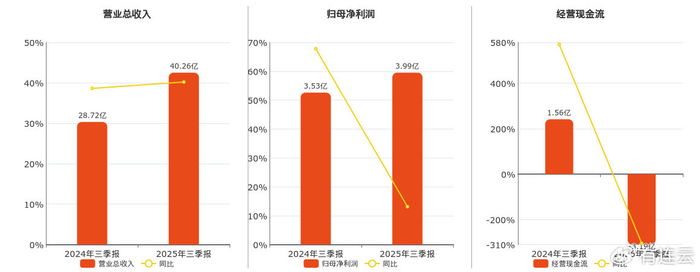
Core Insights - The company reported a total revenue of 4.026 billion yuan for Q3 2025, with a net profit attributable to shareholders of 399 million yuan [1] - The operating cash flow showed a net outflow of 319 million yuan, a decrease of 475 million yuan compared to the same period last year, representing a year-on-year decline of 304.20% [1] Financial Performance - The latest debt-to-asset ratio stands at 53.90%, an increase of 3.74 percentage points compared to the same period last year [3] - The gross profit margin is reported at 27.32%, down by 4.41 percentage points year-on-year [3] - The return on equity (ROE) is at 12.05%, a decrease of 0.60 percentage points from the previous year [3] - The diluted earnings per share (EPS) is 0.41 yuan [4] Operational Metrics - The total asset turnover ratio is 0.61 times, while the inventory turnover ratio is 2.77 times [5] - The number of shareholders is 164,300, with the top ten shareholders holding a total of 470 million shares, accounting for 48.08% of the total share capital [5]