
清洁能源转型

Search documents
耐心资本加码、入选“上证50”…中国核电市场认可度再上新台阶
Quan Jing Wang· 2025-04-29 01:11
Core Insights - The article highlights the significant role of state-owned enterprises like China Nuclear Power in stabilizing the economy amid global uncertainties and the evolving political landscape [1] - China Nuclear Power reported a revenue of 77.272 billion yuan and a net profit of 8.777 billion yuan for 2024, with a debt-to-asset ratio reduced to 68.27% and a return on equity of 9.44% [1][2] - The company has been recognized by both domestic and international investors, entering the "Shanghai Stock Exchange 50" and "FTSE China 50" indices [1][2] Financial Performance - In 2024, China Nuclear Power achieved a total operating revenue of 77.272 billion yuan and a total profit of 22.564 billion yuan [1] - The company’s net profit attributable to shareholders was 8.777 billion yuan, with a debt-to-asset ratio of 68.27% and a return on equity of 9.44% [1] - The company’s market capitalization increased to 196.9 billion yuan, a year-on-year increase of 59.3 billion yuan, with a growth rate of 43% [8] Operational Highlights - The total electricity generation for 2024 was 216.349 billion kWh, a year-on-year increase of 3.09%, with a target of 237 billion kWh for 2025 [2] - The company operated 25 nuclear power units with a total installed capacity of 23.75 million kW, achieving a non-stop rate of 0.04 times per unit per year [2] - The company’s nuclear power units achieved a WANO comprehensive index average score of 99.13, marking a historical high [2] Renewable Energy Development - In 2024, the renewable energy segment generated 33.227 billion kWh, a year-on-year increase of 42.21%, with solar and wind power generation increasing by 44.81% and 39.02%, respectively [3] - The company has completed its 14th Five-Year Plan goals ahead of schedule, with a total installed capacity of 3.06916 million kW in non-nuclear clean energy [3] Strategic Initiatives - China Nuclear Power is actively engaging in strategic emerging industries, including the domestic production of carbon-14 and the successful trial production of the medical isotope Lutetium-177 [4][5] - The company plans to invest 1 billion yuan in China Fusion Energy Co., aiming to support the development of fusion energy and align with national energy strategies [5] Governance and Recognition - The company has improved its governance standards, receiving multiple awards for its management practices and transparency in information disclosure [8] - The company’s governance improvements have been recognized by national management departments and market investors, enhancing its reputation [8][9] Future Outlook - China Nuclear Power aims to enhance its core competitiveness and transition from a nuclear power producer to a clean energy production and service provider [10] - The company will focus on quality, efficiency, and safety transformations, implementing six major projects to boost its capabilities [10]

中国天楹的“守旧立新”:从垃圾焚烧到氢能革命
Quan Jing Wang· 2025-04-28 13:57
Core Viewpoint - China Tianying reported a slight revenue increase for 2024, but a significant drop in net profit due to a one-time tax payment, indicating underlying growth potential when excluding this impact [1] Financial Performance - 2024 revenue reached 5.667 billion yuan, a slight year-on-year increase - Net profit attributable to shareholders was 279.9 million yuan, a decrease of 17% - Excluding the one-time tax impact, net profit would have been 463 million yuan, reflecting a year-on-year growth of 37.41% [1] Business Operations - The company operates 20 domestic and international waste-to-energy projects with a total daily processing capacity of 21,550 tons - The annual waste processed reached 8.49 million tons, a 20% increase year-on-year - Electricity generated was 2.197 billion kWh, a 15% increase year-on-year - Steam sales volume increased by 177.35% to 1.7 million tons, contributing an additional gross profit of 193 million yuan [1] Cost Management - The company successfully reduced sales and management expenses by over 46 million yuan through organizational reforms and process optimization [1] Cash Flow - Operating cash flow for 2024 was 655 million yuan, indicating strong cash generation capabilities [1] International Expansion - China Tianying is actively pursuing overseas projects, particularly in Southeast Asia, where waste incineration treatment is underdeveloped, presenting significant market opportunities [2] - The company has established a strong presence in Vietnam with projects recognized as benchmarks for cooperation [2] New Business Ventures - The company is expanding its business model from traditional waste incineration to integrated urban environmental services, enhancing revenue sources and economic efficiency [3] - Investments in green hydrogen production facilities are underway, with plans to achieve an annual production capacity of 200,000 tons of methanol by Q1 2026 [3] Strategic Partnerships - A strategic cooperation agreement was signed with China Ship Fuel, enhancing the company's position in the green supply chain [4] - The company has obtained ISCC EU certification, facilitating entry into the EU market for green hydrogen derivatives [4] Management Confidence - Company executives have demonstrated confidence in future growth by increasing their holdings by over 58 million yuan [4]

邓正红软实力思想解析:美国能源政策呈现“战略扩张与软实力损耗并生”的格局
Sou Hu Cai Jing· 2025-04-27 03:40
Core Insights - The energy policy of the Trump administration presents a complex pattern of "strategic expansion and soft power erosion," highlighting core contradictions such as strategic coordination dilemmas, resource integration paradoxes, environmental adaptation challenges, and value guidance conflicts [1][3] Group 1: Strategic Challenges - The strategic coordination dilemma is evident in the split between production commitments and market rules, leading to a potential decline in the U.S. energy soft power index to 62%-68% if the current path continues [1][3] - The resource integration paradox reveals a conflict between supply chain control and adverse effects, as the U.S. pressure on OPEC to increase production (by 411,000 barrels per day) disrupts the dynamic balance among oil-producing countries [1] Group 2: Policy Implications - The duality of rule reconstruction is highlighted by U.S.-Russia energy diplomacy surrounding Ukraine, which aims to reshape energy circulation rules but undermines the stability of the international energy market [1][2] - Tariff policies, such as imposing tariffs on Canadian heavy oil, protect domestic shale oil companies but increase refining costs by 15%-20%, creating a distribution pattern where capital groups benefit while small businesses and consumers bear the costs [1][2] Group 3: Market Dynamics - The resilience limitations of the shale revolution are evident as the increase of 1 million barrels per day in U.S. shale oil production is countered by cash flow crises below the $50 per barrel price line, leading to a decline in drilling platform numbers [2] - The International Energy Agency (IEA) has downgraded the global oil demand growth forecast for 2025 from 1.03 million barrels to 730,000 barrels, primarily due to the "composite suppression effect" of Trump's tariff policies, which suppress daily demand by 150,000 to 200,000 barrels [2] Group 4: Financial and Technological Shifts - The disruption of price signal transmission is illustrated by the Brent crude oil backwardation and the simultaneous decline in refined oil inventories, indicating a market adaptation that acknowledges current tightness while predicting future oversupply [2] - The weakening of the petrodollar system is accelerated by tariff policies that prompt the EU to advance carbon tariffs and India and China to establish non-dollar energy trading systems, diminishing U.S. financial soft power [2] Group 5: Energy Transition Challenges - The paradox of clean energy transition is highlighted by excessive protection of traditional energy sources, which has led to a more than 20% increase in photovoltaic component costs, negating the effectiveness of the IRA tax credit policy [2][3] - The current energy policy is trapped in a "triple dilemma" of conflicting strategic goals, diminishing tool effectiveness, and rising institutional costs, necessitating policy adjustments focused on establishing flexible quota systems and reshaping clean energy leadership through technology sharing [3]

亿纬锂能再签11GWh订单
起点锂电· 2025-04-15 10:40
其中,亿纬锂能与 沃太能源 正式签署《战略合作协议》,双方将在 2025-2028 年达成电芯战略采购合作, 预计总采购规模达 10GWh 。 此次合作将进一步强化双方在新能源产业链的协同优势,共同推动全球清洁能源转型;与 威胜能源技术股份有限公司签署 1GWh 战略合作框 架 ,深化产业协同,共绘绿色能源新蓝图。 在 2025 年初,亿纬锂能已与海博思创签 50GWh 电芯战略采购合作,至此亿纬锂能合作签单已达 61GWh 。 大规模订单支撑亿纬锂能 2024 年至今储能出货量保持强劲势头。 起点研究院统计, 2024 年全球储能电池出货量前十企业中,亿纬锂能排 名上升至全球第二。 可以看到,通过与国际、国内一线新能源企业达成合作,亿纬锂能进一步打开了国内外销售市场,助推其 2024 年全球储能电池市场地位的 提升。 2024 年 4 月,亿纬锂能宣布与海得智慧能源、林洋储能、晶科储能等国内多家企业达成合作,总合作规模达到 19GWh 。 2024 年 6 月和 9 月 , 亿纬锂能 分别与 Powin 、 AESI 等海外客户达成合作,供应规模分别达 15GWh 和 19.5GWh 。 同 年 12 月, ...

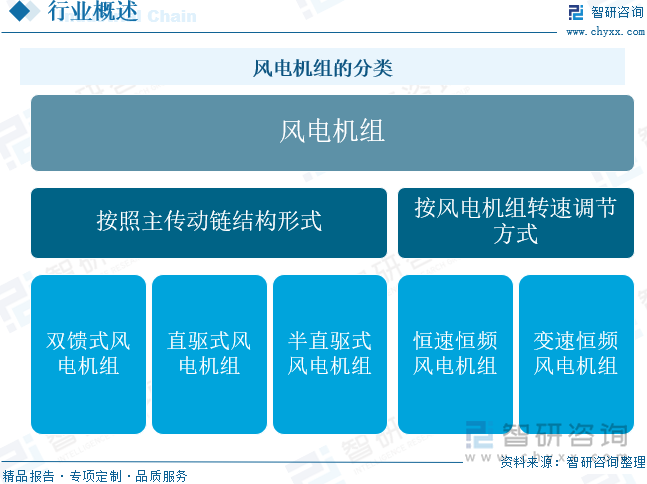
2025年中国风电机组行业相关政策、产业链、平均单机容量、竞争格局及发展趋势研判:风电机组平均单机容量不断增加,海陆风电机组大型化进程持续提速[图]
Chan Ye Xin Xi Wang· 2025-04-14 01:26
Core Viewpoint - Wind power is a clean and renewable energy source that significantly reduces greenhouse gas emissions and pollution, thereby alleviating climate change and improving air quality. The wind power industry in China has maintained high-quality development, with a notable trend towards larger wind turbine capacities [1][21]. Industry Overview - Wind turbines convert wind energy into mechanical energy and then into electricity, playing a crucial role in the transition to clean energy. The average capacity of newly installed wind turbines in China for 2024 is projected to be 6046 kW, an increase of 8.1% year-on-year [1][19]. - The average capacity of onshore wind turbines is expected to reach 5885 kW, up 9.6%, while offshore wind turbines will average 9981 kW, a 3.9% increase [1][19]. - The share of wind turbines with a capacity of 5 MW and below has rapidly decreased from over 50% in 2022 to around 5%, while the share of offshore wind turbines with a capacity of 10 MW and above has increased from 12.1% in 2022 to 58% [1][19]. Industry Policies - The Chinese government has implemented various policies to enhance the strategic position of the wind power industry, including the "Thousand Villages and Ten Thousand Villages Wind Action" initiative aimed at promoting wind power development in rural areas [9][12]. - The Ningxia government has proposed a plan to upgrade and replace old wind turbines, targeting the renovation of over 200,000 kW of outdated wind power capacity by 2027 [9][12]. Industry Chain - The wind turbine industry chain includes upstream component manufacturing, midstream assembly, and downstream application markets. Key components include blades, generators, gearboxes, and converters [13]. Market Size and Growth - The wind turbine blade market in China is projected to reach 47.6 billion yuan in 2024, driven by advancements in technology and the trend towards larger blades [15]. - The total installed wind power capacity in China is expected to reach 520.68 GW by 2024, with a year-on-year growth of 18% [19]. Key Companies - Major players in the wind turbine industry include Goldwind Technology, Dongfang Electric, and Harbin Electric, which dominate the market share. The industry is characterized by a high concentration of production capacity [29][31]. - Goldwind Technology reported a revenue of 12.768 billion yuan from wind turbine sales in the first half of 2024, while Dongfang Electric's clean energy equipment revenue reached 14.065 billion yuan, a 41.03% increase year-on-year [31][33]. Development Trends - The wind turbine industry is expected to undergo significant technological innovations, with advancements in design and materials leading to higher energy capture efficiency [36]. - The industry will see deeper vertical integration and specialized division of labor, with leading companies extending into upstream core component production [37]. - New business models, such as shared wind power and community wind power, are emerging, alongside the integration of wind power with hydrogen and energy storage solutions [38].

2024年全球清洁电力占比首超40%!太阳能成为最大新增电力来源
Sou Hu Cai Jing· 2025-04-09 21:30
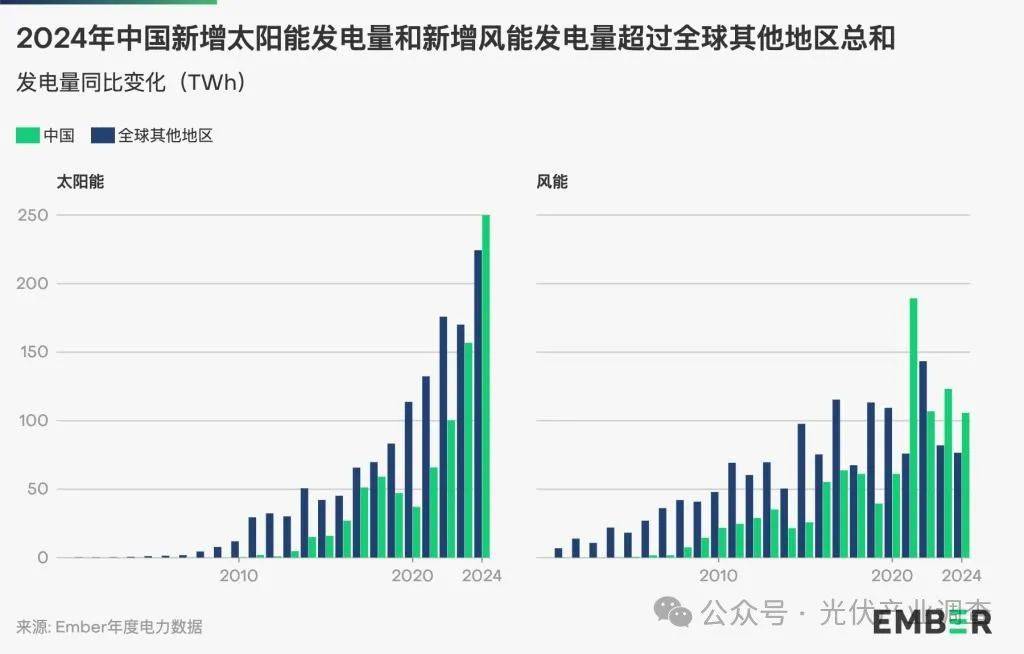
Core Insights - The report by Ember highlights a record growth in global renewable energy generation in 2024, with clean energy (including renewables and nuclear) surpassing 40% of total global electricity generation [1] Group 1: Renewable Energy Growth - In 2024, global renewable energy generation increased by 858 TWh, a 49% rise compared to the previous record of 577 TWh set in 2022 [1] - Hydropower remains the largest source of clean electricity, accounting for 14.3%, while wind and solar energy represent 8.1% and 6.9% respectively, with their combined share exceeding hydropower for the first time in 2024 [1] - Nuclear energy's share dropped to 9%, marking a 45-year low [1] Group 2: Solar Energy Dominance - Solar energy continues to be the largest source of new electricity globally for the third consecutive year, with an addition of 474 TWh in 2024, bringing its total generation to 2 TW, doubling from 1 TW in 2022 [2] - China plays a crucial role in the global energy transition, contributing 53% of new solar and 58% of new wind energy generation in 2024, significantly outpacing other regions [2] - China's solar generation now accounts for 8.3% of the global total, more than doubling from three years ago [2] Group 3: Challenges and Future Outlook - The report indicates that global electricity demand grew by 4% in 2024 due to frequent heatwaves, leading to a slight increase in fossil fuel generation and a record high in carbon emissions from the electricity sector [5] - The rapid growth of clean energy generation is expected to gradually reduce reliance on fossil fuel generation in the coming years, aided by advancements in battery storage and other technologies [5]

中金:澳大利亚—新型电力系统发展前沿,风光储需求加速
中金点睛· 2025-03-17 23:51
Core Viewpoint - Australia is at the forefront of developing a new power system, with a high proportion of wind and solar power generation, reaching 28.14% in 2023. The non-interconnected nature of its grid presents significant challenges as the share of renewable energy increases [1]. Group 1: Demand Side Transformation - The demand for wind and solar energy in Australia is primarily driven by the electrification, hydrogen energy, and electric vehicle development, rather than a typical shortage of electricity seen in developing countries. The projected CAGR for electricity demand from 2024 to 2050 is approximately 1.93%, with significant growth rates of 13%, 18%, and 27% for electrification, hydrogen, and electric vehicles respectively [3][4]. - The total electricity demand in Australia for 2023 is estimated at 273 TWh, with a compound annual growth rate (CAGR) of 0.54% over the past five years. By 2030, total electricity demand is expected to reach 304 TWh, with a CAGR of 1.81% from 2024 to 2030 [5][6]. Group 2: Generation Side Characteristics - The cost of solar and storage has reached a parity point in 2024, with the levelized cost of electricity (LCOE) for solar plus storage estimated at approximately 0.056-0.086 AUD/kWh, which is lower than coal and gas costs [7]. - The proportion of renewable energy generation is expected to increase significantly, with projections indicating that by 2030, renewable energy will account for 82% of total generation, potentially exceeding 90% by 2033 [10]. Group 3: Policy Framework and Trends - The energy transition policy in Australia is accelerating, with a clear target for clean energy transformation. The actual pace of transition may exceed government expectations due to increasing regulatory demands and the need for flexible energy resources [8][9]. - The retirement of coal-fired power plants is occurring at an accelerated pace, with all coal plants expected to close by 2037, five years earlier than previous estimates [12]. Group 4: Market Characteristics - The Australian electricity market is characterized by high volatility in wholesale prices due to the lack of a capacity market and price caps. This has led to frequent negative pricing and challenges in recovering investments in coal power plants [17][18]. - The minimum demand for electricity has reached historical lows, with extreme price fluctuations becoming more common. The price cap for the wholesale market is set to increase significantly over the next few years [18]. Group 5: Investment Opportunities - The largest market growth is expected in centralized storage, with a CAGR of 42.9% from 2025 to 2030. The charging station market is projected to grow at a CAGR of 44.8% during the same period [19][20][22]. - Hydrogen energy is anticipated to become a significant market by 2030, with production expected to reach 50,000 tons, translating to a market size of approximately 39 billion AUD [21].
2024全球锂电池出货量1502GWh,储能和轻型动力市场增速领先!
起点锂电· 2025-01-18 03:50
根据起点研究院(SPIR)统计数据显示, 2024全球锂电池出货量达1501.9GWh,同比增长 26.0% ,其中EV动力锂电池出货1036GWh,+18.6%; ESS储能锂电池出货356GWh, +61.5%;轻型动力锂电池出货43GWh,+21.5%; 3C锂电池出货66.9Wh,+6.9%。 细分到各主要细分领域,市场表现如下: EV动力电池: 起点研究院(SPIR)统计数据显示2024年全球新能源汽车销量1810万辆,同比 增长25.2%,新能源汽车销量的增长带动2024全球EV动力电池出货量达1036GWh,同比增长 18.6%。起点研究院(SPIR)预计2025年全球EV动力电池出货量将达1210GWh,同比增长 16.8%。 ESS储能电池: 在各国清洁能源转型目标及3060碳中和碳达峰目标推动下,风电光伏装机比例 不断提升、电力系统灵活性要求提高、储能技术进步及电池系统成本下降,2024储能电池市场 需求持续快速增长。起点研究院(SPIR)统计数据显示,2024全球储能电池出货量356GWh, 同比增长61.5%;预计2025年全球储能电池出货量将达530GWh,同比增长48.9%,主要增 ...