
社区团购

Search documents
来伊份跌2.03%,成交额9518.28万元,主力资金净流出2073.51万元
Xin Lang Cai Jing· 2025-08-22 03:08
Group 1 - The core viewpoint of the news is that Laiyifen's stock has experienced a decline in price and trading activity, indicating potential challenges in the market [1] - As of August 22, Laiyifen's stock price dropped by 2.03% to 13.53 CNY per share, with a total market capitalization of 4.525 billion CNY [1] - The company has seen a net outflow of main funds amounting to 20.7351 million CNY, with significant selling activity [1] Group 2 - Laiyifen's stock has decreased by 12.26% year-to-date, with a slight increase of 1.50% over the last five trading days [1] - The company has appeared on the trading leaderboard 12 times this year, with the most recent occurrence on March 3 [1] - As of March 31, the number of Laiyifen's shareholders decreased by 5.44% to 43,100, while the average circulating shares per person increased by 6.10% to 7,810 shares [2] Group 3 - For the first quarter of 2025, Laiyifen reported a revenue of 1.048 billion CNY, reflecting a year-on-year decrease of 1.23% [2] - The company has distributed a total of 314 million CNY in dividends since its A-share listing, with 47.7924 million CNY distributed over the past three years [2] - Laiyifen operates in the food and beverage sector, specifically in the snack food industry, and is involved in various concepts such as community group buying and new retail [1]

妙可蓝多跌2.01%,成交额8576.09万元,主力资金净流出455.71万元
Xin Lang Cai Jing· 2025-08-22 03:04
Core Viewpoint - The stock of Miaokelan Duo has experienced fluctuations, with a year-to-date increase of 52.79% and a recent decline in the last 20 and 60 days, indicating potential volatility in the market [1]. Group 1: Stock Performance - On August 22, Miaokelan Duo's stock price decreased by 2.01%, reaching 27.35 CNY per share, with a trading volume of 85.76 million CNY and a turnover rate of 0.61% [1]. - The total market capitalization of Miaokelan Duo is 14.005 billion CNY [1]. - Year-to-date, the stock has risen by 52.79%, with a 1.00% increase over the last 5 trading days, but a decline of 2.39% over the last 20 days and 5.17% over the last 60 days [1]. Group 2: Financial Performance - For the period from January to June 2025, Miaokelan Duo achieved a revenue of 2.567 billion CNY, reflecting a year-on-year growth of 33.52% [2]. - The number of shareholders as of June 30, 2025, is 34,300, a decrease of 23.14% from the previous period, while the average circulating shares per person increased by 30.11% to 14,909 shares [2]. - Since its A-share listing, Miaokelan Duo has distributed a total of 368 million CNY in dividends, with no dividends paid in the last three years [2]. Group 3: Shareholder and Institutional Holdings - As of June 30, 2025, Hong Kong Central Clearing Limited has exited the list of the top ten circulating shareholders of Miaokelan Duo [2].

京东杀回社区团购
3 6 Ke· 2025-08-22 01:46
Core Viewpoint - JD.com is re-entering the community group buying market with its business JD Pinpin, expanding its presence in multiple cities including Beijing, Hebei, Anhui, and Jiangsu, indicating a strategic push to capture market share in this sector [1][2][3] Group 1: Expansion Strategy - JD Pinpin has opened multiple stores in Beijing and has plans for further expansion in areas like Daxing and Miyun, focusing on regions outside the city center [1] - In Hebei's Zhuozhou, JD Pinpin has opened 16 new stores since late June, targeting communities with over 600 households and partnering with local businesses like convenience stores and delivery stations [2] - The company aims to open 1,000 stores in Suqian, showcasing its ambitious growth plans [2] Group 2: Business Model and Partnerships - JD Pinpin offers flexible partnership models for local businesses, including a 5% commission on online sales and the option to purchase goods at cost for resale [2] - A security deposit of 20,000 to 30,000 yuan is required from participating merchants, which can be refunded after one year if they do not renew their contract [2] - JD Pinpin is leveraging resources from other JD businesses to reduce supply chain costs and enhance product offerings, including partnerships with discount supermarkets and its own brands [3] Group 3: Market Challenges and Industry Context - The community group buying sector has faced significant challenges, including regulatory scrutiny and competition from other e-commerce models, leading to a contraction in the market [4][5] - Experts suggest that community group buying is not currently a profitable business due to low customer spending and high operational costs, particularly in managing group leaders [6] - JD Pinpin's new approach combines community group buying with convenience store operations, but this complexity may pose challenges in execution and customer experience [6]

京东杀回社区团购
财联社· 2025-08-22 00:44
Core Viewpoint - JD.com is re-entering the community group buying market with its JD Pinpin business, expanding its presence in multiple cities and aiming for significant growth in the sector [3][4][5]. Group 1: Expansion Strategy - JD Pinpin has opened multiple stores in Beijing and other regions, including Hebei, Anhui, and Jiangsu, with plans for further expansion in areas like Daxing and Miyun [4][5]. - Since June, JD Pinpin has launched 16 new stores in Zhuozhou, focusing on communities with over 600 households and targeting local businesses like convenience stores and express delivery stations [5][6]. - The company aims to open 1,000 stores in Suqian, showcasing its ambitious expansion plans [5]. Group 2: Business Model and Partnerships - JD Pinpin offers flexible cooperation models for local merchants, providing a 5% commission on online sales and allowing them to purchase goods at cost price for resale [5][6]. - Merchants are required to pay a deposit of 20,000 to 30,000 yuan, which can be refunded after one year if they do not renew their contract [5]. - The business leverages resources from JD's other operations, such as discount supermarkets, to reduce supply chain costs and enhance market coverage [6]. Group 3: Competitive Landscape - The community group buying sector has faced challenges, with competitors like Meituan and Taobao adjusting their strategies or exiting the market due to profitability issues [9][10]. - Experts indicate that community group buying is not currently a lucrative business due to low customer spending and high operational costs [9][10]. - JD Pinpin's new approach combines community group buying with convenience store operations, but this complexity may pose challenges in user experience and supply chain management [10].


数据复盘丨发电机、人形机器人等概念走强 96股获主力资金净流入超1亿元
Zheng Quan Shi Bao Wang· 2025-08-19 10:47
Market Overview - The Shanghai Composite Index closed at 3727.29 points, down 0.02%, with a trading volume of 10,609 billion yuan [2] - The Shenzhen Component Index closed at 11821.63 points, down 0.12%, with a trading volume of 15,274.7 billion yuan [2] - The ChiNext Index closed at 2601.74 points, down 0.17% [2] - The STAR Market 50 Index closed at 1112.27 points, down 1.12% [2] - Total trading volume in both markets reached 25,883.7 billion yuan, marking the fifth consecutive trading day above 20 trillion yuan, a decrease of 1,757.51 billion yuan from the previous trading day [2] Sector Performance - Strong sectors included telecommunications, food and beverage, retail, home appliances, real estate, agriculture, automotive, and textiles [4] - Active concepts included generators, humanoid robots, automotive integrated die-casting, CPO, smart TVs, copper cable high-speed connections, liquor, and community group buying [4] - Weak sectors included securities, insurance, defense, oil and petrochemicals, pharmaceuticals, and coal [4] Fund Flow Analysis - The main funds in the Shanghai and Shenzhen markets experienced a net outflow of 450.86 billion yuan, with the ChiNext seeing a net outflow of 231.66 billion yuan [5][6] - The food and beverage sector saw the highest net inflow of main funds, amounting to 10.71 billion yuan, followed by home appliances and banking [6] - The electronics sector had the largest net outflow, totaling 79.08 billion yuan, followed by computer, defense, machinery, non-bank financials, and metals [6] Individual Stock Performance - A total of 2,196 stocks saw net inflows, with 96 stocks receiving over 1 billion yuan in net inflows [7][8] - The stock with the highest net inflow was Zhongyou Capital, with 10.47 billion yuan, followed by Top Group and Sichuan Changhong [8] - Conversely, 2,946 stocks experienced net outflows, with 182 stocks seeing over 1 billion yuan in net outflows [9][10] - The stock with the highest net outflow was Dongfang Caifu, with 30.31 billion yuan, followed by Great Wall Securities and Northern Rare Earth [10] Institutional Activity - Institutional investors had a net selling of approximately 10.22 billion yuan, with 12 stocks seeing net purchases and 19 stocks net sales [11] - The stock with the highest net purchase by institutions was Electronic City, with about 1.79 billion yuan [11]


落地北京门店 京东放不下社区团购
Bei Jing Shang Bao· 2025-08-17 13:57
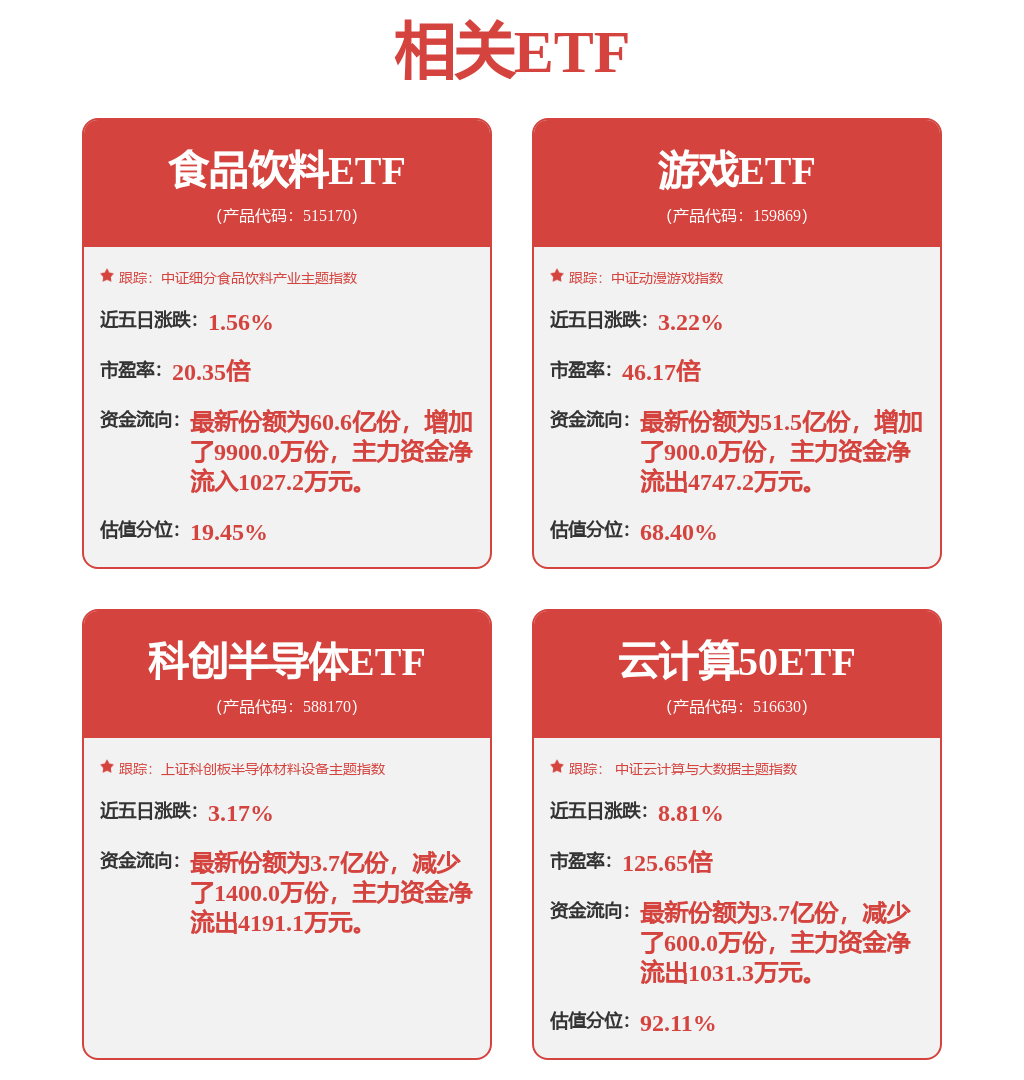
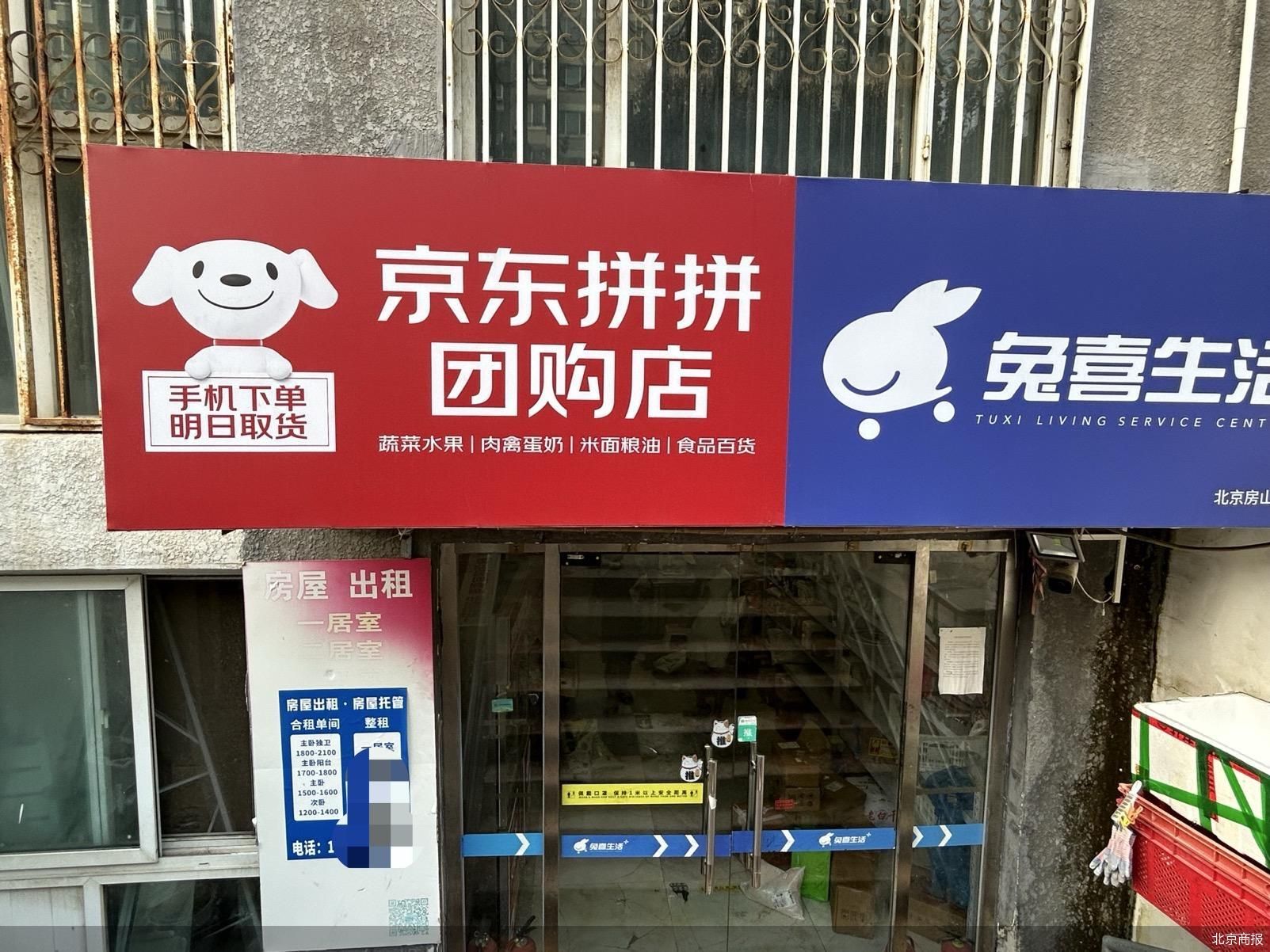
Core Insights - JD Pinpin has quietly opened several stores in Beijing's Fangshan district, indicating a strategic expansion into community group buying, which remains a low-margin business [1][3] - The company aims to optimize supply chain costs by integrating resources from discount supermarkets and community group buying, with a target gross margin of around 20% [1][7] Group 1: Market Expansion - JD Pinpin has established multiple storefronts in Fangshan, with a shared space model alongside logistics partners like Zhongtong [3] - The stores offer a variety of essential goods, including fresh produce and daily necessities, and have begun operations since April 2023 [4][5] - Future expansion plans include targeting areas outside Beijing's Fifth Ring Road, such as Daxing and Miyun [4] Group 2: Supply Chain Integration - The integration of supply chain resources between JD Pinpin and JD's discount supermarket business is a key strategy to reduce costs and enhance product offerings [6][8] - The company has introduced its private labels, such as JD Seven Fresh and JD Fresh Workshop, to compete on price with rivals like Duoduo Maicai [4][8] Group 3: Business Model Challenges - Community group buying is characterized by low profitability, with logistics costs averaging around 10%, necessitating a careful balance of margins and operational costs [9][10] - The competitive landscape has shifted, with major players like Meituan scaling back, leaving Duoduo Maicai as a primary competitor [9] - JD Pinpin's strategy includes recruiting capable group leaders and providing them with training to enhance user engagement and retention [10]
徐家汇股价微涨0.83% 商业百货板块活跃度提升
Jin Rong Jie· 2025-08-15 20:15
Group 1 - The stock price of Xu Jia Hui reached 8.54 yuan as of August 15, 2025, with an increase of 0.07 yuan from the previous trading day [1] - The trading volume on that day was 93,577 hands, with a transaction amount of 0.8 billion yuan, resulting in a turnover rate of 2.26% [1] - Xu Jia Hui's main business is department store retail, owning well-known malls such as Shanghai Liu Bai and Hui Jin Department Store, making it a significant commercial retail enterprise in Shanghai [1] Group 2 - The commercial department store sector has recently shown active performance, with the company also involved in new retail and community group buying [1] - As of August 15, 2025, the net outflow of main funds for Xu Jia Hui was 8.2049 million yuan, with a cumulative net outflow of 23.8856 million yuan over the past five trading days [1]

三江购物股价微涨0.47% 公司所属新零售板块受关注
Jin Rong Jie· 2025-08-15 19:58
Group 1 - The stock price of Sanjiang Shopping closed at 10.66 yuan on August 15, with an increase of 0.05 yuan, representing a rise of 0.47% [1] - The trading volume on that day was 71,712 hands, with a transaction amount reaching 0.76 billion yuan [1] - Sanjiang Shopping's main business is commercial retail, primarily operating supermarkets and convenience stores [1] Group 2 - The company has established a relatively complete regional sales network and is a well-known retail chain in Zhejiang Province [1] - The company's concept sectors include commercial department stores, new retail, and community group buying [1] - On August 15, the net outflow of main funds was 7.1955 million yuan, with a cumulative net outflow of 32.8053 million yuan over the past five trading days [1]

劲仔食品股价微跌0.08% 新品“魔芋京门酱肚”上线
Jin Rong Jie· 2025-08-11 17:46
Group 1 - As of August 11, 2025, the stock price of Jinzhai Food is 12.79 yuan, down 0.08% from the previous trading day, with a trading volume of 1.04 billion yuan and a turnover rate of 2.71% [1] - Jinzhai Food primarily engages in the research, development, production, and sales of snack foods, including fish snacks, bean products, and meat products [1] - The company operates in the food and beverage industry and is involved in concepts such as the Hunan sector and community group buying [1] Group 2 - Recently, Jinzhai Food launched a new product called "Jinzhai Konjac Beijing Sauce Belly," which emphasizes the flavor of old Beijing and is now available on its official flagship store [1] - On August 11, the net inflow of main funds was 816,700 yuan, while the net outflow of main funds over the past five days was 28.6953 million yuan [1]
小众代收品牌挤入末端市场 快递轻模式运作求生
Bei Jing Shang Bao· 2025-08-08 06:59
Core Insights - The article discusses the emergence of niche delivery brands like Panda Express and Xiaobing Station in the last-mile delivery market, which are targeting small supermarkets and convenience stores for package collection services [1][2]. Group 1: Market Entry Strategies - Niche delivery brands are adopting a low-barrier entry strategy, with Panda Express requiring only a 199 yuan material fee and system maintenance fee for加盟 [2]. - Xiaobing Station charges an annual加盟 fee of 3000 yuan, after which no further fees are required, and they provide similar services as Panda Express [2]. - Both brands are leveraging existing local stores to reduce market expansion difficulties, offering technology and material support [4]. Group 2: Operational Challenges - The last-mile delivery market primarily consists of self-pickup from stations, lockers, and collection points, with major players like Cainiao and Mama Station dominating the landscape [3]. - Many small delivery points face high operational costs, including rent and labor, making profitability challenging despite high package volumes [3]. - The light asset operation model adopted by these niche brands allows for easier market penetration but may struggle to achieve scale [4][5]. Group 3: Market Dynamics - The flexibility of niche brands allows them to adapt to localized consumer needs, but they face challenges in establishing a sustainable presence in competitive markets [5]. - The loose relationship between加盟商 and the brands makes it easy for加盟商 to exit if the expected customer traffic is not generated, hindering long-term market establishment [6]. - In first-tier cities, the saturation of delivery points makes it difficult for these brands to gain traction, often relegating them to a "catching leftovers" role [6].