
商业百货

Search documents
股票行情快报:小商品城(600415)2月9日主力资金净卖出4970.81万元
Sou Hu Cai Jing· 2026-02-09 11:29
Core Viewpoint - The stock of Xiaogoods City (600415) has shown stable performance with a closing price of 15.28 yuan as of February 9, 2026, with a slight increase in trading volume and mixed capital flow data indicating varying investor sentiment [1][2]. Financial Performance - Xiaogoods City reported a total market capitalization of 837.89 billion yuan, significantly higher than the commercial retail industry average of 102.44 billion yuan, ranking first among 57 companies in the industry [3]. - The company achieved a net profit of 34.57 billion yuan, which is substantially higher than the industry average of 85.47 million yuan, also ranking first in the industry [3]. - For the first three quarters of 2025, the company’s main revenue reached 130.61 billion yuan, reflecting a year-on-year increase of 23.07%, while the net profit grew by 48.45% [3]. - The gross profit margin stands at 37.23%, slightly below the industry average of 37.66%, while the net profit margin is significantly higher at 26.53% compared to the industry average of 4.78% [3]. Investment Ratings - In the last 90 days, 12 institutions have rated Xiaogoods City with a "buy" recommendation, indicating strong institutional confidence in the stock [4]. - The average target price set by institutions for the stock over the past 90 days is 21.16 yuan, suggesting potential upside from the current trading price [4].


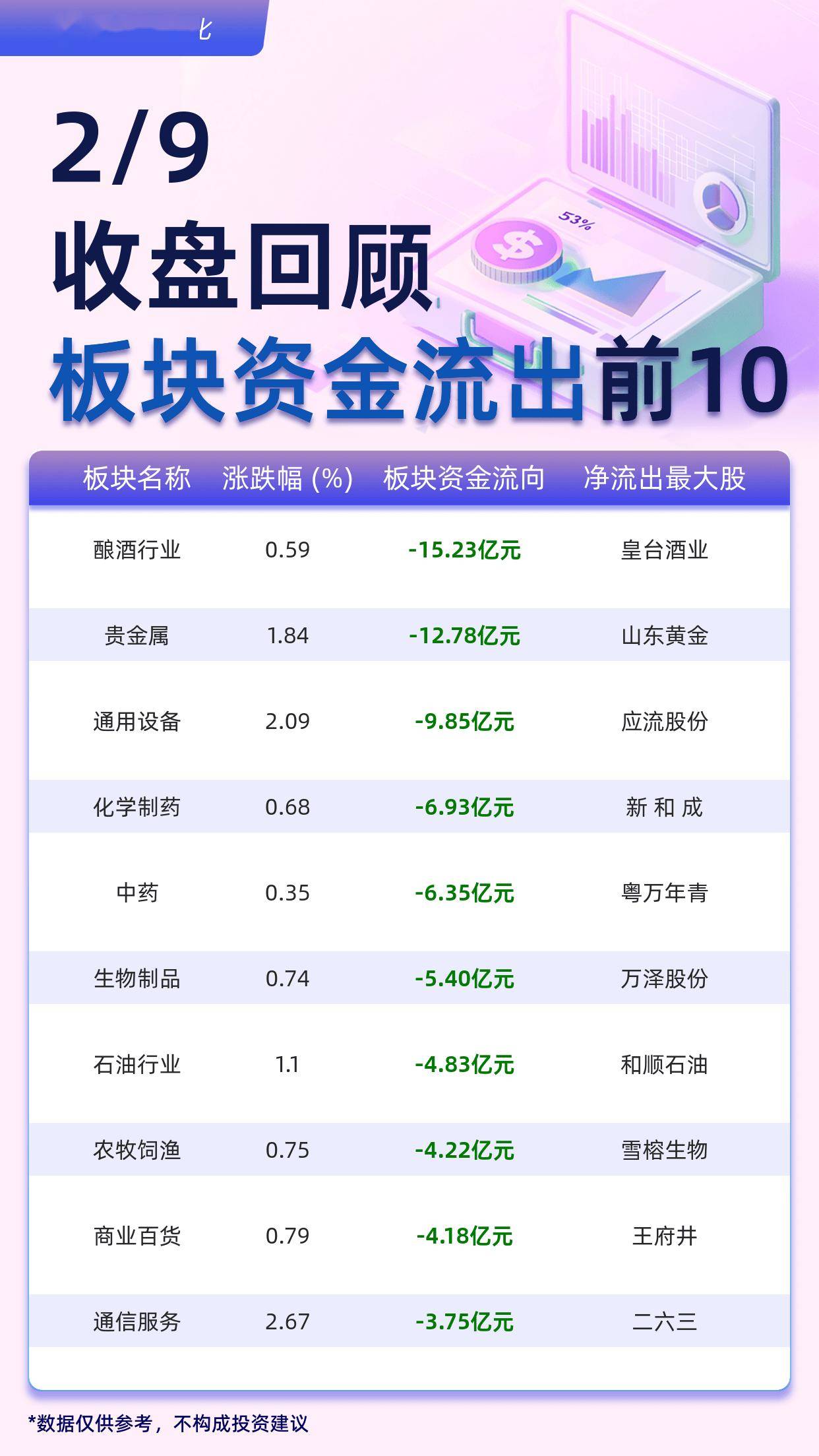
主力板块资金流出前10:酿酒行业流出15.23亿元、贵金属流出12.78亿元
Sou Hu Cai Jing· 2026-02-09 07:16
Core Insights - The main market saw a net inflow of 26.126 billion yuan as of February 9, indicating a positive trend in overall market sentiment [1]. Sector Analysis - The top ten sectors with the largest net outflows of funds were as follows: - **Beverage Industry**: Experienced a net outflow of 1.523 billion yuan, with Huangtai Liquor being the largest contributor to this outflow [2]. - **Precious Metals**: Saw a net outflow of 1.278 billion yuan, primarily driven by Shandong Gold [2]. - **General Equipment**: Had a net outflow of 0.985 billion yuan, with Yingliu Co. being the main affected company [2]. - **Chemical Pharmaceuticals**: Experienced a net outflow of 0.693 billion yuan, with Xinhengcheng as the largest contributor [2]. - **Traditional Chinese Medicine**: Faced a net outflow of 0.635 billion yuan, with Guangdong Wannianqing leading the outflow [2]. - **Biological Products**: Saw a net outflow of 0.540 billion yuan, with Wanze Co. being the most impacted [2]. - **Oil Industry**: Experienced a net outflow of 0.483 billion yuan, with Heshun Oil being the largest contributor [3]. - **Agriculture, Animal Husbandry, and Fishery**: Had a net outflow of 0.422 billion yuan, with Xue Rong Biological being the main affected company [3]. - **Commercial Retail**: Faced a net outflow of 0.418 billion yuan, with Wangfujing leading the outflow [3]. - **Telecommunication Services**: Experienced a net outflow of 0.375 billion yuan, with Erli San being the largest contributor [3].
英大证券晨会纪要-20260209
British Securities· 2026-02-09 03:13
Core Insights - The report indicates a cautious market sentiment ahead of the Spring Festival, with a focus on individual stock plays and structural rotations, suggesting that opportunities will arise from quick stock trading and sector rotations rather than a clear trend [1][13][14] - The market is expected to exhibit a "seek stability before the festival, rebound after" rhythm, with defensive sectors like consumption and dividend stocks likely to attract attention before the holiday, while post-holiday focus may shift to small-cap growth stocks and sectors with clear industrial catalysts [1][13][14] Market Overview - Last Friday, the three major indices in the A-share market opened lower but rebounded to close in the green during the morning session, only to fall back in the afternoon, continuing the recent adjustment trend [4][5] - The chemical, battery, and mining sectors showed strength, while consumer and AI-related stocks experienced a collective pullback, indicating a structural rotation in the market [1][4][13] Sector Performance - The report highlights that cyclical sectors like chemicals and energy metals have been active, driven by ongoing domestic policies aimed at stabilizing growth and improving economic supply-demand dynamics [7][8] - The new energy sector, particularly battery and photovoltaic stocks, has shown resilience, supported by global trends towards carbon neutrality and domestic policy reforms aimed at reducing competition in these fields [8][9] - Consumer stocks have also been active, with government policies aimed at stimulating consumption creating structural investment opportunities, particularly in sectors catering to demographic trends and service consumption upgrades [10][11] Investment Strategy - Investors are advised to balance stability and flexibility in their strategies, focusing on consumption and dividend stocks before the festival while preparing for potential growth opportunities post-festival [2][14] - The report emphasizes the importance of timing in the current volatile market, suggesting that investors should be ready to adapt to changing market rhythms [2][14]
最长”春节假,消费要“开花
2 1 Shi Ji Jing Ji Bao Dao· 2026-02-06 15:10
Group 1 - The core viewpoint of the article highlights a significant rebound in consumer stocks, particularly in the food and beverage, cultural tourism, and film industries, driven by the longest Spring Festival holiday in history and ongoing consumer stimulus policies [1][4] - The consumer sector has seen a rotation and substantial increase since February, with notable growth in the food and beverage and cultural tourism sectors [1] - The Ministry of Commerce and nine other departments have launched a special Spring Festival activity plan to boost consumption during the nine-day holiday, focusing on cultural traditions and family gatherings [3] Group 2 - Travel booking orders have surged ahead of the Spring Festival, with a report indicating that the average travel days per user for the holiday have increased to 5.9 days, up by 1.1 days from last year [6] - Flight bookings for the holiday have shown a 20% year-on-year increase, with outbound travel service bookings rising nearly 40% and inbound flight bookings increasing over fourfold [6] - Online shopping has also seen remarkable growth, with a specific seafood package experiencing a 607% month-on-month increase in demand since the start of the New Year shopping festival [6]
市场分析:电池电子行业领涨,A股先抑后扬
Zhongyuan Securities· 2026-02-06 09:36
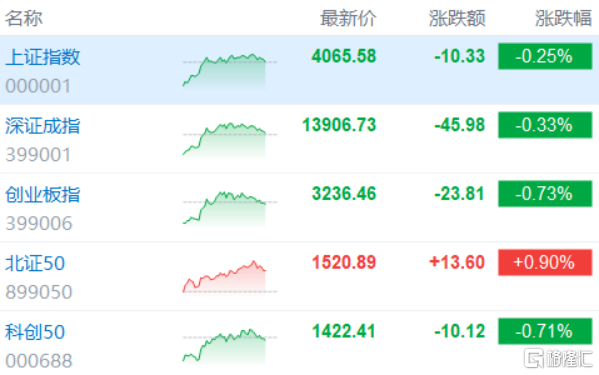
Investment Rating - The industry is rated as "outperforming the market," indicating an expected increase of over 10% in the industry index relative to the CSI 300 index over the next six months [15]. Core Insights - The A-share market experienced a slight fluctuation, with the Shanghai Composite Index finding support around 4029 points before rebounding. Key sectors such as batteries, electronic components, consumer electronics, and general equipment showed strong performance, while sectors like liquor, retail, aerospace, and tourism lagged behind [2][3][7]. - The average price-to-earnings (P/E) ratios for the Shanghai Composite Index and the ChiNext Index are currently at 16.75 times and 51.98 times, respectively, which are above the median levels of the past three years, suggesting a favorable environment for medium to long-term investments [3][14]. - The total trading volume on the two exchanges was 21,636 billion, which is above the median trading volume of the past three years, indicating robust market activity [3][14]. - Despite a slight decline in the official manufacturing PMI for January, the PMI for equipment manufacturing and high-tech manufacturing remains in the expansion zone, reflecting ongoing structural optimization in the industry [3][14]. - The report anticipates that the effects of growth-stabilizing policies will gradually manifest in the first quarter, which is typically a period of the year with the most abundant liquidity [3][14]. - Investors are advised to adopt a balanced allocation strategy, focusing on technology growth sectors such as AI and high-end manufacturing while also considering investment opportunities in certain consumer sectors [3][14]. Summary by Sections A-share Market Overview - On February 6, the A-share market showed a pattern of initial decline followed by a rebound, with the Shanghai Composite Index closing at 4065.58 points, down 0.25%. The Shenzhen Component Index closed at 13,906.73 points, down 0.33% [7][8]. - Over 50% of stocks in the two markets saw gains, particularly in sectors like mining, energy metals, jewelry, batteries, and chemical raw materials, while sectors such as retail, liquor, tourism, aerospace, and media experienced declines [7][9]. Future Market Outlook and Investment Recommendations - The report suggests that the Shanghai Composite Index is likely to maintain a slight upward trend, and investors should closely monitor macroeconomic data, changes in overseas liquidity, and policy developments [3][14]. - Short-term investment opportunities are highlighted in the battery, electronic components, consumer electronics, and general equipment sectors [3][14].
沪指险守4000点,白酒重挫,机构称A股年内或再创新高,港股蔚来飙涨8%
2 1 Shi Ji Jing Ji Bao Dao· 2026-02-06 08:31
Market Overview - The A-share market experienced a slight decline, with the Shanghai Composite Index down 0.25% to 4065 points, and the Shenzhen Component Index down 0.33% [1] - The total market turnover was 2.16 trillion yuan, a decrease of 30.8 billion yuan from the previous trading day, with over 2700 stocks rising [1] Sector Performance - The mining and oil sectors saw gains, with stocks like Tongyuan Petroleum and Zhun Oil reaching their daily limit [1] - The fluorochemical sector also performed well, with Tianji Co. hitting the daily limit [1] - Lithium mining and battery sectors were active, with Enjie Co. reaching the daily limit [1] - Conversely, the liquor sector faced declines, with Huangtai Liquor hitting the daily limit down, and Moutai falling by 2.57% [1] - Other sectors such as commercial retail and tourism also saw declines, with Dalian Shengya dropping over 8% [1] Alibaba Concept Stocks - Alibaba concept stocks collectively surged, with Data Port hitting the daily limit and several other stocks like Borui Data and Lijun Thermal Energy rising over 5% [2] - The rise was attributed to the launch of a promotional event by Qianwen, which topped the Apple App Store free application chart [2] Precious Metals - International precious metal prices rebounded, with spot gold rising nearly 1% and silver increasing over 2% [4] - Analysts noted that the current upward trend in gold prices is driven by liquidity expectations and ongoing geopolitical conflicts providing safe-haven demand [5] - The outlook for the metal prices is optimistic, with potential for new highs due to a combination of demand recovery and rigid supply [5] Economic Outlook - Analysts predict a potential recovery in the economy over the next 6-12 months, which could boost market demand and support metal prices [5] - The macroeconomic outlook includes expectations for a "tight then loose" monetary policy from the Federal Reserve, a weaker dollar, and a strengthening of the RMB [6] - The stock market is anticipated to have upward potential, with liquidity being a significant driver of market changes [6]

A股收评:三大指数齐跌!白酒股重挫,化工股逆市爆发
Ge Long Hui· 2026-02-06 07:30
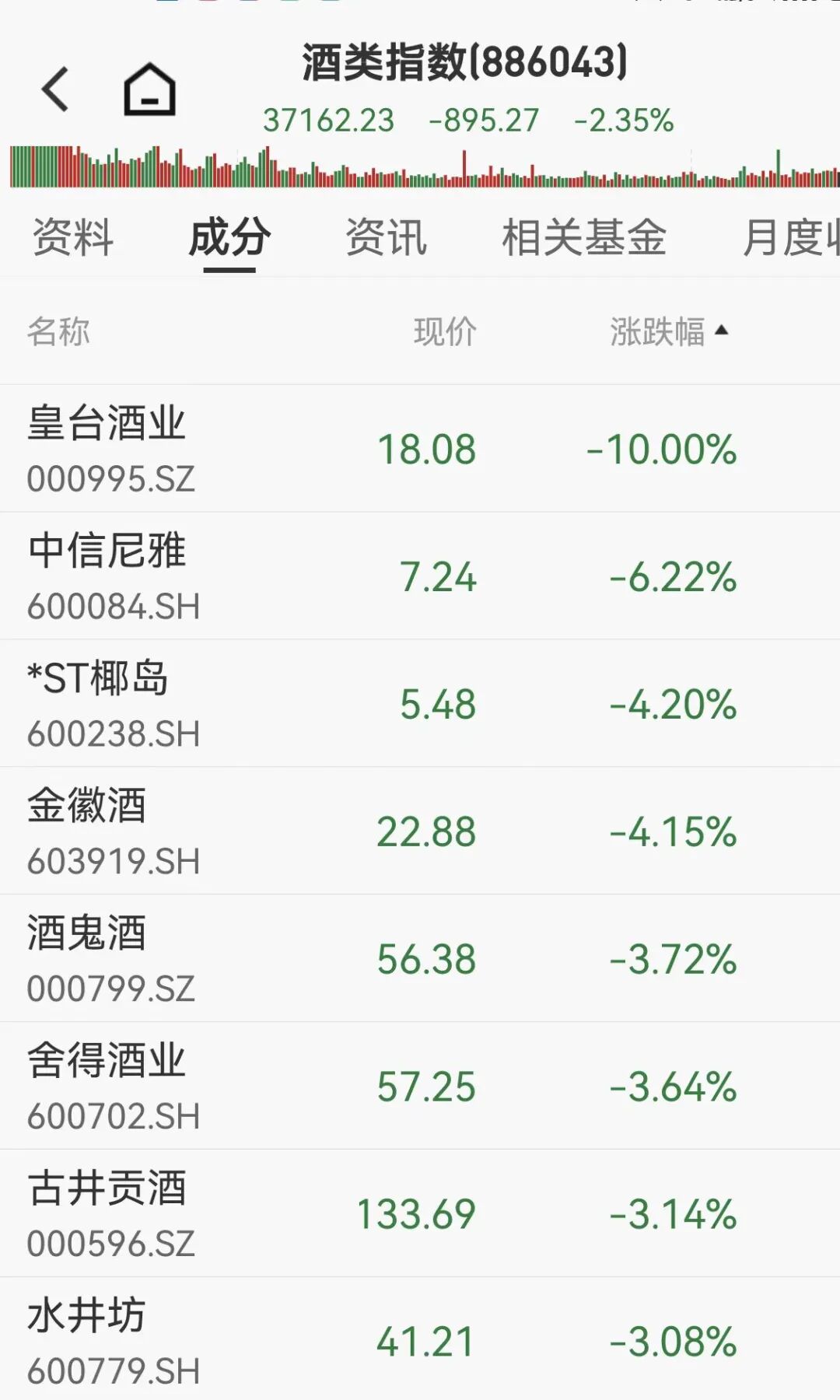
Market Overview - The A-share market experienced slight declines on February 6, with the Shanghai Composite Index down 0.25% to 4065 points, the Shenzhen Component Index down 0.33%, and the ChiNext Index down 0.73% [1][2] - The total market turnover was 2.16 trillion yuan, a decrease of 30.8 billion yuan compared to the previous trading day, with over 2700 stocks rising [1] Sector Performance - The mining and oil sectors saw gains, with stocks like Tongyuan Petroleum and Zhun Oil Co. hitting the daily limit [2] - The fluorine chemical sector was strong, with Tianji Co. also reaching the daily limit [2] - The lithium mining and battery sectors were active, with Enjie Co. hitting the daily limit [2] - Conversely, the liquor sector faced widespread declines, with Huangtai Liquor hitting the daily limit down [2] - The retail sector fell, led by Baida Group, which dropped nearly 10% [11] - The tourism sector weakened, with Dalian Shengya leading the decline, down over 8% [12] Notable Stocks - In the battery sector, stocks such as Zhenyu Technology and Enjie Co. saw significant gains, with Zhenyu Technology rising 13.39% [4][5] - The chemical sector was active, with stocks like Shanshan Co. and Yongtai Technology also hitting the daily limit [7] - The small metals sector rose, with Xianglu Tungsten Industry hitting the daily limit and Zhangyuan Tungsten Industry up over 9% [8] Economic Indicators - The China Bulk Commodity Price Index (CBPI) for January was reported at 125.3 points, a month-on-month increase of 6.3% and a year-on-year increase of 12.7%, marking the highest level since July 2022 [6] - The chemical price index also saw a significant rise, reporting a month-on-month increase of 3.8% [6] Liquor Industry Outlook - Recent forecasts from several liquor companies, including Huangtai Liquor and Jiu Gui Liquor, predict declines in net profits for 2025, with expectations of a bottoming out in the industry by 2026 [9] - The liquor sector is currently at historical low valuations, presenting strong bottom-fishing opportunities [9] Market Sentiment - Analysts from Guosen Securities noted that the market is currently under pressure due to hawkish sentiments, leading to a contraction in liquidity [17] - Despite short-term pressures on indices, the release of liquidity is expected to alleviate the impact on other sectors and reduce long-term bubble risks [17]
每日市场观察-20260206
Caida Securities· 2026-02-06 02:57
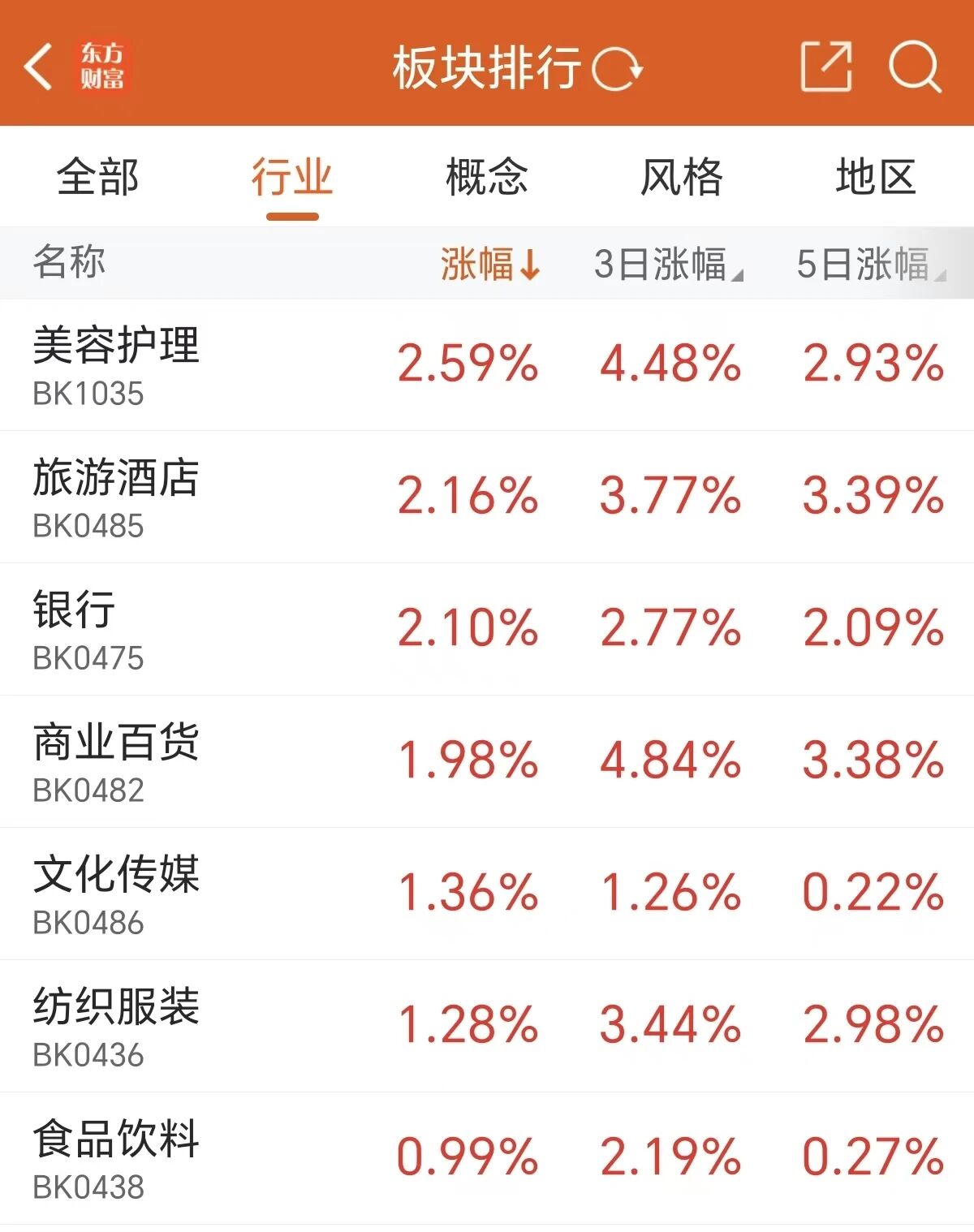
Market Performance - The Shanghai Composite Index fell by 0.64%, the Shenzhen Component Index dropped by 1.44%, and the ChiNext Index decreased by 1.55%[1] - A total of 1,602 stocks rose while 3,515 stocks declined, indicating a bearish market trend[1] - The total trading volume in the two markets exceeded 2.17 trillion yuan, showing a significant decrease compared to previous sessions[1] Sector Analysis - Sectors such as beauty care, tourism and hotels, banking, and consumer goods showed positive performance, while precious metals, photovoltaic equipment, and energy metals faced significant declines[1] - The banking sector is currently at a low point and may experience a technical rebound in the short term[1] Policy and Economic Indicators - The Ministry of Commerce and eight other departments issued a "Spring Festival Special Activity Plan" to boost consumption during the holiday season, particularly in retail and tourism sectors[1] - The China Machinery Industry Federation forecasts a growth rate of approximately 5.5% for the machinery industry in 2026, with significant contributions from the automotive sector, which is expected to grow by 11.5%[7][8] Fund Dynamics - Public funds have distributed over 33 billion yuan in dividends this year, with equity funds accounting for nearly 80% of the total[12] - The total trading volume of ETFs reached 586.79 billion yuan, with stock ETFs contributing 163.6 billion yuan and bond ETFs 273.25 billion yuan[13]
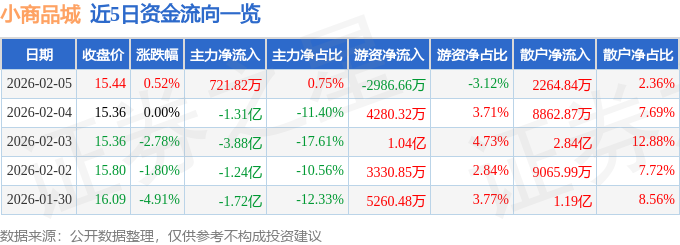
股票行情快报:小商品城(600415)2月5日主力资金净买入721.82万元
Sou Hu Cai Jing· 2026-02-05 12:35
Group 1 - The stock of Xiaogoods City (600415) closed at 15.44 yuan on February 5, 2026, with an increase of 0.52% and a trading volume of 622,400 hands, resulting in a transaction amount of 958 million yuan [1] - On February 5, 2026, the net inflow of main funds was 7.22 million yuan, accounting for 0.75% of the total transaction amount, while retail investors had a net inflow of 22.65 million yuan, representing 2.36% of the total transaction amount [1][2] - Xiaogoods City has a total market value of 846.66 billion yuan, ranking first in the commercial retail industry, with a net profit of 34.57 billion yuan, also ranking first [3] Group 2 - In the first three quarters of 2025, Xiaogoods City reported a main business income of 13.06 billion yuan, a year-on-year increase of 23.07%, and a net profit attributable to shareholders of 3.46 billion yuan, up 48.45% year-on-year [3] - The company aims to build a shared trade service platform for small and medium-sized enterprises globally, focusing on becoming a "world-class comprehensive international trade service provider" [3] - The average target price set by 13 institutions in the last 90 days is 21.16 yuan, with all institutions giving a buy rating [4]
缩量下跌 大盘向下空间不大
Chang Sha Wan Bao· 2026-02-05 10:12
Market Overview - On February 5, A-shares experienced a collective pullback, with the Shanghai Composite Index down 0.64% to 4075.92 points, the Shenzhen Component down 1.44% to 13952.71 points, and the ChiNext Index down 1.55% to 3260.28 points [1] - The total trading volume in the Shanghai and Shenzhen markets was 21,945 billion yuan, a decrease of 3,090 billion yuan compared to the previous day [1] - The market saw more declines than gains, with 1,618 stocks rising and 3,719 stocks falling, including 56 stocks hitting the daily limit up and 23 stocks hitting the daily limit down [1] Sector Performance - The consumer sector showed relatively strong performance, attributed to its defensive nature and the upcoming Spring Festival, which typically sees increased consumer spending [2] - In contrast, sectors such as precious metals, photovoltaic equipment, energy metals, and non-ferrous metals experienced significant declines, with the photovoltaic sector index dropping nearly 3% [1][2] Company Specifics - In Hunan stocks, only 40 out of 146 stocks rose, with Huasheng Co., Ltd. hitting the daily limit up and being the only stock in the region to rise over 4% [3] - Huasheng Co., Ltd. announced a 2025 earnings forecast indicating a net loss attributable to shareholders of 46 million to 34 million yuan, representing a year-on-year change of -6.76% to -31.08% [3] - The company's net profit after deducting non-recurring items is expected to be between -85 million and -65 million yuan, reflecting a year-on-year change of -38.46% to -5.88%, indicating a reduction in losses [3]