
量子技术

Search documents
诺奖“提前的认可” 点亮一盏守望的灯
Ke Ji Ri Bao· 2025-10-09 02:43
Group 1 - The Nobel Prizes awarded in October highlight significant advancements in science, particularly in physiology or medicine, physics, and chemistry, recognizing both established paradigms and groundbreaking innovations [1][2] - The awards in physiology or medicine and chemistry confirm mature scientific paradigms, while the physics award acknowledges foundational work that challenges traditional understandings of quantum behavior, paving the way for future quantum technologies [2][3] - The recognition of quantum advancements serves as an "early acknowledgment," rewarding past achievements while fostering hope for future developments in quantum computing, despite existing challenges such as noise and scalability [2][3] Group 2 - The essence of basic research is to illuminate the unknown, and early recognition by prestigious awards can mobilize global intellectual resources and attract capital investment, encouraging the next generation to engage in scientific exploration [3] - A mature research evaluation system should reward visible results while also providing stable support for long-term projects that may take years to yield outcomes, emphasizing the need for a culture that nurtures original innovation [3] - The courage to provide "early recognition" reflects trust in human curiosity and exploration, serving as a guiding light for those still navigating the uncertainties of scientific discovery [3][4]
国盾量子股价涨6.74%,博时基金旗下1只基金重仓,持有43.81万股浮盈赚取1036.17万元
Xin Lang Cai Jing· 2025-10-09 01:44
Company Overview - Guodian Quantum Technology Co., Ltd. is located in Hefei, Anhui Province, established on May 27, 2009, and listed on July 9, 2020. The company specializes in the research, production, sales, and technical services of quantum communication products, providing software and hardware products for various sectors including government, finance, electricity, and national defense [1] Business Segmentation - The main business revenue composition includes: - Technical services: 35.68% - Quantum communication products: 34.31% - Quantum precision measurement products: 13.03% - Quantum computing products: 12.42% - Others: 4.56% [1] Stock Performance - On October 9, Guodian Quantum's stock rose by 6.74%, reaching 374.65 CNY per share, with a trading volume of 380 million CNY and a turnover rate of 1.24%. The total market capitalization is 38.537 billion CNY [1] Fund Holdings - According to data, Bosera Fund has a significant holding in Guodian Quantum through the Bosera Sci-Tech 100 ETF (588030), which reduced its holdings by 28,800 shares in the second quarter, now holding 438,100 shares, representing 1.9% of the fund's net value [2] Fund Performance - The Bosera Sci-Tech 100 ETF, established on September 6, 2023, has a latest scale of 6.337 billion CNY. Year-to-date returns are 59.16%, ranking 434 out of 4221 in its category, while the one-year return is 63.85%, ranking 459 out of 3848. Since inception, the return is 42.45% [2] Fund Management - The fund manager of Bosera Sci-Tech 100 ETF is Tang Yibing, who has been in the position for 3 years and 81 days. The total asset size of the fund is 9.874 billion CNY, with the best return during his tenure being 77.07% and the worst being -41.93% [3]

量子科学研究成果获诺贝尔奖,关注量子技术产业化前景
Orient Securities· 2025-10-08 08:12
Investment Rating - The report maintains a "Positive" investment rating for the electronic industry, indicating an expectation of returns exceeding the market benchmark by more than 5% [6][17]. Core Insights - The Nobel Prize in Physics awarded for quantum science research is expected to enhance the attention of governments and leading tech companies towards the industrialization of quantum technology, accelerating its commercialization process [3][10]. - The research recognized by the Nobel Prize lays a theoretical foundation for the industrialization of quantum technology, with significant contributions from the awarded scientists in developing superconducting circuits and quantum bits [9][10]. - Recent advancements in quantum technology, such as the installation of the first quantum computer in a data center in New York City, signify a shift from laboratory research to practical applications in the industry [9][10]. Summary by Sections Investment Recommendations and Targets - The report suggests focusing on leading domestic quantum technology companies, including Guandun Quantum, Guoxin Technology, Tengjing Technology, and Huagong Technology, as potential investment targets [3][10]. Industry Overview - The report highlights the growing interest in quantum technology following the Nobel Prize announcement, with expectations for increased investment and development in quantum computing, communication, and measurement technologies [9][10].


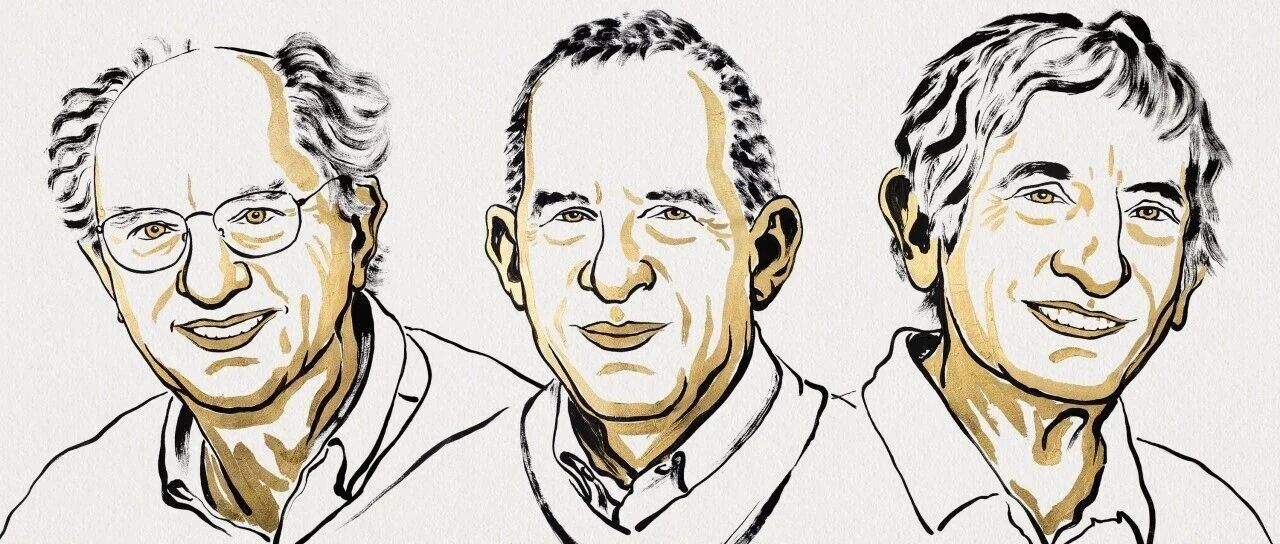
刚刚,2025年诺贝尔物理学奖揭晓!量子计算成最大赢家
猿大侠· 2025-10-08 04:11
Core Viewpoint - The 2025 Nobel Prize in Physics was awarded to scientists John Clarke, Michel H. Devoret, and John M. Martinis for their discovery of macroscopic quantum tunneling effects and energy quantization in circuits, highlighting the ongoing significance and practical value of quantum mechanics in digital technology [1][2][4][6]. Group 1: Award Significance - The Nobel Prize this year amounts to 11 million Swedish Krona (approximately 8.35 million RMB), shared among the three winners [9]. - The work of the laureates lays the foundation for the development of next-generation quantum technologies, including quantum cryptography, quantum computers, and quantum sensors [6][50]. Group 2: Experimental Findings - The laureates demonstrated that the strange properties of the quantum world can manifest in systems large enough to be held in hand, specifically through superconducting circuits that allow for tunneling between states [10][11]. - Their experiments showed that charged particles in superconductors can act synchronously, akin to a single particle, and can tunnel through barriers, which is a fundamental quantum phenomenon [17][40]. Group 3: Historical Context - The research conducted by Clarke, Devoret, and Martinis builds on decades of theoretical concepts and experimental tools, with significant contributions to understanding quantum tunneling as a necessary condition for certain types of nuclear decay [19][20]. - Their work involved a series of experiments conducted at the University of California, Berkeley, during 1984-1985, focusing on the behavior of Cooper pairs in superconductors [15][30]. Group 4: Implications for Quantum Technology - The findings have opened new possibilities for utilizing macroscopic quantum states in experiments, likening them to large-scale artificial atoms that can be integrated into new testing devices or emerging quantum technologies [47][48]. - Superconducting circuits are currently one of the leading technological pathways for exploring the construction of future quantum computers [49].

河南矿山董事长发1000万中秋礼金;威海冷库火灾调查结果公布;哈马斯高层亲赴埃及,将与以色列谈判丨每经早参
Mei Ri Jing Ji Xin Wen· 2025-10-05 23:13
Group 1 - Henan Mining Crane Co., Ltd. held its 12th Mid-Autumn Filial Culture Festival, inviting over 19,000 participants and hosting thousands of banquet tables each day [2][14] - The founder, Cui Peijun, presented 600 yuan in holiday gifts and flowers to each employee's parents, with a total gift distribution exceeding 10 million yuan [2][14] - Cui Peijun emphasized that the event, held for over a decade, is not a publicity stunt but a genuine celebration with employees and their families [2][15] Group 2 - The State Development and Reform Commission allocated 200 million yuan for disaster recovery efforts in Guangdong and Hainan following Typhoon "Maidum" [5] - The National Food and Strategic Reserves Administration dispatched 30,000 emergency relief items to support disaster relief efforts in affected areas [6] Group 3 - As of August 31, 2025, there are 5,435 listed companies in China's stock market, with the majority being A-share companies [7] - The manufacturing sector accounts for 68% of the total number of listed companies, representing 56% of the market capitalization [7] Group 4 - The fire incident at a cold storage facility in Weihai resulted in 9 fatalities and direct economic losses of 27.84 million yuan, with 13 individuals facing criminal charges [8][11] Group 5 - Sunshine Power submitted a listing application to the Hong Kong Stock Exchange, with CICC as the exclusive sponsor, aiming to enhance brand influence and raise capital [17] - Novo Holdings announced the establishment of the world's largest quantum-focused venture capital fund, raising approximately 300 million euros, which is expected to foster innovation in the quantum technology sector [18]

哈马斯高层亲赴埃及 将与以色列谈判;河南矿山董事长发1000万中秋礼金;腾讯混元图像3.0盲测登顶丨每经早参
Mei Ri Jing Ji Xin Wen· 2025-10-05 22:40
Group 1 - The National Development and Reform Commission has allocated 200 million yuan for disaster recovery efforts in Guangdong and Hainan following Typhoon "Maidum" [5] - The National Food and Strategic Reserves Administration has dispatched 30,000 emergency relief supplies to support disaster relief efforts in affected areas [6] Group 2 - As of August 31, 2025, there are 5,435 listed companies in China's stock market, with 2,286 on the Shanghai Stock Exchange, 2,875 on the Shenzhen Stock Exchange, and 274 on the Beijing Stock Exchange [7] - The manufacturing sector accounts for 68% of the total number of listed companies, representing 56% of the market capitalization [7] Group 3 - Sunshine Power has submitted a listing application to the Hong Kong Stock Exchange, with China International Capital Corporation as the exclusive sponsor [18] - The establishment of the world's largest quantum-focused venture capital fund, "55 North," led by Novo Holdings, aims to promote innovation in the quantum technology sector [19]

哈马斯高层亲赴埃及,将与以色列谈判;威海冷库火灾调查结果公布;河南矿山董事长发1000万中秋礼金;腾讯混元图像3.0盲测登顶丨每经早参
Mei Ri Jing Ji Xin Wen· 2025-10-05 22:33
Group 1 - The National Development and Reform Commission has allocated 200 million yuan for disaster recovery efforts in Guangdong and Hainan following Typhoon "Maidum" [5] - The National Food and Strategic Reserves Administration has dispatched 30,000 emergency relief supplies to support disaster relief efforts in affected areas [6] - As of August 31, 2025, there are 5,435 listed companies in China's stock market, with the manufacturing sector accounting for 68% of the total number of companies [7] Group 2 - The investigation into the Weihai cold storage fire has resulted in 13 individuals being held criminally responsible, with direct economic losses amounting to 27.84 million yuan [8] - Five individuals were confirmed dead after entering an abandoned mine in Youxi County, Fujian Province [9] - The total box office for the 2025 National Day film season has exceeded 1.3 billion yuan, with top films including "The Volunteer Army: Blood and Peace" [10] Group 3 - A major oil-producing countries' meeting concluded with a decision to maintain an increase in oil production by 137,000 barrels per day in November [11] - Tencent's "Hunyuan Image 3.0" has been ranked first in the global blind test for AI models, enhancing its position in the AI technology sector [15] - Sunshine Power has submitted a listing application to the Hong Kong Stock Exchange, which may enhance its brand influence and financing capabilities [18] Group 4 - Novo Holdings has established the world's largest venture capital fund focused on quantum technology, raising approximately 300 million euros [19]


诺和诺德母公司投资 全球最大规模量子专项风投基金成立
Sou Hu Cai Jing· 2025-10-05 11:03
Core Insights - Novo Nordisk's parent company, Novo Holdings, has established a quantum-focused venture capital fund named 55 North, which has raised approximately €300 million in its first funding round [1] - Novo Holdings and the Danish Export and Investment Fund (EIFO) are cornerstone investors, contributing €134 million [1] - 55 North is now the largest quantum-focused venture capital fund globally [1]
全球最大量子专项风投基金成立 诺和诺德母公司领投
Huan Qiu Wang Zi Xun· 2025-10-05 01:25
Core Insights - Novo Holdings has launched a quantum-focused venture capital fund named "55 North," raising approximately €300 million, making it the largest fund globally dedicated to quantum technology [1][3] Fund Overview - The fund is co-backed by Novo Holdings and the Danish Export and Investment Fund (EIFO), which together contributed €134 million [1] - 55 North will primarily invest in the Nordic and European regions while also targeting global opportunities [3] Key Investments - The fund has participated in two significant investments: - A €275 million Series B financing round for European quantum computing leader IQM [3] - A multi-million euro investment in Kiutra, a German supplier of low-temperature cooling systems for quantum computers [3] Related Initiatives - Earlier this year, EIFO and the Novo Nordisk Foundation jointly invested €80 million to establish QuNorth, a Nordic joint venture focused on developing a commercial quantum computer named "Magne," expected to be operational by early 2027 [3] - The Novo Nordisk Foundation's quantum technology initiatives began in 2022, with nearly $30 million invested in establishing a biomedical quantum sensing center in Copenhagen, aimed at developing early disease detection tools [3]

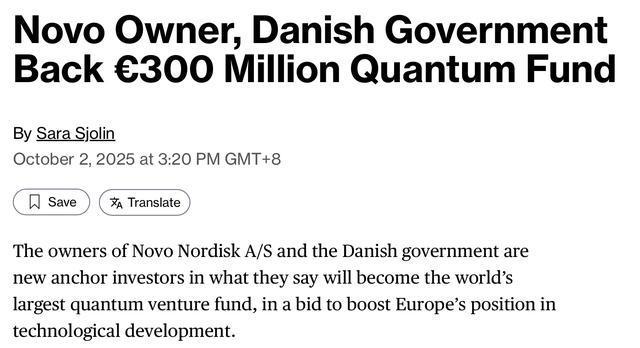
诺和诺德母公司投资,全球最大规模量子专项风投基金成立
Di Yi Cai Jing· 2025-10-04 13:11
Core Insights - Novo Nordisk's parent company has established a quantum-focused venture capital fund named 55 North, which has raised approximately €300 million in its first round, making it the largest quantum-focused venture capital fund globally [1][2] - The fund has already participated in two investments, including a €275 million Series B round for European quantum computing company IQM and a multi-million euro financing for German company Kiutra, which provides low-temperature cooling systems for quantum computers [1][2] - Novo Nordisk has been strategically investing in emerging technologies, including a recent €80 million investment in a joint venture for commercial quantum computing [1][2] Investment Focus - 55 North will focus on global investments, particularly in Northern Europe and Europe [1] - The fund's cornerstone investors include Novo Holdings and the Danish Export and Investment Fund (EIFO), which invested €134 million [1] Quantum Computing Developments - The commercial quantum computer Magne, expected to be operational by early 2027, aims to solve significant quantum chemistry problems and aid in drug development [2] - The Novo Nordisk Foundation has invested nearly $30 million since 2022 to establish a quantum sensing center in Copenhagen, focusing on early disease detection and developing medical diagnostic tools [2] AI Integration - Novo Nordisk is increasing its investment in AI, with discussions on AI's role in the company's strategy and research pipeline scheduled for 2024 [2][3] - A collaboration with NVIDIA aims to accelerate drug development through a flagship AI supercomputer in Denmark, focusing on custom AI models for early clinical development [3] Market Response - Following the positive news regarding Novo Holdings' investments, quantum computing-related companies listed in the U.S. saw significant stock price increases, with Rigetti Computing, D-Wave Quantum, and Quantum Computing rising over 20%, and Arqit Quantum increasing by over 32% [3] Future Outlook - Experts believe that while quantum simulation has not yet achieved universal fault-tolerant quantum computing, it serves as a crucial bridge between theory and experimentation, with ongoing breakthroughs in platform construction and control technology [4]