大数据

Search documents
拆壁垒筑底座,中华人寿前端基础服务平台破局数字化转型
Jing Ji Guan Cha Wang· 2026-02-04 11:27
中华人寿启动前端基础服务平台建设的动因,源于一个在保险业,尤其是成立一段时间的公司中极具普 遍性的挑战——"数字债务"。随着公司业务规模从初创期迈向成长期,前端销售、核保、保全、理赔等 服务场景呈几何级数复杂化。然而,支撑这些业务的老旧系统,多数诞生于公司开业初期,受当时技术 视野和业务紧迫性所限,普遍采用"烟囱式"架构独立建设。 这种模式在早期实现了快速上线,但长期积累的代价高昂,此外,还会导致系统功能"越来越臃肿",业 务需求实现"周期越来越长",开发和运维成本"越来越高"。更深层的问题在于,各系统间数据无法共 享,标准难以统一,如同一个个信息孤岛。当公司试图推出一个需要跨系统协同的创新产品,或为用户 打造一个无缝衔接的全旅程服务体验时,这些坚固的"烟囱"便成了难以逾越的障碍。 保险机构在"数据治理、系统整合"等方面仍面临现实挑战。在行业热议AI大模型、精准营销等前沿话题 时,许多公司的创新实践却受制于底层数据割裂、接口纷繁复杂的基础环境,难以规模化落地,投入产 出比面临严峻考验。保险行业所面对的,正是如何偿还历史"数字债务",为未来智能化发展清扫基础障 碍的典型课题。 近日,中华联合人寿保险股份有限公司 ...
中国平安揽获2025年金融科技、医疗健康行业专利数双榜首
Jin Rong Shi Bao· 2026-02-04 10:22
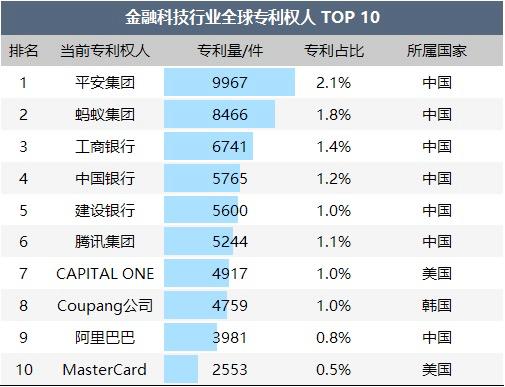
Core Insights - The white papers released by the National Intellectual Property Administration reveal that Chinese companies are solidifying their innovation leadership in the financial technology and healthcare sectors from 2019 to 2025 [1] Group 1: Patent Leadership - Ping An Group ranks first globally in both financial technology and healthcare sectors, with a total of 9,967 patents in financial technology and 5,704 patents in healthcare [2][3][4] - In financial technology, Ping An's patents are particularly strong in risk prevention (12.7% of total patents) and intelligent customer service (10.5% of total patents) [2] - In healthcare, Ping An leads in medical image processing, elder care, and intelligent consultation, showcasing a comprehensive innovation strategy [4] Group 2: Technological Drivers - Artificial intelligence (AI) and big data are identified as core technological engines driving Ping An's innovation strategy [5] - The company has integrated AI and big data into its operations, achieving a 23% increase in policy renewal efficiency through its AI-driven models [5] - Ping An's commitment to sustainable development is evident through its AI-ESG management platform, which has earned it an AAA rating in the MSCI ESG assessment [5] Group 3: Application Empowerment - Ping An has successfully transformed its patent achievements into impactful applications, such as the "Ping An Medical Assistant" and "Ping An Family Doctor" products, which address healthcare challenges [6] - The company is focused on creating a comprehensive AI medical product matrix that includes various innovative solutions for healthcare [6] - The strategic emphasis on deep application of technology has allowed Ping An to convert its extensive patent portfolio into significant business drivers [7] Group 4: Economic Impact - The technological innovations by Ping An aim to enhance the quality and efficiency of the real economy while addressing the public's desire for improved living standards [8] - The company's innovations have led to significant improvements in service efficiency, such as reducing car insurance claim processing time from hours to minutes [8]


为算力时代“降温”,瑞为新材以金刚石散热技术攻克芯片散热“卡脖子”难题
Huan Qiu Wang Zi Xun· 2026-02-04 09:15
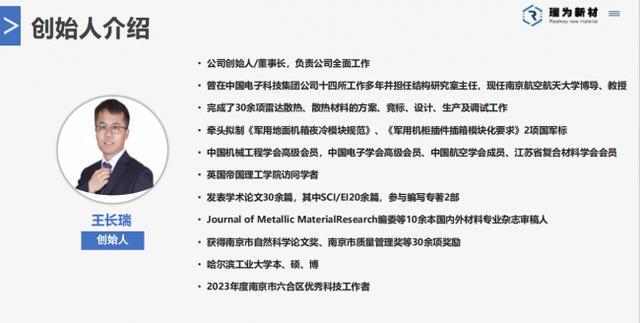
Core Insights - The article highlights the achievements of Nanjing Ruiwei New Materials Technology Co., Ltd. in overcoming challenges in the heat dissipation sector for chips, led by an 80s-born PhD, Wang Changrui [1][3] Company Background - Wang Changrui, with a strong academic background from Harbin Institute of Technology and roles as a professor and doctoral advisor, founded Ruiwei New Materials in 2021 to address national strategic needs in chip heat dissipation [3][4] - The company aims to transform laboratory research into practical solutions for the Chinese chip industry, focusing on breaking foreign technology monopolies [3] Technological Breakthroughs - Ruiwei New Materials has developed a new formula that effectively combines diamond and metal, addressing the compatibility issues that have historically limited the use of diamond in chip cooling applications [4] - The company has achieved significant advancements in manufacturing techniques, enabling the production of diamond-copper composite materials that meet the high thermal conductivity requirements of modern electronics [4] Product Development - The company has completed three iterations of its products, each tailored to meet industry demands: - The first generation offers a thermal conductivity improvement of 275%-300% over conventional materials, reducing chip temperature by 20-30°C [6] - The second generation integrates chip heat sinks with housing for enhanced cooling efficiency [6] - The third generation features an all-in-one design that minimizes thermal resistance and simplifies manufacturing processes [6] Market Position and Growth Potential - Ruiwei New Materials is the first company in China to achieve mass production of diamond heat dissipation materials, supplying major industries including aerospace and automotive [7] - The demand for cooling solutions is expected to rise significantly due to the rapid growth of AI and big data industries, with China's computing power scale growing at an annual rate of approximately 30% [7] - The company has successfully completed four rounds of financing, raising several hundred million yuan to support ongoing research and capacity expansion [7]
探索中国式健康管理新路径 访北大医疗董事长、平安健康险董事长兼首席执行官朱友刚
Jin Rong Shi Bao· 2026-02-04 06:39
Core Viewpoint - The article discusses the transformation of the healthcare model from a disease treatment-centric approach to a more diversified health management system, highlighting the role of private healthcare providers like Peking University Health in this shift, particularly through the integration of insurance capital and medical services [1][2]. Group 1: Advantages and Challenges of the "Insurance + Healthcare" Model - The core advantages of the "Insurance + Healthcare" model include the potential to create a closed loop of "payment + service," leveraging over 250 million personal financial customers of Ping An to design proactive health management solutions [2][3]. - Another advantage is the long-term strategic patience for investment, allowing for necessary infrastructure and innovation without the pressure of short-term financial returns [2]. - The main challenge faced by Peking University Health is the cultural integration and capability reconstruction between the rigorous medical professionalism of Peking University and the market-driven, efficiency-oriented culture of Ping An [2][3]. Group 2: Strategic Focus Areas - Peking University Health is focusing on a comprehensive health management approach that spans the entire lifecycle of health, emphasizing proactive health management, rehabilitation, and corporate health services [3][4]. - The organization aims to transform traditional health check-ups into health management centers, providing customized health screening packages and continuous health management services [4][5]. - In the medical aspect, Peking University Health is implementing a multidisciplinary team (MDT) approach to ensure comprehensive and precise treatment for patients, particularly in oncology [5][6]. Group 3: Future Strategic Vision - The long-term vision of Peking University Health is to become a model akin to a combination of West China Hospital and Kaiser Permanente, focusing on top-tier medical technology and an integrated healthcare and insurance service model [7][8]. - The organization has outlined five core strategic projects for the next five years, including a comprehensive medical project targeting high-mortality diseases, a family health project, a rehabilitation care project, an AI and digital intelligence project, and a medical-insurance collaboration project [8][9][10].
科技为舟,安全为舵:陆控驶向金融高质量发展的底层逻辑
Cai Fu Zai Xian· 2026-02-04 05:26
Group 1 - The core viewpoint emphasizes the integration of financial technology into the financial sector, driven by policies aimed at enhancing risk control and efficiency through digital and technological collaboration [1][2] - The financial institutions' core competitiveness is shifting from mere scale expansion to a systematic capability based on technology and risk control [1][2] - The industry faces the challenge of balancing efficiency and risk control amid economic fluctuations and evolving risk patterns [1] Group 2 - The "Cloud Sail AI" solution represents a significant advancement in AI-driven sales processes, achieving a cost reduction to 1.64% (over 30% decrease) and a productivity increase of 2.5 times since its launch in May 2025 [2] - The "Intelligent Shield" system enhances client due diligence by automating material analysis and risk alerts, improving review efficiency by 75% and reducing processing time by 90% [3] - The DeepSeek model has intercepted risk cases amounting to 1.24 billion yuan, demonstrating quantifiable improvements in risk control effectiveness [4] Group 3 - The Aegis project, part of the credit approval process, utilizes AI for risk discovery, review, and decision-making, covering 157,000 applications within five months [5] - The "Intelligent Customer Service 3.0" addresses key pain points in customer service, improving resolution rates by 2% and customer satisfaction from 80% to 85% [5] Group 4 - The company has received recognition for its proactive intelligent risk control system, validated by awards from regulatory bodies for its data security and risk prevention efforts [6][7] - The integration of advanced technologies into financial operations contributes to a robust defense network against fraud, shifting risk management from reactive to proactive measures [6][7] Group 5 - The company’s strategic focus on technology-driven business and intelligent upgrades is seen as a pathway to enhance both service efficiency and risk management capabilities [9] - The future direction includes deepening technological integration to strengthen financial security and provide more inclusive, safe, and efficient financial services [9]
华通线缆20260203
2026-02-04 02:27
Summary of Huadong Cable Conference Call Company Overview - **Company**: Huadong Cable - **Industry**: Cable manufacturing and oil service equipment - **Key Markets**: Africa (Angola), Panama, South Korea, and the United States Key Points Business Performance - Traditional aluminum and oil service segments are experiencing growth of over 15% YoY, with expected revenue of approximately 7.2 billion RMB for the year, an increase of around 1 billion RMB from the previous year [1][2] - The company is expanding into new segments, including an aluminum project in Angola, which is expected to produce around 100,000 tons this year, contributing approximately 2 billion RMB in sales [2] Production and Capacity - The Panama factory is being established to relocate domestic production to avoid tariffs from the US-China trade war, with expected sales of around 400 million RMB by the end of 2026 [2][3] - Current production capacity in South Korea is around 21-22 billion RMB, with potential to increase to 25 billion RMB if fully utilized [7] - The company plans to maintain existing production levels while exploring new customer opportunities in South America [7] Market Dynamics - The US market is showing stable growth, with a projected increase in orders of 10-20% [15] - The demand for copper cables is rising due to shifts towards data centers and AI, with approximately 20-30% of products in South Korea being copper cables [9] - The company is managing the impact of rising copper prices on profit margins, noting that while sales prices may increase, gross margins could be affected due to higher raw material costs [10][11] Financial Outlook - The company expects to maintain stable gross margins despite fluctuations in raw material prices and tariffs, with overall gross margins remaining consistent across production lines in South Korea and Panama [11] - The company has secured favorable tax rates in Angola, with a 95% reduction in corporate tax, leading to an effective tax rate of 2.5% [22] Expansion Plans - The company is focusing on expanding its operations in Angola, with plans for a second phase of production expected to start in mid-2024, aiming for a total capacity of 360,000 tons [44][41] - Financing for the Angola project includes a mix of self-funding, bank loans, and trade financing, with a total investment of approximately 2.5 billion USD for the first phase and around 5 billion USD for the second phase [40][41] Risks and Considerations - Currency fluctuations pose a significant risk, particularly in the African market, where exchange rates can impact profitability [14] - The company is cautious about expanding production capacity in Panama, as current capacity is deemed sufficient for existing demand [37] Conclusion - Huadong Cable is positioned for growth with a diversified portfolio and strategic expansions in key markets. The company emphasizes the importance of traditional business segments while exploring new opportunities in emerging markets. Investors are encouraged to monitor both the traditional and new business developments as the company navigates market dynamics and expansion plans [49]

如何让服务消费“花得起、买得到、放心买”?
2 1 Shi Ji Jing Ji Bao Dao· 2026-02-04 02:19
Core Viewpoint - Service consumption is becoming a structural variable driving economic growth in China, with a shift from material to service-oriented consumption as residents' income rises and GDP per capita exceeds $13,000 [1][2] Group 1: Reasons for Service Consumption as a Key Driver - The combination of resident demand upgrade, economic structure transformation, and continuous policy support has established service consumption as a new driving force for high-quality economic development [2][3] - The aging population and the growing number of young children create a strong demand for services such as elderly care and childcare, with the domestic service industry expected to employ over 30 million people by 2024 [2] - The "scene economy" in sectors like tourism and health is driving consumption, with projected leisure tourism revenue of 450 billion yuan during the 2025-2026 winter season [2] Group 2: Economic Structure Transformation - The service sector has become the largest industry in China's economy, with the unique non-standard nature of services influencing consumer behavior and market dynamics [3] - Establishing a reliable service standard and credit system is crucial for enhancing consumer trust and expanding service consumption [3] Group 3: Policy Support and Institutional Framework - A comprehensive policy framework has been developed to support service consumption, transitioning from merely stimulating demand to fostering supply-demand collaboration [3][6] - The government is focusing on improving market access in sectors like healthcare and education while enhancing consumer infrastructure, with a 95.9% year-on-year increase in sales of tax refund goods expected by 2025 [3] Group 4: Practical Pathways for Modernizing Service Supply - Addressing structural mismatches in supply and demand, improving service quality, and enhancing consumer confidence are essential for the growth of service consumption [4][5] - Emphasizing technological innovation and digital transformation can help standardize services and reduce transaction costs, making services more accessible and reliable [4][5] Group 5: Focus on Basic Needs and Social Welfare - The aging population is shifting service consumption from optional to essential, increasing demand for healthcare and home care services [7] - Strengthening social security systems and expanding coverage can stabilize residents' income expectations and enhance consumer confidence [7] Group 6: Future Outlook - Service consumption is positioned as a key driver for China's economic transformation, with significant growth potential and a favorable policy environment [8] - The success of service consumption will depend on building a modern supply system that ensures quality, trust, and accessibility, ultimately benefiting the entire population [8]
拓尔思2月3日获融资买入8205.43万元,融资余额17.08亿元
Xin Lang Cai Jing· 2026-02-04 01:27
Group 1 - The core viewpoint of the news is that Tuoer Technology has experienced significant fluctuations in its stock performance and financial metrics, indicating potential investment opportunities and risks [1][2]. Group 2 - On February 3, Tuoer Technology's stock rose by 3.74%, with a trading volume of 954 million yuan. The margin trading data showed a net margin buy of -6.69 million yuan for the day, with a total margin balance of 1.711 billion yuan [1]. - As of February 3, the margin balance accounted for 8.39% of the circulating market value, indicating a high level of margin trading activity compared to the past year [1]. - The company reported a total of 11.67 million shareholders as of September 30, a decrease of 2.78% from the previous period, with an average of 7,483 circulating shares per shareholder, an increase of 2.86% [2]. - For the period from January to September 2025, Tuoer Technology achieved a revenue of 337 million yuan, a year-on-year decrease of 45.57%, and a net profit attributable to shareholders of -160 million yuan, a decrease of 460.24% [2]. - Tuoer Technology has distributed a total of 325 million yuan in dividends since its A-share listing, with 55.67 million yuan distributed over the past three years [2]. - Among the top ten circulating shareholders, Huabao Zhongzheng Financial Technology Theme ETF holds 10.166 million shares, an increase of 5.026 million shares from the previous period [2].

数据泄露不是电影情节,国安部发布公民数据安全防护全攻略
Xin Lang Cai Jing· 2026-02-03 23:55
Core Insights - The rapid advancement of technologies such as artificial intelligence, big data, and the Internet of Things is significantly transforming lifestyles, production methods, and national governance systems. However, this innovation also brings a critical risk: data breaches, which can lead to the loss of personal privacy, core assets, and business secrets, as well as expose national security to unknown risks [1] Group 1: Data Security Risks - Recent incidents highlight the urgent need for data security measures, including a March 2023 case where a backend cache vulnerability led to the exposure of sensitive user information from an AI software service [2] - In February 2025, a database leak from an IoT company resulted in the exposure of millions of records, including Wi-Fi passwords and email addresses, due to inadequate protection [2] - As of February 2025, over 2,000 phishing websites impersonating DeepSeek have emerged, misleading users to steal personal information or subscription fees [2] Group 2: Personal Data Security Checklist - Recommendations for securing network devices include changing default passwords and regularly updating firmware for smart home devices [3] - Personal information protection measures suggest avoiding inputting sensitive data into AI software and using password protection for important files [3] - Guidelines for safe online behavior emphasize verifying website security during online shopping and being cautious of suspicious messages [3] Group 3: Security Practices - Basic security practices include changing default passwords to strong ones and enabling two-step verification for accounts [4][5] - Users are advised to verify suspicious requests for money or verification codes by contacting official customer service [4] - Caution is recommended when using software, emphasizing the importance of downloading applications from official channels and using privacy modes during sensitive interactions [5]
如何让服务消费“花得起、买得到、放心买”?丨孙立坚专栏
Xin Lang Cai Jing· 2026-02-03 22:56
Core Viewpoint - Service consumption is becoming a structural variable in China's economic growth, driven by the transformation of consumer demand from material to service-oriented, with a projected increase in per capita service consumption expenditure to 46.1% by 2025 [2] Group 1: Reasons for Service Consumption as a Key Driver - The combination of resident demand upgrades, economic structure transformation, and continuous policy support creates a robust foundation for service consumption [3] - The aging population and the growing number of young children in China are driving demand for essential services like elderly care and childcare, with the domestic housekeeping industry expected to create over 30 million jobs by 2024 [3] - Experience-based consumption in sectors like tourism and health is expected to generate significant economic activity, with leisure tourism revenue projected to reach 450 billion yuan during the 2025-2026 winter season [3] Group 2: Economic Structure and Trust - The service sector has become the largest industry in China's economy, with its unique non-standard nature influencing consumer behavior and market dynamics [4] - Establishing a unified service standard and a reliable credit system is essential for enhancing service quality and consumer trust, which are critical for unlocking potential demand [4] Group 3: Policy Support and Institutional Framework - The policy framework has shifted from merely stimulating demand to a dual focus on supply and demand collaboration, with significant improvements in areas like medical and educational market access [4] - By 2025, the sales of tax refund goods for outbound travelers are expected to increase by 95.9%, indicating a growing emphasis on enhancing consumer infrastructure [4] Group 4: Challenges and Opportunities - Despite rapid growth in service consumption, issues such as structural mismatches in supply and demand, quality concerns, and consumer confidence need to be addressed [5] - The integration of AI and big data in service consumption can help overcome challenges related to non-standard services, enhancing precision and efficiency in service delivery [5] Group 5: Modernization of Supply System - The modernization of the service supply system is crucial, focusing on making services affordable, accessible, and trustworthy [6] - Emphasizing the development of a professional workforce in essential service areas like elderly care and childcare is vital for meeting growing demand [6] Group 6: Institutional Improvement and Market Integration - The establishment of a unified national market can reduce transaction costs and facilitate the replication of quality services across regions [7] - Continuous efforts to optimize the business environment for private enterprises and enhance service standards are necessary for fostering a safe and fair consumption environment [7] Group 7: Open Cooperation and Trade Upgrading - Promoting high standards in service trade and enhancing cross-border payment systems can lower costs and improve efficiency in service consumption [8] - The focus on integrating regional economies and enhancing service resource collaboration can lead to improved supply efficiency and quality [8] Group 8: Focus on Livelihood and Essential Services - The aging population is shifting service consumption from optional to essential, creating stable demand for healthcare and related services [9] - Strengthening social security systems and expanding coverage can enhance consumer confidence and support service consumption growth [9] Group 9: Long-term Economic Growth - Service consumption is positioned as a new engine for economic growth, with significant potential for expansion and development [10] - The successful transformation of service consumption into a long-term economic driver depends on building a modern supply system that ensures quality, trust, and accessibility [10]