借壳上市

Search documents
“轻资产上市”逆袭?杜甫酒业曲线登陆港股,诗酒文化能否突围?
Sou Hu Cai Jing· 2025-05-30 16:07
Core Viewpoint - Du Fu Liquor Industry has successfully completed a reverse merger with China Environmental Energy, marking its entry into the Hong Kong stock market as the second liquor company after Zhenjiu Lidong, and becoming the 22nd listed company in China's liquor industry [1][3]. Company Overview - Du Fu Liquor Industry was established in July 2013, originating from a liquor factory founded in 1983, and has positioned itself around the "poetry and liquor culture" IP, holding over a thousand cultural trademarks [3][4]. - The company operates 13 subsidiaries and has two major production bases, with an annual production capacity of 5,000 tons of raw liquor and 10,000 tons of finished liquor [3][4]. Market Position and Strategy - The company aims to focus on its core liquor business while expanding its international market presence, particularly in Southeast Asia [4][12]. - Du Fu Liquor's products are priced in the mid-to-high range, between 200 to 800 RMB, and include various series such as the Du Fu core series and cultural series [14][21]. Financial Performance - As of the latest reports, Du Fu Liquor has set ambitious targets for growth, aiming for a production value of 1 billion RMB and a market value of 5 billion RMB by 2025 [21]. - The company has expressed intentions to leverage its brand through capital markets to enhance its growth trajectory [4][21]. Competitive Landscape - Du Fu Liquor faces intense competition from established brands like Wuliangye and Luzhou Laojiao, as well as emerging brands like Jiangxiaobai in the Sichuan market [14][21]. - The company’s online sales presence is limited, with a small number of followers and sales on platforms like Taobao and JD, indicating a need for improved e-commerce strategies [16][20]. Recent Developments - The reverse merger with China Environmental Energy was structured through a sales agency agreement, allowing Du Fu Liquor to enter the market without traditional equity acquisition methods [11][12]. - The company has previously expressed its desire to go public and has taken steps towards this goal over the past few years [4][21].

科技巨头超聚变借壳上市猜想
Jing Ji Guan Cha Wang· 2025-05-29 04:20
Core Viewpoint - The company, Chaopujian, is considering a reverse merger as a faster route to go public, given the lengthy and complex IPO process in China, which can take 2 to 3 years [2][7]. Group 1: Company Background and Market Position - Chaopujian, a significant player in the computing power industry, has a strong position in server and computing infrastructure [2]. - Originally a subsidiary of Huawei, it was acquired by the Henan State-owned Assets Supervision and Administration Commission in 2021 [2]. - The company's main business focuses on computing infrastructure and services, covering the entire industry chain, including hardware manufacturing, software development, and comprehensive solutions [2]. Group 2: Listing Strategy and Timeline - The Henan State-owned Assets Commission views 2025 as a critical year for Chaopujian's listing, aligning with the completion of the three-year state-owned enterprise reform plan [3][6]. - The urgency for Chaopujian's listing is heightened by the need to accelerate the growth of the domestic digital economy [3]. - The company aims to capitalize quickly to seize market opportunities and enhance its capital structure [6]. Group 3: Reverse Merger Considerations - A reverse merger is seen as a viable option to achieve the listing goal quickly, avoiding the lengthy IPO process [7]. - The company is under pressure to meet its capitalization goals, and a reverse merger could facilitate this [7]. - The valuation of Chaopujian has reportedly exceeded 90 billion yuan, raising concerns about market absorption capacity if pursued through a direct IPO [8]. Group 4: Regulatory Environment and Support - The new "National Nine Articles" policy encourages listed companies to achieve resource integration and industrial upgrades through mergers and acquisitions, providing a supportive framework for Chaopujian's reverse merger [9][10]. - Recent regulatory changes have simplified the merger and acquisition process, reducing barriers for companies like Chaopujian [9][10]. Group 5: Potential Shell Companies - Speculation about potential shell companies for the reverse merger has been circulating since October 2023, with various companies under the Henan State-owned Assets Commission being considered [13][14]. - Companies like Rongke Technology and An Cai High-tech are noted for their business synergies with Chaopujian, making them suitable candidates for the merger [19]. Group 6: Risk Management and Market Communication - The company is aware of the risks associated with high market expectations and is discussing strategies for effective market communication and expectation management [5][21]. - To mitigate risks, the company plans to avoid high market capitalization targets and ensure transparent information disclosure regarding the merger process [24][25]. - Maintaining close communication with regulatory bodies and addressing their feedback promptly is deemed crucial for minimizing regulatory risks [27][28].
苦等16年,1块钱一瓶的矿泉水企业终于能上市了?
商业洞察· 2025-05-23 09:42
Core Viewpoint - The article discusses the journey of the Jiangxi-based bottled water brand "Runtian," highlighting its rise, fall, and attempts to re-enter the capital market through a reverse merger with ST United, amidst challenges such as low pricing strategies, industry competition, and national expansion barriers [2][18]. Group 1: Historical Background - Runtian was founded in 1994 and quickly gained market penetration in Jiangxi, achieving over 50% market share with its 1 yuan pricing strategy and memorable advertising [3]. - By 2007, Runtian had expanded significantly, attracting a 200 million yuan investment from Softbank SAIF, which facilitated its national expansion and product line diversification [5]. - Despite plans for an IPO in 2009, Runtian's listing was ultimately shelved due to market conditions [6]. Group 2: Crisis and Restructuring - A critical misstep in 2013 involving a controversial product led to a significant decline in Runtian's brand value and financial troubles, including debt crises and unpaid wages [8][10]. - In 2014, Runtian underwent a restructuring process, leading to the establishment of Jiangxi Runtian Industrial Co., which laid the groundwork for future state-owned capital involvement [11]. - By 2016, Jiangxi Tourism Group became the controlling shareholder of Runtian, marking its transition to a mixed-ownership enterprise [12]. Group 3: Current Challenges - Runtian faces ongoing issues with industry competition, particularly with Jiangxi Nanshan Yiquan, which poses a potential conflict of interest due to shared ownership under Jiangxi State Capital [12][13]. - The bottled water market in China is highly concentrated, with major brands holding over 80% market share, making it difficult for regional brands like Runtian to compete effectively [15]. - Runtian's limited product diversification compared to competitors further hampers its growth potential in the beverage market [16]. Group 4: Future Prospects - Runtian is currently pursuing a reverse merger with ST United, which could provide a pathway to public listing after years of failed IPO attempts [18][19]. - ST United, facing its own financial difficulties, may benefit from acquiring Runtian, creating a mutually beneficial scenario if the merger is successful [21]. - However, even with a successful merger, Runtian will still contend with significant challenges posed by larger competitors in the bottled water market [21].

亿腾医药借壳上市,7亿销售费与1.4亿分红的资本迷局
Xin Lang Zheng Quan· 2025-05-21 05:56
Core Viewpoint - Yiteng Pharmaceutical has completed a reverse acquisition of Jiahe Biotech, marking its entry into the Hong Kong stock market amid a challenging IPO environment for biopharmaceutical companies. However, the company faces scrutiny due to controversial financial practices, including soaring sales expenses and significant pre-listing dividends [1][2]. Group 1: Acquisition Details - Yiteng Pharmaceutical achieved a valuation of $677 million through a share swap with Jiahe Biotech, which was valued at $197 million, highlighting a stark contrast in market perceptions of established commercial products versus innovative drug development [2]. - The reverse acquisition was a strategic move after Yiteng's unsuccessful attempts to go public over four years, with multiple failed IPO applications since 2020 [2]. Group 2: Financial Practices - Sales and distribution expenses surged to 731 million yuan in 2024, accounting for 28.7% of revenue, significantly outpacing research and development expenditures of 480 million yuan [3]. - The company allocated over 220 million yuan to meeting expenses in 2024, nearly double the R&D spending of 122 million yuan for the same period, raising concerns about potential regulatory scrutiny regarding commercial bribery [3]. Group 3: Pre-listing Dividends - Yiteng Pharmaceutical distributed approximately 144 million yuan in dividends within six months before the merger, with the controlling shareholder, Ni Xin, receiving about 63 million yuan [4]. - This dividend distribution has drawn criticism as a potential "cash extraction" strategy, especially given the company's rising inventory levels and increased administrative expenses [4]. Group 4: Future Prospects - The newly formed entity, Yiteng Jiahe, is betting on its innovative drug pipeline, particularly the breast cancer drug GB491, which is expected to seek approval by 2025 and aims for inclusion in the medical insurance catalog [5]. - However, the company faces significant challenges, including intense competition for GB491 and potential pricing pressures from insurance negotiations, which could impact profitability [5]. Group 5: Conclusion - The reverse acquisition represents both a survival strategy in a tough capital market and a critical juncture for innovation transformation. The company's reliance on a sales-heavy model amidst regulatory scrutiny and governance questions will be pivotal in shaping its future trajectory [6].
三闯IPO折戟 江西润田曲线上市
Jing Ji Guan Cha Wang· 2025-05-20 16:12
Core Viewpoint - The acquisition of Jiangxi Runtian by ST United through asset restructuring represents a significant opportunity for both companies, with Runtian aiming for a public listing and ST United seeking to improve its financial health and transform its business model [1][2]. Company Summary - Jiangxi Runtian has established a dominant position in the regional bottled water market, achieving over 10 billion yuan in revenue and an annual production capacity of 1.5 million tons in 2021 [2]. - The ownership structure of Jiangxi Runtian includes Maitong Health (51%), Runtian Investment (24.7%), and Jinkai Capital (24.3%), with the current transaction targeting a 75.7% stake acquisition [1]. - Runtian has faced challenges in its IPO attempts, having been thwarted three times due to market conditions and competition issues, making the current backdoor listing a necessary move [2]. Industry Summary - The bottled water market is experiencing intense competition, with major brands engaging in price wars that have significantly reduced profit margins, pushing smaller companies to the brink [3][4]. - The market concentration is increasing, with top brands like Nongfu Spring, Yibao, and others controlling 58.6% of the market share, which severely limits the growth potential for regional brands like Jiangxi Runtian [3]. - Despite Runtian's strong market penetration in Jiangxi, accounting for over 50% of the local market, its national market share remains below 1%, indicating a need for broader competitiveness [3][4]. - The survival of regional brands is under pressure as they must invest heavily in channels to maintain their market position against larger competitors [4].
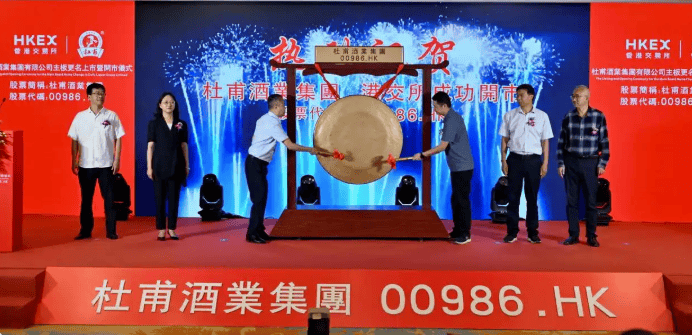
珠宝公司跨界饮酒 杜甫酒业“借壳”遭质疑
Zhong Guo Jing Ying Bao· 2025-05-20 11:05
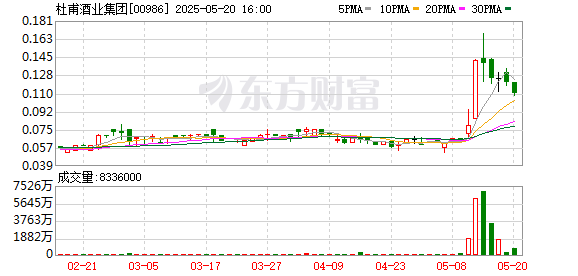
Core Viewpoint - The recent name change of China Environmental Energy Investment Co., Ltd. to Du Fu Liquor Group marks a significant move for the Sichuan-based liquor company to enter the Hong Kong stock market, although it does not constitute a traditional reverse merger due to the lack of equity transactions or asset injections [2][4]. Group 1: Company Background and History - Du Fu Liquor has been seeking capitalization for several years, previously holding a Hong Kong listing launch conference in 2021 [2][4]. - The company transitioned from Du Fu Distillery to Sichuan Mianzhu Du Fu Liquor Co., Ltd. in 2013 and has engaged in various capital market activities, including listing its intellectual property in Hong Kong in 2021 [5][6]. - Du Fu Liquor has established strategic partnerships and investment agreements, indicating a long-term focus on capital market entry [6][7]. Group 2: Recent Developments - The name change to Du Fu Liquor Group was accompanied by a sales agency agreement with China Environmental Energy, which allows the latter to act as an exclusive agent in 14 markets, with a sales target of no less than 150 million yuan over three years [7][8]. - Following the name change announcement, the stock price of the company surged by 79.75% to 0.142 HKD, indicating strong market interest [8]. Group 3: Future Plans and Strategies - Du Fu Liquor aims to leverage its capital strength to enhance brand value, targeting a market value of 50 billion yuan and brand value of 100 billion yuan by 2025 [8][9]. - The company plans to pursue both organic growth through production scale expansion and external growth via mergers and acquisitions in the liquor industry [9]. - The focus will also be on enhancing product quality and marketing networks to transition from a small enterprise to a "small giant" in the liquor market [9].
何为SPAC上市?实操中有哪些优势及潜在风险?
3 6 Ke· 2025-05-20 08:37
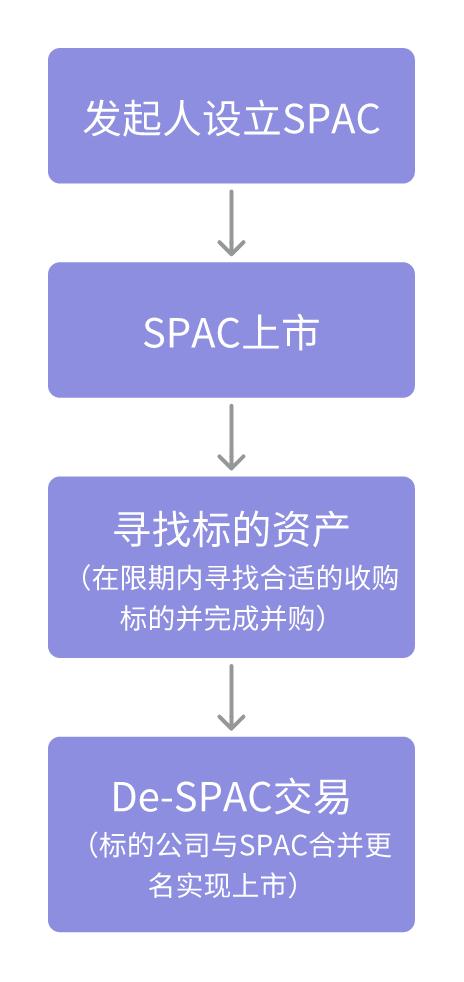
Core Viewpoint - The increasing trend of domestic companies choosing to go public overseas, particularly through SPAC listings, is highlighted as a simple, fast, and efficient method for companies to access capital markets [1][9]. Group 1: What is SPAC? - SPAC, or Special Purpose Acquisition Company, is a shell company created to raise capital through an IPO for the purpose of acquiring a private company, thereby facilitating its public listing [2][5]. - SPACs are often referred to as "blank check companies" because they do not have any assets or operations at the time of their IPO [2][5]. Group 2: Characteristics of SPAC Listings - SPAC listings require a high level of professionalism from the founding team, as their expertise is crucial for identifying and acquiring a suitable target company within a specified timeframe [5][9]. - SPACs possess private equity investment characteristics, as investors primarily rely on the reputation and trust in the founding team rather than the company itself [6]. - SPACs serve a financing function, where funds raised during the IPO are held in a trust account until the completion of the acquisition [7][9]. - Unlike traditional "backdoor listings," SPACs are formed to raise capital first and then acquire a target company, which differentiates them from companies that acquire existing public companies to go public [8]. Group 3: Advantages of SPAC Listings - SPAC listings have a higher success rate and lower costs compared to traditional IPOs, as they do not require extensive historical performance data [10][11]. - Founders of SPACs can achieve significant returns due to the appreciation of the acquired company's value post-merger [11]. - Investor funds are safeguarded in a trust account before the acquisition, allowing for a refund if the deal does not go through [12]. - The process of going public is expedited for target companies, as they can access SPAC funds and gain public company status without paying a "shell price" [13]. Group 4: Risks Associated with SPAC Listings - There is a time constraint for completing the De-SPAC transaction, typically within 24 to 36 months, which can lead to potential liquidation if not met [14]. - The equity dilution risk exists for the target company's existing shareholders due to the issuance of shares to SPAC founders [15]. - SPACs may encourage short-term trading behavior among investors, which could detract from attracting long-term investment [16]. Group 5: Conclusion - SPACs have emerged as a favored method for companies to list overseas due to their regulatory leniency, speed, and cost-effectiveness, despite the need for careful consideration of the founding team's expertise and other financial details [17].
“旭阳系”规避借壳上市明牌:入主滨海能源刚满3年就置入实控人资产 港股母公司减去置出标的利润将亏损
Xin Lang Zheng Quan· 2025-05-20 07:10
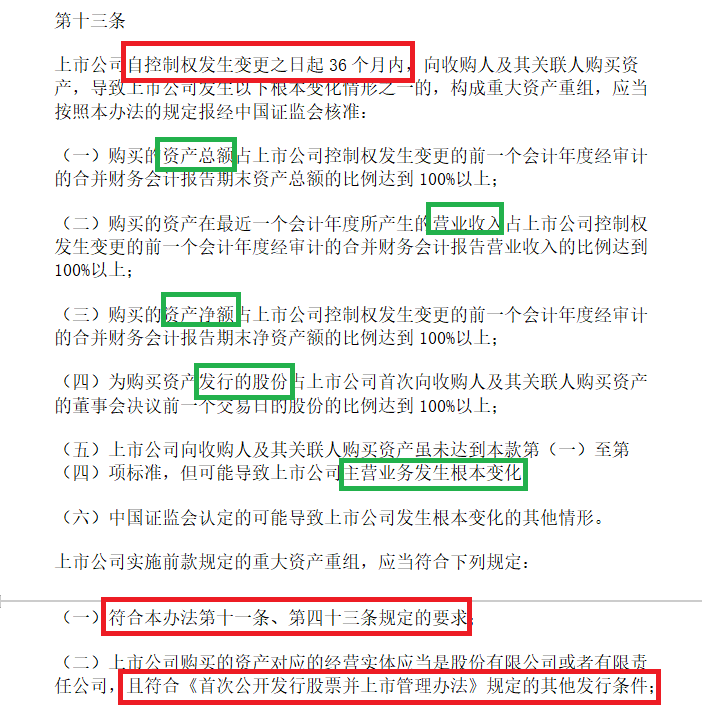
Core Viewpoint - The acquisition of Cangzhou Xuyang by Binhai Energy is essentially a capital maneuver by the actual controller Yang Xuegang, allowing him to inject assets into the company while avoiding the shell listing regulations [1][6][17]. Group 1: Acquisition Details - Binhai Energy announced plans to acquire 100% of Cangzhou Xuyang from several entities controlled by Yang Xuegang, including Xuyang Group and Xuyang Coal Chemical [1]. - The acquisition is structured to avoid the shell listing regulations, as it occurs just after the 36-month period following Yang Xuegang's acquisition of control over Binhai Energy [6][8]. - Cangzhou Xuyang's projected total assets and revenue for 2024 are 138.32 billion and 103.11 billion respectively, significantly exceeding Binhai Energy's corresponding figures of 12.79 billion and 4.93 billion [6][8]. Group 2: Financial Performance - Binhai Energy has faced continuous losses from 2020 to 2024, indicating its status as a "shell" company [6][7]. - Cangzhou Xuyang, on the other hand, is projected to generate revenues of 92.76 billion and 103.11 billion in 2023 and 2024, respectively, with net profits of 3.48 billion and 2.38 billion [8][17]. - The financial performance of Cangzhou Xuyang is crucial for Binhai Energy's turnaround, as it will significantly enhance the latter's asset base and revenue generation capabilities [8][17]. Group 3: Market Reactions - Following the announcement of the acquisition, Binhai Energy's stock price surged, while the stock of the parent company, China Xuyang Group, experienced a decline, reflecting investor sentiment regarding the valuation of both entities [17]. - The market's reaction indicates a potential reassessment of the investment value of China Xuyang Group, particularly as it may face a "hollowing out" effect due to the separation of Cangzhou Xuyang's profitable assets [17].

ST联合扣非连亏21年停牌前涨停 润田实业16年IPO未果拟曲线上市
Chang Jiang Shang Bao· 2025-05-19 23:33
Group 1 - ST United (国旅联合) announced a suspension of trading for restructuring, planning to acquire part or all of the shares of Jiangxi Runtian Industrial Co., Ltd. (润田实业) through a combination of stock issuance and cash payment [1][3] - ST United has been in operational difficulties, with its net profit excluding non-recurring items showing continuous losses for 21 years since 2004, including losses in the first quarter of this year [1][10] - Runtian Industrial is a leading bottled water producer in Jiangxi, with a nationwide distribution network and plans for an IPO that have been ongoing since 2007, but it has yet to achieve a successful listing [4][5] Group 2 - The market reacted positively to the restructuring announcement, with ST United's stock hitting the daily limit up before the suspension, adding uncertainty to the deal [2] - If the restructuring is successful, Runtian Industrial could achieve its long-desired goal of going public through a backdoor listing [6] - The bottled water market is highly competitive, with established brands like Yibao and Wahaha launching their premium bottled water products, posing challenges for Runtian Industrial [10][11] Group 3 - ST United has a history of poor financial performance, with its revenue increasing from 154 million yuan in 2000 to 328 million yuan in 2004, while net profit decreased from 18.94 million yuan to 3.75 million yuan during the same period [9] - The company has attempted multiple business transformations, including acquisitions in various sectors, but these efforts have not significantly improved its financial situation [10] - The potential acquisition of Runtian Industrial is seen as a way for ST United to improve its fundamentals, as Runtian is recognized for its strong profitability in the bottled water sector [10]
借壳上市+百亿资产注入,比双成药业还强的重组黑马!
Sou Hu Cai Jing· 2025-05-19 10:43
但大家一定要知道,并不是所有公布了重组消息的企业都能够开启连板行情,市场中唯有出现了借壳上 市、核心资产收购、资产注入等拿出"真金白银"给予上市公司扶持的企业,才能够获得资金抱团,开启 连板行情。 而市场中真正符合条件的公司只有这两家: 第一家中成股份,拟受让中技江苏清洁能源有限公司100%股权; 真正的主线来了! 如果3月的中毅达,5月的成飞集成你都没有把握住 那么接下来即将开启连板的借壳上市黑马一定不要错过了,它即将超越10倍双成药业! 要知道,自从"并购六条"这一顶层设计出台之后,市场对于重组的关注的与日俱增,众多企业纷纷开启 相关动作,同时各省也同步出台了大量重组扶持动作,让重组获得了需求+供给的双重推动力。 加上高层对于并购重组的利好政策不断释放,增强国内上市公司质量的意图极为明显,将不断推动重组 新行情诞生! 第二家可太牛了,(素材来源供众号,长涨)公司已经被中联重科斩获实控权,将有极大概率获得中联 重科旗下中联高机的资产注入,其资产股价高达上百亿元,并且此前已经有资产注入意向,近期极有可 能撑着政策红利期加速重组进程!关键是公司股价位于上市以来的相对低位,随时可能逆势爆发! 风险提示:以上内容仅 ...