
十四五规划

Search documents
拿起手机就能免费听讲座、看展览 “十四五”期间多彩文化点亮生活
Yang Shi Xin Wen Ke Hu Duan· 2025-10-18 14:03
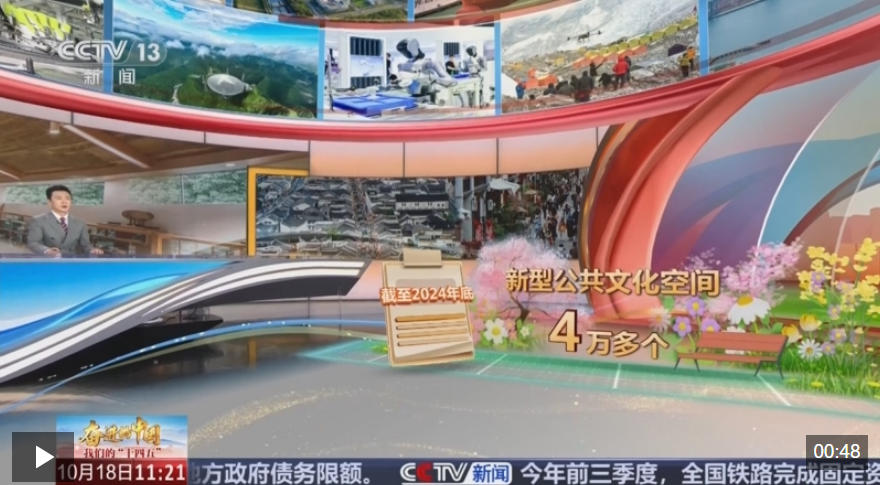
Group 1 - The core viewpoint highlights the continuous improvement of China's public cultural service system during the 14th Five-Year Plan period, enhancing access to quality cultural resources for the public [3] - By the end of 2024, there will be a total of 3,248 public libraries, nearly 44,000 community cultural institutions, and over 40,000 new public cultural spaces across the country, allowing citizens to access free lectures, art learning, and exhibitions via their mobile phones [2] Group 2 - The tourism product supply is becoming more diverse, with a focus on upgrading the product types and service quality of tourist attractions [5] - During the 14th Five-Year Plan period, 58 new 5A-level tourist attractions have been launched, bringing the total number of A-level attractions to 16,500, with a county coverage rate of 97% [5]

“十四五”·答卷|中国经济“成绩单”彰显高质量发展新成效
Yang Shi Wang· 2025-10-18 13:29
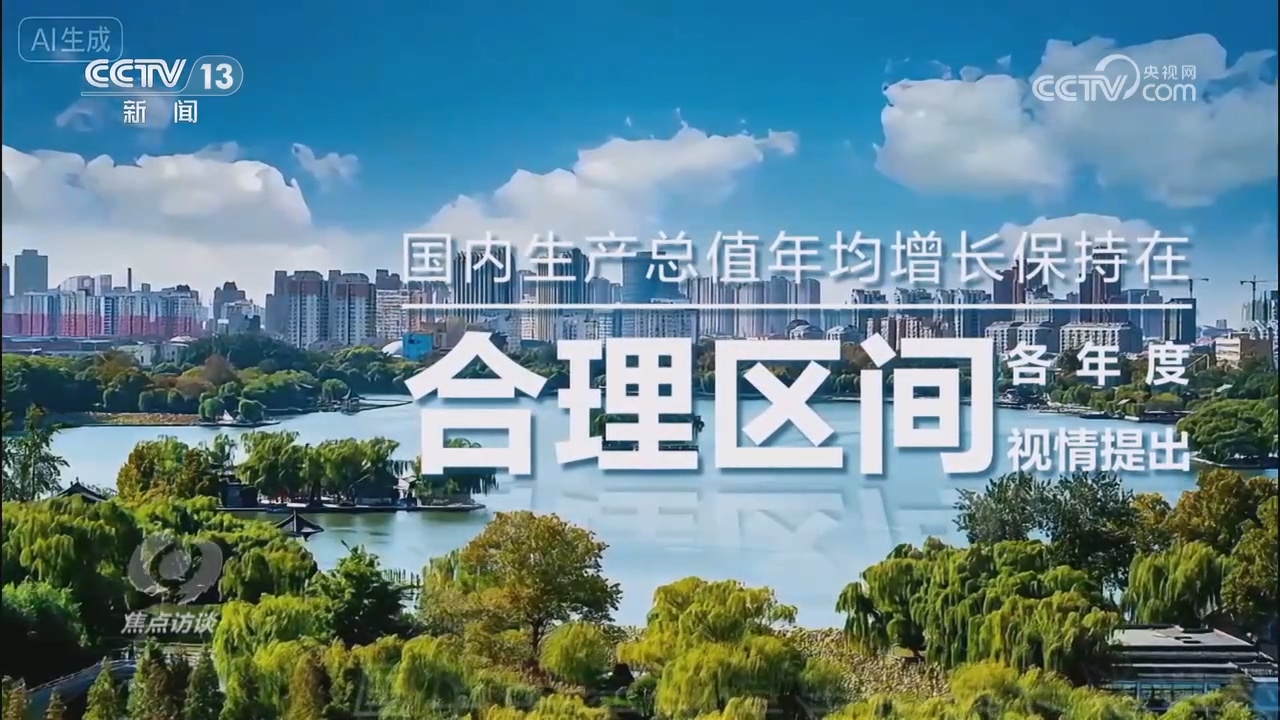
我国经济总量连续跨越110万亿元、120万亿元、130万亿元,今年预计可以达到140万亿元左右;过去4年,国民经济保持了年均5.5%的增长速度。"十四 五"增量有多可观——预计超过35万亿元,相当于再造一个长三角,也超过了世界排名第三国家的经济总量。 央视网消息(焦点访谈):用中长期规划指导经济社会发展是我们党治国理政的一种重要方式。今年是"十四五"规划收官之年。"十四五"期间,全党全国各 族人民完整准确全面贯彻新发展理念,加快构建新发展格局,高质量发展不断取得新成效、迈出新步伐、跃上新台阶。从今天开始,《焦点访谈》推出系列 节目《"十四五"·答卷》。这五年,中国经济爬坡过坎,风雨兼程见彩虹。先来通过一些数据,看看经济发展这张答卷的成绩单。 经济是国家发展的核心支柱,发展是解决我国一切问题的基础和关键,这五年,中国发展得怎么样?经济数据来说话。 "十四五"规划对于经济提出的目标是:国内生产总值年均增长保持在合理区间、各年度视情提出。 实际完成情况如何呢? 让14亿多人奔向好日子,中国经济向前走的每一步都不容易。回顾这五年,世界百年未有之大变局加速演进,全球进入新的动荡变革期,国内改革发展稳定 任务艰巨繁重,中 ...
奔赴星辰大海,见证“十四五”中国经济跨越与蝶变
21世纪经济报道· 2025-10-18 13:08
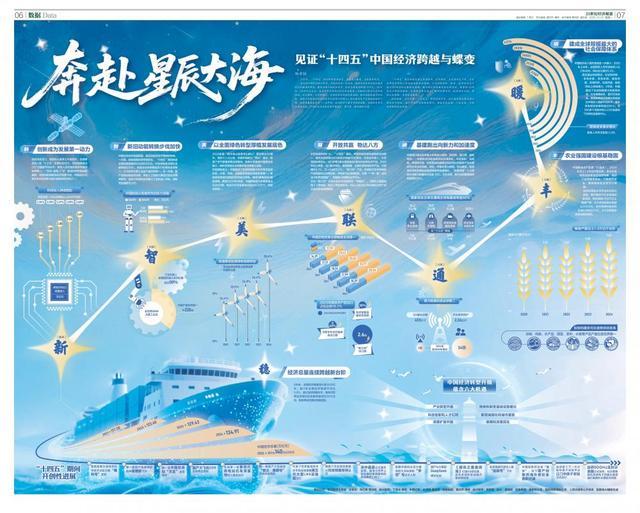
Core Viewpoint - The article highlights the achievements and progress made during China's "14th Five-Year Plan" period, emphasizing economic resilience, innovation, and sustainable development as key drivers for future growth [1][2]. Economic Growth - China's economic increment over the past five years is expected to exceed 35 trillion yuan, with an average growth rate of 5.5%, surpassing the global average and contributing approximately 30% to global economic growth [5]. Innovation - Innovation has become the primary driving force for development, with national R&D investment increasing by nearly 50% compared to the end of the "13th Five-Year Plan." R&D intensity is approaching the OECD average, and China ranks 10th in the global innovation index [7]. Industrial Transformation - The transition from old to new economic drivers is progressing smoothly, with manufacturing value added expected to increase by 8 trillion yuan during the "14th Five-Year Plan," contributing over 30% to global manufacturing growth [9]. Green Development - China has established the world's largest renewable energy system, with installed capacities for hydropower, wind, and solar energy leading globally. By mid-2025, the number of electric vehicles reached 36.89 million, with charging infrastructure also ranking first worldwide [11]. Trade and Global Cooperation - During the "14th Five-Year Plan," China's goods trade volume remained the largest globally, with service trade expected to surpass 1 trillion USD for the first time in 2024. High-tech products accounted for nearly 20% of exports [13][14]. Infrastructure Development - China has built the largest highway, high-speed rail, and port networks globally, with significant growth in new infrastructure sectors such as computing networks and smart cities, achieving a 30% annual growth rate in computing capacity over the past five years [16]. Agricultural Strength - China's grain production has achieved 21 consecutive years of growth, reaching a new milestone of 1.4 trillion jin in 2024, ensuring food security and advancing agricultural technology [18]. Social Welfare - The income gap between urban and rural areas has narrowed, with per capita disposable income reaching 21,840 yuan in the first half of 2025, reflecting ongoing improvements in social welfare systems [20].

“海上新广东”奏响法护深蓝新乐章
Ren Min Wang· 2025-10-18 02:12
Core Viewpoint - Guangdong's maritime economy has been steadily growing, with a projected marine production value exceeding 2 trillion yuan in 2024, supported by judicial innovations that enhance legal frameworks for emerging maritime industries [1][2][3]. Maritime Economic Development - Guangdong has maintained its position as the leading province in maritime economy for 30 consecutive years, with courts handling 14,300 maritime cases in the past five years [1]. - The introduction of 18 innovative judicial measures aims to support high-quality development of the maritime economy, aligning with the "14th Five-Year Plan" [1][3]. Judicial Innovations - The Guangzhou Maritime Court's ruling on the legal status of offshore wind platforms has limited compensation liabilities, boosting investor confidence in the offshore wind sector [2]. - The court has also established the first national guidelines for cross-border e-commerce logistics disputes, resolving nearly 10,000 cases and reducing complaint rates by over 30% [2][3]. Environmental Protection Initiatives - Guangdong courts have implemented ecological compensation measures, such as labor compensation for environmental restoration, to address illegal sand mining and promote sustainable marine ecosystems [5][6]. - Collaborative agreements with neighboring provinces have been established to enhance judicial protection of marine environments, creating a comprehensive ecological judicial network [6]. Global Maritime Governance - Guangdong courts have actively participated in global maritime governance, exemplified by the resolution of humanitarian crises involving abandoned foreign crew members [8][9]. - The courts have asserted China's judicial authority in international maritime disputes, enhancing China's international maritime legal standing [9][10]. Conclusion - The judicial system in Guangdong is playing a crucial role in supporting the maritime economy's high-quality development, with a focus on legal stability, environmental sustainability, and international cooperation [10].
中国经济圆桌会|“十四五”前四年经济发展平均增速达到5.5%
Xin Hua Wang· 2025-10-18 00:45
新华社音视频部制作 国家发展改革委发展战略和规划司副司长相伟在"中国经济圆桌会"节目中提到,"十四五"前四年平 均经济增速达到5.5%,连续迈上110万亿元、120万亿元、130万亿元大台阶,完整产业体系优势更加凸 显,发展的质量和效益明显提高。 0:00 / 0:11 ...
奔赴星辰大海 见证“十四五”中国经济跨越与蝶变
2 1 Shi Ji Jing Ji Bao Dao· 2025-10-17 22:48
Core Insights - The article highlights the significant achievements of China's economy during the "14th Five-Year Plan" period, emphasizing its resilience and contributions to global economic growth [1][3]. Economic Growth - Over the past five years, China's economic increment is expected to exceed 35 trillion yuan, with an average annual growth rate of 5.5%, surpassing the global average [3]. - China's contribution to global economic growth has remained around 30% annually, establishing it as a stable anchor for the world economy [3]. Innovation - National R&D investment has increased by nearly 50% compared to the end of the "13th Five-Year Plan," with R&D intensity approaching the OECD average [4]. - China ranks 10th in the global innovation index and has maintained the largest number of R&D personnel in the world for several years [4]. Industrial Transformation - The manufacturing sector is projected to contribute an additional 8 trillion yuan during the "14th Five-Year Plan," maintaining over 30% of global manufacturing growth [5]. - China continues to lead in the production of over 220 major industrial products, with significant advancements in AI and innovative pharmaceuticals [5]. Green Development - China has made substantial progress in environmental quality, with the fastest improvement in air quality and the largest increase in forest resources globally [6]. - By mid-2025, the installed capacity of renewable energy has surpassed that of coal, with 368.9 million new energy vehicles and nearly 16.7 million charging facilities, both ranking first in the world [6]. Trade and Global Cooperation - During the "14th Five-Year Plan," China's goods trade volume has remained the largest globally, with service trade expected to exceed 1 trillion USD for the first time in 2024 [8]. - High-tech products account for nearly 20% of exports, with significant growth in electronic information and high-end equipment sectors [8]. Infrastructure Development - China has established the world's largest networks of highways, high-speed rail, and ports, while also rapidly expanding new infrastructure in computing and smart cities [9]. - The computing power scale has grown at an annual rate of 30% over the past five years, with major nodes accounting for about 70% of the national total [9]. Agricultural Strength - China has achieved 21 consecutive years of grain production growth, with a target of 1.4 trillion jin by 2024, ensuring food security [10]. - The country has built over 1 billion mu of high-standard farmland, with a mechanization rate exceeding 74% for major crops [10]. Social Welfare - By mid-2025, the per capita disposable income reached 21,840 yuan, reflecting a nominal growth of 5.3% [11]. - China has developed the largest education, social security, and healthcare systems globally, with a basic pension insurance coverage exceeding 95% [11].
中工国际:“十四五”转型融合破困局 二次创业谋新篇
Zhong Guo Zheng Quan Bao· 2025-10-17 20:21
Core Viewpoint - Since the "14th Five-Year Plan," Zhonggong International (002051) has embarked on a "second entrepreneurship" journey in a complex and changing market environment, focusing on market layout adjustment, business integration, technological innovation, and full industry chain construction [1] Group 1: Strategic Initiatives - The company has initiated a transformation path centered on "doing the right and difficult things," which has significantly helped in expanding overseas markets and upgrading business models [1] - The implementation of the "14th Five-Year Plan" has been a crucial opportunity for the company to address challenges posed by traditional business models and development paths [1] Group 2: Leadership Insights - Chairman Wang Bo provided insights into the progress of the company's "14th Five-Year Plan," technological innovation achievements, and development layout for the "15th Five-Year Plan" during an interview with China Securities Journal [1] - The company has established a unique development strategy that supports resilient growth and aims for higher peaks in the future [1]

新的开创性进展、突破性变革、历史性成就
Zhong Guo Zheng Quan Bao· 2025-10-17 20:19
Core Insights - The "14th Five-Year Plan" period is crucial for China's economic and social development, marking the first five years after achieving a moderately prosperous society and setting the stage for the second centenary goal [1] - China's GDP growth averaged 5.5% over the first four years of the "14th Five-Year Plan," with an economic increment expected to exceed 35 trillion yuan, equivalent to recreating a region like the Yangtze River Delta [1] Economic Growth and Stability - China's GDP reached 110 trillion yuan, with projections of 120 trillion and 130 trillion yuan, showcasing resilience against global challenges [1] - The average annual contribution of China to global economic growth from 2021 to 2024 is around 30%, establishing it as a stable and reliable economic driver [2] Quality of Development - The quality and efficiency of development have improved significantly, with advancements in healthcare, renewable energy, and environmental quality [2] - The global innovation index ranking has entered the top ten for the first time, indicating rapid enhancement in innovation capabilities [2] Green Development - China has become a leader in global green transformation, achieving a 4.7% annual growth in energy consumption while maintaining a 5.5% economic growth rate, with a cumulative energy intensity reduction of 11.6% [3] - The country has successfully shifted from a coal-heavy energy structure to a cleaner energy system, with renewable energy generation capacity surpassing that of coal [5] Domestic Market and Consumption - The social retail sales of consumer goods are projected to grow from 39 trillion yuan in 2020 to 48 trillion yuan in 2024, with online retail sales increasing from under 12 trillion yuan to 15.5 trillion yuan [7] - Domestic demand has become a significant driver of economic growth, contributing an average of 86.8% to economic growth from 2021 to 2024 [7] International Trade and Openness - China's goods trade has consistently exceeded 5 trillion and 6 trillion USD during the "14th Five-Year Plan," with an average annual growth rate of 8.1% from 2021 to 2024 [8] - The country has actively expanded high-level openness, reducing the negative list for foreign investment and enhancing trade partnerships [6] Social Development and Welfare - The urban population reached 944 million, with continuous improvements in rural living conditions and social security coverage [6] - The "14th Five-Year Plan" emphasizes social welfare, with over one-third of the 20 major indicators focusing on improving people's livelihoods [6] Future Outlook - The "15th Five-Year Plan" is seen as a critical period for solidifying the foundation for socialist modernization, with a focus on high-quality development and addressing challenges ahead [9] - The upcoming 20th Central Committee meeting is expected to set new historical milestones for China's modernization efforts [9]
【“十四五”成绩单】优化营商环境 民营经济“爱拼会赢”
Yang Shi Wang· 2025-10-17 16:11
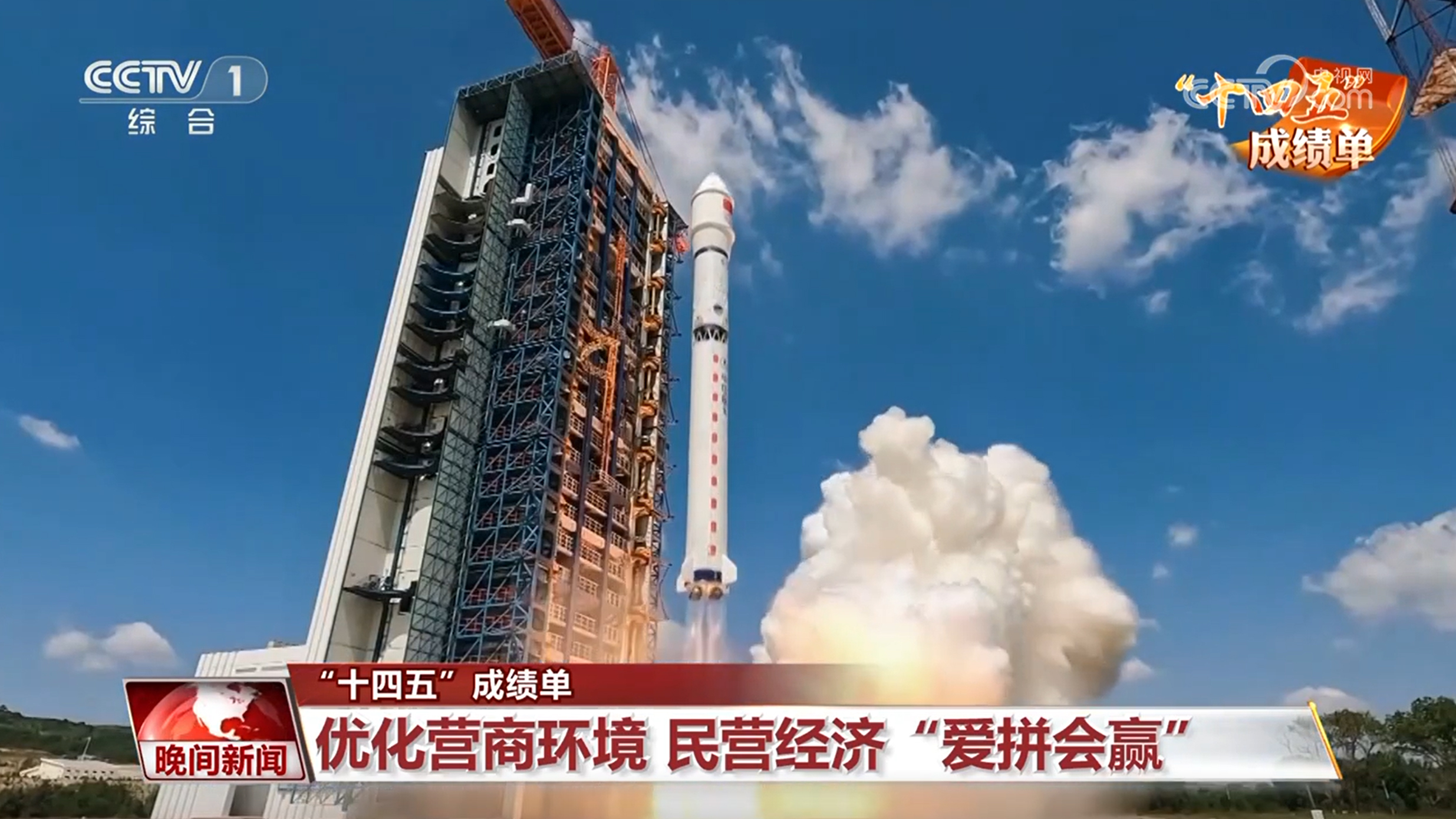
央视网消息:"十四五"期间,民营经济是推进中国式现代化的"生力军"。在政策护航与创新驱动下,一个个民营经济市场主体攻坚克难,保持"爱拼会赢"的 精气神,交出了一份规模与质量双提升的亮眼成绩单,一起看10月17日的"十四五"成绩单。 "十四五"规划纲要用专门章节明确了"优化民营企业发展环境"和"促进民营企业高质量发展"两大任务。具体包括:健全支持民营企业发展的法治环境、政策 环境和市场环境;支持民营企业参与关键核心技术研发和国家重大科技项目攻关等。 截至2025年5月底,我国实有民营经济组织1.85亿户,占经营主体总量的96.76%。其中,民营企业超5800万户,比"十三五"末增长超过40%。1.27亿个体工商 户,比"十三五"末增长约37%。 如今,民营经济贡献了我国50%以上的税收、固定资产投资和外贸进出口额;60%以上的国内生产总值和A股上市公司数量;创造70%以上的技术创新成 果;吸纳80%以上的城镇就业;集中了超过92%的国家高新技术企业。 民营企业正在商业航天等国家战略上崭露头角。北京亦庄"火箭一条街",聚集民营空天企业超140家,今年以来,已实现火箭发射18次,搭载卫星150颗。 民营企业还在人工 ...
“十四五”规划的重要意义及启示
Zhong Yang Ji Wei Guo Jia Jian Wei Wang Zhan· 2025-10-17 12:44
Group 1 - The core viewpoint emphasizes the importance of the "Five-Year Plan" as a governance tool that reflects China's unique political advantages and strategic vision for modernization [1][2][3] - The "14th Five-Year Plan" serves as a roadmap for building a modern socialist country, marking the transition towards the second centenary goal [2][3] - The plan integrates new development concepts and focuses on high-quality development, ensuring alignment with the Party's governance philosophy [2][4] Group 2 - The "14th Five-Year Plan" outlines strategic directions such as "three new and one high," providing a comprehensive framework for economic and social development [4] - It emphasizes the importance of balancing development and security, establishing safety indicators to safeguard national interests [5] - The plan aims to promote common prosperity through substantial improvements in public welfare and income distribution [5][6] Group 3 - Significant achievements during the "14th Five-Year Plan" period include a notable increase in economic strength, with a projected growth of over 35 trillion yuan [6] - Major breakthroughs in technological innovation have been realized, including advancements in nuclear power and space exploration [6] - The plan has led to improvements in living standards, with a focus on education, healthcare, and social security systems [6] Group 4 - The interaction between planning and institutional advantages has enabled efficient completion of major strategic tasks, ensuring policy continuity and stability [7] - The "14th Five-Year Plan" incorporates a scientific top-level design that balances immediate needs with long-term goals [8] - The plan emphasizes a people-centered approach, integrating public feedback into its development and implementation [8] Group 5 - The execution of the "14th Five-Year Plan" showcases the country's strategic execution capabilities through systematic mechanisms and effective resource mobilization [9] - The plan demonstrates flexibility in responding to environmental changes, with mechanisms for mid-term evaluations and adjustments [9][10] - It highlights the importance of maintaining strategic focus while allowing for dynamic optimization in response to new challenges [10] Group 6 - The methodology embedded in the "14th Five-Year Plan" emphasizes forward-thinking, comprehensive planning, and strategic layout to ensure continuity and stability in national development [10][11] - The plan advocates for a scientific development approach that integrates systemic thinking and practical measures [11][12] - It aims to enhance the adaptability and precision of planning, focusing on high-quality development indicators [12][13]