
多品牌战略

Search documents
剥开海底捞“红石榴计划”:开启一场内部人才选拔赛,子品牌的发展遵循市场选择
Mei Ri Jing Ji Xin Wen· 2025-03-30 07:27
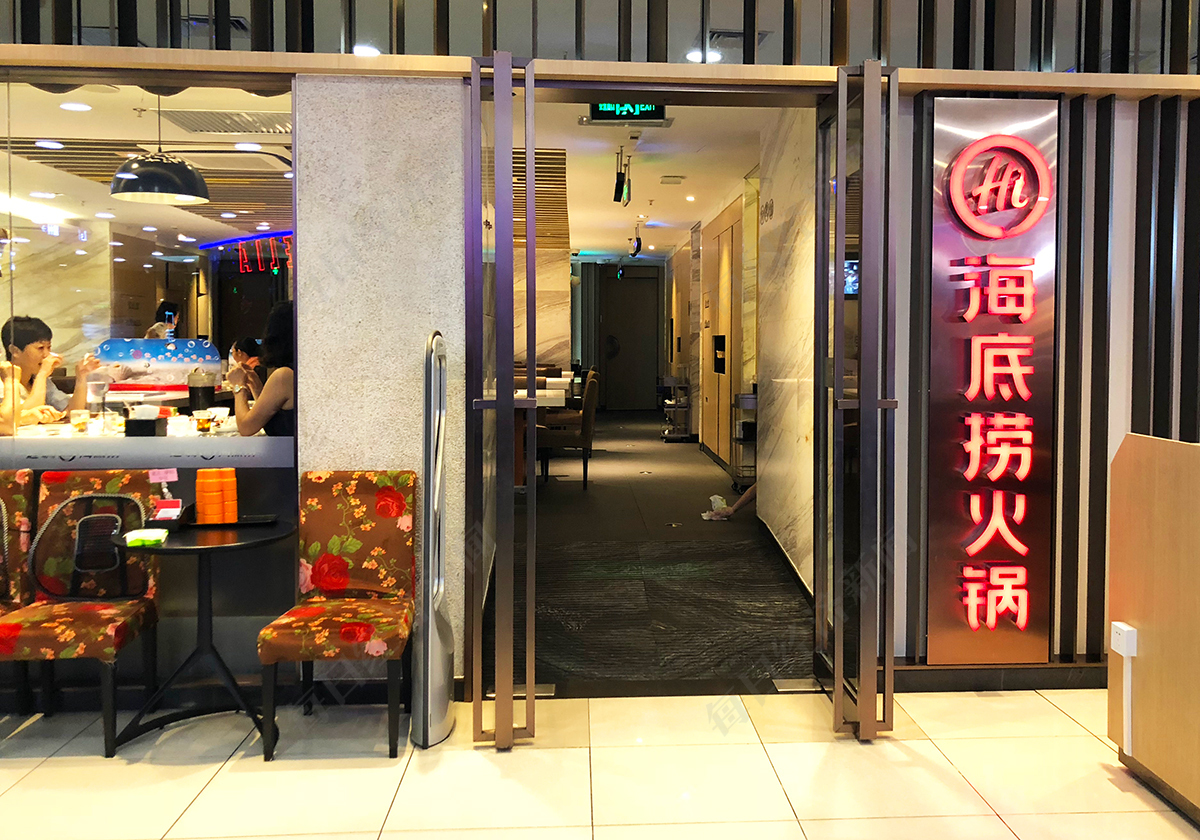
Core Viewpoint - In 2024, Haidilao is launching the "Pomegranate Plan" to incubate independent brands internally, aiming to address market saturation and consumer segmentation challenges while fostering employee entrepreneurship [1][2][3]. Group 1: Financial Performance - By the end of 2024, Haidilao's other restaurant revenues reached 483 million yuan, marking a year-on-year increase of 39.6% [2]. - The company has already established 11 sub-brands, including "Yanjing BBQ," "Fire Flame Official," and "Little Hi Hot Pot," with a total of 74 stores [7]. Group 2: Strategic Initiatives - The "Pomegranate Plan" encourages employees to manage multiple stores, allowing store managers to oversee both the main brand and incubated brands, thus promoting talent sharing [2][3]. - The plan symbolizes internal innovation and entrepreneurship, with a focus on project replicability and alignment with economic trends [3][5]. Group 3: Internal Structure and Evaluation - The internal "Entrepreneurship Committee" acts similarly to a venture capital entity, evaluating new projects based on their replicability, market trends, and integration of automation and digital operations [8][9]. - Projects may be voluntarily shut down by founders or based on data assessments by the company, with a structured review mechanism in place [9]. Group 4: Employee Engagement and Incentives - The incentive mechanism for the entrepreneurial teams includes equity incentives, profit sharing, and salary guarantees, aligning the interests of founders with the company's performance [9]. - Employees are excited about the potential for career advancement, seeing opportunities to manage new brands beyond just Haidilao [4].


Z Auto|卖一辆亏10万,蔚来还有明天?
Z Finance· 2025-03-27 21:31
Core Viewpoint - NIO is facing severe financial difficulties despite high sales figures, with a record net loss of 22.4 billion RMB in 2024, leading to a loss of 100,911 RMB per vehicle sold [1][2][3]. Financial Performance - In 2024, NIO's total revenue reached 65.7 billion RMB, an 18% year-on-year increase, with automotive sales contributing 58.2 billion RMB [2]. - The net loss for the fourth quarter of 2024 was 7.1 billion RMB, contributing to an annual net loss of 22.4 billion RMB, resulting in a net loss margin of -34% [2][3]. - Cumulative net losses since NIO's IPO in 2018 have exceeded 100 billion RMB, highlighting the scale of financial challenges compared to industry leader BYD, which reported a net profit of 25.2 billion RMB in the first three quarters of 2024 [2][3]. Vehicle Delivery and Pricing - NIO delivered 220,000 vehicles in 2024, with an average selling price of approximately 262,301 RMB, while the average manufacturing cost per vehicle was 230,000 RMB, leading to a gross profit of 30,000 RMB per vehicle [3][4]. - The average selling price dropped to 240,000 RMB in the fourth quarter, influenced by the introduction of the lower-priced model L60 [3][4]. Cost Structure - R&D expenses per vehicle for NIO were 58,726 RMB, significantly higher than competitors like XPeng and Li Auto, which spent 33,985 RMB and 22,121 RMB respectively [5][6]. - Sales and administrative expenses per vehicle were 70,910 RMB, also exceeding those of competitors, indicating a high cost structure that is not yielding proportional returns [5][6]. Debt and Cash Flow - As of December 31, 2024, NIO had cash reserves of 41.9 billion RMB but faced short-term liabilities totaling 623 billion RMB, indicating a liquidity crisis [7][8]. - The company needs to repay short-term loans of 5.7 billion RMB and trade payables of 34.4 billion RMB within a year, raising concerns about its ability to meet obligations without external financing [7][8]. Strategic Challenges - The launch of the L60 model under the new brand "Lao Dao" has not met sales expectations, with deliveries significantly below targets, raising questions about market demand and brand strategy [10][11]. - NIO's multi-brand strategy has not effectively reduced fixed costs, and the lack of shared resources between brands has led to increased operational expenses [15][16]. - The company is under pressure to reassess its development strategy and improve cost efficiency to avoid further financial deterioration [16].

港股汽车股“思路一致”?比亚迪、小米之后,蔚来也要配售了!
Hua Er Jie Jian Wen· 2025-03-27 12:15
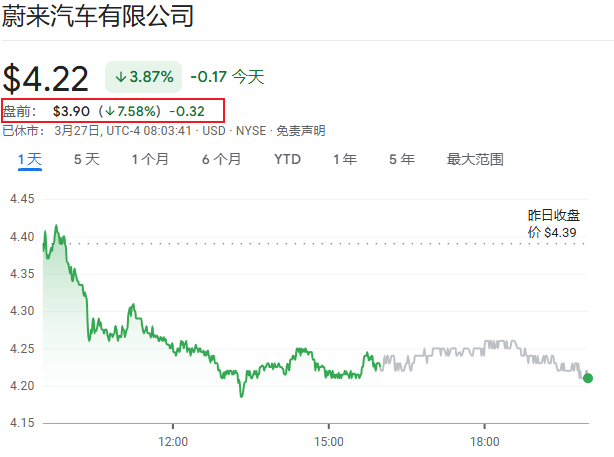
近期港股纷纷宣布配售,继比亚迪、小米之后,蔚来也宣布开启配售。 3月27日,蔚来宣布开启港股"闪电"配售,拟以每股29.46港元的价格配售股份,发行不超过1.1879亿股 A类普通股。这一配售价格较其港股最新收盘价折让约9.5%,蔚来周四收于32.550港元/股。 此外,2024年是公司扩张期,除主品牌及换电、服务体系的扩张外,蔚来还接连推出了乐道、萤火虫, 多品牌战略之下必将增加研发与渠道的投入。 从以上两点因素来看,股票配售能够为企业迅速筹集资金,蔚来本次配售融资有一定合理性。 港股配售潮来了,比亚迪、小米规模最大 值得一提的是,配售作为一种常见的再融资手段,在电动汽车行业竞争愈发激烈的背景下,比亚迪、小 米先后宣布配售。 本月初,比亚迪宣布以每股335.2港元的价格配售近1.3亿股H股,净筹资433.83亿港元,用于提升技术 实力、提速出海进程和补充运营资金,并期望通过引入新股东进一步丰富其股东基础。 比亚迪此次H股闪电配售,是全球汽车行业有史来规模最大的股权再融资项目,也是香港市场有史以来 规模第二大的闪电配售项目。花旗银行的一份研报指出,比亚迪的配售将进一步推动其海外资产和工厂 建设,显示出国际资本 ...

谁还关心海底捞
Hu Xiu· 2025-03-27 01:07
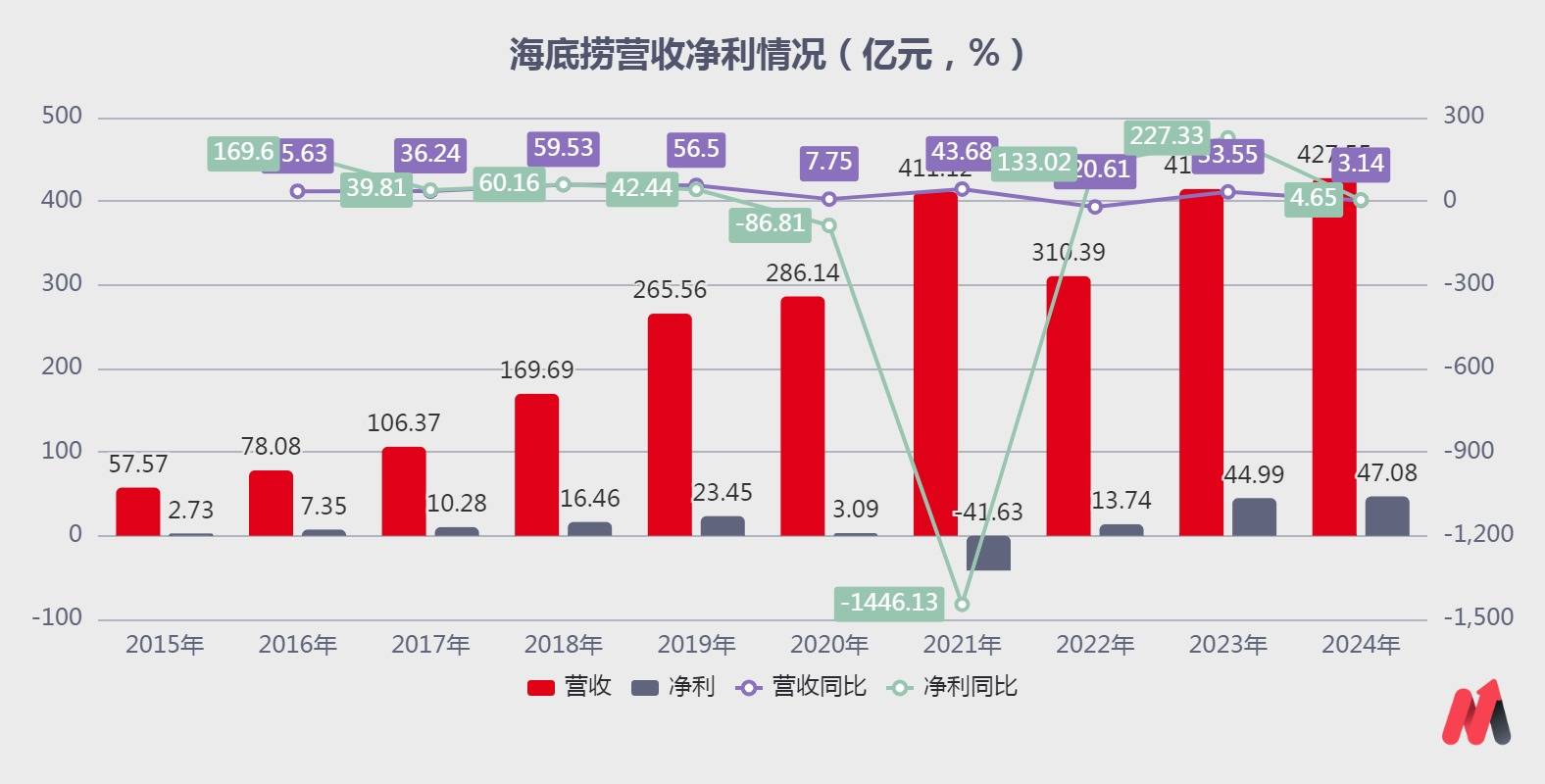
Core Viewpoint - The restaurant industry, particularly hot pot chain Haidilao, is facing significant challenges, with a decline in stock price from a peak of 76.82 HKD to around 17 HKD, indicating a loss of investor confidence and growth potential [1][2] Financial Performance - Haidilao's 2024 revenue and net profit are projected to grow only 3.1% and 4.6% year-on-year, respectively, reflecting limited growth prospects [1] - The average revenue per store is estimated at 30.81 million CNY, with a profit of over 3.47 million CNY per store [4] - The company reported a 20.4% increase in takeaway revenue, reaching 1.254 billion CNY, but this only accounts for 2.9% of total revenue [7] Store Operations - Haidilao opened 62 new restaurants in the past year but closed or relocated 70, resulting in a net decrease of 19 self-operated restaurants, totaling 1,355 by the end of 2024 [5] - The average table turnover rate has stabilized at 4.1 times per day, but maintaining this rate may become increasingly difficult due to service quality issues [5] Market Strategy - The company has initiated a franchise model to tap into lower-tier markets, with 13 franchise stores contributing 16.7 million CNY in revenue, indicating limited immediate growth potential [6] - Haidilao is diversifying its brand portfolio with 11 new restaurant brands, but these have not yet shown significant revenue contributions, with new brands averaging 6.5 million CNY in annual revenue [7][9] Consumer Trends - The consumer base is shifting towards younger demographics, with a growing emphasis on fresh ingredients and high cost-performance ratios, which may challenge Haidilao's traditional business model [12][13] - Analysts predict a revenue growth rate of around 7% for 2025, but the lack of new growth narratives and high stock prices may deter investor interest [13]
客单价跌破百元!海底捞转型“阵痛”,全年关店19家 | BUG
新浪财经· 2025-03-26 01:06
面对火锅主业的增长瓶颈,2024年8月,海底捞加速推进"红石榴计划",以孵化多品牌来分散风 险。财报数据显示,截至2024年末,海底捞通过内部创业创立了焰请烤肉铺子、火焰官、小嗨 火锅等11个餐饮品牌共计74家门店,覆盖正餐、简餐、快餐等不同消费场景。2024年,海底捞 其他餐厅实现收入4.83亿元,同比增长39.6%。 文 | 《BUG》栏目 徐苑蕾 3月25日晚,海底捞发布2024年业绩报告。尽管连续两年实现正向增长,但数据背后难掩海底 捞的增长疲态。 财报显示,2024年,海底捞营收和利润增速均较2023年骤降,与2019年前双位数的高增长相比 更是相形见绌。作为核心业务,海底捞餐厅的经营面临瓶颈,2024年营收仅微增不到3%。 此外,海底捞自营店收缩、客单价持续下滑等问题凸显。2024年,海底捞关闭19家自营店,客 单价进一步下滑至97.5元。 尽管以价换量策略带动客流量回升,但餐饮行业整体承压,海底捞的破局之路仍充满不确定 性。在消费者愈发挑剔、竞争日益激烈的背景下,海底捞的多品牌与加盟尝试能否成为新的增 长引擎,尚待市场检验。 业绩增速放缓, 加盟收入首进财报 2024年海底捞实现营收427.55 ...
比亚迪年报数据公布:一年赚402.54亿元 平均每天卖出11698辆车
Zhong Guo Jing Ying Bao· 2025-03-25 06:43
比亚迪年报数据公布:一年赚402.54亿元 平均每天 卖出11698辆车 本报记者 陈靖斌 赵毅 广州报道 3月24日,比亚迪股份有限公司(002594.SZ,以下简称"比亚迪")发布2024年年报,展现出强劲的业绩 增长势头。年报显示,公司2024年实现营收7771.02亿元,同比增长29.02%;归母净利润402.54亿元, 同比增长34.00%。各项核心经营指标均创历史新高,显示出比亚迪在全球新能源汽车市场中的稳健发 展态势。 2024年,比亚迪全球销量达到427万辆,同比增长41%,继续稳居全球新能源汽车市场的领先地位。销 量的快速增长得益于公司实施的多品牌战略和持续的技术创新。通过王朝、海洋、腾势、方程豹等品牌 矩阵的协同发力,比亚迪在不同细分市场中形成了广泛的覆盖,进一步巩固了市场竞争力。 在国内市场,比亚迪通过加速新车型推出和优化产品结构,满足了消费者对新能源车型日益增长的需 求。而在海外市场,公司加速本地化布局,推动品牌知名度和市场份额持续攀升。 《中国经营报》记者注意到,比亚迪的持续成长离不开巨额的研发投入。2024年,公司在研发方面投入 达542亿元,同比增长36%,远超同期净利润。在20 ...
特步国际(01368) - 2024 Q2 - 业绩电话会
2024-08-20 01:00
Financial Data and Key Metrics Changes - The company's total sales increased by 10.4% to RMB 7.203 billion, with gross profit up 18.5% to RMB 3.314 billion, resulting in a gross margin increase of 3.1 percentage points to 46% [8][11][9] - Net profit rose by 13% to RMB 752 million, with a net profit margin slightly increasing by 0.2 percentage points to 10.4% [9][12] - Operating cash inflow was RMB 826 million, exceeding net profit, indicating healthy cash flow [9] Business Line Data and Key Metrics Changes - Sales of the core brand (XTAP) increased by 6.6% to RMB 5.789 billion, while the professional sports segment (Saucony and Merrell) saw sales growth exceeding 72% to RMB 593 million [8][17] - The athleisure segment (K Swiss and Palladium) reported a sales increase of 9.7%, primarily driven by growth in China [20][21] Market Data and Key Metrics Changes - The macroeconomic environment remains challenging, with weak consumer sentiment impacting brand development [7][26] - Consumer demand for sports goods has remained stable, outperforming the overall consumer industry [26] - The number of marathon participants and events has recovered to approximately 85% of pre-pandemic levels, indicating a growing interest in running [28][29] Company Strategy and Development Direction - The company announced a strategic disposal of K Swiss and Palladium to focus resources on high-profit brands like XTAP, Saucony, and Merrell, emphasizing running as a core strategy [4][30] - The multi-brand strategy aims to cater to various customer segments in different sports scenarios, enhancing market position [5][30] - The company aims to maximize shareholder value and create good returns for investors despite economic uncertainties [6][43] Management's Comments on Operating Environment and Future Outlook - Management expressed confidence in the long-term development of the group, citing a unique competitive advantage in the running market [6][43] - The company anticipates some growth driven by running products and kids' offerings, although it will adopt a more conservative target to avoid excessive inventory [18][24] - The focus will be on controlling expenses and inventory management in the second half of the year [24][25] Other Important Information - The company achieved an upgrade to A level in the Morgan Stanley ESG rating, becoming the first A-grade company in China's sports goods industry [6][10] - The interim dividend recommended is HKD 15.6 per share, with a total expected dividend of HKD 60.3 if approved [9][10] Q&A Session Summary - Questions regarding the impact of the macroeconomic environment on sales and strategies to mitigate risks were addressed, with management emphasizing a focus on running and cost-effective products [18][24] - Inquiries about the performance of new brands and their contribution to overall growth were met with positive feedback on Saucony's rapid expansion and profitability [36][37] - Concerns about inventory management and future sales targets were acknowledged, with management indicating a cautious approach to avoid excess stock [24][25]