
数字金融

Search documents
理论学习丨党的二十届四中全会《建议》学习辅导百问(33-41)
Sou Hu Cai Jing· 2026-01-02 10:50
Group 1 - The core idea is to accelerate the establishment of a long-term mechanism for government debt management that aligns with high-quality development, emphasizing the need for effective debt management and risk prevention [2][3][4] - The Chinese government has strengthened local government debt management during the 14th Five-Year Plan period, optimizing special bond management and implementing a negative list for bond usage [3][4] - There is a need to improve the government debt management system, clarify the classification and functional positioning of government debt, and ensure sustainable debt limits [4][5] Group 2 - A long-term mechanism for preventing and resolving hidden debt risks is essential, requiring a comprehensive monitoring system and strict budget management for government expenditures [5][6] - Enhancing the management of local government special bonds is crucial, focusing on project approval processes and ensuring timely repayment to mitigate default risks [6] - The reform and transformation of local government financing platforms should be accelerated, ensuring they operate independently of government credit and adhere to market principles [6] Group 3 - The development of technology finance, green finance, inclusive finance, pension finance, and digital finance is a strategic deployment to better serve the real economy and meet the needs of high-quality economic development [7][8] - By June 2025, loans in the five key financial areas are expected to reach 105.7 trillion yuan, accounting for 38.8% of total loans, with a year-on-year growth of 14% [8][9] - The financial system should enhance its service capabilities and support for key sectors such as technology innovation and green development [9][10] Group 4 - The promotion of balanced development in imports and exports is essential for maintaining economic stability and responding to global trade challenges [24][25] - In 2024, China's goods trade is projected to reach 6.16 trillion USD, with a trade surplus of 992.2 billion USD, highlighting the need for balanced trade [24][25] - The focus on high-quality development necessitates increasing both export quality and import volume to meet domestic needs and enhance global cooperation [26][27] Group 5 - The push for digital trade innovation involves expanding market access in the digital sector and improving the regulatory framework for data flow [29][30] - Establishing high-level open platforms for digital trade is crucial, with initiatives like national digital trade demonstration zones to enhance competitiveness [30][31] - International cooperation in digital trade should be deepened, particularly with countries in ASEAN and BRICS, to foster a collaborative digital economy [31]


稳步发展数字人民币,建设自主可控的人民币跨境支付体系|新刊亮相
清华金融评论· 2026-01-01 10:18
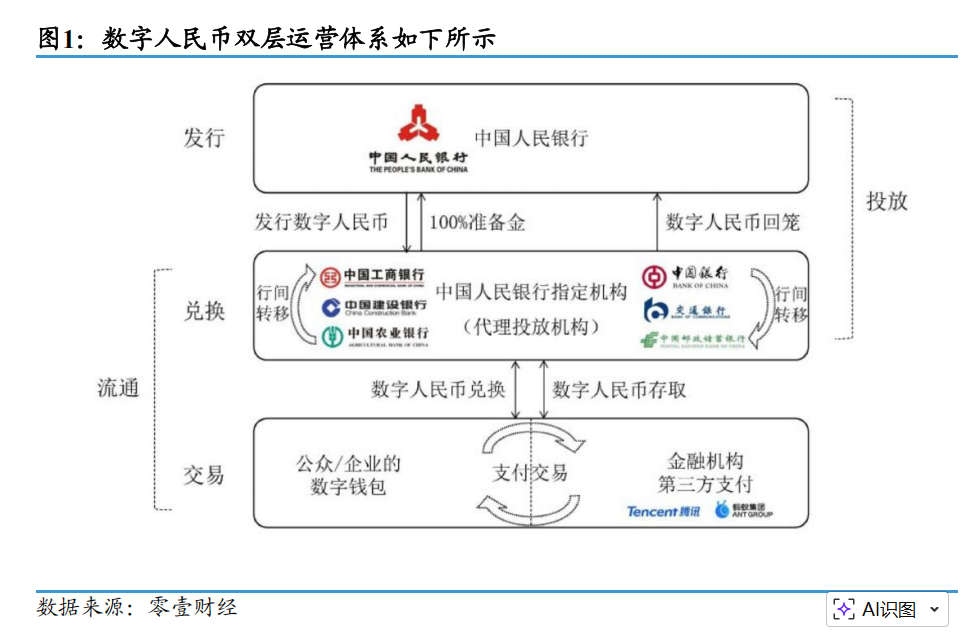
Core Viewpoint - The article emphasizes that the digital renminbi (e-CNY) is transforming the digital financial landscape and facilitating the internationalization of the renminbi through technological upgrades and institutional innovations [10]. Group 1: Digital Renminbi Development - The digital renminbi has transitioned from a cash equivalent (M0) to a fully functional legal digital currency, marking a new paradigm in digital finance and the internationalization of the renminbi [10]. - The People's Bank of China has established three principles for the digital currency: "no loss, compliance, and interoperability," which serve as fundamental guidelines for building cross-border infrastructure [5][6]. - As of November 2025, the digital renminbi has processed 3.48 billion transactions, amounting to 16.7 trillion yuan, with 230 million personal wallets opened through the digital renminbi app [6]. Group 2: Cross-Border Payment System - The digital renminbi is positioned to enhance domestic payment efficiency and promote financial inclusion while reshaping the cross-border payment landscape [7]. - Traditional cross-border payment systems face challenges such as high costs and inefficiencies, which the digital renminbi aims to address through point-to-point payments and real-time settlement mechanisms [7]. - The implementation of a partial reserve system for the digital renminbi will create new issuance channels and enhance user retention by allowing interest payments on digital currency held in wallets [8]. Group 3: Strategic Importance and Challenges - The digital renminbi's unique characteristics present new challenges for issuers, operators, and users, necessitating enhanced technical capabilities and security measures [9]. - The widespread application of the digital renminbi will impact the central bank's monetary policy transmission and macroeconomic regulation, requiring a comprehensive approach to development and security [9]. - The establishment of an international operational center and the expansion of the "mBridge" network will position the digital renminbi as a "digital bridge" connecting more countries [8].

数字人民币2.0:“计息数字货币”的机制与技术创新
Hua Er Jie Jian Wen· 2026-01-01 08:06
Core Viewpoint - The People's Bank of China is officially transitioning the digital yuan from a "cash-type 1.0" to a "deposit currency type 2.0," introducing a historical transformation that enhances its functionality as a financial asset with value storage capabilities [1][2]. Group 1: Mechanism Innovation - The core mechanism innovation of version 2.0 is characterized by the redefinition of liability attributes and the incorporation of a macro framework, allowing digital yuan balances in commercial banks to be classified as "account-based commercial bank liabilities" [3][6]. - The cancellation of the "non-interest" policy for digital yuan enables liquidity to flow directly into the electronic wallet system, marking the end of the cash era [3][6]. - The new framework enhances user willingness to hold and use digital yuan while providing banks with a manageable asset-liability space [6]. Group 2: Technical Architecture - The technical architecture features three major innovations: an account system, a currency string, and smart contracts, which facilitate a digital path for the digital yuan [7]. - The upgrade maintains compliance with existing bank account rules while introducing a "currency string" for value transfer and offline circulation, enhancing verification and system resilience [7]. - Smart contracts embedded in the funding flow can trigger conditions and automate verification in various scenarios, reducing misuse risks and compliance costs [7]. Group 3: Cross-Border Applications - The transition to "digital deposit currency" is reshaping the liquidity foundation and settlement efficiency of the multilateral central bank digital currency bridge (mBridge) [11]. - As of November 2025, digital yuan holds a dominant position in mBridge operations, accounting for 95.3% of transactions, with a total of 4,047 cross-border payments amounting to 387.2 billion yuan [14]. - The introduction of deposit insurance significantly lowers the risk costs for foreign participants holding digital yuan, enabling more robust fund position management [14].


刘小涛走访慰问金融财税海关部门干部职工深化改革创新奋力担当作为 更好促进经济向新向优发展
Xin Hua Ri Bao· 2026-01-01 00:13
Group 1 - The provincial governor Liu Xiaotao visited financial, tax, and customs departments to express gratitude for their hard work over the past year and to convey New Year wishes [1][2] - Liu emphasized the importance of implementing the spirit of the 20th Central Committee's Fourth Plenary Session and the Central Economic Work Conference, focusing on economic development and high-quality growth [1] - The governor highlighted the need for the Jiangsu branch of the People's Bank to plan major financial reforms and support initiatives in technology, green finance, inclusive finance, pension finance, and digital finance [1] Group 2 - Liu acknowledged the effective tax collection and service improvements made by the provincial tax system, urging further efforts to enhance the business environment and stimulate innovation [2] - At the Provincial Finance Department, Liu stressed the importance of leveraging fiscal funds for significant projects and supporting key industries while managing expenditures effectively [2] - Liu commended the Nanjing Customs for its role in foreign trade and encouraged further reforms to enhance regulatory efficiency and support the province's economic development [2]
深圳创新四姐妹,2025年三大关键词
21世纪经济报道· 2025-12-31 12:50
Core Viewpoint - The rapid development of artificial intelligence (AI) is prompting a revaluation of technology assets globally, with Shenzhen emerging as a focal point for investors seeking opportunities in China. The city has produced several tech giants, referred to as the "Four Sisters" of innovation: Huawei, Tencent, China Ping An, and BYD, all of which have market capitalizations exceeding 1 trillion yuan and revenues above 600 billion yuan, with Ping An's revenue surpassing 1 trillion yuan in 2024 [1][2]. Group 1: Characteristics of the "Four Sisters" - The "Four Sisters" have experienced a collective revaluation, with stock prices and market capitalizations reaching new highs. Except for Huawei, which is not publicly listed, Tencent, Ping An, and BYD have all seen significant stock price increases this year, benefiting from the narrative of asset revaluation in China [3][4]. - The average stock price increase for the "Four Sisters" is 44.87% year-to-date, outperforming the average increase of 27.95% for the "Magnificent Seven" in the U.S. [4][5]. - Each of the "Four Sisters" has achieved record market capitalizations this year, with Tencent reaching a peak of 683 HKD per share and a market cap of 5.45 trillion HKD, while Ping An's market cap is around 1.3 trillion HKD [6][7]. Group 2: AI Investment and Strategy - The "Four Sisters" are heavily investing in AI, engaging in a talent acquisition race and increasing R&D expenditures. For instance, Huawei's R&D spending reached 96.95 billion yuan in the first half of the year, accounting for 22.7% of its revenue [8][9]. - Each company has a differentiated AI strategy: Huawei focuses on foundational technologies, Tencent integrates AI into its social applications, Ping An emphasizes AI in financial and healthcare services, and BYD incorporates AI into smart transportation solutions [12][13]. Group 3: Global Expansion and Influence - The global influence of the "Four Sisters" is on the rise, as evidenced by their improved rankings in the 2025 Fortune Global 500 and Kantar BrandZ lists. Ping An ranks 13th, Huawei 24th, BYD 27th, and Tencent 32nd [13][14]. - BYD has surpassed Tesla in global electric vehicle sales, exporting 878,000 units from January to November, a 144% increase year-on-year. Huawei operates in over 170 countries, while Tencent's international gaming revenue grew by 43% [14][15].

为什么最赚钱的IT生意往往不起眼?
虎嗅APP· 2025-12-31 11:37
Core Insights - Dell's financial report reveals that over 80% of its PC revenue in FY2024 comes from commercial machines, indicating that flashy gaming laptops are a minority in its product lineup [2] - In the current economic climate, consumer spending is tight, while the commercial sector is providing a rare source of stability for tech giants [3] - Companies prioritize stability and sustainability over flashy features, leading IT giants like Dell and HP to focus on the lucrative commercial business [4] Market Dynamics - The commercial sector has high entry barriers, making it difficult for new players to enter, which results in a natural oligopoly [7] - Customer stickiness is strong in the commercial business, as selling hardware is just the beginning; long-term maintenance, software licensing, and asset management follow [8] - The lock-in effect is significant, as once companies choose their IT systems, switching costs increase, leading to stable and sustainable cash flows [9] Evaluation Criteria - In the commercial market, safety and compliance take precedence over design and cutting-edge technology, with total cost of ownership (TCO) and predictability being key concerns [11] - The procurement decision-making process in commercial settings often prioritizes financial and operational metrics over user experience [16] - Trust is a critical factor in the commercial sector, and establishing a reliable relationship can lead to long-term growth [12] Huawei's Strategy - Huawei's "Huawei Qingyun" has made significant strides in the commercial sector, serving over 100,000 industry clients and implementing over 90 scenario-based solutions [14] - The company aims to balance cost, efficiency, and user experience by leveraging its consumer product capabilities in commercial settings [16][17] - Huawei's approach includes integrating AI and collaborative capabilities into commercial products, enhancing user experience while meeting compliance requirements [19] Brand Positioning - Huawei Qingyun has developed a unified brand expression, which is crucial for accelerating business growth in a market dominated by established players [21] - The company is positioned as a pioneer in the HarmonyOS commercial sector, providing not just hardware but also a sustainable value network through ecosystem collaboration [22] - The HarmonyOS enterprise version aims to provide a secure and controllable technology foundation for businesses, facilitating digital transformation across various industries [24] Future Outlook - The competition in the commercial sector will shift from merely providing durable or cheaper products to balancing organizational management security with employee efficiency [27] - Companies that can build resilient digital foundations for various industries will secure their place in the next decade of digitalization [27]

持续打造数字金融服务新范式 光大银行APP获评“年度用户青睐产品”
Cai Jing Wang· 2025-12-31 11:28
Core Insights - The article emphasizes the transformation of financial institutions, particularly through mobile banking, as a key platform for enhancing service experience, security, and convenience, marking a shift from traditional transaction processing to comprehensive financial service platforms [1][2] Group 1: Mobile Banking Evolution - China Everbright Bank has launched the 13.0 version of its mobile app, focusing on wealth management, retirement finance, retail credit, and credit cards, with a goal of connecting users to a better life [1][2] - The new app design is centered around user needs, restructuring the homepage into five main modules: Home, Borrowing, Wealth, Activities, and My Account, indicating a fundamental shift from a bank-centric to a user-centric service logic [2] Group 2: Wealth Management Focus - The retail asset management scale of China Everbright Bank has surpassed 3.15 trillion yuan, with wealth management products reaching 1.89 trillion yuan, showcasing its robust capabilities in providing a reliable wealth management platform [3] - The app's wealth management section emphasizes the "Sunshine Wealth" brand, focusing on trust, security, and professionalism, while introducing the "Four Types of Money" asset allocation concept to guide users in financial planning [3][7] Group 3: Retirement Financial Services - The bank has upgraded its mobile banking features to address the growing demand for diverse retirement solutions, transitioning from a single product sales approach to a comprehensive "finance + ecosystem" service model [5][6] - The app includes dedicated sections for retirement finance and personal pensions, offering a one-stop service that aligns with the national multi-pillar pension system, enhancing the planning of future retirement funds [6] Group 4: User-Centric Innovations - The 13.0 version of the app includes a "Simplified Love" version tailored for elderly users, improving usability through optimized design and simplified processes, thereby lowering barriers for older customers to access digital financial services [6][7] - The bank's initiatives reflect a commitment to redefining the relationship between banks and users in the digital economy, positioning itself as a co-creator of value and an enabler of a better life [7]

新股前瞻|乘Web3与AI东风,四方精创赴港抢占数字金融新高地
智通财经网· 2025-12-31 11:25
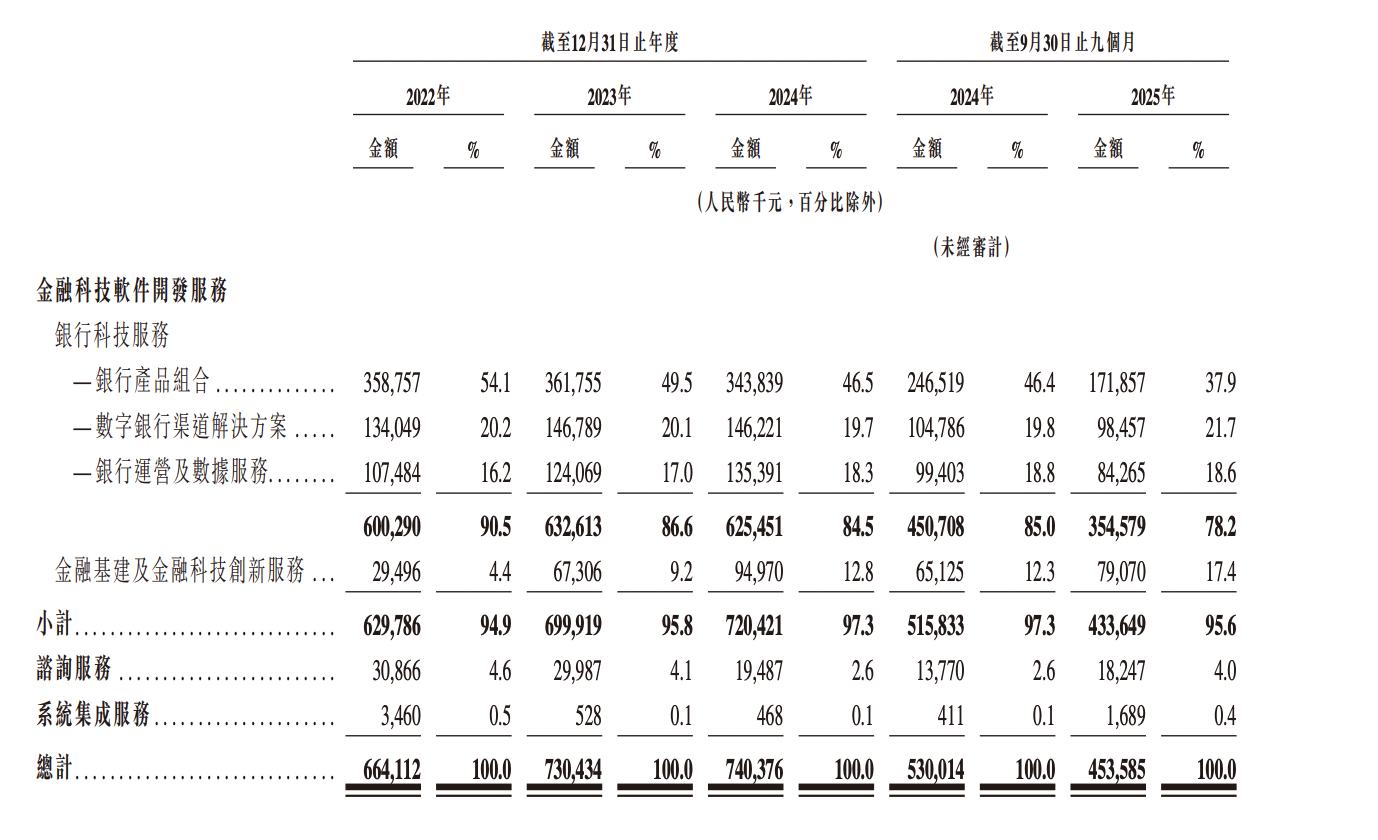
Core Viewpoint - The global fintech industry is undergoing structural changes driven by AI, blockchain, and Web3, with Hong Kong emerging as a key hub for digital financial innovation in Asia due to its unique advantages and regulatory framework [1]. Company Overview - The company, Sifang Precision, focuses on providing comprehensive fintech solutions to banks, regulatory bodies, and financial institutions in mainland China, Hong Kong, and Southeast Asia, covering software development, consulting, and system integration services [2]. - Sifang Precision's core revenue source is fintech software development services, which consistently accounts for over 90% of total revenue [3]. Financial Performance - The company reported revenues of 664 million, 730 million, 740 million, and 454 million RMB over the past four years, with corresponding profits of 41.19 million, 47.38 million, 67.36 million, and 66.58 million RMB [3]. - The fintech software development services segment generated revenues of 629 million, 699 million, and 720 million RMB from 2022 to 2024, representing 94.9%, 95.8%, and 97.3% of total revenue respectively [3]. Market Growth - The fintech software development services market in mainland China and Hong Kong is projected to grow from 100.3 billion RMB in 2020 to 158.8 billion RMB in 2024, with a compound annual growth rate (CAGR) of 12.2% [7]. - Hong Kong's fintech software development services market is expected to reach 90 billion RMB in 2024, with a CAGR of 32.3% from 2024 to 2029, growing to 363 billion RMB by 2029 [10]. Competitive Landscape - Sifang Precision is the largest fintech software development service provider in Hong Kong, holding approximately 11.0% of the market share [13]. - The competitive landscape in Hong Kong is fragmented, with the top five providers accounting for 31.9% of the market share [13]. Strategic Focus - The company plans to use the funds raised from its IPO to enhance R&D capabilities, improve delivery capabilities, strengthen sales in mainland China and global markets, and pursue potential investments and acquisitions [15]. - Sifang Precision aims to transition from a leading service provider to a trusted ecosystem builder in the rapidly growing Asian digital finance landscape [15].

赋能高质量发展行稳致远 宁波银行获评“年度上市银行”
Cai Jing Wang· 2025-12-31 07:24
Core Viewpoint - Ningbo Bank has been recognized as the "Annual Listed Bank" in the 2025 Financial Industry Annual Selection for its outstanding performance in business development and commitment to serving the real economy [1] Group 1: Financial Performance - As of September 2025, Ningbo Bank's total assets reached 35,783.96 billion yuan, a 14.50% increase from the beginning of the year [2] - The bank reported operating income of 54.976 billion yuan and a net profit attributable to shareholders of 22.445 billion yuan, reflecting year-on-year growth of 8.32% and 8.39%, respectively, outperforming the industry average [2] Group 2: Loan and Deposit Growth - Total loans and advances amounted to 17,168.23 billion yuan, marking a 16.31% increase since the beginning of the year [3] - Total deposits reached 20,478.04 billion yuan, up 11.52% from the start of the year [3] Group 3: Risk Management - As of September 2025, the non-performing loan ratio stood at 0.76%, unchanged from the beginning of the year, with a provision coverage ratio of 375.92% [3] - The bank has maintained a non-performing loan ratio below 1% for 18 consecutive years since its listing, showcasing strong asset quality [3] Group 4: Strategic Initiatives - Ningbo Bank is committed to integrating national strategies with its development, focusing on five key areas: technology finance, green finance, inclusive finance, pension finance, and digital finance [3][4] - The bank has been recognized for its achievements, ranking 72nd in the Global 1000 Banks list by The Banker magazine, an improvement of 8 places from the previous year [4] Group 5: Social Responsibility and Innovation - The bank emphasizes its role in supporting the real economy and has developed specialized products like patent loans and technology loans to foster new technologies [5] - It has also integrated green development into its strategic management, with green loan balances exceeding 68 billion yuan, expected to facilitate a carbon reduction of over 230,000 tons [5] Group 6: Future Outlook - Looking ahead, Ningbo Bank aims to uphold the principle of "professionalism creates value" while continuing to serve the real economy and empower social progress [7]

中信银行日照分行供应链金融助力普惠企业加“数”前行
Qi Lu Wan Bao· 2025-12-31 07:16
Core Insights - The integration of finance and the real economy is undergoing a systematic transformation driven by digital technology and ecosystem foundations [1] - CITIC Bank's Rizhao branch has embedded digital finance deeply into industrial structures, collaborating with core enterprises to create an innovative paradigm of inclusive supply chain finance [1] Group 1 - The collaboration between Rizhao branch and a core enterprise began with traditional credit services and quickly evolved into digital ecological collaboration [1] - The launch of the "Xin e Chain" product in 2022 marked a key turning point, facilitating the transition of core enterprises to online channels with embedded and customized financial support [1] Group 2 - Facing challenges from upstream suppliers that are scattered, small, and regionally diverse, Rizhao branch has developed a chain service system based on core enterprise credit and real transaction data [2] - Utilizing CITIC's intelligent platform product matrix, the branch introduced online factoring, allowing suppliers to apply for pure credit loans online based on accounts receivable data, with a maximum limit of 10 million yuan [2] - The financing cycle has been reduced from the traditional 7 days to within 8 hours, addressing the urgent financing needs of small and micro enterprises [2] - To date, the Rizhao branch has provided nearly 200 million yuan in financial support to over a dozen small and micro suppliers of the core enterprise through online factoring and other products [2] - This model is rooted in closely following regional development strategies, leveraging CITIC Group's comprehensive advantages to ensure transaction authenticity and build a credit system for chain enterprises [2]
