新型工业化

Search documents
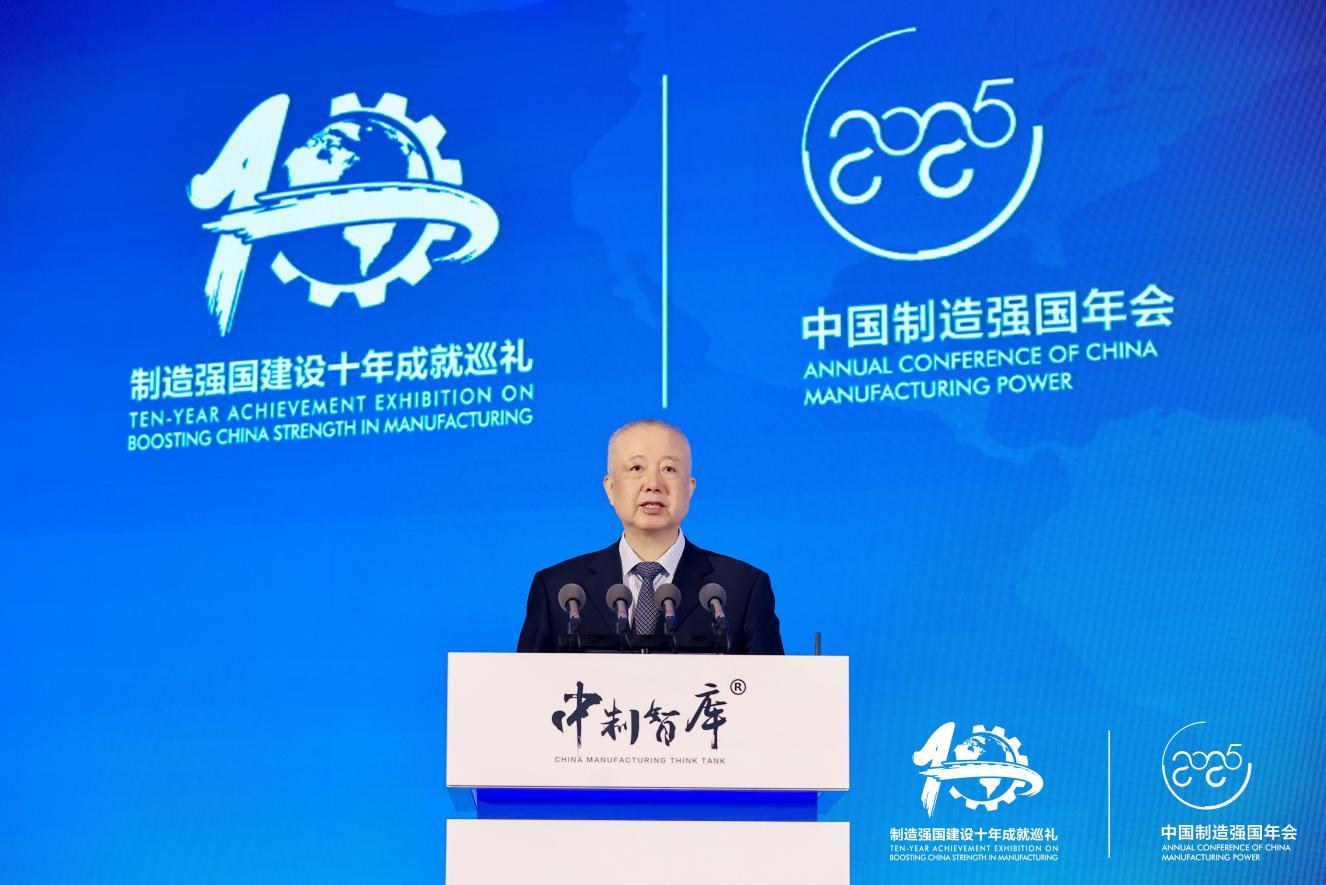
刘利华:推进产业基础高级化和产业链现代化,完善“工业强基”扶持机制
Feng Huang Wang Cai Jing· 2025-12-29 06:20
Core Insights - The 10th China Manufacturing Power Conference was successfully held in Beijing, focusing on the theme "Entity as the Root, Moving Towards New Directions" [1] - The conference aimed to explore the path for high-quality development of China's manufacturing industry during the 14th and 15th Five-Year Plans, marking a critical juncture in the "Made in China 2025" initiative [1] Group 1 - Liu Lihua, a member of the National Manufacturing Power Construction Strategic Advisory Committee, emphasized the importance of strengthening the foundation of the real economy and leading the development of new productive forces [3] - The manufacturing sector in China has achieved significant progress during the 14th Five-Year Plan, overcoming complex domestic and international challenges [3] - Key achievements include solidifying the foundational advantages of the manufacturing system, achieving critical structural transformation, and forming an ecosystem supported by clusters and enterprise leadership [3] Group 2 - For the 15th Five-Year Plan, the focus should be on four main areas: solidifying the industrial foundation, accelerating high-level technological self-reliance, cultivating new productive forces, and formulating the next decade's action plan for becoming a manufacturing powerhouse [3] - The strategy includes promoting the modernization of industrial chains and enhancing the support mechanisms for a strong industrial base [3] - Emphasis will also be placed on advancing emerging and future industries to drive new industrialization [3]

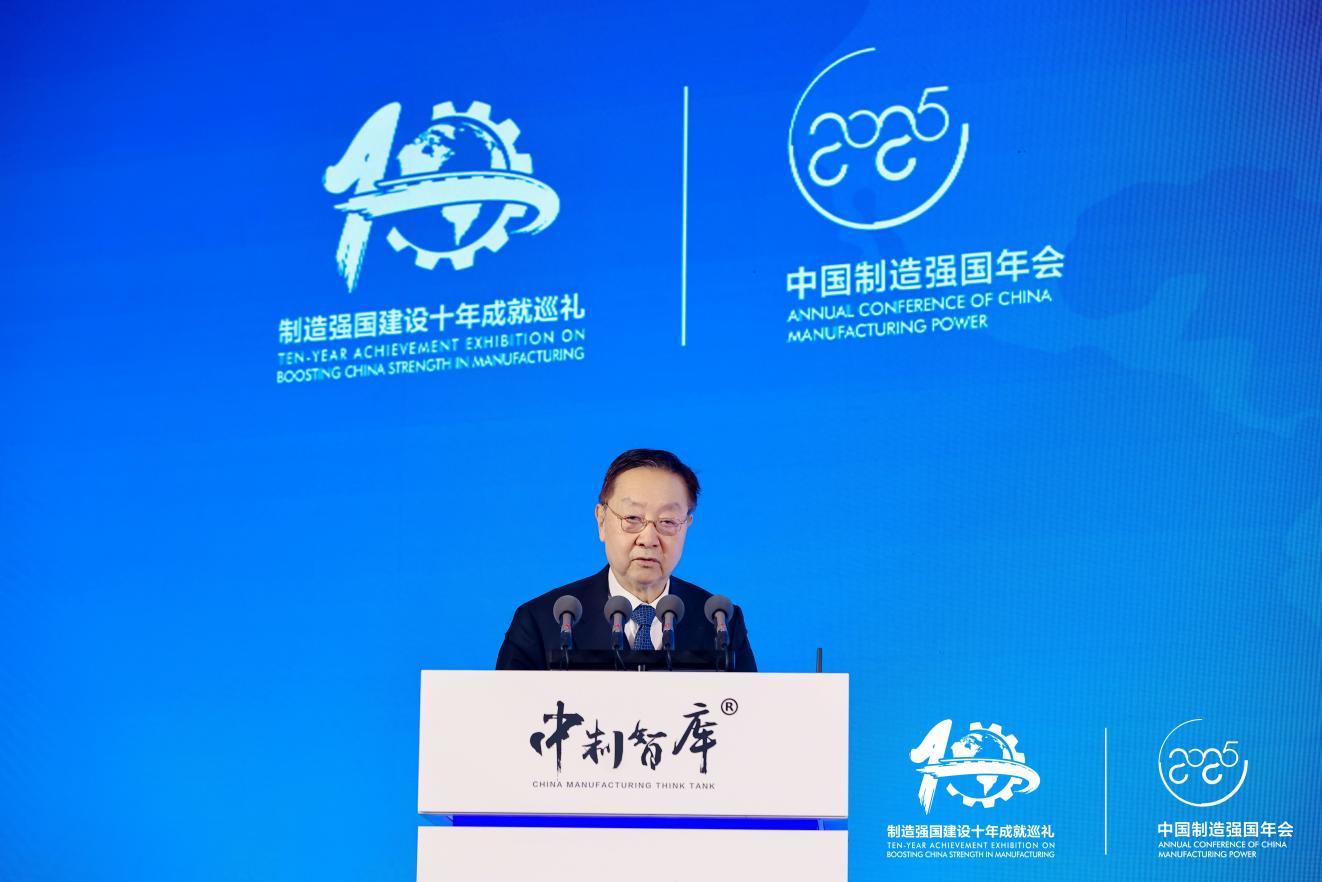
李毅中:准确把握“高端化”,防止中低端产业盲目退出
Feng Huang Wang Cai Jing· 2025-12-29 06:13
Group 1 - The 10th China Manufacturing Power Conference was successfully held in Beijing, focusing on the theme "Entity as the Root, Moving Towards New Directions" and discussing the high-quality development path of China's manufacturing industry during the 14th and 15th Five-Year Plans [1] - The conference emphasized the importance of transitioning to a modern industrial system supported by advanced manufacturing, highlighting the need for intelligent, green, and integrated approaches in industrialization [3] - The concept of "integration" was introduced, stressing the blurring lines between secondary and tertiary industries, and the necessity for multi-modal integration paths to enhance the modern industrial system [3] Group 2 - The importance of accurately understanding the connotation of "high-end" was highlighted, with a focus on technological innovation to optimize industrial and product structures, while ensuring the stability of supply chains and employment [4] - The need to integrate into global value chains, supply chains, and industrial chains was emphasized, advocating for a balanced approach to high-end industry development without blindly eliminating mid-to-low-end industries [4] - The goal for the 15th Five-Year Plan period is to achieve qualitative improvements and reasonable quantitative growth in the economy, addressing diverse economic and social needs [4]
第十届中国制造强国年会成功在京召开
Feng Huang Wang Cai Jing· 2025-12-29 05:36
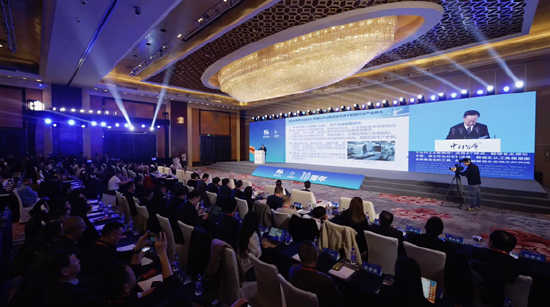
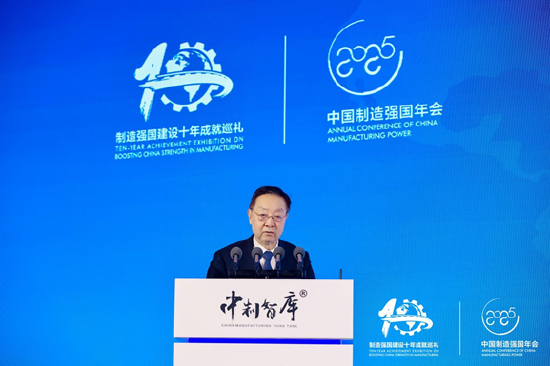
Core Insights - The 10th China Manufacturing Power Conference was held in Beijing, focusing on the theme "Rooted in the Real Economy, Moving Towards New Directions" and discussing the high-quality development path of China's manufacturing industry during the 14th and 15th Five-Year Plans [1][15] - The conference gathered over 400 guests from various sectors, including government, industry, academia, and research, to explore key topics such as strengthening the foundation of the real economy and developing new productive forces [1][2] Group 1: Key Themes and Discussions - The conference emphasized the importance of high-end, specialized, market-oriented, refined, and effective approaches to empower the real economy [2] - Li Yizhong, former Minister of Industry and Information Technology, highlighted the need for intelligent, green, and integrated development in building a modern industrial system, focusing on AI applications, low-carbon transitions, and the fusion of manufacturing and services [3][4] - Su Bo, former Deputy Minister of Industry and Information Technology, stated that China has reached a manufacturing power development index of 128.85, narrowing the gap with Germany and Japan, and emphasized the need for a three-step strategy for manufacturing power construction during the 15th Five-Year Plan [4][5] Group 2: Strategic Recommendations - Six key tasks were proposed for the 15th Five-Year Plan, including enhancing technological innovation, advancing digital economy, fostering new productive forces, promoting green growth, and strengthening the resilience of industrial supply chains [5][6] - Liu Lihua, former Deputy Minister of Industry and Information Technology, discussed the importance of consolidating the foundation of the real economy and leading the development of new productive forces, reflecting on the achievements of the manufacturing industry during the 14th Five-Year Plan [6][8] Group 3: Innovations and Future Directions - The conference introduced the "Innovation Development Index for Small and Medium-Sized Enterprises" to evaluate and support local industrial clusters, aiming to enhance the innovation capabilities of SMEs [10][11] - The "Two-Innovation Integration" public service platform was launched to assist in the development of industrial clusters, providing data-driven insights and support for local industries [11][12] - Liu Fei, Deputy Secretary-General of the China Manufacturing Power Research Institute, presented the "Invisible Champion Growth Path" report, outlining the characteristics of successful small and medium-sized enterprises in China [13][14] Group 4: Historical Context and Future Outlook - The conference marked a significant milestone, coinciding with the conclusion of the "Made in China 2025" initiative and the beginning of the 15th Five-Year Plan, reinforcing the commitment to building a modern industrial system [15][16] - The event has evolved into a major platform for discussing the future of China's manufacturing industry, aiming to continue contributing to the construction of a manufacturing power [15][16]

实体为根 向新而行丨第十届中国制造强国年会成功在京召开
Xin Lang Cai Jing· 2025-12-29 05:23
Core Viewpoint - The 10th China Manufacturing Power Conference emphasizes the importance of strengthening the foundation of the real economy and developing new quality productivity during the "14th Five-Year" and "15th Five-Year" planning periods, marking a critical juncture in the "China Manufacturing 2025" action plan [1][34]. Group 1: Authority and Themes - The conference gathered over 400 guests from government, industry, academia, and research to discuss the high-quality development path of China's manufacturing industry during the "15th Five-Year" period [1][34]. - The event was hosted by Dr. Xin Wang, a member of the "15th Five-Year" planning expert group from the Ministry of Industry and Information Technology [3][36]. - The conference adhered to a philosophy of high-end, professional, market-oriented, refined, and effective organization, aiming to consolidate manufacturing power and empower the real economy [4][37]. Group 2: Key Presentations - Minister Li Yizhong discussed the paths to new industrialization, emphasizing the need for "intelligent," "green," and "integrated" approaches to build a modern industrial system [6][39]. - Minister Su Bo highlighted that China has reached a manufacturing power development index of 128.85, indicating a shift from low-end to mid-high-end manufacturing, with a goal to reach a medium level among global manufacturing powers by 2035 [9][42]. - Minister Liu Lihua outlined four focus areas for the "15th Five-Year" period: solidifying industrial foundations, accelerating technological self-reliance, fostering new quality productivity, and formulating the next decade's manufacturing action plan [12][45]. Group 3: Innovations and Initiatives - Minister Cao Jianlin emphasized the importance of high-end equipment manufacturing as a key component of industrial strength, advocating for a collaborative approach to develop competitive high-end equipment industries [14][47]. - The conference introduced the "Innovation Development Index for Small and Medium Enterprises" to evaluate and support local industrial clusters, aiming to enhance their growth and innovation capabilities [21][54]. - The "Invisible Champion" program was launched to promote stories of successful manufacturing enterprises, aiming to instill national pride and foster a sense of patriotism among youth [28][61]. Group 4: Future Directions - The conference marked a decade of progress in China's manufacturing strategy, reflecting on achievements and setting the stage for future developments in the manufacturing sector [32][65]. - The ongoing transition from investment-driven to innovation-driven growth, and from a manufacturing power to a consumption power, is crucial for China's economic future [52][51].
李毅中谈新型工业化实践路径:以“智能化、绿色化、融合化”构建现代化产业体系
Xin Lang Cai Jing· 2025-12-29 03:28
Core Viewpoint - The 10th China Manufacturing Power Conference emphasizes the theme "Entity as the Root, Moving Towards the New" and discusses the importance of advancing industrialization through smart, green, and integrated approaches [1][5]. Group 1: Smart Manufacturing - The concept of "smart manufacturing" involves advancing the application of artificial intelligence (AI) to drive technological breakthroughs and implement the "AI+" initiative, which empowers research and innovation as well as production transformation [3][7]. Group 2: Green Transformation - "Green transformation" focuses on strengthening low-carbon transitions to ensure that the industrial sector meets the carbon peak target by 2030 and steadily progresses towards carbon neutrality [3][7]. Group 3: Integrated Development - The term "integration" refers to the blurring boundaries between secondary and tertiary industries, as well as between manufacturing and services. It highlights the need for multi-modal integration paths, including the fusion of technology and industry, and deep collaboration between academia and industry [3][7]. Group 4: High-End Development - Understanding the connotation of "high-end" is crucial. It involves leveraging technological innovation to optimize and adjust industrial and product structures, phasing out outdated practices while enhancing quality and efficiency to move towards high-end manufacturing [4][8]. - The strategy includes integrating into global value chains, supply chains, and industrial chains, ensuring that the manufacturing sector adapts to global market practices while maintaining stability in the supply chain and employment [4][8].
拓斯达涨2.00%,成交额5.04亿元,主力资金净流入2303.46万元
Xin Lang Zheng Quan· 2025-12-29 02:49
Core Viewpoint - TuoStar's stock price has shown significant fluctuations, with a year-to-date increase of 26.05% and a recent 5-day increase of 13.53%, indicating strong market interest and trading activity [1] Group 1: Company Overview - TuoStar Technology Co., Ltd. is located in Dongguan, Guangdong Province, and was established on June 1, 2007, with its IPO on February 9, 2017 [2] - The company specializes in providing industrial automation solutions and related equipment to downstream manufacturing clients, with revenue breakdown as follows: Smart Energy and Environmental Management Systems (31.50%), Industrial Robots and Automation Applications (29.39%), Injection Molding Machines and Supporting Equipment (21.05%), CNC Machine Tools (15.07%), and Others (3.00%) [2] - TuoStar is classified under the machinery equipment sector, specifically in automation equipment and robotics, and is associated with concepts such as machine vision, new industrialization, industrial internet, Industry 4.0, and robotics [2] Group 2: Financial Performance - For the period from January to September 2025, TuoStar reported a revenue of 1.688 billion yuan, a year-on-year decrease of 24.49%, while the net profit attributable to shareholders was 49.3365 million yuan, showing a significant increase of 446.75% [2] - Since its A-share listing, TuoStar has distributed a total of 284 million yuan in dividends, with 48.1781 million yuan distributed over the past three years [3] Group 3: Shareholder and Market Activity - As of September 30, 2025, TuoStar had 71,600 shareholders, a decrease of 17.93% from the previous period, with an average of 4,638 circulating shares per person, an increase of 21.85% [2] - Major institutional shareholders include the E Fund National Robot Industry ETF, which is the second-largest shareholder with 10.8108 million shares, and the Huaxia CSI Robot ETF, the third-largest with 9.2021 million shares, both showing increases in holdings [3]

诺力股份涨2.03%,成交额3402.20万元,主力资金净流入694.45万元
Xin Lang Cai Jing· 2025-12-29 02:29
Group 1 - The core viewpoint of the news is that Noli Co., Ltd. has shown a significant increase in stock price and trading activity, indicating positive market sentiment and potential growth opportunities [1][2]. - As of December 29, Noli's stock price rose by 2.03% to 24.59 CNY per share, with a total market capitalization of 6.334 billion CNY [1]. - The company has experienced a year-to-date stock price increase of 44.20%, with a 5.04% rise over the last five trading days [1]. Group 2 - For the period from January to September 2025, Noli reported a revenue of 5.03 billion CNY, a year-on-year decrease of 2.28%, while the net profit attributable to shareholders increased by 9.23% to 396 million CNY [2]. - The company has distributed a total of 1.167 billion CNY in dividends since its A-share listing, with 533 million CNY distributed over the past three years [3]. - As of September 30, 2025, the number of shareholders increased by 26.66% to 24,000, while the average circulating shares per person decreased by 21.05% to 10,725 shares [2].

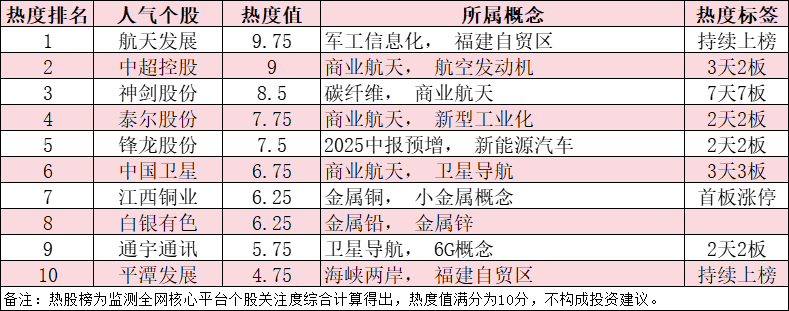
今日十大热股:航天发展、中超控股领衔,神剑股份7天7板,商业航天概念持续爆炒
Jin Rong Jie· 2025-12-29 02:02
Group 1: Aerospace Industry - Aerospace Development is gaining market attention due to the overall increase in the commercial aerospace industry's popularity, driven by external catalysts such as SpaceX's plan to go public in 2026 and the anticipated maiden flight of Long March 12A [1] - The company's business layout aligns well with market hotspots, covering military information technology fields such as electronic countermeasures and information security, while also participating in low-orbit satellite constellation projects, creating a resonance effect in the commercial aerospace sector [1] - China Satellite is recognized for its leading position in the commercial aerospace and satellite internet sectors, serving as a core supplier for the StarNet plan and handling numerous low-orbit communication satellite orders, which positions it uniquely in the industry [2] Group 2: Emerging Industries - Zhongchao Holdings is benefiting from the market's enthusiasm for emerging industries, particularly in commercial aerospace and high-end manufacturing, which has attracted significant funding attention [1] - Tailor Shares is gaining attention due to the combination of multiple hot concepts, including commercial aerospace and industrial robotics, particularly in light of recent policy events such as the New Industrialization Promotion Conference in Shanghai [2] - Jiangxi Copper's market heat is driven by several factors, including plans to acquire overseas quality mineral resources, a 35% year-on-year increase in net profit for the third quarter, and a capital operation plan to spin off its subsidiary Jiang Copper Foil for A-share listing [2] Group 3: Corporate Actions - Fenglong Shares' popularity stems from a significant asset restructuring event, where the leading Hong Kong humanoid robot company, UBTECH, plans to acquire approximately 43% of the company's shares for 1.665 billion yuan, which has sparked discussions about business transformation and value reassessment [2] - Shenjian Shares' heat is attributed to its business layout in the commercial aerospace sector, with a clear indication of supplying related components, which aligns well with the ongoing market interest in commercial aerospace themes [1]

宇环数控跌3.29%,成交额8474.77万元,主力资金净流出1113.64万元
Xin Lang Cai Jing· 2025-12-29 01:52
Group 1 - The core viewpoint of the news is that Yuhuan CNC has experienced fluctuations in its stock price and trading activity, with a notable decline on December 29, 2023, where the stock dropped by 3.29% to 23.80 CNY per share, with a market capitalization of 3.729 billion CNY [1] - Yuhuan CNC's stock price has increased by 47.19% year-to-date, with a recent 12.74% rise over the last five trading days, but a slight decline of 1.57% over the past 20 days [2] - The company has appeared on the "Dragon and Tiger List" five times this year, with the most recent appearance on November 28, where it recorded a net purchase of 42.42 million CNY [2] Group 2 - As of December 19, 2023, Yuhuan CNC had 20,700 shareholders, an increase of 0.59% from the previous period, with an average of 5,115 circulating shares per person, which decreased by 0.59% [3] - For the period from January to September 2025, Yuhuan CNC reported a revenue of 339 million CNY, reflecting a year-on-year growth of 4.91%, while the net profit attributable to shareholders decreased by 77.08% to 3.0609 million CNY [3] - The company has distributed a total of 157 million CNY in dividends since its A-share listing, with 66.476 million CNY distributed over the past three years [4]

他们从“干点不一样的”那颗初心出发
Ren Min Wang· 2025-12-29 01:13
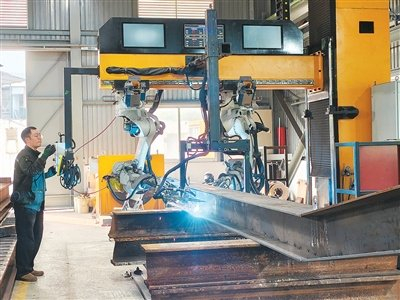
Group 1: Economic Transformation in Hong Kong - Hong Kong is experiencing an economic transformation with companies focusing on quality improvement and efficiency in sectors like cultural creativity, technology, and green economy [2] - The concept of "谷子经济" (Goods Economy) is emerging, emphasizing consumer emotional value and the willingness to pay for personalized experiences [3] Group 2: Innovative Business Models - A restaurant owner successfully increased revenue by collaborating with a game IP agent to create a themed dining experience, demonstrating the potential of emotional value in consumer spending [3] - The introduction of smart welding technology at a steel company has improved production efficiency and reduced the average age of skilled workers from 55 to the 30s, addressing the shortage of skilled labor [4] Group 3: Sustainable Agriculture Practices - A farm in Hong Kong utilizes a unique method of producing organic vegetables without pesticides or chemical fertilizers, converting food waste into nutrient-rich solutions for crops [5][6] - The partnership between the farm and a major food group has led to a reduction of approximately 24 tons of greenhouse gas emissions, showcasing the benefits of local production and sustainable practices [5][6] Group 4: Market Trends in Health-Conscious Consumption - There is a growing consumer demand for healthy food products, particularly those grown without pesticides or chemical fertilizers, indicating a trend towards sustainable agriculture in Hong Kong [7] - The local agricultural sector is well-positioned to innovate and promote green products due to a robust food waste recycling system and a focus on low-carbon practices by businesses [7]