
智能辅助驾驶

Search documents
华为智能汽车杀入15万元以下市场
3 6 Ke· 2025-08-28 10:58
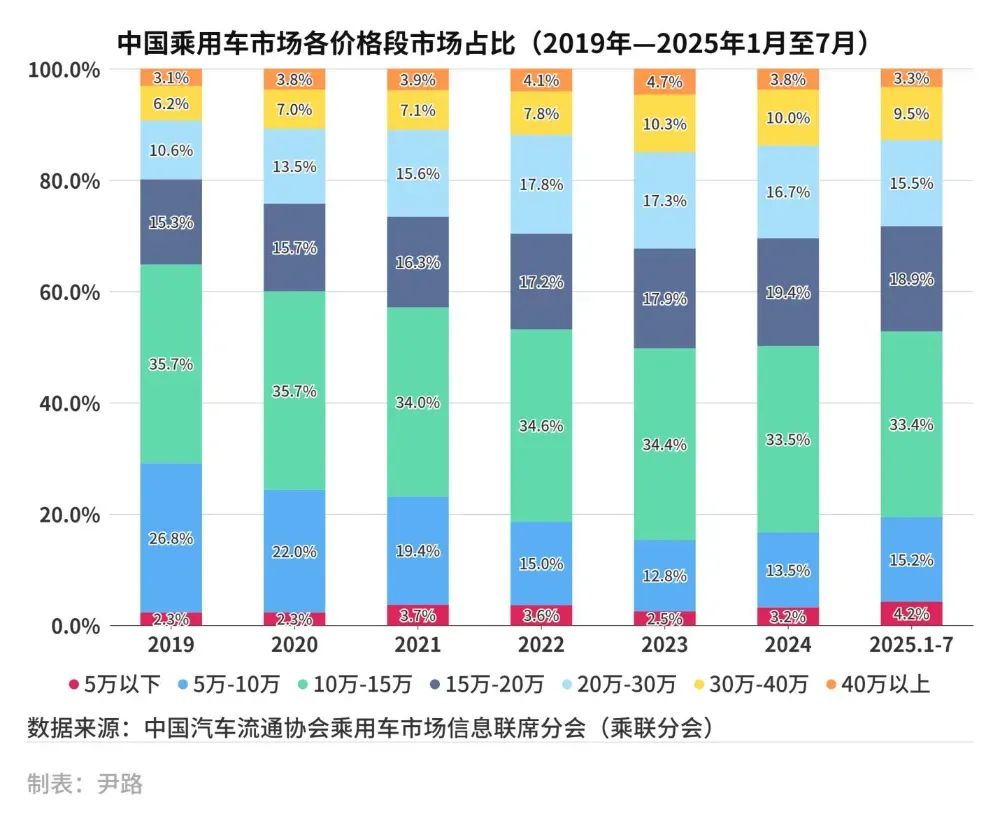
Core Insights - The penetration rate of intelligent assisted driving in China reached 50% in just five years, while the penetration rate of new energy vehicles took ten years to reach the same level [1] - Huawei's intelligent automotive solutions have now entered the mainstream price range of 150,000 to 200,000 yuan, with the launch of the Shangjie brand's first model priced at 169,800 yuan, which can drop below 150,000 yuan with subsidies [1][2] - The market share of Huawei's intelligent driving system in vehicles priced above 350,000 yuan has reached 50% [1] Market Dynamics - The shift from high-end to mainstream pricing is a strategic choice by Huawei to adapt to changes in the Chinese passenger car market, focusing on the 150,000 yuan price segment, which is crucial for many domestic brands [2][5] - The market structure for passenger vehicles is changing, with a notable decline in the market share of vehicles priced above 200,000 yuan, which dropped from 32.3% in 2023 to 28.3% in the first half of 2025 [9] Price Point Strategy - Huawei's intelligent automotive solutions have seen their price anchor drop from 300,000 yuan to 150,000-200,000 yuan, with intentions to further penetrate the 100,000-150,000 yuan segment [3][4] - The 10,000-20,000 yuan price range is identified as the largest incremental market for intelligent automotive solutions, with significant growth expected in this segment [12] Competitive Landscape - Huawei and CATL are the only companies in the Chinese automotive parts industry that can set prices, while other suppliers are engaged in price wars [1] - The competitive strategy involves offering flexible technology and cooperation models, allowing automakers to choose specific components based on their market positioning and cost requirements [13][14] Technological Advancements - Huawei's intelligent automotive solutions include five core technologies, and the company has achieved significant scale, with over 1 million vehicles equipped with its systems [13] - The rapid growth of intelligent systems in the 100,000-200,000 yuan price range is a key factor driving Huawei's strategy to penetrate this market [12]

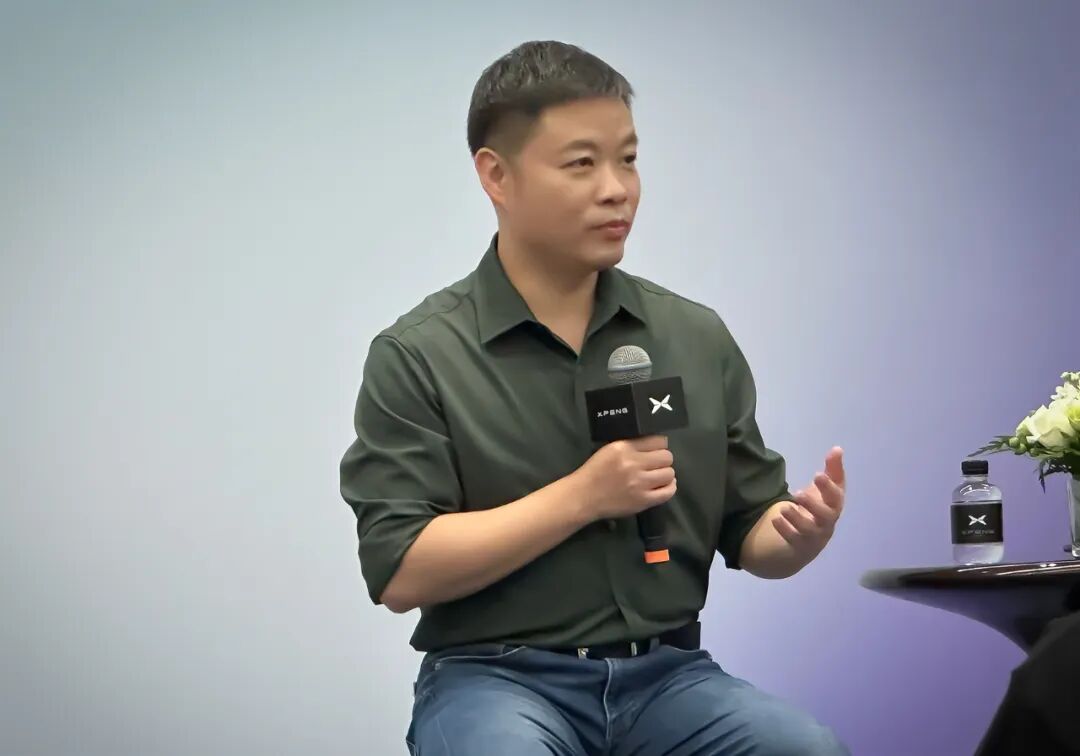
何小鹏回应:与特斯拉市值差50倍合理吗?劝雷军造车是“害”他吗?
3 6 Ke· 2025-08-28 09:43
Core Insights - He Xiaopeng emphasized that urging Lei Jun to enter the automotive industry was not intended to harm him, highlighting the challenges of the sector [1] - The company claims to be the only one in China to have truly developed a Vehicle Level Automation (VLA) system, showcasing confidence in its technological advancements [1][18] - He Xiaopeng expressed optimism about the company's valuation changing significantly within six months as Robotaxi services are expected to launch [1][26] Product and Market Strategy - The new P7 model sold 10,000 units in just 7 minutes, indicating strong market demand [3] - The P7 is considered a crucial product for the company, with a focus on simplicity and cutting-edge technology [3][4] - The company aims to achieve top-three production capacity in its class for the P7, leveraging modular manufacturing improvements [4] Financial Performance and Cost Structure - He Xiaopeng discussed the challenges of profitability in the automotive sector, noting that traditional cost structures do not apply to electric vehicles, where battery costs account for 40%-50% of total expenses [7] - The company anticipates recovering previous losses within one to two years, thanks to its unique integration of software and hardware in smart vehicles [10] - The company plans to invest approximately 5 billion yuan annually in VLA development, emphasizing the need for substantial investment to achieve meaningful advancements [16] Technological Development - The company is transitioning from single-unit intelligence to group intelligence in its AI systems, with a long-term vision extending to 2027-2028 [10] - He Xiaopeng highlighted the importance of VLA and VLM (Vehicle Level Model) integration, suggesting that the latter will enhance task execution capabilities [20][22] - The company is utilizing both NVIDIA and domestic GPUs, with over 30,000 units deployed, to enhance AI capabilities [24] Competitive Landscape - He Xiaopeng acknowledged the significant valuation gap between the company and Tesla, attributing it to broader market trends and the company's potential yet to be fully realized [26] - The company believes that the automotive industry will see a differentiation in capabilities among competitors in the near future, driven by substantial investments in AI [22] Industry Insights - He Xiaopeng shared insights on the challenges of the automotive industry, likening it to a marathon where resilience is crucial for success [30][32] - The company recognizes the complexities of merging hardware and software effectively, which poses a greater challenge compared to purely digital companies [27]

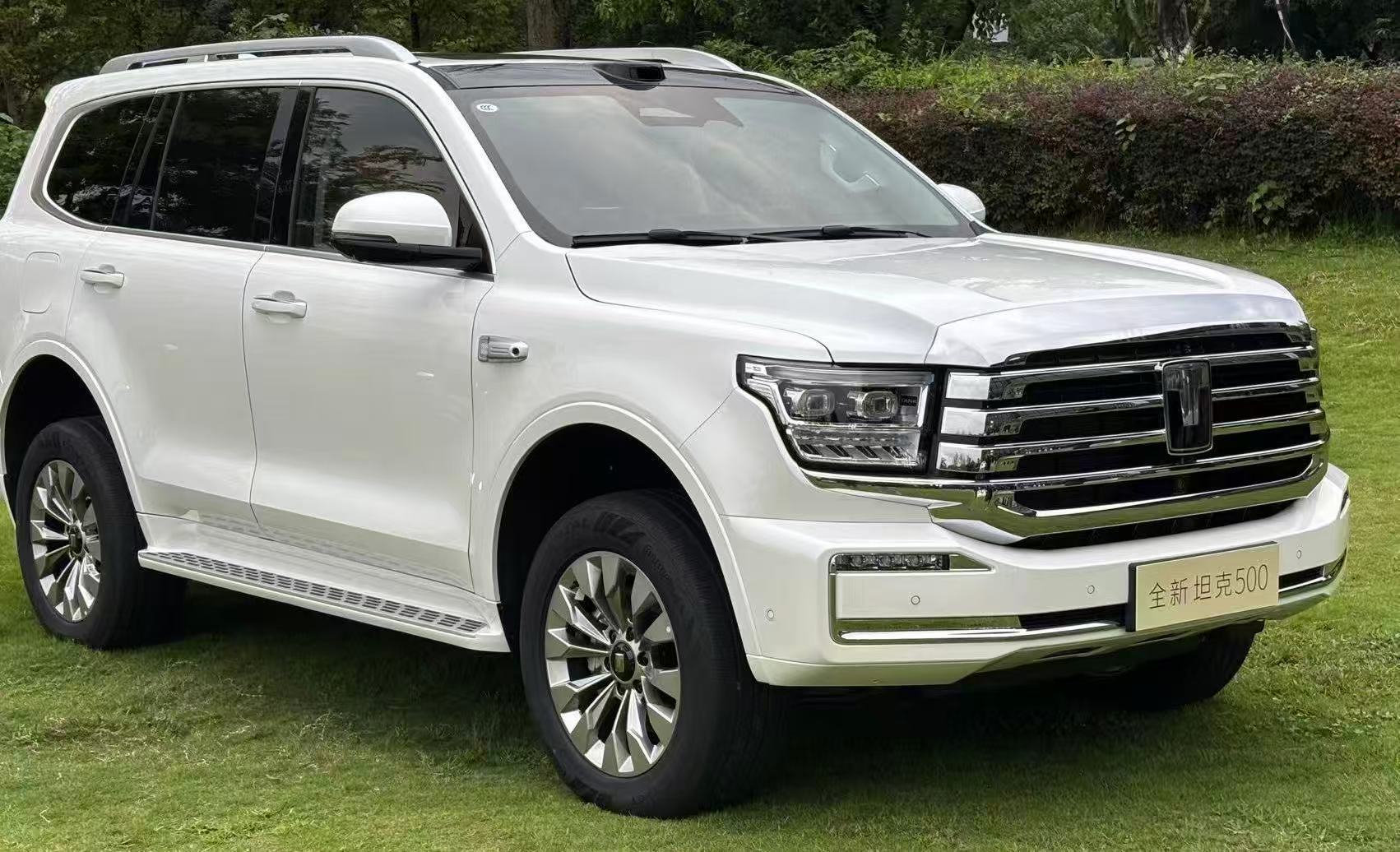
33.5万元起!全新坦克500正式上市,预售订单已达3.6万辆
Mei Ri Jing Ji Xin Wen· 2025-08-28 07:13
Group 1 - The core viewpoint of the articles highlights the launch of the new Tank 500 by Great Wall Motors, which features significant upgrades in intelligence and technology, including a comprehensive sensor system and advanced driving assistance capabilities [1][2] - The Tank brand, established in 2021, has seen rapid growth, with sales increasing from 85,000 units in its first year to 163,000 units in 2023, reflecting a year-on-year growth of 31.2% [2] - Despite the strong performance, the Tank brand is expected to face a slowdown in growth starting in 2025, with a projected decline of 10.67% in sales during the first half of that year [2] Group 2 - The competitive landscape for the off-road segment remains intense, with the Tank series facing challenges not only from traditional fuel-powered off-road vehicles but also from emerging electric models such as BYD's Fangcheng Leopard series [3] - The new Tank 500 has already received significant interest, with 12,257 orders placed within two hours of its announcement and a total of 36,000 pre-sale orders to date [2]

地平线机器人-W涨幅扩大逾9% 上半年业绩表现强劲 机构称未来数月业务发展或成催化剂
Zhi Tong Cai Jing· 2025-08-28 06:23
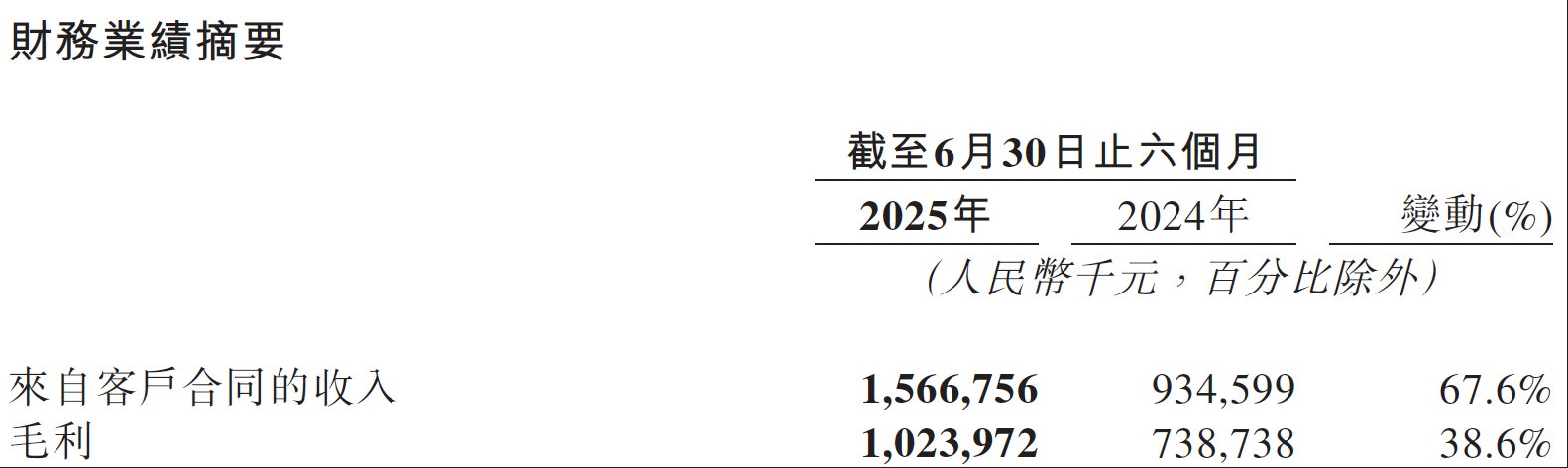
Core Viewpoint - Horizon Robotics-W (09660) has shown significant stock performance, with a 9.07% increase to HKD 8.66 and a trading volume of HKD 39.56 billion following the release of its interim results, indicating strong market confidence in the company's growth potential [1] Financial Performance - The company reported a revenue of RMB 1.567 billion for the first half of the year, representing a year-on-year growth of 67.6% [1] - Gross profit reached RMB 1.024 billion, with a comprehensive gross margin of 65.4% [1] - Cash reserves stood at RMB 16.1 billion, providing a solid financial foundation for future growth [1] Market Position - The CEO stated that the company maintained a leading market share of 45.8% in the ADAS (Advanced Driver Assistance Systems) basic auxiliary driving market and 32.4% in the overall intelligent auxiliary driving computing solutions market for domestic brands in mainland China [1] Analyst Insights - Citi's research report highlighted the strong performance of Horizon Robotics, with total revenue growth of 68% year-on-year, driven by hardware shipments of 2 million units and an average product selling price increase of over 60% [1] - The report anticipates increased visibility in overseas shipments of the J6B model, along with successful progress in the J6P and upgraded HSD models, predicting significant contributions to shipments in the passenger vehicle and Robotaxi sectors over the next five years [1] - The revenue forecast for Horizon Robotics for 2025 to 2027 has been raised by 3% to 5%, with the target price increased from HKD 10.5 to HKD 11, suggesting that upcoming business developments could act as catalysts for stock price growth and reaffirming a "outperform" rating [1]

地平线机器人-W午前涨超4% 产品及解决方案量价齐升 上半年公司收入同比增近七成
Zhi Tong Cai Jing· 2025-08-28 04:09
Core Insights - Horizon Robotics-W (09660) saw its stock rise over 4% in the morning session, currently trading at 8.22 HKD with a transaction volume of 2.39 billion HKD [1] Financial Performance - For the first half of the year, Horizon Robotics reported a revenue of 1.567 billion CNY, representing a year-on-year growth of 67.6% [1] - The gross profit reached 1.024 billion CNY, with a comprehensive gross margin of 65.4% [1] - The company holds cash reserves of 16.1 billion CNY [1] Market Position - The CEO of Horizon Robotics, Yu Kai, announced that the company maintained a market share of 45.8% in the ADAS (Advanced Driver Assistance Systems) market, ranking first [1] - In the overall intelligent driving computing solutions market for domestic brands, the company also secured the top position with a market share of 32.4% [1] Product and Solution Performance - Revenue from products and solutions grew 3.5 times year-on-year, amounting to 778 million CNY, with a shipment volume of 1.98 million units, doubling compared to the previous year [1] - The shipment structure improved significantly, with mid-to-high-end product solutions achieving a shipment volume of 980,000 units, a sixfold increase year-on-year, accounting for 49.5% of total shipments and contributing over 80% of the revenue from products and solutions [1] - The increase in the delivery ratio of mid-to-high-end product solutions led to a substantial rise in the average value per vehicle, which is now 1.7 times higher than the same period last year [1]
地平线半年报呈现高阶智驾“吸金”实力,资本市场热捧其增长空间
Jing Ji Guan Cha Wang· 2025-08-27 14:57
Core Insights - MSCI China Index has officially included Horizon Robotics (9660.HK) as the only autonomous driving technology company, reflecting market recognition of its growth potential [1] - Horizon's H1 2023 financial report shows significant growth, with revenue reaching 1.567 billion yuan, a 67.6% year-on-year increase, and gross profit of 1.024 billion yuan, with a gross margin of 65.4% [3][4] - The company is optimistic about its annual shipment volume, projecting around 4 million units, driven by new orders from major automakers like Geely, Chery, and Changan [2][10] Financial Performance - Horizon's revenue structure has improved, with product solutions and software services driving growth [3][4] - The product solutions business saw a total shipment of 1.98 million units in H1 2023, doubling year-on-year, with high-end products accounting for 49.5% of total shipments [3][4] - The average unit price of products is expected to continue rising, contributing to a 3.5-fold increase in revenue for the product solutions segment [3][4] Market Position and Strategy - Horizon holds a 32.4% market share in the domestic autonomous driving market and has made significant progress in supplying both domestic and joint venture brands [2][9] - The company has established partnerships with 27 OEMs, including the top ten Chinese OEMs, and is expanding its international presence [9][10] - The upcoming launch of the Horizon SuperDrive (HSD) system is anticipated to create substantial growth opportunities, with multiple models already designated for production [6][10] Technological Advancements - HSD is positioned as a foundational technology for future Robotaxi applications, with high computational power and advanced capabilities [6][7] - The company is increasing its investment in cloud services, with R&D expenses rising by over 62% to 2.3 billion yuan, indicating a focus on enhancing software and algorithm capabilities [7][8] - The penetration rate of advanced driver-assistance systems (ADAS) in China's passenger vehicles has reached 65.6%, with high-end features rapidly increasing [4][5] Future Outlook - The year 2025 is projected to be a pivotal year for the widespread adoption of intelligent driving solutions in China [2][5] - Horizon's strategic focus on high-end autonomous driving technology and its ability to adapt to market changes position it favorably for sustained growth [11] - The company is expected to benefit from the increasing demand for high-performance autonomous driving solutions as competition intensifies [10][11]
收入大增近七成“征程”迎里程碑时刻,地平线机器人-W(09660)强势进入密集兑现期
智通财经网· 2025-08-27 13:48
Core Insights - Horizon Robotics has recently announced that its "Journey" family of products is about to surpass 10 million units in cumulative production, making it the first company in China to reach this milestone in intelligent driving solutions [1] - The company has launched the largest upgrade of its Horizon SuperDrive (HSD) system, which is designed to provide a smooth, human-like driving experience across various scenarios [1][2] - The company's mid-year financial report shows significant growth, with revenue reaching 1.567 billion yuan, a year-on-year increase of 67.6%, and gross profit of 1.024 billion yuan, up 38.6%, resulting in a gross margin of 65.4% [1] Financial Performance - In the first half of the year, Horizon Robotics achieved a product solution shipment of 1.98 million units, doubling year-on-year, with revenue from product solutions increasing 2.5 times to 778 million yuan [4] - The delivery of mid-to-high-end solutions reached 980,000 units, accounting for 49.5% of total shipments, contributing over 80% of the revenue from product solutions [4] - The company's R&D expenditure for the first half of the year was 2.3 billion yuan, a 62% increase year-on-year, indicating a strong commitment to innovation [5][6] Market Trends - The global market for intelligent driving solutions is projected to grow from 19.1 billion yuan in 2024 to 123.4 billion yuan by 2030, with a compound annual growth rate of 36.5% [3] - Horizon Robotics has captured a significant market share, with 45.8% in the ADAS front-view integrated machine market and 32.4% in the autonomous driving computing solutions market [5] Product Development and Partnerships - The HSD system is expected to enhance the company's market performance, with multiple car manufacturers already committing to its deployment [2][7] - Horizon Robotics has established partnerships with major automotive brands, including BYD, Chery, and NIO, and has secured contracts for nearly 400 new vehicle models [7] - The company has also formed strategic collaborations with international suppliers like Bosch and Denso, expanding its global ecosystem [7] Investment Recognition - Horizon Robotics has been included in several authoritative indices, such as the FTSE Global Index and MSCI China Index, reflecting its growing investment value [9] - The company is expected to maintain strong domestic performance while enhancing its influence in international markets due to its robust product offerings and innovations [9]
HORIZONROBOT-W(09660) - 2025 Q2 - Earnings Call Transcript
2025-08-27 12:00
Financial Data and Key Metrics Changes - The total revenue for the first half of 2025 amounted to RMB 1.57 billion, representing an increase of 67.6% compared to the same period last year [21] - Revenue from automotive solutions surged by 67%, with product solutions revenue increasing by 250% to RMB 777.8 million [21][22] - The overall gross margin was 65.4%, maintaining a strong position compared to other automotive solution providers [22] Business Line Data and Key Metrics Changes - The company shipped approximately 2 million units of automotive-grade processing hardware, more than doubling year on year [10] - Shipments of mid to high-level intelligent driving solutions accounted for half of total shipments, with a sixfold increase compared to the same period last year [10][12] - The average selling price (ASP) of solutions increased by 70% compared to last year, driven by a higher mix of mid to high-end solutions [15] Market Data and Key Metrics Changes - The penetration rate of intelligent driver assistance in domestic brands rose from 51% in 2024 to 59% in 2025 [6] - The market share of the company in the ADAS basic assisted driving market was 45.8%, and 32.4% in the overall intelligent assisted driving computing solutions market among Chinese domestic brands [9] Company Strategy and Development Direction - The company aims to advance its position in the high-end intelligent driving market, focusing on the development of the Horizon SuperDrive (HSD) as a foundation for future robotaxi solutions [14][19] - Strategic investments in cloud services and R&D are expected to drive growth opportunities and enhance the company's competitive edge in the intelligent driving sector [15][63] - The company plans to expand its global footprint and deepen partnerships with leading international automakers [19] Management's Comments on Operating Environment and Future Outlook - Management expressed optimism about sustained growth potential in the intelligent driving market, driven by rising volumes and prices [6][12] - The company anticipates achieving shipments of around 4 million units in 2025, with a significant portion coming from mid to high-end solutions [32][42] - The management highlighted the importance of adhering to strict standards for L2 intelligent driving, which will benefit the entire ecosystem [56] Other Important Information - The company recorded an adjusted operating loss of RMB 1.1 billion, reflecting increased R&D investments [24][25] - Cumulative shipments of the Journey series processing hardware exceeded 10 million units, setting a new benchmark for the industry [17] Q&A Session Summary Question: Can management elaborate on major customers for mid to high-end products in the first half of this year? - Major customers included BYD and Auto Li, with both being early adopters of the company's solutions [30][31] Question: What is the outlook for revenue contribution from Journey 6E and Horizon SuperDrive? - The ASP for Journey 6P and HSD is expected to be significantly higher, contributing to future revenue growth [35] Question: Can management provide guidance for volume and ASP for the second half of this year? - The company expects continued growth in shipments and ASP, driven by new product launches and market penetration [40][45] Question: What are the details about global customers and their chosen solutions? - The company is working with global automotive groups and joint ventures, providing ADAS and new generation solutions [48][50] Question: Does the company anticipate actual deployments of robotaxi within this year? - The company plans to launch robotaxi technologies within the next three to five years, collaborating with operators to validate data [59] Question: What are the plans regarding R&D expenditure? - The company will continue to invest heavily in R&D, particularly for HSD, to capture structural transformations in the intelligent driving industry [63]
华为高管:世界上根本没有免费的东西
Di Yi Cai Jing Zi Xun· 2025-08-27 08:51
Core Insights - Huawei's automotive business is rapidly expanding its assisted driving solutions and collaborating with various car manufacturers, including Baojun, Leap Motor, and Hongqi, indicating a growing presence in the industry [2][3] - The company emphasizes a diverse cooperation model with car manufacturers, ranging from component supply to full-stack solutions, enhancing their capabilities from product definition to marketing [2][9] - Huawei's approach to assisted driving technology diverges from the prevalent Vision-Language-Action (VLA) model, focusing instead on a World and Action (WA) model that utilizes direct sensory inputs for vehicle control [3][10] Cooperation Models - Huawei's cooperation with car manufacturers includes multiple models: component supply, single intelligence (either smart cockpit or assisted driving), dual intelligence (both), and full-stack solutions [2][9] - The collaboration process is designed to deepen over time, with Huawei supporting car manufacturers throughout the entire product lifecycle, from design to marketing [2][9] Technology Perspective - Huawei does not endorse the VLA approach, believing it is not the ultimate solution for autonomous driving; instead, it prioritizes the WA model, which aims for direct control through sensory inputs [3][10] - The company acknowledges the rapid development of assisted driving technology and anticipates a consolidation of players in the market, driven by data, computing power, and algorithms [11] Commercial Strategy - Huawei does not have a specific short-term profitability target for its automotive business, focusing instead on long-term user-centered investments and sustainable growth [8] - The company argues that there is no such thing as a free service in the automotive sector, as costs are often hidden in vehicle pricing or future service fees [13]
汽车视点丨吉利全域AI布局进入收获期 千里智驾目标直指超越华为“引望”
Zhong Guo Jin Rong Xin Xi Wang· 2025-08-26 13:18
转自:新华财经 新华财经上海8月26日电(记者 王鹤)"只有具备强大制造能力,对人工智能未来科技全面布局,具有强大科技属性的汽车公司才能生存,走向未来。"在近 日举办的吉利汽车控股有限公司(0175.HK)上半年业绩会上,管理层释放出公司发展方向的重要信号。 吉利汽车集团CEO淦家阅在业绩说明会上指出,基于"感知-规控-决策"链式逻辑的传统辅助驾驶系统,在面对复杂道路场景时存在响应机制不够灵活的问 题。特别是在高速公路匝道、多车道变道等场景下,系统的决策能力与人类驾驶员仍存在差距。 针对这些痛点,吉利选择与千里科技深度协同的技术路线。双方合作开发的"One Model",即一个大模型解决方案,采用端到端的深度学习架构,通过先进 的AI算法模型取代传统的算法和人工编写规则,实现技术路径的根本性变革。这种架构变革使得辅助驾驶系统能够更好地处理长尾场景,提升系统的泛化 能力。 在技术方面,吉利汽车7月发布了最新技术架构,包括云端WM世界模型、基座大模型、车端多模态VLA大模型,以及端到端安全对抗大模型,通过这些大 模型,吉利将构建出云端和车端协同的闭环系统——在云端训练AI、车端校验AI,使得整个系统具备持续进化能 ...
